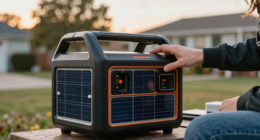
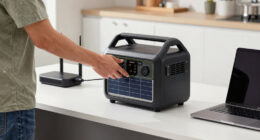
To keep your food cold without powering your whole house, prioritize your fridge and freezer by minimizing door openings, keeping doors sealed tight, and storing items efficiently. Use thermal containers, ice packs, or frozen water bottles inside to stabilize temperatures. Consider portable, energy-efficient cooling units or insulation methods. Monitoring temperatures regularly helps prevent spoilage. With proper organization and some simple techniques, you can protect your perishables during power outages—learn more about effective strategies ahead.
Key Takeaways
- Use insulated containers and thermal bags to store perishables during power outages, maintaining cold temperatures without running the entire house.
- Place ice packs or frozen water bottles inside the fridge and freezer to absorb heat and prolong cold retention.
- Keep the fridge door closed as much as possible to prevent warm air entry and maintain internal temperature.
- Prioritize and organize perishable foods for quick access, reducing door openings and temperature fluctuations.
- Consider portable cooling solutions like battery-powered chillers or solar-powered units to keep food cold independently.

Jackery Portable Power Station Explorer 300, 293Wh Backup Lithium Battery, Solar Generator for Outdoors Camping Travel Hunting Blackout (Solar Panel Optional)
SPEED UP YOUR RECHARGEABILITY: It takes only 2 hours to recharge 80% battery of the power station through...
As an affiliate, we earn on qualifying purchases.
Understanding the Importance of Maintaining Cold Temperatures

Maintaining cold temperatures in your fridge is essential for keeping food safe and fresh. Proper temperature control prevents bacteria growth that can cause foodborne illnesses and spoilage. The ideal fridge temperature is at or below 40°F (4°C). When temperatures rise above this, perishable foods like dairy, meats,, and leftovers become vulnerable to dangerous bacteria. Consistently monitoring your fridge’s temperature ensures your food remains safe to consume and reduces waste. If the power goes out, keeping the fridge cold for as long as possible becomes crucial. By understanding the importance of temperature control, you can take proactive steps to preserve your food’s safety, preventing health risks and unnecessary waste. Maintaining the right temperatures is a simple yet vital aspect of food safety. Smart sensors can assist in real-time temperature monitoring, alerting you immediately if conditions become unsafe. Being aware of temperature fluctuations can help you respond quickly and prevent spoilage.

Jackery Solar Generator 1000 v2 with 200W Solar Panel,1070Wh Portable Power Station LiFePO4 Battery,1500W AC/100W USB-C Output, 1Hr Fast Charge for Outdoor,Off-Grid Living,RV,Emergency
Powerful yet Compact: Boasting a 1,500W AC output and a 3,000W surge peak, the Solar Generator 1000 V2...
As an affiliate, we earn on qualifying purchases.
Assessing Your Emergency Power Needs and Resources

To prepare effectively, you need to know your emergency power needs and what resources you have available. Start by evaluating your power capacity to determine how much backup energy you can rely on during an outage. Then, check your resource inventory to identify what equipment and supplies you can use to keep essentials cold and powered. Understanding your power requirements for home appliances can help you choose the most suitable backup solutions. Additionally, knowing your energy consumption patterns can assist in optimizing your backup system for efficiency and reliability. Being aware of your dog’s emotional needs and how they respond to stress during emergencies can also help you plan for their comfort and safety during power outages. Incorporating European cloud innovation principles into your planning can ensure your emergency systems are both secure and sustainable. Moreover, evaluating your energy storage options can enhance your preparedness by providing more flexible and resilient backup solutions.
Power Capacity Assessment
Have you ever wondered if your emergency power setup can handle your essential needs during a blackout? To find out, start with a power capacity assessment. First, review your battery monitoring systems to verify your batteries can supply enough energy for critical devices like your fridge and small appliances. Next, focus on generator sizing—calculate the wattage of all essential equipment you plan to run simultaneously. This helps you determine if your current generator can meet your needs or if you need an upgrade. Remember, overestimating capacity can lead to unnecessary expenses, while underestimating leaves you unprepared. Keep detailed records of your power requirements and regularly test your system to stay confident it will perform when you need it most. Additionally, understanding support breakfast options like cozy accommodations and local specialties can help you plan for energy-efficient meals during outages. Considering power efficiency strategies can further optimize your setup and extend your backup capabilities.
Resource Inventory Check
After completing your power capacity assessment, it’s time to take stock of your available resources. Focus on your food storage options and inventory management to prepare for power outages. Knowing what supplies you have helps you prioritize which foods to keep cold and how to efficiently use your resources. Create a simple inventory list to track perishables, canned goods, and other essentials. Use this table to organize your resources:
| Item Category | Quantity |
|---|---|
| Cold Storage Items | 10 lbs |
| Non-perishables | 30 cans |
| Power Backup Devices | 2 units |
This resource check ensures you optimize your emergency power needs, maintaining food safety and reducing waste during outages. Additionally, understanding floating water concepts can help you adapt your food storage strategies to various conditions, such as managing condensation or humidity that may affect stored items.

BLUETTI Elite 100 V2 Portable Power Station, 1024Wh LFP Battery Backup w/ 4 1800W AC Ports (3600W Surge), 35% Smaller, Fast Charge and UPS Solar Generator for Camping, Road Trip, Outages, Home Backup
[Power 11 Devices] - With a 1024Wh capacity, Elite 100 V2 portable power station delivers 1800W AC output...
As an affiliate, we earn on qualifying purchases.
Selecting the Right Portable Cooling Solutions

When choosing portable cooling options, consider how much space you need to cool and how long your power supply can last. Look for energy-efficient models to save your resources during an outage. By matching your power needs with the right device, you’ll stay cool without draining your backup energy too quickly. Additionally, selecting a high-quality cooling unit can improve efficiency and effectiveness during extended power outages. For optimal performance, also evaluate the maintenance requirements to ensure your system remains reliable over time. Remember to review size and capacity to select a unit suitable for your specific needs and consider how smart‑home integrations could enhance your control and monitoring capabilities. Understanding energy consumption can help you choose options that balance cooling power with efficiency to maximize your backup resources.
Portable Options for Emergency Cooling
Are you prepared to keep your cool during a power outage or emergency? Portable cooling options like solar cooling systems and battery-powered chillers can be lifesavers. Solar cooling units harness sunlight, providing an eco-friendly way to maintain a comfortable temperature without relying on the grid. Battery-powered chillers, on the other hand, store energy in advance, allowing you to cool food and drinks even when power is out. When choosing a portable option, consider your space, cooling needs, and how much energy you can supply or store. Both solar cooling and battery-powered chillers offer flexibility and independence, making them ideal for emergencies. They’re lightweight, easy to set up, and designed to keep your essentials cold without draining your home’s main power source. For instance, understanding the wave and wind can help you prepare for regional weather patterns and outdoor conditions that influence your cooling needs, especially when considering the filtration and airflow of your cooling devices to maximize efficiency. Additionally, evaluating your power capacity can ensure you select a system that reliably meets your cooling demands during outages. Planning for energy storage capacity is also crucial to ensure your portable cooling solutions can operate for the duration needed.
Energy Efficiency and Power Needs
Choosing the right portable cooling solution depends on understanding your energy needs and efficiency. To maximize energy conservation, consider options that use minimal power, like energy-efficient thermoelectric or small compressor units. Solar panels can be a valuable addition, providing renewable power and reducing reliance on grid electricity during outages. When selecting a cooler, compare their power consumption ratings to ensure they fit your available energy resources. Portable solutions that operate on low wattage help you conserve energy and extend usage time. Additionally, selecting models with low power consumption features ensures you maximize efficiency during extended use. Incorporating energy-efficient technologies can further improve cooling performance and reduce overall energy use. By choosing devices designed for energy efficiency and pairing them with solar panels, you can keep food cold without draining your power supply. Incorporating energy-saving features can further enhance performance and prolong operation during power outages. This approach guarantees reliable cooling while minimizing your environmental footprint and energy costs during emergencies.

Anker SOLIX C1000 Gen 2 Portable Power Station, 2,000W (Peak 3,000W) Solar Generator, Full Charge in 49 Min, 1,024Wh LiFePO4 Battery for Home Backup, Power Outages, and Camping (Optional Solar Panel)
49 Min UltraFast Recharging: With upgraded HyperFlash tech, fully recharge at 1,600W—for outage prepping, camping trips, or tailgating...
As an affiliate, we earn on qualifying purchases.
Techniques for Maximizing Cold Retention in Your Fridge and Freezer

To maximize cold retention in your fridge and freezer, focus on optimizing their internal environment and usage habits. Keep the fridge temperature at around 37°F (3°C) and the freezer at 0°F (-18°C) to support effective food preservation and maintain the cold chain. Avoid leaving the door open for extended periods, as frequent temperature fluctuations can weaken cold retention. Use insulated containers or thermal bags for storing perishables during power outages or when opening the door. Keep staples like ice packs or frozen water bottles inside to help stabilize temperature and absorb heat. Ensuring proper sealing and minimizing door openings help prevent warm air from entering, extending the time your food stays cold without power. Additionally, placing cold retention techniques around your appliances can further improve their efficiency during outages. These steps help you maintain the cold chain and preserve food longer during power disruptions.
Strategically Organizing Food to Optimize Cold Storage

Organizing your food strategically inside the fridge and freezer can considerably improve cold retention and extend the freshness of your groceries. Start with food organization by grouping similar items together—dairy with dairy, meats with meats—to prevent temperature fluctuations. Use clear containers and keep items in designated zones to maintain proper airflow and temperature consistency. Container labeling is essential; label each container with contents and date to avoid unnecessary opening and to prioritize older items first. Place frequently accessed foods toward the front or top for easy access. Avoid overstuffing shelves, as proper air circulation helps keep everything colder longer. Implementing systematic organization helps reduce energy loss and maximizes the cold storage potential of your fridge and freezer during power outages, especially when combined with proper air circulation techniques.
Implementing Energy-Efficient Practices During Power Outages

During a power outage, your primary goal should be to preserve the cold temperature of your stored food for as long as possible. To do this efficiently, consider utilizing a solar backup system to keep critical appliances running without relying solely on grid power. Regular appliance maintenance ensures your refrigerator and freezer operate at peak efficiency, reducing energy loss during outages. Use the table below to prioritize actions:
| Action | Benefit |
|---|---|
| Implement solar backup | Maintains cooling with renewable energy |
| Schedule appliance check | Ensures best performance during outages |
| Minimize door opening | Keeps food cold longer |
| Use thermal blankets | Insulates and prolongs coldness |
These practices help you conserve energy and protect your food during unexpected outages.
Using Alternative Methods to Keep Food Fresh Without Electricity

When electricity is unavailable, preserving your food requires practical, hands-on methods that don’t rely on power. One effective approach is using cool, shaded areas such as underground cellars or insulated containers filled with ice or cold packs. Regular temperature monitoring is essential to ensure foods stay within safe ranges, ideally below 40°F (4°C). Keep perishable items in airtight containers to prevent contamination and spoilage. Using natural cooling methods like damp cloths or burying items in cool soil can extend freshness temporarily. Remember, maintaining proper temperature is vital for food safety; if food warms above recommended levels, consume promptly or discard to avoid health risks. These low-tech solutions help keep food safe and fresh until power is restored.
Safety Tips for Handling Perishable Foods in Emergency Situations
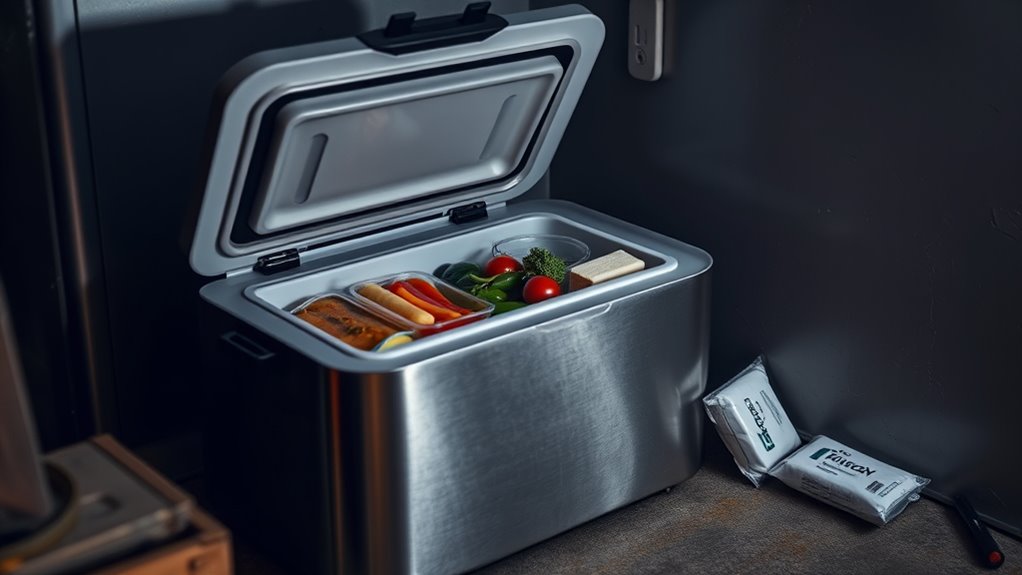
Handling perishable foods safely during emergencies requires vigilance and quick action to prevent foodborne illnesses. Keep track of how long foods stay at unsafe temperatures, ideally under two hours. When in doubt, discard any perishable item that has been above 40°F for more than two hours, as bacteria can grow rapidly. Use a thermometer to monitor food temperatures if possible. Always wash your hands thoroughly before handling foods to prevent contamination. Avoid cross-contamination by using separate utensils and containers for raw and cooked foods. Store perishable items in cool, insulated containers or ice packs to maintain food safety. Remember, contamination prevention is key—when in doubt, throw it out. Prioritizing proper handling minimizes health risks during emergencies.
Planning Ahead: Preparing Your Home for Future Power Disruptions

To guarantee your home is prepared for future power disruptions, take proactive steps now to minimize inconvenience and protect your essentials. Focus on effective food preservation by stocking up on non-perishable items and investing in coolers or portable refrigeration options. Consider installing backup power sources like generators or battery systems to maintain refrigeration during outages. Create an emergency preparedness plan that includes clear steps for handling perishable foods safely and preserving your food supply. Label and organize your supplies so you can access what you need quickly. Practice your plan periodically to identify any gaps. Being prepared assures you can keep food cold without power, reduces waste, and keeps your family safe during unexpected disruptions.
Frequently Asked Questions
How Long Can a Portable Cooler Realistically Keep Food Cold Without Power?
You can expect a portable cooler to keep food cold for about 24 to 48 hours if you maintain its cooling efficiency. To maximize food safety, pre-chill the cooler and use plenty of ice packs. Keep the lid closed as much as possible to prevent temperature rises. For longer periods, consider adding ice regularly or upgrading to a high-quality cooler designed for extended cooling.
What Are the Best Types of Ice or Cooling Packs for Extended Use?
Did you know gel packs and dry ice can keep food cold for days? For extended use, gel packs are reusable and easier to handle, making them ideal for several days. Dry ice, however, offers colder temperatures and faster cooling. Use gel packs for convenience and reusability, but turn to dry ice if you need longer-lasting, colder cooling. Always handle dry ice with gloves to stay safe.
Can Natural Methods Like Insulation Significantly Prolong Cold Retention?
Yes, natural methods like insulation can considerably prolong cold retention. You can use thermal insulation to slow heat transfer and keep your food colder longer. Additionally, evaporative cooling techniques, such as moistening cloths or placing wet materials nearby, can reduce temperature rise by promoting moisture evaporation. Combining insulation with evaporative cooling creates an effective, eco-friendly way to extend the cold storage period without power, helping your perishables stay fresher longer.
How Do Temperature Fluctuations Affect Food Safety During Outages?
During an outage, temperature fluctuations can seriously impact food safety by disrupting temperature stability and encouraging microbial growth. For example, if your fridge temperature rises above 40°F for more than two hours, bacteria like Salmonella can proliferate rapidly. To prevent this, keep the door closed as much as possible, use insulated coolers, and monitor temperatures closely. Maintaining consistent cold temperatures is key to keeping food safe during power interruptions.
Are There Specific Foods That Spoil Faster Without Consistent Refrigeration?
Yes, perishable snacks and dairy products spoil faster without consistent refrigeration. You should prioritize keeping items like milk, cheese, yogurt, and deli meats cold, as they can develop harmful bacteria quickly when not properly chilled. To extend their freshness during outages, place these items in a cooler with ice packs or use a portable fridge. Regularly check temperatures and discard anything that smells or looks off to stay safe.
Conclusion
By embracing the fridge-first strategy, you’re turning your kitchen into a resilient fortress against power outages. Think of your cold storage as a loyal guardian, guarding your food like a treasure chest in stormy seas. With careful planning and smart techniques, you’ll keep perishables safe and fresh, no matter the darkness outside. Remember, you’re the captain steering through chaos—guiding your supplies safely home, even when the lights go out.