
TL;DR
Get ready for Prime Big Deal Days — try Prime free
Exclusive member deals on October 6–7, plus fast free delivery. Cancel anytime.
As an affiliate, we earn on qualifying purchases.
A novel floating waterfall power plant inspired by baobab trees has been launched off Madagascar, harnessing ocean water for renewable energy. The project aims to provide sustainable power while mimicking natural forms.
A new floating waterfall power plant inspired by baobab trees has been launched off Madagascar, utilizing ocean water flow to generate renewable energy. The project is designed to mimic natural forms and aims to provide a sustainable energy source for the region. India floats tenders for 1.2 GW of renewable energy projects with storage to ensure reliable peak power supply.
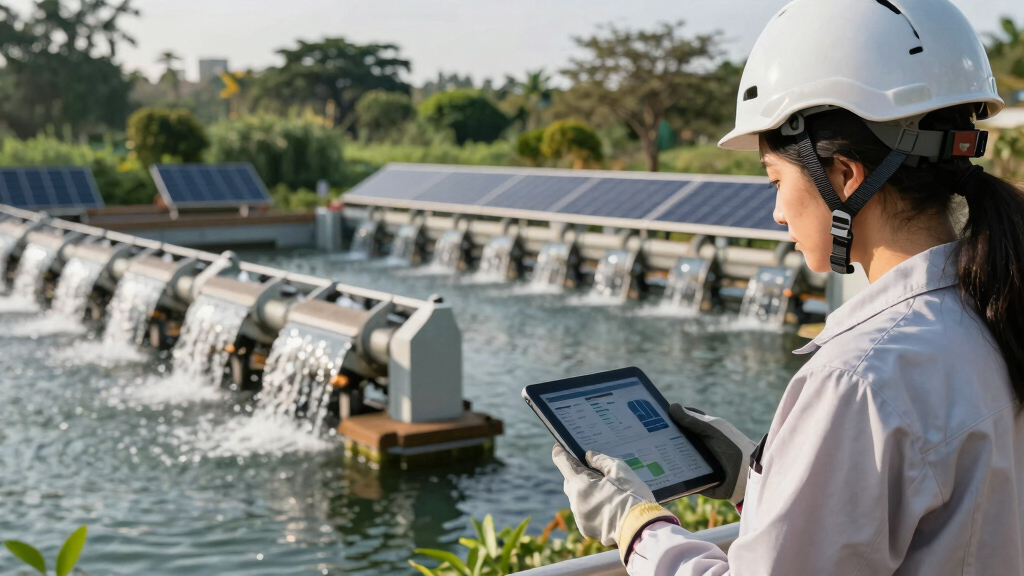
The power plant, developed by an anonymous design team, features a continuous waterfall system where ocean water is directed through a marine dome structure. This system creates a flowing waterfall that drives turbines to produce electricity. The design draws inspiration from the shape and resilience of baobab trees, aiming to integrate ecological aesthetics with renewable energy technology.
According to design diagrams and drawings released by designboom, the underwater marine dome acts as a conduit, channeling ocean water through a controlled waterfall. The project is currently in the deployment stage, with initial testing phases underway off Madagascar’s coast. Officials involved have confirmed that the system is operational and generating power, although detailed output data remains undisclosed.
Innovative Marine Structure Combines Ecology and Energy
This project demonstrates a novel approach to renewable energy by integrating natural forms into technological design, potentially offering a sustainable solution for island nations and coastal regions. Its success could pave the way for similar ecological-inspired energy systems worldwide, reducing reliance on fossil fuels and enhancing local energy resilience.
As an affiliate, we earn on qualifying purchases.
Emerging Trends in Eco-Inspired Renewable Infrastructure
Recent years have seen increasing interest in biomimicry and ecological design in renewable energy projects, such as India’s renewable energy tenders. Previous initiatives include solar panels shaped like leaves and wind turbines inspired by whale fins. The Madagascar project adds to this trend by employing a natural form—baobab trees—as a conceptual and structural influence, aligning with broader efforts to develop environmentally harmonious infrastructure.
The concept of harnessing ocean currents and water flow for energy is not new, but the application of waterfall-inspired structures is innovative. This development follows ongoing research into marine-based renewable systems, with prototypes tested in various coastal regions globally.
“The baobab-inspired structure not only provides an efficient energy harvesting method but also symbolizes resilience and ecological harmony.”
— an anonymous design researcher
floating water turbine generator
As an affiliate, we earn on qualifying purchases.
As an affiliate, we earn on qualifying purchases.
Details on Power Output and Environmental Impact
It is not yet clear how much energy the system is producing or its long-term environmental impacts. While initial reports confirm operational status, comprehensive data on efficiency, durability, and ecological effects remain unavailable. Further studies are needed to evaluate its scalability and sustainability.
eco-inspired renewable energy devices
As an affiliate, we earn on qualifying purchases.
As an affiliate, we earn on qualifying purchases.
Monitoring, Data Collection, and Potential Expansion Plans
The project team plans to monitor the system’s performance over the coming months, collecting data on energy output and ecological impact. If successful, there may be plans to expand similar structures to other coastal regions or adapt the design for different ecological contexts. Additional testing and peer review will inform future deployment strategies.
ocean water flow energy harnessing system
As an affiliate, we earn on qualifying purchases.
As an affiliate, we earn on qualifying purchases.
Key Questions
How does the waterfall system generate electricity?
The ocean water is directed through a marine dome to create a continuous waterfall, which drives turbines connected to generators, producing electricity. This innovative approach aligns with ongoing efforts like India’s renewable energy projects to harness ocean and water flow for power generation.
What inspired the design of this power plant?
The design draws inspiration from baobab trees, known for their resilience and distinctive shape, aiming to merge ecological symbolism with renewable energy technology.
Is this system environmentally sustainable?
Initial indications suggest it is environmentally friendly, utilizing natural ocean currents. However, comprehensive environmental impact assessments are still pending.
When will the system be fully operational?
The system is currently in testing phases, with full operational capacity expected to be confirmed after ongoing data collection over the next few months.
Could this technology be scaled for larger use?
Potentially, yes. If performance and environmental safety are confirmed, similar systems could be developed for larger coastal areas or adapted for different ecological settings.
Source: designboom
Flea & tick season Picks
flea and tick prevention
As an affiliate, we earn on qualifying purchases.