TL;DR
India’s Solar Energy Corp. of India (SECI) has issued tenders for 1.2 GW of renewable energy projects with integrated storage. The projects aim to deliver 4,800 MWh of peak power daily and will be developed on a build-own-operate basis with 25-year PPAs. This move enhances India’s renewable capacity and grid stability.
India’s Solar Energy Corp. of India (SECI) has officially invited bids for developing 1.2 GW of renewable energy projects integrated with energy storage systems, aiming to supply dispatchable power during peak demand periods. This initiative is part of India’s broader strategy to enhance renewable capacity and grid reliability, with successful bidders signing 25-year power purchase agreements (PPAs).
The tender specifies that the projects will be connected to the interstate transmission system (ISTS) and must include energy storage systems capable of delivering 4,800 MWh of power daily, equivalent to 1,200 MW for four hours. Developers will be responsible for establishing generation facilities, storage, and transmission infrastructure up to the delivery point, with land acquisition and grid connectivity within their scope. Bidders can propose projects with capacities ranging from 50 MW to 600 MW, with the total capacity awarded to any single bidder capped at 600 MW.
SECI will enter into 25-year PPAs with successful bidders, who will then sell the power to distribution companies and other entities across India. The projects can be located anywhere within the country, provided the generation and storage assets are co-located. The initiative aims to create a reliable, dispatchable renewable energy source to support India’s growing energy needs and grid stability.
Impact on India’s Renewable Energy Goals
This tender represents a significant step in India’s efforts to expand renewable capacity while ensuring power reliability through integrated storage. By committing to dispatchable renewable energy, India aims to reduce dependence on fossil fuels, improve grid stability, and meet its climate commitments. The move could also stimulate domestic manufacturing and innovation in energy storage technologies, boosting the overall clean energy sector.

ECO WORTHY 10000W Output Complete Off-Grid Solar Panel Kit for Home| 10KW 120V/240V Output Split Phase Inverter| 48V 314Ah16.1kWh High Capacity Energy Storage| 2950W Solar Panel PV| Whole House System
- Power Output: 10kW with split-phase support
- Solar Panels: Five 590W panels, 2950W capacity
- Energy Storage: 48V 314Ah LiFePO₄ battery, 16.1 kWh
As an affiliate, we earn on qualifying purchases.
As an affiliate, we earn on qualifying purchases.
India’s Renewable Expansion and Storage Integration
India has set ambitious targets to reach 500 GW of non-fossil fuel capacity by 2030, including substantial solar and wind projects. The government has increasingly emphasized the importance of integrating energy storage to address the intermittent nature of renewables. Previous tenders have focused on large-scale solar and wind, but this initiative marks a shift toward dispatchable, reliable renewable power. The move aligns with global trends toward hybrid projects and grid modernization efforts.
“This tender could accelerate India’s transition to a more resilient and flexible renewable energy system.”
— an anonymous researcher

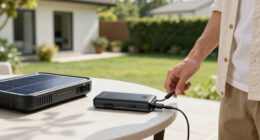
Portable Solar Generator 300W Portable Power Station with 60W Solar Panel
- Powerful 300W Portable Generator: Charges smartphones, tablets, laptops, and small devices
- Includes 60W Foldable Solar Panel: Recharges via solar, AC, or car power
- Multiple Charging Outlets: AC, DC, USB, and quick charge ports
As an affiliate, we earn on qualifying purchases.
As an affiliate, we earn on qualifying purchases.
Details on Project Implementation and Timeline
It is not yet clear how quickly the bidding process will be completed or when the selected projects will begin construction. Specifics about the exact locations of the projects, the types of storage technologies to be used, and the potential impact on existing grid infrastructure remain to be clarified. Additionally, the response from developers and the level of interest in the tender are still emerging.

SOARAISE Solar Charger Power Bank – 48000mAh Wireless Portable Charger Built-in 4 Cables and 4 Solar Panels, PD QC 3.0 Fast Charging USB C Battery Pack with Flashlight for Camping Travel
- High-Efficiency Solar Panels: Charges 5 times faster with 4 panels
- Large 48000mAh Capacity: Extended power for outdoor use
- Multi-Device Charging: Supports 7 devices simultaneously
As an affiliate, we earn on qualifying purchases.
As an affiliate, we earn on qualifying purchases.
Next Steps in Bid Submission and Project Development
Bidders will prepare and submit their proposals by the specified deadline, after which SECI will evaluate the bids. Successful applicants will then proceed with detailed project planning, securing land and grid connections, and initiating construction. The timeline for project commissioning and operational start-up will depend on the bid evaluation process and project complexity.

Decentralized Energy Systems: A Global Climate Solutions Technology Explainer on How Renewable Energy, Microgrids, and Energy Storage Enable Climate Resilience and Energy Access
As an affiliate, we earn on qualifying purchases.
As an affiliate, we earn on qualifying purchases.
Key Questions
What is the main goal of this tender?
The primary goal is to develop 1.2 GW of renewable energy projects with integrated storage to provide dispatchable power during peak demand, supporting India’s renewable energy expansion and grid stability.
Who can participate in the bidding process?
Developers or consortiums capable of constructing renewable generation and storage facilities, with capacities between 50 MW and 600 MW, can submit bids. Land acquisition and grid connectivity are within their scope.
When will the projects likely become operational?
The timeline depends on the bid evaluation process and project development stages, but the aim is to have projects commissioned within a few years after contract signing.
What types of storage technologies are expected to be used?
The tender does not specify storage technology types; developers may propose batteries, pumped hydro, or other suitable systems, provided they meet the capacity and reliability requirements.
How does this tender fit into India’s overall energy strategy?
It aligns with India’s goal to reach 500 GW of non-fossil fuel capacity by 2030, emphasizing dispatchable renewable energy and grid modernization to support economic growth and climate commitments.
Source: PV Magazine