TL;DR

Get backup power and energy gear delivered free with Prime
- Fast, free delivery on millions of items
- Prime Video, Amazon Music and more included
- Member-only deals all year
Tesla is extending vehicle-to-home backup capability to its latest Model 3 and Model Y vehicles, provided owners also have a Powerwall 3. The setup uses power-conversion hardware in the cars and Tesla’s standard Wall Connector, avoiding the separate bidirectional DC charger required by most U.S. systems.
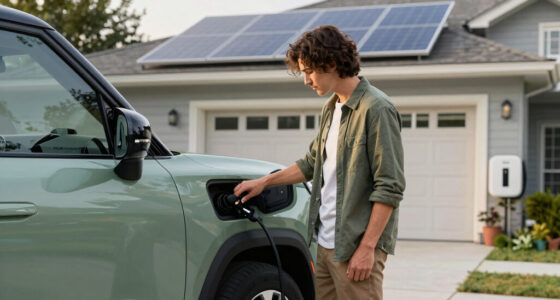
Tesla says its latest Model 3 and Model Y electric vehicles can now send power to a home when paired with a Powerwall 3, extending the company’s vehicle-to-home backup offering beyond the Cybertruck. The system uses conversion hardware built into the vehicles and Tesla’s standard Wall Connector, rather than a separate, costly bidirectional charger.
The capability is for homes with a Powerwall 3; it is not described as a stand-alone home backup setup for Model 3 or Model Y owners without that battery. Tesla says the Wall Connector is the only additional equipment needed to connect the vehicles for this use. The Wall Connector retails for $595, according to the report.
Canary Media reports that a Powerwall 3 retails for $8,200, with installation adding several thousand dollars. The report says an EV could provide two to three days of additional backup power, but does not give the assumptions behind that estimate, such as household energy use or the vehicle’s state of charge. Actual backup duration will depend on those factors.
Tesla’s approach differs from most commercially available U.S. vehicle-to-home systems, which use a separate DC bidirectional charger to convert vehicle battery power into the alternating current used in homes. Tesla puts the conversion hardware in the vehicle. The report cites prices of $6,500 to $10,000 or more for a DC bidirectional charger, before the cost of a home battery; the figures are not a direct comparison of complete systems.
Lowering the Cost of Home Backup
Vehicle-to-home technology can let households draw on an EV battery during an outage, potentially extending backup beyond what a home battery can provide alone. Tesla’s announcement matters because avoiding a separate bidirectional charger could reduce the added equipment cost for eligible households. It does not remove the substantial cost of the required Powerwall 3, installation or the vehicle itself.
The development may also help expand interest in EV batteries as a flexible energy resource. Zach Woogen, executive director of the Vehicle-Grid Integration Council, told Canary Media that many in the industry expect AC bidirectional equipment to be more economical for customers and manufacturers. He described the lower-cost possibility as promising in a market constrained by high upfront costs. That is an industry assessment, not a guarantee that the Tesla system will be affordable for every household.
For readers considering backup options, the distinction is practical: Tesla’s Model 3 and Model Y configuration depends on owning a compatible home battery, while other systems may use different vehicle and charger combinations. System prices, installation requirements and eligibility vary, so the reported equipment prices should not be treated as a complete quote for a working installation.
Tesla Model 3 vehicle-to-home power kit
As an affiliate, we earn on qualifying purchases.
As an affiliate, we earn on qualifying purchases.
Tesla’s Route to Bidirectional Power
Home electricity is generally delivered as alternating current, while EV batteries store energy as direct current. A conventional DC bidirectional setup uses an external charger to handle that conversion. Tesla’s approach shifts the conversion function into the vehicle, according to the report.
Tesla’s Cybertruck has offered vehicle-to-home capability for more than a year, Canary Media reported. Cybertruck owners can use a separate Tesla V2H hardware package, listed at $1,990, plus an estimated $1,800 to $2,200 for installation, without needing a Powerwall, according to the article. The newly announced Model 3 and Model Y arrangement has a different requirement: a Powerwall 3.
Vehicle-to-home backup is distinct from vehicle-to-grid service, in which utilities draw on EV batteries to support the wider electricity grid. The report says Tesla has enrolled Cybertrucks in programs with California utility PG&E and Texas utilities CenterPoint Energy and Oncor. PG&E is also testing V2H systems from other automakers using DC bidirectional chargers.
““This is us bringing the whole ecosystem together and allowing our products to complement each other.””
— Colby Hastings, head of Tesla Energy’s residential energy business
As an affiliate, we earn on qualifying purchases.
Availability and Operating Details
The report does not specify when the new Model 3 and Model Y capability will be available, which exact model years or trims qualify, or whether existing owners can access it through a software update. It also does not provide technical limits for power output, the vehicle models’ usable battery capacity in backup mode, or the conditions behind the estimate of two to three extra days of power.
Compatibility and installation details may vary by home. Tesla’s announcement, as described by Canary Media, does not establish that the system is available in every location or that it can automatically supply a home during every outage. The report also does not identify a timetable for broader grid exports from the newly supported vehicles. Utility interconnection rules remain an additional issue for vehicle-to-grid service.
Tesla Wall Connector for home charging
As an affiliate, we earn on qualifying purchases.
As an affiliate, we earn on qualifying purchases.
Rollout and Utility Certification
The next practical milestones are clearer information from Tesla on eligible Model 3 and Model Y versions, purchase and installation availability, and the system’s operating limits. Homeowners will also need to confirm Powerwall 3 and Wall Connector compatibility and installation requirements for their address.
For grid use, utilities and regulators must approve the relevant equipment and interconnection arrangements. PG&E told Canary Media it is testing Tesla systems for interconnection, while the report said only California and Maryland had established utility regulations allowing AC bidirectional charging outside pilot projects. Whether Tesla’s expanded vehicle support will lead to wider utility programs remains unresolved.
As an affiliate, we earn on qualifying purchases.
Key Questions
Which Tesla vehicles are included in the announcement?
Tesla said its latest Model 3 and Model Y vehicles can provide home backup when paired with a Powerwall 3. The report does not specify eligible trims or model years.
Can a Model 3 or Model Y power a home without a Powerwall?
The reported setup requires a Powerwall 3 for Model 3 and Model Y owners. The Cybertruck’s separate V2H arrangement does not require a Powerwall, according to Canary Media.
What equipment does the new setup use?
It uses power-conversion hardware built into the vehicle and Tesla’s standard Wall Connector. The report says owners do not need the separate DC bidirectional charger used by most other U.S. systems.
How much does the setup cost?
The report lists the Powerwall 3 at $8,200, with installation costing several thousand dollars, and the Wall Connector at $595. Those prices do not include the EV, and the article does not provide a complete installed price for the Model 3 or Model Y configuration.
Does this mean the cars can send electricity back to the grid?
Not necessarily. Vehicle-to-home backup supplies a home, while vehicle-to-grid service exports power to utility systems. The report describes Tesla grid programs involving Cybertrucks, but does not say the newly supported Model 3 and Model Y vehicles are approved for grid exports.
Source: rss
Fall Picks
fall essentials
As an affiliate, we earn on qualifying purchases.