
When setting up a battery backup system, it’s vital to understand your grounding options—whether to adopt a grounded or ungrounded configuration—to guarantee safety and fault detection. Bonding enclosures and racks to the grounding system helps prevent voltage buildup, while selecting proper grounding electrodes and conductors reduces resistance. Additionally, installing ground-fault detection and regularly testing your system keeps it reliable. Keep these essentials in mind to maintain safety and code compliance—more details can help you perfect your setup.
Key Takeaways
- Ensure your battery backup system complies with NEC Article 706 and local codes for proper grounding practices.
- Decide between grounded or ungrounded configurations based on safety, fault detection needs, and system stability.
- Properly bond enclosures, racks, and conductors to create a low-impedance path to ground, enhancing safety and fault response.
- Use appropriate grounding electrodes and conductors, considering soil conditions and NEC sizing requirements for reliable grounding.
- Regularly test and inspect grounding connections and fault detection systems to maintain system safety and compliance.

ECO-WORTHY (Cubix 100) 48V 600Ah Server Rack Battery LiFePO4 w/Bluetooth | 6 Pack 30.72kWh Solar Battery Kit for Home Backup | UL1973 & UL9540A & CEC Listed (Get Free 6-Layer Rack with 600A Busbar)
UL1973 | UL9540A | CEC LISTED – Completed comprehensive testing by Intertek and has officially earned two key…
As an affiliate, we earn on qualifying purchases.
As an affiliate, we earn on qualifying purchases.
Understanding Grounding Requirements for Battery Systems
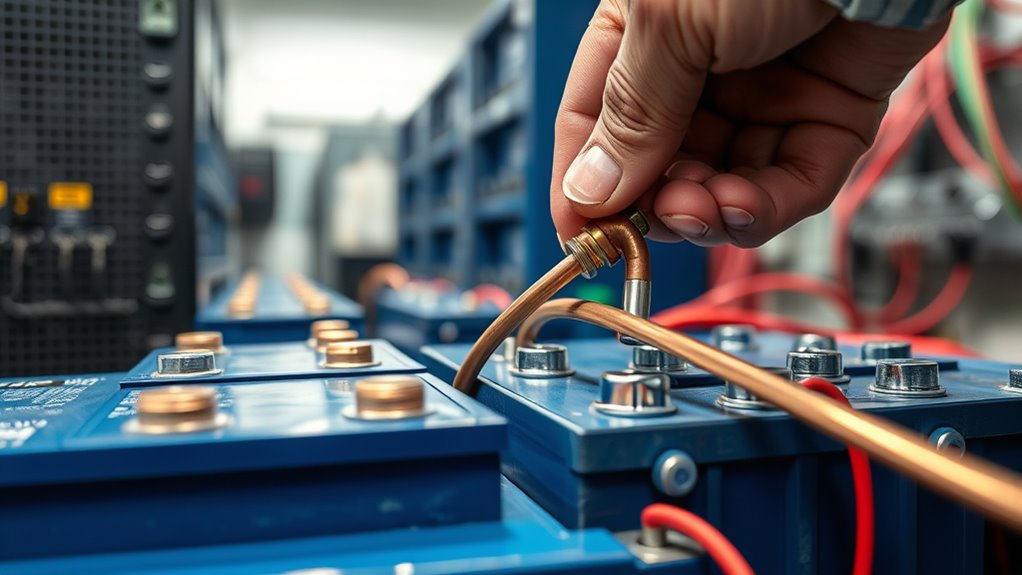
To properly understand grounding requirements for battery systems, you need to recognize how the NEC categorizes different system types and the specific rules that apply to each. NEC Article 706 covers energy storage systems (ESS), especially those over 60 V DC, and outlines their particular grounding needs. Additionally, NEC Article 250 defines grounding and bonding criteria, emphasizing the differences between grounded, ungrounded, and separately derived systems. Grounded systems connect one conductor to earth, while ungrounded systems do not, requiring ground-fault detection to ensure safety. Your approach depends on the system’s classification, local codes, and manufacturer instructions. Proper grounding ensures safety, fault detection, and system stability, so understanding these categories is essential before designing or installing a battery backup system. grounding requirements vary based on system type and application, making it critical to follow the appropriate standards. Recognizing how system classification influences grounding practices helps ensure compliance and safety. Knowing the system grounding method is crucial for proper system operation and safety compliance. Incorporating proper grounding techniques can help prevent potential hazards and system failures, and understanding the underlying principles of electrical safety can further enhance system reliability.

GFL3000 Ground Fault Locator
Locates Ground Faults (cuts and nicks) in Buried Wires.
As an affiliate, we earn on qualifying purchases.
As an affiliate, we earn on qualifying purchases.
Differences Between Grounded and Ungrounded Configurations
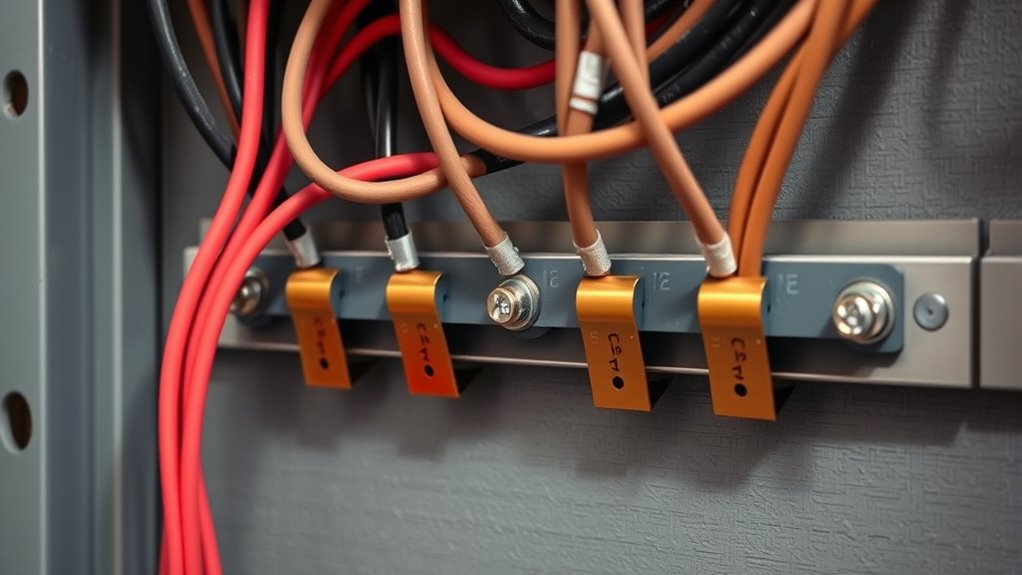
Are you aware of how grounded and ungrounded systems differ in their safety and operation? In a grounded system, the negative or positive terminal is connected directly to earth, creating a clear reference point that simplifies fault detection and enhances safety. This setup helps prevent dangerous voltage build-up during faults and ensures overcurrent devices can quickly clear issues. Additionally, grounding systems play a crucial role in maintaining electrical stability and safety standards. Grounding also facilitates effective fault detection and reduces the risk of electrical shock. Conversely, ungrounded systems isolate the battery or inverter from earth, which reduces the risk of ground faults triggering false alarms and allows continuous operation despite a single fault. However, ungrounded configurations require ground-fault detection to identify issues promptly. Both approaches impact system stability, maintenance, and safety. Choosing between them depends on your specific application, local codes, and safety priorities. Additionally, understanding the grounding system employed in your setup is essential for ensuring compliance and optimal performance.

Grounding Electrical Distribution Systems
As an affiliate, we earn on qualifying purchases.
As an affiliate, we earn on qualifying purchases.
When and Why to Bond Battery Enclosures and Racks
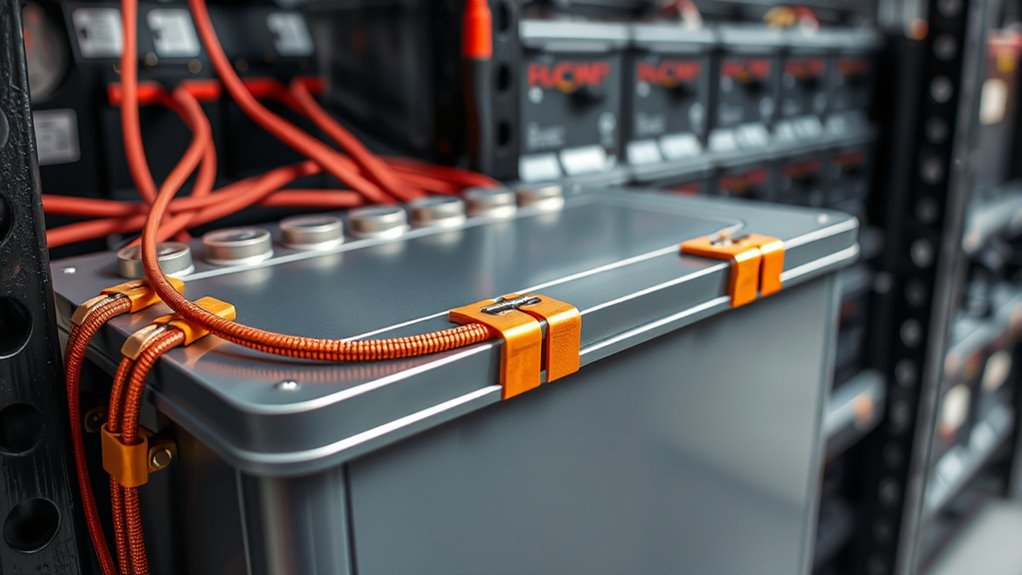
Bonding battery enclosures and racks is essential for safety and fault prevention, ensuring a low-impedance path to ground if a fault occurs. Consistent grounding practices help maintain system stability and meet code and manufacturer requirements. Knowing when to bond these components protects personnel and keeps your system compliant. Regularly reviewing grounding requirements helps ensure ongoing safety and adherence to best practices. Additionally, proper ventilation considerations are important to prevent overheating and ensure safe operation of the system. Implementing appropriate glycolic acid application can also contribute to maintaining the integrity of electrical components by preventing corrosion. Understanding grounding techniques used in various electrical systems, including industrial and aviation applications, can further enhance overall safety and reliability.
Safety and Fault Prevention
Properly bonding battery enclosures and racks is essential for safety and fault prevention because it helps guarantee that all exposed conductive parts are at the same electrical potential. This minimizes the risk of electric shock if a fault occurs, as it ensures no dangerous voltage difference exists between components. Bonding also provides a low-impedance path for fault currents, enabling overcurrent devices to quickly clear faults and reduce potential damage or hazard. It stabilizes the system voltage, helping surge protection and ground-fault detection work reliably. Without proper bonding, enclosures can develop hazardous voltages during faults, increasing shock risks and compromising system safety. Consistent bonding practices prevent dangerous voltage buildup and support effective fault response, protecting personnel and equipment alike. Proper grounding techniques are fundamental to maintaining system safety and reliability in battery backup setups. Additionally, adhering to electrical codes and standards ensures that bonding practices meet safety regulations and industry best practices, including proper inspection and testing procedures. Implementing comprehensive bonding strategies further enhances overall safety and fault management in these systems. Moreover, following manufacturer guidelines ensures that all components are correctly bonded and compatible, which is crucial for system integrity.
System Grounding Consistency
Maintaining system grounding consistency is essential to guarantee safe and reliable operation of battery backup systems. Consistent grounding ensures that all conductive parts are referenced to the same potential, reducing shock hazards and preventing fault conditions. Bonding battery enclosures, racks, and associated metal components to the building grounding system creates a unified reference point, which simplifies fault detection and clears faults quickly. When you bond enclosures and racks, you prevent dangerous voltage differentials that can develop if parts are isolated or inconsistently grounded. This uniform approach improves system stability, minimizes EMI, and ensures code compliance. Proper grounding techniques are vital for system safety and performance. Using proper bonding practices helps maintain system integrity and ensures all components operate safely under fault conditions. Be sure to follow manufacturer instructions and NEC guidelines, and verify that all connections are solid and of proper size to maintain system integrity and safety. Additionally, consistent grounding practices are fundamental for system reliability and overall safety in battery backup setups. Implementing grounding protocols as recommended can further enhance the safety and performance of your system. Regular inspections and testing of grounding connections further prevent issues and ensure ongoing compliance with safety standards.
Code and Manufacturer Requirements
Understanding when and why to bond battery enclosures and racks is essential for ensuring safety and code compliance. NEC codes, especially Articles 250 and 706, specify bonding requirements based on system type—grounded, ungrounded, or separately derived. Bonding prevents hazardous voltages on enclosures during faults and supports effective ground-fault detection. Manufacturer instructions often specify bonding practices to ensure safe operation and maintain warranty coverage. Local AHJs may impose additional requirements beyond NEC standards. Proper bonding involves connecting enclosures, racks, and frames to the building’s grounding system with appropriately sized conductors, ensuring low impedance paths. Additionally, bonding practices are critical for providing a reliable low-resistance path to ground, which helps in quick fault clearing and system stability. Ensuring system safety through proper bonding reduces shock hazards, enhances system stability, and ensures reliable fault clearance, ultimately protecting personnel and equipment.

The Basement Watchdog Maintenance Free (AGM) Standby Battery for Backup Sump Pumps (BW-27AGM)
Maintenance free – no need to add battery fluid or distilled water
As an affiliate, we earn on qualifying purchases.
As an affiliate, we earn on qualifying purchases.
Selecting the Right Grounding Electrodes and Conductors

Choosing the right grounding electrodes and conductors is essential for a reliable and code-compliant system. You need to select electrode materials and depths that suit your soil conditions and guarantee proper sizing and length of conductors to minimize impedance. Properly designed grounding enhances safety, system performance, and fault response.
Electrode Material & Depth
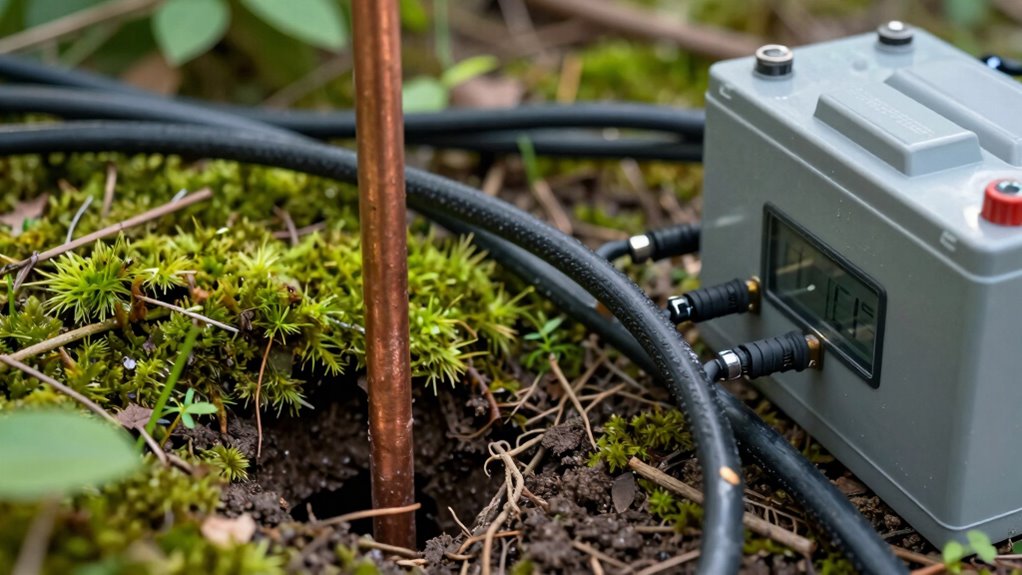
Selecting the right grounding electrode material and depth is essential to guarantee a low-resistance path to earth and reliable system performance. The material must resist corrosion and maintain conductivity over time. Depth ensures stable grounding and reduces resistance, especially in high-resistivity soils. Here are key considerations:
- Use copper or copper-clad rods for durability and excellent conductivity.
- Drive ground rods at least 8 feet deep, or more in poor soil conditions.
- In high-resistivity soils, add multiple rods or ground rings to lower resistance.
- Ensure the electrode material and depth meet local code requirements and manufacturer recommendations.
Proper material selection and sufficient depth create a consistent, low-impedance ground, enhancing safety and fault response.
Conductor Sizing & Length
Proper conductor sizing and length are critical to guaranteeing a low-impedance grounding system that can reliably clear faults and protect personnel. You must select conductors that meet NEC requirements, typically sized based on the system’s fault current and conductor length, to minimize voltage drop and impedance. Use NEC tables and calculations to determine the correct gauge; undersized conductors increase resistance and delay fault clearing. Keep conductors as short and straight as possible to reduce transient voltages and impedance. Bond all grounding points consistently, ensuring connections are secure and corrosion-resistant. Long or poorly sized conductors can compromise system safety and performance, so verify sizing with earth-resistance measurements and follow manufacturer and code guidance for installation. Proper conductor sizing ensures a resilient, effective grounding system.
Ground-Fault Detection: What It Is and When It’s Needed

Ground-fault detection is a critical safety feature in energy storage systems, especially for ungrounded or separately derived DC systems. It helps identify leakage currents that could lead to shock hazards or equipment damage. You need it when:
Ground-fault detection is vital for safety in ungrounded energy storage systems.
- The system is ungrounded, to prevent unnoticed faults.
- Code mandates for safety, like NEC 250.167, apply.
- You want early detection to avoid system shutdowns or hazards.
- The system includes sensitive electronics that require stable grounding.
This detection continuously monitors the system for imbalance or leakage. When a fault occurs, it triggers alarms or disconnects power to prevent injury or equipment failure. Proper installation and testing ensure reliable fault detection, maintaining safety and system integrity.
Practical Tips for Installing and Testing Grounding Systems

To guarantee your grounding system performs reliably and safely, focus on careful installation and thorough testing. Start by ensuring all grounding conductors are correctly sized per NEC guidelines and kept as short and direct as possible to minimize impedance. Drive ground rods at least 8 feet deep, and use multiple rods or ground rings if needed to meet resistance targets, typically below 5 ohms. Bond all non-current-carrying metal parts, such as enclosures, racks, and conduit, to create a continuous grounding path. After installation, verify system effectiveness with earth-resistance measurements and inspect for corrosion, loose connections, or damage. Regular testing guarantees ongoing performance, so schedule periodic checks and maintain detailed records of all grounding system tests to ensure safety and compliance.
Common Mistakes That Can Compromise Grounding Safety
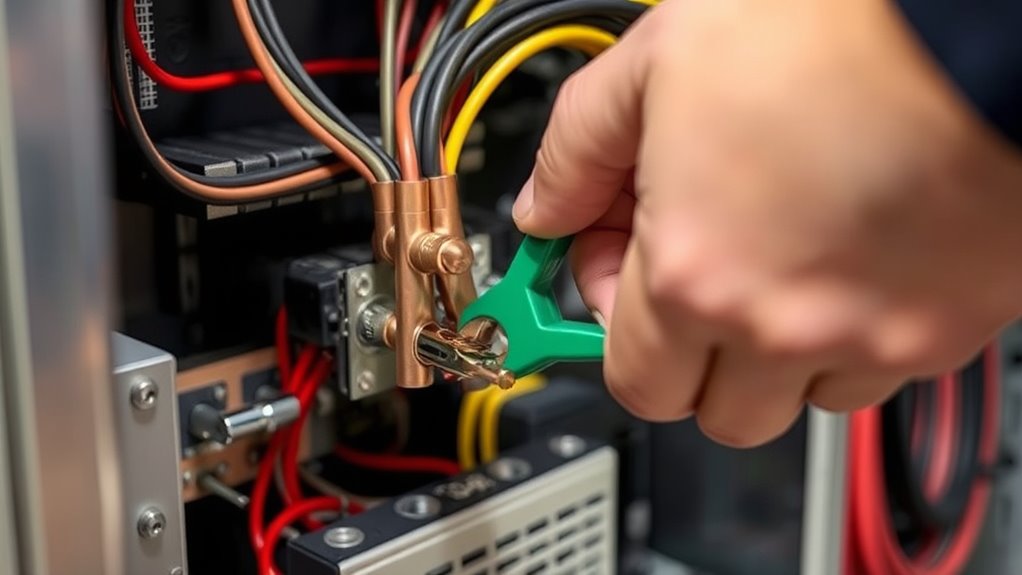
One of the most common mistakes that can compromise grounding safety is using undersized or excessively long grounding conductors, which increase impedance and reduce fault-clearing effectiveness. To avoid this, make sure you:
Using undersized or overly long grounding conductors compromises safety by increasing impedance.
- Select conductors with the correct gauge per NEC Section 250.122, avoiding undersized sizes.
- Keep grounding runs as short and straight as possible to minimize resistance.
- Use proper connections and secure bonding to prevent loose or corroded joints.
- Avoid extending grounding conductors unnecessarily, which can create high transient voltages.
Failing to follow these practices can lead to higher touch voltages, slower fault response, and increased risk of electrical shock or equipment damage. Proper sizing, routing, and secure connections are essential for maintaining grounding safety.
How Soil Conditions Affect Grounding Effectiveness

Soil conditions directly impact the effectiveness of grounding systems by influencing the earth’s resistance. High-resistivity soils, like dry sand or rocky terrain, hinder current flow, raising resistance and risking inadequate fault clearing. Moist, clay-rich soils conduct better, lowering resistance and improving safety. Temperature also affects resistance; colder soils increase impedance, while warmer soils decrease it. To optimize grounding, consider soil testing and adapt your setup accordingly.
| Soil Type | Conductivity Level | Recommended Action |
|---|---|---|
| Dry Sand | Low | Add ground rods, chemical treatment |
| Clay-Rich | High | Use ground rings, multiple rods |
| Rocky Terrain | Very High | Increase electrode length, improve contact |
| Moist Soil | Good | Maintain and periodically test |
Compliance and Marking: Staying Within Code and Best Practices
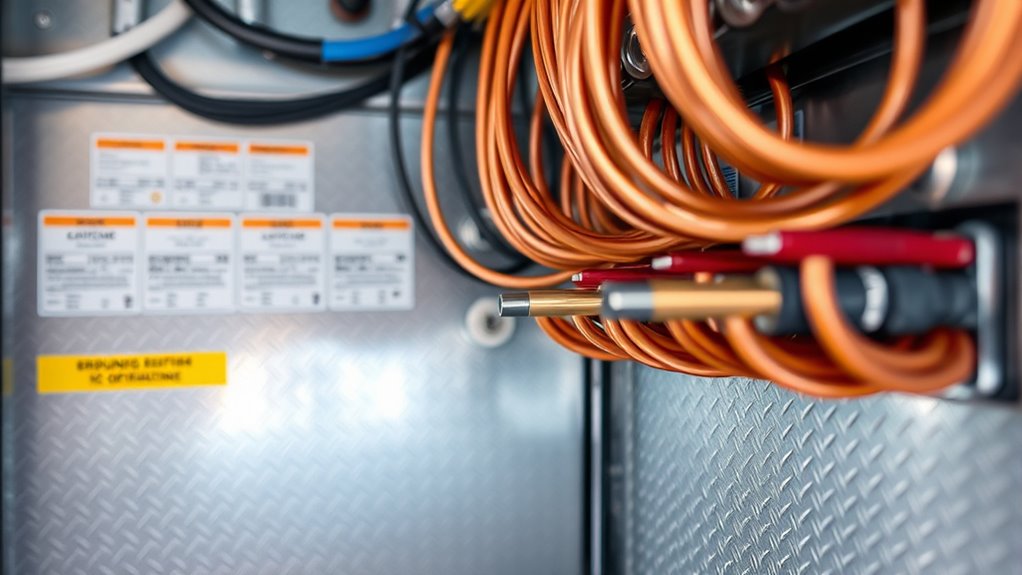
Ensuring compliance with grounding requirements is essential for safety, reliability, and code adherence in battery backup systems. To stay within code and best practices, focus on proper marking and documentation.
- Clearly label grounding points, system type (grounded or ungrounded), and connection methods using durable, legible labels.
- Follow NEC requirements, such as marking grounding conductors and bonding jumpers with appropriate identifiers.
- Document system grounding schemes in plans and maintenance records to facilitate inspections and troubleshooting.
- Verify all grounding components meet manufacturer specifications and are installed according to NEC standards, making certain of consistency with local AHJ requirements.
Adhering to these steps helps prevent unsafe conditions and ensures your system remains compliant and easy to maintain.
Frequently Asked Questions
Can I Use Existing Building Grounding for My Battery Backup System?
Yes, you can use the existing building grounding for your battery backup system, but only if it meets NEC requirements. Make certain the grounding electrode system has low resistance (typically below 5 ohms), and bond all relevant equipment, like enclosures and racks, to this system. Verify proper conductor sizing, keep runs short, and perform earth-resistance tests. Always follow manufacturer instructions and consult local codes or AHJ to confirm compliance and safety.
What Size Grounding Conductor Is Required for Large Battery Systems?
Think of your grounding conductor as the highway directing fault currents safely to earth. For large battery systems, you should size the grounding conductor per NEC Section 250.122, which typically means using a conductor at least the size of the ungrounded conductors or as specified by manufacturer and local codes. Don’t cut corners—using an undersized conductor can bottleneck fault currents, risking system safety and compliance. Always verify with your specific system requirements.
Is It Necessary to Install Multiple Grounding Electrodes for High-Resistivity Soils?
Yes, you should install multiple grounding electrodes in high-resistivity soils. High soil resistance can prevent effective grounding with a single rod, so adding additional electrodes or a ground ring helps lower earth resistance to meet safety standards. Keep the electrodes spaced appropriately, and verify their effectiveness with earth-resistance measurements. Doing so guarantees proper system grounding, reduces touch potential, and enhances fault-clearing capabilities, keeping your system compliant and safe.
How Often Should I Test Earth Resistance in My Battery Grounding System?
You should test your earth resistance at least once a year to guarantee your grounding system remains effective. If your soil conditions are highly variable or if you’ve made changes to your system, consider testing more frequently, such as every six months. Regular testing helps identify rising earth resistance, corrosion, or loose bonds, allowing you to maintain safety, compliance, and peak system performance.
Are There Specific Markings Required to Identify Grounding Connections?
You should clearly mark all grounding connections with durable, legible labels that specify their purpose and system type, like “Grounding Electrode” or “System Ground.” These markings help maintenance and inspection teams identify the grounding points quickly and guarantee compliance with NEC requirements. Use weather-resistant labels or tags and place them near grounding conductors, terminals, and enclosures, so they remain visible and intact over time.
Conclusion
By understanding grounding essentials for battery backups, you’re safeguarding your system like a fortress against electrical chaos. Don’t overlook the importance of proper bonding, choosing the right grounding components, or testing regularly—these steps can make or break your setup’s safety. Remember, cutting corners here isn’t just risky; it’s like inviting disaster to dance right on your doorstep. Stay informed, stay compliant, and keep your system grounded for peace of mind that’s as solid as a mountain.