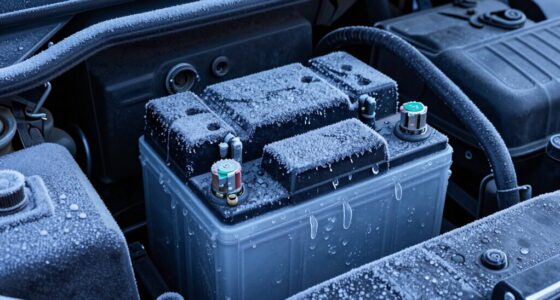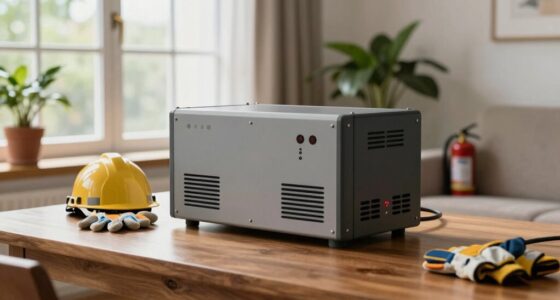

Low-temperature cutoffs are safety features that activate unexpectedly during cold weather, preventing your battery from charging or discharging below safe limits. When temperatures drop, the system detects the risk of lithium plating, electrolyte freezing, or increased resistance, and halts operation to protect the battery from damage. While this helps preserve your battery’s health, it can also cause sudden power loss or charging issues. To learn how these features work and how to manage cold conditions, keep exploring this topic.
Key Takeaways
- Low-temperature cutoffs prevent charging when batteries are too cold, avoiding lithium plating and potential damage.
- You may notice charging halts or warning lights during cold weather, signaling protective cutoff activation.
- Power loss or sluggish performance during cold starts can indicate the system’s low-temperature safety measures.
- System alerts or error messages often appear when batteries reach critical low-temperature thresholds.
- These cutoffs ensure safety and longevity but can temporarily limit vehicle operation in winter conditions.
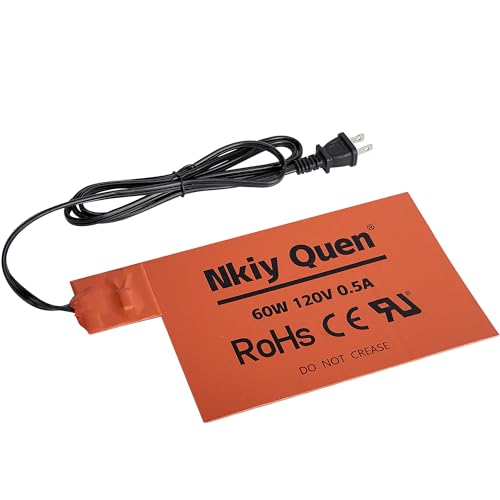
Nkiy Quen 8.2 x 5.5 Inches Automotive Silicone Battery Pad,Silicone Battery Heater Pad with Thermostatic Control,Car Batteries Heater for Cold Weather Batteries Protection
Efficient Heating:Features built-in precision heating wires that quickly generate uniform heat, directly acting on the bottom of the…
As an affiliate, we earn on qualifying purchases.
As an affiliate, we earn on qualifying purchases.
Why Batteries Have Temperature Limits

Batteries have temperature limits because their chemical and physical processes depend heavily on temperature to function safely and efficiently. When the temperature drops too low, electrolyte viscosity increases, making ion transport difficult and reducing overall performance. Internal resistance rises, which limits current flow and capacity. If temperatures are too high, chemical reactions accelerate, increasing the risk of degradation, swelling, or thermal runaway. Extremes can cause mechanical stresses, seal failures, or electrolyte freezing, damaging the cell’s structure. To prevent these issues, battery management systems enforce cutoff thresholds, stopping charging or discharging when temperatures fall outside safe ranges. These limits help preserve battery life, ensure safety, and maintain reliable operation across different environments. Understanding these temperature boundaries is crucial for ideal battery performance and longevity. Additionally, temperature-sensitive components within the battery can be compromised if operating outside the recommended thermal range, which may lead to performance degradation over time. Recognizing the importance of thermal management systems is essential for maintaining optimal battery operation in various conditions. Proper thermal regulation can also extend the overall battery lifespan and prevent costly failures.

E-outstanding 18650 Battery Insulator Gasket 100PCS 18650 Lithium Battery Insulator Rings Hollow Paper Pad Electrical Insulation Ring Adhesive Cardboard Sticker Red and Green
Type: 18650 lithium battery insulator ring adhesive paper.Material: hollow paper.
As an affiliate, we earn on qualifying purchases.
As an affiliate, we earn on qualifying purchases.
How Cold Affects Lithium-Ion Chemistry

When temperatures drop, lithium-ion chemistry experiences significant changes that can impair performance and safety. As it gets colder, electrolyte viscosity increases, making ion transport more difficult. This slows down chemical reactions inside the cell, reducing capacity and voltage stability. Internal resistance rises sharply, causing voltage sag and limiting current flow. During charging, low temperatures can lead to lithium plating on the anode, which causes irreversible capacity loss and increases the risk of short circuits. Discharge becomes less efficient, with delayed reactions producing voltage drops and early cutoffs. Mechanical stresses from thermal contraction can damage cell seals, risking leaks or gas buildup. Additionally, battery management systems play a crucial role in mitigating these effects by controlling temperature and preventing damage during cold conditions. Proper thermal regulation is essential to maintain safe and optimal operation of lithium-ion batteries in low-temperature environments. Implementing effective insulation and warm-up procedures can also help maintain performance and safety during cold weather, especially when temperature cutoffs are in effect to prevent damage.
Thermal Management System for Lithium-Ion Batteries
As an affiliate, we earn on qualifying purchases.
As an affiliate, we earn on qualifying purchases.
The Role of Battery Management Systems

Battery Management Systems (BMS) serve as the frontline defense against the challenges posed by low temperatures, actively monitoring and controlling cell conditions to maintain safety and performance. They use temperature sensors to detect cold conditions and enforce low-temperature cutoffs, preventing unsafe charging or discharging. When temperatures drop below thresholds, the BMS inhibits charging to avoid lithium plating and internal damage. It also manages discharge limits to reduce stress and protect cell integrity. Additionally, the BMS can implement recovery hysteresis, requiring cells to warm before reactivating. Some systems adjust charge profiles or activate internal heaters to warm batteries. By continuously overseeing temperature and cell health, the BMS guarantees safe operation, prolongs battery life, and minimizes performance losses during cold weather. Understanding how BMS work helps clarify their vital role in maintaining battery safety and longevity. Incorporating temperature regulation features allows BMS to adapt to varying environmental conditions, further enhancing their protective capabilities. Regular temperature monitoring ensures early detection of adverse conditions, enabling proactive adjustments to safeguard the battery system. The integration of advanced sensors enhances the accuracy of temperature detection, making the system more reliable in harsh environments. Furthermore, ongoing research into battery chemistry optimization continues to improve performance in low-temperature scenarios, offering new avenues for resilience.

Sunny color Wearable Car Electric Blanket 12 Volt Heated Blanket for Car Truck SUV Van with Controller 2 Heating Level Ideal for Camping, Traveling Machine Washable(59 x 43, Gray)
【Universal Fit for All Vehicles】Compatible with standard 12V outlets in cars, SUVs, and RVs—simply plug and play! Perfect…
As an affiliate, we earn on qualifying purchases.
As an affiliate, we earn on qualifying purchases.
Recognizing the Signs of Low-Temperature Cutoffs

You’ll notice sudden power loss or inconsistent performance when temperatures drop below recommended levels. Charging might halt unexpectedly, and your device could display temperature-related alerts to warn you of unsafe conditions. Recognizing these signs early helps prevent damage and guarantees safe operation in cold environments. Additionally, understanding the best herbal teas for specific health issues, such as ginger or chamomile, can support your well-being during extreme weather conditions.
Sudden Power Loss
Sudden power loss during operation is often a clear sign that low-temperature cutoff thresholds have been been reached or exceeded. When the battery temperature drops below its safe operating range, the Battery Management System (BMS) may immediately disconnect power to protect the cells from damage. You’ll notice the equipment or vehicle suddenly lose power without warning, even if the battery still shows a reasonable charge level. This abrupt cutoff prevents further discharge or charging that could cause irreversible harm. Sometimes, the voltage may sag briefly before cutting out, or you might feel a sudden drop in performance. Recognizing these signs early can help you take action—such as warming the battery—to restore normal operation and prevent long-term damage. Being aware of vetted safety features can help you better understand how low-temperature cutoffs are designed to protect your equipment. Additionally, understanding thermal protection mechanisms can give you insight into how modern systems automatically respond to prevent damage during extreme conditions, including automatic shutdowns that activate when thresholds are surpassed. In some cases, a temperature sensor detects the cold and triggers these protective responses to safeguard the battery’s integrity. Awareness of these advanced safety protocols can also assist in planning maintenance and operational procedures in cold environments.
Charging Halt Indicators
When temperatures drop below the designated low-temperature cutoff thresholds, charging systems typically signal impending or actual halts to prevent damage. You might notice the charger refusing to connect or show a warning light indicating cold conditions. Some systems display error messages on the dashboard or charging app, alerting you that charging is paused due to low temperature. You may also see a specific indicator—like a freeze icon or temperature warning—when attempting to charge. In many cases, the charger or BMS will disable charging altogether until the battery warms up above the cutoff point. These signals are designed to protect your battery from lithium plating, increased resistance, or mechanical stress, ensuring safety and longevity by preventing unsafe charging conditions in cold environments. Understanding the low-temperature cutoff feature can help you better manage your device during cold weather. Recognizing these charging halt indicators early can prevent unexpected disruptions during critical charging moments. Additionally, being aware of battery management system alerts can provide further insight into the safety protocols in place.
Temperature-Related Alerts
Recognizing the signs of low-temperature cutoffs involves paying attention to various alerts and indicators that your battery management system (BMS) provides. When temperatures drop near or below safe operating thresholds, your BMS often issues warnings or disables charging and discharging to protect the cells. Look for warning messages or indicator lights on your dashboard or device interface indicating low-temperature conditions. You may also notice voltage sag during operation or a sudden halt in energy flow, especially during cold starts. Some systems provide audible alerts or display temperature readings, highlighting when cells are outside ideal ranges. If you see these alerts, avoid forcing operation and instead warm your battery before resuming use to prevent damage and guarantee safety. Additionally, smart home sensors can help monitor ambient conditions and alert you when temperatures are too low for safe battery operation. Being aware of temperature-related alerts can help you act promptly to safeguard your devices and ensure longevity.
Risks of Charging Below Safe Temperatures

Charging a lithium-ion battery below its safe temperature threshold can cause irreversible damage and safety hazards. When you charge at low temperatures, lithium plating may occur on the anode, leading to capacity loss and increasing the risk of internal short circuits. The electrolyte becomes more viscous, impeding ion flow and causing voltage sag or incomplete chemical reactions during charging. Mechanical stresses from thermal contraction can damage seals or cause leaks. Additionally, increased internal resistance reduces current delivery, risking overheating. If the battery isn’t properly protected, these issues can escalate into thermal runaway or fires. To prevent these risks, most BMS systems enforce strict low-temperature cutoffs, stopping charging altogether when conditions fall below safe levels. Ignoring these protections can seriously compromise battery safety and longevity.
Strategies to Manage Cold Battery Conditions

Effective management of cold battery conditions hinges on deploying strategies that maintain safe operating temperatures and prevent damage. You can use internal or external heating methods, such as resistive heaters or insulated enclosures, to warm batteries before charging. Pre-conditioning systems in electric vehicles activate heating during pre-drive or charging, reducing cold-start impacts. Incorporating temperature sensors and firmware controls ensures charging and discharging are halted if temperatures fall below safe thresholds, avoiding lithium plating or internal resistance buildup. Adaptive charging profiles—reducing current or extending absorption phases—limit stress during cold conditions. Using thermal management systems, like heat pumps or waste-heat recovery, helps keep batteries within ideal temperature ranges. These strategies ensure safety, preserve capacity, and minimize performance degradation during winter or in cold environments.
Impact on Vehicle Range and Performance

Cold temperatures markedly reduce vehicle range and impact overall performance by increasing internal resistance and limiting battery capacity. As the temperature drops, the electrolyte becomes more viscous, hindering ion flow, which reduces the amount of energy your battery can deliver. You’ll notice a decrease in available range, often by 20-40%, especially below 0°C. The battery’s ability to supply high currents diminishes, causing slower acceleration and reduced power output. Additionally, the increased internal resistance causes voltage sag during demanding drives, triggering protection cutoffs earlier than usual. Heating systems draw more energy to maintain cabin comfort, further draining the battery. Overall, cold weather can profoundly impair your vehicle’s efficiency, making it essential to plan for reduced range and performance during winter conditions.
Technologies That Keep Batteries Warm

Maintaining ideal battery temperature is vital for preserving performance and extending lifespan in cold environments. To achieve this, advanced thermal management technologies are employed. Self-heating packs use internal resistive elements or active balancing to warm cells before charging or discharging, ensuring they stay within safe temperature ranges. External heaters, such as insulated enclosures or heat tracing, provide additional warmth in stationary or vehicular setups. Some EVs leverage heat-pump HVAC systems that pre-condition the battery, reducing energy consumption while warming cells. Waste heat recovery from the vehicle’s powertrain or auxiliary systems can also be redirected to warm batteries efficiently. These technologies work together to prevent low-temperature cutoffs, minimize capacity loss, and maintain ideal performance during cold conditions.
Best Practices for Cold-Weather Battery Use

To optimize battery performance in cold weather, you should pre-warm your cells before charging or discharging. Regularly monitoring temperature helps prevent operating outside safe thresholds and reduces risk of damage. Implementing these practices guarantees your battery stays protected and functions reliably in low temperatures.
Pre-warm Battery Cells
Pre-warming battery cells is a highly effective strategy to guarantee safe and reliable operation in cold weather. By raising the temperature before charging or discharging, you reduce internal resistance, preventing lithium plating and electrolyte solidification. Use internal resistive heaters or external warming devices to bring cells above their safe operating thresholds, typically around 10°C. Ensure sensors monitor cell temperature accurately, and activate pre-warming automatically when temperatures drop near cutoff points. Avoid sudden temperature changes to prevent mechanical stress or seal damage. Implementing pre-warming helps maintain capacity, extend battery life, and prevent safety hazards. For stationary systems or electric vehicles, consider insulated enclosures or thermal management systems that facilitate consistent warming. Proper pre-warming guarantees your battery performs at its best and safely, even in the coldest conditions.
Monitor Temperature Regularly
Regularly monitoring battery temperature during cold weather guarantees safe operation and helps prevent damage. Use built-in sensors or external thermometers to check cell and pack temperatures frequently, especially before charging or discharging. Keep an eye on temperature fluctuations, as rapid drops can signal the need to warm the battery. If temperatures approach or fall below critical thresholds, delay charging or discharge and activate warming strategies. Many Battery Management Systems (BMS) automatically cut off operation when unsafe temperatures are detected. By maintaining real-time temperature awareness, you can optimize performance, extend battery life, and prevent irreversible damage caused by lithium plating, electrolyte freezing, or mechanical stress. Consistent temperature monitoring ensures your system operates within safe limits, minimizing risks and maintaining efficiency in cold conditions.
Frequently Asked Questions
Can Batteries Recover From Low-Temperature Cutoff Once Warmed?
Yes, your batteries can recuperate from low-temperature cutoff once they warm up. When the temperature rises above the cutoff threshold, the Battery Management System (BMS) re-enables charging or discharging, allowing normal operation to resume. Keep in mind, if the battery has experienced lithium plating or internal stress due to cold, recovery might be incomplete, potentially leading to capacity loss or reduced performance over time. Proper warming ensures safer, more reliable use.
How Does Low-Temp Cutoff Affect Battery Lifespan?
Low-temperature cutoffs can shorten your battery’s lifespan over time. When the battery repeatedly hits these thresholds, it causes stress and mechanical wear, especially from lithium plating and increased internal resistance. Frequent cycling near or below these cutoffs accelerates capacity loss and degrades cell components. To protect your battery long-term, avoid operating at low temperatures whenever possible, and guarantee proper thermal management to minimize the need for cutoff-triggering conditions.
Are All Battery Chemistries Equally Sensitive to Cold?
Are all battery chemistries equally sensitive to cold? Not quite. Lithium-ion variants like LCO are more prone to issues like lithium plating and capacity loss at low temperatures, especially near 0°C. In contrast, chemistries like LiFePO4 tolerate colder conditions better, with cutoffs around –20°C. Your choice depends on your environment; some chemistries need active thermal management to operate safely and efficiently in cold climates.
What Are the Differences Between Firmware and Hardware Cutoffs?
Firmware cutoffs rely on software algorithms that monitor temperature and voltage, temporarily disabling charging or discharging when thresholds are reached. Hardware cutoffs use physical components like relays or switches to automatically disconnect power at certain limits. You’ll find firmware more flexible, allowing adjustments via updates, while hardware cutoffs are more fail-safe, providing immediate protection without relying on software. Both work together to keep your battery safe in cold conditions.
Can External Heating Fully Prevent Low-Temperature Shutdowns?
Imagine a chilly winter morning, your battery cozy in an external heater, thawing gently. External heating can substantially prevent low-temperature shutdowns, but it can’t always fully eliminate them. If the heater fails or isn’t sufficient, the battery still risks reaching cutoff thresholds. Proper insulation, reliable power sources, and active thermal management work together to keep the battery within safe limits, but no solution guarantees 100% prevention in every cold scenario.
Conclusion
As winter’s chill settles in, remember that your battery’s low-temperature cutoff is like a silent guardian warning you of danger. By respecting its limits and using smart strategies, you can keep your vehicle’s heart warm and beating strong. Don’t let the cold catch you off guard—think of it as a delicate dance between technology and nature. With care, you’ll power through the frost, keeping your journey smooth and your spirit unbroken.