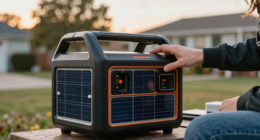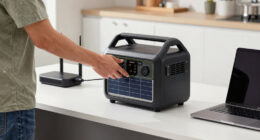
To keep your indoor battery backup system safe, you should place it in a well-ventilated, non-living space away from flammable materials, with at least 3 feet clearance for airflow and heat dissipation. Guarantee proper ventilation to remove heat and gases, and select dry, elevated locations safe from flooding. Keeping these factors in check reduces risks of overheating, fire, or water damage. Continuing ensures you’ll understand how to optimize safety and system longevity effectively.
Key Takeaways
- Place batteries in non-living, dry, elevated areas with at least 3 feet clearance for heat dissipation and safe access.
- Ensure proper ventilation pathways with non-combustible materials to remove heat and gases effectively outdoors.
- Maintain ambient temperatures within manufacturer guidelines to prevent overheating and capacity loss.
- Keep batteries away from flammable materials, bedrooms, and moisture-prone zones to reduce fire and water damage risks.
- Use secure, non-combustible surfaces and follow clearance and placement standards for safety and system longevity.

Anker SOLIX C1000 Gen 2 Portable Power Station, 2,000W (Peak 3,000W) Solar Generator, Full Charge in 49 Min, 1,024Wh LiFePO4 Battery for Home Backup, Power Outages, and Camping (Optional Solar Panel)
49 Min UltraFast Recharging: With upgraded HyperFlash tech, fully recharge at 1,600W—for outage prepping, camping trips, or tailgating...
As an affiliate, we earn on qualifying purchases.
Managing Heat Generation During Operation
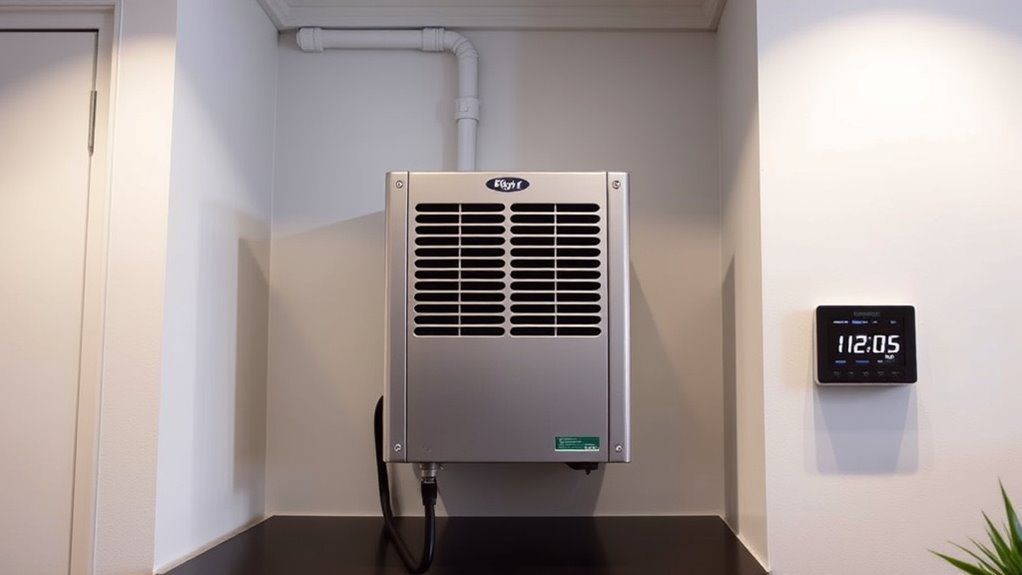
Managing heat generation during operation is essential to maintaining battery safety and longevity. When your battery charges and discharges, it produces heat, especially at higher power levels. Excessive heat accelerates chemical reactions inside the cells, causing capacity loss and shortening lifespan. To prevent this, keep the ambient temperature within the manufacturer’s recommended range, avoiding extremes that can trigger safety shutdowns. Ensure proper clearance—about 3 feet—around the unit for effective convective cooling. Incorporate active thermal management systems like fans or coolant loops when necessary, particularly for high-capacity setups. Additionally, rely on your Battery Management System (BMS) to monitor temperatures constantly. If sensors detect overheating, the BMS can automatically reduce performance or shut down the system to prevent thermal runaway and ensure safe operation. Understanding the contrast ratio of your system can also help optimize cooling strategies for better temperature control. Proper ventilation and thermal regulation are crucial components of safe battery operation, especially in enclosed spaces. Maintaining good airflow around the battery unit can significantly improve heat dissipation and prolong battery life. Regularly inspecting and maintaining cooling components can further prevent thermal buildup and enhance overall safety. Incorporating proper placement also helps mitigate heat accumulation by avoiding confined or poorly ventilated areas.

Jackery Portable Power Station Explorer 300, 293Wh Backup Lithium Battery, Solar Generator for Outdoors Camping Travel Hunting Blackout (Solar Panel Optional)
SPEED UP YOUR RECHARGEABILITY: It takes only 2 hours to recharge 80% battery of the power station through...
As an affiliate, we earn on qualifying purchases.
Designing Effective Ventilation Systems
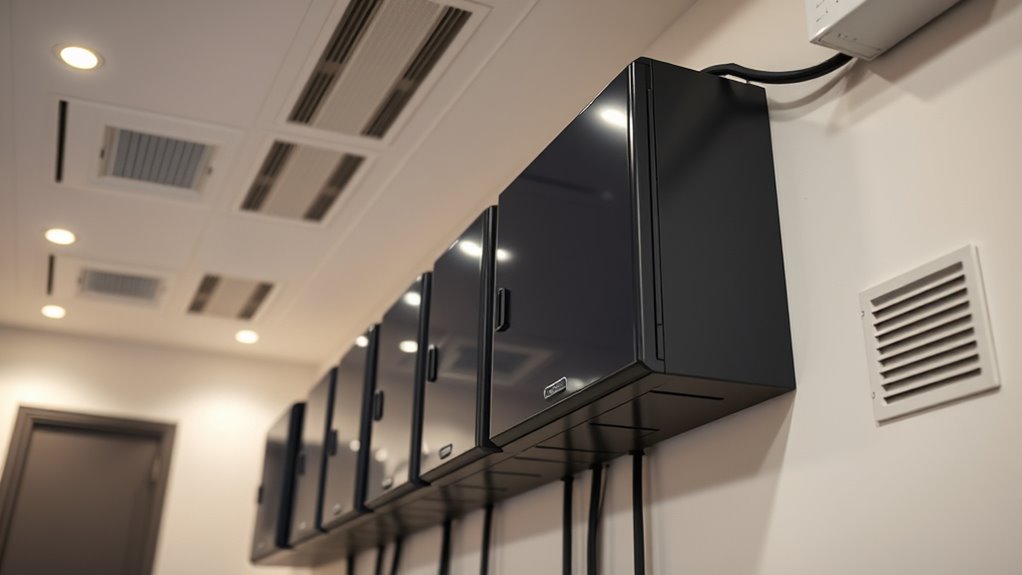
You need to design ventilation pathways that effectively remove heat and gases from your battery system, following manufacturer guidance and local codes. Use materials that are non-combustible and compatible with your setup to verify safety and durability. Proper exhaust placement is essential to prevent warmed air from recirculating and to keep fumes away from living areas. Incorporating simple, effective systems can make maintenance easier and ensure ongoing safety. Ensuring your ventilation system is designed with proper airflow management helps maintain safe operating conditions and prolongs the lifespan of your equipment, especially considering the importance of ventilation best practices in maintaining battery health and safety. Additionally, integrating energy-efficient ventilation strategies can reduce overall power consumption while maintaining optimal safety standards. Paying attention to outdoor air intake can further improve the overall effectiveness of your ventilation setup and reduce risks associated with poor air quality.
Ventilation Pathways Design
Effective ventilation pathways are essential for maintaining safe battery backup systems, especially during charge and discharge cycles when heat and potentially hazardous gases are generated. You should design ventilation routes that promote unobstructed airflow, ensuring heat and gases can escape efficiently. Follow manufacturer guidance and local codes to position intake and exhaust vents appropriately, avoiding recirculation of fumes. Use non-combustible ducts routed away from living spaces, and consider mechanical ventilation if passive airflow isn’t sufficient. Properly designed pathways prevent heat buildup and mitigate gas accumulation. The table below highlights key considerations:
| Aspect | Best Practice | Why It Matters |
|---|---|---|
| Intake Placement | Near cool, fresh air sources | Ensures consistent airflow |
| Exhaust Routing | Direct to outdoors, unobstructed | Removes heat and gases safely |
| Duct Material | Non-combustible, corrosion-resistant | Maintains system integrity |
Additionally, ensuring proper ventilation design is crucial for system safety and efficiency. Proper airflow management helps prevent heat buildup that could compromise system performance and safety, especially when integrating AI-powered household systems that may generate additional heat during operation.
Material Compatibility Guidelines
Selecting appropriate materials for ventilation components is vital to maintaining safe and reliable battery backup systems. You should use non-combustible materials for ducts, vents, and enclosures to minimize fire risk in case of thermal events or off-gassing. Avoid plastics, wood, or other combustible substances that could ignite or degrade when exposed to heat or chemicals released during battery operation. Metal or ceramic components are preferred for their durability and resistance to high temperatures. Confirm all materials are compatible with any off-gassing vapors and won’t corrode or break down over time. Proper material selection supports effective airflow, prevents contamination, and maintains the integrity of the ventilation system, ultimately safeguarding your system’s safety and longevity. Ensuring material compatibility with battery emissions is essential for long-term safety and system performance. Paying attention to heat resistance ensures materials can withstand temperature fluctuations without failure, providing additional safety margins. Additionally, selecting materials with chemical resistance helps prevent deterioration caused by vapors and corrosive substances, further enhancing system reliability. Incorporating ventilation design fundamentals ensures that airflow remains efficient and safe under various operating conditions. Considering fire safety standards when choosing materials can further reduce risks associated with thermal events.
Exhaust Placement Strategies
Proper exhaust placement is critical to guaranteeing safe and efficient ventilation for battery backup systems. You want to position exhaust outlets where heat, gases, and vapors can escape quickly, preventing buildup that could compromise safety or system performance. Place exhaust vents near the highest points of the enclosure or room, where hot air naturally rises. Ensure airflow directs fumes away from occupied areas and avoid recirculating exhaust back into the space. Use the following strategies:
- Position vents away from air intakes and living spaces
- Install exhaust outlets at high points for effective heat removal
- Keep pathways clear to prevent airflow obstructions
- Use non-combustible, corrosion-resistant duct materials for durability
- Understanding airflow dynamics can help optimize vent placement for maximum safety and efficiency. Proper airflow management is essential for maintaining system stability and preventing heat buildup. Effective exhaust placement minimizes heat accumulation and reduces fire risk, maintaining a safe environment for your battery system. Incorporating proper ventilation planning can further enhance safety by ensuring consistent airflow and reducing the chance of hazardous gas buildup.
APC UPS 600VA / 330W UPS Battery Backup & Surge Protector, 7 Outlets (NEMA 5-15R), USB Charging Port, BE600M1 Uninterruptible Power Supply for Computers, Wi-Fi Routers, and Home Office Electronics
KEEP YOUR COMPUTER, WI-FI AND ROUTER RUNNING THROUGH POWER OUTAGES: Supplies short‑term battery power during outages to maintain...
As an affiliate, we earn on qualifying purchases.
Selecting Appropriate Placement Locations
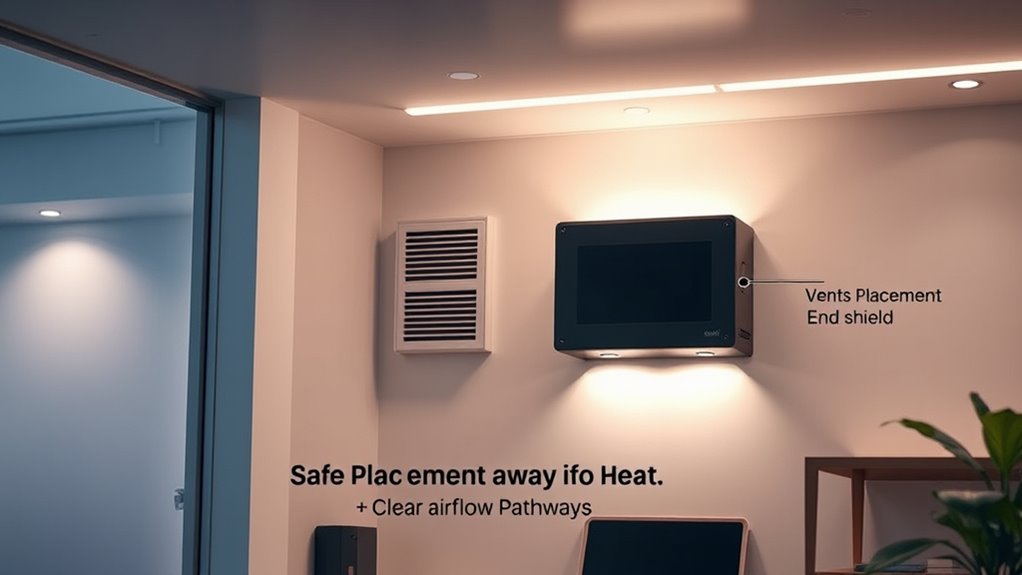
When choosing a placement for your battery backup system, prefer non-living spaces like garages or utility closets to reduce safety risks. Make sure to keep a clear distance (usually about 3 feet) around the units for proper heat dissipation and easy access. Also, avoid flood-prone areas and elevate equipment when necessary to prevent water damage and electrical hazards. Ensuring proper ventilation is essential to prevent overheating and maintain system safety. Additionally, selecting locations with adequate security zone info can help protect your equipment from tampering or accidental damage. Proper air circulation around the units can further enhance safety and performance.
Favor Non-Living Spaces
Placing battery backup systems in non-living spaces enhances safety by reducing exposure to occupants and minimizing fire risks. These areas, like garages, utility closets, or dedicated battery rooms, are better suited for housing batteries safely. They limit the chance of accidental contact, contain potential fires, and help control heat and venting. When choosing a location, consider:
- Using non-combustible surfaces for mounting
- Separating batteries from bedrooms and main living areas
- Keeping units away from flammable materials
- Ensuring proper ventilation paths for heat dissipation
This strategy reduces hazards and simplifies maintenance. Avoid placing batteries in confined, sealed, or flood-prone spaces, as these conditions increase risks and hinder thermal management. Prioritizing non-living spaces helps ensure your system operates safely and reliably.
Maintain Clearance Distances
Maintaining adequate clearance distances around your battery backup system is essential for safe operation and ease of maintenance. You should keep at least 3 feet of space around the unit to allow proper airflow and heat dissipation, preventing overheating and ensuring effective cooling. This clearance also provides safe access for inspections, servicing, and emergency shutoffs. Avoid storing flammable materials, liquids, or combustible debris near the batteries, as these can increase fire risk. Place the system on non-combustible surfaces like concrete or metal racks and secure it firmly to prevent tipping or impact. Additionally, steer clear of flood-prone areas and high-traffic zones to minimize water damage and accidental contact. Proper placement maximizes safety, maintains system longevity, and simplifies maintenance routines.
Avoid Flood-Prone Areas
Are you aware of the flood risks in your chosen installation area? Flooding can damage your battery system, cause short circuits, and lead to dangerous electrical failures. To protect your investment and safety, avoid placing batteries in flood-prone zones. Elevate the units on non-conductive surfaces or install them in elevated enclosures if flooding is a possibility. Keep these points in mind:
- Choose dry, elevated locations away from basements or low-lying areas
- Do not install directly on floors vulnerable to water exposure
- Maintain proper drainage around the installation site
- Ensure the area has no history of flooding or water intrusion

GOLDENMATE 1000VA/800W Lithium UPS Battery Backup and Surge Protector, Backup Battery Power Supply with LiFePO4 Batteries(230.4 Wh), Sinewave UPS System, 10 Years Lifespan, 8 Outlets, LCD Display
[LiFePO4 Battery, Ultra-long Endurance]: This lithium UPS is equipped with a state-of-the-art Lithium Iron Phosphate Battery Pack, delivering...
As an affiliate, we earn on qualifying purchases.
Ensuring Adequate Clearance and Accessibility
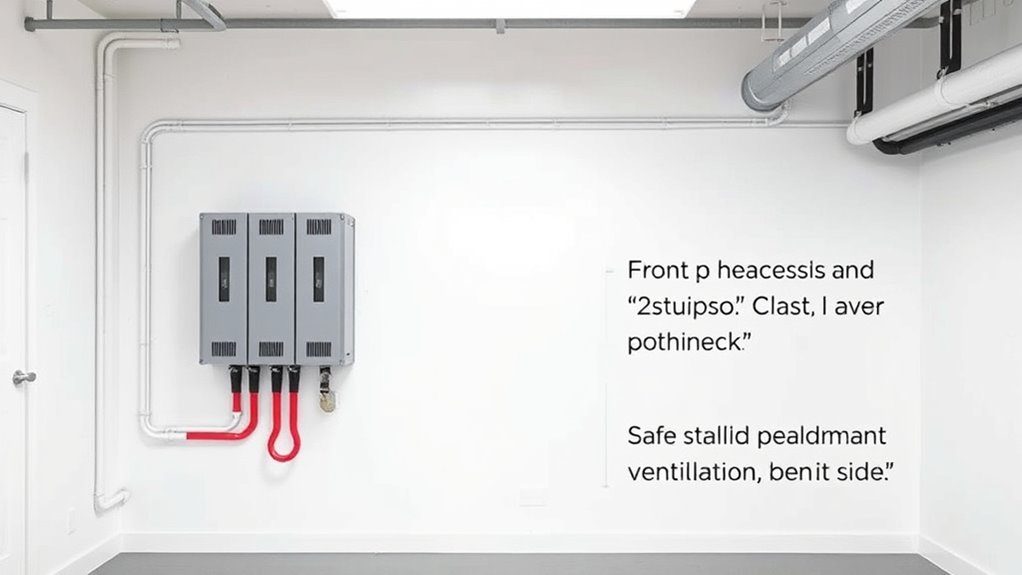
To guarantee safe operation and easy access for maintenance, you must provide adequate clearance around your battery backup system. Maintain at least 3 feet of space on all sides to allow proper ventilation and heat dissipation. This clearance also ensures you can safely perform inspections, repairs, or replacements without obstruction. Avoid clutter or storage of flammable materials nearby, which could hinder access or pose a fire hazard. Mount the system on non-combustible surfaces and secure it against tipping or impact. Keep pathways clear for emergency access and ensure doors or panels can be opened fully. Regularly check that ventilation openings remain unobstructed, and don’t forget to follow manufacturer guidelines and local codes for spacing requirements. Proper clearance minimizes safety risks and simplifies system management.
Addressing Fire and Safety Precautions
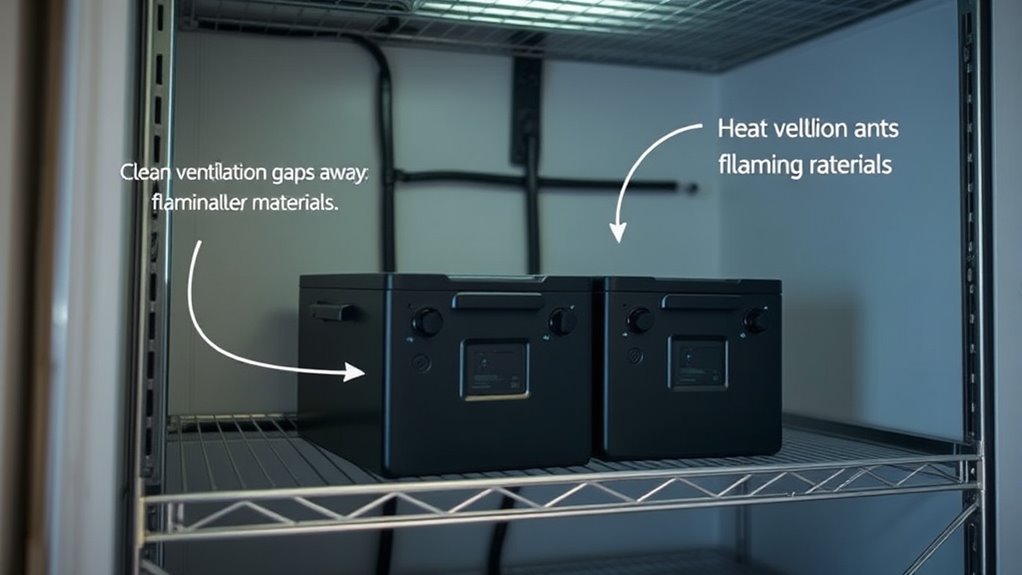
You need to have proper fire detection and suppression systems in place to protect your battery backup setup. Installing smoke detectors and using appropriate extinguishers can help, but in a thermal runaway event, quick evacuation and emergency response are vital. Planning and training ensure you’re ready to act fast and minimize damage if a fire occurs.
Fire Detection and Suppression
Effective fire detection and suppression are critical components of indoor battery backup safety. You should install smoke detectors in battery rooms and connect them to your building’s alarm system. Use fire extinguishers rated for electrical fires nearby, but remember they may not fully suppress lithium battery fires, so evacuation is essential. Consider UL 9540A-rated enclosures or passive fire barriers to contain thermal runaway. Clearly label emergency shutdown controls and ensure everyone knows how to use them. Regularly review incident-response plans and coordinate with local fire services. Key safety measures include:
- Installing smoke detectors linked to alarms
- Keeping fire extinguishers rated for electrical fires accessible
- Using fire barriers or UL-rated enclosures
- Training responders on emergency procedures
These steps help minimize fire risks and protect lives.
Emergency Response Planning
Are you prepared to handle emergencies involving indoor battery backup systems? Having a clear emergency response plan is vital. Know how to shut down the system quickly using labeled disconnects or emergency controls. Make sure smoke detectors are installed and integrated with your alarm system. Keep fire extinguishers rated for electrical fires nearby, but remember, lithium battery fires often require specialized suppression methods. Train everyone on evacuation procedures and emergency contacts. Regularly review and update your plan, and coordinate with local fire authorities to understand access points. Having these steps in place minimizes risks and guarantees swift action during incidents.
| Emergency Step | Action |
|---|---|
| Evacuate Immediately | Clear the area and alert others |
| Shut System Down | Use labeled disconnects or emergency controls |
| Call Emergency Services | Contact fire or rescue teams promptly |
| Use Fire Extinguisher | If safe, attempt to control small fires |
| Follow Up | Document incident and review safety measures |
Electrical System Safety and Proper Wiring
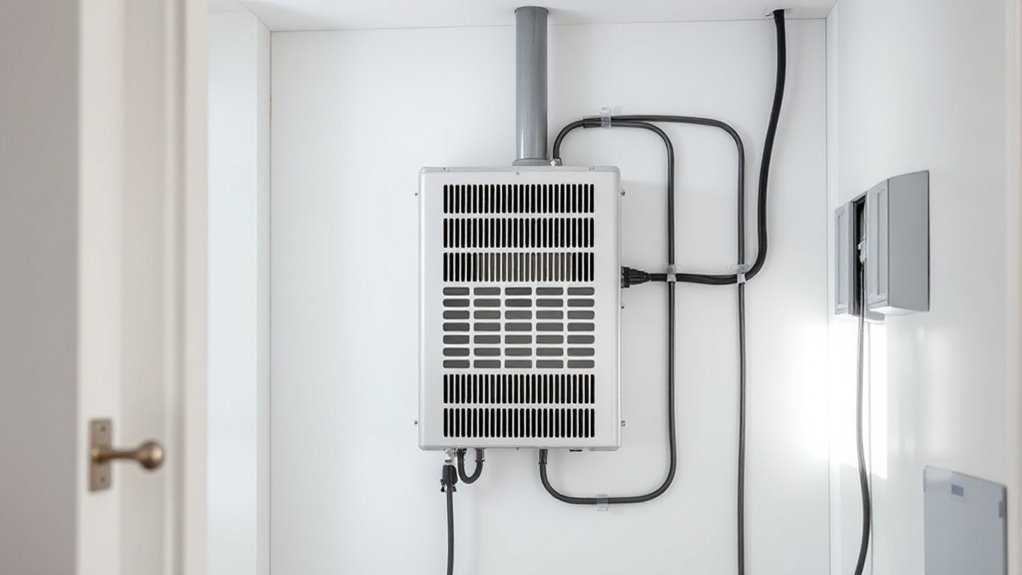
Proper electrical system safety begins with following manufacturer instructions and local electrical codes, such as NFPA 855 and NEC. To guarantee safe wiring, use licensed electricians for installation and inspection. Make sure your system includes an integrated Battery Management System (BMS) to monitor voltage, temperature, and current, preventing dangerous conditions. Keep your wiring properly sized and protected with appropriate conduit and overcurrent devices to avoid overheating. Clearly label disconnect switches and breakers for quick access during emergencies. Regularly inspect terminals, wiring connections, and ventilation paths for signs of damage or degradation. Also, ensure your system is grounded correctly and complies with all safety standards.
- Use certified, non-combustible wiring and components
- Install accessible emergency disconnects
- Follow manufacturer’s wiring diagrams precisely
- Schedule routine safety inspections
Monitoring and Maintaining Battery Health
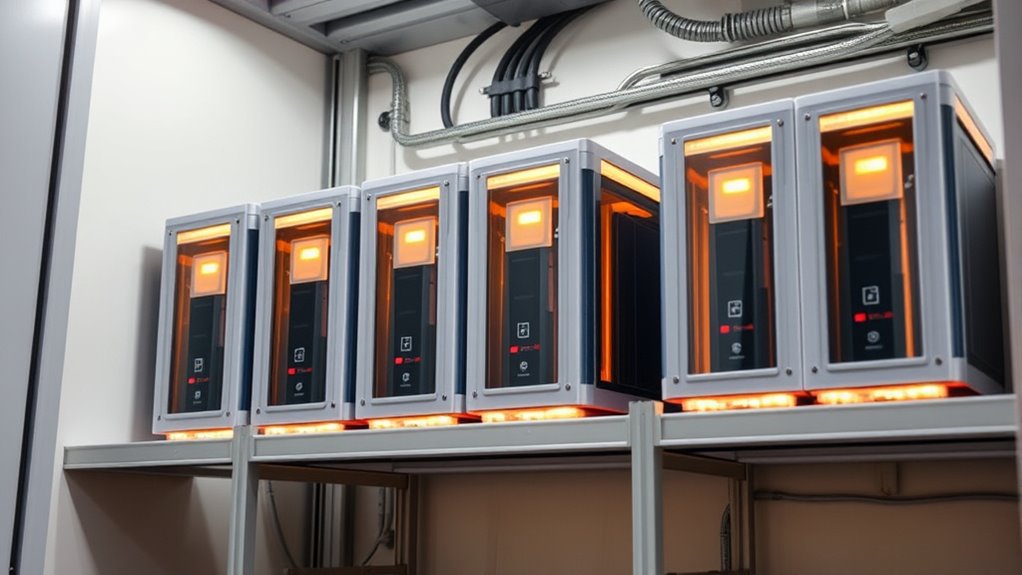
Regular monitoring and maintenance of your battery system help guarantee safety and extend its lifespan. You should regularly check for signs of wear, corrosion, or loose connections. Use remote monitoring tools to track temperature, voltage, and state of charge, catching issues early. Keep ventilation clear and ensure the system stays within manufacturer-recommended parameters. Here’s a quick overview:
| Monitoring Aspect | Action | Why It Matters |
|---|---|---|
| Temperature | Check sensors and cooling systems | Prevent overheating and thermal runaway |
| Voltage & State of Charge | Use BMS alerts and logs | Avoid over-discharge or overcharge |
| Physical Inspection | Regular visual checks | Detect corrosion or damage early |
| Firmware & Software | Update regularly | Maintain system safety and functionality |
Handling Emergency Situations and Fire Response
When a thermal runaway or fire occurs in a battery backup system, quick and effective response can prevent injury and limit property damage. Your first step is to evacuate the area and call emergency services immediately. Do not attempt to extinguish the fire with standard extinguishers, as lithium battery fires require specialized suppression methods. Confirm smoke detectors are installed and integrated with alarm systems for early warning. Keep emergency shutdown controls clearly labeled and accessible to safely disconnect power if needed. Maintain an incident-response plan and coordinate with local fire departments to understand system access points. Remember:
- Evacuate and call emergency services immediately
- Avoid using water or standard extinguishers on lithium fires
- Use fire extinguishers rated for electrical fires if trained
- Follow established safety procedures and shutdown protocols
Complying With Building Codes and Standards
Ensuring your indoor battery backup system meets building codes and standards is essential for safety, legality, and peak operation. You must follow local regulations such as NFPA 855 and NEC requirements, which specify proper siting, ventilation, and electrical connections. Obtain necessary permits before installation and use licensed electricians for wiring and system setup. Adhere to manufacturer guidelines for clearance distances, fire safety measures, and thermal management. Incorporate approved fire detection and suppression systems, and ensure easy access to disconnects for emergency shutoff. Regularly verify compliance through inspections and documentation. Staying current with updates and safety bulletins from authorities guarantees your system remains within legal and safety parameters. Proper compliance minimizes risks and ensures your backup system functions reliably when needed.
Best Practices for Ongoing Operational Safety
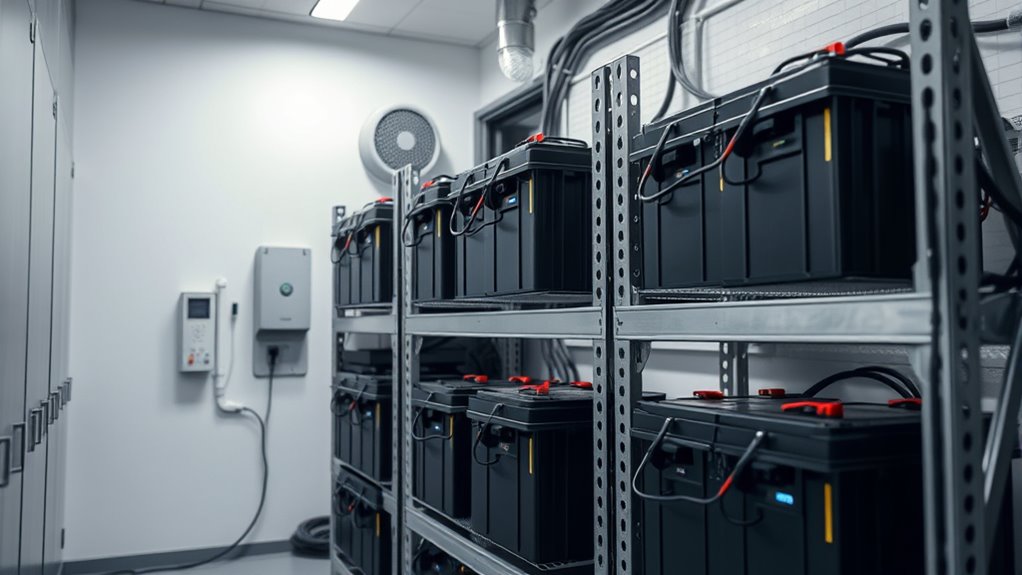
Maintaining ongoing operational safety requires you to actively monitor your battery backup system, promptly address any issues, and follow recommended procedures. Regular inspections help identify signs of wear, corrosion, or ventilation blockages before they escalate. Keep systems charged within manufacturer guidelines; overcharging or deep discharges accelerate aging and safety risks. Enable remote monitoring to receive alerts for temperature spikes, faults, or capacity drops. Stay updated on safety bulletins and recalls, and remove units if a thermal runaway threat appears.
Regularly inspect and monitor your battery system to ensure safe, reliable operation and prevent hazards.
Remember to:
- Conduct visual inspections routinely
- Maintain proper ventilation and airflow
- Keep clear access for servicing and emergencies
- Store flammable materials away from units
Consistent vigilance minimizes risks and ensures your system operates safely and reliably.
Frequently Asked Questions
How Often Should I Schedule Battery System Maintenance?
You should schedule battery system maintenance at least every 6 to 12 months. Regular inspections help you check terminals, mounting hardware, and ventilation paths for signs of wear or degradation. Keep an eye on manufacturer recommendations, and perform more frequent checks if your system operates in harsh environments or shows warning signs like unusual temperatures or performance drops. Consistent maintenance guarantees safety, peak performance, and longer system lifespan.
What Are Signs of Thermal Runaway or Overheating?
You should look for signs like rapid temperature increases, unusual smells, or visible smoke or flames. If the battery emits a burning odor or if the system’s thermal sensors detect excessive heat, shutdown immediately. Noticeable swelling, leaks, or hissing sounds also indicate thermal runaway risk. Always monitor your system regularly and respond quickly to any abnormal behavior to prevent fire or damage.
Can Indoor Ventilation Prevent Battery Fire Spread?
Indoor ventilation acts like a vigilant guardian, whisking away heat and containing sparks before they ignite a blaze. By providing clear airflow paths and exhaust routes, you prevent hot gases from building up and spreading flames. Proper ventilation keeps the battery’s temperature in check, reducing thermal runaway risk and stopping fires from roaring out of control. It’s your first line of defense, quietly working to keep your space safe and flames at bay.
How Do I Select the Safest Location for Installation?
You should choose a non-living space like a garage or utility room, keeping it separated from bedrooms and main living areas. Mount the batteries on non-combustible surfaces, secure them properly, and maintain at least a 3-ft clearance for ventilation and access. Avoid flood-prone or high-heat areas, keep flammable materials away, and guarantee proper ventilation. Follow manufacturer guidelines and local codes for maximum safety.
What Are the Key Steps During a Battery Fire Emergency?
During a battery fire emergency, immediately evacuate the area and call emergency services. If safe, disconnect power using emergency shutdown controls. Do not attempt to extinguish the fire with water or standard extinguishers, as lithium fires require specialized extinguishing methods. Use a Class D fire extinguisher or a fire blanket if trained and equipped. Keep clear of smoke and fumes, and inform responders about the battery type and setup for proper handling.
Conclusion
So, next time you decide to stash your battery backup inside, remember: heat, ventilation, and placement are your new best friends—because nothing says “safe” like turning your cozy closet into a potential fire hazard. Follow the guidelines, stay vigilant, and maybe, just maybe, keep a fire extinguisher nearby. After all, who doesn’t love a little excitement with their indoor power backup? Stay safe and keep those batteries happy!