
TL;DR

Get backup power and energy gear delivered free — and shop member deals
- Fast, free delivery on millions of items
- Access to Prime Big Deal Days deals on October 6–7
- Prime Video, Amazon Music and more included
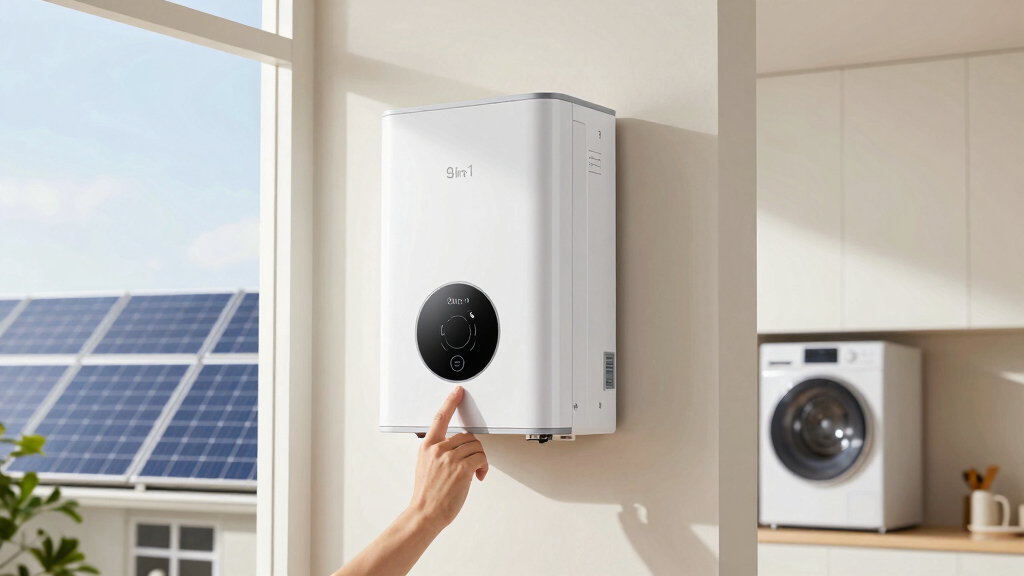
Differ Power has announced the D1 Series, a groundbreaking 9-in-1 heat pump that combines heating, cooling, hot water, PV inversion, and energy management. It aims to turn the heat pump into a central energy hub for homes, integrating solar, storage, and backup power in a single platform. The product will be showcased at Intersolar Europe 2026.
Differ Power has announced the upcoming launch of the D1 Series, a 9-in-1 integrated solar-storage air-to-water heat pump that transforms the traditional heating appliance into a central home energy hub, integrating PV, battery, backup power, and thermal management functions.
The D1 Series, set to debut at Intersolar Europe 2026, combines space heating, cooling, domestic hot water, PV inversion, battery management, power conversion systems, backup power, home energy management, and gateway control within a single platform. It uses the low-GWP refrigerant R290 and is designed primarily for European residential applications, including new builds and retrofits with rooftop PV.
Unlike conventional setups that require separate devices for each function, the D1 Series consolidates these into one system, reducing installation complexity and time by up to 50%. Its hybrid solar inverter manages PV and battery operations directly, improving overall efficiency by over 10% through optimized energy flow and waste heat recovery from power electronics. The system also features an emergency power switch that seamlessly transitions household loads to backup during outages, with backup duration depending on battery capacity.
According to PV Magazine, the initial models will offer capacities of 12 kW, 14 kW, and 16 kW, covering most residential heating and power needs, with future versions planned for commercial and industrial applications. The system supports major European grid standards, including UK’s G98/G99 and Italy’s CEI 0-21.
Transforming Home Energy Management with Integrated Systems
The D1 Series represents a significant shift in residential energy technology by positioning the heat pump as a central energy management hub rather than just a heating device. This integration can streamline installation, reduce costs, and improve energy efficiency, supporting the broader transition to electrified, renewable-powered homes. It also aligns with Europe’s push for smarter, more resilient energy systems, potentially influencing future standards and consumer adoption.
9-in-1 heat pump with energy management
As an affiliate, we earn on qualifying purchases.
As an affiliate, we earn on qualifying purchases.
Evolution of Residential Heat Pumps and Energy Systems
Traditional heat pumps primarily provide space heating and cooling, with separate systems managing hot water, PV inverters, and energy storage. As residential electrification accelerates across Europe, integrating these functions into a single platform is increasingly seen as a way to optimize energy use and reduce costs. Differ Power’s D1 Series builds on recent trends toward smart, modular energy systems, leveraging AI and advanced control algorithms to enhance efficiency and resilience.
The company’s approach reflects ongoing industry efforts to combine multiple energy functions, reducing complexity and enabling better coordination between solar, storage, and thermal loads. The product’s development aligns with European regulations supporting grid stability and renewable integration.
“The D1 Series could redefine residential energy management by consolidating multiple functions into one platform, simplifying installation and boosting efficiency.”
— an anonymous researcher
solar heat pump with battery storage
As an affiliate, we earn on qualifying purchases.
As an affiliate, we earn on qualifying purchases.
Unconfirmed Details on Deployment and Compatibility
It is not yet clear how quickly the D1 Series will be adopted across different European markets or how it will perform in diverse real-world conditions. Details about long-term reliability, cost, and compatibility with existing systems remain to be seen. Additionally, the final specifications and pricing for various models are still under development.
integrated home energy hub system
As an affiliate, we earn on qualifying purchases.
As an affiliate, we earn on qualifying purchases.
Upcoming Demonstrations and Market Rollout Plans
Differ Power plans to showcase the D1 Series at Intersolar Europe 2026, with initial units expected to be available later in 2026. The company will likely begin pilot projects and seek regulatory approvals for various markets. Broader commercial availability and integration support are anticipated in the following months, with potential updates on performance and customer feedback.
air-to-water heat pump with PV inverter
As an affiliate, we earn on qualifying purchases.
As an affiliate, we earn on qualifying purchases.
Key Questions
What makes the D1 Series different from traditional heat pumps?
The D1 Series integrates heating, cooling, hot water, PV inversion, battery management, backup power, and home energy control into one platform, transforming the heat pump into a central energy hub.
When will the D1 Series be available for purchase?
The product is scheduled to be showcased at Intersolar Europe 2026, with initial models expected later in 2026.
How does the system improve efficiency?
It reduces energy conversion losses by direct PV and battery integration, recovers waste heat from power electronics, and optimizes energy flow with advanced algorithms, potentially increasing overall efficiency by over 10%.
Will this system work with existing home setups?
It is designed primarily for new builds and retrofit projects with rooftop PV, supporting major European grid standards, but compatibility with existing systems will depend on specific configurations and future updates.
Source: PV Magazine
Fall Picks
fall essentials
As an affiliate, we earn on qualifying purchases.





![[Fact Check] Lee’s Claim Blaming Oh For Seoul Home Prices? - 최보식의언론](https://wattreserve.com/wp-content/uploads/2026/09/fact-check-lee-s-claim-blaming-oh-for-seoul-home-prices-featured-260x140.jpg)