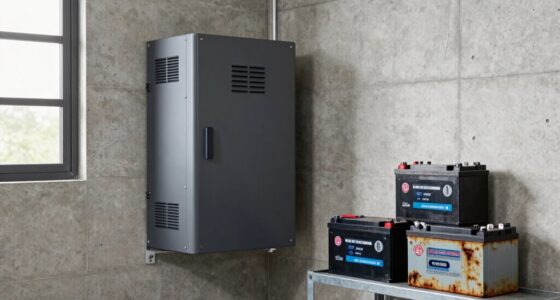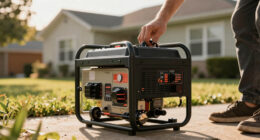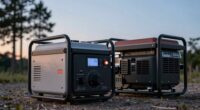
During outages, using DC output can be more efficient because it minimizes conversion losses, especially when powering battery-based devices or solar systems. DC systems often require simpler setups and lose less energy during conversion compared to AC. However, many household appliances run best on AC, so choosing the right output depends on your specific needs. If you want a smarter backup, exploring these options further can help you maximize efficiency during power interruptions.
Key Takeaways
- DC systems often provide higher efficiency during outages due to simpler inverter setups and fewer conversion losses.
- Using DC directly reduces energy losses compared to converting AC to DC, maximizing stored power availability.
- DC solutions enable quicker power restoration with fewer components, minimizing downtime in emergencies.
- Compatibility with battery storage enhances DC system efficiency and simplifies backup power management.
- Properly designed DC systems can deliver more reliable and sustained power during outages with less complexity.

3000W Power Inverter 12V DC to 110V/120V AC Converter, 6000W Peak, LCD Display & Remote Control, Dual AC Outlets & USB Port for RV Truck Solar System, Emergency Backup, Outdoor Camping
【3000W Continuous Power for Multiple Devices】: This power inverter converts 12V DC to stable 110/120V AC, delivering 3000W…
As an affiliate, we earn on qualifying purchases.
As an affiliate, we earn on qualifying purchases.
Fundamental Differences Between DC and AC Power
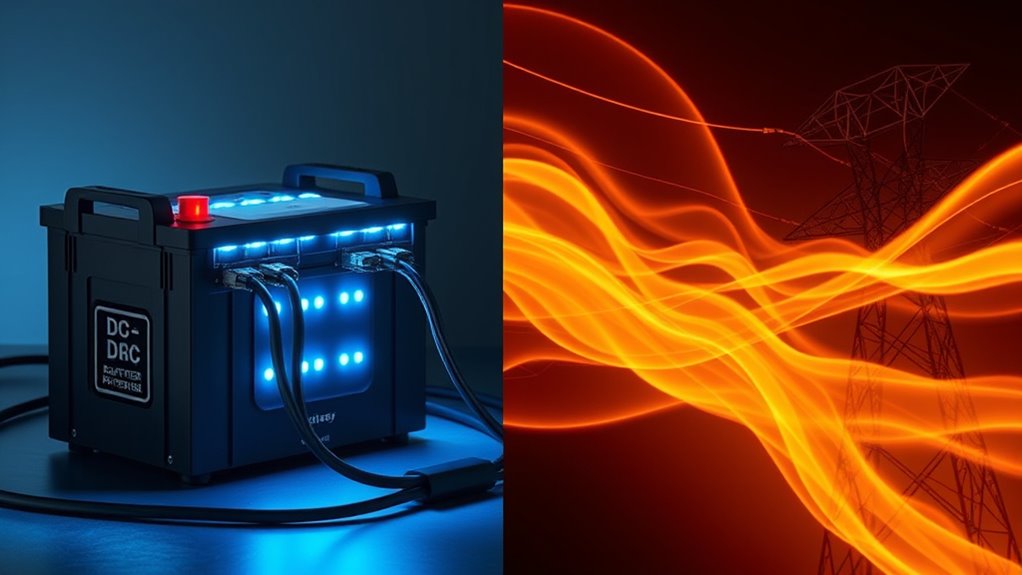
Direct current (DC) and alternating current (AC) are two fundamental types of electrical power that differ mainly in how they flow. DC flows in a single, steady direction, making it ideal for battery charging and small electronics. When you need to power devices from batteries or solar panels, DC is what you’re using. AC, on the other hand, changes direction periodically, which makes it suitable for long-distance power transmission and household outlets. To use AC with DC-powered devices, you rely on a power inverter, which converts the AC into usable DC. These fundamental differences influence how each type is generated, transmitted, and utilized, especially during outages when backup power solutions like batteries and inverters come into play. Understanding these distinctions helps you choose the right power setup. Energy-efficient cloud solutions are increasingly leveraging these concepts to enhance sustainability and reliability during power disruptions. Additionally, the efficiency of energy transfer depends heavily on the current type used, impacting overall system performance during outages.

ECO-WORTHY (Cubix 100) 48V 600Ah Server Rack Battery LiFePO4 w/Bluetooth | 6 Pack 30.72kWh Solar Battery Kit for Home Backup | UL1973 & UL9540A & CEC Listed (Get Free 6-Layer Rack with 600A Busbar)
UL1973 | UL9540A | CEC LISTED – Completed comprehensive testing by Intertek and has officially earned two key…
As an affiliate, we earn on qualifying purchases.
As an affiliate, we earn on qualifying purchases.
Efficiency in Power Conversion and Usage
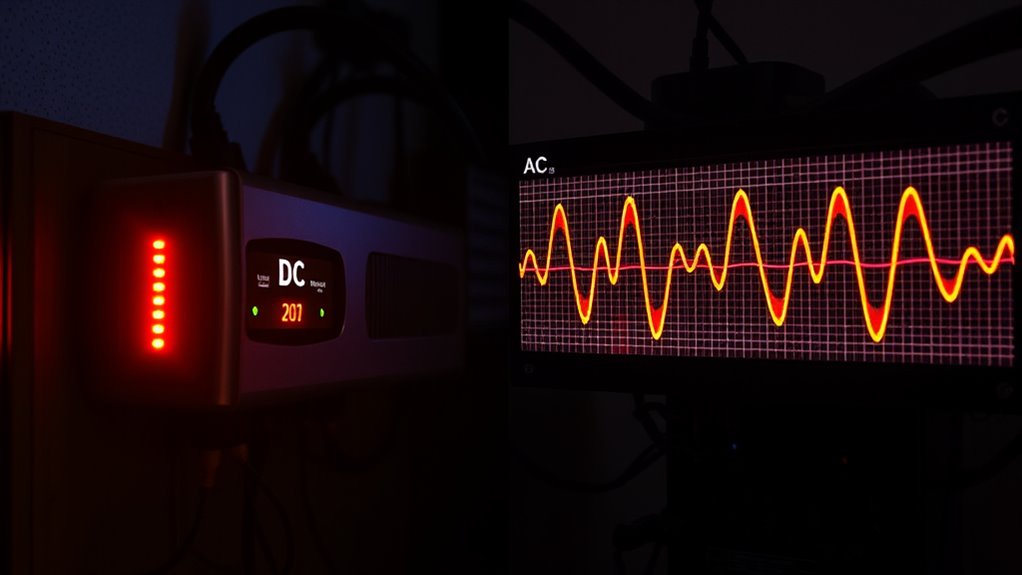
When it comes to power conversion and usage, efficiency plays a crucial role in determining how effectively energy is transmitted and utilized. The better your system manages inverter efficiency, the less energy you lose during conversion. Battery storage systems benefit from high efficiency, ensuring stored energy remains usable when needed. Lower conversion losses mean longer-lasting power and reduced costs. Factors influencing efficiency include the quality of inverters, the type of storage batteries, and how well the system is designed. Incorporating smart automation can further optimize energy management and reduce waste. Additionally, selecting high-quality components can significantly improve overall system efficiency and reliability. Proper system sizing and performance testing can help identify inefficiencies and optimize operation. Implementing efficient energy systems reduces energy waste during conversion, extends battery life and storage retention, lowers operational costs, provides a more reliable power supply during outages, and enhances overall system performance. Carefully monitoring system performance can reveal hidden inefficiencies and opportunities for improvement. Focusing on high inverter efficiency and optimized storage can greatly boost your energy system’s performance and reduce wasted power during conversions.

BELTTT 2000W Pure Sine Wave Inverter, Inverter 12V DC to 120V AC for Solar, RV, Truck, Outdoor, Power Inverter with Dual AC and 20A Socket, 5V 2.1A USB, Surge 4000W, Hardwire Port, Remote Controller
【POWERFUL DC to AC CONVERTER】: This solar inverter delivers 2000W of continuous battery DC 12V to AC 110V…
As an affiliate, we earn on qualifying purchases.
As an affiliate, we earn on qualifying purchases.
Ease of Implementation During Power Outages
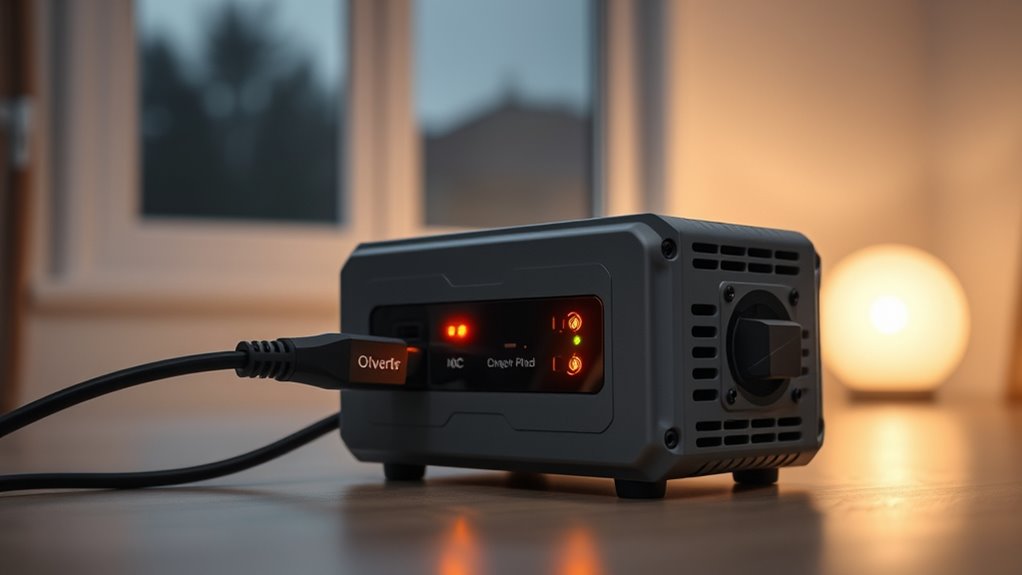
During power outages, quickly restoring reliable energy becomes essential, and the ease of implementing DC or AC systems greatly influences how swiftly you can get back online. DC systems often require simpler inverter installation, making setup faster and more straightforward, especially if you already have batteries in place. Additionally, DC systems tend to need less maintenance for batteries because they operate at a constant voltage, reducing wear and tear. If you prioritize quick deployment, DC solutions with minimal battery maintenance and straightforward inverter installation offer a clear advantage. This simplicity helps you restore power faster, minimizing downtime during emergencies. Considering system compatibility with your existing home setup can further streamline the recovery process, especially when selecting components that are compatible with standard electrical requirements. Moreover, understanding the efficiency benefits of DC over AC during outages can help you make more informed decisions for reliable backup power. Recognizing plug-and-play capabilities may also influence how rapidly your backup system can be operationalized without extensive modifications. Additionally, the installation complexity of DC systems often surpasses that of AC systems, which can be a critical factor in emergency scenarios.

CyberPower CP1500PFCLCD PFC Sinewave UPS Battery Backup and Surge Protector, 1500VA/1000W, 12 Outlets, AVR, Mini Tower, UL Certified
1500VA/1000W PFC Sine Wave Battery Backup Uninterruptible Power Supply (UPS) System designed to support active PFC and conventional…
As an affiliate, we earn on qualifying purchases.
As an affiliate, we earn on qualifying purchases.
Compatibility With Devices and Equipment
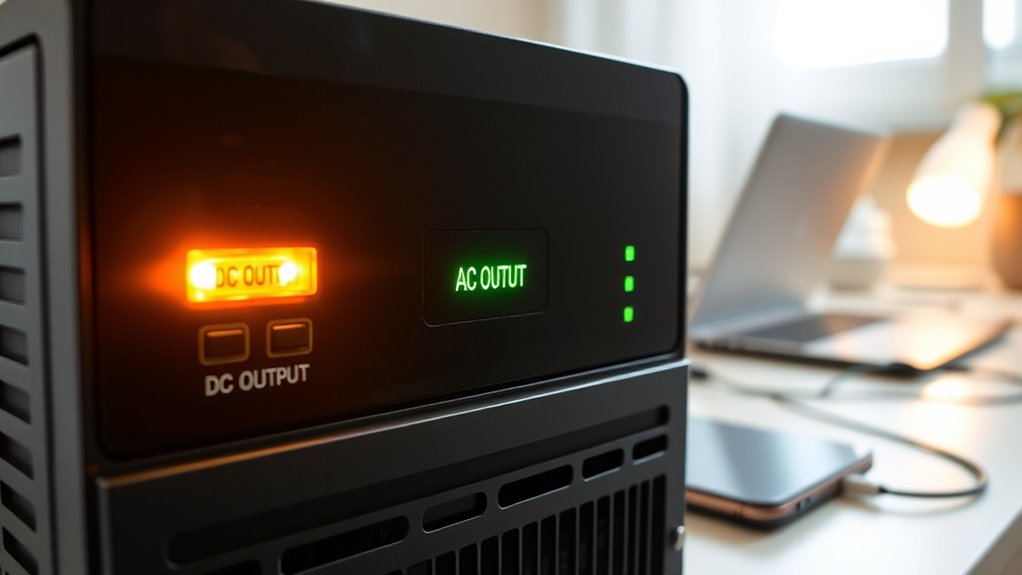
Choosing between DC and AC output systems depends heavily on device compatibility. Your appliances and equipment must work seamlessly with the power source, which impacts overall efficiency and usability. With DC systems, you need to factor in battery compatibility since many devices aren’t designed for direct DC input. Conversely, AC systems offer straightforward device integration because most household appliances are built for AC power. Think about how your devices connect:
- Compatibility with inverter types
- Voltage and wattage requirements
- Whether converters are necessary
- Ease of plug-and-play setup
- Compatibility with existing batteries or power banks
Ensuring your devices support the chosen output type minimizes conversion losses and simplifies setup, making your emergency power system more reliable and efficient during outages. Additionally, understanding the benefits of glycolic acid can help optimize your skincare routine, especially during power outages when self-care routines become even more important during outages. For example, choosing the right body jewelry measurements and materials can also contribute to comfort and safety if you need to wear accessories for extended periods during these times. Recognizing device compatibility considerations is crucial for selecting the most effective and hassle-free power solution, as power source compatibility can significantly influence system performance and longevity.
Safety Considerations for Emergency Power Supply
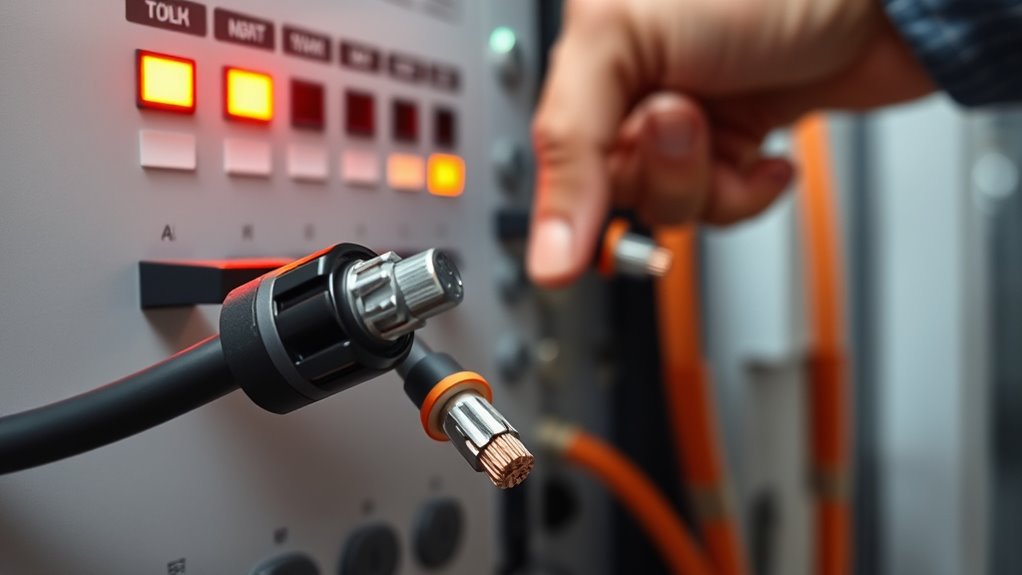
When handling emergency power supplies, you need to prioritize proper equipment handling to prevent accidents. Safe power switching is vital to avoid electrical shocks or damage to devices. Paying attention to these safety considerations keeps you protected and ensures reliable operation during emergencies. Additionally, understanding vetted wave and wind sources can help optimize your power setup for better efficiency and safety. Incorporating power quality monitoring can further enhance system reliability by detecting potential issues early. Regular maintenance of your power system components ensures continued safety and efficiency over time. Being aware of system configuration best practices can also contribute to a safer and more effective emergency power setup. Furthermore, staying informed about essential safety protocols can significantly reduce risks during operation.
Proper Equipment Handling
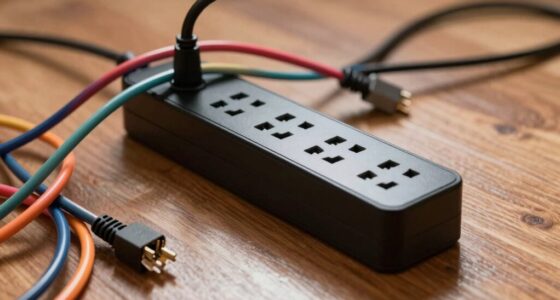
Handling emergency power supply equipment correctly is crucial to guarantee safety and prevent accidents. Proper equipment handling involves regular battery maintenance to ensure reliable operation and safe connections. When selecting an inverter, prioritize quality and compatibility with your system to avoid overloads or malfunctions. Always wear insulated gloves and use tools with non-conductive handles to prevent electric shocks. Keep cables organized to avoid tripping hazards and inspect connections regularly for corrosion or damage. Remember to follow manufacturer instructions carefully and never bypass safety features. Proper handling reduces risks during outages and extends equipment lifespan, ensuring dependable backup power. Additionally, understanding the importance of equipment maintenance can greatly enhance the longevity and safety of your power backup system. Practicing safety protocols consistently helps mitigate potential hazards and ensures a secure environment during emergencies. Staying cautious and attentive to these safety considerations helps you manage your emergency power supply effectively and safely. Moreover, familiarizing yourself with modern technology integration can improve your system’s efficiency and responsiveness during outages, especially when utilizing inverter technology to optimize power conversion. Regular training on safety procedures and proper handling techniques can further reduce the risk of accidents during equipment operation.
Safe Power Switching
Proper equipment handling lays the foundation for safe operation, especially during power outages. When switching power sources, guarantee your batteries are well-maintained to prevent hazards. Check inverter ratings to confirm they match your load requirements, avoiding overloads. Use transfer switches designed for your system, allowing seamless and safe switching between power sources. Always turn off the main power before making connections to prevent electrical shocks. Follow manufacturer instructions carefully. Here’s a quick overview:
| Power Source | Safety Tip | Key Considerations |
|---|---|---|
| Battery | Regular maintenance is vital | Avoid deep discharges |
| Inverter | Confirm ratings match load | Use appropriate transfer switches |
| Switch | Turn off before switching | Use properly rated equipment |
| Load | Avoid overloads | Distribute power evenly |
| Maintenance | Schedule routine checks | Keep terminals clean |
Safety depends on proper handling and understanding your system’s limits, including proper maintenance practices to ensure longevity and safety.
Practical Tips for Choosing the Right Output in Emergencies
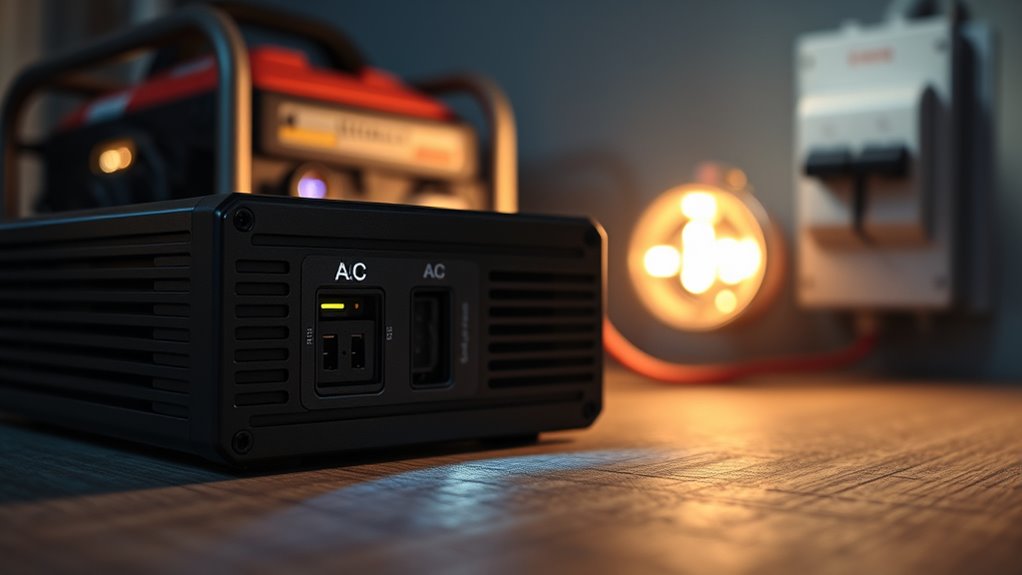
In emergency situations, choosing the right power output can make all the difference in guaranteeing safety and functionality. To do this effectively, consider your needs for battery storage and inverter selection. Think about the devices you need to power and their voltage or current requirements. Opt for an inverter that matches or exceeds your load demands to prevent overloads. Keep in mind that AC output is ideal for most household appliances, while DC might suit specific electronics.
Here are practical tips:
- Assess your critical appliances and their power needs
- Choose an inverter compatible with your battery storage capacity
- Prioritize pure sine wave inverters for sensitive electronics
- Ensure your system can switch seamlessly between outputs
- Test your setup regularly to confirm reliable emergency performance
Frequently Asked Questions
How Does Battery Capacity Affect DC Vs AC Output During Outages?
Your battery capacity directly impacts both DC and AC output during outages. A larger battery size provides more stored energy, allowing longer operation and better efficiency. Higher energy density means you can store more power in a smaller space, making it easier to supply your devices. With increased capacity, you can sustain your critical loads longer, whether using DC or converting to AC, ensuring reliable backup power when outages strike.
Can Hybrid Systems Combine DC and AC Outputs Effectively?
Yes, hybrid systems can effectively combine DC and AC outputs, especially when designed for solar integration and grid compatibility. You can use DC for direct solar device connections, improving efficiency, while AC handles household appliances. This flexibility guarantees ideal power management during outages, reducing energy loss. By balancing both outputs, you get a more reliable, efficient system that adapts seamlessly to your energy needs and grid requirements.
What Are the Long-Term Maintenance Considerations for DC and AC Systems?
You’ll want to keep an eye on your battery lifespan, as it affects both DC and AC systems’ efficiency over time. Regular maintenance, like inspecting connections and cooling systems, helps prevent costly repairs. Plan for system upgrades to stay compatible with new tech and extend longevity. Since AC systems often involve more moving parts, they might require more frequent upkeep, while DC systems tend to be simpler but still benefit from routine checks.
Are There Cost Differences Between Installing DC and AC Backup Systems?
You’ll find that the cost differences between installing DC and AC backup systems mainly hinge on cost analysis and installation complexity. DC systems often have higher upfront costs due to specialized components, but can save money long-term with greater efficiency during outages. AC systems tend to be cheaper and easier to install because of widespread compatibility, but may incur higher energy losses over time. Weigh these factors carefully to choose the best option for your needs.
How Do Inverter Types Influence Efficiency in AC Power Conversion?
Did you know that modern inverter technology can boost power conversion efficiency up to 95%? The type of inverter greatly influences how effectively it converts DC to AC power. For example, sine wave inverters provide cleaner, smoother power, reducing energy loss, while modified sine wave inverters are less efficient but more affordable. Your choice of inverter type impacts overall system performance, especially during outages, ensuring you get the most reliable, efficient power.
Conclusion
Choosing between DC and AC output during outages hinges on efficiency and practicality. Did you know that converting DC to AC typically results in a 10-15% energy loss? By opting for DC supply when possible, you can maximize power use and reduce waste. This simple switch can make your emergency power setup more reliable and efficient, ensuring your devices stay operational longer. Prioritize your needs and equipment compatibility to make the smartest, most efficient choice during outages.