
Cold weather slows down your battery’s chemical reactions, reducing energy output and making it harder to charge. It also increases internal resistance, causing efficiency drops and potential range loss. To prepare, keep your vehicle sheltered, precondition while plugged in, and limit heavy accessory use. Also, choosing warmer parking spots and adjusting driving habits help preserve battery health. Want to learn how to maximize winter performance? Keep going to find out more tips and tricks.

Get backup power and energy gear delivered free with Prime
- Fast, free delivery on millions of items
- Prime Video, Amazon Music and more included
- Member-only deals all year
Key Takeaways
- Cold temperatures slow chemical reactions inside batteries, reducing energy output and increasing internal resistance.
- Charging becomes less efficient and slower because cold cells resist accepting charge and generate less heat naturally.
- Battery capacity and range decrease significantly in cold weather due to chemical slowing and heat loss.
- Thermal management and preconditioning help keep batteries warm, maintaining performance and faster charging in winter.
- Parking in sheltered, warm environments and limiting high accessory loads conserve battery temperature and extend range.
How Cold Temperatures Impact Battery Chemistry and Energy Output
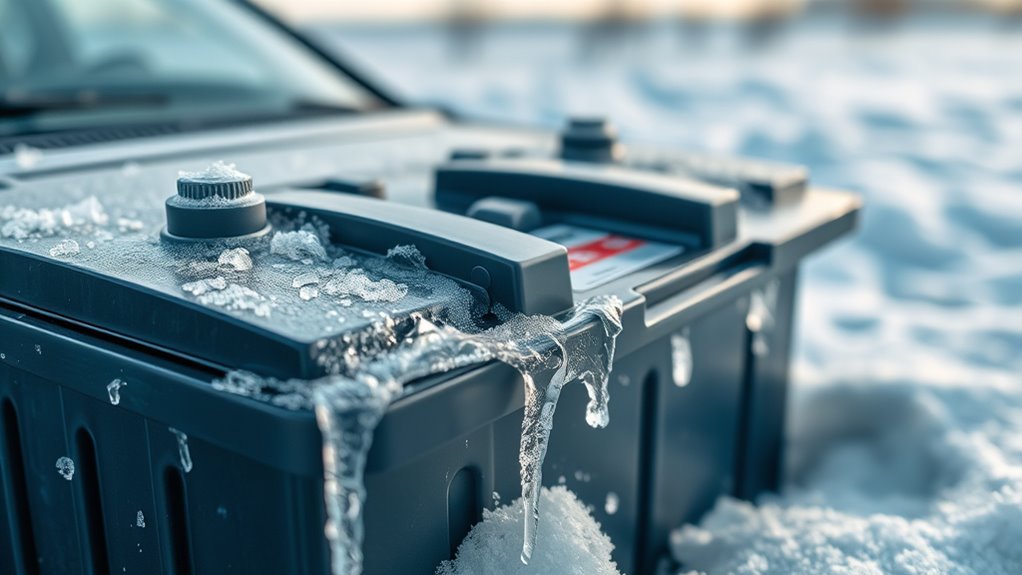
Cold temperatures slow down the chemical reactions inside lithium-ion batteries, which directly reduces their energy output. When it’s cold, the reactions that generate electrical current happen more slowly, causing a drop in the battery’s open-circuit voltage and overall usable energy. In lab and field tests, energy can decrease to about 75% at −10°C compared to 25°C. Real-world data confirms this, showing winter efficiency declines of 10–39%, with some cases over 50%. Cold also increases the internal resistance within the battery, making it harder to deliver power and reducing the effective state of charge. As a result, your EV’s range drops, and you may notice a significant decrease in performance during colder months. Additionally, the washability of certain battery components can be compromised by extreme cold, further impacting performance. Proper thermal management can help mitigate these effects and maintain better battery performance in winter conditions. Moreover, reduced temperature can affect the battery life cycle, leading to faster degradation over time if not properly managed. Incorporating advanced materials in battery design may also help improve performance in cold climates. Developing sustainable practices in battery design may also help improve performance in cold climates.
Challenges of Charging in Winter Conditions

Charging your EV in winter presents unique challenges because the battery’s internal chemistry slows down at low temperatures, making it accept charge more slowly and reducing overall efficiency. Cold cells resist charging, and protective thermal strategies limit the rate to prevent damage. You’ll notice longer charge times and lower power output, especially during fast-charging sessions. Without preconditioning, charging stations may throttle power, prolonging your stop. The battery generates less heat naturally, so energy is diverted from driving to warm the pack, further reducing range. Additionally, the thermal management system consumes extra energy to keep the battery at optimal temperatures, impacting overall efficiency. Properly managing battery temperature can help mitigate some of these issues and improve winter charging performance. For example, pre-heating the battery before charging can significantly reduce charge time and improve efficiency. Imagine:
- Reduced charging speeds, with fewer kilowatts delivered
- Longer wait times at fast chargers
- Throttled charging power without pre-warming
- Increased energy consumption to heat the battery during charging
- Limited charging capacity due to cold-induced chemistry slowdown
- The importance of temperature regulation in maintaining optimal performance
These factors make winter charging more deliberate and less efficient.
The Role of Cabin Heating and Accessory Loads on Range

Heating your vehicle’s cabin in winter can substantially impact your EV’s range because the energy used for heating competes with propulsion. When you turn on the heater, your battery supplies energy to warm the interior, reducing the power available for driving. Using full cabin heat consumes significant energy, especially in very cold conditions, leading to noticeable range drops. To minimize this, opt for seat or steering wheel heaters, which use less energy than heating the entire cabin. Preconditioning the vehicle while plugged in can also help, as it warms the cabin without draining the battery during the trip. Parking in sheltered areas or garages further reduces the need for extensive heating and helps preserve your range on cold days. Additionally, understanding your vehicle’s accessory loads and managing them efficiently can further optimize range during winter conditions. Being aware of your vehicle’s thermal management system can also enhance energy efficiency and help maintain optimal battery performance in cold weather. Properly maintaining your battery thermal management system can significantly improve cold-weather range and battery longevity. Moreover, monitoring your vehicle’s temperature sensors can provide better insights for adjusting driving habits in winter.
Battery Thermal Management Strategies for Cold Weather

Active battery thermal management systems keep your battery warm or cool to prevent cold-weather performance issues. Preconditioning your vehicle while plugged in helps raise battery temperature without draining your range. These strategies ensure better efficiency, faster charging, and more reliable power in cold conditions. Incorporating smart home automation can further optimize energy use and maintain ideal battery temperatures through integrated climate control systems. Additionally, implementing thermal insulation around battery packs can help retain heat and improve overall temperature stability during extreme cold. Proper system integration allows for seamless control and more effective temperature regulation. Employing temperature sensors can provide real-time data to adjust heating or cooling for optimal performance.
Active Cooling and Heating
Battery thermal management systems (BTMS) play a crucial role in maintaining ideal performance during cold weather by actively regulating the temperature of your EV’s battery pack. They use heating elements, coolant loops, and fans to warm or insulate the battery, ensuring optimal operation. Active cooling can prevent overheating during high loads, while heating keeps the pack above freezing. Imagine:
- Pumping warm coolant through battery cells to prevent cold soak
- Using electric heaters to rapidly raise temperature before driving
- Circulating coolant to evenly distribute heat across the pack
- Applying insulation to retain heat during parked periods
These strategies help reduce capacity loss, improve charging speed, and sustain power output. Properly managed, active thermal control keeps your battery functioning efficiently in winter’s chill, ensuring reliable performance when you need it most. Additionally, understanding wall surfaces and finishes can aid in designing effective insulation strategies to further enhance thermal retention. Recognizing thermal behavior is essential when developing insulation and heating approaches to optimize energy efficiency and maintain consistent temperature control. Incorporating thermal management techniques can also extend battery life and improve overall vehicle reliability in cold conditions. Moreover, employing insulation materials effectively can further minimize heat loss and improve system efficiency. Being aware of thermal conductivity helps in selecting the right materials to maximize heat retention and system performance.
Preconditioning Benefits
Preconditioning your electric vehicle while plugged in offers significant advantages in cold weather by optimizing battery temperature before driving. This process warms the battery to a suitable temperature, reducing internal resistance and improving power delivery, efficiency, and charge rates. It also minimizes the energy drain from cabin heating, preserving range. Preconditioning guarantees the battery reaches an ideal operating temperature, enabling faster, more efficient charging and preventing issues like lithium plating. By warming the battery and cabin while connected to power, you avoid depleting your pack during cold starts. Many EVs allow scheduled preconditioning, so you can set it to activate before departure. Battery thermal management strategies are essential for maintaining optimal performance in low temperatures. Implementing thermal regulation techniques can significantly enhance winter driving conditions, ensuring your vehicle performs reliably. This simple step enhances overall winter performance, reduces range loss, and helps your vehicle operate safely and efficiently in low temperatures.
Practical Tips to Prepare Your EV for Winter
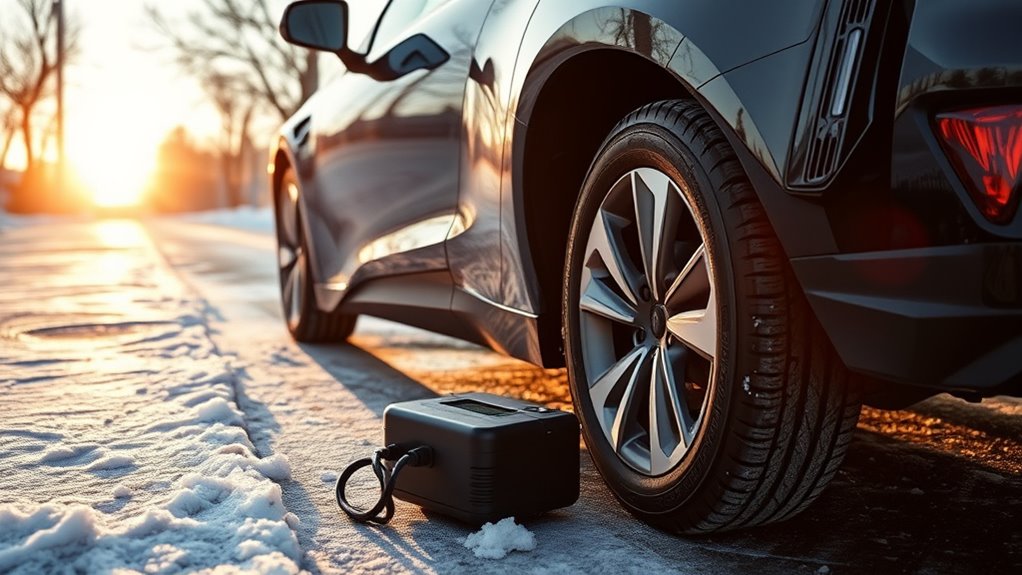
Before you head out in cold weather, precondition your vehicle while it’s still plugged in to warm the battery and cabin. This helps conserve range and ensures faster charging when you arrive at your destination. To save energy, opt for heated seats or steering wheels instead of blasting the full cabin heater.
Precondition Before Leaving
Warming up your EV’s battery and cabin while plugged in is one of the most effective ways to prepare for winter trips. Preconditioning ensures the battery reaches an ideal temperature, reducing cold-related efficiency drops and charging issues. Before leaving, consider these actions:
- Connect your EV to a charger well in advance to allow thermal management systems to warm the pack.
- Use your vehicle’s app or timer to schedule preconditioning during off-peak hours.
- Focus on heated seats or steering instead of the full cabin to conserve energy.
- Park in a garage or sheltered area to minimize cold soak and maintain higher battery temperature.
These steps help maximize range, improve charging speed, and reduce energy used for heating during your trip, making winter driving more manageable.
Optimize Cabin Heating
Optimizing your cabin heating can considerably extend your EV’s winter range and improve comfort. Start by preconditioning your vehicle while plugged in, so the cabin warms without draining the battery. Use heated seats and steering wheels instead of blasting the entire cabin, as these use less energy. Park in a garage or sheltered area to reduce cold soak and maintain higher battery temperatures. Set your climate control to a moderate temperature—around 72°F—since higher settings increase energy consumption. Use timed charging to finish just before departure, ensuring the cabin warms up efficiently without depleting your pack. Avoid high-speed driving and aggressive acceleration, which demand more power in cold conditions. These simple steps help conserve energy and keep you comfortable on winter drives.
How Driving Habits and Parking Choices Affect Cold Weather Performance
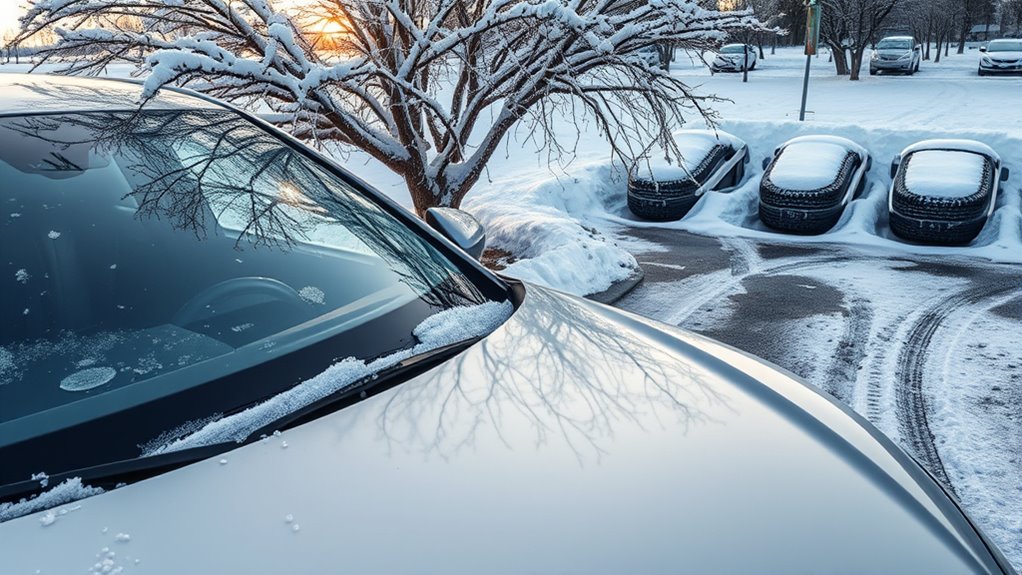
Your driving habits and parking choices considerably influence how well your EV performs in cold weather. Sudden acceleration and high speeds increase current draw, making the battery work harder and reducing range. Heavy braking and rapid deceleration can strain the battery further, especially when cold. Parking outside exposes your vehicle to low temperatures, causing the battery to soak in the cold and lose usable capacity. Conversely, parking in a garage or sheltered area keeps the battery warmer. Preconditioning the battery while plugged in is a smart move. Limiting aggressive driving, avoiding high speeds, and choosing sheltered parking spots help maintain higher battery temperatures. These small adjustments can markedly reduce cold-related range loss and improve overall winter performance.
Making Informed Decisions for Winter EV Use and Planning
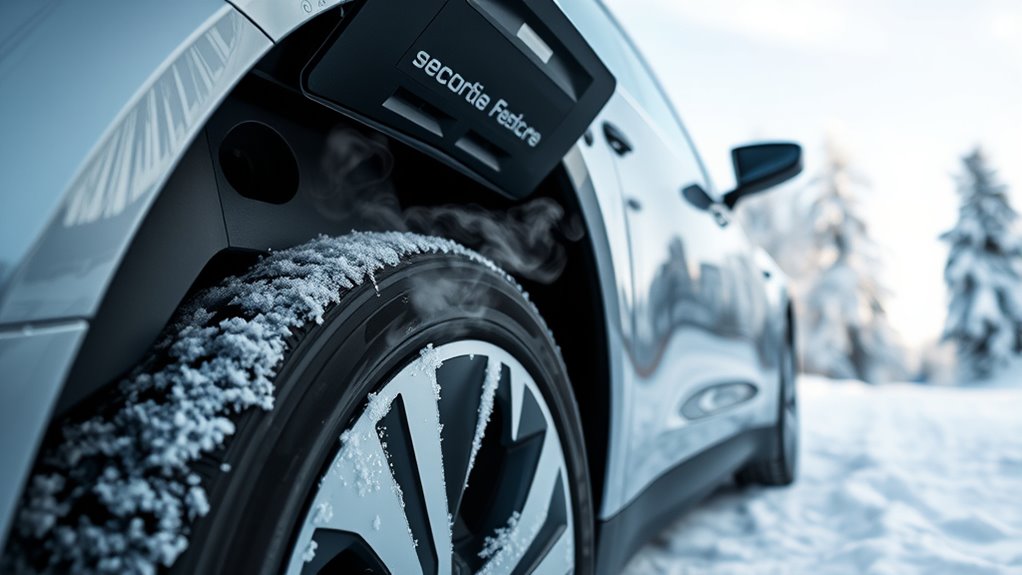
To make informed decisions for winter EV use and planning, understanding how cold weather impacts battery performance is essential. Cold temperatures reduce usable capacity because chemical reactions slow, decreasing voltage and energy output. Expect range to drop by 10–39%, with some vehicles losing over 50%. Charging slows down as internal resistance increases, and fast-charging may be limited until the battery warms. HVAC use and accessory loads further drain the battery, reducing range. Mitigate these effects by preconditioning the vehicle while plugged in, using heated seats instead of cabin heat, parking indoors, and planning trips with extra range margins. Keeping the battery warm and minimizing high-current driving can help maintain performance. These strategies enable you to make smarter, more reliable winter EV decisions.
Frequently Asked Questions
How Does Cold Weather Affect EV Battery Lifespan Over Time?
Cold weather can accelerate EV battery aging over time because frequent exposure to low temperatures causes the chemical reactions inside the battery to slow down, leading to increased internal resistance and potential capacity loss. Repeated cold cycles strain the battery’s thermal management system, which can wear out faster if not properly maintained. To extend your battery’s lifespan, keep it warm with preconditioning, park indoors, and avoid deep discharges during winter.
Can Aftermarket Thermal Accessories Improve Cold Weather EV Performance?
Yes, aftermarket thermal accessories can improve cold weather EV performance. By adding insulation, heated blankets, or thermal wraps, you help keep your battery warmer, which maintains higher voltage, reduces internal resistance, and improves charging and driving efficiency. These accessories also minimize the need for extensive cabin heating, saving battery energy. Just make certain compatibility with your vehicle and follow manufacturer guidelines to avoid damaging your battery or thermal system.
What Are the Best Ways to Minimize HVAC Energy Drain During Winter Drives?
You can cut HVAC energy drain by using heated seats or steering wheels instead of full cabin heat, especially during winter drives. Precondition your vehicle while plugged in to warm the battery and cabin before departure, and park in sheltered areas to reduce cold soak. Keep driving at moderate speeds and avoid heavy acceleration, which demand more energy. Planning trips with conservative range margins also helps, ensuring you don’t rely heavily on HVAC heating.
Do Different EV Models Perform Better in Cold Climates?
Yes, some EV models perform better in cold climates. Vehicles with advanced thermal management systems and efficient heat insulation maintain higher range and charging speeds when it’s cold. You’ll find that models with stronger battery thermal controls and preconditioning features handle low temperatures more effectively, reducing range loss. So, if you live in a cold area, choose an EV designed with robust cold-weather strategies to guarantee better winter performance and reliability.
How Do Cold Temperatures Influence Regenerative Braking Efficiency?
Cold temperatures reduce regenerative braking efficiency because the battery’s internal resistance increases, limiting how much energy it can recover. When it’s cold, the system reduces regen rates to protect the pack, meaning you get less energy back during deceleration. To maximize regen in winter, precondition your battery while plugged in, keep the vehicle warm, and drive smoothly to avoid high current demands that further impair regen capability.
Conclusion
Think of your EV battery as a delicate plant that thrives in warmth but wilts in the cold. By giving it proper care—warming it before drives, parking in sunlit spots, and adjusting your habits—you’re nurturing its health through winter’s chill. With a little preparation, you’ll keep your EV blooming despite the frost, ensuring it performs reliably just like a resilient garden that flourishes despite the harshest seasons. Stay proactive, and winter won’t catch your battery off guard.
Fall Picks
fall essentials
As an affiliate, we earn on qualifying purchases.