TL;DR

Get backup power and energy gear delivered free with Prime
- Fast, free delivery on millions of items
- Prime Video, Amazon Music and more included
- Member-only deals all year
A gas leak from Sherry Frazier’s furnace sent her and her daughter out of their Baltimore home after they developed headaches and dizziness. A retrofit coordinated by Green & Healthy Homes Initiative replaced gas appliances and added solar panels; the nonprofit says eligible low-income households can receive its services at no cost.
Sherry Frazier’s Baltimore home was converted from gas to all-electric after a furnace leak sent her and her daughter outside with headaches and dizziness, according to a report by Canary Media. The retrofit, which included solar panels, was coordinated by the nonprofit Green & Healthy Homes Initiative (GHHI), which covers the full cost for low-income households that qualify for its services.
Frazier, a retired educator who worked with students with disabilities in Baltimore public schools, said the leak forced her and her daughter to leave the house. “Oh, it was awful,” she told Canary Media. She described both of them as having bad headaches and feeling dizzy and unsteady. Frazier said she feared they could have ended up in the hospital if they had stayed longer. The source report does not provide the leak’s date or identify how it was detected.
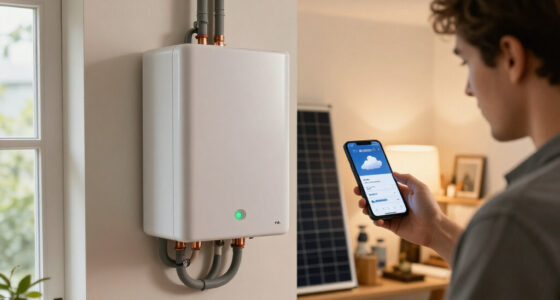
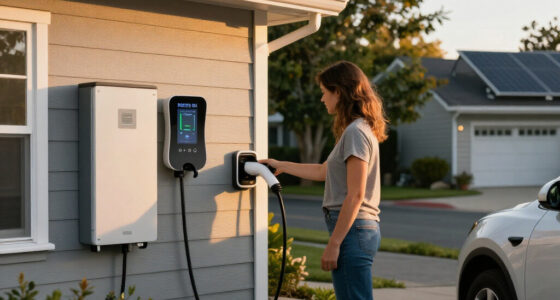
GHHI coordinated a broad home retrofit that replaced gas appliances with electric equipment and installed solar panels. Frazier said she feels safer at home and that her utility bill for heating and air conditioning is much lower. Those are her reported experiences; the source does not give bill amounts, a before-and-after energy analysis, or details about the installed equipment.
The nonprofit’s approach includes addressing home repairs and hazards as well as replacing appliances. For eligible low-income households, GHHI covers the entire cost of its services, drawing on local and federal programs and private funding. The source does not specify the total cost of Frazier’s project or which individual funding sources paid for it.
Health and Costs in One Retrofit
Frazier’s experience shows how a housing repair can involve both an immediate safety concern and longer-term household costs. A furnace leak led her and her daughter to leave their home; afterward, the retrofit changed how the house is heated and cooled and, Frazier said, reduced her utility bill. The case connects home safety, energy use and affordability without establishing that every household will see the same results.
The funding model matters because replacing appliances or addressing older-home hazards can be beyond the reach of residents who cannot pay for repairs themselves. GHHI says it combines public and private funding to cover work for qualifying households. Its approach also treats repairs as connected: installing new equipment may not be enough if a home has other safety problems that need attention. The source provides no data on the program’s overall energy savings, health outcomes, or the number of households that received complete electrification.
Products Worth Considering

Bose Lifestyle Ultra Compact Wireless Smart Home Speaker Bundle, Black

Bose Lifestyle Ultra Wireless Home Speaker, White Smoke

Arlo Pro Wireless Security Camera, 2K HDR, 6th Generation, 4-Camera System
As an affiliate, we earn on qualifying purchases.
GHHI’s Whole-Home Approach
GHHI began in Baltimore with a focus on preventing lead poisoning in children. Its president and CEO, Ruth Ann Norton, said the organization came to view housing conditions more broadly, linking lead-related concerns with other risks in homes. In a July webinar, Norton said GHHI wanted to address problems associated with “carbon-emitting appliances and homes,” including potential effects on neurological and reproductive development and long-term health.
The nonprofit serves Baltimore and Providence, Rhode Island, and advises about 50 cities and 12 states, according to the source report. It works on hazards that can accompany older housing, including rotten roofs, mold, lead and asbestos, before or alongside energy upgrades. The report cites a median U.S. housing-stock age of 44 years, but does not specify the date or underlying dataset for that figure.
GHHI draws on sources including Maryland’s EmPOWER program, the U.S. Department of Housing and Urban Development’s Office of Lead Hazard Control and Healthy Housing, philanthropic organizations, healthcare companies and utilities. The report does not indicate which of those sources supported Frazier’s specific retrofit.
Project Costs and Outcomes Unreported
The source does not state when the leak occurred, the precise cause of the leak, or what testing confirmed the symptoms’ source. It also does not list the appliances installed, the retrofit’s total cost, the specific funding used for Frazier’s home, or the amount of her utility-bill reduction. Frazier’s account of feeling safer and paying less is not accompanied by independent measurements or a billing comparison.
GHHI’s full-cost assistance applies to low-income households that qualify, but the report does not set out the eligibility rules, application process, wait times or availability of funds. It also provides no program-wide figures that would show how often households receive a similar all-electric retrofit or what health and energy outcomes follow.
Eligibility and Funding Details
The report describes Frazier’s retrofit as completed but gives no next project milestone or schedule. Residents interested in similar work would need to check directly with GHHI or local housing and energy programs to learn whether services are available in their area, whether they qualify, and which repairs or upgrades can be covered. Funding and eligibility may vary by program and location; the source does not confirm that every applicant can receive a fully funded conversion.
Further reporting on program costs, household eligibility, project wait times and measured energy or health outcomes would help show how widely this model can be applied. For now, Frazier’s reported experience is a specific example of a nonprofit-funded whole-home retrofit, not evidence that every gas-to-electric conversion will cost nothing or produce the same savings.
Key Questions
What happened to Sherry Frazier’s furnace?
Frazier told Canary Media that a gas leak from her furnace forced her and her daughter out of their Baltimore home. Both experienced headaches and dizziness, according to her account. The report does not state the leak’s date or exact cause.
What changes were made to her home?
GHHI coordinated a retrofit that made the home all-electric and added solar panels. The report does not provide a full equipment list or technical details about the installation.
How was the retrofit paid for?
GHHI says it covers the full cost of its services for eligible low-income households, using public and private funding. The report does not identify the specific funding sources or total project cost for Frazier’s home.
Did the retrofit lower Frazier’s utility bills?
Frazier said her bill for heating and air conditioning is much lower. The source does not provide bill amounts, a time period for comparison, or independent data measuring the change.
Can other households receive the same free work?
Possibly, if they qualify for GHHI services and live in an area it serves or advises. Eligibility, coverage and funding availability are not detailed in the report and may vary by program and location.
Source: canarymedia.com