
To prepare for a hurricane evacuation, start by fully charging your mobile phones, tablets, portable power banks, and medical devices with backup batteries. Pack your chargers, multiport hubs, and solar chargers for extended outages. Secure backup power sources like high-capacity power stations and spare batteries, and make sure your generator is fueled and ready. Unplug unnecessary appliances and label circuit breakers. To learn more about organizing your power plan effectively, keep going for essential tips.
Listen free for 30 days with Audible
Thousands of audiobooks and originals — cancel anytime.
As an affiliate, we earn on qualifying purchases.
Key Takeaways
- Fully charge essential mobile devices, power banks, NOAA radios, and medical devices with backup batteries.
- Top off vehicle batteries and fuel to ensure reliable transportation and backup power.
- Pack portable power stations, high-capacity USB power banks, solar chargers, and necessary cables for extended outages.
- Prepare and label backup batteries for medical devices, and include DC adapters and vehicle-to-device cables.
- Unplug non-essential electronics, secure circuit breakers, and verify safety alarms before evacuation.
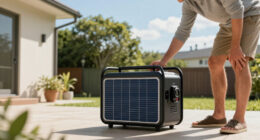
portable power station for emergency backup
As an affiliate, we earn on qualifying purchases.
As an affiliate, we earn on qualifying purchases.
Prioritizing Device Charging Before Evacuation

Before evacuating, it’s crucial to make certain your devices are fully charged to maintain communication and access emergency information. Start by charging your cell phones and tablets to 100%, then store them in a protective, easy-access pouch. Fully charge portable power banks and label their capacity for quick identification. Don’t forget to top off your vehicle’s battery and fuel it to at least 90%, as your car can serve as a backup power source. Charge rechargeable flashlights, headlamps, and two-way radios, keeping spare batteries in waterproof containers. Additionally, ensure medical devices like oxygen concentrators or insulin pumps are charged and pack backup batteries or adapters. Prioritizing these devices guarantees you’ll stay connected and prepared during emergencies. Energy-efficient cloud servers demonstrate how adopting sustainable technology can support resilient communication infrastructure during crises. Device readiness also involves verifying that all chargers and cables are functional and readily available for quick use in urgent situations.
As an affiliate, we earn on qualifying purchases.
Essential Power-Dependent Items to Include in Your Kit
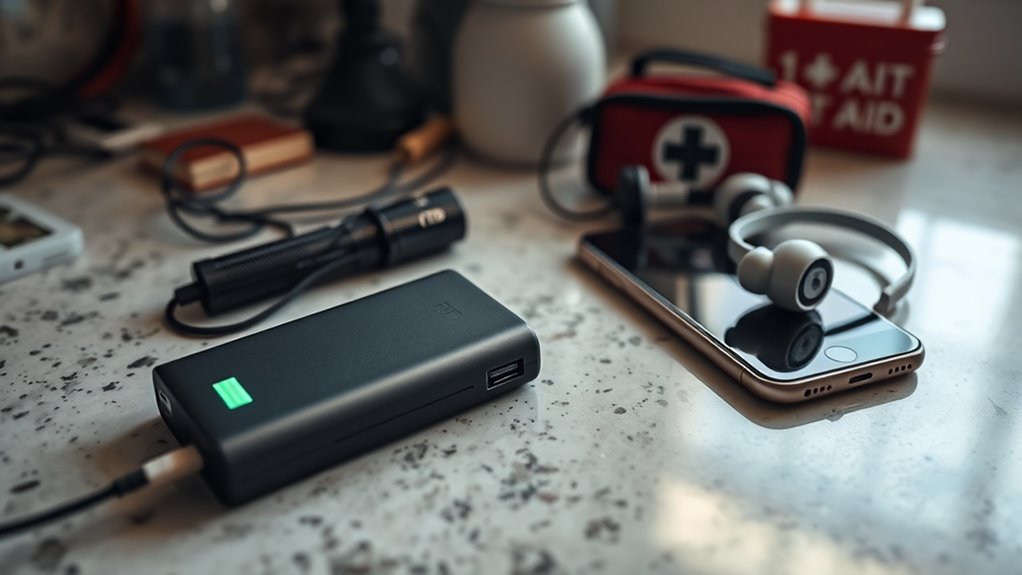
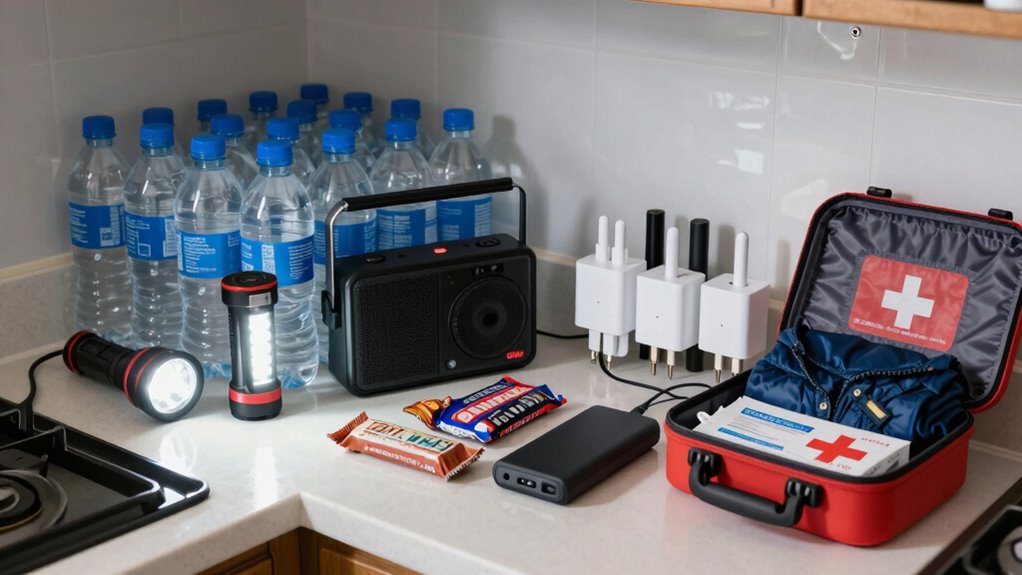
When assembling your evacuation kit, focus on power-dependent items that guarantee you can communicate, stay informed, and maintain basic medical needs. Pack your mobile phones with chargers and a compact power bank for immediate use. Include a battery-powered or hand-crank NOAA/weather radio to receive alerts if cellular service fails. Carry a flashlight and headlamp with spare batteries for visibility in darkness or flooded conditions. Ensure you have backup power sources for medical devices, like spare batteries or portable chargers for insulin or oxygen concentrators. Bring multiport charging hubs and various charging cables (USB-C, Lightning, Micro-USB) to maximize outlets. Additionally, power management strategies can help you conserve battery life and ensure your devices remain operational during extended outages. Using device efficiency tips can further extend your battery life and keep your essential electronics running longer. Practicing energy conservation methods can help prolong your device usage as power sources dwindle. Incorporating preparedness techniques into your routine can make all the difference in staying safe during an emergency. These essentials keep you connected, safe, and able to respond during power outages, ensuring critical communication and medical support when you need it most. Proper planning can make all the difference in staying safe during an emergency.
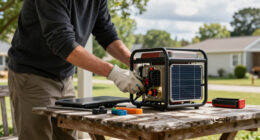
solar charger for camping and emergencies
As an affiliate, we earn on qualifying purchases.
As an affiliate, we earn on qualifying purchases.
Selecting Portable Power Options for Extended Outages

To guarantee your devices stay powered during extended outages, selecting the right portable power options is essential. You need reliable sources that can support essential devices over time. Consider carrying a high-capacity portable power station rated between 300–1000 Wh, capable of charging multiple devices simultaneously. Include several USB power banks with a combined capacity of 20,000–50,000 mAh for staggered recharges. Solar chargers with at least 20W output and integrated charge controllers are excellent for prolonged outages. Vehicle-to-device charging cables and a 12V DC adapter let you harness your car or generator as a power source. Don’t forget spare batteries—AA, AAA, or specialty types stored in sealed containers—to keep flashlights, radios, and medical devices operational. Power management strategies can help you optimize your energy use and extend your backup power during emergencies. Additionally, understanding load‑planning can ensure your power sources are sufficient for your critical devices without overloading your system. Familiarizing yourself with battery capacity can help you better estimate how long your devices will run on each power source. To further maximize efficiency, consider energy conservation techniques such as turning off unused devices and using low-power modes whenever possible. Implementing efficient charging methods can also prolong the life of your backup batteries and power sources.
NOAA weather radio with batteries
As an affiliate, we earn on qualifying purchases.
As an affiliate, we earn on qualifying purchases.
Preparing Your Generator and Fuel Supplies

Before evacuating, you need to guarantee your generator and fuel supplies are safe and ready to use. Check your fuel storage for leaks and proper labeling, and perform maintenance on the generator to prevent issues later. Make sure you transport fuel carefully, using approved containers and following safety guidelines to avoid spills or accidents. Additionally, familiarize yourself with deep-sky imaging techniques to safely monitor your equipment during power outages. Properly understanding water quality and maintenance can also help ensure that your essential systems remain reliable during emergencies. Ensuring your pilot gear is accessible and in good condition can also be crucial if you need to evacuate swiftly. Recognizing market trends in emergency supplies can help you better prepare and stock the necessary items effectively. Paying attention to piercings and their healing needs can be relevant if you require medical assistance during your evacuation.
Fuel Storage and Safety
Are you prepared to store fuel safely for your generator during a hurricane evacuation? Proper fuel storage minimizes fire risks and guarantees your generator runs smoothly. Use approved containers designed for fuel, and keep them outside living areas—away from windows, vents, and ignition sources. Never store more fuel than needed; excess fuel increases danger. Label containers with fuel type and date to monitor freshness. Ensure fuel is tightly sealed and stored upright to prevent leaks. Always handle fuel with care, using spill-proof tools. Keep fire extinguishers nearby and avoid smoking or open flames near stored fuel. Regularly inspect containers for damage or leaks. Proper storage techniques and following safety steps help prevent accidents. Additionally, maintaining correct ventilation during storage can significantly reduce the buildup of dangerous fumes. Remember that fuel vapor hazards can be severe if proper precautions are not followed. By following these safety steps, you protect yourself and your property during emergencies.
Generator Maintenance Checks
Have you checked your generator’s condition recently? Ensure it’s in good working order by inspecting for visible damage, loose parts, or corrosion. Change the oil according to the manufacturer’s instructions and replace filters if needed. Test run the generator to confirm it starts smoothly and runs steadily. Verify that the spark plugs, air filters, and fuel lines are clean and functioning properly. Check the battery, if applicable, and ensure connections are secure. Confirm that the fuel is fresh and stored in approved containers, avoiding old or contaminated supplies. Keep a wrench, spare spark plugs, and oil on hand for quick maintenance. Document your generator’s make, model, and start-up procedure on a waterproof card for easy reference during an emergency. Additionally, regularly performing appliance testing can ensure safety and proper operation during power outages. Regularly testing your generator’s load capacity helps prevent overloads and ensures it can handle essential appliances when needed. Remember to review your fuel supplies periodically to maintain freshness and prevent storage issues. Performing routine maintenance checks on your generator can extend its lifespan and ensure reliable performance when it’s most needed. Moreover, maintaining a comprehensive maintenance log can help track service intervals and potential issues over time.
Proper Fuel Transportation
Proper fuel transportation is essential to guarantee your generator operates safely and reliably during an emergency. You need to transport fuel carefully to prevent spills, leaks, or accidents. Always use approved, sealed containers designed for fuel storage, and keep them away from living areas. Secure your containers firmly in your vehicle to avoid tipping or sliding during transit. Label all containers with fuel type and date to track freshness and safety. Avoid overfilling to allow for expansion and reduce spill risks. Maintain proper ventilation during transport, and do not leave fuel inside the vehicle for extended periods. Consider bringing spare containers in case you need extra fuel en route. Proper handling ensures your generator stays ready and safe when you need it most.
- Use approved, sealed fuel containers designed for transport
- Secure containers firmly in your vehicle to prevent tipping
- Label fuel with type and fill date for safety
- Avoid overfilling to prevent spills and expansion
- Keep fuel away from living spaces and in well-ventilated areas
Safely Managing Electrical Equipment and Circuit Breakers

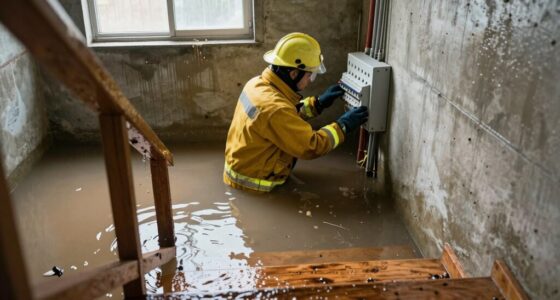
To manage electrical equipment safely during a hurricane evacuation, you should prioritize shutting off and unplugging non-essential devices before power is lost. This prevents surge damage and reduces fire risk. Turn off circuit breakers for non-critical circuits, like entertainment systems or extra outlets. Keep essential appliances—like refrigerators and medical devices—on designated circuits. Use a circuit breaker panel diagram to identify critical breakers for quick action. Secure and label circuit breakers for easy access during emergencies. Maintain a written checklist near the main panel to ensure consistent shutdowns under stress.
| Action | Purpose |
|---|---|
| Unplug non-essential devices | Prevent surge damage and fire risk |
| Turn off main circuit breaker | Cut power supply to entire system |
| Label critical breakers | Quick identification during stress |
| Secure and fasten panels | Avoid accidental activation or damage |
| Keep checklist nearby | Ensure systematic shutdown |
Organizing Important Documents and Emergency Information

You should gather both digital and paper copies of essential documents like IDs, insurance policies, and medical records, storing them in a waterproof pouch for quick access. Make sure to include emergency contact details and utility account numbers, printed and saved on your devices. Organize these items so you can easily find and share them during and after evacuation.
Digital and Paper Copies
Organizing your important documents and emergency information guarantees quick access during a hurricane evacuation. You should prepare digital and paper copies to guarantee you’re covered if power or network outages occur. Keep digital copies on a secure USB drive or external hard drive, and store them in a waterproof pouch. Also, print physical copies of key documents and keep them in a waterproof container. This way, you can access your information even if digital devices fail. Consider creating a list of essential documents such as IDs, insurance policies, medical records, and emergency contacts. Keep a backup copy in the cloud or on a secure online platform. Having both digital and paper copies ready helps you act swiftly and reduces stress during an emergency.
Emergency Contact Details
Having your emergency contact details readily accessible guarantees you can quickly reach loved ones, authorities, or service providers during a hurricane. Prepare a printed list with key numbers, including family, neighbors, medical contacts, and local emergency agencies. Store this list in a waterproof pouch near your evacuation kit for easy access. Use a clear, organized format to avoid delays in stress. Also, preprogram important contacts into your phone and save offline maps and routes. Keep a backup of digital copies on a USB drive or cloud storage, and include relevant medical info and insurance policies. This assures you’re prepared to communicate swiftly and effectively, even if power or networks fail.
| Contact Type | Details |
|---|---|
| Family & Friends | Phone numbers, addresses |
| Emergency Services | Local police, fire, hospitals |
| Medical Contacts | Doctors, pharmacies |
| Utility Providers | Gas, water, electricity accounts |
Securing Medical Devices and Backup Power Solutions
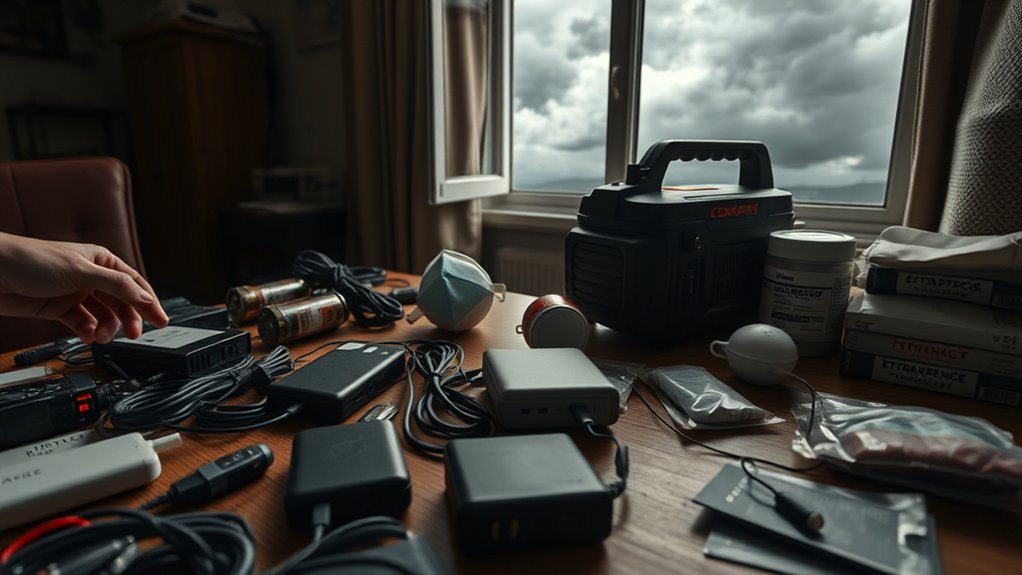
Securing medical devices and backup power solutions is critical to maintaining health and safety during a hurricane evacuation. You need to guarantee essential devices stay operational and charged. Start by charging medical equipment like oxygen concentrators, CPAP batteries, and insulin pumps. Pack device-specific backup batteries or DC adapters for quick replacements. Keep spare batteries in waterproof containers and label capacity for easy identification. Prioritize portable power banks rated for medical devices, ensuring they’re fully charged and accessible. Include solar chargers for extended outages, and carry vehicle-to-device charging cables. Store all essential medical supplies and backup power options in an easy-to-reach, waterproof bag. Doing so guarantees you maintain vital functions and respond effectively during power disruptions caused by the storm.
Packing and Labeling Power Banks and Batteries Effectively

Packing and labeling power banks and batteries properly guarantees you can quickly identify and access the right power sources during an emergency. Use permanent markers or labels to note capacity (mAh or Wh) and device compatibility. Store each in clearly marked, waterproof containers or resealable bags to prevent damage and confusion. Arrange power banks by priority, such as those for medical devices or communication tools, and keep them in easy-to-reach compartments. For batteries, separate rechargeable and disposable types, labeling each with size and quantity. Keep backup batteries in sealed, labeled containers to avoid corrosion. Make certain cables and adapters are bundled and labeled for quick connection. Proper organization minimizes search time, helping you conserve energy and stay prepared when every second counts.
Final Checklist for Power Readiness and Safety Measures

Before you leave, double-check that all your power sources are fully charged, labeled, and organized for quick access. Confirm devices like phones, power banks, and medical equipment are ready to go. Make certain portable power stations and solar chargers are packed and functional. Verify generator fuel levels and store extra fuel safely. Turn off unnecessary electronics and unplug appliances to prevent surges. Raise or relocate critical electronics to avoid flood damage. Secure circuit breakers for essential circuits and label them clearly. Pack waterproof copies of important documents, medical records, and inventory photos. List emergency contacts and utility info, keeping printed copies handy. Confirm all safety measures, like ventilation and CO alarms, are in place. With these steps, you’ll ensure your power readiness and safety during evacuation.
Frequently Asked Questions
How Can I Test My Backup Power Sources Before Evacuation?
You should regularly test your backup power sources by fully charging them and running them under load for a few hours. Check that all devices, like power banks, solar chargers, and generators, operate correctly and hold a charge. Keep spare batteries in waterproof containers. Periodically verify connections and functionality, especially before evacuation, to make sure they’ll work when you need them most.
What Are the Best Ways to Prevent Power Bank Damage During Transport?
Think of your power bank as a fragile treasure—handle it with care during transport. Keep it in a padded, waterproof pouch to prevent bumps and moisture. Avoid extreme temperatures and direct sunlight, which can damage batteries. Secure it upright in a dedicated compartment, away from heavy items or sharp objects. Disconnect and turn it off before packing, ensuring it’s fully charged but not overfilled, to keep your power safe during the journey.
How Do I Safely Store Extra Fuel for My Generator?
You should store extra generator fuel in approved, clearly labeled containers designed for flammable liquids. Keep these containers upright in a cool, well-ventilated area away from living spaces, heat sources, and electrical outlets. Secure them to prevent spills during transport, and never store fuel inside your vehicle or home. Always follow local regulations and manufacturer instructions for safe storage, and make certain containers are tightly sealed to prevent leaks.
What Should I Do if My Circuits Don’t Shut off Properly?
If your circuits refuse to shut off, don’t panic—just pretend you’re a superhero in disguise. First, flip the main breaker carefully, then turn off individual circuit breakers to isolate the problem. If that doesn’t work, call a professional electrician—your cape can wait. Avoid tampering with live wires or emergency shutoffs unless you’re trained; safety always comes first, even when you’re feeling mighty.
How Can I Protect Sensitive Medical Devices From Power Surges?
To safeguard your sensitive medical devices from power surges, you should connect them to surge protectors or uninterruptible power supplies (UPS) rated for medical equipment. Confirm the surge protectors are certified and have adequate joule ratings. Always plug devices directly into these protectors, avoid daisy-chaining multiple power strips, and disconnect devices during storms or when not in use. Regularly check and replace surge protectors to maintain peak protection.
Conclusion
Just when you think you’re fully prepared, the power might cut out anyway. But if you’ve charged your devices, stocked your backup power, and organized your essentials, you’ll be ahead of the game—at least for a little while. Ironically, the very tools meant to keep you safe could leave you in the dark if overlooked. So, double-check, pack smart, and hope for the best—because sometimes, preparedness only goes so far.
Back to school Picks
back to school
As an affiliate, we earn on qualifying purchases.