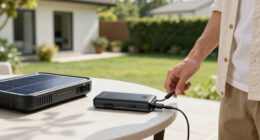
To add hours of runtime, you need to optimize your solar panels’ angle based on your location and season. Adjust the tilt according to the sun’s path, increasing it in winter and lowering it in summer. Using proper tools and mounting systems makes this easier and more precise. Maintaining the correct angle guarantees maximum sunlight exposure, reduces shading, and boosts efficiency. Keep exploring to discover more tips on solar setup that can maximize your energy output.
Key Takeaways
- Adjusting panel tilt seasonally maximizes sunlight absorption, increasing overall runtime.
- Properly aligning panels to the sun’s path reduces shading and debris buildup, boosting efficiency.
- Using adjustable mounts allows for tilt modifications based on geographic location and seasonal changes.
- Avoiding obstacles and shading during setup ensures maximum sunlight exposure and longer operational hours.
- Regular maintenance and correct tilt angles enhance panel performance, extending runtime and system reliability.

AeternaSol 45 Inch 2 Sets Solar Panel Mounting Brackets Kit 0-90 Adjustable Solar Panel Tilt Mount Brackets for 100-400W Panels Windproof for Roof,RV,Ground,Boat and Off-Grid. (2Sets)
- Material and Durability: Aluminum alloy, corrosion-resistant, withstands harsh weather
- Wind and Snow Load Capacity: Supports 2400Pa wind, 1.4 kN/m² snow loads
- Adjustable Tilt Angle: 0°-90° tilt for optimal sun exposure
As an affiliate, we earn on qualifying purchases.
As an affiliate, we earn on qualifying purchases.
Understanding the Sun’s Path Throughout the Year
Have you ever wondered how the sun’s position changes throughout the year? It directly affects how your solar panels perform, especially in shadow casting. As the sun moves higher or lower, its angle alters the amount of sunlight hitting your panels, impacting inverter efficiency. During summer, the sun’s higher position means more direct sunlight, reducing shadows and maximizing energy output. Conversely, in winter, lower sun angles create longer shadows that can block parts of your panels, decreasing efficiency. Understanding this solar path helps you optimize panel placement and tilt, ensuring you get the most sunlight year-round. Recognizing the solar path is key to designing energy-efficient solar setups. Additionally, understanding the seasonal sun angles allows for better planning and adjustment of panel orientation to maximize energy capture throughout the year. Being aware of the solar trajectory can also guide you in selecting the best locations for installation to enhance overall performance, especially considering solar radiation patterns. Gaining knowledge about solar angles can further improve your ability to predict optimal tilt and orientation for different seasons.

Solar Angle Guide for Solar Panel – Keopuals Solar Panel Accessories Find The Optimal Angle for Solar Panels Tools
- Find Optimal Solar Panel Angle: Maximize energy output and efficiency
- Easy to Use Adjustment: Align shadow of black dot to scale
- Compatible with Various Panels: Fits fixed, adjustable, and portable panels
As an affiliate, we earn on qualifying purchases.
As an affiliate, we earn on qualifying purchases.
The Impact of Latitude on Panel Tilt Angle
Your location’s latitude affects the sun’s path across the sky, which influences the best tilt angle for your panels. Adjusting the tilt seasonally helps maximize sunlight capture throughout the year. Understanding how latitude impacts ideal angles ensures your solar setup is as efficient as possible. Proper projector placement can also enhance your viewing experience by optimizing image quality and reducing glare. Additionally, considering local climate conditions can aid in selecting the most appropriate tilt adjustments for year-round performance.
Latitude and Sun Path
Ever wondered how your geographic location influences the ideal tilt angle for your solar panels? Your latitude determines the sun’s path across the sky, affecting how panels should be oriented for maximum exposure. In higher latitudes, the sun stays lower, requiring a steeper tilt to capture more sunlight throughout the year. Conversely, near the equator, a flatter angle works better. When planning your setup, consider panel rotation to follow the sun’s movement and perform shading analysis to ensure no nearby objects block sunlight during peak hours. These adjustments help optimize energy production. Understanding the sun’s trajectory based on your latitude allows you to fine-tune your panel tilt, ensuring consistent, efficient sunlight capture and extended runtime.
Optimal Tilt Adjustments
Latitude plays a crucial role in determining the ideal tilt angle for your solar panels, as it directly influences the sun’s position in the sky throughout the year. To maximize energy output, you should adjust your panel tilt based on your latitude, guaranteeing it captures the most sunlight possible. Regular panel maintenance keeps your system operating efficiently, preventing dirt or debris from reducing output. Conduct shading analysis to identify and eliminate obstructions that could cast shadows, especially during peak sunlight hours. Proper tilt adjustments help minimize shading issues and optimize solar exposure. Remember, even small modifications can considerably boost your system’s performance and runtime. By aligning your tilt angle with your geographic location, you’ll ensure your panels perform at their best year-round. Understanding cultural symbolism can also inspire a deeper appreciation for the importance of harmony with natural elements in renewable energy.
Seasonal Angle Variations
Since the sun’s position changes throughout the year, adjusting your solar panel tilt seasonally is essential for peak energy production. Your latitude affects the *ideal* tilt angle, influencing solar panel efficiency and weather influence. For example, higher latitudes benefit from steeper angles during winter, while lower latitudes need less tilt year-round. Consider this table:
| Latitude Range | Winter Tilt Angle | Summer Tilt Angle |
|---|---|---|
| 0-30° | 15-25° | 10-15° |
| 30-60° | 30-45° | 15-25° |
| 60-90° | 45-60° | 25-35° |
| 45-75° | 35-50° | 20-30° |
Adjusting tilt seasonally helps counter weather influence and maximize solar panel efficiency across varying seasons. Additionally, considering the angle of incidence can further optimize energy capture, especially when factoring the seasonal variations in sun position.

Mindoub Solar Panel Mounting Rail Kit for 5 x 320W Panels, Includes 8 x 47.2 Aluminum Rails, Adjustable Clamps, L-Brackets & Grounding Lugs, Universal Racking for Metal, Tile, Shingle Roof
- Versatile mounting kit: Supports various solar panel configurations
- Heavy-duty aluminum construction: Corrosion-resistant, UV-protected durable material
- Adjustable clamps: Universal fit for framed panels
As an affiliate, we earn on qualifying purchases.
As an affiliate, we earn on qualifying purchases.
How to Determine the Optimal Tilt for Your Location
To find the best tilt for your solar panels, start with your latitude as a baseline. Consider adjusting the angle seasonally for maximum efficiency, and watch out for obstacles that could cast shadows. These factors help you optimize your setup for year-round energy production. Incorporating energy-efficient models can further enhance your system’s performance and savings. Additionally, using precision mounting tools can ensure your panels are installed at the optimal angle for your specific location, which is crucial for achieving maximum energy output.
Latitude-Based Tilt Angle
Determining the ideal tilt angle for your solar panels is essential to maximize energy production throughout the year. Using your geographic latitude as a guide helps you set a baseline tilt that enhances panel efficiency. Typically, aligning your panels close to your latitude provides a good starting point for year-round performance. This approach minimizes the need for frequent adjustments and reduces installation costs, making it a cost-effective choice. Keep in mind that a proper tilt ensures sunlight hits the panels at the optimal angle, boosting energy output without the need for complex modifications. While seasonal adjustments can improve performance, a latitude-based tilt offers a reliable, simple method to optimize your setup and get the most out of your solar investment.
Seasonal Adjustment Tips
Adjusting your solar panel tilt seasonally can considerably boost energy production by capturing more sunlight when the sun’s position changes throughout the year. To maximize, consider your panel orientation and shading considerations. In summer, tilt panels flatter to reduce excess heat and avoid shading from nearby objects. In winter, increase tilt to maximize sun exposure. Use this table as a guide:
| Season | Recommended Tilt Angle | Panel Orientation |
|---|---|---|
| Summer | Flatter (around 15°) | Face true south (north in southern hemisphere) |
| Winter | Steeper (around 45°) | Same as summer, adjust for shading considerations |
| Transition | Intermediate angles | Adjust based on shading and shading considerations |
Regularly adjusting tilt guarantees you capture ideal sunlight while minimizing shading issues.
Obstacle Impact Considerations
Understanding how obstacles affect your solar panel setup is key to finding the best tilt angle. Shading effects from nearby trees, buildings, or other structures can substantially reduce your panels’ efficiency. Even partial shading during certain times of the day can cause considerable power loss. Additionally, debris accumulation like leaves, dirt, or snow can block sunlight and decrease performance if not regularly cleaned. To determine the ideal tilt, evaluate the height and position of these obstacles throughout the year. Adjust your panel’s angle to minimize shading during peak sunlight hours and facilitate debris runoff. Regular maintenance and strategic placement help ensure your panels stay clear of shading effects and debris buildup, maximizing your solar energy production and runtime. Incorporating solar panel tilt optimization into your setup allows for better energy capture and improved overall efficiency. Monitoring shading patterns over time can further refine your tilt adjustments and enhance energy output. Conducting a site assessment beforehand can provide valuable insights into potential shading issues and optimal tilt angles.
Solar Angle Guide for Solar Panel – Keopuals Solar Panel Accessories Find The Optimal Angle for Solar Panels Tools
- Find Optimal Solar Panel Angle: Maximize energy output and efficiency
- Easy to Use Adjustment: Align shadow of black dot to scale
- Compatible with Various Panels: Fits fixed, adjustable, and portable panels
As an affiliate, we earn on qualifying purchases.
As an affiliate, we earn on qualifying purchases.
Adjusting Panel Orientation for Seasonal Changes
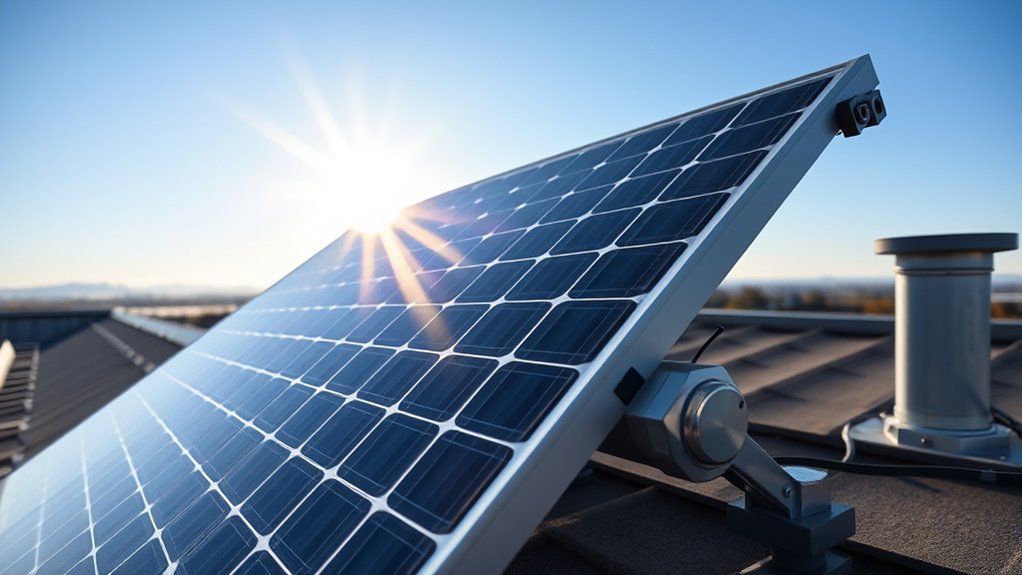
Since the sun’s position changes throughout the year, adjusting your solar panel’s orientation guarantees maximum efficiency during each season. You should modify your panel mounting angle accordingly—aiming higher in winter to capture more low-angle sunlight and lowering it in summer for direct exposure. To do this effectively, verify your mounting system allows for easy adjustments. Additionally, use weatherproofing techniques like sealing joints and waterproof coatings to protect your setup during seasonal storms and rain. Regularly check and tighten mounting hardware to prevent misalignment. Making seasonal adjustments maximizes energy production and extends your system’s lifespan. Proper solar panel orientation not only boosts performance but also reduces wear and tear caused by weather-related damage.
Fixed vs. Adjustable Mounts: Which Is Better?
Choosing between fixed and adjustable mounts depends on your energy goals, budget, and willingness to perform maintenance. Fixed mounts are straightforward, offering greater mounting durability since they have fewer moving parts and require less upkeep. They’re ideal if you want a low-maintenance setup and don’t need seasonal adjustments. Adjustable mounts, on the other hand, allow you to modify the panel angle throughout the year, maximizing energy capture and extending runtime. They often integrate better aesthetically, especially if you prefer a sleek, customizable look. However, adjustable mounts may be more expensive initially and require periodic adjustments, which can impact long-term durability. Consider your priorities carefully—if simplicity and durability matter most, fixed mounts are better; for peak performance and aesthetics, adjustable mounts may be worth the investment. Additionally, understanding the thermal behavior of panels can help you optimize positioning and prevent overheating, especially since panel cooling can influence overall efficiency and lifespan. Being aware of thermal management techniques can further enhance your system’s performance and longevity.
Tools and Techniques for Precise Panel Setup
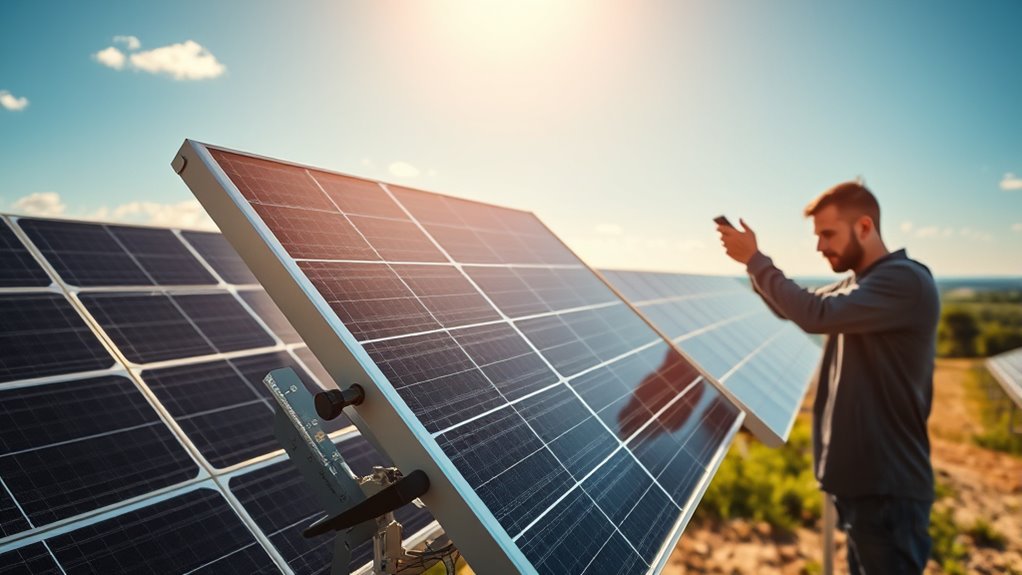
Setting up your solar panels with precision guarantees maximum efficiency and longevity. To achieve this, use the right tools and techniques. Start with quality mounting hardware compatible with your solar panel materials, ensuring stability and ease of adjustment. Use a digital inclinometer or angle finder to set the ideal tilt, maximizing sunlight capture. A level helps verify proper alignment, preventing tilt errors. A spirit level and a compass aid in precise positioning. Here’s a quick reference:
| Tool | Purpose | Benefit |
|---|---|---|
| Digital inclinometer | Measure tilt angle | Accurate sun exposure |
| Spirit level | Confirm horizontal alignment | Ensures stability |
| Compass | Determine true south | Perfect orientation |
Mastering these tools guarantees a setup that boosts performance and lifespan.
Long-Term Benefits of Proper Panel Angling
Proper panel angling offers significant long-term benefits by ensuring your solar system operates at peak efficiency over its lifespan. When your panels are correctly angled, you reduce the need for frequent panel cleaning because less dirt and debris accumulate, maintaining ideal sunlight absorption. Additionally, proper tilt allows for easier shading analysis, helping you identify and minimize shadows that can diminish output. Over time, this proactive approach prevents efficiency losses caused by dirt buildup or unexpected shading, saving you money and effort. Correct angling also promotes better water runoff, reducing the risk of corrosion and damage. Proper setup can also improve system resilience, ensuring your energy system remains dependable during adverse weather conditions. Furthermore, proper setup facilitates reliable backup power performance during outages, ensuring your energy system remains dependable when you need it most. Well-angled panels also allow for easier system adjustments, making ongoing maintenance more manageable. Additionally, maintaining optimal angles can help prevent snow accumulation, enabling faster snow shedding and continuous energy production. Overall, investing in proper panel setup maximizes your system’s performance, extends its durability, and guarantees you get the most sunlight exposure for years to come.
Frequently Asked Questions
How Does Shading Affect the Efficiency of Angled Solar Panels?
Shading considerably reduces the efficiency of your angled solar panels because shadow casting blocks sunlight, limiting energy production. When your panels are tilted, they’re more exposed to direct sunlight, but even small shadows can cause substantial power loss. To maximize efficiency, guarantee your panel tilt minimizes shadow casting during peak sunlight hours, and regularly check for shading caused by nearby objects. Properly positioning panels helps maintain ideal energy generation despite shading challenges.
Can Weather Patterns Influence the Optimal Tilt Angle Over Time?
Weather patterns can definitely influence your solar panel orientation and tilt optimization over time. As seasons change, adjusting your panels’ tilt helps maximize sunlight exposure, especially when cloud cover or snow alters sunlight angles. Regularly monitoring weather trends enables you to fine-tune your tilt angle, ensuring consistent energy production. By staying attentive to weather shifts, you can optimize your solar panel setup for the best performance year-round.
What Maintenance Is Required to Keep Panels at the Correct Angle?
You should regularly perform panel cleaning to prevent dust and debris from reducing efficiency, and check your angle calibration to guarantee ideal sunlight exposure. Coincidentally, weather changes can shift your panels slightly, so periodically adjusting the tilt ensures maximum energy capture. Keep an eye on these aspects, especially after storms or seasonal shifts, to maintain the correct angle and keep your system running at peak performance.
How Do Local Obstructions Impact the Ideal Panel Orientation?
Local obstructions like urban shading and architectural obstacles considerably impact your ideal panel orientation. When buildings, trees, or other structures cast shadows, they reduce sunlight exposure and decrease efficiency. You should adjust your panels to minimize shading, possibly by repositioning them or choosing a different tilt. Regularly monitor shading patterns throughout the day and season to guarantee your panels receive maximum sunlight, optimizing energy production despite obstacles.
Are There Cost Differences Between Fixed and Adjustable Mounting Systems?
A fixed mounting system costs a fraction of an adjustable one, saving you thousands, while the installation complexity is like assembling a simple puzzle versus a rocket ship. With a cost comparison favoring fixed setups, you get straightforward installation and no ongoing adjustments. Adjustable systems, though pricier, offer flexibility but come with higher initial costs and more intricate setup. Choose based on your budget and need for future flexibility.
Conclusion
Getting your solar panels angled just right can open hours of extra sunlight, turning your setup into a powerhouse. When you tune the tilt and orientation, you’re not just optimizing efficiency—you’re harnessing the sun’s full potential like never before. Don’t settle for a mediocre setup; with the right adjustments, your panels could outperform even the sun’s brightest days. Mastering this simple trick makes your solar system a true marvel of energy capture!