To stay warm without a space heater, start with a thermal base layer like snug-fitting underwear to trap heat and wick moisture. Add insulating layers, such as wool sweaters and thick socks, to maintain warmth even if damp. Seal drafts with curtains or DIY draft stoppers, and maximize sunlight during the day. Enhance insulation with rugs and blankets, plus creative DIY heat sources like candles or heated stones. Keep exploring tips to keep cozy all winter long.
Key Takeaways
- Layer thermal underwear, wool garments, and insulating accessories to trap heat effectively without electronics.
- Use thick curtains, draft stoppers, and rugs to prevent heat loss and retain warmth indoors.
- Incorporate DIY heat sources like candles, terracotta pots, and soapstone for natural warmth.
- Maximize sunlight by opening window coverings during the day and closing them at night for passive heating.
- Seal drafts, rearrange furniture, and add insulating textiles to improve thermal retention throughout the space.

WEERTI Thermal Underwear for Men Long Johns with Fleece Lined Base Layer Men Cold Weather Top Bottom-Black L
All-Day Warmth: These long johns for men thermal lock in body heat for lasting warmth, keeping you comfortable…
As an affiliate, we earn on qualifying purchases.
As an affiliate, we earn on qualifying purchases.
Building a Thermal Base: The Foundation of Warmth
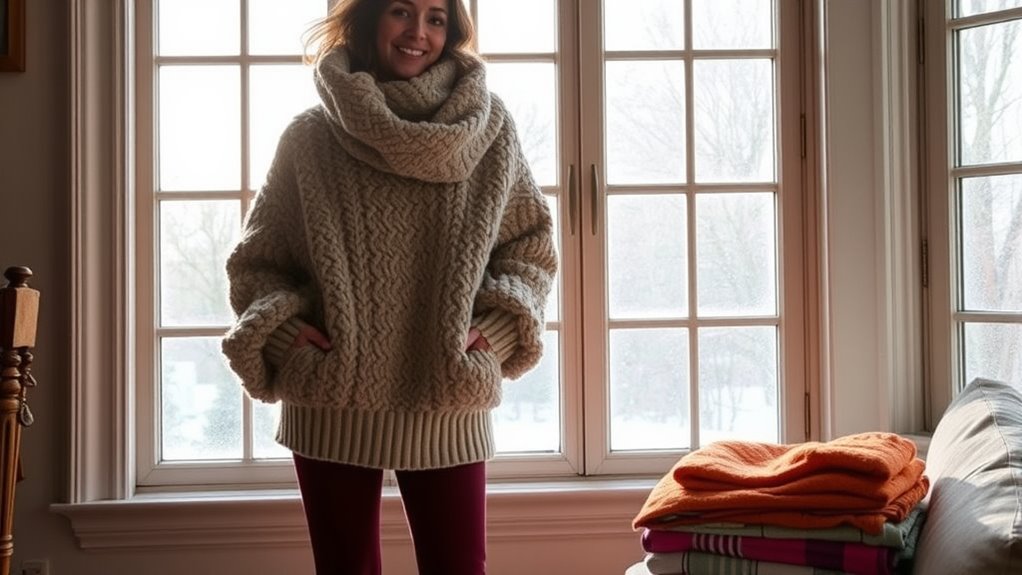
Building a thermal base is essential for staying warm in cold weather. You want to start with thermal underwear or long underwear that fit snugly against your skin. These base layers trap heat close to your body and wick moisture away, preventing chills caused by sweat. Next, add a thick woolen vest or sweater for extra insulation. Wool is excellent because it keeps its insulating properties even when damp. Layering these pieces ensures you’re retaining body heat efficiently. You don’t want to forget about your feet—wool socks are a must to keep cold from creeping in. If you wear turtlenecks under your shirts, you add another layer of warmth without bulk, helping you stay cozy longer. Building a solid thermal base is your first step toward winter comfort. Incorporating clothing with high color retention properties can also help maintain warmth and visual clarity in low-light conditions. Proper layering techniques are also crucial for thermal regulation and overall comfort during cold weather.

Alvada Merino Wool Hiking Socks Thermal Warm Crew Winter Boot Sock For Men Women 3 Pairs ML
MAKE HIKING A COMFORTABLE EXPERIENCE These Merino wool hiking socks are built to provide you with total support…
As an affiliate, we earn on qualifying purchases.
As an affiliate, we earn on qualifying purchases.
Insulating Your Living Space With Textiles and Draft Prevention
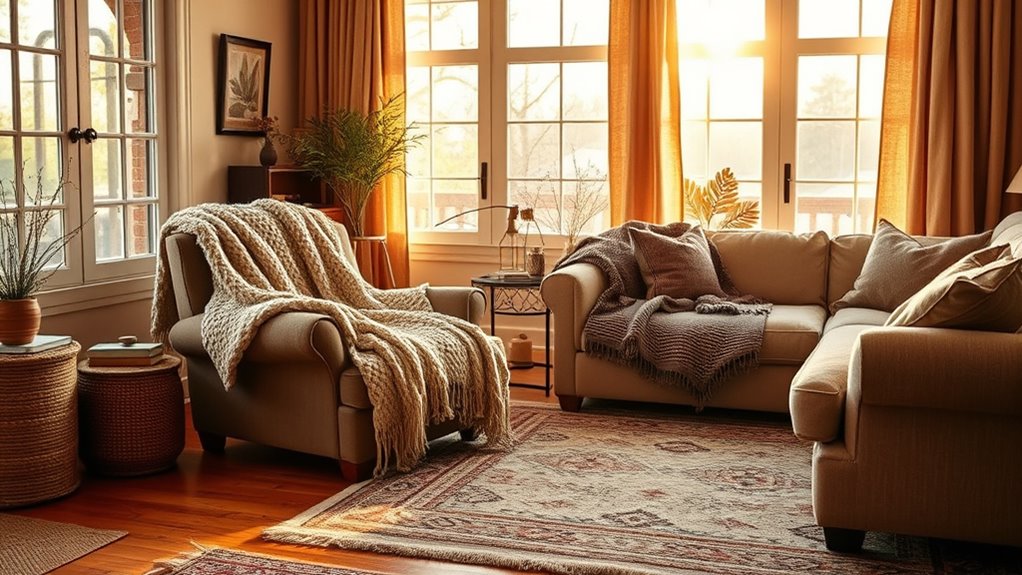
After establishing a warm thermal base, focusing on textiles and draft prevention can further boost your indoor comfort. Start by adding thick curtains or thermal liners to your windows to block cold drafts at night. During the day, open them to let sunlight warm your space passively. Use draft stoppers or rolled-up towels on door bottoms and window sills to prevent chilly air from sneaking in. Layer soft textiles like rugs on hardwood floors and plush blankets over furniture to trap heat. Cover vents or gaps with weatherstripping or caulk to seal leaks. Hanging extra blankets or quilts over windows and doors adds insulation without much effort. These simple steps help keep warmth inside and make your space feel noticeably cozier. For added effectiveness, consider using insulation materials designed for home draft-proofing to maximize energy efficiency. Incorporating natural insulation options like wool or cellulose can also be a sustainable way to improve your home’s thermal performance. Additionally, using thermal curtains can provide an extra barrier against cold air while still allowing sunlight during the day. To further enhance your draft prevention, consider air sealing techniques to effectively block unwanted cold drafts. Employing proper installation methods ensures that your insulation and sealing efforts are most effective.
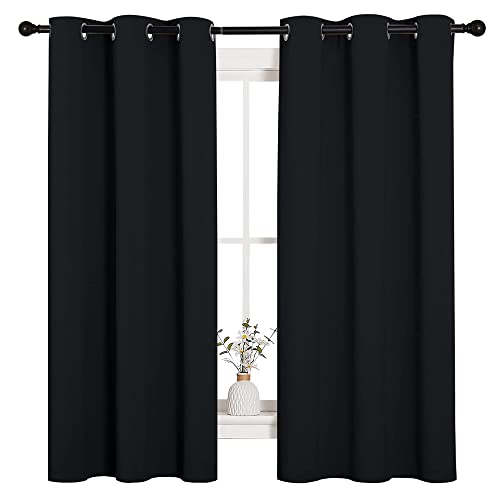
NICETOWN Halloween Pitch Black Solid Thermal Insulated Grommet Blackout Curtains/Drapes for Bedroom Window (2 Panels, 42 inches Wide by 63 inches Long, Black)
READY MADE: Set includes 2 BLACKOUT CURTAINS PANELS of 42" wide x 63" length with 6 grommets top…
As an affiliate, we earn on qualifying purchases.
As an affiliate, we earn on qualifying purchases.
Creative Heating Solutions Using Natural and DIY Methods
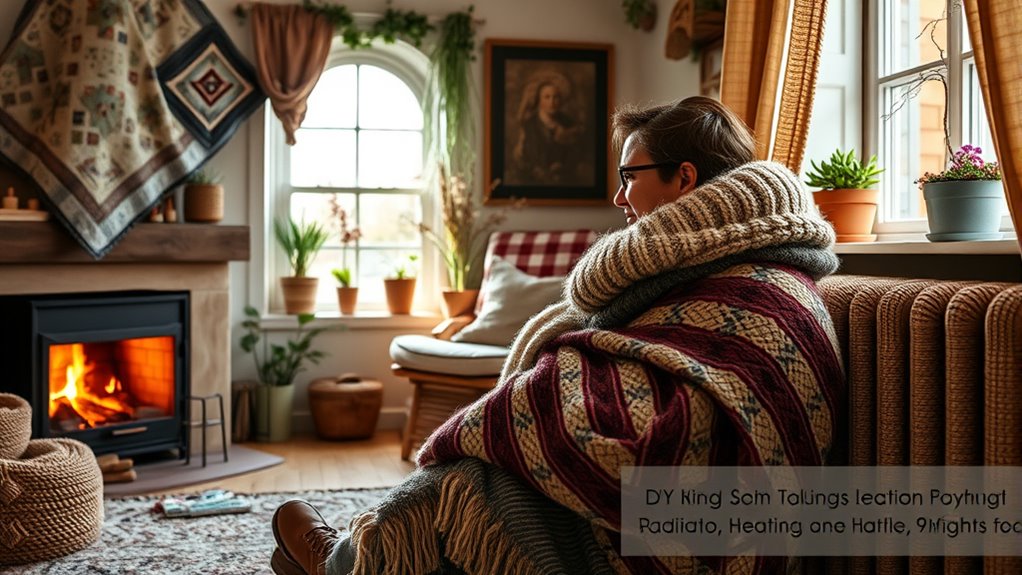
When it comes to staying warm using natural and DIY methods, you can harness everyday materials and simple techniques to create effective heating solutions. These methods require minimal investment and can markedly boost comfort during cold days. For example, terracotta heaters use simple pots and candles to radiate warmth, providing a low-cost heat source. Soapstone blocks absorb and slowly release heat, serving as natural radiators that keep a room cozy for hours without electricity. Additionally, you can craft insulative window covers with blankets or DIY draft stoppers from fabric scraps to trap heat. These creative solutions are easy to implement, eco-friendly, and effective, helping you stay warm without relying solely on electric heaters or expensive setups. Leveraging thermal mass can further enhance heat retention in your space, making these DIY methods even more efficient. Incorporating insulation techniques into your efforts can significantly improve heat conservation and overall comfort during colder months. Using energy-efficient design principles can help maximize the effectiveness of these natural heating methods and reduce energy consumption, especially when combined with appropriate insulation. Emphasizing proper ventilation can also prevent moisture buildup and maintain indoor air quality while keeping your space warm.
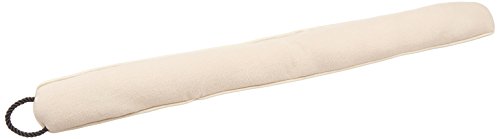
Frost King DS2 Door or Window Draft Stop Cloth Seal, 3-Feet, Beige
3-foot long draft stop cloth seal that fits most doors
As an affiliate, we earn on qualifying purchases.
As an affiliate, we earn on qualifying purchases.
Optimizing Sunlight and Window Coverings for Passive Heating
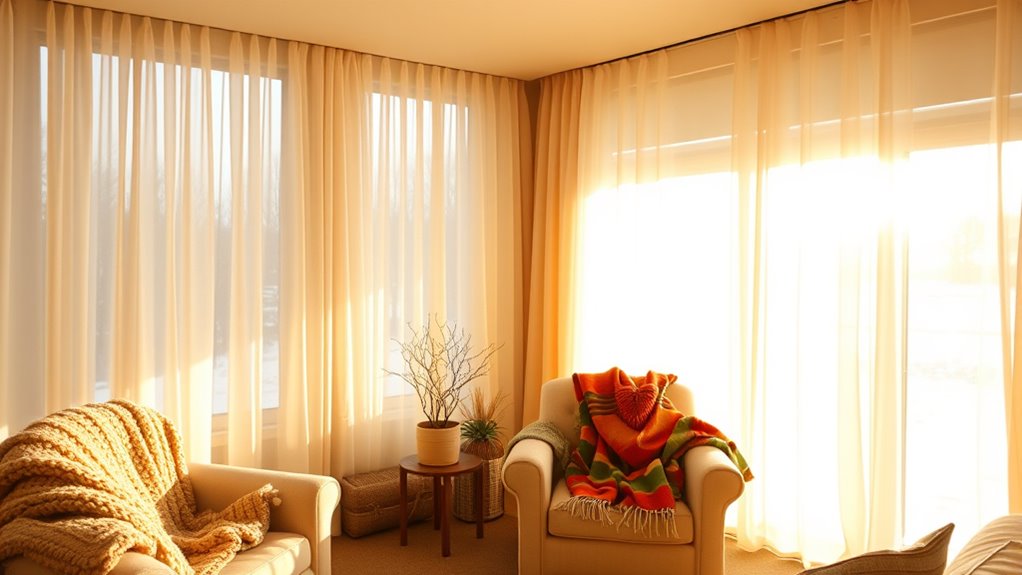
Are you making the most of sunlight to heat your home naturally? During the day, open south-facing curtains and blinds to let in sunlight, which warms your space passively. Keep them open while the sun is shining and close them at night to prevent heat loss. For extra insulation, add thermal liners or heavy curtains that trap a layer of air, acting as a buffer against cold drafts. Hang throw blankets over your curtains for added warmth without clutter. Make sure to keep shades open during the day and close them at night to maximize heat retention. This simple adjustment keeps your home warmer naturally, reducing the need for electric heating and making the most of the sun’s free, renewable energy. Passive heating techniques can significantly improve your home’s energy efficiency and comfort during colder months. Additionally, ensuring proper window insulation can further reduce heat loss and boost passive heating efforts.
Additional Tips for Maximizing Comfort Without Electric Heaters

To maximize comfort without relying on electric heaters, focus on sealing drafts and insulating your living space. Address gaps around windows and doors with weatherstripping or draft stoppers to keep warm air in. Use rugs and curtains to add extra insulation, especially on cold floors and windows. Additionally, move furniture away from external walls to improve air circulation and prevent cold spots. Incorporating insulation materials like foam panels or reflective barriers can further enhance your home’s thermal efficiency. Considering whole-house water filtration systems can also improve overall comfort by ensuring cleaner water, which supports better health and well-being during the colder months. Paying attention to thermal insulation techniques can significantly boost your home’s ability to retain heat naturally, while integrating soundproofing methods can also help minimize heat loss through vibrations and structural gaps.
Frequently Asked Questions
How Effective Are Thermal Base Layers Compared to Electric Heating?
Thermal base layers are highly effective because they trap heat close to your skin naturally, providing consistent warmth without electricity. Unlike electric heating, they don’t rely on power sources or produce noise, making them ideal for energy-saving or off-grid situations. While electric heaters can quickly boost room temperature, base layers keep you warm longer by insulating your body directly, offering reliable comfort in cold conditions.
Can Layering Clothing Replace All Indoor Heating Needs?
Layering clothing can markedly reduce your dependence on indoor heating, but it may not completely replace all heating needs, especially in very cold environments. By combining thermal base layers, insulating sweaters, and warm accessories, you trap heat effectively. However, for extreme cold or large spaces, supplemental methods like draft blocking, heated blankets, or small heaters might still be necessary to maintain comfort.
What Are the Best Materials for DIY Space Heating Devices?
You should use terracotta, soapstone, and ceramic materials for DIY space heating devices. These materials absorb heat well, radiate warmth slowly, and are durable. For example, terracotta pots and soapstone blocks work great to store and emit heat after warming. Use thick ceramic tiles or bricks underneath to enhance heat retention. These materials are affordable, safe, and effective, making them ideal for creating your own low-cost heaters.
How Should I Position Furniture for Maximum Warmth Retention?
Sure, because the secret to staying warm is hiding your furniture from the cold, right? Actually, you should move furniture away from external walls to prevent cold drafts and improve circulation. Place heavy pieces against exterior walls to block drafts and create cozy corners. Keep your seating near south-facing windows for passive solar gain. This simple trick keeps warmth in, making your space feel toasty without cranking up the heat.
Are Natural Insulation Methods Safe for Children and Pets?
Natural insulation methods are generally safe for children and pets when used properly. You should guarantee that any items like hot water bottles or soapstone blocks are secure, preventing burns or spills. Keep cords, candles, and small objects out of reach to avoid accidents. Ventilate the space to prevent moisture buildup and always supervise young children and pets around any heating accessories. Proper precautions make natural insulation both effective and safe.
Conclusion
By layering wisely and sealing drafts, you create a cozy fortress that keeps the cold out. Using natural warmth sources and simple DIY tricks, you’re like a skilled gardener tending to your own comfort garden. Remember, staying warm without a space heater is about smart choices and creative solutions—it’s like crafting a warm blanket from the inside out. With these tips, you’ll stay comfy, even on the chilliest days.