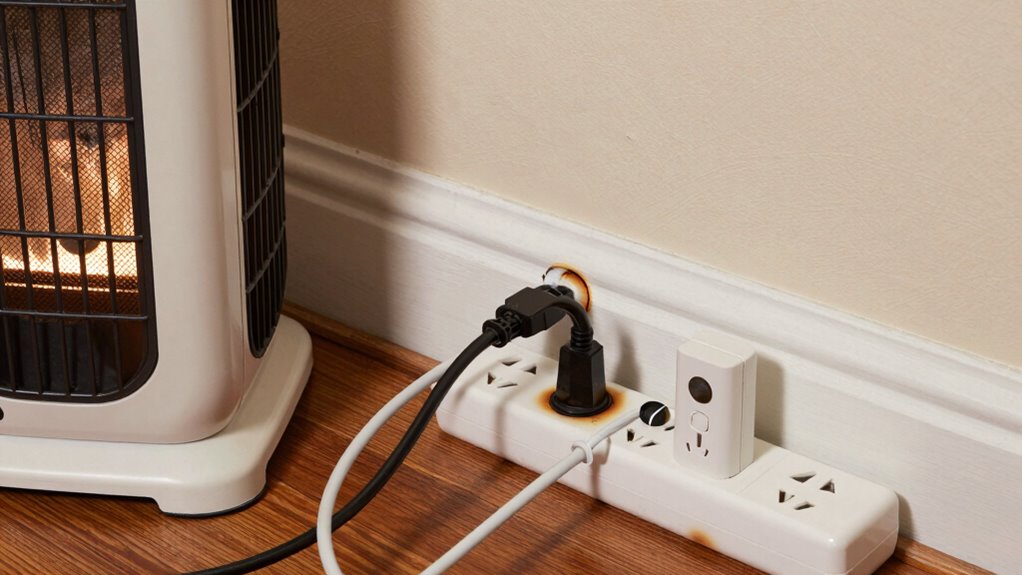
Using power strips with space heaters is risky because most strips aren’t rated for high wattage, causing them to overheat, melt, or spark, which can lead to fires. Space heaters draw about 1500 watts, easily overwhelming the capacity of standard power strips and creating dangerous conditions. Overloading wiring and circuits increases the chance of shorts, sparks, and damage. Keep in mind, safe heater use involves proper placement and direct wall outlet connections—learn more to stay protected.

Get backup power and energy gear delivered free — and shop member deals
- Fast, free delivery on millions of items
- Access to Prime Big Deal Days deals on October 6–7
- Prime Video, Amazon Music and more included
Key Takeaways
- Power strips are not rated for the high wattage of space heaters, risking overheating, melting, or fires.
- Using extension cords or power strips with heaters can cause wiring overheating and electrical shorts.
- Overloading power strips increases internal heat, degrading insulation and raising fire hazards.
- Placement of power strips near heaters and flammable items amplifies fire risk.
- Proper safety requires plugging heaters directly into wall outlets and avoiding power strips altogether.
high wattage space heater wall outlet
As an affiliate, we earn on qualifying purchases.
As an affiliate, we earn on qualifying purchases.
The Dangers of Overloading Power Strips With Heaters
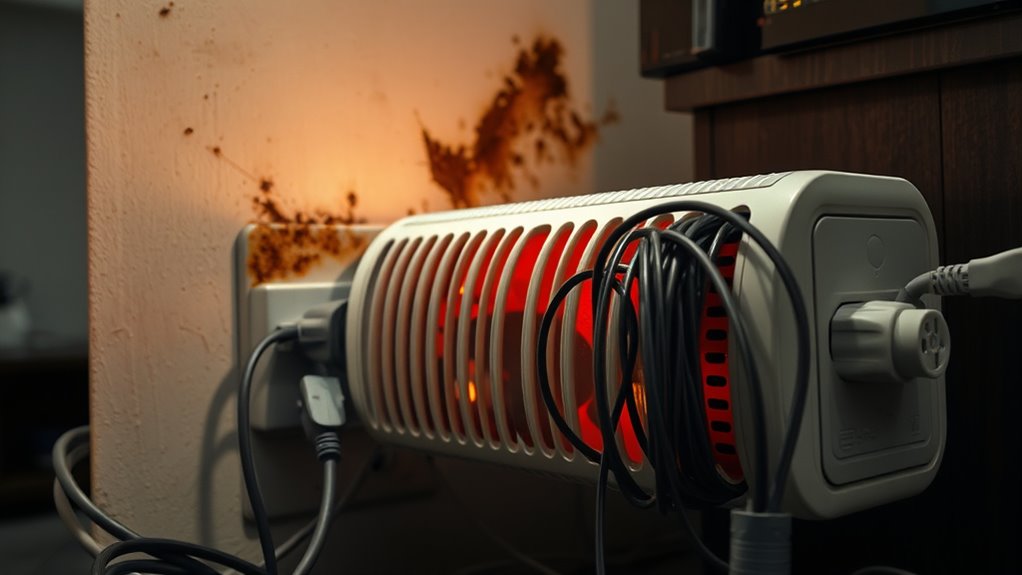
Using a power strip to run a space heater might seem convenient, but it’s extremely dangerous. Power strips are designed for low-power devices like lamps or chargers, not high-wattage heaters. When you plug a heater into a strip, it draws around 1500 watts, often exceeding the strip’s capacity. This overload causes internal wiring to overheat, increasing the risk of melting or sparks. Repeated use wears down the strip’s components, making it even more vulnerable over time. Plus, power strips lack the built-in safety features to handle such continuous, high-demand loads. Overloading a strip not only damages the device but also considerably raises the chance of electrical fires. Always plug space heaters directly into wall outlets to avoid these hazardous situations. Proper electrical load management is essential for preventing these risks. Additionally, many safety standards recommend against using extension cords or power strips with high-wattage appliances like heaters. Furthermore, using a power strip for such devices can lead to equipment failure, increasing the risk of fire or electrical shock.
fireproof space heater extension cord
As an affiliate, we earn on qualifying purchases.
As an affiliate, we earn on qualifying purchases.
How Space Heaters Can Cause Wiring Overheating

When a space heater runs on high power for extended periods, it can cause wiring inside nearby outlets and devices to overheat. The heater draws a large current, often reaching 1500 watts, which puts stress on the existing wiring. If the wiring isn’t rated for this load, it heats up quickly. Over time, this excess heat weakens the insulation and can cause the wiring to soften, melt, or even spark. This risk is heightened if the wiring is old, damaged, or improperly installed. Overheating wires can lead to short circuits, electrical fires, or damage to your home’s electrical system. Additionally, using energy-efficient cloud servers as a metaphor, it’s important to recognize that improperly managed electrical loads can undermine the overall safety and sustainability of your electrical system. Recognizing proper wiring ratings and ensuring compatibility can help prevent these hazards. Regular inspections of your electrical system are crucial to catch potential issues early and maintain safety. Being aware of wiring capacity helps ensure that your electrical setup can handle high-power appliances safely.
As an affiliate, we earn on qualifying purchases.
Fire Risks Linked to Power Strip Use Near Heaters
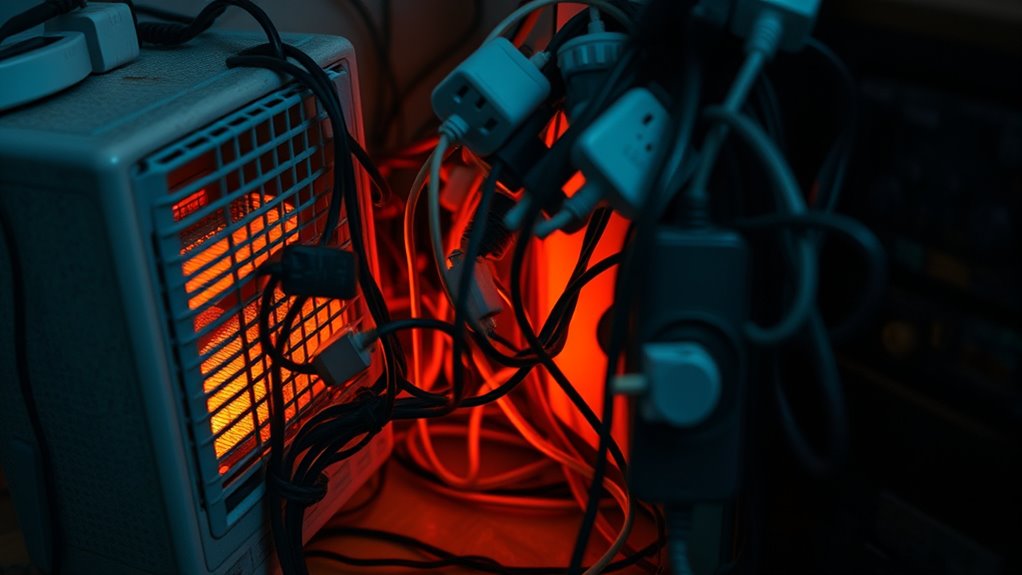
Power strips are not designed to handle the high electrical load of space heaters, which can lead to dangerous overheating and fires. When you plug a heater into a power strip, the internal wiring can overheat, melt, or spark, increasing fire risk. Repeated use wears down the strip’s components, worsening the danger. Placement near flammable items like curtains or rugs amplifies the hazard. Additionally, many power strips lack adequate circuit protection, making them especially vulnerable to electrical faults. Overloading power strips also increases the chance of electrical failure, which can cause sparks or short circuits. Using a power strip with insufficient load capacity can significantly raise these risks. Proper electrical safety practices recommend plugging space heaters directly into wall outlets with appropriate circuit ratings.
As an affiliate, we earn on qualifying purchases.
Why Power Strips Fail Under High-Wattage Demands
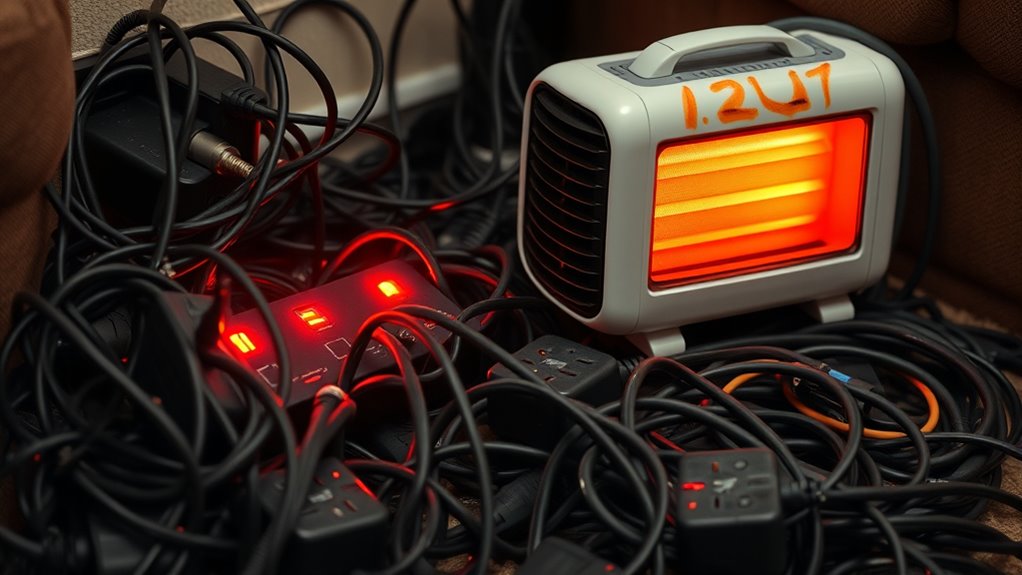
Power strips aren’t built to handle the high current draw from space heaters, which can cause internal wiring to overheat and melt. Over time, the materials inside wear down, increasing the chance of short circuits and failure. Plus, safety circuits in power strips often fail under continuous heavy loads, leaving your setup vulnerable to fires.
Overheating From Excess Current
Exceeding a power strip’s rated capacity causes internal components to overheat and fail. When you plug a space heater into a strip not designed for high wattage, the strip’s wiring and circuit breaker become overwhelmed. This overload forces current through wires that aren’t rated for such power, generating excessive heat. The internal connections, often thin and fragile, can melt or burn out, increasing the risk of sparks and fire. Power strips aren’t built to handle the continuous high current draw of space heaters, especially at maximum settings. As the demand persists, the internal temperature rises, weakening insulation and risking short circuits. Repeated overloads can cause internal damage, making failure more likely and elevating fire hazards. The incident highlighted in the global chaos subtopic underscores the importance of reliable electrical safety measures. Additionally, many power strips lack built-in overcurrent protection, leaving users vulnerable to dangerous overloads.
Material Limitations and Wear
Over time, the materials used in power strips are unable to withstand the high heat generated by continuous high-wattage loads like space heaters. The internal wiring, connectors, and plastic components degrade from constant exposure to elevated temperatures. As the materials weaken, their insulating properties diminish, increasing the risk of shorts and sparks. Repeated use under heavy loads causes joints and contacts to loosen or crack, further compromising safety. Over time, the protective coatings break down, exposing live parts. This wear accelerates heat buildup, making overheating more likely even without visible damage. Additionally, the lack of proper airflow around the unit can exacerbate heat accumulation and hasten material fatigue. Continuous high-wattage use can also cause the internal components to fail prematurely, raising safety concerns. Ultimately, the materials simply can’t handle the stress of sustained high-wattage demands, leading to failures that can ignite fires or cause electrical shocks. Regular wear and material fatigue make power strips increasingly unsafe for high-demand appliances like space heaters.
Safety Circuit Failures
When high-wattage devices like space heaters are plugged into power strips, the built-in safety circuits often fail to protect against the surge in current. These circuits are designed for low-power devices, so they can’t handle the heavy load of a heater. As a result, they may trip repeatedly or fail completely, leaving you unaware of the risk. Over time, the safety components wear down or become damaged, increasing the chance of overheating or sparks. This failure happens because power strips aren’t built for continuous high-demand use. Additionally, vetted quality power strips may include overload protection features, but even these can be overwhelmed by the demands of high-wattage appliances.
Safe Alternatives for Heating Large or Small Spaces
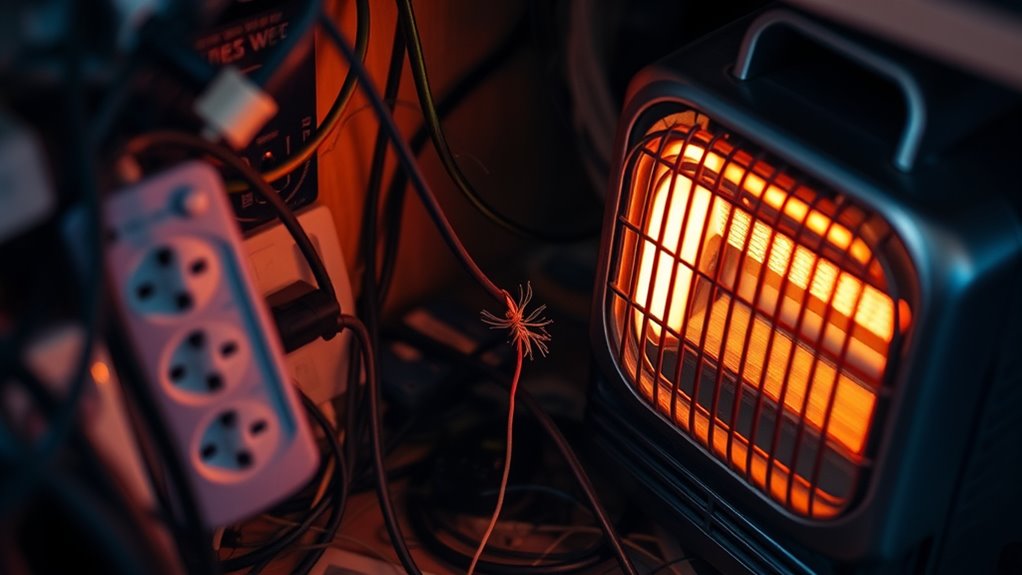
To stay safe while heating your space, choose heaters with built-in safety features like tip-over protection and overheat sensors. Properly sized heaters can improve efficiency and reduce energy waste, making your space more comfortable. Prioritizing these options helps prevent fire risks and ensures safer, more effective heating. Considering whole-house heating solutions can also provide consistent warmth without the hazards associated with space heaters and power strips. Additionally, understanding nanotechnology applications can lead to innovative, safer heating solutions that enhance energy efficiency and safety. Incorporating energy-efficient designs into heating systems further reduces risks and promotes sustainable use. Exploring advanced insulation materials can also help retain heat better, reducing the need for risky supplemental heating options. Embracing thermal management techniques can optimize heat distribution and further reduce safety concerns.
Opt for Proper Heaters
Choosing the right heater guarantees safer and more efficient warmth for your space. To minimize fire risks and electrical hazards, select models with built-in safety features. Look for heaters with tip-over protection, overheat sensors, and automatic shut-off. These features help prevent accidents if the heater tips over or overheats. For small rooms or personal heating, compact units like the DREO Atom 316 are ideal because they deliver focused heat without overloading your electrical system. For larger spaces, consider oscillating heaters that distribute warmth evenly and efficiently. Always position heaters on flat surfaces away from furniture or curtains. Investing in a Gold IRA rollover can be a smart way to diversify your retirement portfolio and protect your savings from inflation. Additionally, choosing energy-efficient models with safety certifications ensures you get reliable performance while minimizing electrical issues. Remember, investing in a proper heater not only keeps you warm but also notably reduces fire and electrical risks.
Prioritize Built-in Safety Features
Prioritizing heaters with built-in safety features is essential for reducing fire hazards and electrical risks. Look for models equipped with overheat sensors, automatic shut-off, and tip-over protection. These features detect dangerous conditions and turn off the heater before hazards develop, preventing overheating and accidental fires. Choose units with quality UL or ETL certification to ensure safety standards are met. Built-in safety features diminish reliance on external devices like power strips, which are often inadequate for high-wattage heaters. Additionally, heaters with adjustable thermostats help maintain safe temperature levels, minimizing overheating risks. By selecting heaters with these safety features, you create a safer environment, reduce the likelihood of electrical fires, and ensure peace of mind for yourself and your loved ones.
Enhance Room Heating Efficiency
Enhancing room heating efficiency involves selecting the right type of heater tailored to your space size. You want a heater that provides even warmth without overloading your electrical system. For small spaces, consider compact models like DREO Atom 316, which are energy-efficient and easy to use. For larger rooms, oscillating heaters distribute heat more evenly and reduce hot spots. Proper placement is key—position heaters near the center of the room, away from furniture or curtains, to maximize coverage. Additionally, maintaining insulation, sealing drafts, and using programmable thermostats help retain heat and reduce energy consumption. This approach guarantees you stay warm safely and efficiently, avoiding the risks associated with improper heating methods.
- Choose heaters suited to your room size and insulation
- Use models with safety features like tip-over and overheat protection
- Optimize placement and insulation for maximum efficiency
Recognizing Signs of Overheating and Preventing Fires
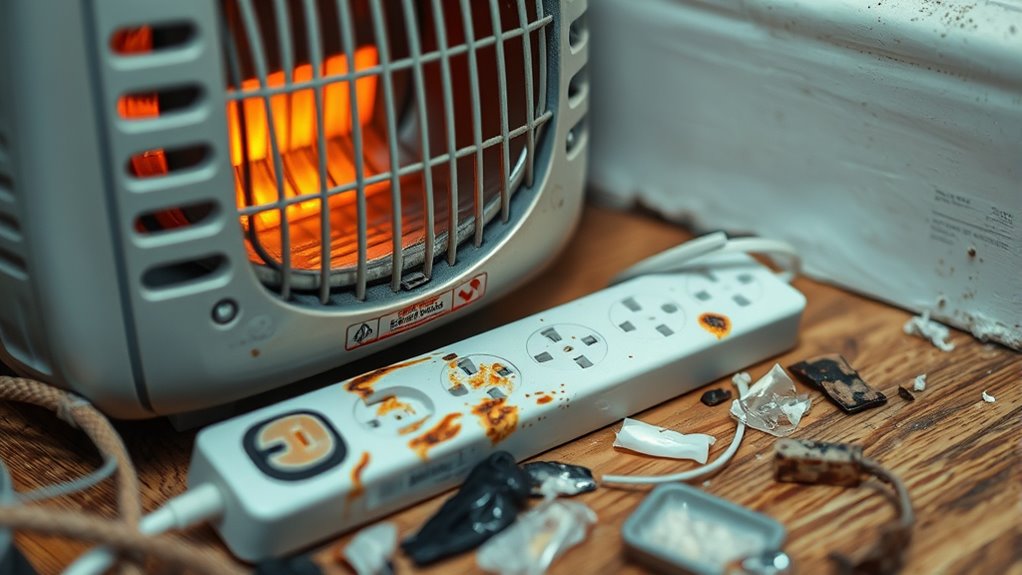
Recognizing the signs of overheating in your space heater or power strip is essential for preventing fires. If you notice buzzing sounds, a burning smell, or visible smoke, turn off and unplug the device immediately. Feel for excessive heat or hot spots on the power strip or heater’s surface; overheating often causes these. Discolored or melted plugs, frayed cords, or scorch marks indicate serious damage. Keep an eye out for flickering or dimming lights connected to the same circuit, which can signal overloading. Never ignore these warning signs—prompt action can prevent a fire. Regularly inspect cords and plugs for damage, and avoid using devices near flammable materials. Staying vigilant and acting quickly are your best defenses against overheating-related fires.
Proper Placement and Usage of Space Heaters for Safety
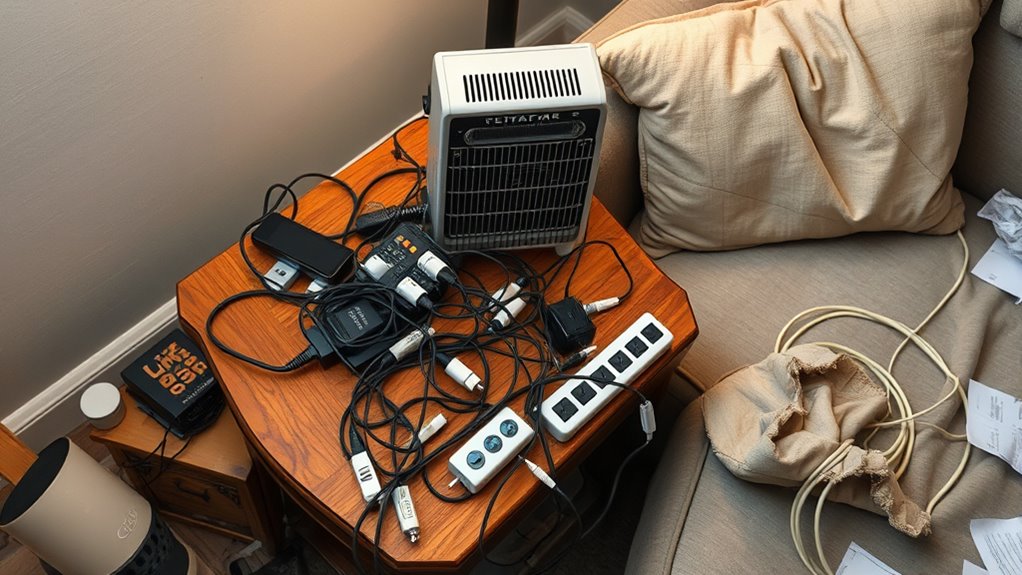
Proper placement and usage are essential to safely operating your space heater. You should always position it on a flat, stable surface away from anything flammable. Keep the heater at least three feet from curtains, furniture, bedding, and other combustibles. Avoid placing it on carpets, beds, or furniture that could trap heat or block airflow. Never plug a space heater into a power strip or extension cord; always connect it directly to a wall outlet to prevent overloads. Regularly inspect cords and plugs for damage, and ensure the heater has built-in safety features like tip-over protection and overheat shut-off. Following these guidelines reduces fire risks and helps maintain a safe environment.
- Place on a stable, flat surface, away from combustibles
- Never use power strips or extensions with heaters
- Regularly inspect for damage and safety features
The Importance of Electrical Safety Devices and Proper Maintenance
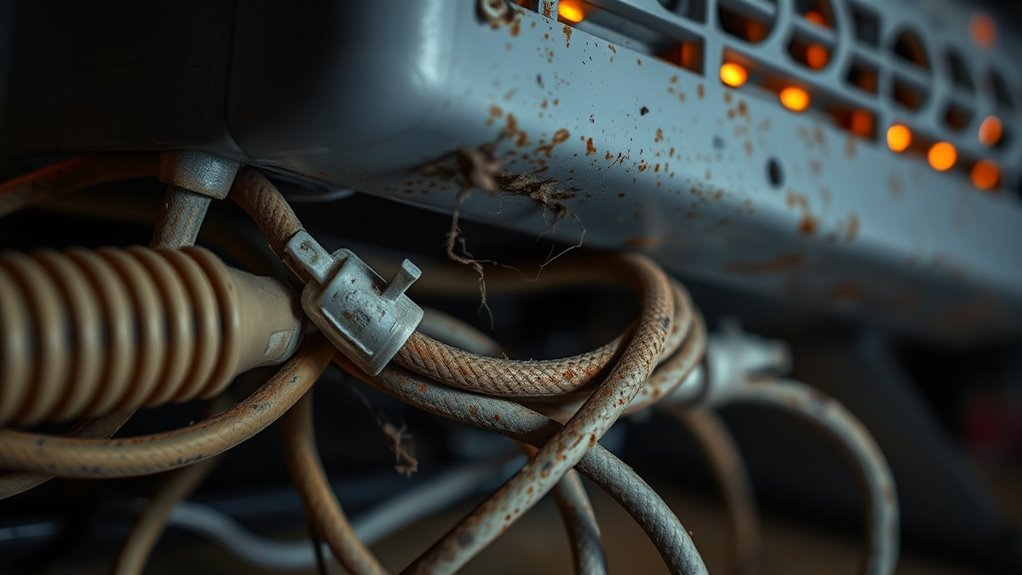
Using electrical safety devices like surge protectors and circuit breakers is essential to prevent fires and electrical hazards, especially when operating high-wattage appliances such as space heaters. Surge protectors can overheat and melt under the load of a space heater, creating sparks and potential fires. Circuit breakers help prevent overloads, but many are not designed for continuous high demand, increasing the risk of short circuits. Proper maintenance includes regularly inspecting cords, plugs, and outlets for damage, and replacing worn or damaged devices immediately. Never rely solely on these safety devices; they should complement safe practices like plugging heaters directly into wall outlets and avoiding extension cords or power strips. Ensuring your equipment is well-maintained minimizes fire risks and keeps you safe.
Frequently Asked Questions
Can Using Extension Cords With Space Heaters Prevent Overheating Risks?
Using extension cords with space heaters doesn’t prevent overheating risks; it actually increases them. Extension cords can’t handle the high wattage draw of a heater, leading to overheating and potential fires. They may also cause voltage drops, reducing heater performance and safety. To stay safe, always plug your heater directly into a wall outlet, never use extension cords or power strips, and follow all safety guidelines for proper usage.
What Are the Most Common Signs That a Power Strip Is Overheating?
Imagine a power strip as a crowded highway; signs of overheating are like traffic jams. You might notice a burning smell, discoloration, or melting plastic. Feel for excessive warmth or hot spots, and watch for flickering lights or frequent tripping of circuit breakers. If cords or outlets are warm to the touch, it’s a clear warning. Ignoring these signs can lead to fires, so always act quickly.
How Often Should I Replace My Power Strip to Ensure Safety?
You should replace your power strip every 3 to 5 years or sooner if you notice signs of wear. Regularly inspect it for frayed cords, scorch marks, or loose connections. Over time, repeated use wears down internal components, increasing fire risks. Never ignore damage or overheating signs. Upgrading to a high-quality, UL-listed strip can also improve safety, but routine replacement remains essential for peace of mind and protection.
Are There Specific Power Strip Features That Reduce Fire Hazards?
If you’re looking to minimize fire hazards with your power strip, seek out models with built-in safety features. Look for strips with surge protection, overload switches, and sturdy construction. Verify they have a thermal cutoff or resettable circuit breaker to prevent overheating. Also, choose strips that are UL or ETL listed, indicating they meet safety standards. These features help reduce the risk, but never overload or use them with high-wattage appliances like space heaters.
What Are the Best Practices for Safely Using Space Heaters Indoors?
To safely use space heaters indoors, always plug them directly into a wall outlet, avoiding power strips or extension cords. Keep the heater at least three feet away from flammable items like curtains or furniture. Place it on a flat, stable surface, and never leave it unattended or running overnight. Regularly inspect cords for damage, and choose models with safety features like tip-over protection and overheat sensors to prevent accidents.
Conclusion
Remember, when you stack a space heater on a power strip, it’s like inviting danger to your doorstep—wires heat up, sparks fly, and a fire could ignite in a flash. Instead, choose safer options, keep cords clear of clutter, and listen to signs of overheating. By staying vigilant and respecting your electrical system, you create a warm, cozy space without risking a devastating blaze. Your safety is worth every mindful step.
Fall Picks
fall essentials
As an affiliate, we earn on qualifying purchases.