Charging devices through a window depends heavily on how much sunlight passes through the glass, which varies based on window material, coatings, and orientation. Clear, low-iron glass allows more light, but reflection, absorption, and tinting can cut efficiency by up to 70%. Proper placement near south-facing windows and using high-efficiency panels can boost your chances. For a deeper look at maximizing indoor solar power, keep exploring these factors and how technology can help.
Key Takeaways
- Clear or low-iron glass allows most sunlight to pass, optimizing indoor solar power potential.
- Reflection, absorption, and tinted coatings can significantly reduce sunlight reaching indoor solar panels.
- Optimal panel placement is near south- or west-facing windows with minimal obstructions for maximum efficiency.
- High-efficiency monocrystalline and integrated photovoltaic glass improve indoor solar energy harvesting.
- Advanced coatings and smart glass technologies can enhance transparency and boost indoor solar power without sacrificing comfort.

Jackery Explorer 300 Portable Power Station,292Wh
- Lightweight Design: Only 7.5 lbs with 292Wh capacity
- Portable Handle: Integrated handle for easy carrying
- Multiple Device Charging: 2 AC outlets, USB-C, USB-A, car port
As an affiliate, we earn on qualifying purchases.
The Impact of Window Transparency on Solar Power Generation

The transparency of your windows directly affects how much sunlight reaches your solar panels, which in turn influences their power generation. Clear glass allows most sunlight to pass through, maximizing the energy your panels can harvest indoors. High-transmission materials like low-iron glass minimize light loss, often keeping it between 10 and 20%. Larger windows also provide more surface area for sunlight, boosting potential power output. Conversely, windows with coatings like Low-E reduce transmission by reflecting or absorbing sunlight, considerably lowering efficiency. Tinted or double-glazed windows cut down even more light, sometimes by up to 70%. The type of glass and its transparency level are critical factors in determining how effectively your indoor solar setup can produce energy. Window transparency directly impacts the amount of sunlight available for energy conversion, making it a key consideration in optimizing solar power systems. Additionally, the type of window can influence not only energy production but also indoor temperature regulation, which can affect overall system performance. Moreover, understanding the light transmission characteristics of different window types can help you choose the most suitable options for maximizing solar energy efficiency. Recognizing these factors can lead to better solar panel placement strategies within your space. Considering window orientation can further enhance solar energy capture by aligning panels for optimal sunlight exposure throughout the day.

SOARAISE Solar Power Bank 48000mAh Wireless Portable Charger with 4 Cables
- High-Efficiency Solar Panels: Charges 5 times faster with 4 panels
- Large 48000mAh Capacity: Extended power for outdoor use
- Multi-Device Charging: Supports 7 devices simultaneously
As an affiliate, we earn on qualifying purchases.
How Reflection and Absorption Reduce Indoor Solar Efficiency

Even if your windows are highly transparent, reflection and absorption can still markedly cut down the amount of sunlight reaching your solar panels indoors. Clear glass causes 30-50% of sunlight to be reflected or absorbed, considerably reducing efficiency. Tinted or double-glazed windows can lead to losses of up to 70%. Reflection sends sunlight back outside, while absorption traps energy within the window material, preventing it from reaching your panels. Diffusion also scatters light, further decreasing the amount that gets through. Certain coatings or materials may block specific parts of the sunlight spectrum needed for ideal power. All these factors combine to lower the amount of usable sunlight, meaning your indoor solar setup won’t perform as well as it would outdoors. Understanding solar efficiency is essential to optimize your indoor solar energy system effectively. Additionally, material properties of your window coatings can influence how much light is transmitted or reflected, impacting overall efficiency. Moreover, reflection and absorption can vary depending on the angle of sunlight and window positioning, further affecting solar performance indoors. Recognizing how window material properties interact with sunlight can help you choose the best setup for maximizing indoor solar gains. Furthermore, solar gain limitations imposed by these factors highlight the importance of proper window selection and placement in solar energy planning.
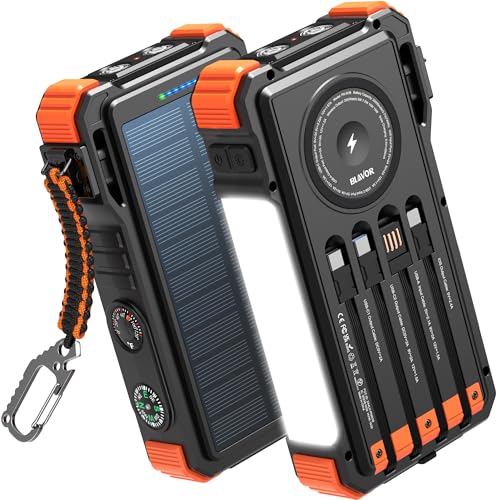
BLAVOR Solar Power Bank 20000mAh Built-in Cables, Wireless Charger for Phones & Apple Watch, 20W Fast Charging Battery Pack with USB C, Flashlight, Solar Charger for iPhone, iPad, iWatch, Samsung
- Simultaneously Charge 6 Devices: Multiple cables and ports for 6 devices
- High Capacity & Fast Charging: 20000mAh battery with 20W USB-C fast charge
- Wireless Charging & Built-in Cables: Wireless charger for phones and Apple Watch
As an affiliate, we earn on qualifying purchases.
The Role of Window Orientation and Positioning in Solar Charging

Choosing the right window orientation can considerably boost your indoor solar charging efficiency. South-facing windows receive the most direct sunlight throughout the day, maximizing energy capture. West-facing windows are ideal for afternoon charging, while east-facing ones work best in the morning. North-facing windows receive limited direct sunlight, reducing potential power. Position your solar chargers near windows with unobstructed views to the sun, avoiding shade from trees or buildings. Adjusting the angle of your panels to match the sun’s position throughout the day further improves efficiency. Keep in mind that indoor lighting conditions and window placement impact how much sunlight reaches your panels. Proper orientation and strategic positioning help you harness the maximum sunlight possible, even through glass, making indoor solar charging more effective. Solar panel positioning plays a crucial role in optimizing your indoor solar energy collection.

Takki Solar Generator 120W Peak Portable Power Station with 21W Solar Panel 88.8Wh Battery Power Bank with 110V AC Outlet for Camping RV Tent Home Outages Emergency
- Lightweight and Compact: Weighs only 2.29 lbs, fits in backpack
- Fast Charging: Charges from 0% to 80% in 2 hours
- Includes Solar Panel: Foldable 21W high-efficiency solar panel
As an affiliate, we earn on qualifying purchases.
Comparing Types of Solar Panels for Indoor and Window Applications

Different types of solar panels vary markedly in performance when used indoors or behind windows. Your choice depends on light transmission, absorption, and efficiency. Monocrystalline panels excel with higher efficiencies (18-22%) and perform better indoors due to their ability to convert limited light. Polycrystalline panels offer a slightly lower efficiency (15-17%) but are more affordable and suitable for larger window areas. Thin-film panels are flexible, lightweight, and work with diffuse light, though their efficiency (10-13%) is lower. Keep in mind:
Monocrystalline panels excel indoors, while polycrystalline and thin-film options suit different budgets and surfaces.
- Monocrystalline panels deliver the best indoor performance.
- Polycrystalline panels balance cost and size.
- Thin-film panels suit curved or unconventional glass surfaces.
Understanding connected home fitness can help you optimize your energy use in smart home environments, including solar-powered gym equipment. Additionally, considering solar panel efficiency can help you select the right type for your specific window conditions, ensuring optimal energy generation. Moreover, evaluating the light transmission properties of your window glass can significantly influence the overall efficiency of the solar panels you choose, especially in indoor settings. To maximize your solar power potential, it’s important to evaluate your solar energy potential based on your location and window orientation. Your selection should match your window’s transparency, available space, and power needs for ideal results. Recognizing the impact of solar spectrum on panel performance can further refine your choices for indoor solar applications.
Innovative Window Technologies Enhancing Solar Performance

Innovative window technologies are transforming how sunlight reaches your solar devices, with advanced coatings that boost light transmission. These new materials and coatings directly impact power output, making solar windows more efficient. By choosing the right materials, you can maximize energy generation from your indoor or window-mounted solar systems. Optimizing sleep environments can also enhance overall energy efficiency in your home. Additionally, understanding these solar performance factors can help you select the most effective window solutions for your needs. Incorporating encryption solutions into your home’s energy management system can further safeguard your energy data and control systems from cyber threats. Exploring advanced coatings can further improve the light transmission and durability of your solar windows. Moreover, advancements in smart glass technology offer dynamic control over light and heat transfer, further optimizing solar energy collection and indoor comfort.
Advanced Coatings Improve Light Transmission
Advanced coatings on window glass considerably enhance light transmission, allowing more sunlight to reach integrated solar cells. These innovative coatings reduce reflection and absorption losses, boosting overall efficiency. For example, low-iron glass minimizes light loss to about 10-20%, maximizing sunlight entry. Additionally, special coatings can be tailored to filter specific wavelengths, optimizing the spectrum for solar conversion. They also help in reducing glare and improving visual clarity inside buildings. With these advancements, windows become more than just barriers—they actively contribute to energy harvesting. You’ll find that applying such coatings makes a noticeable difference, especially in maximizing the sunlight that reaches your solar devices indoors. Incorporating coating technologies can further enhance the performance of solar windows, making them more effective in energy collection. Moreover, ongoing research into spectral filtering aims to optimize the light spectrum even further for solar conversion. These coatings also contribute to cost efficiency by reducing energy costs over time. By utilizing advanced coatings, manufacturers are able to improve the durability and longevity of solar windows, ensuring sustained performance over time. Embracing these technologies ensures you get the most out of your window-mounted solar systems.
Solar Window Innovations Increase Efficiency
Recent breakthroughs in window technology are transforming how sunlight is harnessed for indoor energy generation. Innovative designs like solar windows integrate photovoltaic materials directly into glass, boosting efficiency without sacrificing transparency. For example, solar windows with cholesteric liquid crystal coatings direct light toward embedded edge photovoltaics, increasing power output. Nanjing University’s solar windows now reach 18.1% optical efficiency, a significant improvement over traditional setups. Some prototypes power small devices, like a 10mW fan, with larger versions scaling energy production substantially. While power conversion remains modest at around 3.7%, these advancements demonstrate that integrating solar technology into window glass can enhance overall energy capture. These innovations pave the way for more functional, energy-generating windows that maximize sunlight use indoors.
Material Choices Affect Power Output
Choosing the right materials for solar windows directly impacts their power output, as different substances absorb, transmit, or reflect sunlight with varying efficiency. Your goal is to maximize sunlight reaching the solar cells, so material selection is key. High-transparency glass, like low-iron variants, allows up to 80% light transmission, boosting energy generation. Conversely, coatings or tinted glass can reduce transmission and decrease output. Consider these factors:
- Clear, low-iron glass enhances sunlight passage, improving efficiency.
- Coatings like Low-E reflect or absorb some sunlight, lowering power.
- Innovative materials like cholesteric liquid crystal coatings direct light toward edge photovoltaics, increasing usable sunlight.
Choosing materials that optimize light transmission while minimizing reflection and absorption can considerably improve your solar window’s performance.
Strategies to Maximize Solar Charging Through Windows

To maximize solar charging through windows, start by selecting high-efficiency panels like monocrystalline or polycrystalline types, which perform better indoors despite lower light levels. Position your panels near south- or west-facing windows to catch the most sunlight. Keep panels clean and free of dust or smudges to guarantee optimal light absorption. Use window films or coatings that increase transparency, allowing more light to reach the panels. Adjust the angle of your panels to match the sun’s daily movement, maximizing exposure. Remove obstructions like curtains or blinds during peak sunlight hours. Consider installing low-iron or high-transmission glass to reduce light loss. Combining these strategies helps boost indoor solar power generation, even through glass barriers.
Frequently Asked Questions
How Does Dirt or Grime on Windows Affect Solar Efficiency?
Dirt or grime on your windows greatly reduces solar efficiency by blocking and scattering sunlight before it reaches your panels. This buildup creates a barrier that diminishes the amount of light transmitted, leading to lower power output. To maximize your solar charging, you should clean your windows regularly, especially after dust storms or heavy pollution. Keeping your windows clear ensures maximum sunlight exposure, boosting your solar system’s performance indoors.
What Is the Optimal Time of Day for Indoor Solar Charging?
The ideal time for indoor solar charging is when sunlight hits your windows most directly, usually around midday. Think of it like catching the sun’s rays in a perfect spotlight. You’ll get the best energy when the sun is high, between 10 a.m. and 2 p.m., especially if your windows face south or west. During this time, sunlight’s intensity peaks, maximizing your solar charger’s efficiency indoors.
Can Window Tinting Improve or Hinder Solar Panel Performance?
Window tinting generally hinders your solar panel performance by reducing light transmission, which lowers the energy your panels can generate. Tinted or coated windows reflect or absorb more sunlight, cutting efficiency by up to 70%. However, if you choose specialized high-transmission films or low-iron glass, you can improve light passage slightly. Overall, for maximum solar output, un tinted windows work best, but strategic tinting can balance privacy and performance.
Are There Specific Window Coatings That Maximize Sunlight Transmission?
You can maximize sunlight transmission with specific window coatings like low-iron glass, which allows more light to pass through, or high-transparency films designed to reduce reflection and absorption. Coatings such as clear, untinted, and specialized UV or anti-reflective layers help improve light flow to your solar devices. By choosing these coatings, you guarantee that your windows transmit the maximum amount of sunlight, boosting your solar charging efficiency.
How Does Indoor Lighting Compare to Natural Sunlight for Solar Power Generation?
Indoor lighting offers considerably less energy than natural sunlight, so your solar panels generate much less power indoors. Artificial lights, even bright LEDs, typically produce only a small fraction of the sunlight’s intensity, which limits charging speed and efficiency. To maximize power, it’s best to place your panels near windows that face the sun, where they can capture more natural light and perform better than relying solely on indoor lighting.
Conclusion
While it might seem that windows limit solar power, understanding their impact helps you optimize your setup. By choosing the right window treatments, orientations, and innovative technologies, you can still harness sunlight effectively indoors. Don’t be discouraged by perceived restrictions—think of windows as opportunities rather than barriers. With the right strategies, you can maximize solar charging without sacrificing your view or comfort, turning your windows into powerful sources of renewable energy.