Knowing your sump pump’s wattage is vital before a storm hits to make certain your electrical system can handle it. Most residential pumps use between 600 and 1500 watts, with common models averaging around 800-1050 watts. Properly sizing your pump and backup power sources helps prevent overloads and flooding. If you want to learn how to accurately estimate your pump’s needs and prepare for extreme weather, keep exploring these tips.
Key Takeaways
- Most residential sump pumps operate between 600-1500 watts, commonly averaging around 800-1050 watts.
- Sump pump wattage varies with horsepower; 1/3 HP models typically use about 800W, while 1/2 HP models use 600-750W.
- Knowing your pump’s wattage helps ensure your electrical system can support it during storms without overloads.
- Proper wattage understanding allows for effective backup power planning, like selecting an appropriate generator capacity.
- Tracking your sump pump’s actual power consumption during storms provides data to optimize energy use and backup readiness.
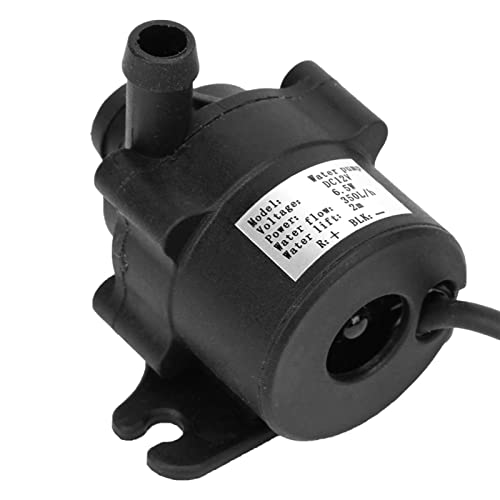
Generic DC 12V Submersible, Plastic Brushless Pond Sump Pump, 350L H 6.5W 2m Lift, Quiet DC Water for Aquarium Fish Tank Garden Pond Fountain Waterfall
- Brushless DC Pump: 350L/h flow rate, 2m lift
- Submersible Design: Plastic construction, quiet operation
- Compact and Efficient: 6.5W power, suitable for various setups
As an affiliate, we earn on qualifying purchases.
As an affiliate, we earn on qualifying purchases.
Understanding Sump Pump Power Needs
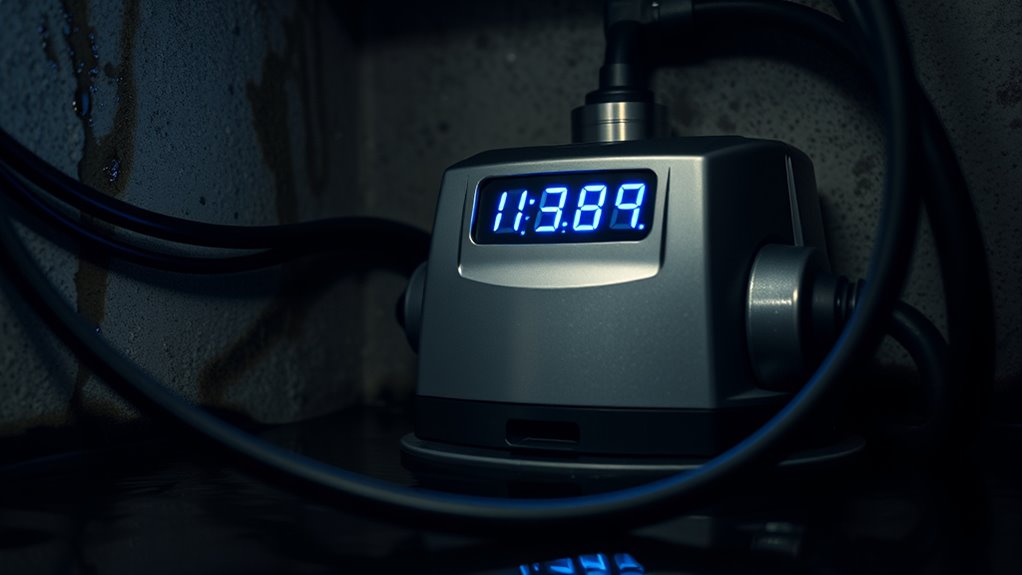
Understanding the power needs of your sump pump is vital to guarantee it operates reliably during heavy rainfall or flooding. Your pump’s wattage determines how effectively it can handle water removal, especially during peak conditions. Most residential sump pumps use between 600 and 1500 watts, with common models averaging around 800 to 1050 watts. The size and horsepower of your pump influence its energy consumption; for example, a 1/3 HP pump typically consumes about 800 watts, while a 1/2 HP may use 600 to 750 watts. Knowing these figures helps confirm your electrical system can support the pump’s operation without overload. Additionally, understanding the wattage helps in ensuring your electrical circuit can handle the load during critical times. Proper sizing and understanding of your pump’s power needs are essential for consistent performance and avoiding electrical issues during storms. To ensure reliable operation, it’s also important to consider the electrical capacity of your home’s circuit to prevent overloads during peak usage.

VEVOR 2500W Sump Pump Battery Backup System, LCD Display, Auto Switches to Battery Inverter Power for Sump Pump, Pure Sine Wave, for Basement Protection Emergency and Power Outage, Battery Not Include
- High Power Output: 2500W pure sine wave power
- Dual Pump Support: Supports main and backup pumps
- Multiple Outlets: Includes USB port and AC outlet
As an affiliate, we earn on qualifying purchases.
As an affiliate, we earn on qualifying purchases.
How Wattage Affects Pump Performance
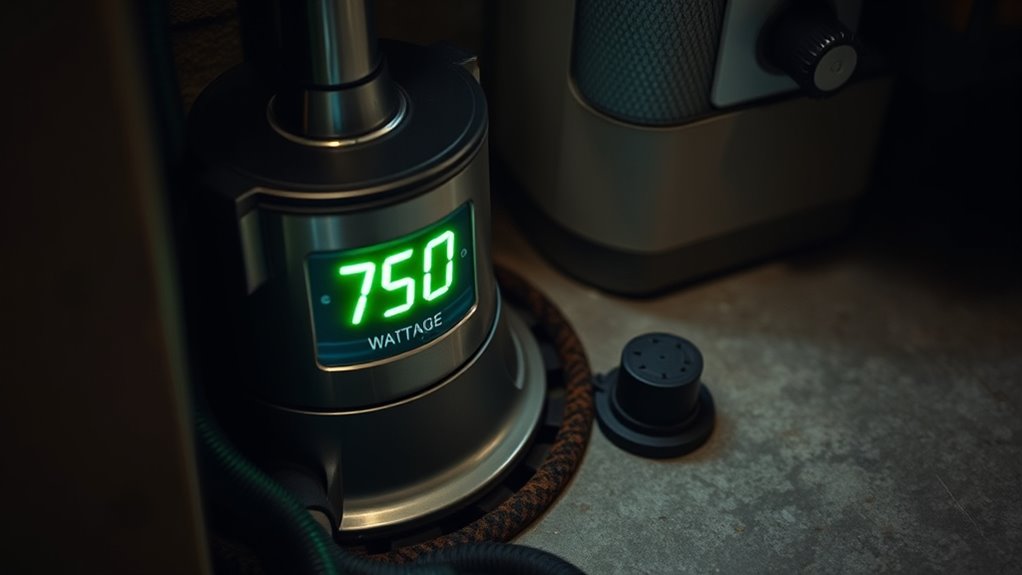
Wattage directly influences how well your sump pump performs under various conditions. Higher wattage generally means more power, allowing your pump to handle larger volumes of water more efficiently. For example, a 1/2 HP pump consuming around 1050 watts can move water faster than a lower-wattage model, reducing the risk of flooding. Proper pump sizing is essential to ensure the pump meets your specific needs without wasting energy. Additionally, selecting a pump with appropriate power capacity ensures reliable operation during heavy storms and prevents premature wear. However, excessive wattage may lead to unnecessary energy use and wear. Conversely, a pump with too low wattage might struggle during heavy storms, causing delays or failures. Your pump’s wattage determines its ability to start quickly, maintain consistent flow, and operate reliably under demanding conditions. Choosing the right wattage guarantees your sump pump can respond effectively, protecting your home without wasting energy. Proper tool selection based on wattage ensures optimal performance and longevity of your pump. Additionally, understanding the relationship between wattage and energy efficiency can help you select a model that balances power with cost savings over time.

Acquaer 1/2 HP Submersible Sewage Pump 6000 GPH Cast Iron Effluent Pump
- High Flow Capacity: Pumps up to 6000 GPH or 27ft lift
- Automatic Operation: Float switch for auto on/off
- Durable Construction: Cast iron casing and non-clog impeller
As an affiliate, we earn on qualifying purchases.
As an affiliate, we earn on qualifying purchases.
Estimating Your Sump Pump’s Power Consumption
Estimating your sump pump’s power consumption helps you plan for energy costs and choose the right backup systems. To do this, identify your pump’s wattage, which varies by horsepower and model. Check the label or user manual for running and starting wattage. Keep in mind that starting wattage can be 2-3 times higher than running wattage, markedly impacting backup sizing. Consider your pump’s amperage and voltage to calculate actual power use. Additionally, understanding electric load calculations can help you determine your pump’s energy requirements more precisely. It’s also helpful to track how long your pump runs during heavy storms to estimate daily energy consumption. Knowing the AI-driven discoveries in related fields can inspire innovative solutions for energy efficiency in your home. Monitoring energy consumption patterns over time enables better system optimization and potential cost savings. For more accurate assessments, incorporating real-time energy monitoring devices can provide detailed insights into your pump’s actual power usage. Understanding pump maintenance can also extend its lifespan and efficiency, reducing overall energy use.
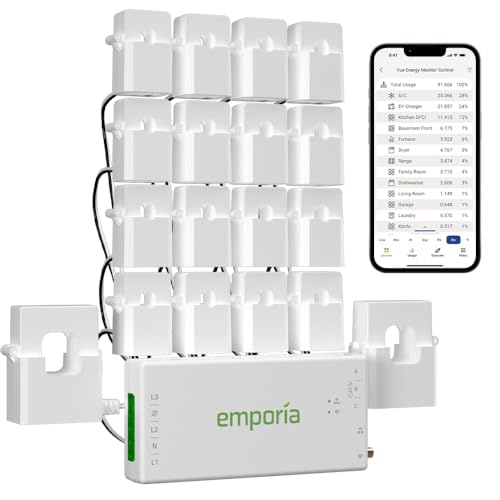
Emporia Vue 3 Home Energy Monitor – Smart Home Automation Module and Real Time Electricity Usage Monitor, Power Consumption Meter, Solar and Net Metering for UL Certified Safe Energy Monitoring
- UL Certified Safe Energy Monitoring: Certified for safety and reliability
- Easy Installation in Circuit Panel: Supports various home electrical systems
- Real-Time Energy Monitoring: 24/7 management and control of energy use
As an affiliate, we earn on qualifying purchases.
As an affiliate, we earn on qualifying purchases.
Choosing the Right Generator for Backup Power
Choosing the right generator for backup power involves calculating your essential devices’ total starting and running wattage to guarantee the generator can handle the surge demands. First, list your critical appliances, including your sump pump, fridge, and lights. Then, add their running watts and multiply the sump pump’s starting wattage by 2 or 3 for surge. Use this table as a reference:
| Device | Running Wattage | Starting Wattage |
|---|---|---|
| Sump Pump | 800W | 1600-2400W |
| Fridge | 600W | 1200W |
| Lights | 300W | N/A |
| Total | — | — |
Choosing a generator rated at least 20% above your total ensures power capacity can handle your essential devices during outages without overloads. Additionally, understanding the difference between surge capacity and continuous wattage can help ensure your generator meets your needs effectively. Properly sizing your generator based on power requirements is essential for a reliable backup during outages, especially when considering the importance of accurate calculations for preventing overloads and ensuring safety. Being aware of generator efficiency can also help optimize fuel consumption and longevity during extended outages.
Tips for Managing Electrical Load During Storms
During storms, managing your electrical load effectively is crucial to prevent overloads and guarantee your essential devices keep running. To do this, prioritize critical appliances like your sump pump, fridge, and communication devices. Avoid running multiple high-wattage devices simultaneously, which can trip circuit breakers or drain backup power sources. Incorporating smart energy management tools can help you monitor and optimize your power use in real-time. Consider these tips: – Use a dedicated circuit for your sump pump to prevent overloads. – Turn off non-essential devices during peak storm activity. – Monitor your energy consumption with a circuit monitor or smart meter to identify high load periods. Understanding modern kitchen technology concepts can also inspire smarter energy solutions for your entire home. Additionally, being aware of your sump pump wattage helps you plan and prevent electrical issues during storms. Implementing local automation systems can further enhance your ability to respond quickly to changing power needs during severe weather.
Frequently Asked Questions
What Is the Typical Lifespan of a Sump Pump?
A typical sump pump lasts about 7 to 10 years, depending on usage, water quality, and maintenance. You can prolong its lifespan by regularly inspecting, cleaning, and replacing worn parts. Keep an eye on its performance, listen for unusual noises, and address issues promptly. Proper upkeep ensures your sump pump keeps working efficiently during storms, giving you peace of mind and protecting your home from flooding.
How Often Should I Test My Sump Pump?
You should test your sump pump at least once a month to verify it works properly. Regular testing helps you catch any issues before a heavy storm hits. To test, pour water into the sump pit and verify the pump activates and drains efficiently. If it doesn’t turn on or runs loudly, it’s time for repairs or replacement. Consistent testing keeps your system reliable when you need it most.
Can I Upgrade My Sump Pump to a Higher Wattage?
Yes, you can upgrade your sump pump to a higher wattage, but you’ll need to verify your current electrical system first. Make sure your circuit can handle the increased power demand, especially if you’re moving to a more powerful pump like a 1/2 HP or 1 HP model. Consider the surge wattage and ensure your wiring, breaker, and outlet are compatible and rated for the new pump’s requirements to avoid overloads.
What Safety Precautions Are Needed When Working With Sump Pump Electricals?
When working with sump pump electricals, you need to prioritize safety. Always unplug the pump before maintenance, avoid working in wet conditions, and use GFCI outlets for protection against shocks. Wear insulated gloves and tools, and make certain your circuit is correctly rated for the pump’s wattage. If you’re unsure, consult a professional electrician to prevent electrical hazards and ensure your sump pump operates safely during storms.
How Does Temperature Affect Sump Pump Performance?
You might think temperature doesn’t matter much, but it directly impacts your sump pump’s performance. Cold weather can cause the pump’s components to freeze or become less efficient, leading to clogs or failure. Conversely, excessive heat can cause overheating and damage. To keep your sump pump running smoothly, make certain it’s installed in a protected environment, and consider insulation or heaters if you’re in a very cold climate.
Conclusion
Knowing your sump pump’s wattage is like having a reliable map during a storm — it helps you navigate potential power issues with confidence. By understanding how wattage impacts performance and choosing the right backup power, you make certain your home stays dry no matter the weather. Keep these tips in mind, and you’ll be prepared to handle stormy days just like a captain steering through rough seas with steady hands.
![The GNU Emacs Architecture: Unlocking The Core [Pdf]](https://wattreserve.com/wp-content/uploads/2026/07/the-gnu-emacs-architecture-unlocking-the-core-pdf-featured-560x300.jpg)