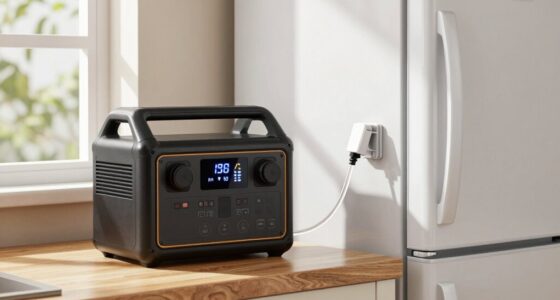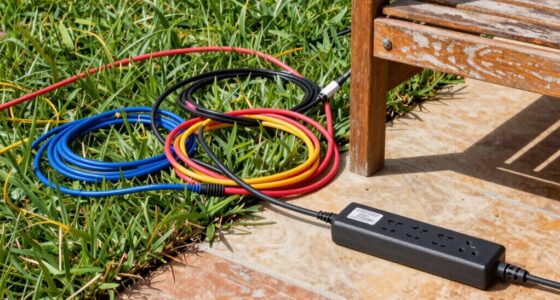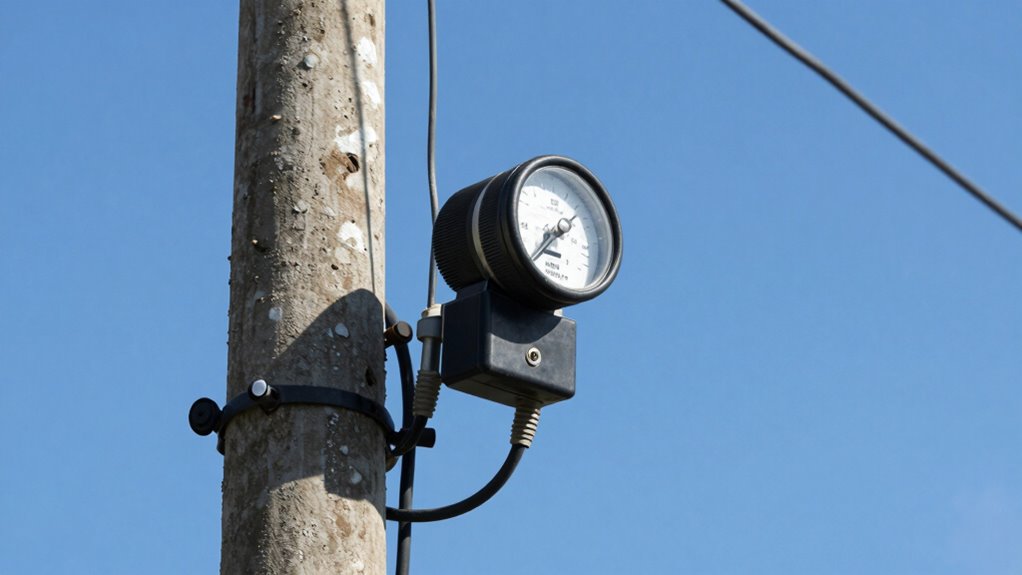
To estimate surge power without fancy tools, start by observing how much current your appliance draws when it first powers on—this is often higher than normal. Use a basic multimeter in series with the device to measure this initial surge. Multiply the voltage by this current, adjusting for the appliance’s power factor if known. With careful approximation, you can get a decent estimate of the surge power, and if you keep exploring, you’ll find simple methods to refine your calculations even more.
Open a free Amazon Business account
Business pricing, bulk buying and tax-exempt orders.
As an affiliate, we earn on qualifying purchases.
Key Takeaways
- Observe appliances during startup for flickering lights, clicking sounds, or hums indicating high surge demand.
- Use a multimeter in series to measure initial current at startup, then multiply by voltage for approximate surge power.
- Compare the appliance’s running wattage with its startup power listed on labels to estimate surge requirements.
- Use a clamp meter to safely measure current during startup without disconnecting devices.
- Review manufacturer labels for surge ratings and maximum current to gauge potential surge power without advanced tools.

Fluke 15B+ Digital Multimeter, for Electrical Applications, Measures AC/DC Voltage and Current Measurements up to 1000V and 10A, Along with Resistance, Continuity, Diode, and Capacitance Capabilities
- Safety Rating: CAT III 600V for safety
- Voltage Measurement: Measures AC/DC up to 1000V
- Current Measurement: Measures AC/DC up to 10A
As an affiliate, we earn on qualifying purchases.
As an affiliate, we earn on qualifying purchases.
Understanding Surge Power and Why It Matters
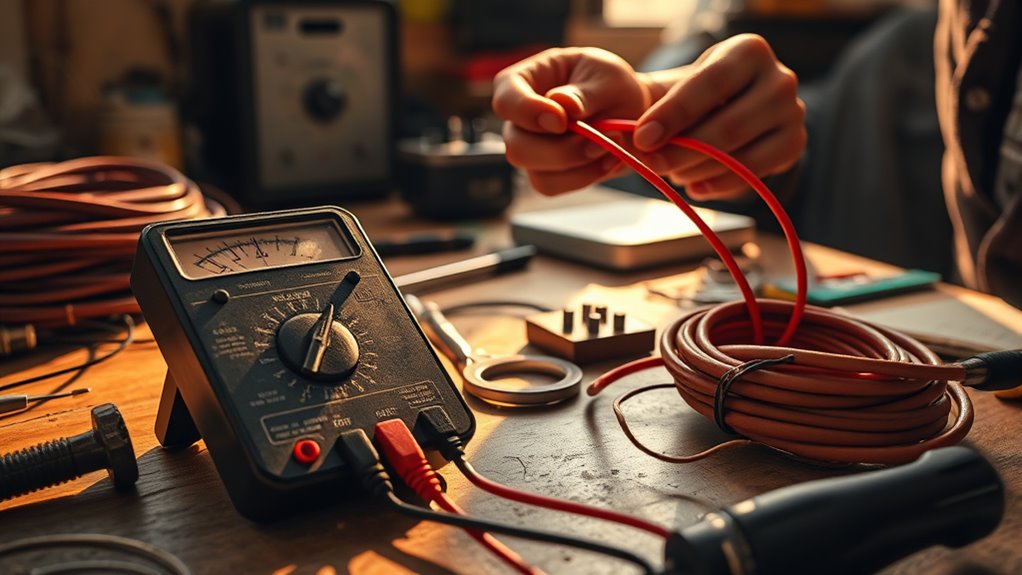
Understanding surge power is essential because it determines how well your electrical devices can handle sudden increases in power demand. When appliances start up, they often draw more current than during normal operation, creating a surge. The power factor, which measures how effectively your electrical load uses electricity, influences these surges. A low power factor means more current is needed, increasing the likelihood of higher surge power requirements. Knowing the relationship between your electrical load and surge power helps prevent overloads and potential damage. Additionally, understanding electrical load can help optimize your system’s performance and longevity. Recognizing the impact of surge power can further improve your system’s stability and safety. Properly managing surge power also involves understanding voltage fluctuations, which can cause additional stress on electrical components. This knowledge is key to choosing the right equipment and maintaining a safe, efficient electrical setup. Being aware of essential oils for various health concerns, like those used for respiratory health or relieving dizziness, can also contribute to overall well-being and system management.

VIVANTECH High Accuracy Low Current Clamp Meter – AC/DC Clamp-On Ammeter, 1mA Resolution, 60A Range, Data Hold & Backlight, Ideal for Automotive Electrical Diagnosis & Power Maintenance
- High Accuracy AC/DC Measurement: Measures 1mA to 60A with 1mA resolution
- Automatic AC/DC Detection: Switches between AC and DC automatically or manually
- Non-Contact Safe Testing: Clamp jaw for circuit-free current measurement
As an affiliate, we earn on qualifying purchases.
As an affiliate, we earn on qualifying purchases.
Identifying Appliances With High Starting Power
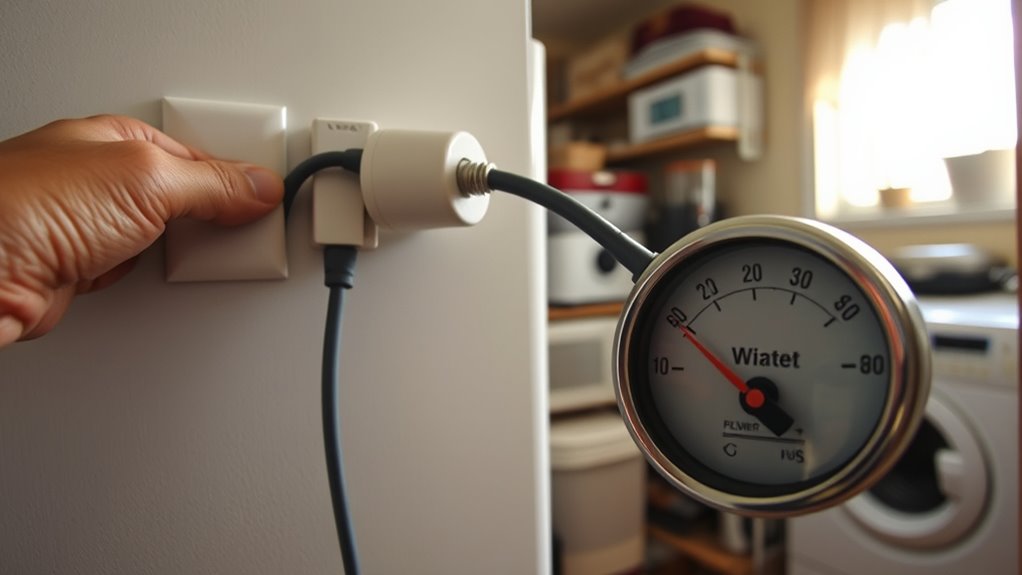
How can you tell which appliances draw the most power when they start up? During an appliance startup, surge current spikes as motors and compressors engage. These appliances typically require a higher initial power draw compared to their running power. To identify them, observe which devices cause lights to flicker or circuit breakers to trip when turned on. Large appliances like refrigerators, air conditioners, and washing machines usually have significant surge power because their motors need extra energy to overcome inertia. You can also listen for a brief, loud hum or click when powering on certain devices. Recognizing these appliances helps you estimate their surge power, ensuring your electrical system can handle their startup demands without issues. Additionally, understanding the power requirements of appliances can help you select appropriate surge protectors or circuit ratings. Being familiar with appliance startup characteristics allows for better planning and prevents overloads during peak power demand moments. Moreover, knowing how to measure surge power can further improve your ability to manage electrical loads safely and efficiently. Recognizing the initial power draw of appliances is essential for designing a safe and reliable electrical setup. Being aware of the variability in surge power among different devices also aids in accurate estimation and system design.

Heavy Duty 20-Amp 2400-Watt Appliance Surge Protector Smart Circuit Plug with Outlet Saver Power Cord
- Appliance Protection: Protects large and small appliances
- High Power Capacity: 120V, 20A, 2400W, 1.0 HP
- Wide Voltage Tolerance: Adjustable 90-105V to 140V
As an affiliate, we earn on qualifying purchases.
As an affiliate, we earn on qualifying purchases.
Using Manufacturer Labels to Find Surge Ratings
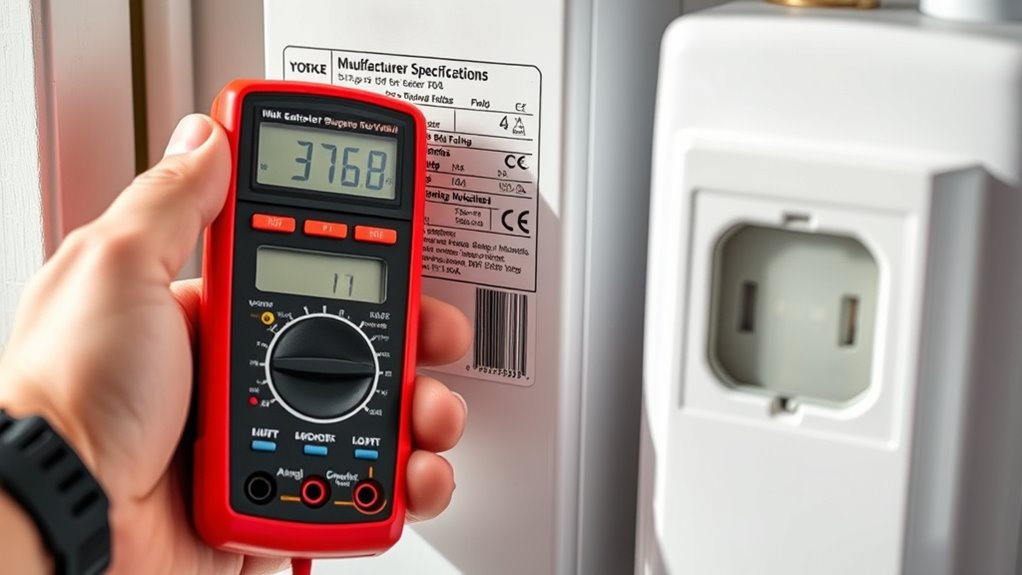
You can find surge ratings by carefully reading the specifications on manufacturer labels. These labels often list the maximum surge current or power the device can handle. Understanding how to interpret these ratings helps you choose the right surge protector for your appliances. Additionally, being aware of surge protection ratings ensures your equipment remains safe during power fluctuations. Recognizing nanotechnology applications in these ratings can also give insights into advanced protective features incorporated into modern devices. Furthermore, manufacturers’ testing standards can provide additional assurance of a surge protector’s reliability and effectiveness. Being familiar with vetted standards in the industry can help you make more informed decisions. Considering community feedback and experiences can also help assess the real-world performance of surge protectors beyond manufacturer specifications.
Reading Label Specifications
Manufacturer labels provide essential information for estimating surge power, making them a reliable resource for identifying surge ratings. Look carefully at the specifications, especially the rated voltage and current. Also, note the power factor, which affects how efficiently the device uses electricity and influences surge behavior. Voltage regulation details reveal how much voltage might fluctuate during operation, impacting surge expectations. Many labels include a maximum surge current or power rating, directly indicating the device’s capacity to handle surges. By understanding these specifications, you can approximate the surge power your equipment might experience. Remember, accurate reading depends on paying attention to all listed parameters, especially those related to voltage stability and power factor, which are vital for a correct estimate. Additionally, understanding power quality can help you better interpret how devices respond to surges and voltage variations, as it encompasses the overall stability of electrical supply and device performance. Being aware of voltage fluctuations can help you anticipate how your equipment will react during transient events. Furthermore, familiarizing yourself with manufacturer specifications can also provide insights into the device’s surge tolerance, which is crucial for protecting your equipment from unexpected power spikes. Recognizing the significance of wave and wind effects on electrical systems can further refine your surge power estimations, especially in environments prone to such disturbances.
Interpreting Surge Ratings
To interpret surge ratings accurately, start by locating the relevant specifications on the label, which often include maximum surge current or power ratings. These figures indicate the device’s capacity to handle brief power spikes without damage. Look for terms like “surge current,” “surge power,” or “peak transient.” Keep in mind, the power factor affects how efficiently the device handles surges, while voltage stability influences the severity of spikes. Visualize the label details with these points:
- Maximum surge current in amperes or kiloamperes
- Surge power rating in watts or joules
- Power factor, indicating efficiency during surges
- Voltage range, showing stability requirements
- Duration or pulse width of surge capacity
Understanding these helps you estimate the surge power your equipment can safely handle. Reviewing the specifications can give you a clearer picture of the device’s transient response capabilities. Additionally, voltage stability impacts how well the equipment can withstand power fluctuations. Paying attention to surge duration helps determine if the device can endure longer power spikes without damage, especially when considering cable and hardware quality that also influence surge response. Recognizing the role of system grounding can further improve your assessment of surge handling capacity.
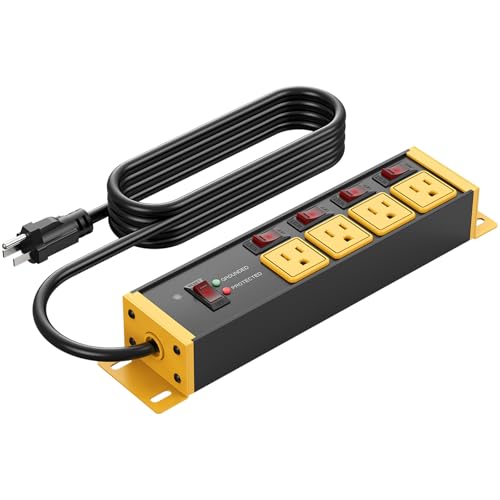
CCCEI Heavy Duty Surge Protector, 20A Individual Switches, Yellow, 6FT, 1
- Heavy Duty Power Strip: 20A with 4 outlets and switches
- 6ft Heavy Duty Extension Cord: 12 gauge, wall mount design
- Independent Circuit Breakers: 20A per outlet for autonomous control
As an affiliate, we earn on qualifying purchases.
As an affiliate, we earn on qualifying purchases.
Estimating Surge Power by Comparing With Running Power

Estimating surge power by comparing it with running power involves analyzing how much additional energy is required during brief, intense bursts of activity. When appliances start, they often draw a surge current that exceeds their normal running power, causing power fluctuation. By observing your appliance’s typical running power, you can estimate the surge power, since the surge usually doubles or triples the running wattage. Keep in mind that appliance compatibility plays a role; some devices are more sensitive to surges, making their power fluctuations more noticeable. To estimate, note the power used during startup compared to steady operation. This comparison helps you gauge the surge power without fancy tools, ensuring you choose a power source capable of handling brief but significant energy demands. Additionally, understanding power fluctuations and electrical demands can help prevent overloads in pool equipment. Recognizing surge characteristics can also assist in selecting the right electrical components for your setup.
Observing and Recording Inrush Current With a Multimeter
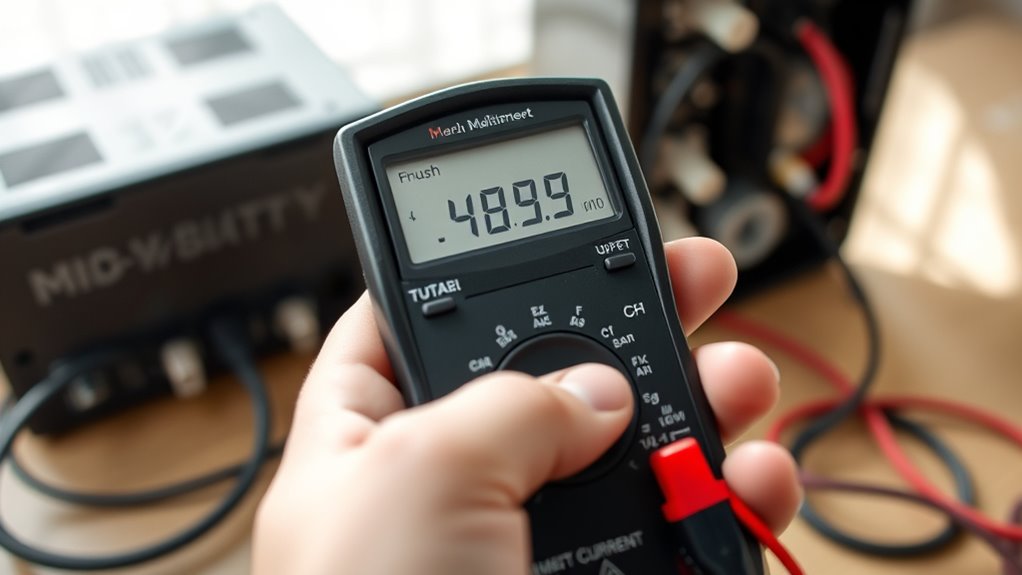
Once you’ve observed the difference between an appliance’s running power and its surge, the next step is to measure the actual inrush current during startup. Using a multimeter, set it to measure current, ideally in the low amp range. To get an accurate reading, you might need to briefly disconnect the device and connect the multimeter in series. Watch for the initial spike that occurs when the appliance powers on. This surge is influenced by capacitor behavior, especially in devices with motor start components or power factor correction circuits. When recording, picture these points:
- The quick, high-current spike at startup
- How the inrush exceeds normal running current
- The effect of capacitor charge in delaying current stabilization
- Variations between similar appliances
- The importance of consistent measurement for accuracy
This helps you estimate surge power without fancy tools.
Calculating Surge Power Using Basic Mathematical Formulas
Calculating surge power involves using basic mathematical formulas that relate current and voltage to power consumption during startup. To estimate surge power accurately, multiply the initial current draw by the voltage supplied. Keep in mind that the power factor influences the actual power used; a lower power factor means less efficient energy transfer, impacting your calculations. Additionally, voltage sag during startup can cause fluctuations, which might slightly affect your estimates. To account for this, use the rated voltage rather than any temporarily reduced voltage during surge moments. The formula is straightforward: Surge Power (Watts) = Voltage (V) × Current (A) × Power Factor. By applying these simple calculations, you can effectively estimate the surge power without the need for advanced tools or equipment.
Practical Tips for Monitoring Power Spikes Safely
To monitor power spikes safely, start by using a clamp meter to measure current without direct contact with energized parts. Keep an eye on how the circuit behaves during peak loads, noting any sudden changes or irregularities. Taking these precautions helps you stay safe while accurately tracking power surges.
Use a Clamp Meter
Using a clamp meter to monitor power spikes is one of the safest and most effective methods available. It allows you to measure current directly without disconnecting circuits, reducing risk. Before use, verify your clamp meter is properly calibrated; inaccurate readings can lead to surge power myths. When measuring, you’ll see:
- The clamp encircling the wire securely
- Real-time current readings displayed instantly
- No need to disconnect wires or open panels
- Ability to spot sudden current surges during operation
- Easy switching between AC and DC modes for different circuits
This tool helps you identify transient spikes accurately, dispelling common surge power myths. Always follow safety guidelines, keep the device calibrated, and avoid assumptions based on faulty readings. A clamp meter offers a safe, straightforward way to monitor power spikes effectively.
Observe Circuit Behavior
Monitoring circuit behavior closely is essential for safely detecting power spikes as they happen. By observing circuit noise and power fluctuations, you can identify sudden changes indicating surge events. Keep an eye on irregular or unexpected sparks, flickering lights, or brief surges in voltage that might not be obvious with tools alone. Pay attention to subtle signs like increased circuit noise during startup or when devices turn on, as these can signal impending surges. Using your senses and simple visual cues helps you react quickly and prevent damage. Remember, safe observation means staying at a safe distance and avoiding direct contact with live components. Consistently monitoring circuit behavior enables you to estimate surge power more accurately without complex equipment.
Applying Your Estimates to Choose the Right Generator
Choosing the right generator begins with applying your surge power estimates to match your equipment’s needs. Focus on how voltage fluctuations can affect startup loads and guarantee the generator can handle these surges. Consider the power factor, which influences how efficiently the generator delivers power to your devices. To select correctly, visualize your setup:
Selecting the right generator depends on surge power, voltage stability, and matching power factors for reliable operation.
- Handling devices with high startup surges
- Managing voltage fluctuations during load changes
- Ensuring capacity for continuous operation
- Matching the generator’s power factor with your equipment
- Avoiding overloads during peak demand
Frequently Asked Questions
Can Surge Power Vary Between Different Brands of the Same Appliance?
Yes, surge power can vary between different brands of the same appliance due to brand variability. Some brands may produce appliances with higher or lower starting currents, affecting surge power. You’ll notice differences in appliance consistency, especially when comparing cheaper models to premium ones. To get an accurate estimate, consider each brand’s specifications and how they handle initial power demands, rather than assuming all appliances of the same type have identical surge power.
How Often Do Appliances Experience Peak Surge Power During Operation?
Ever notice your appliance’s power flickering? Appliances typically experience peak surge power only briefly during startup or heavy loads. This short-lived surge can happen multiple times daily, especially if you frequently turn devices on or off. Power stability affects both surge occurrences and your appliance’s lifespan. Understanding this helps you protect your devices; avoiding unnecessary surges prolongs their life and guarantees consistent performance.
Are There Environmental Factors That Influence Surge Power Estimates?
Environmental interference and power line variability definitely influence surge power estimates. You should consider that weather conditions, such as lightning or storms, can cause sudden power surges. Additionally, fluctuations in the power grid, like heavy usage or electrical noise, can affect surge readings. These factors make it harder to precisely estimate surge power without specialized tools, so always account for environmental conditions when evaluating surge potential.
What’s the Typical Margin of Error in Manual Surge Power Calculations?
Imagine aiming a flashlight into the dark—your power measurement and calculation accuracy can vary, often by about 10-20%. This margin of error depends on your skill and available data, so expect some flickering in your estimates. While manual surge power calculations aren’t perfect, with careful attention, you can improve accuracy. Keep in mind, small errors can compound, but steady practice helps you illuminate the true power behind the surge.
Can Household Power Fluctuations Affect the Accuracy of Surge Power Estimates?
Household power fluctuations and voltage stability can impact your surge power estimates. When voltage isn’t stable, it can cause temporary spikes or drops, making it harder to get accurate readings manually. These fluctuations might lead you to overestimate or underestimate surge power, especially if you’re relying on basic calculations. To improve accuracy, try to measure during stable voltage periods, and be aware that fluctuations can still influence your results.
Conclusion
Now you’re armed with simple ways to estimate surge power without fancy tools. Think of it as catching lightning in a bottle—you don’t need a storm to see the spark. By paying attention to your appliances and using basic math, you can make smart choices for your generator needs. With a little observation and effort, you’ll tame those power surges and keep your devices running smoothly, no magic required.
Back to school Picks
back to school
As an affiliate, we earn on qualifying purchases.