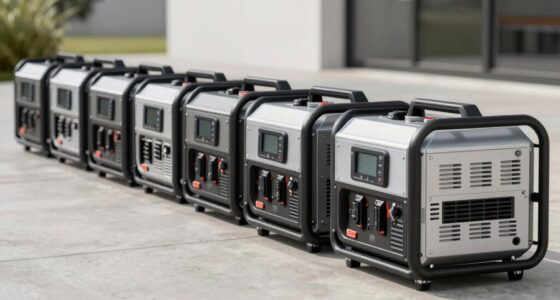
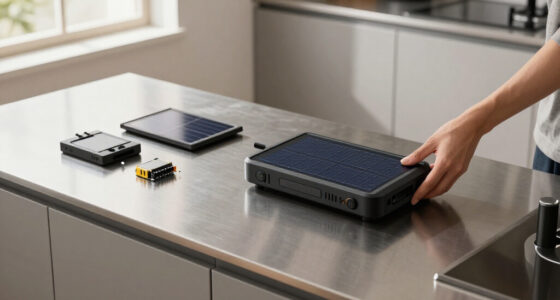
The Anker SOLIX E10 is my best overall pick for buyers seeking a coordinated whole-home system, while the ECO-WORTHY Powermega 16.07 kWh stands out for substantial storage in a single battery and the WattCycle dual-battery bundle for pairing storage with a split-phase inverter. The right choice depends on whether you need a battery alone, an inverter-and-battery package, or a system designed around solar and whole-home backup. Capacity, inverter compatibility, installation requirements, and expansion options matter as much as the headline kilowatt-hours. Larger systems can cover more loads, but may require more planning, space, and compatible equipment. Read on for the full comparison and guidance on matching a system to your setup.

Get backup power and energy gear delivered free with Prime
- Fast, free delivery on millions of items
- Prime Video, Amazon Music and more included
- Member-only deals all year
Key Takeaways
- The Anker SOLIX E10 is the most integrated option in this lineup: its Power Dock and extra battery suit buyers who want a coordinated whole-home setup rather than a standalone battery.
- Battery capacity varies widely: the listed systems range from 5.12 kWh wall-mounted storage to multi-battery configurations rated around 30 kWh or more, so buyers should size storage to actual loads.
- Bundles change the comparison: the WattCycle package includes a split-phase inverter, and the ECO-WORTHY off-grid system includes panels, battery storage, and power equipment; neither is a like-for-like comparison with a battery-only unit.
- 48V-class LiFePO4 batteries dominate the standalone choices: they offer substantial storage, but buyers still need to confirm inverter compatibility, communications support, and installation requirements.
- Large capacity is not the same as whole-home readiness: rack batteries and multi-pack systems can provide considerable stored energy, yet system integration, output limits, and professional installation may determine what they can actually power.
| SUNGOLDPOWER CoreX 5 Elite 51.2V 100Ah Wall-Mounted Lithium Battery |  | Best Wall-Mounted Battery | Chemistry: Lithium-ion | Nominal voltage: 51.2V | Capacity: 100Ah | VIEW LATEST PRICE | See Our Full Breakdown |
| MFUZOP 48V 100Ah LiFePO4 Server Rack Battery with 100A BMS |  | Best Rack-Mount Value | Chemistry: LiFePO4 | Nominal voltage: 51.2V (48V class) | Capacity: 100Ah | VIEW LATEST PRICE | See Our Full Breakdown |
| ECO-WORTHY 10 kW Off-Grid Solar Power System with 2,950 W Panels and 16.1 kWh Battery |  | Best Complete Off-Grid Kit | Battery chemistry: LiFePO4 | Battery voltage and capacity: 48V, 314Ah | Battery energy: 16.076kWh | VIEW LATEST PRICE | See Our Full Breakdown |
| WattCycle Dual 48V 100Ah Server Rack Batteries & 12kW Split Phase Inverter |  | Best for Fast-Transfer Backup | Battery configuration: Two 48V 100Ah rack batteries | Combined battery capacity: 10.24kWh | Inverter output: 12kW | VIEW LATEST PRICE | See Our Full Breakdown |
| ECO-WORTHY Powermega 51.2V 314Ah LiFePO4 Battery, 16.07kWh |  | Best High-Capacity Single Battery | Chemistry: LiFePO4 | Nominal voltage: 51.2V | Capacity: 314Ah | VIEW LATEST PRICE | See Our Full Breakdown |
| WattCycle 51.2V 400Ah LiFePO4 Server Rack Battery, 20.48kWh, 4-Pack |  | Best for Modular Rack Storage | Chemistry: LiFePO4 | System voltage: 51.2V | Total capacity: 400Ah | VIEW LATEST PRICE | See Our Full Breakdown |
| 48V 314Ah LiFePO4 16.08 kWh Lithium Battery |  | Best High-Capacity Single Enclosure | Chemistry: Grade A LiFePO4 | Voltage: 48V | Capacity: 314Ah | VIEW LATEST PRICE | See Our Full Breakdown |
| Anker SOLIX E10 Whole-Home Power System with Power Dock and Extra Battery, 12–90 kWh |  | Best for Whole-Home Backup | Included components: E10 Power Module, 2 B6000 Battery Modules, metal pad, quick start guide | Storage capacity: 12–90 kWh | Continuous output: 7.6 kW per unit; scales to 22.8 kW | VIEW LATEST PRICE | See Our Full Breakdown |
| VEVOR 51.2V 400Ah LiFePO4 Server Rack Battery |  | Best for Standard-Rack Compatibility | Model: LPS48100-B | Chemistry: LiFePO4 | Voltage: 51.2V | VIEW LATEST PRICE | See Our Full Breakdown |
| ECO-WORTHY Cubix100 48V 600Ah LiFePO4 Server Rack Battery, 6-Pack |  | Best for Large Expandable Storage | Model: Cubix100 | Chemistry: LiFePO4 | Battery voltage: 51.2V | VIEW LATEST PRICE | See Our Full Breakdown |
| battery energy storage system | Chemistry | Capacity |
|---|---|---|
| SUNGOLDPOWER CoreX 5 Elite 51. | Lithium-ion | 100Ah |
| MFUZOP 48V 100Ah LiFePO4 Serve | LiFePO4 | 100Ah |
| ECO-WORTHY 10 kW Off-Grid Sola | — | — |
| WattCycle Dual 48V 100Ah Serve | — | — |
| ECO-WORTHY Powermega 51.2V 314 | LiFePO4 | 314Ah |
| WattCycle 51.2V 400Ah LiFePO4 | LiFePO4 | — |
| 48V 314Ah LiFePO4 16.08 kWh Li | Grade A LiFePO4 | 314Ah |
| Anker SOLIX E10 Whole-Home Pow | — | — |
| VEVOR 51.2V 400Ah LiFePO4 Serv | LiFePO4 | 400Ah, configured as four 100Ah units |
| ECO-WORTHY Cubix100 48V 600Ah | LiFePO4 | — |
More Details on Our Top Picks
SUNGOLDPOWER CoreX 5 Elite 51.2V 100Ah Wall-Mounted Lithium Battery
The SUNGOLDPOWER CoreX 5 Elite suits buyers who want a single 5.12 kWh battery mounted on a wall rather than installed in a rack. Its LCD, Bluetooth, and Wi-Fi monitoring make status checks accessible both at the unit and remotely, while CAN and RS485 support communication with compatible inverters. Compared with the rack-style MFUZOP 48V 100Ah, this model offers wall mounting and a longer stated warranty, but both have 100Ah capacity and support expansion to 15 units. The CoreX 5 Elite’s 100A BMS and 5,120W maximum power make it a modular building block, not a high-capacity solution by itself. Its 105.8-pound weight also makes mounting a two-person or professional job. The manufacturer claims 80% capacity after 5,000 cycles at 100% depth of discharge; that is a product claim, not an independent performance result.
Pros:- LCD, Bluetooth, and Wi-Fi monitoring provide both on-unit and remote status checks.
- CAN and RS485 support communication with compatible inverter systems.
- Parallel connection supports expansion to as many as 15 units.
- Manufacturer states a 10-year warranty and 5,000-cycle capacity claim.
Cons:- At 105.8 pounds, lifting and wall mounting may require help or professional installation.
- A single unit stores 5.12 kWh, well below the ECO-WORTHY Powermega’s 16.07 kWh.
- The stated 5,120W maximum applies to this battery unit and does not describe a whole-home system.
Best for: Homeowners building a compatible 48V system who prefer wall mounting, remote monitoring, and the option to add batteries gradually.
Not ideal for: Buyers who need substantial storage from one battery or cannot safely handle and mount a 105.8-pound unit.
- Chemistry:Lithium-ion
- Nominal voltage:51.2V
- Capacity:100Ah
- Maximum power:5,120W
- BMS current:100A
- Monitoring:LCD, Bluetooth, and Wi-Fi
- Communication:CAN and RS485
- Parallel expansion:Up to 15 units
- Weight:105.8 lb
Our verdict“Choose the CoreX 5 Elite if you want a wall-mounted, expandable 5.12 kWh battery and have a compatible inverter and safe mounting plan.”
MFUZOP 48V 100Ah LiFePO4 Server Rack Battery with 100A BMS
The MFUZOP 48V 100Ah is a straightforward entry point for buyers assembling a server-rack or off-grid battery bank: it provides 5.12 kWh of LiFePO4 storage, a built-in 100A BMS, and a 125A circuit breaker. Bluetooth app monitoring is included, while CAN and RS485 allow inverter communication when the equipment is compatible. Compared with the wall-mounted SUNGOLDPOWER CoreX 5 Elite, MFUZOP takes a 3U rack format and lists installation cables and hardware, but its rack itself is not included and its warranty is five years rather than ten. The stated 15-unit parallel limit gives room to build out a larger bank, although a single battery’s capacity is modest beside the ECO-WORTHY Powermega. Check inverter protocols before buying: communication features are useful only when the rest of the system supports them.
Pros:- Provides 5.12 kWh of LiFePO4 storage in a 3U rack format.
- Built-in 100A BMS and 125A circuit breaker add battery protection.
- Bluetooth app monitoring plus CAN and RS485 communication for compatible inverters.
- Supports up to 15 batteries in parallel and includes connection accessories.
Cons:- Server rack is not included, adding a separate equipment requirement.
- CAN and RS485 inverter communication depends on protocol compatibility.
- The five-year limited warranty is shorter than the stated warranties for the CoreX 5 Elite and Powermega.
Best for: DIY solar and backup builders who already have, or plan to buy, a compatible server rack and want to expand a 48V bank in stages.
Not ideal for: Buyers who need a battery rack included, require broad inverter compatibility without checking protocols, or want high storage capacity from one unit.
- Chemistry:LiFePO4
- Nominal voltage:51.2V (48V class)
- Capacity:100Ah
- Energy:5.12kWh
- BMS:100A
- Circuit breaker:125A
- Form factor:3U server rack; rack not included
- Communications:CAN, RS485, and Bluetooth app
- Parallel expansion:Up to 15 batteries
Our verdict“Pick the MFUZOP if you want a rack-format 5.12 kWh battery with monitoring and expansion options, and already have a compatible rack and inverter.”
ECO-WORTHY 10 kW Off-Grid Solar Power System with 2,950 W Panels and 16.1 kWh Battery
This ECO-WORTHY package is the clearest choice here for buyers who need more than a battery: it bundles 16.076 kWh of LiFePO4 storage, a 10 kW split-phase inverter, five bifacial panels, and connection cables. That package can simplify planning compared with pairing the ECO-WORTHY Powermega battery with separately sourced panels and an inverter. The tradeoff is a pronounced gap between the 2,950W of included solar and the inverter’s 10,000W continuous output rating; the inverter’s output capacity does not mean the included array can recharge the battery quickly under all conditions. Split-phase output supports 120/240V loads, while dual MPPT controllers help manage solar input. Freight delivery, large panels, and the recommendation for professional installation make this a substantial project rather than a plug-in battery purchase.
Pros:- Combines a 16.076 kWh battery, inverter, five panels, and connection cables.
- 10 kW continuous split-phase inverter supports 120V or 120/240V output.
- LiFePO4 battery includes a 200A PACE BMS and supports up to 200A charging current.
- Bifacial panels may gain energy from reflected light under suitable site conditions.
Cons:- Included panel capacity is 2,950W, substantially below the inverter’s 10,000W continuous output.
- Professional installation is recommended, making setup less suitable for casual DIY buyers.
- Palletized freight delivery and large, heavy panels require suitable access and handling.
Best for: Off-grid property owners who want a coordinated battery, inverter, and panel package with split-phase output and can arrange professional installation.
Not ideal for: Buyers seeking a battery-only purchase, an easy DIY setup, or a solar array sized to match the inverter’s full 10 kW output rating.
- Battery chemistry:LiFePO4
- Battery voltage and capacity:48V, 314Ah
- Battery energy:16.076kWh
- Inverter output:10,000W continuous; 20,000W peak
- Output voltage:120V or 120/240V split phase
- Included solar panels:Five 590W panels; 2,950W total
- Panel conversion efficiency:23.23%
- Battery management system:PACE 200A
- Maximum battery charging current:200A
Our verdict“Choose this kit if you want one bundled off-grid package and can accept its smaller included solar array, freight logistics, and professional installation needs.”
WattCycle Dual 48V 100Ah Server Rack Batteries & 12kW Split Phase Inverter
The WattCycle bundle pairs 10.24 kWh of battery storage with a 12 kW split-phase inverter, making it a better fit for a connected home backup setup than buying a small battery alone. Its under-10-millisecond transfer time is the key differentiator: it is aimed at keeping supported critical loads running through a grid interruption, not just storing solar energy for later. Compared with the ECO-WORTHY 10 kW kit, WattCycle offers a higher stated inverter output and 24 kW of PV input, but it includes no panels in the supplied description and stores less energy than that kit’s 16.076 kWh battery. The dual MPPT inputs and 250A charging current can accommodate substantial solar equipment, but the system still needs careful electrical planning. Its rack batteries and inverter also demand dedicated space and skilled installation.
Pros:- Two batteries provide 10.24 kWh of combined storage.
- 12 kW split-phase inverter supports higher output than the ECO-WORTHY kit’s 10 kW inverter.
- Under-10-millisecond UPS transfer targets minimal interruption for supported critical loads.
- Dual MPPT controllers accept up to 24 kW of PV input, with a stated 250A charging current.
Cons:- The listed package does not include solar panels, so PV equipment must be sourced separately.
- At 10.24 kWh, its storage is lower than the ECO-WORTHY off-grid kit’s 16.076 kWh.
- Rack batteries and inverter need dedicated space and may require professional installation.
Best for: Homeowners building a professionally planned backup system who prioritize fast transfer for critical loads and expect to connect a substantial solar array.
Not ideal for: Buyers who need panels included, want a compact battery-only unit, or do not have space and installation support for rack equipment.
- Battery configuration:Two 48V 100Ah rack batteries
- Combined battery capacity:10.24kWh
- Inverter output:12kW
- Output:Split phase
- Maximum PV input:24kW
- Charging current:250A
- Stated efficiency:98%
- UPS transfer time:<10ms
- Monitoring:Bluetooth and LCD
Our verdict“Choose the WattCycle bundle if fast-transfer backup and a high-capacity inverter matter more than included panels or maximum battery capacity.”
ECO-WORTHY Powermega 51.2V 314Ah LiFePO4 Battery, 16.07kWh
For buyers who want substantial storage without starting with several small batteries, the ECO-WORTHY Powermega offers 16.07 kWh in one LiFePO4 unit. That is more than three times the stated energy of the 5.12 kWh SUNGOLDPOWER CoreX 5 Elite, so it can reduce the number of separate battery units needed for a larger installation. Its 200A active-balancing BMS, external circuit breaker, aerosol fire-suppression modules, and 7-inch touchscreen make safety provisions and local status checks central features. Wi-Fi, Bluetooth, RS485, and CAN add monitoring and integration choices. Unlike the ECO-WORTHY off-grid kit, this is battery-only: the inverter and solar panels are not included. The 10-year warranty and support for up to 15 parallel units suit long-term expansion, but pallet delivery and the unit’s size call for adequate access and installation planning.
Pros:- 16.07 kWh capacity provides much more storage per unit than the CoreX 5 Elite or MFUZOP battery.
- 200A active-balancing BMS, external circuit breaker, and aerosol fire-suppression modules are included.
- 7-inch touchscreen plus Wi-Fi, Bluetooth, RS485, and CAN support monitoring and system integration.
- Supports parallel expansion up to 15 units and lists UL 1973 certification.
Cons:- Battery-only package requires a compatible inverter and separately sourced solar equipment.
- Large, heavy construction ships by truck on a pallet and requires suitable delivery access.
- A high-capacity battery can be more storage than a smaller backup system needs.
Best for: Homeowners and off-grid system builders who need around 16 kWh from a single LiFePO4 battery and have compatible inverter equipment or plan to source it separately.
Not ideal for: Buyers wanting a complete solar-and-inverter package, a lightweight battery for frequent relocation, or delivery without truck access.
- Chemistry:LiFePO4
- Nominal voltage:51.2V
- Capacity:314Ah
- Energy:16.07kWh
- BMS current:200A
- Parallel expansion:Up to 15 units
- Display:7-inch HD touchscreen
- Connectivity:Wi-Fi, Bluetooth, RS485, and CAN
- Safety features:Active cell balancing, external two-pole circuit breaker, and aerosol fire suppression
Our verdict“Choose the Powermega if you want 16.07 kWh in one expandable LiFePO4 battery and are prepared to provide the inverter, solar equipment, and delivery access.”
WattCycle 51.2V 400Ah LiFePO4 Server Rack Battery, 20.48kWh, 4-Pack
The WattCycle four-pack is a strong fit for buyers who want 20.48 kWh split across four rack batteries rather than one large enclosure. That layout can make capacity easier to expand or service, while each unit’s 100A BMS and 3A active balancing help manage protection and cell balance. The LCD and Bluetooth app also give you local and phone-based status checks. Compared with the VEVOR 51.2V 400Ah battery, WattCycle adds active balancing and lists CAN, RS232, and RS485 alongside Bluetooth; the VEVOR listing gives a stated 103.6-pound weight. The tradeoff is installation: you need a compatible rack cabinet, and inverter communication depends on matching protocols. It suits a planned 48V storage build better than a simple plug-in backup setup.
Pros:- Four batteries provide 20.48 kWh of nominal storage.
- 3A active balancing and a 100A BMS per battery support cell management and protection.
- LCD touchscreen and Bluetooth app provide multiple monitoring options.
- 3U rack-mount format supports parallel expansion.
Cons:- A compatible rack cabinet or enclosure is required for rack installation.
- Communication ports only help with inverter monitoring or control when the inverter is compatible.
Best for: Home backup and off-grid buyers building a rack-based 48V system who want 20.48 kWh distributed across four batteries.
Not ideal for: Buyers without a rack cabinet or compatible inverter, since installation and communications require suitable equipment.
- Chemistry:LiFePO4
- System voltage:51.2V
- Total capacity:400Ah
- Nominal energy:20.48 kWh
- Package:4 batteries, 100Ah each
- Continuous current:100A per battery
- Cycle life:6000+ cycles
- Monitoring and communications:3.2-inch LCD touchscreen, Bluetooth, CAN, RS232, RS485
- Warranty:5 years
Our verdict“Choose WattCycle if you want a four-unit rack system with active balancing and monitoring, and already have a compatible enclosure and inverter.”
48V 314Ah LiFePO4 16.08 kWh Lithium Battery
This 16.08 kWh battery puts substantial storage in one wheeled enclosure, making it a middle ground between a single smaller battery and a multi-unit rack bank. Its 200A BMS and dual breakers are a notable contrast with the WattCycle 400Ah four-pack, whose listed continuous current is 100A per battery; the higher BMS rating here may suit systems with heavier current demands, subject to inverter compatibility. The display, Bluetooth/Wi-Fi app, and RS485, CAN, and RS232 ports offer several ways to check status and connect equipment. The main catch is the 291-pound weight: wheels and handles help with positioning, but do not make it easy to move through stairs or tight spaces. Installation may also call for professional inverter setup.
Pros:- 16.08 kWh of storage in a single enclosure.
- 200A BMS and dual breakers provide substantial current protection.
- Display, Bluetooth/Wi-Fi app, RS485, CAN, and RS232 support monitoring and system integration.
- Handles and wheels aid positioning, and up to 15 units can be connected in parallel.
Cons:- At 291 pounds, it is difficult to handle despite the wheels.
- Proper inverter integration may require professional setup.
Best for: Homeowners or off-grid users seeking roughly 16 kWh in one enclosure, with a higher-current BMS and multiple monitoring options.
Not ideal for: Buyers who need a battery they can carry or move without assistance, or who lack a plan for inverter integration.
- Chemistry:Grade A LiFePO4
- Voltage:48V
- Capacity:314Ah
- Energy storage:16.08 kWh
- BMS:200A with dual breakers
- Cycle life:6,000 cycles at 80% SOH
- Weight and dimensions:291 lb; 20.08 × 10.87 × 33.54 in
- Communications:RS485, CAN, RS232, Bluetooth, Wi-Fi
- Warranty:5 years
Our verdict“Pick this battery if you want a high-capacity, single-enclosure option and can accommodate its weight and installation needs.”
Anker SOLIX E10 Whole-Home Power System with Power Dock and Extra Battery, 12–90 kWh
The Anker SOLIX E10 is the clearest whole-home choice in this group because it pairs battery modules with a 200A Power Dock, rather than asking you to assemble a rack battery bank and compatible inverter path yourself. Its stated 20 ms or less switchover is aimed at keeping backed-up loads supplied during an outage, while storage can scale from 12 to 90 kWh. Compared with ECO-WORTHY’s 30.72 kWh Cubix100 rack package, the E10 emphasizes home integration, solar input, and weather-rated installation rather than a large fixed capacity in a server-rack format. That convenience comes with a setup tradeoff: the Power Dock and extra battery ship separately, and professional installation may be needed. Buyers should also plan around its 7.6 kW continuous output per unit.
Pros:- Expandable storage from 12 to 90 kWh.
- 200A Power Dock supports whole-home backup integration.
- Switchover time is specified at 20 ms or less.
- LFP batteries and weather-rated indoor or outdoor installation broaden placement options.
Cons:- The Power Dock and extra battery ship separately.
- Professional installation may be needed.
- Single-unit continuous output is 7.6 kW, which may not cover every high-load setup.
Best for: Homeowners who want a scalable, solar-ready backup system connected through a whole-home Power Dock, with professional installation available.
Not ideal for: DIY buyers seeking a rack-battery package or those who need more than 7.6 kW continuous output from a single unit.
- Included components:E10 Power Module, 2 B6000 Battery Modules, metal pad, quick start guide
- Storage capacity:12–90 kWh
- Continuous output:7.6 kW per unit; scales to 22.8 kW
- Turbo output:10 kW per unit; scales to 30 kW with three units
- Power Dock coverage:200A
- Solar input:9 kW per unit
- Switchover time:20 ms or less
- Chemistry and operating temperature:LFP; -4°F to 131°F
- Warranty:5 years for E10; 10 years for Power Dock
Our verdict“Choose the E10 for scalable whole-home backup and a dedicated Power Dock, provided its output and installation requirements fit your home.”
VEVOR 51.2V 400Ah LiFePO4 Server Rack Battery
VEVOR’s 400Ah setup is aimed at buyers who want four 100Ah units in a standard server-rack format, with LCD and app monitoring for routine checks. Its stated 51.2V, 400Ah configuration matches the WattCycle four-pack’s 20.48 kWh nominal capacity, but WattCycle lists 3A active balancing and a touchscreen, while VEVOR specifies a 100A maximum charge and discharge current and a 103.6-pound weight. VEVOR lists RS485 and CAN for inverter communications and claims UL1973 and UL9540 safety standards, details buyers should verify for their installation and local requirements. The chief limitation is current: a 100A ceiling can constrain output or charging compared with systems designed for higher current. It makes most sense where rack fit and straightforward monitoring matter more than high-power headroom.
Pros:- Four 100Ah units provide a combined 400Ah capacity.
- Designed to fit standard server racks.
- LCD and mobile app support real-time battery monitoring.
- Lists over 6000 cycles and UL1973 and UL9540 safety standards.
Cons:- Maximum charge and discharge current is limited to 100A.
- At 103.6 pounds, the battery is heavy to handle.
Best for: Solar and backup system owners with a standard server rack who want 400Ah of LiFePO4 storage and LCD/app monitoring.
Not ideal for: Buyers with high-current inverter demands or those who need a clearly stated active-balancing feature.
- Model:LPS48100-B
- Chemistry:LiFePO4
- Voltage:51.2V
- Capacity:400Ah, configured as four 100Ah units
- Maximum charge/discharge current:100A
- Cycle life:Over 6000 cycles
- Monitoring and communications:LCD display, mobile app, RS485, CAN
- Weight:103.6 lb
- Listed safety standards:UL1973 and UL9540
Our verdict“Choose VEVOR if standard-rack fit and basic app monitoring suit your setup, but look elsewhere if your inverter needs more than 100A.”
ECO-WORTHY Cubix100 48V 600Ah LiFePO4 Server Rack Battery, 6-Pack
With 30.72 kWh across six batteries, the Cubix100 offers the largest stated starting capacity among these rack-oriented packages. It suits buyers planning a substantial home or off-grid bank, and its listed UL9540, UL1973, and CEC certifications give installers specific standards to check against project requirements. Bluetooth and Wi-Fi add app monitoring, while CAN and RS485 support compatible inverter communication. Compared with WattCycle’s 20.48 kWh four-pack, ECO-WORTHY provides more capacity at the outset and lists a 10-year limited warranty; the WattCycle listing, by contrast, specifies 3A active balancing. The Cubix100 can expand to 32 parallel units, but that headroom only helps if the rest of the system is designed to scale. A rack is not included, and shipments may arrive separately.
Pros:- Six batteries provide 30.72 kWh of stated storage.
- Lists UL9540, UL1973, and CEC certifications.
- Bluetooth, Wi-Fi, CAN, and RS485 support monitoring and compatible inverter communications.
- Supports expansion to 32 parallel units and includes installation accessories.
Cons:- Server rack is not included.
- Package may arrive in multiple shipments.
Best for: Off-grid and home-storage buyers who need more than 30 kWh at the outset and want a battery bank with room to scale.
Not ideal for: Buyers with limited rack space or those seeking a complete, ready-to-install rack enclosure in the package.
- Model:Cubix100
- Chemistry:LiFePO4
- Battery voltage:51.2V
- Configuration:6 batteries, 100Ah each
- Total capacity:600Ah
- Energy storage:30.72 kWh
- Certifications:UL9540, UL1973, CEC
- Communications:CAN, RS485, Bluetooth, Wi-Fi
- Warranty:10-year limited warranty
Our verdict“Choose the Cubix100 for a large, expandable rack battery bank, if you have space for the batteries and will supply the rack.”

How We Picked
I compared these systems on the factors that change real buying decisions: stated usable or nominal capacity, included equipment, expandability, battery chemistry, system format, and the complexity of building a working installation. A battery-only unit should not receive the same credit as a complete solar or inverter bundle simply because its capacity is large; I judged each by how well its format fits the job it appears designed to serve. I also looked for clear distinctions between compact storage, rack-mounted batteries, multi-unit configurations, and whole-home systems.
The ranking favors options with a clearer path from purchase to a usable storage setup, then weighs capacity and flexibility against integration demands. That puts the Anker SOLIX E10 first for its coordinated whole-home components, while high-capacity standalone units and bundles earn their places for more specific needs. Products with fewer disclosed system details or a greater need for separate compatible equipment rank lower, even when their stated capacity is substantial. Buyers should verify current specifications, compatibility, warranty terms, and local installation rules before choosing.
| battery energy storage system | Chemistry |
|---|---|
| SUNGOLDPOWER CoreX 5 Elite 51. | Lithium-ion |
| MFUZOP 48V 100Ah LiFePO4 Serve | LiFePO4 |
| ECO-WORTHY 10 kW Off-Grid Sola | — |
| WattCycle Dual 48V 100Ah Serve | — |
| ECO-WORTHY Powermega 51.2V 314 | LiFePO4 |
| WattCycle 51.2V 400Ah LiFePO4 | LiFePO4 |
| 48V 314Ah LiFePO4 16.08 kWh Li | Grade A LiFePO4 |
| Anker SOLIX E10 Whole-Home Pow | — |
| VEVOR 51.2V 400Ah LiFePO4 Serv | LiFePO4 |
| ECO-WORTHY Cubix100 48V 600Ah | LiFePO4 |
Factors to Consider When Choosing Best Battery Energy Storage Systems
Battery capacity is only one part of the decision. Before choosing among these systems, I would work backward from the loads you need to run, the equipment you already own, and how much installation work you are prepared to take on.
Size storage around the outage, not the biggest number
Start by listing the appliances and circuits you want to keep running, then estimate their energy use and the hours of backup you need. A battery’s kilowatt-hour rating describes stored energy, but it does not by itself say how long a particular home will run or which loads can start at once. Include surge loads such as pumps and refrigerators, which may need more inverter output than their everyday consumption suggests. Avoid buying a multi-battery pack just because it has a larger headline capacity; unused storage adds cost, space, and installation work without helping a smaller backup plan. For longer outages, also account for how you will recharge the batteries. Solar, a generator, or grid charging can change the amount of storage you need.
Check the inverter and battery compatibility before ordering
A 48V-class battery is not automatically compatible with every 48V inverter. Check the inverter’s supported voltage range, charge and discharge limits, battery communication protocol, and whether the manufacturer lists the specific battery model. A system that can communicate with its battery may report state of charge more reliably and coordinate charging limits, while a mismatched setup can require manual settings or fail to perform as intended. Confirm whether the inverter is included: several products here are batteries only, while other listings bundle power equipment. Do not assume that a battery’s maximum current equals the power your home can draw; the inverter and wiring set practical limits too. When compatibility information is unclear, get written confirmation from the manufacturers or installer before buying.
Decide whether you want a battery or a complete system
Battery-only products can suit a buyer who already owns a compatible inverter, solar equipment, and the knowledge to assemble the system. A bundle may reduce the task of matching components, but its included equipment still needs to fit the home’s electrical service and intended loads. Whole-home backup often calls for a transfer device, a critical-loads panel, or other electrical work; a battery alone does not automatically provide that function. Compare what is actually included, including inverter, solar panels, monitoring, cables, and backup controls. Ask an installer to identify any missing parts before treating a bundle as a ready-to-run package. Paying more for integration can make sense when it reduces compatibility uncertainty and installation complexity.
Plan for expansion, space, and safe installation
Rack batteries and multi-unit packs can build substantial storage, but they need suitable floor space, ventilation, wiring, and a location approved by local rules. A wall-mounted battery may use space differently, though its weight and mounting surface need proper assessment. Check the system’s stated limits for the number of batteries that can be connected, whether expansion requires matching units, and whether the inverter can handle the added capacity. Expansion is useful only when the rest of the system can charge and discharge the extra storage at a practical rate. Plan cable routing, circuit protection, and access for service before installation rather than after the batteries arrive. For fixed home systems, use a qualified installer familiar with local electrical and fire requirements.
Compare usable energy, power, and warranty terms
Two batteries with similar capacity can deliver different results if their continuous output, surge capability, or usable depth of discharge differs. Ask whether the listed capacity is nominal or usable and review any operating limits that reduce available energy. Warranty coverage should be checked for term, throughput or cycle limits, retained-capacity requirements, and who handles service. A longer warranty is less useful if support, replacement logistics, or compatible parts are unclear. Compare the system’s expected daily cycling with the warranty conditions, especially if solar will charge and discharge it regularly. These details can matter more over time than a small difference in stated capacity.
Match the system to your charging plan
Storage helps only if you can recharge it when needed. Buyers with rooftop solar should check the inverter’s solar input limits, supported panel configuration, and whether the battery can charge from the available array. Off-grid users need to account for cloudy periods, seasonal solar variation, and other charging sources rather than sizing the battery for a single ideal day. Grid-backed homes should check whether charging from the grid is supported and whether local utility rules affect operation. A bundle that includes panels can simplify procurement, but panel output and roof space still need to match your energy use. Build the charging plan before choosing a very large battery bank, since extra storage cannot make up for insufficient recharge capacity.
Frequently Asked Questions
Can I connect one of these batteries to an inverter I already own?
Possibly, but matching the nominal voltage is not enough. Check the inverter’s voltage range, current limits, supported battery chemistry, and communication protocol against the battery’s specifications. Some combinations can operate with manual settings, while others need a compatible data connection for monitoring and charge control. Confirm that the inverter can handle the loads you intend to run, including startup surges. If the manufacturer does not list the pairing, ask both manufacturers or a qualified installer before connecting the equipment.
How much battery capacity do I need to keep essential home circuits running overnight?
Estimate the energy use of the specific circuits you want to back up rather than using your home’s total daily consumption. Add together the expected kilowatt-hours for those loads over the backup period, then allow for conversion losses and a reserve so the battery is not routinely drained to its limit. Also check the inverter’s continuous and surge output; enough stored energy does not guarantee that it can start a pump or run several appliances at once. A short load audit using appliance labels or energy monitoring can narrow the range considerably. If your outage plan includes heating, cooling, or electric cooking, size the system around those high-demand loads separately.
Is a battery bundle with an inverter and panels better than buying the components separately?
A bundle can reduce the chance of buying incompatible parts and may offer a simpler path to a matched system. Separate components can give experienced buyers more choice, especially when they already own an inverter or have a particular solar array. Compare the included inverter’s output and solar input limits with your actual loads and panels instead of assuming every part in a bundle is a fit. Check whether wiring, backup switching, monitoring, and installation materials are included or still need to be sourced. A bundle is most useful when its components fit your electrical setup and the vendor clearly supports them as a system.
Should I choose one large battery or several smaller batteries?
One large unit can reduce the number of connections and may simplify the physical layout, while multiple smaller units can make staged expansion easier. Parallel battery installations still need compatible models, proper protection, balanced wiring, and an inverter rated for the combined current. Check the manufacturer’s expansion rules before mixing batteries purchased at different times, since age or model differences can affect performance. Also compare where the units will be installed and how they can be serviced. Choose based on system limits and future plans, not capacity alone.
Can a rack battery provide whole-home backup by itself?
No: a rack battery stores energy, but a home backup system also needs suitable power conversion and electrical controls. Depending on the design, that may include an inverter, transfer equipment, a backed-up loads panel, protection devices, and approved wiring. The inverter determines which loads can run at once, while the battery’s capacity affects how long they can run. A battery-only product may suit an existing compatible system, but it is not automatically a plug-in whole-home solution. Have an electrician review the home’s service, intended circuits, and local requirements before selecting equipment.
Conclusion
For the broadest mix of coordinated components and whole-home intent, I recommend the Anker SOLIX E10 as best overall, especially for buyers who value an integrated system over assembling separate parts. The ECO-WORTHY Powermega 16.07 kWh is my best value-style pick for substantial standalone storage when you already have compatible power equipment, while the WattCycle dual-battery and inverter bundle suits buyers who want storage and split-phase power equipment together. For beginners, the ECO-WORTHY off-grid solar system is the clearest starting point among the listed packages because it combines panels, storage, and power equipment, though installation and compatibility checks still matter. For expandable, high-capacity builds, compare the WattCycle four-pack and ECO-WORTHY Cubix100 configuration against your inverter limits and space. If you need only a compact battery or already own system components, a standalone unit such as the SUNGOLDPOWER CoreX or MFUZOP rack battery may be a better fit than paying for equipment you will not use.