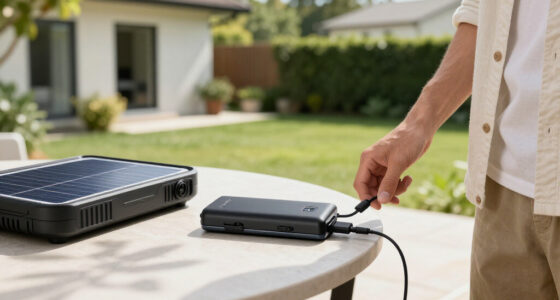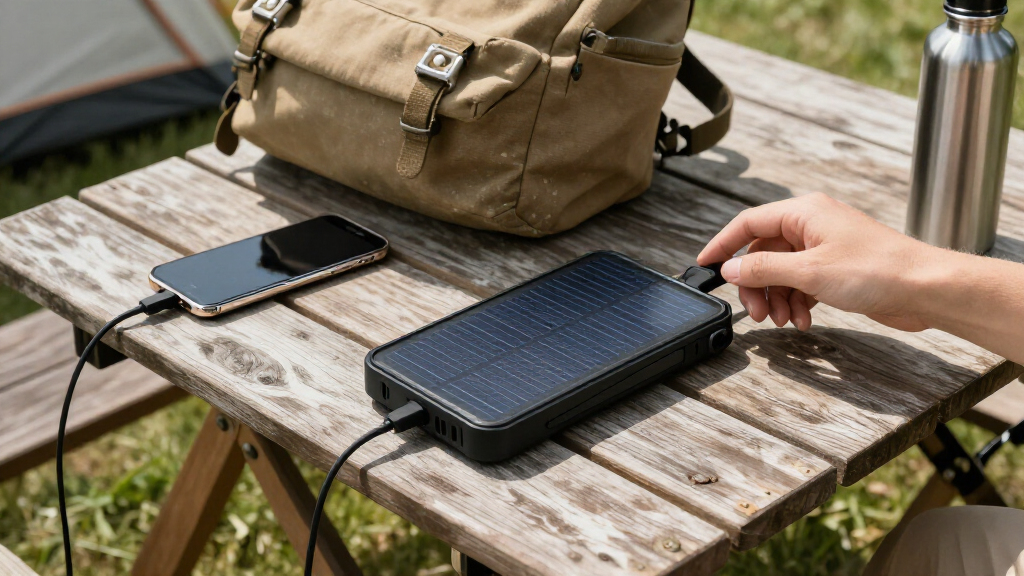
Solar power banks for phones vary most in everyday charging speed, carry weight, and how much you can rely on their solar panels. My best overall pick is the BLAVOR 20,000mAh Solar Power Bank with Wireless Charging, which balances a practical capacity with wired and wireless charging. For faster wired charging, the BLAVOR 10,000mAh 20W USB-C model is a more compact option, while the SOARAISE 50,000mAh model suits buyers who prioritize a large reserve and multiple charging methods. The main tradeoff is that high-capacity models can be bulky, and built-in solar charging is generally better as a backup than as a dependable way to refill a bank quickly. Read on for the full comparison, buying advice, and recommendations by use.

Get backup power and energy gear delivered free with Prime
- Fast, free delivery on millions of items
- Prime Video, Amazon Music and more included
- Member-only deals all year
Key Takeaways
The BLAVOR 20,000mAh model is my best overall pick because its wireless charging and midrange capacity make it a more balanced phone companion than the lineup’s larger, cable-heavy banks.
Capacity is not the same as convenience: the 49,800mAh and 50,000mAh options promise a larger reserve but add bulk that can make everyday carry less appealing.
Built-in cables reduce packing friction on the YOLOSKS, Durecopow, and similar models, but buyers should check cable compatibility and replacement options before relying on them for every device.
BLAVOR’s 10,000mAh 20W model favors portability and wired speed over the longer reserve offered by the 20,000mAh and 49,800mAh choices.
Solar panels are a backup feature across this roundup, not a substitute for wall charging; choose capacity and output for phone charging first, then treat solar as a way to add power when conditions allow.
| Luvknit 49,800mAh Solar Power Bank with USB-A and USB-C Ports |  | Best for Multiple Wired Devices | Battery capacity: 49,800 mAh | Ports: 2 USB-A, 1 USB-C | Built-in connectors: Lightning and USB-C | VIEW LATEST PRICE | See Our Full Breakdown |
| YELOMIN 38800mAh Solar Power Bank with LED Flashlights |  | Best for Lighter Outdoor Carry | Battery capacity: 38,800 mAh | Ports: 2 USB-A outputs; 1 USB-C input/output | Weight: 9.9 oz | VIEW LATEST PRICE | See Our Full Breakdown |
| BLAVOR 20,000mAh Solar Power Bank with Wireless Charging |  | Best for Cable-Free Phone Charging | Battery capacity: 20,000 mAh | Built-in cables: 2 USB-C, 1 iOS, 1 USB-A | Ports: USB-C, USB-A, iOS | VIEW LATEST PRICE | See Our Full Breakdown |
| 38800mAh Solar Power Bank with Fast Charging and LED Flashlight |  | Best for Defined Weather Protection | Battery capacity: 38,800 mAh | Battery cell type: Lithium-ion | Charging options: USB and built-in solar panel | VIEW LATEST PRICE | See Our Full Breakdown |
| YOLOSKS 49,800mAh Solar Power Bank with Wireless Charging and Built-In Cables |  | Best for High-Capacity Mixed Charging | Battery capacity: 49,800 mAh | Battery type: Lithium-ion | Charging methods: USB and solar | VIEW LATEST PRICE | See Our Full Breakdown |
| Durecopow 20,000 mAh Solar Power Bank with 4 Built-In Cables, 3 Ports, and Dual Flashlight |  | Best for Cable-Free Group Charging | Battery capacity: 20,000 mAh | Built-in cables: USB-C, Lightning, Micro USB, and USB-A input | Ports: 3 | VIEW LATEST PRICE | See Our Full Breakdown |
| BLAVOR Solar Power Bank, 10,000mAh, 20W USB-C and Qi Wireless Charging |  | Best Compact Wireless Pick | Battery capacity: 10,000mAh | USB-C output: Up to 20W | Wireless charging: Qi compatible | VIEW LATEST PRICE | See Our Full Breakdown |
| SOARAISE 50000mAh Solar Power Bank with 22.5W USB-C and 15W Wireless Charging |  | Best for Maximum Phone-Charging Reserve | Battery capacity: 50,000mAh | USB-C wired charging: 22.5W PD | Wireless charging: Up to 15W | VIEW LATEST PRICE | See Our Full Breakdown |
| BLAVOR 10,000mAh Solar Power Bank with Wireless Charging |  | Best for Short Trips with Faster Recharging | Battery capacity: 10,000mAh | USB-C output: Up to 20W | Wireless charging: Qi compatible | VIEW LATEST PRICE | See Our Full Breakdown |
| 49,800mAh Solar Power Bank with Wireless Charging, Built-In Cables, and LED Flashlights |  | Best for Built-In Cable Variety and Emergency Lighting | Battery capacity: 49,800mAh | Battery voltage: 3.7 V | Charging methods: USB-C, Lightning, Micro USB, wireless, and solar | VIEW LATEST PRICE | See Our Full Breakdown |
| TRASHBINEAN 49,800mAh Solar Power Bank with Wireless Charging and Built-In Cables |  | Best for Cable-Free Convenience | Battery capacity: 49,800mAh | Charging options: 15W wireless, USB-C PD, four built-in cables, two USB ports | Maximum output power: 15W | VIEW LATEST PRICE | See Our Full Breakdown |
| 20,000mAh Solar Power Bank with 20W Fast Charging and Built-In Cables |  | Best for Faster Phone Top-Ups | Battery capacity: 20,000mAh | Fast charging output: 20W | Built-in cables: Micro USB, USB-C, Apple-compatible cable, USB-A input cable | VIEW LATEST PRICE | See Our Full Breakdown |
| YOLOSKS 49,800mAh Solar Power Bank with Wireless Charging, Built-In Cables, and LED Flashlight |  | Best Rugged High-Capacity Pick | Battery capacity: 49,800mAh | Battery type: Lithium-ion polymer | Fast charging: 22.5W QC3.0 | VIEW LATEST PRICE | See Our Full Breakdown |
| Durecopow 49,800mAh Solar Power Bank with USB-C, Dual USB-A, LED Flashlight, and Carabiner |  | Best for Simple Rugged Charging | Battery capacity: 49,800mAh | Ports: Two USB-A outputs; one USB-C input/output | Fast charging: QC3.0, 15W | VIEW LATEST PRICE | See Our Full Breakdown |
| solar power banks for phone | Battery capacity | Ports |
|---|---|---|
| Luvknit 49,800mAh Solar Power | 49,800 mAh | 2 USB-A, 1 USB-C |
| YELOMIN 38800mAh Solar Power B | 38,800 mAh | 2 USB-A outputs; 1 USB-C input/output |
| BLAVOR 20,000mAh Solar Power B | 20,000 mAh | USB-C, USB-A, iOS |
| 38800mAh Solar Power Bank with | 38,800 mAh | 3; USB Type-A and USB Type-C |
| YOLOSKS 49,800mAh Solar Power | 49,800 mAh | — |
| Durecopow 20,000 mAh Solar Pow | 20,000 mAh | 3 |
| BLAVOR Solar Power Bank | 10,000mAh | 3 |
| SOARAISE 50000mAh Solar Power | 50,000mAh | 3 |
| BLAVOR 10,000mAh Solar Power B | 10,000mAh | 3 |
| 49,800mAh Solar Power Bank wit | 49,800mAh | 1 |
| TRASHBINEAN 49,800mAh Solar Po | 49,800mAh | — |
| 20,000mAh Solar Power Bank wit | 20,000mAh | — |
| YOLOSKS 49,800mAh Solar Power | 49,800mAh | 6 |
| Durecopow 49,800mAh Solar Powe | 49,800mAh | Two USB-A outputs; one USB-C input/output |
More Details on Our Top Picks
Luvknit 49,800mAh Solar Power Bank with USB-A and USB-C Ports
The Luvknit suits phone owners who want high listed capacity and straightforward wired charging for several devices. Its two USB-A ports, USB-C port, and built-in Lightning and USB-C connectors offer more connection options than the YELOMIN 38800mAh Solar Power Bank, which has no built-in cables listed. Dual flashlights with steady, strobe, and SOS modes add practical backup lighting for a campsite or outage.
The main tradeoff is its solar panel: the stated up to 400 mA applies under ideal light, so treat sunlight as a slow backup rather than a dependable way to refill the bank. USB-C input is rated up to 15W for planned recharging. The product is also listed at 0.9 lb, a substantial carry for a phone-focused setup; the listed battery weight of 200 g does not match that figure, so the actual carry weight is unclear.
Pros:- Two USB-A ports and one USB-C port let you charge multiple devices.
- Built-in Lightning and USB-C connectors reduce the need to pack separate charging cables.
- Dual LED flashlights provide steady, strobe, and SOS modes.
- USB-C input supports charging at up to 15W.
Cons:- Solar charging is limited to up to 400 mA under ideal lighting and is best treated as backup.
- The listed weight is inconsistent: 0.9 lb is given alongside a 200 g battery weight.
- At the listed 0.9 lb, it may feel bulky for everyday phone carry.
Best for: Campers or household emergency-kit buyers who want several wired charging options, built-in phone connectors, and flashlight modes in one unit.
Not ideal for: Day hikers prioritizing a light, clearly specified pack, or anyone relying on solar to quickly recharge a large battery.
- Battery capacity:49,800 mAh
- Ports:2 USB-A, 1 USB-C
- Built-in connectors:Lightning and USB-C
- USB-C input:Up to 15W
- Solar charging current:Up to 400 mA under ideal lighting conditions
- Flashlight modes:Steady, strobe, SOS
- Dimensions:6.1 × 1.38 × 2.99 in
- Listed weight:0.9 lb; battery weight also listed as 200 g
Our verdict“Choose the Luvknit if you want built-in phone connectors and multiple wired outputs, but skip it if low weight or meaningful solar recharging is your priority.”
YELOMIN 38800mAh Solar Power Bank with LED Flashlights
At a listed 9.9 oz, the YELOMIN is the easier carry compared with the Luvknit 49,800mAh Solar Power Bank, which is listed at 0.9 lb. Its 38,800mAh capacity, two USB-A outputs, and USB-C input/output make it a practical choice for phone owners who want to share a charge without bringing a heavier bank. The carabiner and protective port covers also suit a pack or campsite better than a pocket-first setup.
Its solar panel is described as supplemental charging, not a fast recharge source, and no solar rate or waterproof rating is specified. That makes its outdoor protection less clearly defined than the IP65-rated 38,800mAh Solar Power Bank with Fast Charging and LED Flashlight. The YELOMIN’s two LED lights offer steady, SOS, and strobe modes, but buyers should not assume its port covers establish a water-resistance rating.
Pros:- Listed weight of 9.9 oz is lighter than the Luvknit option in this roundup.
- Two USB-A outputs and a USB-C input/output support multiple compatible devices.
- Carabiner and protective port covers suit outdoor packing.
- LED lights include steady, SOS, and strobe modes.
Cons:- Solar charging is described only as supplemental, with no charging rate specified.
- No waterproof rating is provided.
- No built-in charging cables are listed, so users need to bring their own.
Best for: Day hikers and casual campers who want a lighter, carabiner-ready bank for phones and occasional backup lighting.
Not ideal for: Buyers who need a stated waterproof rating, built-in charging cables, or a documented solar charging rate.
- Battery capacity:38,800 mAh
- Ports:2 USB-A outputs; 1 USB-C input/output
- Weight:9.9 oz
- Dimensions:5.9 × 2.95 × 0.98 in
- Battery voltage:3.7V
- LED light modes:Steady, SOS, strobe
- Included outdoor accessories:Carabiner and protective port covers
- Warranty:12 months
Our verdict“Pick the YELOMIN for a comparatively light outdoor bank with useful port access, but choose an IP65-rated alternative if defined ingress protection matters.”
BLAVOR 20,000mAh Solar Power Bank with Wireless Charging
The BLAVOR is the most phone-focused pick here for people who value flexible connections over the largest stated capacity. Qi wireless charging can cut cable clutter for compatible phones, while four built-in cables and three ports give wired alternatives when wireless charging is unsuitable. Its USB-C fast charging is rated at 20W, compared with the 15W USB-C input listed for the Luvknit; that distinction is about the BLAVOR’s stated output, not proof of faster solar recharging.
Its 20,000mAh capacity is much lower than the 38,800mAh YELOMIN or the large-capacity Luvknit, so it is less suited to long trips or charging a group repeatedly. The product lists no solar charging rate, making panel performance difficult to judge. Wireless charging also works only with compatible devices, and the broad accessory set—including a compass and thermometer—adds outdoor utility but may be unnecessary for buyers seeking a simple phone bank.
Pros:- Qi wireless charging supports compatible phones and Apple Watch.
- Four built-in cables and three ports offer several wired connection options.
- USB-C fast charging is rated at 20W.
- Includes a flashlight, camping light, compass, and thermometer.
Cons:- Its 20,000mAh capacity is substantially lower than the Luvknit and YELOMIN options.
- No specific solar charging rate is provided.
- Wireless charging is limited to compatible devices.
Best for: Phone owners with Qi-compatible devices who want wireless charging, built-in cable options, and outdoor lighting in one bank.
Not ideal for: Travelers who need the highest listed capacity, or buyers who want a clearly stated solar charging rate.
- Battery capacity:20,000 mAh
- Built-in cables:2 USB-C, 1 iOS, 1 USB-A
- Ports:USB-C, USB-A, iOS
- USB-C fast charging:20W
- Wireless charging:Qi compatible; phones and Apple Watch
- Protection:Overcharge, over-discharge, overcurrent, and short-circuit protection
- Dimensions:1.5 × 3.85 × 7.28 in
- Additional outdoor features:Flashlight, camping light, red indicator light, compass, thermometer, carabiner, and rope
Our verdict“Choose the BLAVOR for a versatile, cable-light setup with Qi charging, but favor a higher-capacity model for longer trips or repeated multi-device charging.”
38800mAh Solar Power Bank with Fast Charging and LED Flashlight
This model earns its place through a clearly stated IP65 rating, which gives outdoor buyers a more specific protection claim than the YELOMIN 38800mAh Solar Power Bank, whose description does not name a waterproof rating. Its 38,800mAh capacity and three ports make it useful for charging phones and other small devices, while the flashlight’s steady, SOS, and strobe modes add emergency utility. The listed output reaches 15W, though the product also specifies up to 5V/2.4A.
The central limitation is shared by many solar power banks: the built-in panel is positioned as an emergency backup, and the product recommends USB charging before travel. Unlike the BLAVOR 20,000mAh Solar Power Bank, this one does not list wireless charging or built-in cables, so users must bring compatible leads. It makes more sense for someone prioritizing a rugged enclosure and conventional ports than a cable-free phone setup.
Pros:- IP65-rated enclosure provides a clearly stated ingress-protection level.
- Three ports support charging multiple compatible devices.
- Maximum output is listed at 15W.
- Flashlight has steady, SOS, and strobe modes.
Cons:- The manufacturer recommends USB charging before travel and treats solar as emergency backup.
- Built-in charging cables and wireless charging are not listed.
- The output is also specified as up to 5V/2.4A, so buyers should check device-specific charging expectations.
Best for: Campers and emergency-kit buyers who want a stated IP65 enclosure, conventional USB charging, and a flashlight.
Not ideal for: Phone users who want wireless charging, built-in cables, or a solar panel they can count on for a quick refill.
- Battery capacity:38,800 mAh
- Battery cell type:Lithium-ion
- Charging options:USB and built-in solar panel
- Maximum output power:15W
- Output:Up to 5V/2.4A
- Ports:3; USB Type-A and USB Type-C
- Ingress protection:IP65
- Flashlight modes:Steady, SOS, strobe
Our verdict“Choose this model when a stated IP65 rating matters more than wireless convenience or built-in cables.”
YOLOSKS 49,800mAh Solar Power Bank with Wireless Charging and Built-In Cables
The YOLOSKS combines a 49,800mAh listed capacity with wireless charging and built-in cables, making it a more connection-flexible high-capacity option than the Luvknit, which focuses on wired ports and built-in phone connectors. Its IP65-rated housing and three flashlight modes give it a stronger outdoor-use profile than the YELOMIN, which has no waterproof rating listed. The manufacturer claims it can charge up to six devices at once, a useful fit for group gear when the available connections match your devices.
That versatility comes with two cautions. Solar charging is described as an alternative, while USB charging is recommended before travel, so the panel should not be treated as a dependable refill plan. Also, the title says four built-in cables while the description says five; buyers should verify the included cable count rather than assume either figure. Its wireless charging also requires a compatible phone.
Pros:- 49,800mAh listed capacity suits extended trips and multi-device use.
- Supports wireless charging alongside built-in cables and USB charging.
- IP65-rated ABS and PC housing is described as shock-resistant.
- Flashlight includes steady, SOS, and strobe modes.
Cons:- The title and description conflict on whether four or five cables are built in.
- Solar charging speed is not specified, and USB charging is recommended before travel.
- Wireless charging works only with compatible devices.
Best for: Group campers or travelers who want a high-capacity bank with wireless and wired charging options plus a stated IP65 rating.
Not ideal for: Buyers who need a verified cable count, a documented solar charging speed, or a lighter phone-only power bank.
- Battery capacity:49,800 mAh
- Battery type:Lithium-ion
- Charging methods:USB and solar
- USB-C wired charging:5V/3.1A
- Wireless charging:Supported
- Built-in cables:Description says 5; title says 4
- Ingress protection:IP65
- Warranty:2 years
Our verdict“Pick the YOLOSKS for high capacity and mixed charging methods, but confirm the cable bundle and plan to recharge it by USB before a trip.”
Durecopow 20,000 mAh Solar Power Bank with 4 Built-In Cables, 3 Ports, and Dual Flashlight
I’d pick this Durecopow when charging flexibility matters more than wireless charging. Its four built-in cables cover USB-C, Lightning, Micro USB, and USB-A input, so a group with mixed devices can leave separate cords behind. It also supports charging several devices at once through its cables and three ports, a practical contrast with the 10,000mAh BLAVOR models, which are easier to carry but hold less reserve capacity. Silicone corner protection and water-, dust-, and shock-resistant construction suit outdoor trips, while the dual-mode flashlights add useful backup lighting. The tradeoff is that this is a cable-focused choice, not a wireless charger, and its 20,000mAh capacity is below the 49,800–50,000mAh options. Solar recharging is best treated as a backup; the description gives no water-resistance rating or solar recharge time.
Pros:- Four built-in cable types reduce the need to pack separate charging cords.
- Three ports and built-in cables support charging multiple devices.
- Dual LED lights include steady, SOS, and strobe modes.
- Silicone corners and stated water-, dust-, and shock-resistant protection suit outdoor use.
Cons:- Solar charging depends on sunlight, and no solar recharge time is provided.
- The description does not specify a water-resistance rating.
- No wireless charging is listed, and capacity is lower than the 49,800–50,000mAh picks.
Best for: Travelers or families carrying a mix of USB-C, Lightning, and Micro USB phones who want charging cables built into one outdoor-ready bank.
Not ideal for: Buyers who want Qi wireless charging, a clearly stated water-resistance rating, or the largest capacity for extended trips.
- Battery capacity:20,000 mAh
- Built-in cables:USB-C, Lightning, Micro USB, and USB-A input
- Ports:3
- Input/output:USB-C input/output; 2 USB outputs
- Charging sources:Solar or USB
- Output:5 V, 2.4 A
- Battery cell:Lithium-ion
- Protection:Water-resistant, dustproof, and shock-resistant; no rating specified
Our verdict“Choose this Durecopow for mixed-device groups that value built-in cables and outdoor protection over wireless charging or maximum capacity.”
BLAVOR Solar Power Bank, 10,000mAh, 20W USB-C and Qi Wireless Charging
For a phone-first kit that needs to stay relatively compact, I’d favor this BLAVOR over the larger SOARAISE 50,000mAh model. Its 10,000mAh capacity and 9.3-ounce weight make it easier to carry, while 20W USB-C output and Qi charging give phones both wired and cable-free options. It can charge up to three devices at once, though its smaller reserve is a clear limit beside the SOARAISE’s much higher stated capacity. The IPX5-rated case, dual flashlights, and compass carabiner add useful outdoor features, but the seven-hour listed recharge time calls for planning between outings. Solar charging performance and solar recharge time are not specified, so I would treat the panel as supplementary rather than a dependable way to refill the bank.
Pros:- USB-C output supports up to 20W charging.
- Qi compatibility offers a cable-free way to charge supported phones.
- Can charge up to three devices simultaneously.
- IPX5 rating, dual flashlights, and compass carabiner suit outdoor carry.
Cons:- The 10,000mAh capacity is modest beside the 20,000mAh Durecopow and 50,000mAh SOARAISE.
- Listed battery recharge time is seven hours.
- Solar charging output and recharge time are not specified.
Best for: Day hikers and commuters who want a carryable phone bank with Qi charging, USB-C fast charging, and basic outdoor features.
Not ideal for: Multi-day campers or people charging several high-use devices who need more reserve capacity or documented solar recharge performance.
- Battery capacity:10,000mAh
- USB-C output:Up to 20W
- Wireless charging:Qi compatible
- Ports:3
- Maximum output current:3A
- Water resistance:IPX5
- Weight:9.3 ounces
- Battery recharge time:7 hours
- Dimensions:5.91 × 3.07 × 0.87 inches
Our verdict“Pick this BLAVOR for compact wired and wireless phone charging, but choose a higher-capacity model for longer trips.”
SOARAISE 50000mAh Solar Power Bank with 22.5W USB-C and 15W Wireless Charging
If I needed one bank to carry a group through a longer outing, this SOARAISE would be my capacity-first choice. Its 50,000mAh reserve, 22.5W USB-C PD, and up to 15W wireless charging offer more charging options and substantially more stated capacity than the 10,000mAh BLAVOR. Built-in USB-C and Lightning cables also help when several phones need topping up, with the product claiming support for up to six devices. That range comes with bulk-oriented priorities: this is less suited to a light everyday pocket kit than either BLAVOR. Its solar panel is explicitly a backup power source, not a fast way to replenish the bank, and wireless speed can vary with phone model and case thickness. Rugged construction and the compass, thermometer, and flashlight add practical camp features, but the phone-charging value rests mainly on its stored capacity and wired output.
Pros:- 50,000mAh capacity provides a much larger stated reserve than the 10,000mAh BLAVOR models.
- 22.5W USB-C PD and up to 15W wireless charging offer wired and cable-free options.
- Built-in USB-C and Lightning cables reduce extra-cable packing.
- Rugged design includes a flashlight, compass, and thermometer.
Cons:- Solar charging is intended as backup rather than the main recharge method.
- Wireless charging speed can vary with phone model, case thickness, and attachments.
- Its high-capacity, multi-feature design is less suited to buyers prioritizing compact everyday carry.
Best for: Groups on extended camping trips who need a large stored reserve, built-in cables, and both wired and wireless phone charging.
Not ideal for: Commuters seeking a light everyday bank or buyers who expect the solar panel to quickly recharge a depleted power bank.
- Battery capacity:50,000mAh
- USB-C wired charging:22.5W PD
- Wireless charging:Up to 15W
- Built-in cables:USB-C and Lightning
- Ports:3
- Simultaneous charging:Up to 6 devices
- Power sources:Corded electric and solar
- Battery cell:Lithium polymer
- Additional features:Three-mode flashlight, compass, and thermometer
Our verdict“Choose the SOARAISE when maximum stated reserve and multiple phone-charging methods matter more than a compact carry size.”
BLAVOR 10,000mAh Solar Power Bank with Wireless Charging
This BLAVOR makes the most sense for shorter outings where a modest phone reserve is enough and a quicker turnaround between uses matters. Like the other 10,000mAh BLAVOR in this lineup, it pairs Qi wireless charging with up to 20W USB-C output and supports up to three devices. The notable difference in the supplied specs is its four-hour battery recharge time, compared with seven hours listed for the other BLAVOR model. It keeps the same IPX5 rating, dual flashlights, and compass carabiner, but at 9.3 ounces it may feel weighty for a pocket-sized charger. Against the 20,000mAh Durecopow, it offers wireless charging but half the stated capacity; against the SOARAISE, it is easier to carry but holds far less power. Solar charging speed and capacity are not specified, so I would not rely on sunlight as its main recharge plan.
Pros:- Qi wireless charging and USB-C output up to 20W cover cable-free and wired phone charging.
- Supports charging up to three devices at once.
- Listed four-hour battery recharge time is shorter than the seven hours specified for the other BLAVOR.
- IPX5-rated case, dual flashlights, and compass carabiner suit outdoor use.
Cons:- 10,000mAh capacity is limited compared with the Durecopow 20,000mAh and SOARAISE 50,000mAh.
- At 9.3 ounces, it may feel substantial for a pocket-size charger.
- Solar charging speed and capacity are not specified.
Best for: Phone users taking day hikes or short trips who value Qi charging and a listed four-hour recharge over a large battery reserve.
Not ideal for: Multi-day travelers who need high capacity, or buyers seeking documented solar charging performance or a particularly light pocket bank.
- Battery capacity:10,000mAh
- USB-C output:Up to 20W
- Wireless charging:Qi compatible
- Ports:3
- Water resistance:IPX5
- Weight:9.3 ounces
- Dimensions:5.9 × 3.1 × 0.8 inches
- Battery recharge time:4 hours
- Warranty:3 years
Our verdict“Choose this BLAVOR for short outings when wireless phone charging and a comparatively short listed recharge time outweigh capacity.”
49,800mAh Solar Power Bank with Wireless Charging, Built-In Cables, and LED Flashlights
I’d consider this 49,800mAh bank for outdoor users who want several ways to connect a phone without packing separate cables. Built-in USB-C, Lightning, and Micro USB leads sit alongside wireless charging, while dual LEDs offer standard, SOS, and strobe modes. That makes it more cable-flexible than the SOARAISE 50,000mAh, which lists USB-C and Lightning cables, though SOARAISE specifies USB-C PD and wireless output levels that this product data does not provide. The listed solar recharge time of 18–24 hours of sunlight makes the panel a slow backup, not a practical primary refill method. There is also a spec tension: the description promotes multiple built-in cables and wireless charging, yet lists only one port. Wireless charging can enter sleep mode if no device is detected within 30 seconds, so placement may need attention.
Pros:- Built-in USB-C, Lightning, and Micro USB cables cover several common phone connections.
- Wireless charging provides another way to charge compatible phones.
- Dual LED lights offer standard, SOS, and strobe modes with a stated reach up to 15 m.
- Outdoor design is described as shockproof, sandproof, rainproof, and splashproof.
Cons:- Solar recharge is listed at 18–24 hours of sunlight, making it a slow backup method.
- Only one port is specified despite the multiple built-in charging methods.
- Wireless charging enters sleep mode if no device is placed within 30 seconds.
Best for: Campers and emergency-kit owners with mixed-device phones who want built-in cable options, wireless charging, and SOS lighting.
Not ideal for: Buyers who need a clearly specified fast USB-C output, many physical ports, or a solar panel that can quickly restore the bank.
- Battery capacity:49,800mAh
- Battery voltage:3.7 V
- Charging methods:USB-C, Lightning, Micro USB, wireless, and solar
- Solar recharge time:18–24 hours of sunlight
- Battery recharge time:2 hours
- Output current:3 A
- Ports:1
- Flashlight:Dual LED; standard, SOS, and strobe modes; up to 15 m
- Outdoor resistance:Shockproof, sandproof, rainproof, and splashproof
Our verdict“Pick this model for varied built-in phone connections and emergency lighting, not for quick solar replenishment or clearly documented fast output.”
TRASHBINEAN 49,800mAh Solar Power Bank with Wireless Charging and Built-In Cables
The TRASHBINEAN makes the most sense for phone owners who want charging options already attached to the bank: four built-in cables, two USB ports, and 15W wireless charging. Its stated 49,800mAh capacity is also far above the 20,000mAh option from Product 12, though the TRASHBINEAN weighs 580g, a real burden for a daypack. The dual LED flashlights add SOS signaling for outages or campsites, while drop-, dust-, and splash-resistant housing is described in the product information. Solar charging is a backup feature here, not a dependable way to refill the large battery: no solar charging rate is provided. Choose it over the more simply equipped Durecopow if built-in cables and wireless charging matter more than a lighter, simpler setup.
Pros:- Four built-in cables, two USB ports, and wireless charging cover varied phone-charging needs.
- Stated 49,800mAh capacity offers a larger reserve than the 20,000mAh Product 12.
- Dual LED flashlights include an SOS mode.
- Housing is described as resistant to drops, dust, and water splashes.
Cons:- At 580g, it is heavy for routine pocket or daypack carry.
- Solar charging speed is not specified, so outdoor recharging expectations are hard to judge.
- The listed maximum output is 15W, less than the 20W output claimed for Product 12.
Best for: Travelers and campers carrying several phone types who want built-in cables, wireless charging, and a large emergency reserve.
Not ideal for: Weight-conscious hikers or anyone expecting the solar panel to recharge the battery quickly; it weighs 580g and its solar rate is unspecified.
- Battery capacity:49,800mAh
- Charging options:15W wireless, USB-C PD, four built-in cables, two USB ports
- Maximum output power:15W
- Output:5V/3A
- Weight:580g
- Dimensions:5.8 × 1.11 × 2.92 inches
- Flashlight:Dual LED lights with SOS mode
- Warranty:1 year
Our verdict“Choose the TRASHBINEAN if you want a large phone-charging reserve with attached cables and wireless charging, and can accept the added weight.”
20,000mAh Solar Power Bank with 20W Fast Charging and Built-In Cables
For buyers who value charging speed and a manageable feature set over a very large reserve, this 20,000mAh model is the practical pick. Its stated 20W fast-charging output exceeds the TRASHBINEAN’s listed 15W maximum, which can make wired top-ups more useful when a phone needs power during a short stop. Four built-in cables reduce packing clutter, and the steady, strobe, and SOS flashlight modes add simple outdoor utility. The tradeoff is capacity: it holds much less than the 49,800mAh products in this group, including the YOLOSKS. Its solar panel is described as slow and weather-dependent, so I would treat it as emergency backup and recharge by USB before a trip. The Apple-compatible cable type is also not specified.
Pros:- 20W fast-charging output is higher than the TRASHBINEAN’s listed 15W maximum.
- Four built-in cables reduce the need to pack separate charging leads.
- Three flashlight modes include strobe and SOS.
- Carabiner supports attachment to a bag during outdoor use.
Cons:- 20,000mAh capacity is substantially lower than the 49,800mAh YOLOSKS and other large-capacity options.
- Solar charging is weather-dependent and slower than USB recharging.
- The Apple-compatible cable type is not specified.
Best for: Phone users taking weekend trips who want a 20W wired charging option and built-in cables without carrying a 49,800mAh bank.
Not ideal for: Extended off-grid trips or buyers who need a clearly identified Apple cable; its solar charging is slow and weather-dependent, and cable type is unspecified.
- Battery capacity:20,000mAh
- Fast charging output:20W
- Built-in cables:Micro USB, USB-C, Apple-compatible cable, USB-A input cable
- Number of ports:7
- Voltage:5V
- Battery charge time:3.8 hours
- Flashlight modes:Steady, strobe, SOS
- Power source:Battery and solar panel
Our verdict“Pick this model for quicker wired phone charging and cable convenience on shorter outings, not for maximum off-grid capacity.”
YOLOSKS 49,800mAh Solar Power Bank with Wireless Charging, Built-In Cables, and LED Flashlight
The YOLOSKS stands out for pairing a 49,800mAh stated capacity with wireless charging, multiple-device support, and an IP65-rated housing. That protection rating and its steady, SOS, and strobe light modes give it a stronger outdoor-use case than the 20,000mAh Product 12, while its 16-ounce weight is lighter than the TRASHBINEAN’s listed 580g. Its 22.5W QC3.0 specification is also the highest stated wired fast-charging figure among these four products. Still, the solar panel is not a reliable primary recharge method: charging speed depends on sunlight, and the product recommends USB charging before travel. Buyers should also note that the description mentions built-in cables, but the specs list USB-C and Micro-USB inputs without detailing those cables. I would choose it for rugged capacity, not for a simple solar-only setup.
Pros:- 49,800mAh stated capacity provides a larger reserve than Product 12’s 20,000mAh.
- 22.5W QC3.0 fast charging is the highest stated wired output among these four options.
- IP65-rated, shockproof, and dustproof housing suits outdoor carry.
- Wireless charging and three flashlight modes add useful phone and emergency options.
Cons:- Solar charging speed depends on light intensity, and USB charging is recommended before travel.
- At 6.5 × 3.5 × 1.2 inches, it takes up more space than a compact phone bank.
- The specs do not detail the built-in cables referenced in the description.
Best for: Campers and outdoor travelers who want a large-capacity phone bank with wireless charging, multiple-device support, and dust- and water-resistant protection.
Not ideal for: Minimalist day hikers or people counting on sunlight as their main recharge source; it is relatively large, and solar charging speed varies with light.
- Battery capacity:49,800mAh
- Battery type:Lithium-ion polymer
- Fast charging:22.5W QC3.0
- Output:5V/3A
- Wireless charging:Yes
- Ports:6
- Inputs:USB-C and Micro-USB
- Protection and flashlight:IP65-rated housing; steady, SOS, and strobe modes
- Weight and dimensions:16 oz; 6.5 × 3.5 × 1.2 inches
Our verdict“Choose the YOLOSKS for rugged, high-capacity charging and a strong wired output, but plan to recharge it by USB before heading out.”
Durecopow 49,800mAh Solar Power Bank with USB-C, Dual USB-A, LED Flashlight, and Carabiner
The Durecopow is the straightforward choice here: its three wired ports cover charging multiple devices, while the USB-C port handles both input and output. A covered charging port, carabiner, and housing described as waterproof, shockproof, and dustproof make it suited to outdoor carry. Compared with the TRASHBINEAN, it skips wireless charging and built-in cables, so there are fewer ways to connect but less dependence on those extras. The 49,800mAh capacity sounds generous, though the supplied specs do not explain solar charging speed, and the listed 15W QC3.0 output is below the YOLOSKS’s 22.5W figure. Its flashlight offers steady, strobe, and SOS modes. This is a better fit for buyers who want basic wired connections and rugged features than for anyone prioritizing fast charging or cable-free convenience.
Pros:- Two USB-A outputs and one USB-C input/output support charging multiple devices.
- Housing is described as waterproof, shockproof, and dustproof.
- Covered charging port and included carabiner suit outdoor carry.
- Flashlight includes steady, strobe, and SOS modes.
Cons:- No wireless charging or built-in device cables are listed, unlike the TRASHBINEAN.
- Solar charging speed is not specified.
- Listed 15W QC3.0 fast charging is lower than the YOLOSKS’s 22.5W figure.
Best for: Campers and emergency-kit owners who want several wired phone connections, a covered port, and a carabiner for outdoor attachment.
Not ideal for: Buyers who want wireless charging, built-in cables, or a clear solar recharge rate; this model offers none of those details.
- Battery capacity:49,800mAh
- Ports:Two USB-A outputs; one USB-C input/output
- Fast charging:QC3.0, 15W
- Voltage:3.7V
- Output current:3A
- Battery type:Lithium polymer
- Protection:Waterproof, shockproof, dustproof
- Included components:Carabiner, Type-C cable, user guide
- Warranty:1 year
Our verdict“Choose the Durecopow for rugged, simple wired charging outdoors, but skip it if wireless charging or built-in cables are priorities.”

How We Picked
I compared all 14 options around the needs of phone owners: usable capacity, wired charging choices, wireless convenience, carrying burden, and the practical value of extras such as built-in cables, lights, and carabiners. I gave more weight to features that make a phone easier to recharge reliably than to large capacity claims or outdoor accessories alone. Product names and listed specifications provide the basis for this comparison; the roundup does not assume that solar charging speed, durability, or real-world capacity has been independently verified.
The order favors balanced day-to-day usefulness first, then more specialized strengths. The BLAVOR 20,000mAh wireless model leads for its mix of capacity and charging flexibility; the compact BLAVOR 10,000mAh 20W model and the larger SOARAISE option stand out for different priorities. Models with very high stated capacity rank lower when their extra size or overlapping features are less suited to carrying a phone charger routinely. Where products share similar claims, I distinguish them by their listed charging methods and accessories rather than implying a performance difference the specifications do not establish.
Factors to Consider When Choosing Solar Power Banks For Phones
Choosing a phone-focused solar power bank is less about finding the biggest number and more about matching the bank to how you charge and carry your phone. I would weigh these factors before treating a solar panel or accessory list as the deciding feature.
Choose Capacity Around Your Routine, Not the Largest Claim
Think about how many phone top-ups you need between access to an outlet, then choose a capacity with some margin rather than automatically buying the largest bank. A bank’s stated capacity does not translate directly into the same amount of energy delivered to a phone because conversion and charging conditions reduce what reaches the device. Very large models can be worthwhile for multi-day trips or charging more than one device, but they are harder to carry every day. A smaller bank may be the better phone accessory if it fits in a pocket or small bag and you can recharge it regularly. Avoid choosing on the headline capacity alone; compare charging outputs and the physical form factor as well.
Treat Solar as Backup, and Plan Around Sunlight
A small panel built into a power bank is exposed to limited surface area, so solar replenishment can be slow and depends on direct sunlight, angle, temperature, and shade. It can help extend a trip or add some charge while the bank is left in suitable sun, but it is a poor plan for quickly restoring a depleted bank. A common mistake is buying a solar model on the assumption that ordinary daylight will keep a phone charged without other power sources. For regular use, prioritize a dependable USB charging route and regard solar as an extra. If you need substantial off-grid generation, compare a separate folding solar panel and compatible power bank rather than expecting a pocket-sized panel to do both jobs.
Match Output and Ports to Your Phone
Capacity tells you how much energy a bank may store; output tells you how quickly it can deliver that energy. Check whether the listed USB-C output supports the charging behavior your phone can accept, since a high wattage rating cannot make a device charge beyond its own limits. USB-A ports may be useful for older cables or a second device, while USB-C can simplify charging for newer phones. Also check whether the stated fast-charging output is available on the port you expect to use and whether it changes when multiple devices are connected. Choosing by port layout and compatible charging standards can prevent a large bank from feeling slow or inconvenient in practice.
Decide Whether Wireless Charging Is Worth the Tradeoff
Wireless charging is convenient when you want to place a compatible phone on the bank without carrying a separate cable, but it can be slower and less efficient than a wired connection. Alignment matters: a phone that shifts in a bag or on a moving surface may stop charging or charge inconsistently. Cases, phone size, and the exact wireless charging standard can also affect fit and performance. For a quick top-up, a compatible USB-C cable is often the more predictable choice. Pay for wireless capability when cable-free convenience matters to you, not just because it appears on the feature list.
Balance Built-In Accessories Against Flexibility
Built-in cables, flashlights, and carabiners can reduce the number of items you pack, which is useful on hikes or trips where a spare cable is easy to forget. They also add parts that may be difficult to replace if they wear out, and a built-in cable may not suit every device in your household. Before buying, check which connectors are included and whether the bank still has a standard port for your preferred cable. Flashlights are handy for finding gear or handling a short task after dark, but they do not replace a dedicated outdoor light. Choose accessories that solve a real packing problem rather than letting a long feature list outweigh charging performance.
Set Expectations for Weight, Weather, and Long-Term Use
Large-capacity banks often make more sense in a backpack than in a pocket, so consider where the weight will sit during a normal day or hike. An outdoor-oriented appearance or carabiner does not by itself confirm water resistance, impact protection, or safe operation in harsh weather. Look for clear durability and charging-safety information before exposing a bank to rain, grit, or rough handling. Repeatedly leaving a bank in intense heat or direct sun for long periods can also be unwise, even when using its solar feature. If the product details do not explain environmental limits, keep it protected and use solar charging only under suitable conditions.
Frequently Asked Questions
Can a built-in solar panel recharge a phone power bank in a day?
It may add charge under strong, direct sunlight, but a small panel on a power bank is usually too limited to count on for a full recharge in a predictable timeframe. Cloud cover, shade, panel angle, heat, and the bank’s remaining capacity all affect the result. Treat solar as a way to extend an outing or add a reserve, not as the main charging plan. If you need reliable off-grid charging, consider a separate larger panel and check that its output matches the bank’s input. Keep a cable or another charging source available for routine use.
Should I choose a 49,800mAh model over a 20,000mAh model for my phone?
Choose the larger model if you expect to be away from outlets for several days or need to charge multiple devices, and if carrying a heavier bank is acceptable. For a phone used during ordinary commuting or a short outing, a 20,000mAh option may be easier to pack while still offering a useful reserve. Stated capacity is not the same as the energy your phone receives, so compare output and charging options too. Also check the bank’s dimensions and weight rather than assuming the larger number is a better fit. The right choice depends on how often you can recharge the bank and how much you are willing to carry.
Is wireless charging a good reason to buy a solar power bank?
Wireless charging is a useful convenience if your phone supports it and you often want to charge without carrying or connecting a cable. It may be less efficient or slower than wired charging, so I would not make it the only charging method on a bank. Check that your phone aligns properly with the charging area and that your case does not interfere. A model with both wireless and wired options gives you a fallback when you need a more predictable top-up. If you already carry a cable and value speed over convenience, a wired-focused model may be a better match.
Are built-in charging cables better than carrying my own?
Built-in cables can make a bank easier to grab for travel because you do not have to pack a separate lead for each compatible device. Their main drawback is reduced flexibility: the connector may not fit every device, and a damaged attached cable can be harder to replace than a standard one. Check the connector types and whether the bank still includes usable USB ports for your own cables. If your devices use different connectors or you care about charging a particular way, a separate cable may be more adaptable. Built-ins make the most sense when their connectors match the phones you carry most often.
What should I prioritize if I want a solar power bank for everyday phone use?
For everyday use, start with a manageable size, a capacity that covers your typical time away from an outlet, and a wired output compatible with your phone. A compact bank that you carry consistently can be more useful than a very large one left at home. Wireless charging or built-in cables are worthwhile only if they simplify your regular routine. Treat the solar panel as a backup feature rather than the reason to accept extra bulk. If you take occasional trips, choose a bank that still works well from USB power when sunlight is unavailable.
Conclusion
My best overall recommendation is the BLAVOR 20,000mAh Solar Power Bank with Wireless Charging for phone owners seeking a middle ground between useful capacity and charging flexibility. For best value in everyday practicality, I would start with the BLAVOR 10,000mAh 20W USB-C model if portability and wired charging matter more than a long reserve. The SOARAISE 50,000mAh model is my best premium-style pick for buyers prioritizing a large stated capacity alongside multiple charging methods, though its size may be excessive for daily carry. Beginners who want a straightforward balance can choose the BLAVOR 20,000mAh model and use its wired charging as the dependable default. For specific needs, pick a built-in-cable Durecopow or YOLOSKS model to reduce loose accessories, or a high-capacity option for longer trips; whichever you choose, treat solar as backup and confirm the ports, connectors, and carry weight suit your phone.