
TL;DR

Get backup power and energy gear delivered free with Prime
- Fast, free delivery on millions of items
- Prime Video, Amazon Music and more included
- Member-only deals all year
A Brattle Group report for The Pew Charitable Trusts estimates that expanding virtual power plants could reduce the cost of utility overbuilding if electricity demand from data centers comes in below forecasts. In the report’s scenario, VPPs cut $33 billion of projected overbuilding costs from 2030 to 2040; a separate long-term estimate says expansion could avoid $614 billion in grid investments by 2050.
A new report from consultancy The Brattle Group says expanding virtual power plants could help limit customer costs if electricity demand from data centers falls short of forecasts, by letting utilities add flexible capacity instead of committing as early to long-lived grid infrastructure. In a modeled scenario, the approach reduced projected costs from overbuilding by $33 billion between 2030 and 2040.
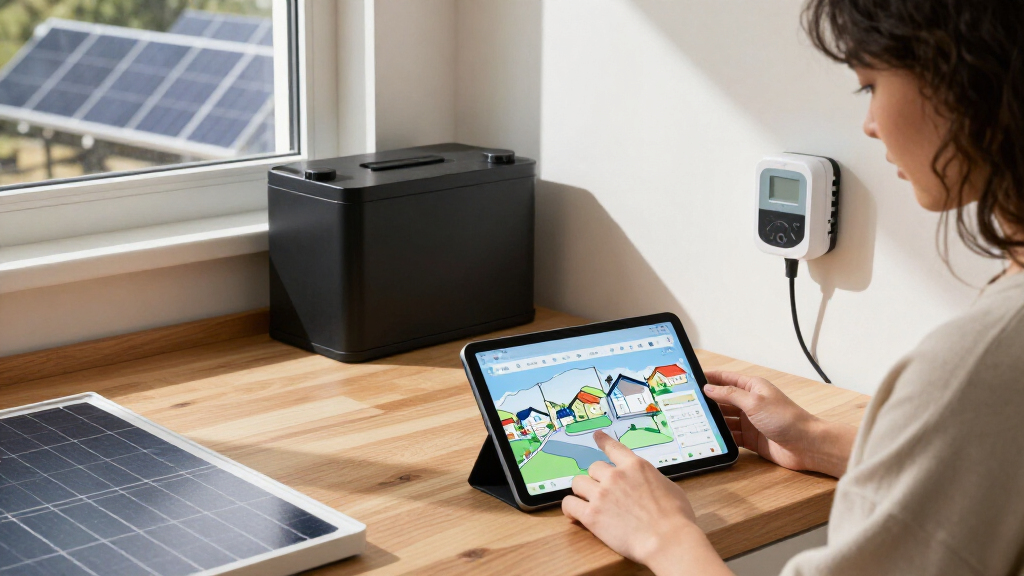
Virtual power plants (VPPs) link distributed resources such as rooftop solar, home batteries and other controllable equipment. Utilities or aggregators can coordinate these resources to reduce demand at peak times or supply power to the grid. The report, prepared for The Pew Charitable Trusts, says the United States had 113 gigawatts of distributed energy resources that could be used in VPPs as of 2025.
In a hypothetical nationwide case where actual electricity load growth falls 5% short of forecasts through 2030, the report estimates that excess power-plant and grid spending would add about $84 billion in costs for utility customers from 2030 to 2040. Expanding VPPs cut that modeled burden by $33 billion, or roughly 40%. Those figures describe a scenario, not a forecast that demand will miss projections by that amount.
The report also models a longer-term expansion: increasing VPP-eligible capacity from 113 gigawatts in 2025 to 524 gigawatts by midcentury. In that case, it estimates the country could avoid $614 billion in grid investments and reduce the average household electricity bill by $122 a year by 2050. The estimates depend on the report’s assumptions about costs, participation and utility planning.
How Flexible Capacity Could Limit Costs
Utilities face a planning problem: they need enough electricity supply and grid capacity to serve growing demand, but some proposed infrastructure could become unnecessary if data center projects are delayed, scaled back or never built. Conventional power plants and transmission or distribution upgrades can take years to plan and build, and their costs may be recovered from customers over time.
VPPs offer a different sequence. A utility could first recruit and coordinate smaller distributed resources, then add more if demand materializes. Brattle principal Ryan Hledik, the report’s lead author, said this flexibility gives planners more time to determine whether projected demand will appear. The report’s modeled savings do not mean VPPs can replace all new generation or grid construction; they indicate a potential way to reduce some investments made against uncertain forecasts.
For customers, the stakes are both reliability and bills. Underinvestment could leave utilities short of capacity, while overinvestment risks leaving customers paying for assets that are not needed. VPP participation also requires program and operating costs, and households and businesses supplying flexibility need compensation. Brattle’s analysis finds the grid benefits exceed participant payments in its scenarios, but actual results will depend on program design and performance.
Products Worth Considering

Philips Hue Festavia 130-Foot Indoor/Outdoor Smart String Lights, 500 Color-Changing LEDs

Philips Hue Play Screen Sync and 65-Inch Play Gradient Smart TV Light Strip

Bose SoundLink Flex Bluetooth Speaker (2nd Gen) – Portable Outdoor Speaker with Hi‑Fi Audio, Waterproof and Dustproof, USB‑C, Up to 12 Hours
As an affiliate, we earn on qualifying purchases.
Planning for Uncertain Data Center Demand
Rapidly growing data center development has increased pressure on utilities to forecast future electricity use. The report says planners face uncertainty about how much power the expansion will require. If they plan too conservatively, reliability and economic activity could be affected; if they build too much, customers may bear the cost of unused infrastructure.
Earlier analyses have also found that coordinating homes and businesses to reduce peak use or share stored and solar power can cost less than building additional grid infrastructure. Brattle’s report adds a specific sensitivity case for demand falling below projections. It does not establish that a broad AI-related demand reversal is underway; it examines what could happen if load growth misses forecasts.
Some states are pursuing special utility rules or rates intended to protect customers from paying for infrastructure built to serve data centers that do not materialize. Hledik said it is unclear how fully those policies could shield households, particularly in more severe cases. The Pew Charitable Trusts has also published a policy playbook and state policy explorer, and the report points to VPP mandates adopted in Colorado, Illinois, Maryland and Virginia.
“These are smaller modular resources we can bring online, once the necessary systems are in place. You can wait longer to figure out if that demand is actually going to appear, and then build the VPP at that point.”
— Ryan Hledik, Brattle Group principal and report lead author
Forecasts, Participation and Program Costs
The report’s estimates are scenario-based; the source material does not specify enough modeling detail to treat the $33 billion reduction or the 2050 figures as guaranteed outcomes. It is also unclear how much data center demand will develop, where new facilities will be built, and how actual electricity use will compare with utility forecasts.
VPP results depend on enough customers enrolling, equipment being available when needed, and utilities having systems to coordinate resources reliably. The report says participants must be compensated and programs cost money. If incentives are reduced when capacity is less needed, participation could become less attractive, Hledik warned. The source does not provide a single nationwide implementation schedule or a confirmed amount of VPP capacity utilities will add.
Utilities Must Put VPPs Into Plans
The report points to utility planning as the next decision point: regulators and utilities can assess whether distributed resources should be counted alongside conventional generation and grid upgrades when preparing for expected load growth. States may also consider the policy approaches described in Pew’s playbook and explorer tool.
Hledik said data center developers could help expand VPP capacity through “bring-your-own” distributed-resource arrangements. He cited Google’s work with VPP aggregator Voltus to seek one gigawatt of distributed capacity across PJM Interconnection’s territory. The source describes that effort as underway, not as capacity already delivered. Its eventual scale, and whether other hyperscalers or utilities adopt similar arrangements, remain open questions.
Key Questions
What is a virtual power plant?
A virtual power plant coordinates distributed energy resources, such as home batteries and rooftop solar, so they can reduce grid demand or provide power when needed. It is a network of equipment rather than one conventional power station.
How much could VPPs reduce overbuilding costs?
In Brattle’s hypothetical scenario where actual load growth falls 5% short of forecasts through 2030, VPP expansion reduced modeled overbuilding costs by $33 billion from 2030 to 2040, about 40% of the scenario’s $84 billion cost.
Does the report say AI data center demand will fall?
No. The report examines a scenario in which electricity demand grows less than forecast. It does not establish that AI-related or data center demand is already falling or predict that it will do so.
Could VPPs replace new power plants and grid upgrades?
The report presents VPPs as a flexible resource that could reduce some investment needs, not as a substitute for all new infrastructure. Utilities would still need to plan for reliability and actual demand.
What needs to happen for the estimates to be realized?
Utilities would need to include VPPs in grid planning, build the systems to coordinate distributed equipment, and recruit customers with compensation that supports participation. Actual savings would depend on demand, program costs and resource availability.
Source: canarymedia.com