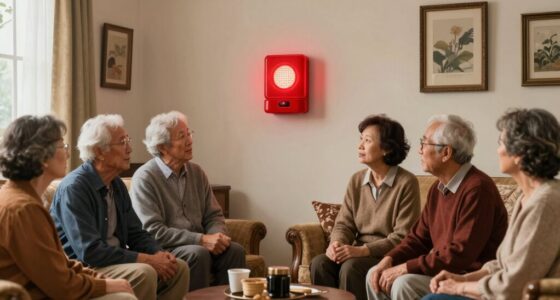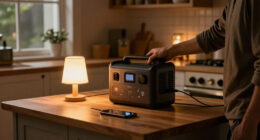
During a home outage, stay calm and prioritize safety by using flashlights, backup power sources, and a battery-powered radio to stay informed. Keep non-perishable foods and bottled water accessible, and manage temperatures with cooling or heating methods suited to the weather. Communicate with neighbors and emergency services, and review your emergency plan regularly. For more helpful tips on keeping loved ones comfortable and safe during outages, explore the complete caregiver’s checklist.

Get backup power and energy gear delivered free with Prime
- Fast, free delivery on millions of items
- Prime Video, Amazon Music and more included
- Member-only deals all year
Key Takeaways
- Prepare an accessible kit with flashlights, batteries, non-perishable food, water, and backup power sources.
- Keep loved ones calm by providing clear updates and maintaining a safe, comfortable environment.
- Use cooling methods like damp cloths or fans for hot weather, and dress appropriately for cold temperatures.
- Maintain communication with neighbors and emergency services, and plan ahead with healthcare providers.
- After power is restored, inspect appliances for hazards, restock supplies, and review emergency plans.
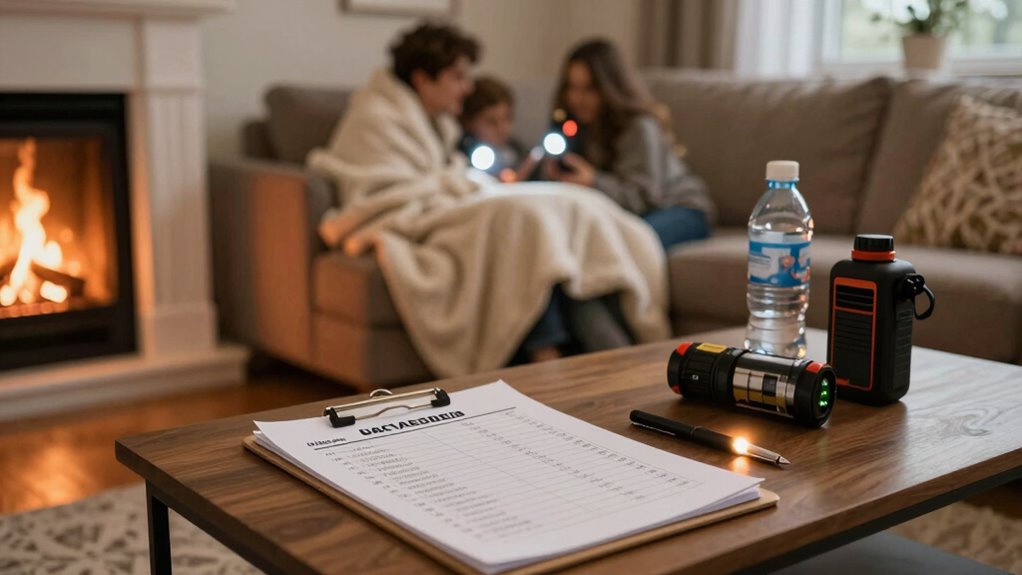
When a home outage occurs, it can be stressful, especially if you’re caring for someone who relies on medical devices or needs extra assistance. During these moments, your priority is ensuring their safety and comfort while managing the situation calmly. Having a solid plan for emergency preparedness helps you stay organized and ready to respond effectively. Before an outage happens, gather essential supplies like flashlights, batteries, a battery-powered radio, and a supply of non-perishable foods and bottled water. Keep these items in an easily accessible location so you can grab them quickly if needed.
Prepare essential supplies and keep them accessible to stay safe during a home power outage.
When the power goes out, try to stay as calm as possible. Your demeanor sets the tone for the person you’re caring for, helping them feel safe despite the uncertainty. If your loved one depends on medical devices such as oxygen concentrators or ventilators, check that backup power sources are ready and functioning. If you have a generator, ensure it’s properly maintained and positioned outside to prevent carbon monoxide buildup. When power restoration tips are available, follow them carefully—this might include turning off appliances that could cause overloads when power returns, to prevent damage or outages in your home. Always listen to local updates on power restoration progress through your battery-powered radio or mobile device, if available.
During a prolonged outage, keep your loved one comfortable by maintaining a cool, well-ventilated environment, especially if the weather is hot. Use cool, damp cloths on their forehead or neck to help regulate body temperature. If it’s cold outside, dress them in layers and use blankets to retain warmth. Staying connected with neighbors or local emergency services can be crucial, particularly if your loved one needs additional assistance or medical supplies. If you’re concerned about medical needs, contact your healthcare provider beforehand to discuss contingency plans. Additionally, understanding the importance of biodiversity and conservation can help you make environmentally conscious choices during emergencies, such as using eco-friendly power sources or sustainable supplies. Being aware of emergency preparedness practices can also help you better respond to unexpected situations. Incorporating sustainable supplies into your emergency kit can reduce environmental impact and promote conservation efforts. Recognizing the significance of indoor air quality can also motivate you to ventilate your home properly during and after outages to maintain a healthier environment. Moreover, practicing energy efficiency can help conserve resources and reduce strain on the power grid during outages.
Once power is restored, check all appliances and devices before using them again, and be cautious of any potential electrical hazards. Restock supplies that are running low and review your emergency preparedness plan to identify any gaps. Keep in mind that staying organized and proactive minimizes stress and keeps everyone safe. Remember, your calm approach combined with a prepared plan ensures that your loved one remains comfortable and secure through any home outage.
battery powered radio for emergencies
As an affiliate, we earn on qualifying purchases.
As an affiliate, we earn on qualifying purchases.
Frequently Asked Questions
How Can I Prevent Appliances From Being Damaged During an Outage?
You can prevent appliance damage during an outage by performing regular appliance maintenance to guarantee they’re in good shape. Install surge protectors on sensitive electronics and major appliances to shield them from power surges when electricity is restored. Unplug appliances that aren’t in use to avoid overloads. These steps help protect your appliances, extend their lifespan, and keep your home safe during outages.
What Are the Best Ways to Keep Pets Safe During a Power Outage?
During a power outage, you should prioritize pet hydration by providing fresh water frequently, and guarantee they have a safe shelter away from extreme temperatures. Keep their essentials handy, like food and blankets, and stay with them to reduce stress. If needed, move them to a cool, ventilated area or a sheltered space where they feel secure. Your attentiveness keeps your pets safe and comfortable until power is restored.
How Do I Communicate With Utility Companies During an Outage?
You should contact your utility company through their official channels, like their website or customer service phone line, to get updates. Many utility companies have outage notification procedures that allow you to sign up for alerts via text or email. During an outage, stay informed by checking their website or social media pages regularly. Clear communication helps you stay updated on restoration efforts and estimated repair times.
What Are Emergency Lighting Options Without Electricity?
In darkness, every shadow whispers a reminder: you need reliable emergency lighting. You can use alternative lighting like battery-powered lanterns or flashlights, which are essential. Solar options are also excellent—they charge during the day and provide light when the power’s out. Keep these tools accessible and well-maintained, ensuring you’re prepared to illuminate your space safely without electricity, turning darkness into a manageable challenge rather than a crisis.
How Can I Ensure Medication Safety Without Refrigeration?
To guarantee medication safety without refrigeration, you should focus on proper medication storage and safety precautions. Keep medicines in a cool, dark, and dry place away from direct sunlight and heat sources. Use airtight containers if recommended, and avoid storing medications near household chemicals. Regularly check expiration dates, and consult your healthcare provider or pharmacist for guidance on storing specific medicines safely when refrigeration isn’t available.
As an affiliate, we earn on qualifying purchases.
Conclusion
Think of yourself as a skilled captain steering your home through a storm. With this checklist as your sturdy compass, you’ll navigate power outages smoothly, ensuring your loved ones stay safe and comfortable. Remember, each step you take is like securing the sails or tightening the ropes—bringing calm to chaos. Trust your preparation, stay steady, and soon the storm will pass. Your vigilance turns turbulence into tranquility, guiding everyone safely back to calm waters.
As an affiliate, we earn on qualifying purchases.
As an affiliate, we earn on qualifying purchases.
Fall Picks
fall essentials
As an affiliate, we earn on qualifying purchases.