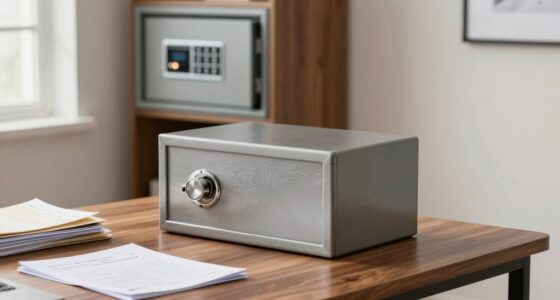

Create a realistic and clean apartment backup plan by keeping essential documents, like your ID and insurance papers, stored in waterproof containers and accessible quickly. Familiarize yourself with all escape routes and practice quick evacuations. Keep a small emergency kit and backup communication devices nearby. Back up digital data securely in the cloud and stay aware of local disaster resources. Focusing on organization and simplicity will help you stay confident when emergencies happen. Learn more to guarantee you’re fully prepared.
Get ready for Prime Big Deal Days — try Prime free
Exclusive member deals on October 6–7, plus fast free delivery. Cancel anytime.
As an affiliate, we earn on qualifying purchases.
Key Takeaways
- Keep digital and physical copies of essential documents, including insurance policies and IDs, in a designated, waterproof, easily accessible location.
- Identify and practice all building escape routes regularly to ensure quick, stress-free evacuation.
- Prepare a compact emergency kit with flashlight, batteries, first aid, and snacks for immediate access during crises.
- Share your emergency plan and contact information with trusted friends and family for coordinated response.
- Back up digital data securely in the cloud and stay informed about local natural disaster resources and environmental risks.

Have you ever faced the stress of a sudden apartment emergency and wished you had a backup plan? It’s a common feeling, but having a clear, realistic plan can make all the difference. The first step is understanding what you need to protect yourself and your belongings. Renters insurance is essential here—it’s your safety net in case of fire, theft, or accidental damage. Not only does it help cover repairs or replacements, but it also offers peace of mind, knowing you’re financially protected. Make sure your policy is up to date and covers the full value of your belongings. Keep a digital and physical copy of your policy in an easily accessible location, so it’s ready when you need it.
Next, you should compile a list of emergency contacts. Think beyond just calling 911; include trusted friends, family members, your landlord, and building management. Having these contacts handy ensures you can quickly reach someone who can assist or provide guidance during a crisis. Share your emergency plan with these contacts so everyone knows their role. For example, if your apartment is compromised, your emergency contacts should be aware of how to help you evacuate safely or secure important items. Being aware of energy efficiency tips can also help you reduce potential environmental risks and prepare better for emergencies.
A realistic backup plan involves knowing your escape routes and assembling essential supplies. Familiarize yourself with the safest exit points in your building, and consider practicing a quick evacuation. Keep a small emergency kit nearby—think flashlight, batteries, a first aid kit, and some non-perishable snacks. Having these items ready means you don’t have to scramble when time is critical. Additionally, store important documents—like your ID, insurance papers, and a list of emergency contacts—in a waterproof, portable container. This way, you can grab everything quickly if you need to leave suddenly. Incorporating biodiversity awareness can also help you recognize potential environmental risks, such as hazards caused by nearby natural habitats or pollution, and respond appropriately. Being aware of cloud server solutions can help you understand how to securely back up your digital data in case of physical damage or loss. Moreover, staying informed about local natural disaster preparedness resources can enhance your overall readiness for unforeseen environmental challenges.
Know your exits, keep essential supplies ready, and store important documents in a waterproof container for quick access during emergencies.
Your backup plan should also include practical steps for communication. If your phone dies or service is interrupted, having a backup means of contacting people. Consider investing in a portable charger or an extra phone with prepaid service. Also, establish a designated meeting point outside your building so you and your loved ones can reconnect if separated during an emergency. Incorporating climate resilience into your preparedness can ensure your plan accounts for weather-related emergencies or other environmental factors that might impact your safety.
Creating a realistic and clean backup plan involves preparation, organization, and awareness. By securing renters insurance, maintaining a list of emergency contacts, familiarizing yourself with evacuation procedures, and gathering essential supplies, you’re setting yourself up for a safer, less stressful response when unexpected situations arise. Remember, the goal is to have a plan that’s easy to follow, so you can act quickly and confidently, no matter what happens.
As an affiliate, we earn on qualifying purchases.
Frequently Asked Questions
How Do I Choose the Best Backup Plan for My Apartment?
To choose the best backup plan for your apartment, start by reviewing evacuation procedures and ensuring they’re practical and easy to follow. Incorporate clear communication strategies, like having a designated contact and emergency kit. Consider your apartment’s layout and potential hazards, then tailor your plan accordingly. Practicing your plan regularly helps you stay prepared. A realistic, clean backup plan keeps you safe and confident during emergencies.
What Supplies Are Essential for an Effective Backup Plan?
Surprisingly, the essentials for a backup plan don’t include a mansion’s worth of supplies. Keep emergency kits with water, non-perishable food, flashlights, batteries, and a first aid kit. Don’t forget safety protocols—fire extinguishers, smoke detectors, and clear evacuation routes. These simple, practical items guarantee you’re prepared without overcomplicating your plan. Sometimes, less really is more when it comes to safety.
How Often Should I Review or Update My Backup Plan?
You should review and update your backup plan at least every six months to guarantee your storage solutions and communication strategies stay current. Regular check-ins help identify outdated information or new risks. Consider adjusting for changes in your living situation or technology. Staying proactive ensures your plan remains realistic, clean, and effective, giving you peace of mind knowing you’re prepared for emergencies without unnecessary clutter or confusion.
What Are Common Mistakes to Avoid in Emergency Planning?
Think of emergency planning as building a sturdy bridge—avoid shaky steps that could collapse. Common mistakes include neglecting clear evacuation procedures and failing to establish reliable communication strategies. You might overlook practicing drills or assuming help will arrive instantly. To stay prepared, regularly review your plan, make sure everyone knows their roles, and keep communication lines open. This way, your emergency response remains smooth, safe, and effective when it counts most.
How Can I Make My Backup Plan Environmentally Friendly?
To make your backup plan eco-friendly, use eco-friendly materials like reusable containers and biodegradable supplies. Incorporate renewable energy sources such as solar chargers or wind turbines to power essential devices. Minimize waste by avoiding single-use plastics and opting for sustainable options. Regularly review and update your plan to guarantee it remains environmentally responsible, helping you reduce your carbon footprint while staying prepared for emergencies.
As an affiliate, we earn on qualifying purchases.
Conclusion
Having a solid backup plan for your apartment keeps you prepared without feeling overwhelmed. It’s like having an ace up your sleeve—peace of mind in case things go sideways. Remember, life is unpredictable, but your plan doesn’t have to be complicated. Keep it simple, stay organized, and trust your instincts. When you’ve got a clean, realistic backup ready, you’re ready to face whatever comes your way—no sweat, no fuss.
As an affiliate, we earn on qualifying purchases.
portable waterproof document bag
As an affiliate, we earn on qualifying purchases.
As an affiliate, we earn on qualifying purchases.
Fall yard work Picks
leaf blowers
As an affiliate, we earn on qualifying purchases.