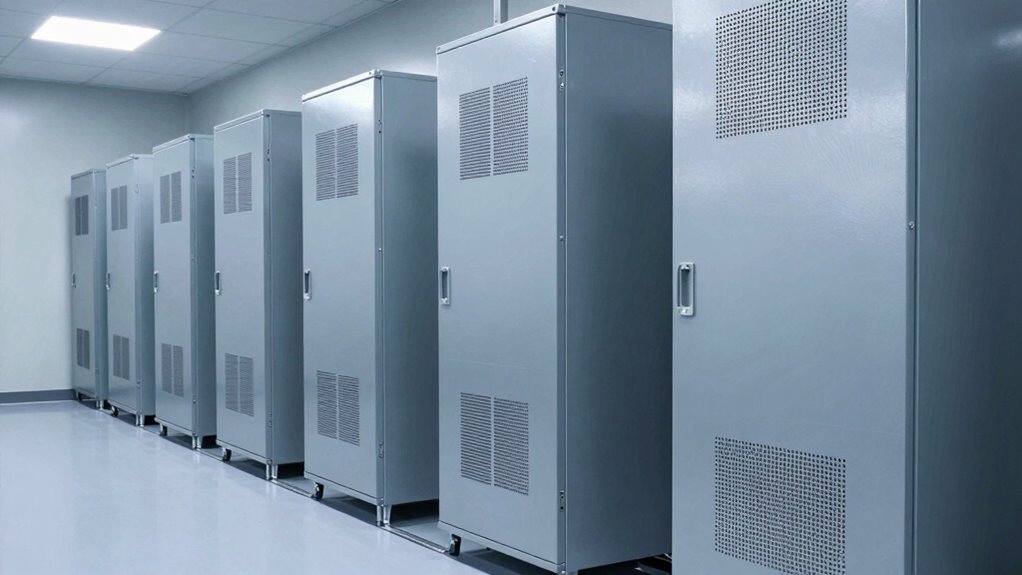

Safe ventilation around backup equipment involves ensuring a continuous airflow that keeps heat and gases moving away from the area. You should install exhaust fans and vents to direct fumes outside and intake vents to bring in fresh air for cooling. Keep the space open and well-spaced, avoiding cramped setups. Regularly inspect and maintain vents, filters, and fans to prevent blockages. Properly monitored systems with gas and temperature sensors further enhance safety—learn more about how to optimize your setup.
Key Takeaways
- Properly positioned vents and exhaust fans direct hazardous gases outside and ensure continuous airflow around backup equipment.
- Backup units are located in open, well-ventilated areas to prevent heat buildup and gas accumulation.
- Regular inspection and maintenance of ventilation pathways prevent obstructions and ensure system reliability.
- Sensors detect high temperatures and gas leaks, providing real-time alerts for early hazard detection.
- Adequate spacing between equipment facilitates heat dissipation and reduces the risk of dangerous concentrations.
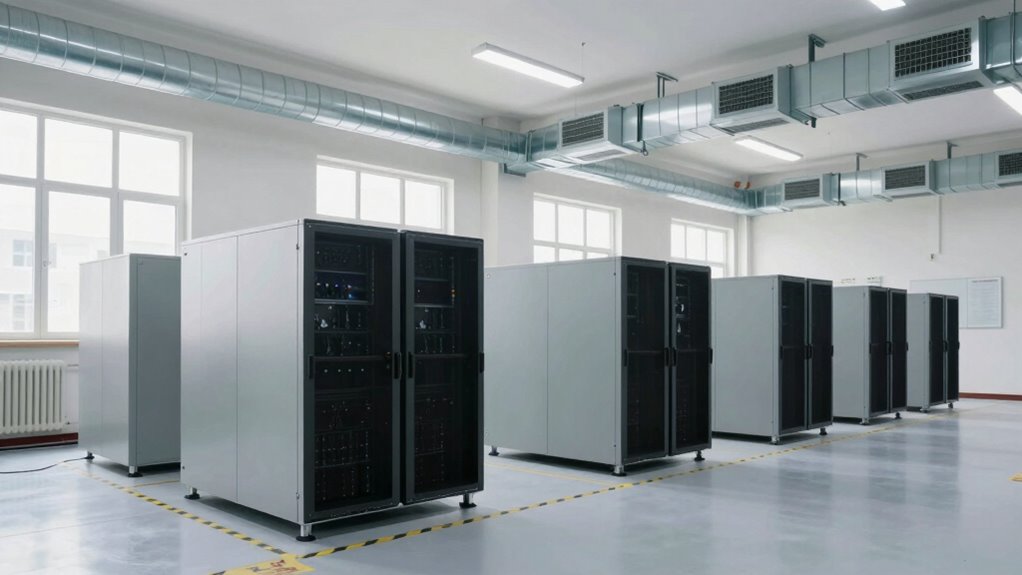
Proper ventilation around backup equipment is crucial to guarantee safety and maintain ideal performance. Without adequate airflow management, equipment can overheat, which not only diminishes efficiency but also creates serious safety risks. Ensuring proper airflow helps prevent the buildup of hazardous gases and reduces the chance of fires or explosions. When you pay close attention to ventilation, you’re actively engaged in hazard mitigation, protecting both personnel and property.
Proper ventilation ensures safety, prevents overheating, and reduces risks of hazardous gases and fires around backup equipment.
To achieve effective airflow management, you need to design your ventilation setup thoughtfully. This starts with understanding the equipment’s heat output and gas emissions. Backup generators, for example, produce heat and exhaust fumes that must be vented properly. You should install vents or exhaust fans that direct fumes outside, away from personnel and sensitive areas. Intake vents should also be positioned to draw in fresh air, ensuring a continuous flow that keeps the equipment cool and operational. Proper ventilation design is essential for optimal safety. Additionally, understanding airflow patterns can help optimize your setup for better safety and efficiency.
Regular maintenance is critical for maintaining proper airflow. Dirty filters, blocked vents, or malfunctioning fans can compromise ventilation efficiency. You should routinely inspect ventilation pathways, clearing any obstructions and replacing filters as needed. This proactive approach helps prevent overheating and reduces the risk of hazardous conditions developing unnoticed.
In addition to mechanical systems, your layout plays a key role in safe ventilation. Keep backup equipment in open, well-ventilated spaces, avoiding cramped areas that trap heat and gases. Adequate spacing between units allows for better airflow and facilitates easier maintenance. When you position equipment thoughtfully, you help ensure that heat and fumes are quickly dispersed, preventing dangerous concentrations from forming.
Monitoring systems also enhance safety. Installing sensors that detect high temperatures or gas leaks can alert you immediately to potential issues. These systems support hazard mitigation by providing real-time data, so you can respond before a situation escalates. Combining proper airflow management with effective monitoring creates a safety net that minimizes risks associated with backup equipment operation.
Ultimately, safe ventilation isn’t just about compliance; it’s about actively protecting everyone around your backup systems. When you prioritize airflow management and hazard mitigation, you ensure your equipment runs efficiently and safely, reducing downtime and preventing accidents. Vigilance, regular upkeep, and thoughtful layout are your best tools for creating a secure environment where backup equipment functions effectively without posing unnecessary risks.

Windigaga 10 Inch Shutter Exhaust Fan, 890 CFM High-Speed Wall Mounted Exhaust Fan, 45dB Quiet Cooling Ventilation Attic Fan for Shed, Garage, Greenhouse, Basement, Chicken Coop, Generator Room, Black
【10" Exhaust Fan】- Our shutter exhaust fan rapidly removes heat, humidity, odors, and dust from enclosed workspaces. Equipped…
As an affiliate, we earn on qualifying purchases.
As an affiliate, we earn on qualifying purchases.
Frequently Asked Questions
How Often Should Backup Equipment Ventilation Systems Be Inspected?
You should inspect backup equipment ventilation systems at least quarterly to guarantee ideal airflow and safety. Regular ventilation maintenance helps prevent dust buildup, blockages, and airflow issues that could compromise backup system performance. By routinely checking these systems, you maintain airflow optimization, reduce fire risks, and ensure reliable operation during emergencies. Don’t forget to document inspections and address any problems promptly to keep your backup equipment functioning safely and efficiently.
Are There Specific Ventilation Standards for Different Backup Equipment Types?
Think of ventilation standards as the backbone of airflow optimization; they vary based on backup equipment types. You must guarantee ventilation compliance by adhering to specific standards, such as ASHRAE or NFPA, tailored for each device—servers, generators, or batteries. These standards guide proper air circulation, preventing overheating and hazards. By customizing ventilation approaches, you safeguard your equipment, ensuring efficient operation and safety.
What Are Common Signs of Inadequate Ventilation Around Backup Systems?
You’ll notice signs of inadequate ventilation around backup systems through poor airflow optimization, which can cause equipment to overheat or malfunction. Dust accumulation is another key indicator, as stagnant air allows dust to settle and build up, increasing fire risks and reducing system efficiency. Regularly check for these signs, guarantee proper airflow, and keep the area clean to maintain safe ventilation and reliable backup system operation.
Can Portable Ventilation Units Be Used for Backup Equipment Areas?
Sure, portable fans can be used for backup equipment areas, but relying on them isn’t the smartest ventilation design. It’s ironic how these units, meant to help, often fall short of providing consistent, safe airflow. They’re a quick fix, but proper ventilation around backup systems requires a well-planned, integrated design that guarantees continuous, adequate airflow—something portable fans simply can’t guarantee. Prioritize a sound ventilation design for safety and reliability.
How Does Ventilation Impact the Lifespan of Backup Equipment?
Proper ventilation critically impacts your backup equipment’s lifespan by maintaining ideal airflow efficiency and guaranteeing effective equipment cooling. When airflow is steady and unobstructed, it prevents overheating and reduces wear and tear. You should regularly check ventilation systems, like portable units, to guarantee they operate correctly. This proactive approach helps extend your backup equipment’s durability, prevents costly breakdowns, and keeps your operations running smoothly.
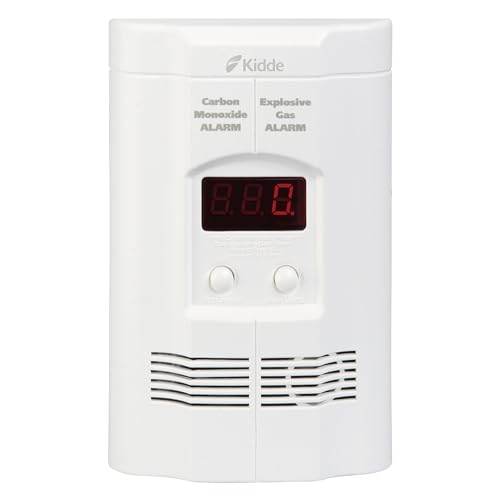
Kidde Carbon Monoxide + Explosive Gas, Natural Gas & Propane Alarm, Plug-in with 9V Battery Backup, Digital Display, 85 dB Alarm, LED Status Indicators, 3rd Edition
Easy Installation – simply plug-in to a standard, 120V outlet in your home
As an affiliate, we earn on qualifying purchases.
As an affiliate, we earn on qualifying purchases.
Conclusion
Remember, safety isn’t just about following rules—it’s about protecting yourself and your equipment. Ensuring proper ventilation around backup systems keeps them functioning effectively and reduces risk. As the saying goes, “A stitch in time saves nine,” so don’t wait until a problem arises. Regularly check and maintain your ventilation setup. By doing so, you’ll create a safer environment and keep your backup equipment ready when you need it most.

Generator Exhaust Extension Silencer Kit with Three Universal Adapters Compatible ALL Portable Generators with ALL-IN-ONE KIT,Insulated Through-Wall Mounting Plate Safely Vent Exhaust Reduce Noise 55%
【ENHANCED COMPATIBILITY & CUSTOM FIT】Our upgraded generator exhaust extension kit is designed to fit most makes and models…
As an affiliate, we earn on qualifying purchases.
As an affiliate, we earn on qualifying purchases.

testo 310 II Combustion Analyzer HVAC Set with Printer – Combustion Leak Tester for Temperature, Flue Gas & Pressure – Natural Gas Leak Detector with Smart App and Probe
Efficient; Perfect for complex flue and exhaust gas analyses, the natural gas detector simplifies maintenance and safety checks…
As an affiliate, we earn on qualifying purchases.
As an affiliate, we earn on qualifying purchases.