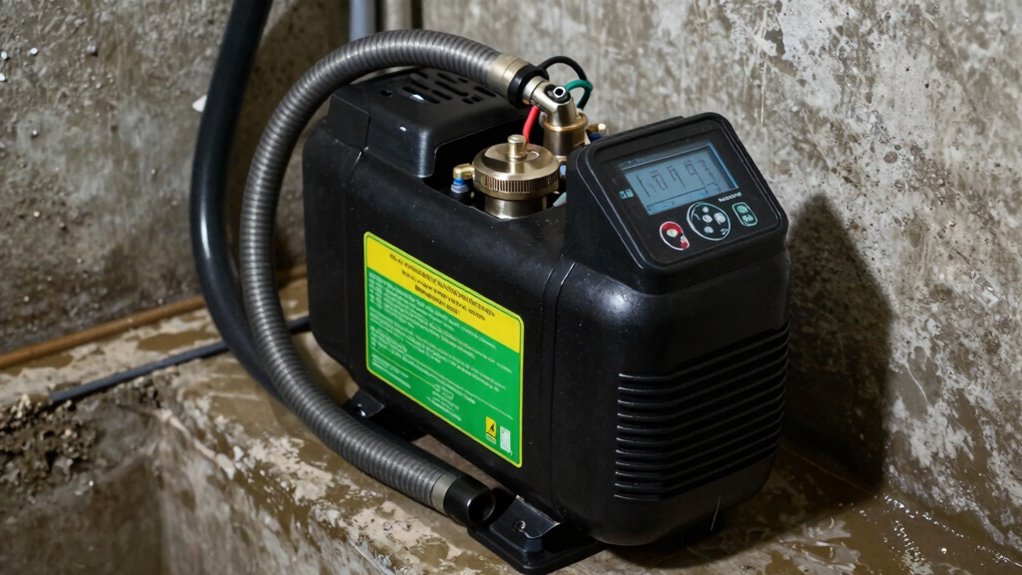

A battery backup sump pump is a vital safety feature that keeps your basement dry during power outages or storms, even if your main pump fails. It works by automatically activating when water levels rise and the primary pump isn’t working. Regular maintenance, such as testing the system and replacing batteries every 2-3 years, is essential for reliable protection. Keep your system in top shape, and you’ll be prepared for emergencies—more useful tips are just ahead.
Get ready for Prime Big Deal Days — try Prime free
Exclusive member deals on October 6–7, plus fast free delivery. Cancel anytime.
As an affiliate, we earn on qualifying purchases.
Key Takeaways
- Battery backup sump pumps provide essential flood protection during power outages or primary pump failure.
- Regular testing and maintenance ensure the backup system operates reliably when needed.
- Proper installation, including secure wiring and correct discharge routing, extends system lifespan.
- Batteries should be replaced every 2-3 years to maintain optimal performance.
- Professional assistance is recommended for complex electrical connections and system setup.
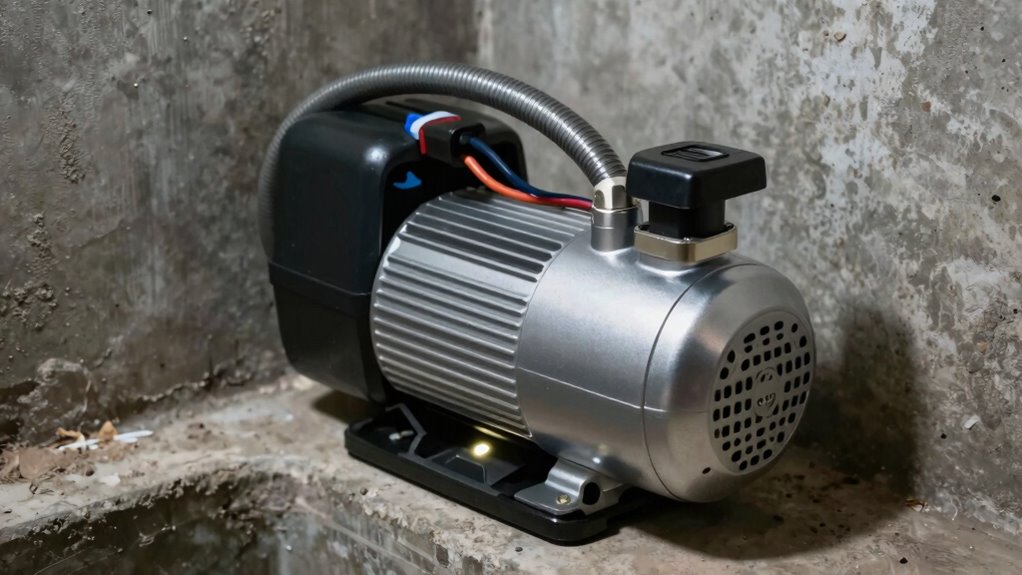
During a power outage or heavy storm, your primary sump pump might fail to keep water out of your basement, which is why a battery backup sump pump is vital. It acts as a second line of defense, guaranteeing your basement remains dry even when the main pump stops working due to power failure. Understanding how these backup systems operate and how to maintain them can save you from costly water damage and headaches.
When it comes to maintenance tips, it’s important to regularly test your battery backup sump pump to confirm it’s functioning properly. Most units have a test switch or a manual override that allows you to simulate a power outage and verify the pump kicks in. Additionally, check the battery’s charge status periodically and replace it every 2-3 years, as batteries degrade over time. Keep the area around the pump clean and free of debris, which might obstruct its operation or cause unnecessary wear. Inspect the float switch, ensuring it moves freely and isn’t obstructed, as this component activates the pump when water reaches a certain level. It’s also wise to run the backup pump independently during routine inspections to confirm it’s operational without relying solely on automatic triggers. Regular testing and battery maintenance are essential for ensuring reliable backup performance during emergencies. Incorporating proper maintenance practices can extend the lifespan of the entire system and ensure it functions when needed most. Additionally, understanding the importance of backup system components can help homeowners troubleshoot issues effectively and ensure optimal performance. Familiarizing yourself with battery backup system features can further enhance your understanding of how to keep your system ready for emergencies.
A crucial aspect of battery backup systems is understanding how the different parts work together to provide reliable protection. When considering installation procedures, precision is key. You should start by reading the manufacturer’s instructions thoroughly before beginning. Typically, installing a battery backup involves connecting the pump to your existing sump system and ensuring the battery is properly mounted and wired. You’ll need to set up a dedicated, secure space for the battery, protected from extreme temperatures and moisture. Make sure all electrical connections are tight, and verify that the pump’s discharge pipe is properly routed to direct water away from your foundation. Testing the system after installation is essential — pour water into the sump pit to see if the backup pump activates as intended.
Installing a backup system might seem straightforward, but if you’re unsure about handling electrical connections or fitting the pump correctly, don’t hesitate to hire a professional. Proper installation not only guarantees effective operation but also extends the lifespan of your backup system. Ultimately, maintaining and correctly installing your battery backup sump pump provides peace of mind, knowing that your basement is protected, no matter how severe the weather or power outages are. Regular upkeep and proper setup ensure that your investment in this safety feature pays off when you need it most.
As an affiliate, we earn on qualifying purchases.
Frequently Asked Questions
How Long Can a Battery Backup Operate During a Power Outage?
During a power outage, your battery backup can typically operate for 4 to 8 hours, depending on its capacity and the sump pump’s power consumption. If your battery has a higher capacity, it’ll last longer; if your sump pump uses more power, it’ll drain the battery faster. To guarantee continuous operation, consider upgrading to a larger battery or reducing the pump’s running time during outages.
What Is the Typical Lifespan of a Battery Backup Sump Pump?
Think of your battery backup sump pump as a loyal guardian, standing watch through storms. Typically, its lifespan ranges from 3 to 5 years, depending on battery technology and how often it’s called into action. The backup capacity and proper maintenance influence how long it serves you. Regular checks and timely replacements keep your guardian reliable, ensuring it’s ready to defend your home whenever flooding threatens.
Are Battery Backups Compatible With All Sump Pump Models?
Battery backups aren’t compatible with all sump pump models because battery compatibility depends on specific sump pump features. You should check your sump pump’s make and model to see if it supports a backup system. Some pumps have built-in features that make installation easier, while others may require adapters. Always verify compatibility before purchasing a battery backup to guarantee it works seamlessly with your existing sump pump.
How Often Should the Backup System Be Tested?
You should test your backup system at least once every three to six months. Did you know that a battery’s capacity can decrease by up to 20% in just six months? During testing, verify safety precautions like wearing gloves and goggles, and check the battery’s charge level. Regular testing guarantees your backup functions properly during a power outage, giving you peace of mind and protecting your home from flooding.
What Maintenance Is Required for Battery Backup Sump Pumps?
You need to regularly inspect your battery backup sump pump for signs of corrosion or damage, and make sure the battery is charged. Replace the battery when it shows signs of declining performance or reaches its expiration date. Conduct system troubleshooting to identify any issues early, such as leaks or electrical problems. Keeping the system clean and testing it periodically helps maintain peak operation and prolongs the life of your backup system.
sump pump battery replacement kit
As an affiliate, we earn on qualifying purchases.
As an affiliate, we earn on qualifying purchases.
Conclusion
So, next time your basement’s flooding, you’ll be glad you invested in a battery backup sump pump—because nothing says “prepared” like a pump that keeps working when the power’s out. Ironically, it’s the very backup that saves your home from disaster, yet many homeowners overlook it until it’s too late. Don’t be that person. Equip yourself now, and enjoy the peace of mind knowing you’re protected—because Murphy’s Law loves to strike when you least expect it.
backup sump pump with test switch
As an affiliate, we earn on qualifying purchases.
As an affiliate, we earn on qualifying purchases.
As an affiliate, we earn on qualifying purchases.
Fall Picks
fall essentials
As an affiliate, we earn on qualifying purchases.