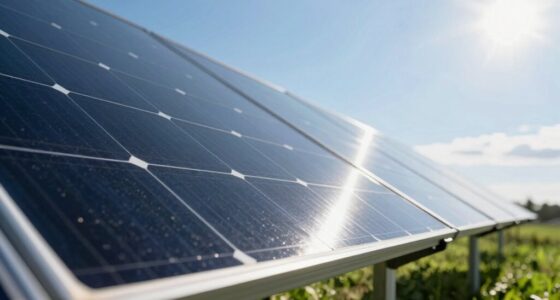
To make your solar setup safer and cleaner, secure cables tightly with sturdy clips, ties, and conduits, keeping them close to structures to prevent fluttering in high winds. Proper grounding of all metal components protects against electrical faults, while organized routing and clear labels simplify maintenance and troubleshooting. Use protective covers to shield cables from damage and guarantee regular inspections for corrosion or looseness. Keep wiring neat and robust—continue exploring for even more expert tips to enhance your system’s safety and longevity.
Open a free Amazon Business account
Business pricing, bulk buying and tax-exempt orders.
As an affiliate, we earn on qualifying purchases.
Key Takeaways
- Secure cables tightly with clips and conduits to prevent wind-induced damage and disconnections.
- Properly ground all metal components to ensure electrical safety and system reliability.
- Use conduits and covers to protect cables from physical damage and environmental elements.
- Label cables clearly and route them neatly along structures to simplify maintenance and troubleshooting.
- Regularly inspect and maintain securing components, grounding connections, and organization for long-term system durability.
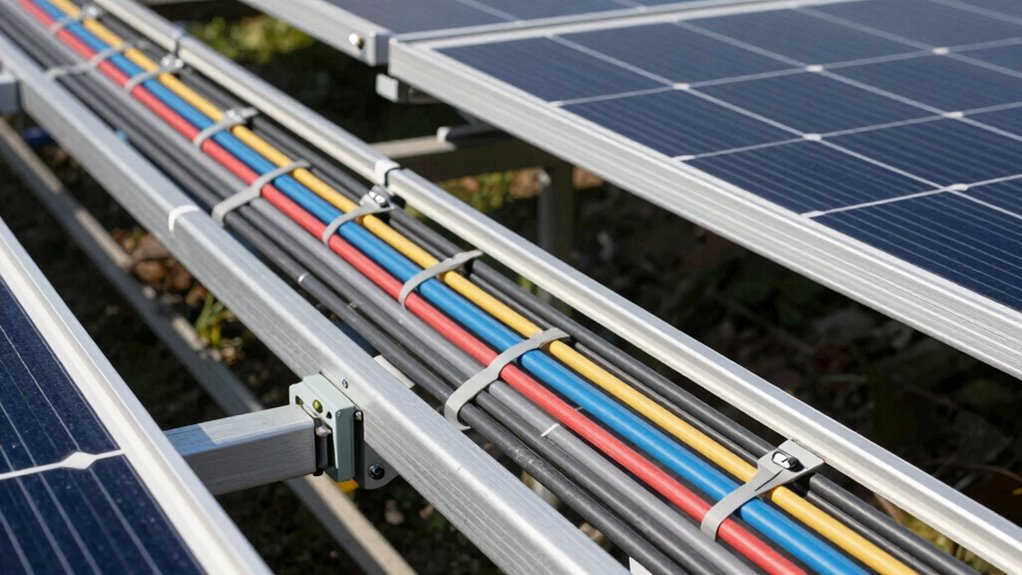
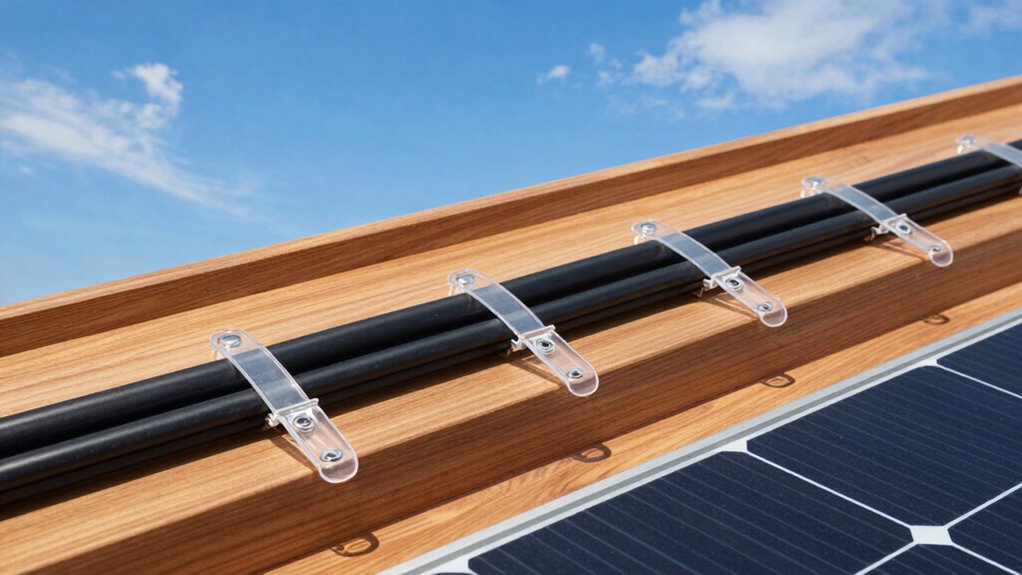
Proper cable management is essential for ensuring the safety, efficiency, and longevity of your solar energy system. When you organize your cables properly, you reduce the risk of damage caused by environmental factors like wind or accidental wear and tear. One of the key aspects to consider is wind resistance. If your cables are loosely hung or poorly secured, strong gusts can whip them around, potentially loosening connections or causing physical damage over time. To prevent this, use sturdy clips, ties, and conduits that keep cables tight and close to your mounting structures. Secure cables at regular intervals so they can withstand high winds without fluttering or catching on debris. This approach not only bolsters the durability of your setup but also minimizes the chance of accidental disconnections, which can impair system performance or create safety hazards. Incorporating cable tensioning techniques can further improve stability under windy conditions.
Along with wind resistance, grounding techniques are vital for safety. When you properly ground your cables and equipment, you protect your system from electrical faults and lightning strikes. Grounding provides a safe path for stray currents, helping to prevent electric shocks and equipment damage. You should connect all metal components and conductors to a common grounding point, ensuring a low-resistance connection. Use appropriately rated grounding wires and connectors, and follow local electrical codes to guarantee effectiveness. Regular inspections are also essential; over time, corrosion or loosening can compromise grounding integrity, so check connections periodically and maintain them as needed. Proper grounding not only safeguards your system but also improves its overall reliability and performance.
Integrating effective cable management practices involves more than just securing wires and grounding. Use conduits and cable covers to protect cables from physical damage, UV exposure, and environmental elements. Keep cables organized in neat bundles, avoiding tangles or overlapping, which can make troubleshooting difficult and increase wear. Labeling your cables clearly helps you identify connections quickly during maintenance, saving you time and reducing errors. Additionally, plan your cable routes thoughtfully—run cables along existing structures or framing to minimize clutter and exposure. When you combine these techniques with attention to wind resistance and grounding, you create a setup that’s safer, more durable, and easier to maintain over the long term.

XHF 100 PCS 3/4" Black Self Adhesive Cable Zip Tie Mounts Wire Cable Clips Holders Management Anchors Organizer Holders Squares(HS-101S)
- Material: Strong adhesive and PA66 nylon
- Tool-Free Installation: Peel and stick for easy setup
- Versatile Use: Suitable for cars, home, and office
As an affiliate, we earn on qualifying purchases.
As an affiliate, we earn on qualifying purchases.
Frequently Asked Questions
How Often Should Solar Cable Connections Be Inspected for Safety?
You should inspect your solar cable connections at least once a year for safety. During inspections, check the cable insulation for any signs of wear or damage, and look for connection corrosion that could compromise performance. Regularly monitoring these elements helps prevent electrical issues, guarantees ideal system function, and prolongs the lifespan of your setup. If you notice any problems, address them promptly to keep your solar system safe and efficient.
What Tools Are Essential for Organizing Solar Cables Effectively?
You’ll want to gather essential tools like cable labels and color coding supplies to organize solar cables effectively. Use clear labeling pens or tags for cable labeling, ensuring each connection is identifiable. Color coding helps distinguish different circuits or functions, making troubleshooting easier. Additionally, cable ties, clips, and conduit protectors keep cables neat and secure, preventing damage. With these tools, you streamline setup, simplify maintenance, and enhance safety efficiently.
Can Flexible Conduits Improve Solar Cable Protection?
Flexible conduits definitely improve solar cable protection by safeguarding against environmental factors like UV rays, moisture, and physical damage. They enhance cable durability, ensuring your solar setup remains reliable over time. By using flexible conduits, you can easily route cables around obstacles, reduce strain, and prevent wear and tear. This makes your solar installation safer, cleaner, and more durable, ultimately extending the lifespan of your cables and system.
Are There Specific Cable Types Recommended for Outdoor Solar Setups?
For outdoor solar setups, you should use cables with durable insulation, like UV-resistant and weatherproof types, to withstand the elements. Opt for cable insulation that resists UV rays, moisture, and temperature fluctuations. Choose connector types designed for outdoor use, such as waterproof or weatherproof connectors, ensuring secure, corrosion-resistant connections. This combination helps your system stay safe, reliable, and efficient over time.
How Do Weather Conditions Affect Solar Cable Longevity?
Weather conditions are like a relentless storm, testing your solar cables’ resilience. Harsh weather can cause wear and tear, especially if cables lack proper UV resistance. UV rays degrade insulation over time, reducing durability. To protect your setup, choose cables with high weather resilience and UV resistance, ensuring they withstand rain, snow, and sun exposure. Properly managed, your solar system stays safer and lasts longer despite nature’s challenges.

20FT 1/2 inch Wire Loom Split Tubing Auto Wire Conduit Flexible Cover Black
- Temperature Range: -40F to 257F
- Protection Features: Resists oil, heat, and pets
- Material Quality: High-quality polypropylene
As an affiliate, we earn on qualifying purchases.
As an affiliate, we earn on qualifying purchases.
Conclusion
By following these simple solar cable management tips, you’ll create a safer, sleeker setup that stands the test of time. Clear, clean cords cut down on clutter and minimize risks, making maintenance more manageable. Remember, neatness not only nurtures safety but also nurtures your system’s longevity. So, stay systematic, secure your solar cables, and see your solar setup shine brighter with both beauty and brilliance. Your solar space will thank you for your smart, systematic approach!

5 PCS TJ-16 Split Bolt Wire Connector, Copper Alloy Ground Wire
- Durable Copper Alloy Construction: High-conductivity, rust-resistant material
- Secure Electrical Connections: Ensures tight, reliable wire bonding
- Corrosion-Resistant Design: Suitable for harsh environments
As an affiliate, we earn on qualifying purchases.
As an affiliate, we earn on qualifying purchases.

Photovoltaic Solar System Installer Label Kit | 2020 | 2017 Code | Electrical Panel Safety Stickers | PV Power Source Warning Set | Caution Solar Circuit | Outdoor Durability (48 Pack)
- Comprehensive Safety Label Kit: Includes 48 vinyl stickers for safety compliance
- Inspection and Warning Stickers: Electrical safety, PV warnings, and circuit cautions
- Weather-Resistant and Durable: UV, waterproof, and outdoor resistant for all conditions
As an affiliate, we earn on qualifying purchases.
As an affiliate, we earn on qualifying purchases.
Pool season Picks
robotic pool cleaners
As an affiliate, we earn on qualifying purchases.