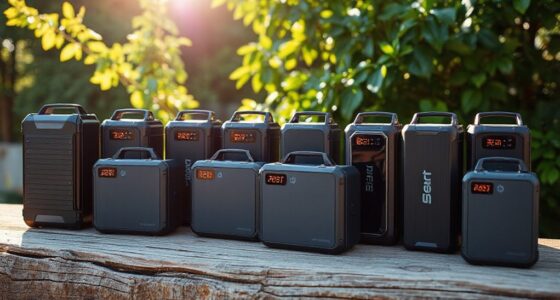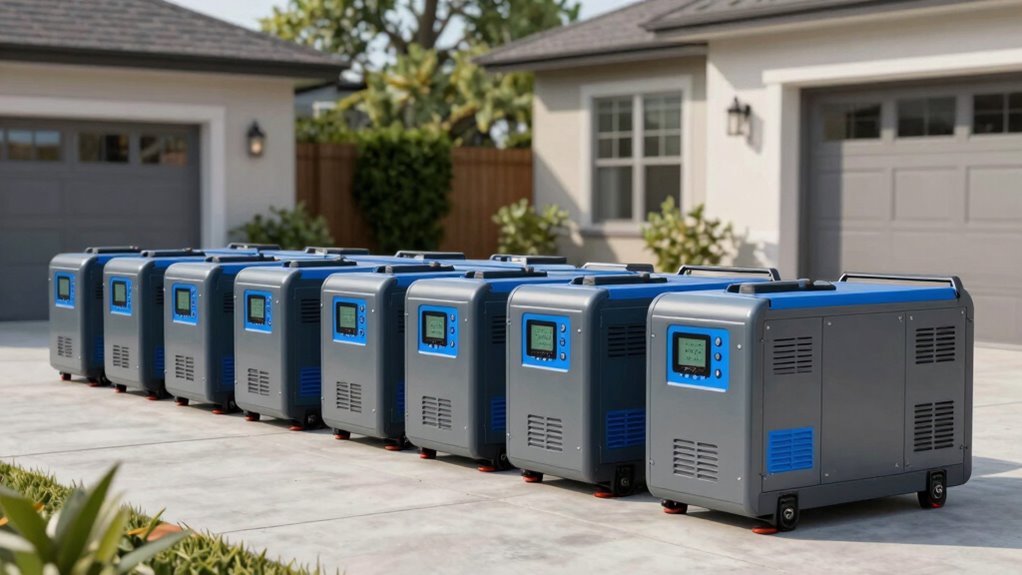

When selecting a tri fuel generator for home backup, you want a machine that offers versatility, power, and reliability during outages. The Champion Power Equipment 15,000-Watt Tri-Fuel Generator stands out for its robust performance and safety features, making it ideal for most homes. The Westinghouse 18000 Peak Watt Tri-Fuel Generator is better suited for larger households or those with high power demands, thanks to its massive output. However, tradeoffs in size, weight, and cost are common in this category. Continue reading for a detailed breakdown of these options to find the best fit for your needs.

Get backup power and energy gear delivered free with Prime
- Fast, free delivery on millions of items
- Prime Video, Amazon Music and more included
- Member-only deals all year
Complete the kit


Key Takeaways
- Top picks balance high wattage output with user-friendly features like remote start and CO sensors.
- Versatility in fuel options is essential but often comes with increased complexity and price.
- Larger generators provide more power but tend to be heavier and more costly, making portability a challenge.
- Safety features like CO detection are vital for home backup but can add to upfront costs.
- Choosing the right generator depends heavily on your expected power needs and budget constraints.
| DuroStar DS13000MXT 13,000-Watt Tri Fuel Portable Generator with Electric Start and CO Alert |  | Best Overall for Whole-Home Emergency Power | Wattage: 13,000 watts | Fuel Type: Gasoline, Propane, Natural Gas | Power Source: Fuel Powered | VIEW ON AMAZON | See Our Full Breakdown |
| DuroMax XP13000HXT 13,000-Watt Tri Fuel Portable Generator with CO Alert |  | Best for Commercial and Heavy-Duty Residential Use | Wattage: 13000 watts | Fuel Type: Tri-Fuel (Gasoline, Propane, Natural Gas) | Voltage: 240 volts | VIEW ON AMAZON | See Our Full Breakdown |
| Pulsar PGD105TiSCO Tri-Fuel Inverter Generator, 10,500-Watt, Portable with Remote Start |  | Best for Sensitive Electronics and Quiet Operation | Wattage: 10,500 watts | Fuel Type: Gasoline, Propane, Natural Gas | Voltage: 240 volts | VIEW ON AMAZON | See Our Full Breakdown |
| Pulsar PGD125TiSRCO 12500W Tri Fuel Inverter Generator with Electric and Remote Start |  | Best for Versatile, Smart Power During Outages | Peak Power: 12500W | Fuel Types: Gasoline, Propane, Natural Gas | Voltage: 120V, 240V | VIEW ON AMAZON | See Our Full Breakdown |
| Champion Power Equipment 15,000-Watt Tri-Fuel Portable Generator with CO Shield |  | Best for Heavy-Duty, Long Runtime Home Backup | VIEW ON AMAZON | See Our Full Breakdown | |||
| WEN 14,500-Watt Tri-Fuel Generator with Electric Start, CO Watchdog, and Wheel Kit |  | Best Overall for Flexibility and Safety | Surge Watts (Gasoline): 14500 | Running Watts (Gasoline): 11500 | Fuel Tank Capacity: 8.2 gallons | VIEW ON AMAZON | See Our Full Breakdown |
| Westinghouse 18000 Peak Watt Tri-Fuel Home Backup Portable Generator with Remote Electric Start and CO Sensor |  | Best for Power Capacity and Convenience | Peak Watts (Gas): 18000 | Running Watts (Gas): 14500 | Tank Capacity: 10.5 gallons | VIEW ON AMAZON | See Our Full Breakdown |
| Generac 12,500 Starting Watt Tri-Fuel Portable Generator with Electric Start |  | Best for Balance of Power and Portability | Starting Watts: 12500 | Running Watts: 9500 | Fuel Tank Capacity: 7.5 gallons | VIEW ON AMAZON | See Our Full Breakdown |
| Westinghouse 13500 Peak Watt Tri-Fuel Home Backup Portable Generator with Remote Electric Start |  | Best for Extended Runtime and Power | Peak Watts: 13500 | Running Watts: 10500 | Fuel Tank Capacity: 9.5 gallons | VIEW ON AMAZON | See Our Full Breakdown |
| Westinghouse 14500 Peak Watt Tri-Fuel Portable Generator with Remote Electric Start |  | Best for High Power and Low THD | Peak Watts: 14500 | Running Watts: 11500 | Fuel Tank Capacity: 9.5 gallons | VIEW ON AMAZON | See Our Full Breakdown |
| Westinghouse 28000 Peak Watt Tri-Fuel Portable Generator with Remote Electric Start |  | Best Overall for Large Homes and Job Sites | Peak Watts: 28,000 | Running Watts: 20,000 | Fuel Types: Gasoline, Propane, Natural Gas | VIEW ON AMAZON | See Our Full Breakdown |
| Champion 12,500-Watt Electric Start Tri-Fuel Portable Generator |  | Best for Moderate Home Backup with User-Friendly Features | Fuel Types: Gasoline, Propane, Natural Gas | Starting Watts: 12,500 (gasoline), 11,250 (propane), 10,000 (natural gas) | Running Watts: 10,000 (gasoline), 9000 (propane), 8000 (natural gas) | VIEW ON AMAZON | See Our Full Breakdown |
| Westinghouse 12500 Peak Watt EFI Tri-Fuel Portable Generator with Remote Electric Start and Transfer Switch Ready |  | Best for Long Runtime and Fuel Efficiency on Medium Power Needs | Peak Watts: 12,500 | Running Watts: 9,500 | Fuel Types: Gasoline, Propane, Natural Gas | VIEW ON AMAZON | See Our Full Breakdown |
| Westinghouse 12500 Peak Watt Tri-Fuel Portable Generator with Remote Electric Start |  | Best for Versatile Home Backup with Real-Time Data Monitoring | Peak Watts: 12,500 | Running Watts: 9,500 | Fuel Types: Gasoline, Propane, Natural Gas | VIEW ON AMAZON | See Our Full Breakdown |
| tri fuel generator for home backup | Runtime | Fuel Tank Capacity | Outlets | Running Watts |
|---|---|---|---|---|
| DuroStar DS13000MXT 13,000-Wat | 13 hours | — | — | — |
| DuroMax XP13000HXT 13,000-Watt | 8 hours | — | — | — |
| Pulsar PGD105TiSCO Tri-Fuel In | 8 hours | — | — | — |
| Pulsar PGD125TiSRCO 12500W Tri | Varies with load | — | — | — |
| Champion Power Equipment 15,00 | — | — | — | — |
| WEN 14,500-Watt Tri-Fuel Gener | — | 8.2 gallons | Four 120V 5-20R, 120V/240V NEMA L14-30R, 120V/240V NEMA 14-50R, 12V DC | — |
| Westinghouse 18000 Peak Watt T | up to 16 hours | — | Multiple including USB and twist-lock | — |
| Generac 12,500 Starting Watt T | — | 7.5 gallons | Two 120V 20A GFCI, 120/240V twist-lock, 50A | 9500 |
| Westinghouse 13500 Peak Watt T | up to 19 hours | 9.5 gallons | Multiple including transfer switch and RV outlets | 10500 |
| Westinghouse 14500 Peak Watt T | up to 19 hours | 9.5 gallons | Multiple including transfer switch and USB | 11500 |
| Westinghouse 28000 Peak Watt T | — | — | Two 120/240V 14-50R 50A, Two 120/240V L14-30R 30A, One 120V L5-30R 30A, Four GFCI 120V 5-20R | 20,000 |
| Champion 12,500-Watt Electric | — | 7.7 gallons | — | 10,000 (gasoline), 9000 (propane), 8000 (natural gas) |
| Westinghouse 12500 Peak Watt E | — | 6.6 gallons | — | 9,500 |
| Westinghouse 12500 Peak Watt T | — | 6.6 gallons | GFCI 120V, transfer switch ready | 9,500 |
More Details on Our Top Picks
DuroStar DS13000MXT 13,000-Watt Tri Fuel Portable Generator with Electric Start and CO Alert
The DuroStar DS13000MXT stands out for its impressive 13,000-watt peak power, making it a solid choice for whole-home backup during outages. Unlike the Champion 15,000-Watt, it offers the flexibility of running on gasoline, propane, or natural gas, which can be a game-changer during fuel shortages or long outages. Its remote electric start adds convenience, but the unit’s weight and size make it less portable, especially when compared to lighter options like inverter generators. The 8.3-gallon tank supports up to 13 hours of runtime, but its high fuel consumption at peak wattage can increase operating costs. This model is ideal for homeowners needing reliable, high-capacity backup with multi-fuel options, though setup complexity may challenge first-time users.
Pros:- High 13,000-watt peak power suitable for entire homes
- Runs on gasoline, propane, or natural gas for fuel flexibility
- Remote electric start for quick operation
- CO Alert safety feature enhances safety during use
Cons:- Heavy and bulky, making transport difficult
- High fuel consumption at maximum wattage
- Complex initial setup for inexperienced users
Best for: Homeowners seeking a powerful, multi-fuel generator capable of fully powering their household during extended outages.
Not ideal for: Buyers who prioritize portability or ease of setup, as this unit is heavy and requires more installation effort.
- Wattage:13,000 watts
- Fuel Type:Gasoline, Propane, Natural Gas
- Power Source:Fuel Powered
- Voltage:240 volts
- Tank Volume:8.3 gallons
- Runtime:13 hours
Our verdict“This generator is best suited for homeowners needing reliable, high-capacity backup with flexible fuel options, despite its size and setup complexity.”
DuroMax XP13000HXT 13,000-Watt Tri Fuel Portable Generator with CO Alert
The DuroMax XP13000HXT offers a commanding 13,000-watt peak power, similar to the DuroStar but with a larger footprint and more outlets, making it suitable for demanding applications. Its tri-fuel capability provides excellent flexibility, but its size and weight make it less suited for portable use compared to inverter models like the Pulsar PGD105TiSCO. The steel construction and 7 outlets support multiple devices, and the CO alert adds safety during extended outages. While it delivers high power, it consumes more fuel and can be noisy, which might be a concern in residential settings.
Pros:- Powerful 13,000-watt output for large loads
- Tri-fuel operation offers great fuel flexibility
- Multiple outlets support various devices simultaneously
- CO alert enhances safety during extended runs
Cons:- Heavy and less portable compared to inverter models
- Higher fuel consumption and noise levels
- More complex setup due to size and fuel connections
Best for: Property owners needing a robust, multi-outlet generator for both residential and small commercial backup scenarios.
Not ideal for: Individuals seeking a lightweight, portable solution for occasional use, as this model is large and heavy.
- Wattage:13000 watts
- Fuel Type:Tri-Fuel (Gasoline, Propane, Natural Gas)
- Voltage:240 volts
- Tank Volume:8.3 gallons
- Runtime:8 hours
- Total Outlets:7
Our verdict“Ideal for users needing a durable, high-capacity backup generator with multiple outlets and fuel options, despite its size and noise levels.”
Pulsar PGD105TiSCO Tri-Fuel Inverter Generator, 10,500-Watt, Portable with Remote Start
The Pulsar PGD105TiSCO delivers a solid 10,500 watts peak power, with inverter technology that keeps noise levels down to 62 dB—much quieter than traditional models like the Champion 15,000-Watt. Its tri-fuel capability provides excellent flexibility, and features like remote start and a digital display add convenience. Compared to larger, more brute-force generators, it excels in portability and safe power delivery for sensitive electronics. However, its 6.9-gallon tank offers less runtime, and its weight can still be a barrier for frequent transport or outdoor mobility. This makes it a strong choice for homeowners who want reliable backup without excessive noise or size.
Pros:- Quiet operation at 62 dB suitable for residential use
- Supports multiple fuel types for versatility
- Remote start and digital display for ease of use
- Inverter technology protects sensitive electronics
Cons:- Limited runtime due to smaller tank capacity
- Heavier than non-inverter portable generators
- Higher cost relative to non-inverter models
Best for: Homeowners needing a portable, quiet generator that can safely power electronics and essential appliances during outages.
Not ideal for: Users requiring the highest possible wattage for entire households or heavy-duty equipment, as its capacity tops out at 10,500 watts.
- Wattage:10,500 watts
- Fuel Type:Gasoline, Propane, Natural Gas
- Voltage:240 volts
- Tank Volume:6.9 gallons
- Runtime:8 hours
- Noise Level:62 dB
Our verdict“Best suited for homeowners seeking a quiet, portable backup that safeguards sensitive devices, despite slightly lower wattage and runtime.”
Pulsar PGD125TiSRCO 12500W Tri Fuel Inverter Generator with Electric and Remote Start
The Pulsar PGD125TiSRCO offers a high peak output of 12,500 watts, combining inverter technology with smart features like electric and remote start, making it suitable for powering major appliances, RVs, or tools during outages. Its quiet operation at 66 dB and safety features like CO Sentry distinguish it from larger, noisier generators such as the Westinghouse 18000 Peak Watt. Its 50-amp output enables hookup to transfer switches, ideal for home backup. The main tradeoff is its weight and higher price point, which might restrict portability. This generator suits users who want reliable, clean power with smart operation features for various applications.
Pros:- High 12,500-watt peak power for large loads
- Inverter technology ensures clean, safe power for electronics
- Electric and remote start for convenience
- Supports 50A transfer switch connection
Cons:- Relatively high noise level at 66 dB
- Heavy and less portable for frequent movement
- Higher cost compared to simpler models
Best for: Home and mobile users requiring a high-capacity inverter generator with smart start options and transfer switch compatibility.
Not ideal for: Those needing a lightweight, portable solution for occasional use, as this model is on the heavier side and more expensive.
- Peak Power:12500W
- Fuel Types:Gasoline, Propane, Natural Gas
- Voltage:120V, 240V
- Amperage:50A
- Noise Level:66 dB
- Runtime:Varies with load
Our verdict“Ideal for homeowners seeking a high-capacity, inverter-based backup with advanced features, accepting its weight and price premium.”
Champion Power Equipment 15,000-Watt Tri-Fuel Portable Generator with CO Shield
The Champion Power Equipment 15,000-Watt generator delivers the highest starting wattage in this lineup, making it well-suited for large homes or demanding backup needs. Its tri-fuel capability, combined with a robust 717cc Milwaukee V-Twin engine, provides long runtime—up to 9 hours on gasoline—and the ability to operate on natural gas or propane. The 78 dBA noise level is higher than inverter models like the Pulsar PGD105TiSCO, and its weight and size mean it’s less portable. The CO Shield safety feature adds peace of mind, but setup can be complex with multiple fuel connections. This unit is best for those who prioritize raw power and runtime over portability.
Pros:- Highest starting wattage at 15,000W for large loads
- Supports natural gas, propane, and gasoline
- Long runtime on gasoline and robust engine design
- CO Shield safety system for added security
Cons:- Relatively noisy at 78 dBA
- Heavy and difficult to move
- Complex setup with multiple fuel connections
Best for: Homeowners needing a heavy-duty, high-wattage backup with long runtime and multiple fuel sources for extensive power needs.
Not ideal for: Buyers looking for a portable, lightweight generator, as this model is large, heavy, and noisy.
Our verdict“Best for users who need maximum power and runtime for large-scale backup, accepting its size and noise tradeoffs.”
WEN 14,500-Watt Tri-Fuel Generator with Electric Start, CO Watchdog, and Wheel Kit
The WEN TF-1450X stands out for its ability to operate on gasoline, propane, or natural gas, providing unmatched fuel flexibility for home backup. Compared with the Westinghouse WGen14500TFc, it offers similar tri-fuel versatility but with a slightly lower peak wattage. Its electric start makes powering up easier, especially during emergencies, while the built-in CO shutdown sensor adds a vital layer of safety. The 8.2-gallon tank supports up to 12 hours of runtime at half load, making it suitable for extended outages. However, the natural gas hose is sold separately, and its weight and bulk may challenge users needing portability. This pick makes the most sense for homeowners needing reliable, versatile backup power with safety features included.
Pros:- Versatile tri-fuel operation allows fuel choice based on availability
- Electric start simplifies operation during emergencies
- Built-in CO shutdown sensor enhances safety
Cons:- Natural gas hose sold separately adds extra cost and setup complexity
- Heavy and bulky design reduces portability for some users
Best for: Homeowners who want flexible fuel options and enhanced safety features in a reliable backup generator
Not ideal for: Those seeking a lightweight, portable unit for frequent transport or small spaces due to its weight and size
- Surge Watts (Gasoline):14500
- Running Watts (Gasoline):11500
- Fuel Tank Capacity:8.2 gallons
- Runtime at half load:up to 12 hours
- Engine:500cc 4-stroke OHV
- Outlets:Four 120V 5-20R, 120V/240V NEMA L14-30R, 120V/240V NEMA 14-50R, 12V DC
Our verdict“Ideal for homeowners needing a versatile, safety-focused generator that can run on multiple fuels with minimal hassle.”
Westinghouse 18000 Peak Watt Tri-Fuel Home Backup Portable Generator with Remote Electric Start and CO Sensor
The Westinghouse WGen14500TFc offers impressive peak wattage, making it suitable for larger home backup needs. Compared to the Generac 12,500-Watt Tri-Fuel, it provides significantly higher peak power and a remote start feature for added convenience. Its 10.5-gallon tank supports up to 16 hours of runtime, ideal for extended outages. The noise level of 74 dBA is higher than some quieter models, and its size and weight make it less portable. Despite this, the multiple outlets, including USB ports, cater well to diverse power needs. This generator is best suited for users who prioritize high power output and remote operation, even if it means sacrificing some portability.
Pros:- High peak wattage for demanding loads
- Remote electric start adds convenience
- Long runtime with large fuel tank
Cons:- Relatively loud at 74 dBA
- Heavy and less portable for frequent movement
Best for: Larger households or small businesses needing high wattage backup with remote operation
Not ideal for: Users requiring frequent transport or compact storage due to its bulk and weight
- Peak Watts (Gas):18000
- Running Watts (Gas):14500
- Tank Capacity:10.5 gallons
- Runtime:up to 16 hours
- Noise Level:74 dBA
- Outlets:Multiple including USB and twist-lock
Our verdict“Best suited for users needing high power capacity and remote control, with less emphasis on portability.”
Generac 12,500 Starting Watt Tri-Fuel Portable Generator with Electric Start
The Generac 12500 offers a solid balance between power and portability, with tri-fuel capability that makes it flexible for different fuel sources. Compared with the Westinghouse 13500 Peak Watt, it has slightly lower wattage but is lighter at 219 lbs, making it easier to move around. Its automatic voltage regulation provides stable power, and the COsense technology improves safety during operation. The 7.5-gallon tank supports roughly 9.5 hours at half load, which is adequate for most home backup scenarios. However, its weight still requires assistance for transport, and setup might be complex for first-time users. It suits those who want reliable power with easier handling.
Pros:- Tri-fuel flexibility for diverse fuel choices
- Automatic voltage regulation for stable power
- COsense safety technology
Cons:- Heavy weight at 219 lbs, requiring assistance for moving
- Complex initial setup for new users
Best for: Homeowners needing a portable, reliable tri-fuel generator with good power capacity
Not ideal for: Those with limited physical strength or space for larger, heavier units
- Starting Watts:12500
- Running Watts:9500
- Fuel Tank Capacity:7.5 gallons
- Runtime at 50% load:9.5 hours
- Weight:219 lbs
- Outlets:Two 120V 20A GFCI, 120/240V twist-lock, 50A
Our verdict“Ideal for users seeking a portable, reliable generator that balances power and ease of handling.”
Westinghouse 13500 Peak Watt Tri-Fuel Home Backup Portable Generator with Remote Electric Start
The Westinghouse 13500 Peak Watt delivers impressive power with up to 19 hours of runtime, making it a strong choice for prolonged outages. Compared with the WEN TF-1450X, it offers higher peak wattage and a longer runtime, but at a heavier weight that complicates portability. Its remote start feature enhances convenience, especially during storm preparations. The 500cc Westinghouse engine provides reliable operation, and the multiple outlets support a variety of devices. The main tradeoff is its size—more suited to stationary backup than frequent moving—along with potential residual odors from factory testing. This generator is perfect for those prioritizing extended runtime and power capacity over portability.
Pros:- Long runtime of up to 19 hours
- Remote electric start for convenience
- High peak wattage suitable for large loads
Cons:- Heavy and less portable
- Possible residual odors from factory testing
Best for: Homeowners wanting extended backup power with remote operation capability
Not ideal for: Users needing a lightweight, easily transportable unit for frequent movement
- Peak Watts:13500
- Running Watts:10500
- Fuel Tank Capacity:9.5 gallons
- Runtime:up to 19 hours
- Engine:500cc Westinghouse 4-stroke OHV
- Outlets:Multiple including transfer switch and RV outlets
Our verdict“Best suited for users seeking long-lasting backup power with remote start, accepting reduced portability.”
Westinghouse 14500 Peak Watt Tri-Fuel Portable Generator with Remote Electric Start
The Westinghouse 14500 Peak Watt offers high wattage output with low Total Harmonic Distortion (THD), making it suitable for sensitive electronics. Compared with the Generac 12500, it provides higher peak power and a longer runtime, but its weight at 550cc engine makes it more challenging to move. The remote start feature adds convenience, while the low THD ensures safe operation for electronics like computers and TVs. Its 9.5-gallon tank supports up to 19 hours of runtime, excellent for extended outages. The main compromise is its weight, which limits portability, and some residual odor after factory testing. This generator is best for users prioritizing power quality and extended runtime for sensitive devices.
Pros:- High peak wattage for demanding appliances
- Low THD safe for electronics
- Remote electric start for convenience
Cons:- Heavy weight at 550cc engine makes transport difficult
- Residual odor from factory testing possible
Best for: Homeowners needing high power, low THD, and remote operation for sensitive electronics
Not ideal for: Those requiring a lightweight or easily portable unit
- Peak Watts:14500
- Running Watts:11500
- Fuel Tank Capacity:9.5 gallons
- Runtime:up to 19 hours
- Engine:550cc 4-stroke OHV
- Outlets:Multiple including transfer switch and USB
Our verdict“Ideal for users who need high power and clean electricity for sensitive devices, accepting limited portability.”
Westinghouse 28000 Peak Watt Tri-Fuel Portable Generator with Remote Electric Start
This Westinghouse model stands out for its incredible power, making it ideal for large homes or demanding job sites where high wattage is non-negotiable. Compared to the smaller Champion 12,500-Watt generator, it offers nearly double the peak watts, but that comes with increased weight and complexity. The extensive outlet options and transfer switch readiness make it a robust backup solution, ensuring you can run multiple appliances simultaneously. Its portability features—large wheels and foldable handles—help mitigate some logistical challenges, though it remains heavy and bulky. The tradeoff for this power is the higher price and setup effort, which might be overkill for small households or occasional use. If you need serious capacity and reliable backup power, this generator provides unmatched wattage and versatility, but it requires space and effort to operate.
Pros:- Extremely high wattage suitable for whole-home backup
- Versatile tri-fuel operation for fuel flexibility
- Multiple outlets and transfer switch compatibility for seamless integration
- Portable design with large wheels and handles
Cons:- Heavy and bulky, challenging to move without assistance
- Higher cost relative to smaller or less powerful models
- Complex setup that might intimidate first-time users
Best for: Large households, construction sites, or emergency scenarios where maximum power is essential
Not ideal for: Small homes or users seeking lightweight, easy-to-move backup options
- Peak Watts:28,000
- Running Watts:20,000
- Fuel Types:Gasoline, Propane, Natural Gas
- Run Time:up to 15 hours at 25% load
- Tank Capacity:17.2 gallons
- Engine:999 cc Westinghouse V-Twin OHV
- Outlets:Two 120/240V 14-50R 50A, Two 120/240V L14-30R 30A, One 120V L5-30R 30A, Four GFCI 120V 5-20R
Our verdict“This generator is best suited for those needing maximum power despite its size and complexity, making it ideal for large homes or job sites.”
Champion 12,500-Watt Electric Start Tri-Fuel Portable Generator
The Champion 12,500-Watt generator offers a balanced mix of power, safety, and ease of use, making it a solid choice for homeowners who want reliable backup without the bulk of larger models. Its electric start and included battery simplify startup, distinguishing it from manual models like the Westinghouse 12500 Peak Watt EFI. The CO shutoff safety feature adds peace of mind, especially for those concerned about carbon monoxide risks. While its 74 dBA noise level is louder than inverter-style generators, it remains manageable for most backup scenarios. The relatively limited run time on propane (about 3 hours at half load) can be a drawback for prolonged outages, especially compared to the longer runtime of the Westinghouse EFI model. Heavy and somewhat loud, this generator is best suited for users prioritizing straightforward operation and safety but willing to accept some noise and runtime limitations.
Pros:- Electric start with battery for quick, hassle-free startup
- Built-in CO safety shutoff for added protection
- Versatile tri-fuel capability for fuel flexibility
- Support includes free lifetime technical support
Cons:- Loud operation at 74 dBA, not ideal for noise-sensitive environments
- Limited propane runtime of 3 hours at half load
- Heavy and less portable for frequent movement
Best for: Homeowners seeking a reliable, easy-to-start backup generator with safety features
Not ideal for: Users needing extended runtime or ultra-quiet operation for frequent or prolonged outages
- Fuel Types:Gasoline, Propane, Natural Gas
- Starting Watts:12,500 (gasoline), 11,250 (propane), 10,000 (natural gas)
- Running Watts:10,000 (gasoline), 9000 (propane), 8000 (natural gas)
- Engine Displacement:500cc
- Fuel Tank Capacity:7.7 gallons
- Run Time at 50% Load:8 hours
- Noise Level:74 dBA at 23 feet
Our verdict“This model is well-suited for homeowners who value safety and ease of use but can accept some noise and runtime tradeoffs.”
Westinghouse 12500 Peak Watt EFI Tri-Fuel Portable Generator with Remote Electric Start and Transfer Switch Ready
The Westinghouse EFI model combines advanced electronic fuel injection with tri-fuel versatility, making it a standout for those who want reliable, efficient power with minimal fuss. It outperforms basic carbureted models like the Pulsar PGD125TiSRCO with smoother starting, better fuel economy, and longer runtime—up to 15 hours on a full tank. The remote start and transfer switch readiness add convenience, especially during emergencies or job site use. The 457cc engine offers solid performance, though it’s still heavy and requires some effort to move. Its price point is higher, reflecting its advanced features. Compared to simpler generators, this model emphasizes efficiency and user comfort, but those seeking lightweight portability or a lower budget may find it less appealing. Ideal for users who prioritize reliability and long run times over portability.
Pros:- Electronic fuel injection for reliable starts and fuel savings
- Long runtime of up to 15 hours on a full tank
- Remote start with key fob for convenience
- Transfer switch ready for easy home integration
Cons:- Relatively heavy, requiring assistance to move
- Higher price due to advanced technology and capacity
- Setup may be complex for first-time users
Best for: Homeowners needing dependable, long-lasting backup power with fuel efficiency
Not ideal for: Users seeking lightweight, highly portable options or those with tight budgets
- Peak Watts:12,500
- Running Watts:9,500
- Fuel Types:Gasoline, Propane, Natural Gas
- Engine:457cc 4-stroke OHV
- Fuel Tank Capacity:6.6 gallons
- Run Time:Up to 15 hours
- Safety Features:Automatic low oil shutdown, CO sensor
Our verdict“This generator is perfect for those who want long, efficient operation combined with ease of starting and safety features for home backup.”
Westinghouse 12500 Peak Watt Tri-Fuel Portable Generator with Remote Electric Start
This Westinghouse model offers a reliable balance of power, features, and convenience, making it suitable for homeowners who want flexibility and real-time data. Its remote electric start and multiple outlet options provide user-friendly operation, similar to the EFI version but at a slightly lower price point. With 12,500 peak watts and a 6.6-gallon tank, it offers up to 12 hours of runtime—adequate for most backup needs. The inclusion of a digital display for real-time data and a CO sensor enhances safety and monitoring, outperforming basic models like the Champion 12,500-Watt in terms of information access. However, it remains heavy and may require assistance for transport, and its price is still on the higher side. This pick makes the most sense for those who want a durable, feature-rich generator without the expense of the EFI technology.
Pros:- Remote electric start for effortless operation
- Digital display for real-time data monitoring
- Tri-fuel versatility for flexible fueling
- Multiple outlets including transfer switch-ready options
Cons:- Heavy and less portable
- Higher price compared to basic models
- Setup can be complex for beginners
Best for: Homeowners who want a versatile, feature-packed generator with real-time monitoring
Not ideal for: Those seeking the lightest or most portable generator for frequent movement
- Peak Watts:12,500
- Running Watts:9,500
- Fuel Types:Gasoline, Propane, Natural Gas
- Fuel Tank Capacity:6.6 gallons
- Run Time:Up to 12 hours
- Features:Remote electric start, digital data display, CO sensor
- Outlets:GFCI 120V, transfer switch ready
Our verdict“Ideal for homeowners wanting a feature-rich, reliable backup generator with real-time data and fuel flexibility, despite its weight.”

How We Picked
In evaluating these tri fuel generators, I prioritized performance, fuel versatility, build quality, safety features, and ease of use. Generators needed to deliver sufficient wattage for typical home essentials, with some headroom for appliances or HVAC systems. Fuel flexibility was a key factor, but I also considered how straightforward each model was to operate and maintain. Cost-effectiveness was assessed alongside reliability, ensuring that top picks deliver value without sacrificing quality. The ranking reflects a balance of these factors, aiming to present options for different budgets and home backup needs.Factors to Consider When Choosing Tri Fuel Generator For Home Backup
Choosing the right tri fuel generator for home backup involves several important considerations beyond raw power. Understanding these factors helps prevent buyer’s remorse and ensures your investment meets your specific needs, whether for occasional outages or prolonged power interruptions.Power Output and Capacity
Assess your home’s typical power demands, including essential appliances, HVAC, and lighting. A generator with too little wattage will leave you short during outages, while excessive capacity can be an unnecessary expense. Consider models that provide a buffer above your peak load to ensure smooth operation and future-proofing. Larger wattage output often means heavier and more expensive units, so balance your needs carefully.
Fuel Compatibility and Efficiency
Tri fuel generators offer the flexibility of running on propane, gasoline, or natural gas, which can be a lifesaver during extended outages. However, fuel efficiency varies and impacts runtime. Think about your access to each fuel type—propane tanks are convenient but limited in capacity, while natural gas requires a connection. Choosing a model with good fuel economy reduces operating costs and refueling frequency.
Size, Portability, and Installation
Size and weight matter, especially if you need to move or store the generator easily. Larger, more powerful units tend to be bulkier, which can be a drawback if space is tight. Consider whether you need a portable model with wheels or a permanent setup with transfer switches. Proper installation, especially for natural gas connection, might require professional help, adding to total costs.
Safety Features and Certifications
Features like CO sensors, automatic shutoff, and overload protection enhance safety during operation. Since these generators are used indoors or near living spaces, safety cannot be overlooked. Look for models with reliable safety certifications and sensors that monitor carbon monoxide levels. These features can prevent dangerous situations and prolong the life of your generator.
Budget and Long-Term Value
Higher-priced models often boast better durability, more features, and higher wattage, but may not be necessary for all users. On the other hand, cheaper options might lack essential safety or convenience features. Evaluate your budget against expected usage, considering not just initial cost but also maintenance and fuel expenses. Investing in a slightly more expensive, reliable model can save money and frustration over time.
Frequently Asked Questions
Can I run my entire home on a tri fuel generator?
Running an entire home depends on the generator’s wattage capacity and your home’s power demands. Most tri fuel generators are designed to power essential appliances and critical circuits, but not necessarily the whole house. To run your entire home, you’ll need a high-capacity unit, possibly with a transfer switch installed by a professional. Always calculate your power needs carefully to avoid overloads and ensure the generator can handle your peak loads.
How long can a tri fuel generator run on a tank of fuel?
Runtime varies based on the generator’s wattage output and fuel consumption rate. Generally, a mid-sized generator consumes about 0.5 to 1 gallon of fuel per hour at half load. With a standard tank capacity—often between 4 and 10 gallons—you can expect anywhere from 4 to 10 hours of continuous operation. Using natural gas or propane typically extends runtime, provided you have an adequate fuel supply and proper connections.
Are tri fuel generators safe to operate indoors?
Tri fuel generators are primarily designed for outdoor use due to the production of carbon monoxide and exhaust gases. Operating them indoors or in enclosed spaces can be extremely dangerous, even with safety features. Always follow manufacturer guidelines and local regulations. For indoor backup, consider inverter generators or stationary home backup systems that are specifically designed for indoor use and include safety features like CO detection alarms integrated into your home’s electrical system.
What maintenance does a tri fuel generator require?
Regular maintenance involves checking and changing oil, inspecting spark plugs, and cleaning or replacing air filters. Fuel system components should be checked periodically for clogs or leaks. Since tri fuel generators can switch fuels, ensure all fuel lines and connections are in good condition. Proper storage during off-season periods is also vital to prevent fuel degradation and corrosion. Following manufacturer instructions will extend the lifespan and reliable operation of your generator.
Is it worth paying more for a generator with remote start and safety features?
Features like remote start and safety sensors add convenience and peace of mind, especially during emergencies. Remote start allows you to power up the generator without manual effort, which can be critical in cold or rainy conditions. Safety features like CO detection protect your household from potential hazards. While these features usually come at a higher initial cost, they can save you time, reduce risk, and improve overall user experience, making them a worthwhile investment for most home backup scenarios.
Conclusion
For most homeowners seeking reliable backup power, the Champion Power Equipment 15,000-Watt Tri-Fuel Generator offers the best overall mix of power, safety, and usability. If you want maximum capacity for large homes or high power needs, the Westinghouse 18000 Peak Watt Tri-Fuel Generator provides unmatched output. Budget-conscious buyers should consider more affordable models with core safety features, while those new to generators might prefer options with remote start and simple controls. Ultimately, your choice depends on your home’s size, your budget, and how often you expect to rely on backup power.
Halloween Picks
halloween
As an affiliate, we earn on qualifying purchases.