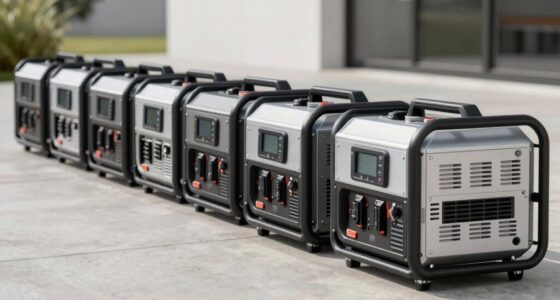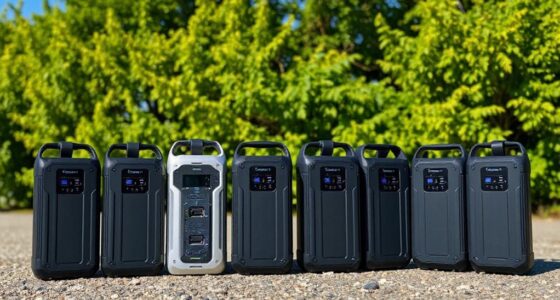
If you’re looking for the best standby generators for small homes in 2026, I recommend the WEN 14,500-Watt Tri-Fuel Generator with Electric Start, the Honeywell 14kW Home Standby Generator with Enclosure, and the Honeywell 22kW model. These options offer reliable power, automatic operation, and flexibility in fuel type. To make the best choice for your home needs and future-proof your setup, there’s more to evaluate—so stay tuned.
Key Takeaways
- Look for generators between 7kW and 15kW with automatic start and transfer switch features suitable for small homes.
- Prioritize models powered by natural gas or propane for convenient, cost-effective fuel options.
- Ensure the generator has automatic operation, including sensors for quick response during power outages.
- Choose units with reliable safety features, easy installation requirements, and manufacturer support for maintenance.
- Consider models with good reviews for durability, efficiency, and compatibility with essential small home appliances.
| WEN 14,500-Watt Tri-Fuel Generator with Electric Start | 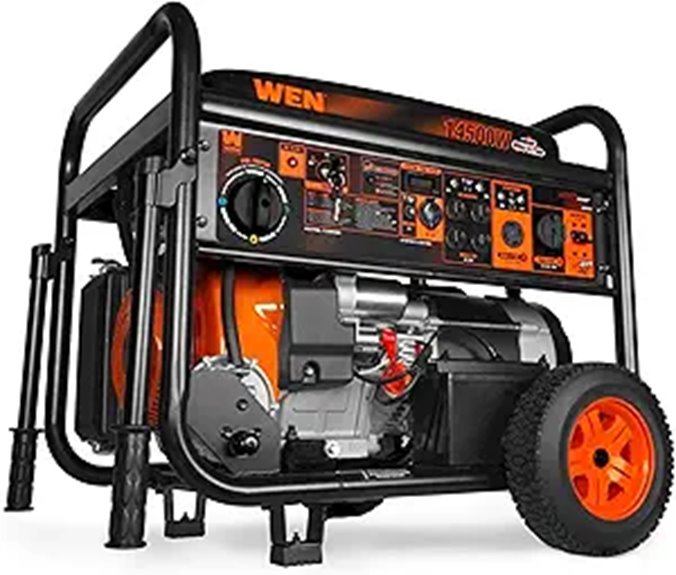 | Versatile Power Solution | Power Output: 14,500 watts (gas), 12,500 watts (propane), 10,500 watts (natural gas) | Fuel Type: Gasoline, Propane, Natural Gas | Automatic Operation: Yes (CO watchdog sensor) | VIEW LATEST PRICE | See Our Full Breakdown |
| Honeywell 14kW Home Standby Generator with Enclosure | 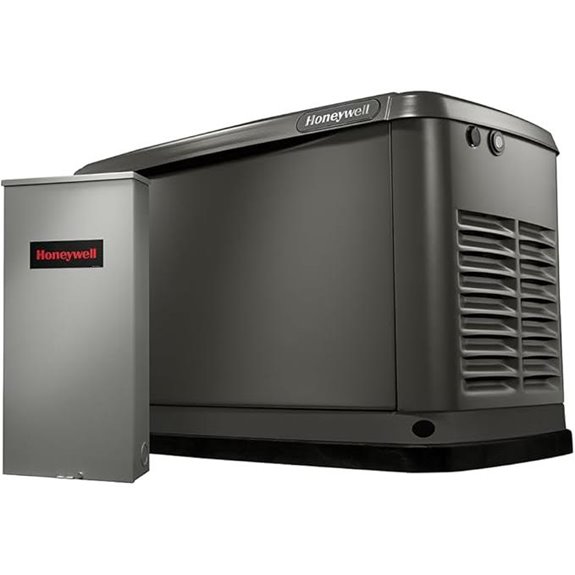 | Easy Install Convenience | Power Output: 14,000 watts (max) | Fuel Type: Natural Gas, Propane | Automatic Operation: Yes (automatic startup/shutdown) | VIEW LATEST PRICE | See Our Full Breakdown |
| Honeywell 14kW Home Standby Generator with Enclosure | | Heavy-Duty Reliability | Power Output: 22,000 watts (max) | Fuel Type: Natural Gas, Propane | Automatic Operation: Yes (automatic startup/shutdown) | VIEW LATEST PRICE | See Our Full Breakdown |

More Details on Our Top Picks
-

Honeywell 14kW Home Standby Generator
PrecisionPower Technology delivers best-in-class power quality with less than 5 percent total harmonic distortion for clean, smooth operation...
As an affiliate, we earn on qualifying purchases.
WEN 14,500-Watt Tri-Fuel Generator with Electric Start
If you’re looking for a versatile generator that can run on multiple fuel sources, the WEN 14,500-Watt Tri-Fuel Generator with Electric Start is an excellent choice for small homes. It supports gasoline, propane, and natural gas, giving you flexibility during outages. The generator has a durable 500cc engine, an 8.2-gallon tank, and can run up to 12 hours at half load. Its electric start makes it easy to operate, while the CO watchdog sensor guarantees safety. With seven outlets, including transfer switch options, it provides reliable power for essential appliances and tools. Its portability features, like wheels and handles, make it convenient to move around.
- Power Output:14,500 watts (gas), 12,500 watts (propane), 10,500 watts (natural gas)
- Fuel Type:Gasoline, Propane, Natural Gas
- Automatic Operation:Yes (CO watchdog sensor)
- Enclosure Material:Not specified (portable)
- Transfer Switch Included:Yes (NEMA transfer switch outlet)
- Warranty Period:3 years
- Additional Feature:Digital data meter display
- Additional Feature:CO watchdog carbon monoxide sensor
- Additional Feature:Includes LPG connection hose
-
Honeywell 22kW Home Standby Generator
PrecisionPower Technology delivers best-in-class power quality with less than 5 percent total harmonic distortion for clean, smooth operation...
As an affiliate, we earn on qualifying purchases.
Honeywell 14kW Home Standby Generator with Enclosure
The Honeywell 14kW Home Standby Generator with Enclosure is an excellent choice for small homes needing reliable, whole-house backup power. It automatically activates within seconds of a power outage, keeping essential circuits running smoothly. With 14,000 watts of power and dual fuel support for natural gas or propane, it offers flexibility and efficiency. The durable aluminum enclosure is weather-resistant, ideal for outdoor installation. The unit features a user-friendly LCD control panel, a 16-circuit transfer switch, and short circuit protection. Weighing around 450 pounds, it’s designed for easy setup, backed by a 3-year warranty, and suited for continuous, reliable home backup.
- Power Output:14,000 watts (max)
- Fuel Type:Natural Gas, Propane
- Automatic Operation:Yes (automatic startup/shutdown)
- Enclosure Material:Aluminum, weather-resistant enclosure
- Transfer Switch Included:Yes (16-circuit transfer switch)
- Warranty Period:3 years
- Additional Feature:Aluminum weather-resistant enclosure
- Additional Feature:16-circuit transfer switch
- Additional Feature:No batteries required
Honeywell 14kW Home Standby Generator with Enclosure
The Honeywell 14kW Home Standby Generator with Enclosure stands out for homeowners seeking reliable, automatic backup power that kicks in within seconds during outages. It offers seamless coverage for essential circuits, whole-house, or full-house needs, ensuring your home stays powered when it matters most. Powered by Generac’s durable G-Force engine, it runs on natural gas or LP fuel, providing up to 22kW of power. The generator features PrecisionPower Technology for clean, stable electricity and a corrosion-resistant RhinoCoat enclosure for durability. With a user-friendly LCD display, automatic transfer switch, and safety shutdowns, it’s designed for easy maintenance and long-term reliability.
- Power Output:22,000 watts (max)
- Fuel Type:Natural Gas, Propane
- Automatic Operation:Yes (automatic startup/shutdown)
- Enclosure Material:Aluminum, weather-resistant enclosure
- Transfer Switch Included:Yes (whole-house transfer switch)
- Warranty Period:3 years
- Additional Feature:Quiet-Test self-test mode
- Additional Feature:All-weather RhinoCoat enclosure
- Additional Feature:Multilingual LCD control panel
Factors to Consider When Choosing a Standby Generator for a Small Home
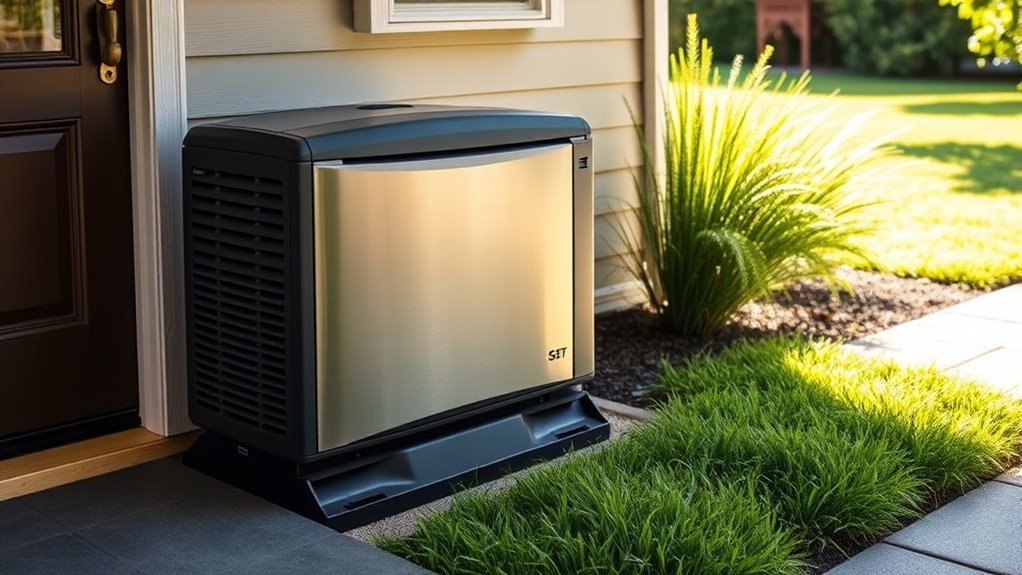
When selecting a standby generator for a small home, I consider several key factors to guarantee I get the right fit. I look at power capacity needs, fuel options, and whether automatic operation makes sense for my lifestyle. Additionally, installation, maintenance, and support are vital to keep everything running smoothly.
Power Capacity Needs
Selecting the right standby generator for a small home starts with understanding your power capacity needs. I recommend calculating the total wattage of your essential appliances and systems to guarantee the generator’s capacity exceeds their combined load. Remember, motor-driven devices have a higher starting wattage than their running wattage, so factor that in. For most small homes, a generator between 7kW and 15kW is sufficient to power basic circuits and appliances. It’s also important to match the generator’s surge and rated wattage to your home’s peak demand to avoid overloads or insufficient power. Additionally, consider future needs or potential additional appliances; choosing a slightly higher capacity generator assures you won’t outgrow your system anytime soon.
Fuel Type Options
Choosing the right fuel type for your standby generator depends on several practical factors. Natural gas is convenient since it connects directly to your home’s existing gas line, ensuring a continuous supply and lower operational costs. Propane, on the other hand, requires an external tank and is often preferred in rural areas where natural gas isn’t available. It’s a reliable option if you want a backup fuel source. Dual fuel generators give you flexibility, allowing you to switch between natural gas and propane based on availability or cost. Keep in mind that each fuel type impacts installation complexity and ongoing expenses. Consider your local fuel availability, your home’s infrastructure, and your budget to choose the most suitable option for your needs.
Automatic Operation Features
Automatic operation features are essential for ensuring your small home stays powered during outages without manual effort. These generators detect power loss with built-in sensors and start up within seconds, providing quick backup when needed. An automatic transfer switch works seamlessly, switching the power source from utility to generator and back, ensuring your essential circuits stay active. Safety features like automatic shutdown and carbon monoxide detection improve security during unattended operation. Many reliable models also include diagnostic tools and status indicators, giving you real-time updates on the generator’s health and performance. With these features, you can trust that your generator will respond promptly and operate safely, providing peace of mind during emergencies without requiring manual intervention.
Installation Requirements
When installing a standby generator for your small home, proper site preparation is essential to guarantee safety and stability. You’ll need a reinforced concrete pad or a sturdy mounting surface to support the generator’s weight and prevent shifting. Electrical connections must meet local codes and usually require a transfer switch, ensuring safe integration with your home’s electrical system. Ventilation is critical—install the generator outdoors in a well-ventilated area, away from windows and vents, to prevent dangerous carbon monoxide buildup. Professional installation is highly recommended to guarantee correct wiring, grounding, and adherence to safety standards. Additionally, some models may need permits or inspections from local authorities to comply with building and safety regulations. Planning thoroughly helps ensure a safe, efficient setup.
Maintenance and Support
Ensuring your standby generator stays reliable over time requires regular maintenance and good support from the manufacturer. Routine tasks like oil changes and filter replacements are essential to keep the unit running smoothly during outages. Many generators feature automatic diagnostic systems that alert you to maintenance needs through digital displays or alarms, making upkeep more straightforward. Support services, including warranties and accessible customer service, help you troubleshoot issues quickly and minimize repair delays. Proper installation by qualified professionals ensures the generator functions correctly and meets safety standards. Additionally, periodic professional inspections and load bank testing verify the generator’s readiness and extend its lifespan. Prioritizing these maintenance and support factors guarantees your small home’s backup power remains dependable when you need it most.
Frequently Asked Questions
What Is the Average Lifespan of Small Home Standby Generators?
The average lifespan of small home standby generators is around 10 to 15 years. I’ve found that with proper maintenance, like regular oil changes and filter replacements, these generators can last even longer. It’s important to follow the manufacturer’s guidelines and schedule routine inspections. Investing in quality and staying on top of upkeep guarantees your generator will serve you well during power outages and last for many years.
How Noisy Are These Generators During Operation?
These generators are generally quite quiet during operation, usually producing around 50 to 70 decibels, comparable to normal conversation or background noise. I’ve found that modern models incorporate soundproofing and mufflers to reduce noise levels markedly. When I installed mine, I was pleased with how discreet it is, so it doesn’t disturb my household or neighbors. If noise is a concern, I recommend choosing a unit with noise-reduction features.
Do These Generators Require Professional Installation?
Yes, these generators typically require professional installation to guarantee they’re set up safely and correctly. I recommend hiring a qualified electrician or technician because they know the local codes and proper procedures. Proper installation not only guarantees peak performance but also keeps your home safe. While it might seem convenient to do it yourself, professional help is the best way to avoid issues down the line and get peace of mind.
Are There Eco-Friendly Standby Generator Options Available?
Think of eco-friendly standby generators as gentle giants that power your home without harming the planet. Yes, there are options like solar hybrid generators and models with lower emissions that are better for the environment. I’ve found these eco-friendly choices to be reliable and quiet, making them perfect for small homes. They help you stay powered up while keeping your carbon footprint light, like a fresh breeze.
What Maintenance Is Needed to Ensure Reliable Operation?
To keep your standby generator reliable, I recommend regular maintenance like checking oil levels, replacing filters, and inspecting the spark plugs every few months. I also make sure the battery stays charged and run the generator under load annually to spot issues early. Cleaning the unit and keeping it free of debris is essential. Finally, follow the manufacturer’s maintenance schedule closely to prevent breakdowns and extend your generator’s lifespan.
Conclusion
So there you have it—your tiny fortress of power in a world gone dark. Whether you choose the tri-fuel wonder, the sleek Honeywell enclosure, or the powerhouse 22kW, just remember, these generators are basically your new best friends—until they decide to take a nap. Invest wisely, and you’ll never have to endure another blackout wondering if your fridge is auditioning for “The Walking Dead.” Power up, and let the apocalypse wait!