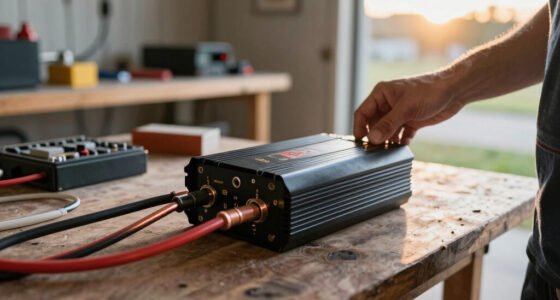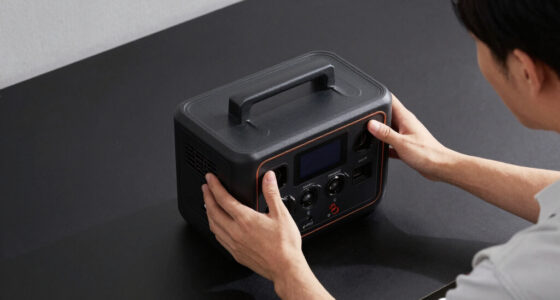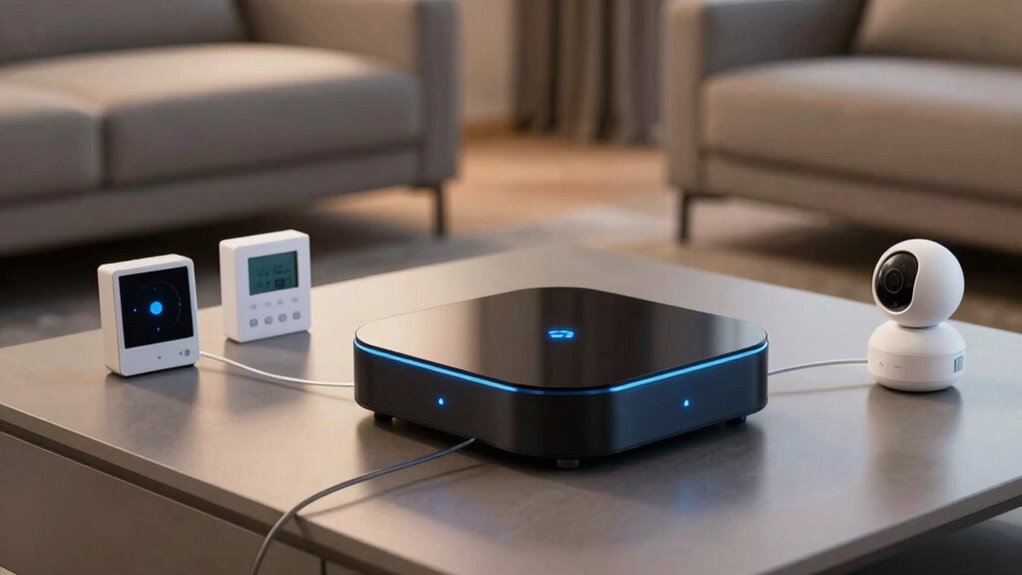

Choosing a smart home hub for reliability means prioritizing consistent performance, local control, and broad device compatibility. The Hubitat Elevation C-8 Pro stands out for its robust local automation, while the Home Assistant Green offers advanced customization for tech-savvy users. Most options balance cloud connectivity with local control, but tradeoffs include complexity versus ease of use. Continue reading for a detailed comparison to find the best fit for your smart home needs.
Get ready for Prime Big Deal Days — try Prime free
Exclusive member deals on October 6–7, plus fast free delivery. Cancel anytime.
Start your free trialAs an affiliate, we earn on qualifying purchases.
Key Takeaways
- Local control capabilities are central to reliability, with products like amazon.com/dp/B0CR4G1G8M?tag=wattreserve-20&ascsubtag=dc-941521″ target=”_blank” rel=”nofollow sponsored noopener”>Hubitat Elevation leading the way.
- Compatibility with multiple protocols (Z-Wave, Zigbee, Matter) enhances system stability and device flexibility.
- User-friendly interfaces vary; simpler hubs favor ease of setup, while advanced options offer greater customization.
- Price often correlates with features—premium hubs provide more reliable automation but at higher costs.
- A mix of cloud and local control balances convenience with resilience—look for hubs that prioritize local automation for maximum reliability.
| Tapo Smart Hub with Built-in Chime, H200, 2.4GHz Wi-Fi Required |  | Best for Simplicity and Local Alerts | Device Capacity: Up to 64 devices + 4 cameras | Connectivity: 2.4GHz Wi-Fi | MicroSD Storage: Up to 512 GB (sold separately) | VIEW ON AMAZON | See Our Full Breakdown |
| Hubitat Elevation C-8 Pro Smart Home Hub, Local Control and Automations |  | Best for Power Users and Custom Automations | Product Dimensions: 2.95 x 3.23 x 0.67 inches | Item Weight: 2.56 ounces | Processor: 2.0 GHz | VIEW ON AMAZON | See Our Full Breakdown |
| Linkind Matter Smart Hub 2 with Real-Time Battery & Energy Tracking |  | Best for Outdoor Lighting and Energy Monitoring | Operation Mode: Wired | Power Current Rating: 1 A | Operating Voltage: 240 volts | VIEW ON AMAZON | See Our Full Breakdown |
| Aeotec Smart Home Hub, Z-Wave, Zigbee, Matter Gateway, Compatible with Alexa and Google Assistant |  | Best for Protocol Compatibility and Broad Device Support | Connectivity: Wi-Fi or Ethernet | Protocols: Z-Wave, Zigbee, Matter, Wi-Fi | Compatibility: Alexa, Google Assistant, SmartThings | VIEW ON AMAZON | See Our Full Breakdown |
| Homey Pro (Early 2023) | Smart Home Hub for Home Automation |  | Best for Extensive Protocol Support and Large Device Ecosystems | Product Dimensions: 5.04 x 5.04 x 1.57 inches | Item Weight: 1.43 pounds | ASIN: B0C5RFQNN4 | VIEW ON AMAZON | See Our Full Breakdown |
| Aqara Smart Hub M100 for Home Automation, Matter Controller, Wi-Fi |  | Best Overall for Versatility and Local Reliability | Protocols: Zigbee, Thread, Wi-Fi 6 | Supported Devices: Up to 20 Zigbee and 20 Thread devices | Wi-Fi Band: 2.4 GHz | VIEW ON AMAZON | See Our Full Breakdown |
| Aqara Smart Home Hub M3 with Matter Controller and IR |  | Best for Privacy and Versatile Placement | Protocols Supported: Zigbee, Thread, Matter | Device Capacity: 127 Zigbee and 127 Thread devices | Connectivity: Wi-Fi 2.4/5 GHz, PoE, USB-C | VIEW ON AMAZON | See Our Full Breakdown |
| Amazon Echo Hub (newest model), 8″ Smart Home Control Panel with Alexa+ |  | Best for User-Friendly Control and Ecosystem Integration | Display Size: 8 inches | Compatibility: Alexa, Ring, Zigbee, Matter, Thread | Control Features: Customizable dashboard, routines, voice control | VIEW ON AMAZON | See Our Full Breakdown |
| Aqara Smart Hub M200, Matter Controller with Zigbee, Wi-Fi, IR, PoE |  | Best for Advanced Protocol Support and Wired Flexibility | Protocols Supported: Zigbee, Thread, Wi-Fi, IR, Matter | Device Capacity: 40 Zigbee and 40 Thread devices | Connectivity: Wi-Fi 2.4/5 GHz, PoE, USB-C | VIEW ON AMAZON | See Our Full Breakdown |
| Home Assistant Green – Official Smart Home Hub with Advanced Automation |  | Best for Customization and Reliable Automation | RAM: 4 GB | Storage Capacity: 32 GB | Connectivity Technology: Ethernet, USB | VIEW ON AMAZON | See Our Full Breakdown |
| smart home hub for reliability | Connectivity |
|---|---|
| Tapo Smart Hub with Built-in C | 2.4GHz Wi-Fi |
| Hubitat Elevation C-8 Pro Smar | Wi-Fi, Ethernet |
| Linkind Matter Smart Hub 2 wit | — |
| Aeotec Smart Home Hub | Wi-Fi or Ethernet |
| Homey Pro | — |
| Aqara Smart Hub M100 for Home | — |
| Aqara Smart Home Hub M3 with M | Wi-Fi 2.4/5 GHz, PoE, USB-C |
| Amazon Echo Hub | — |
| Aqara Smart Hub M200 | Wi-Fi 2.4/5 GHz, PoE, USB-C |
| Home Assistant Green | — |
More Details on Our Top Picks
Tapo Smart Hub with Built-in Chime, H200, 2.4GHz Wi-Fi Required
The Tapo H200 excels in creating a straightforward, reliable smart home setup with a large capacity for devices. Its built-in chime enhances security by providing instant alerts, making it a strong choice for those prioritizing immediate notifications. Compared with the Hubitat Elevation C-8 Pro, it is easier to set up but offers fewer protocols—limited mostly to Tapo devices and Alexa/Google integrations. Its reliance on 2.4GHz Wi-Fi and the need for a microSD card (sold separately) are notable tradeoffs, potentially limiting flexibility in more complex or tech-savvy homes. This pick makes the most sense for homeowners who want a simple, integrated hub with local alert features without extensive protocol support.Pros:- Supports up to 64 devices plus 4 cameras for comprehensive coverage
- Built-in chime improves security notifications
- Supports local storage for recorded videos
Cons:- Requires 2.4GHz Wi-Fi network, limiting flexibility in mixed networks
- MicroSD card sold separately, adding to cost
- Limited to specific Tapo device compatibility for full features
Best for: Homeowners seeking a plug-and-play hub for a large number of Tapo devices and security alerts.
Not ideal for: Advanced users needing multi-protocol support or local automations without Wi-Fi dependency.
- Device Capacity:Up to 64 devices + 4 cameras
- Connectivity:2.4GHz Wi-Fi
- MicroSD Storage:Up to 512 GB (sold separately)
- Power Protocol:Low-power wireless
- Compatibility:Tapo C420, C400, D230, Alexa, Google Home
Our verdict“A reliable, simple hub ideal for users who want straightforward device management and alerting within a Tapo ecosystem.”
Hubitat Elevation C-8 Pro Smart Home Hub, Local Control and Automations
The Hubitat Elevation C-8 Pro stands out for processing automations locally, offering rapid responses and enhanced privacy—significantly outperforming cloud-dependent hubs like the Homey Pro in responsiveness. Its support for multiple protocols including Z-Wave, Zigbee, Matter, and Bluetooth makes it highly adaptable for complex, multi-device setups. Compared with the Aeotec Hub, it provides broader protocol support and local control, but requires more technical setup and has no built-in battery backup, making it less ideal for those uncomfortable with network configurations. This device is ideal for tech-savvy homeowners who value privacy, fast automations, and protocol flexibility.Pros:- Processes automations locally for quick responses and enhanced privacy
- Supports multiple protocols including Z-Wave, Zigbee, Matter, and Bluetooth
- Compatible with major ecosystems like Alexa, Google, and Apple HomeKit
- Receives ongoing free updates expanding device support
Cons:- Setup can be complex for less experienced users
- No built-in battery backup, depends on constant power
- Advanced features may require detailed configuration
Best for: Homeowners comfortable with technical setup seeking a highly customizable, fast, and privacy-focused automation hub.
Not ideal for: Users who prefer plug-and-play solutions or have limited technical expertise.
- Product Dimensions:2.95 x 3.23 x 0.67 inches
- Item Weight:2.56 ounces
- Processor:2.0 GHz
- RAM:2 GB
- Connectivity:Wi-Fi, Ethernet
- Protocols Supported:Z-Wave 800 Series, Zigbee 3.0, Matter 1.5, Bluetooth
Our verdict“A top choice for those who prioritize automation speed, privacy, and protocol versatility over ease of setup.”
Linkind Matter Smart Hub 2 with Real-Time Battery & Energy Tracking
The Linkind Matter Smart Hub 2 offers a specialized solution for outdoor lighting, with the ability to connect up to 200 lights and monitor energy use in real-time—making it ideal for large outdoor setups. Its support for multiple platforms like Alexa, Google, and Apple enhances versatility, but its focus on outdoor lighting limits its use for indoor automation. Compared with the Homey Pro, it is more streamlined for outdoor control but offers less overall protocol support and automation complexity. Its setup complexity and Wi-Fi dependency are tradeoffs for its outdoor-focused automation features. This hub makes sense for homeowners with extensive outdoor lighting needs seeking energy monitoring and straightforward control.Pros:- Supports connection of up to 200 outdoor lights
- Real-time battery and energy usage tracking
- Compatible with multiple smart platforms for flexible control
- Supports automation and scheduling for outdoor spaces
Cons:- Limited to outdoor lighting control only
- Requires 2.4GHz Wi-Fi, which may limit network flexibility
- Setup can be complex for non-technical users
Best for: Homeowners managing large outdoor lighting arrays and energy usage who need simple, reliable control.
Not ideal for: Indoor-focused automations or users seeking multi-protocol indoor hubs.
- Operation Mode:Wired
- Power Current Rating:1 A
- Operating Voltage:240 volts
- Contact Type:Normally Open
- Connectivity Protocol:Bluetooth, Matter, Wi-Fi
- Wattage:5 watts
Our verdict“An excellent outdoor lighting hub with energy insights, best suited for large outdoor spaces and lighting automation.”
Aeotec Smart Home Hub, Z-Wave, Zigbee, Matter Gateway, Compatible with Alexa and Google Assistant
The Aeotec Smart Home Hub offers extensive protocol support, including Z-Wave, Zigbee, and Matter, making it highly versatile for integrating a wide range of devices. Its simple setup via app and support for local automations deliver reliable performance, comparable to the Homey Pro but with a focus on North American markets and fewer advanced automation features. Unlike the Hubitat C-8 Pro, it emphasizes broad compatibility over protocol diversity, but might require an additional hub for full service in some regions. Its reliance on Wi-Fi or Ethernet for connectivity is a plus, but regional support limitations are a consideration. This hub is ideal for users who want a straightforward, multi-protocol gateway that works with most popular ecosystems.Pros:- Supports multiple protocols including Z-Wave, Zigbee, and Matter
- Easy setup via app with Wi-Fi or Ethernet
- Automations run locally for responsiveness
- Compatible with Alexa, Google, and SmartThings
Cons:- Designed primarily for North American markets, limited regional support
- Requires a compatible hub or ecosystem for full features
- Less focused on advanced automations or device customization
Best for: Homeowners needing broad device compatibility and straightforward setup within North America.
Not ideal for: International users or those seeking advanced automations beyond basic device control.
- Connectivity:Wi-Fi or Ethernet
- Protocols:Z-Wave, Zigbee, Matter, Wi-Fi
- Compatibility:Alexa, Google Assistant, SmartThings
- Model:V3 (Z-Wave Plus)
Our verdict“A reliable, multi-protocol gateway suited for users who want broad device support with simple integration in North America.”
Homey Pro (Early 2023) | Smart Home Hub for Home Automation
The Homey Pro stands out for supporting an incredible range of protocols—Z-Wave Plus, Zigbee, Wi-Fi, BLE, Infrared, Matter, and Thread—making it suitable for very large, diverse smart homes. Its local processing capability offers a high level of privacy and responsiveness, while compatibility with over 50,000 brands ensures you can connect nearly any device. However, its moderate customer ratings and complex setup may deter less experienced users, and limited support information raises questions about ongoing service. Compared with the Hubitat Elevation, it offers broader device support but at the cost of complexity. This hub fits best for users with large, varied device inventories who need a centralized, privacy-conscious control point.Pros:- Supports Z-Wave Plus, Zigbee, Wi-Fi, BLE, Infrared, Matter, and Thread
- Local processing enhances privacy and reduces cloud reliance
- Compatible with over 50,000 devices across many brands
- Enables comprehensive automation and remote control
Cons:- Customer ratings are moderate, indicating mixed user experiences
- Setup and configuration can be complex and time-consuming
- Limited information on customer support and warranty
Best for: Tech-savvy users with extensive device collections seeking a highly compatible, privacy-focused hub.
Not ideal for: Beginners or those wanting a simple, straightforward setup without extensive customization.
- Product Dimensions:5.04 x 5.04 x 1.57 inches
- Item Weight:1.43 pounds
- ASIN:B0C5RFQNN4
- Item Model Number:HOMEY-PRO-US-03
Our verdict“A powerful, highly versatile hub designed for large, diverse smart homes willing to handle a more complex setup process.”
Aqara Smart Hub M100 for Home Automation, Matter Controller, Wi-Fi
The Aqara Smart Hub M100 stands out for supporting Zigbee, Thread, and Wi-Fi 6, making it highly adaptable for various device ecosystems. Unlike the Home Assistant Green, which is more focused on automation and customization, the M100 offers strong local automation capabilities that keep your smart home functional even during internet outages. Its support for multiple protocols means fewer compatibility headaches, but it’s limited to Aqara Zigbee devices, unlike hubs like the Aqara M3, which support more protocols natively. The need for a separate power adapter and the reliance on cloud for some automation features are tradeoffs for its versatile connectivity. This hub is ideal for users seeking a reliable, multi-protocol solution that integrates well with existing ecosystems.
Pros:- Supports Zigbee, Thread, and Wi-Fi 6 for broad device compatibility
- Enables local automation even without internet connection
- Flexible placement with adjustable design and power options
Cons:- Requires a separate 5V⎓0.5A power adapter, not included
- Limited to Aqara Zigbee devices, restricting third-party Zigbee device support
- Some automation features depend on cloud connectivity, which could reduce reliability
Best for: Homeowners who want a flexible, multi-protocol hub that prioritizes local automation and compatibility with Aqara devices.
Not ideal for: Users looking for a hub that supports a broad range of third-party Zigbee devices or prefer plug-and-play simplicity without protocol limitations.
- Protocols:Zigbee, Thread, Wi-Fi 6
- Supported Devices:Up to 20 Zigbee and 20 Thread devices
- Wi-Fi Band:2.4 GHz
- Security Protocol:WPA3
- Control Method:App Control
- Connectivity Range:1500-2000 sq ft
Our verdict“This pick is best for users seeking a multi-protocol hub that emphasizes local performance and ecosystem integration.”
Aqara Smart Home Hub M3 with Matter Controller and IR
The Aqara M3 excels in supporting Zigbee, Thread, and Matter, making it a flexible choice for future-proof smart homes. Compared with the Aqara M100, it offers a higher device capacity and the addition of a smart IR blaster, broadening control options for traditional appliances. Its local automation focus ensures privacy and reduces dependence on cloud services, but it requires an external power adapter, which adds to setup complexity. The IR blaster’s effectiveness can vary based on device compatibility, and optimal placement needs to be maintained at a specific distance from the router. This hub makes the most sense for users who want a scalable, privacy-conscious solution with integrated IR control.
Pros:- Supports Zigbee, Thread, and Matter for broad device compatibility
- Prioritizes local automation for enhanced privacy and reliability
- Includes a 360° IR blaster for controlling traditional appliances
Cons:- Requires an external power adapter, not included
- IR functionality may vary depending on device compatibility
- Placement distance from router should be maintained for optimal performance
Best for: Tech-savvy homeowners seeking a multi-protocol hub with IR control and flexible installation options.
Not ideal for: Users who prefer a straightforward, plug-and-play device without the need for external power or IR features.
- Protocols Supported:Zigbee, Thread, Matter
- Device Capacity:127 Zigbee and 127 Thread devices
- Connectivity:Wi-Fi 2.4/5 GHz, PoE, USB-C
- Storage:8GB encrypted local storage
- IR Blaster:360° with feedback and learning
Our verdict“Ideal for users wanting a privacy-focused, multi-protocol hub with IR control and flexible installation options.”
Amazon Echo Hub (newest model), 8″ Smart Home Control Panel with Alexa+
The Echo Hub offers an accessible, touchscreen control panel with an 8-inch display, making daily management straightforward. Its compatibility with Alexa, Ring, Zigbee, and Matter broadens device support, but it’s less focused on local automation compared to hubs like the Aqara M3 or M200. This device excels in ease of use and seamless voice control, yet it requires additional accessories like a stand or mounting kit, and some features hinge on Ring subscriptions. Power-over-Ethernet is sold separately, adding to the setup cost. It’s best suited for households that prioritize visual control and integration with Amazon’s ecosystem, rather than complex automation or protocol flexibility.
Pros:- Large, user-friendly touchscreen with customizable dashboard
- Compatible with a wide range of smart home devices including Ring and Zigbee
- Built-in privacy controls with mic off button and security features
Cons:- Requires separate purchase for stand or mounting accessories
- Some features depend on Ring subscription plans
- Power-over-ethernet adapter sold separately, increasing setup complexity
Best for: Homeowners seeking an intuitive, visually accessible control surface with broad device compatibility and Amazon ecosystem integration.
Not ideal for: Power users wanting advanced local automation or protocol support without reliance on subscription services or extra accessories.
- Display Size:8 inches
- Compatibility:Alexa, Ring, Zigbee, Matter, Thread
- Control Features:Customizable dashboard, routines, voice control
- Privacy:Mic off button, security features
- Materials:27% recycled materials
Our verdict“Perfect for users who want a simple, visually engaging control panel that integrates easily with Amazon’s ecosystem.”
Aqara Smart Hub M200, Matter Controller with Zigbee, Wi-Fi, IR, PoE
The Aqara M200 supports Zigbee, Thread, Wi-Fi, IR, and Matter, making it highly capable for future-proofing a smart home. Compared with the M3, it emphasizes wired connectivity with PoE and USB-C, ideal for installations where reliability is paramount. Its built-in IR blaster adds remote control functionalities for appliances, but only one AC device can be managed via Matter through IR, which could limit its automation scope. The device’s support for multiple protocols and PoE power makes it suitable for technical setups, but the need for an external power source and reliance on cloud for some automation features are potential drawbacks. This hub is best for advanced users who desire maximum protocol support with wired installation options.
Pros:- Supports Zigbee, Thread, Wi-Fi, IR, and Matter for maximum protocol compatibility
- Includes PoE and USB-C for flexible wired installation
- Built-in IR blaster for controlling remote appliances
Cons:- Only one AC device can be exposed to Matter via IR, limiting automation scope
- Power adapter not included, requiring additional purchase
- Some automation features depend on cloud connectivity for full functionality
Best for: Tech-savvy homeowners wanting a multi-protocol hub with wired power and IR remote control capabilities.
Not ideal for: Casual users seeking a plug-and-play experience or those with fewer wired installation options.
- Protocols Supported:Zigbee, Thread, Wi-Fi, IR, Matter
- Device Capacity:40 Zigbee and 40 Thread devices
- Connectivity:Wi-Fi 2.4/5 GHz, PoE, USB-C
- Features:Matter Controller, Thread Border Router, IR Blaster
- Power:PoE support, USB-C port
Our verdict“Designed for advanced users who need a highly versatile, wired-capable hub with extensive protocol support.”
Home Assistant Green – Official Smart Home Hub with Advanced Automation
The Home Assistant Green delivers an open-source, highly customizable experience with a focus on automation reliability. Unlike the proprietary Aqara hubs, it runs Home Assistant OS, offering extensive integration options, including Z-Wave, Zigbee, and Thread via USB. Its fanless design means silent operation, and its powerful processor ensures smooth automation processing. However, its setup is more involved, requiring Ethernet or USB expansion for additional connectivity. While it doesn’t support native protocols like IR or Wi-Fi directly, its compatibility with USB-connected devices broadens its scope. This hub suits users who want a reliable, customizable solution with a strong emphasis on automation control and updates, rather than out-of-the-box simplicity.
Pros:- Official hardware supported by Nabu Casa ensures consistent updates
- Silent, energy-efficient, fanless design
- Supports multiple connectivity options including Z-Wave, Zigbee, and Thread
Cons:- Requires Ethernet or USB expansion for full connectivity
- Limited to home automation, not suitable for non-smart home tasks
- Initial setup complexity compared to proprietary hubs
Best for: DIY enthusiasts and advanced users seeking a flexible, reliable automation hub with extensive protocol support.
Not ideal for: Casual users or those desiring an all-in-one, plug-and-play hub with minimal setup effort.
- RAM:4 GB
- Storage Capacity:32 GB
- Connectivity Technology:Ethernet, USB
- Operating System:Home Assistant OS
- Compatible Devices:Smart Home Devices
Our verdict“Ideal for users who want a customizable, reliable automation hub with comprehensive protocol support and open-source flexibility.”
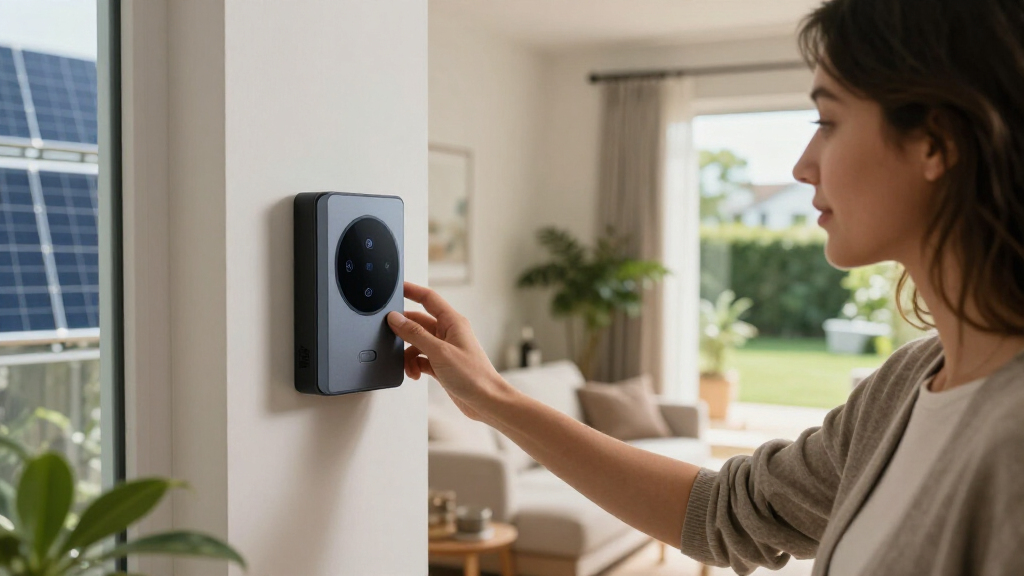
How We Picked
We evaluated these smart home hubs based on their ability to deliver consistent, reliable performance with minimal downtime. Factors such as local control support, protocol compatibility, user interface, community support, and ease of integration were key. Price was considered in relation to features, ensuring options cater to different budgets without sacrificing core reliability. Rankings favor hubs that excel in maintaining stable automation even during internet outages, making them suitable for users who prioritize dependability over bells and whistles.Factors to Consider When Choosing Smart Home Hub For Reliability
When selecting a smart home hub focused on reliability, it’s vital to consider several core factors that influence long-term performance and stability. The right hub should seamlessly connect your devices, operate without constant cloud dependence, and support ongoing updates. Understanding these factors helps avoid common pitfalls like compatibility issues or frequent failures that undermine trust in your automation system.Local Control and Automation
Reliability hinges on a hub’s ability to operate independently of the internet. Local control means your automations run on the hub itself, reducing delays and failures if your Wi-Fi or cloud services go down. Look for hubs that emphasize local processing, especially if your home automation depends heavily on consistent performance. This feature ensures your system remains functional even during internet outages, which is critical for security and daily routines.
Protocol Compatibility and Device Support
A reliable hub should support multiple protocols like Z-Wave, Zigbee, and Matter, as this broad compatibility prevents device lock-in and enhances stability. Some hubs, such as the Aeotec Smart Home Hub, act as gateways for various protocols, minimizing communication failures. Avoid hubs with limited protocol support, as they may cause connectivity issues or require additional hardware, complicating your setup and risking system unreliability.
Ease of Use vs. Advanced Features
While simple interfaces appeal to beginners, more advanced users benefit from customizable automations and scripting. The tradeoff is that complex hubs might require a learning curve, which can lead to configuration errors if not handled carefully. Conversely, overly simplified hubs might lack the depth needed for complex scenarios. Assess your comfort level and select a hub that offers a balance between straightforward operation and advanced capabilities for future growth.
Firmware Updates and Community Support
Reliable hubs receive regular firmware updates that patch bugs, improve security, and expand features. A strong user community can also be a valuable resource for troubleshooting and custom automations, contributing to long-term dependability. Check how actively the manufacturer maintains the firmware and whether the user community is vibrant, as this can significantly influence your system’s stability over time.
Price and Future Scalability
Higher-priced hubs often deliver better reliability with more robust hardware, extensive protocol support, and ongoing updates. However, they might be overkill for simple setups. Conversely, budget options can suffice for basic automations but may lack advanced features or stability needed for larger systems. Consider your current needs and future expansion plans to select a hub that offers the best value without compromising reliability down the line.
Frequently Asked Questions
Can a smart home hub work without an internet connection?
Yes, many reliable hubs support local control, allowing automations and device management without internet. This is especially important if you experience frequent outages or want your system to operate independently of cloud services. Hubs like Hubitat Elevation excel in this area, providing consistent performance even offline, which ensures your home remains automated and secure at all times.
What is the most compatible protocol for a reliable smart home hub?
Protocols like Z-Wave and Zigbee are widely supported and known for their reliability due to dedicated mesh networks that minimize interference. Many hubs support both, offering flexibility and stability. Choosing a hub with multi-protocol support, such as the Aeotec or Aqara models, ensures your devices communicate smoothly and reduces the risk of connectivity failures, making your automation system more dependable.
Should I pay more for a premium smart home hub?
Investing in a premium hub often means better hardware, more robust local control, and longer-term support, all of which contribute to greater reliability. However, for simple setups, a mid-range or budget hub might suffice without sacrificing core performance. Assess your automation complexity and future plans—spending more can be worthwhile if you want a system that stays stable as your smart home grows.
Is a hub with cloud control less reliable than one with local automation?
Generally, hubs that prioritize local control tend to be more reliable because they aren’t dependent on internet connectivity for automations to run. Cloud-dependent hubs may experience delays or failures during internet outages, which can disrupt your routines. For maximum reliability, choose a hub with strong local automation capabilities, ensuring your system functions smoothly regardless of network issues.
How often should I update my smart home hub’s firmware?
Regular firmware updates are vital for maintaining reliability, security, and compatibility. Most manufacturers release updates periodically, addressing bugs and improving stability. Setting your hub to update automatically or checking for updates monthly can help prevent issues caused by outdated software, keeping your automation system dependable over time.
Conclusion
For most users prioritizing overall reliability, the Hubitat Elevation C-8 Pro offers a compelling balance of local control and broad device support, making it the best overall choice. Those seeking the best value might opt for the Aqara Smart Hub M200, which combines reliable performance with affordability. If budget isn’t a concern and you want advanced customization, the Home Assistant Green provides extensive flexibility. Beginners or casual users should consider user-friendly options like the Amazon Echo Hub, while tech enthusiasts aiming for maximum control will find the Homey Pro or Home Assistant Green ideal. Tailor your choice to your specific automation needs and comfort level with technical setup to ensure dependable smart home performance in 2026.
Fall Picks
fall essentials
As an affiliate, we earn on qualifying purchases.