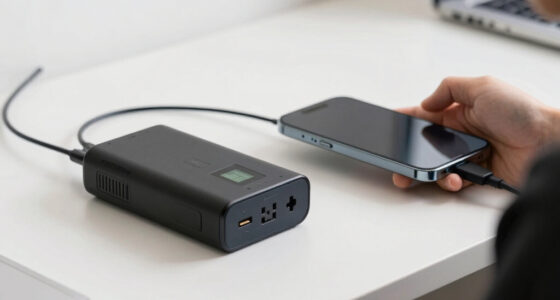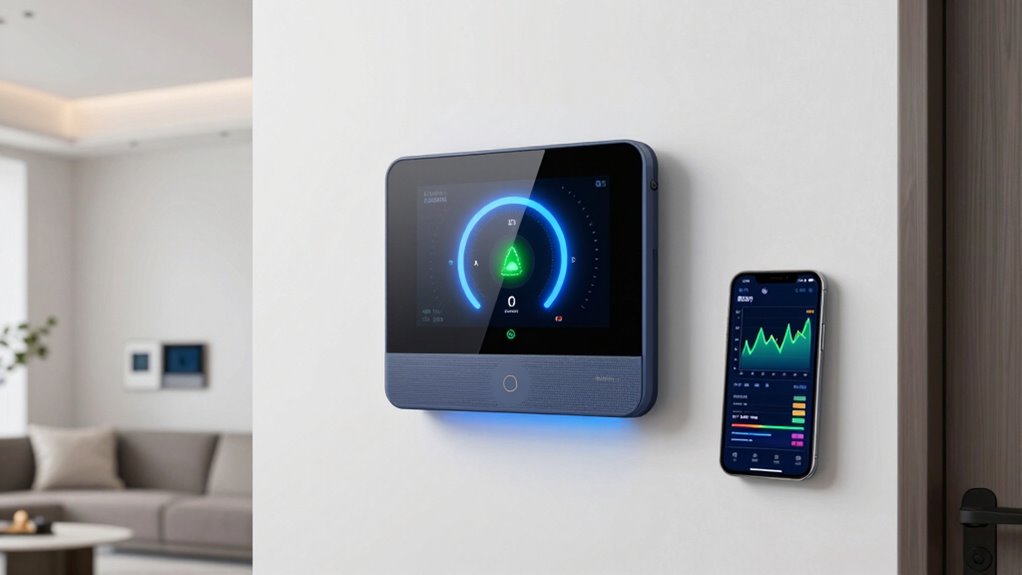

Searching for a smart home energy monitor in 2026? The SIEMENS Inhab Smart Home Energy Monitor stands out as the best overall pick thanks to its comprehensive circuit-level sensing. For those wanting a budget-friendly option, the Refoss Smart Home Energy Monitor offers great features without a hefty price tag. Meanwhile, the Emporia Vue 3 excels in real-time data and automation integration, ideal for tech-savvy homeowners. The main tradeoffs in this category often boil down to complexity versus ease of use, and price versus feature set. Continue reading for a detailed breakdown of each option and find the perfect fit for your smart home.

Get backup power and energy gear delivered free with Prime
- Fast, free delivery on millions of items
- Prime Video, Amazon Music and more included
- Member-only deals all year
Key Takeaways
- Top picks balance comprehensive circuit monitoring with ease of setup and use
- Higher-priced models often include more advanced automation features and real-time data
- Open API and local control are key considerations for privacy-focused users
- Many monitors struggle with false positives or data inaccuracies if not installed correctly
- Choosing between single and multi-channel monitors depends on your home’s complexity and energy goals
| SIEMENS Inhab Smart Home Energy Monitor with Circuit Level Sensors |  | Best Overall for Detailed Circuit-Level Monitoring | Circuit Sensors: 16-50Amp | Main Sensors: 2 x 200Amp | Compatibility: USA and Canada | VIEW ON AMAZON | See Our Full Breakdown |
| Leviton LWHEM-2R Whole Home Energy Monitor with CTs |  | Best for Whole-Home Monitoring & Smart Control | Model: LWHEM-2R | Connectivity: Wi-Fi | Inputs: Up to 3 pairs of LSMMA CTs | VIEW ON AMAZON | See Our Full Breakdown |
| WiFi Home Energy Monitor with 2 x 120A CTs and Power Tracking |  | Best for Solar & Battery Systems with Precise Power Tracking | Power Source: Battery Powered | Compatible Devices: Smartphone Control | WiFi Frequency: 2.4 GHz | VIEW ON AMAZON | See Our Full Breakdown |
| Smart Home Energy Monitor with 16 50A Circuit Sensors, Real-Time Power Usage & Cost Tracking |  | Best for Circuit-Level Monitoring & Cost Management | Sensor Count: 16 | Sensor Current: 50A | Supported Voltages: 120VAC, 240VAC, 415Y/240VAC | VIEW ON AMAZON | See Our Full Breakdown |
| WiFi Home Energy Monitor with 3 80A CT Clamps |  | Best for Multi-Circuit Monitoring & Safety Alerts | Input Voltage: 100–240V AC | Number of CT Clamps: 3 | Clamp Current: 80A each | VIEW ON AMAZON | See Our Full Breakdown |
| Emporia Vue 3 Home Energy Monitor – Smart Home Automation Module and Real-Time Electricity Usage Monitor |  | Best Overall for Comprehensive Home Energy Management | Certification: UL Listed, CE Listed | Installation: Circuit panel, supports single-phase, split-phase, 2-wire, 3-wire, 3-phase systems | Sensors: Sixteen 50A branch sensors | VIEW ON AMAZON | See Our Full Breakdown |
| Meross Smart Home Energy Monitor |  | Best for Local Data Privacy and Easy Installation | Certification: ETL, UL 61010 | System Compatibility: Single-phase 2-wire, single-split phase 3-wire, 3-phase 4-wire Wye | Main Circuits: 200A | VIEW ON AMAZON | See Our Full Breakdown |
| Emporia Vue 3 Home Energy Monitor – Smart Home Automation Module and Real-Time Electricity Usage Monitor |  | Best for Whole-Home Monitoring with Solar Support | Part Number: EMV3A-2P-8 | Item Weight: 3.36 pounds | Dimensions: 10 x 5 x 5 inches | VIEW ON AMAZON | See Our Full Breakdown |
| Refoss Smart Home Energy Monitor with 16 60A Circuit Sensors |  | Best for Detailed Circuit Monitoring and Solar Integration | Number of Circuits: 18 | Sensor Current Rating: up to 60A per branch, 200A main sensors | Compatibility: Single-phase, Split-phase, 3-phase 4-wire Wye systems | VIEW ON AMAZON | See Our Full Breakdown |
| Smart Home Energy Monitor 2×80A, Dual-Channel WiFi Electricity Usage Tracker with App Control |  | Best for Easy Installation and Real-Time Appliance Monitoring | Channels: 2 | Current per channel: 80A | Connectivity: WiFi | VIEW ON AMAZON | See Our Full Breakdown |
| SIEMENS INHEM010 Inhab Smart Home Energy Monitor 200A Main Current Transformer (CT) Kit |  | Best for 3-Phase Energy Monitoring and Professional-Grade Accuracy | Model: INHEM010 | Max Primary Current: 200A | Max Voltage: 250V (Primary) / 333mV (Secondary) | VIEW ON AMAZON | See Our Full Breakdown |
| smart home energy monitor | Connectivity |
|---|---|
| SIEMENS Inhab Smart Home Energ | WiFi |
| Leviton LWHEM-2R Whole Home En | Wi-Fi |
| WiFi Home Energy Monitor with | — |
| Smart Home Energy Monitor with | WiFi 2.4GHz |
| WiFi Home Energy Monitor with | — |
| Emporia Vue 3 Home Energy Moni | 2.4 GHz Wi-Fi with internet |
| Meross Smart Home Energy Monit | Home Assistant, Open API |
| Emporia Vue 3 Home Energy Moni | — |
| Refoss Smart Home Energy Monit | Wi-Fi with external antenna, Open API, MQTT, WebSocket |
| Smart Home Energy Monitor 2×80 | WiFi |
| SIEMENS INHEM010 Inhab Smart H | — |
More Details on Our Top Picks
SIEMENS Inhab Smart Home Energy Monitor with Circuit Level Sensors
This Siemens Inhab model stands out for its ability to provide detailed, real-time data directly at the circuit level, unlike the Leviton LWHEM-2R which offers a broader, whole-home view. It integrates seamlessly into existing electrical panels and supports advanced features like peak demand management and net metering, making it ideal for energy-conscious homeowners and prosumers. However, its installation can be complex and may require electrical expertise, and it’s limited to North America. Compared with other options, this model offers the most granular data, but at the cost of setup complexity.
Pros:- Provides real-time energy monitoring directly at the circuit level
- Supports advanced energy management features like peak demand and net metering
- Easy installation in existing electrical panels
Cons:- Limited to USA and Canada, requiring compatible mobile app
- Installation may require electrical expertise
Best for: Homeowners with existing electrical knowledge who want detailed, circuit-specific insights and control.
Not ideal for: DIY enthusiasts without electrical experience or those seeking a plug-and-play solution.
- Circuit Sensors:16-50Amp
- Main Sensors:2 x 200Amp
- Compatibility:USA and Canada
- Connectivity:WiFi
- Included Components:Energy monitor, wire harness, CTs, WiFi antenna, wire nuts, splicing wires
- Item Weight:4.8 pounds
- Dimensions:1.1 x 5.71 x 2.76 inches
- Model Number:INHEM1216
Our verdict“This pick is best for homeowners wanting detailed circuit-level data and are comfortable with electrical work.”
Leviton LWHEM-2R Whole Home Energy Monitor with CTs
Compared to the Siemens model, the Leviton LWHEM-2R offers a broader view of your entire home’s energy consumption, with the added benefit of remote control of Leviton smart circuit breakers. It’s well-suited for users who want to manage energy at a macro level and integrate with Leviton’s ecosystem, but it requires compatible Leviton breakers, which can complicate setup for non-tech-savvy users. While it supports multiple CTs for comprehensive measurement, its dependence on Wi-Fi and specific hardware limits flexibility. This makes it ideal for those already invested in Leviton smart home products or seeking whole-home oversight.
Pros:- Provides real-time, whole-home energy monitoring
- Enables remote control and scheduling of circuit breakers
- Integrates seamlessly with Leviton’s app ecosystem
- Supports additional CTs for expanded measurement
Cons:- Requires compatible Leviton smart circuit breakers
- Setup can be complex for non-technical users
- Dependent on Wi-Fi for remote features
Best for: Homeowners wanting a unified system to monitor and control entire home energy use via a dedicated app.
Not ideal for: Users without Leviton smart switches or those preferring a simple plug-and-play device.
- Model:LWHEM-2R
- Connectivity:Wi-Fi
- Inputs:Up to 3 pairs of LSMMA CTs
- Control:Remote control of smart circuit breakers
- Integration:My Leviton app
Our verdict“This option makes the most sense for users seeking integrated whole-home energy management within the Leviton ecosystem.”
WiFi Home Energy Monitor with 2 x 120A CTs and Power Tracking
Compared with the Siemens or Leviton models, this WiFi monitor emphasizes bi-directional energy tracking, making it especially suitable for solar and battery setups. Its straightforward installation with split-core CTs and compatibility with smart home automation via app makes it accessible for DIY solar enthusiasts. However, it’s limited to single-phase systems, which could be a drawback for larger or three-phase installations. While highly accurate for specific energy flows, it lacks some advanced features like circuit-level granularity, making it more suited to those focused on renewable energy integration rather than detailed consumption breakdowns.
Pros:- Accurate bi-directional energy monitoring for solar systems
- Easy to install with pluggable terminals and split-core CTs
- Compatible with smart home automation via app
Cons:- Limited to single-phase systems
- Requires WiFi for full functionality
Best for: Solar homeowners or battery storage users needing precise bi-directional energy data.
Not ideal for: Users with three-phase systems or seeking detailed circuit-level insights without solar focus.
- Power Source:Battery Powered
- Compatible Devices:Smartphone Control
- WiFi Frequency:2.4 GHz
- Current Transformers:2 x 120A CTs
- Energy Monitoring:Live energy use, Bi-directional tracking
- Phase:Single-phase 3-wire
Our verdict“This pick is ideal for solar and battery system owners needing reliable, bidirectional energy tracking.”
Smart Home Energy Monitor with 16 50A Circuit Sensors, Real-Time Power Usage & Cost Tracking
This device offers a compelling balance between detailed circuit-level monitoring and privacy, especially when compared to the Leviton or Siemens models. Its clamp-on sensors simplify installation across various electrical setups, and it provides real-time power and cost data, making it a strong choice for rental properties or shared spaces. Plus, the ability to run locally without cloud dependence enhances privacy. However, it’s limited to 50A sensors, which could restrict use in high-power settings, and some users might find the setup complex if unfamiliar with electrical wiring. It’s especially suited for those prioritizing local control and detailed circuit insights.
Pros:- Easy installation with clamp-on sensors suitable for various setups
- Real-time energy and cost tracking to reduce bills
- Supports local operation without cloud or internet for privacy
- Ideal for shared or rental properties
Cons:- Requires WiFi and compatible app for full features
- Advanced electrical setup knowledge may be needed
Best for: Renters, landlords, or small business owners wanting circuit-specific energy data with privacy controls.
Not ideal for: High-power industrial environments or users needing whole-home, single-panel monitoring.
- Sensor Count:16
- Sensor Current:50A
- Supported Voltages:120VAC, 240VAC, 415Y/240VAC
- Connectivity:WiFi 2.4GHz
- Compatibility:Android, Apple, Home Assistant with MQTT
- Warranty:1 year
Our verdict“This monitor is perfect for those wanting detailed circuit tracking with local control and privacy benefits.”
WiFi Home Energy Monitor with 3 80A CT Clamps
Compared to the more comprehensive Siemens or Leviton models, this WiFi monitor offers a straightforward way to keep an eye on up to three circuits simultaneously, making it suitable for small businesses or homes with specific high-power circuits. Its real-time data, combined with temperature alerts and remote control features via the Smart Life or Tuya app, add convenience and safety. However, installation requires electrical wiring and possibly professional help if you’re unfamiliar, and it’s limited to monitoring specific circuits rather than providing a full home overview. Its external temperature sensor adds value but also complexity.
Pros:- Supports monitoring of multiple circuits simultaneously
- Real-time data and historical usage tracking via app
- Temperature alerts and remote ON/OFF control
Cons:- Installation requires electrical wiring and professional help if needed
- Limited to specific circuits, not whole house
Best for: Small business owners or homeowners wanting to monitor specific circuits with safety alerts and remote control.
Not ideal for: Those seeking a comprehensive, whole-house energy management solution or DIYers uncomfortable with wiring.
- Input Voltage:100–240V AC
- Number of CT Clamps:3
- Clamp Current:80A each
- App Compatibility:Smart Life, Tuya
- Relay Current:15A
- Temperature Alert Threshold:50°C
Our verdict“This device works well for targeted circuit monitoring with safety features for those comfortable with electrical wiring.”
Emporia Vue 3 Home Energy Monitor – Smart Home Automation Module and Real-Time Electricity Usage Monitor
The Emporia Vue 3 stands out for its robust support of various electrical systems and comprehensive data capabilities, making it ideal for homeowners seeking a full-picture view of energy consumption. Its UL certification guarantees safety, while support for solar and net metering adds value for renewable energy users. Compared with the Refoss EM16P, it offers more sensors and automation integration, but it requires a Wi-Fi connection and additional sensors for some systems, which can complicate setup. The Vue 3’s real-time data and automation features make it suitable for tech-savvy users wanting remote control and detailed insights, though the data retention limit can be a drawback for those needing continuous monitoring without active app use. Overall, this makes the best pick for large or complex systems where safety, flexibility, and automation are priorities.
Pros:- UL-certified for safety and reliability
- Supports solar and net metering monitoring
- Provides real-time energy data and automation via app
- Supports multiple system types with extensive sensors
Cons:- Requires Wi-Fi connection for real-time updates
- Additional sensors needed for some three-phase systems
- Limited data retention when app is inactive
Best for: Homeowners with complex electrical setups or solar installations seeking detailed real-time monitoring and automation.
Not ideal for: Renters or users with simple electrical systems who won’t benefit from extensive sensors or automation features.
- Certification:UL Listed, CE Listed
- Installation:Circuit panel, supports single-phase, split-phase, 2-wire, 3-wire, 3-phase systems
- Sensors:Sixteen 50A branch sensors
- Connectivity:2.4 GHz Wi-Fi with internet
- Data Retention:1 second active, 3 hours retained, 7 days minute data, indefinite hour data
- Dimensions:10 x 5 x 5 inches
- Warranty:1 year
Our verdict“This monitor is best for homeowners with advanced energy systems who want detailed, automated control and safety assurance.”
Meross Smart Home Energy Monitor
The Meross Smart Home Energy Monitor excels in privacy-conscious households and those seeking straightforward installation. Its local data storage and support for Home Assistant make it appealing for users wary of cloud dependency, unlike the Emporia Vue 3, which relies on internet connectivity for real-time data. With detailed monitoring of power, voltage, and current at the circuit level, it offers precise insights into energy hogs. However, it’s limited to specific electrical standards common in US homes, which means it may not suit international users or homes with non-standard wiring. Its clamp-on installation simplifies setup for those comfortable with basic electrical work, but it doesn’t include built-in solar surplus detection, requiring additional integration. This product is ideal for privacy-focused, tech-savvy homeowners with compatible electrical systems looking to avoid cloud reliance.
Pros:- Local data storage ensures privacy
- Supports circuit-level monitoring for detailed insights
- Easy clamp-on installation
- Integrates with Home Assistant for automation
Cons:- Limited to US electrical standards
- No built-in solar surplus detection without additional setup
- Requires basic electrical knowledge for installation
Best for: Homeowners prioritizing privacy and easy, local installation in compatible electrical systems.
Not ideal for: International users or homes with non-standard wiring that don’t meet electrical compatibility requirements.
- Certification:ETL, UL 61010
- System Compatibility:Single-phase 2-wire, single-split phase 3-wire, 3-phase 4-wire Wye
- Main Circuits:200A
- Branch Circuits:60A
- Data Storage:Up to 5 years
- Connectivity:Home Assistant, Open API
- Warranty:2 years
Our verdict“This monitor is perfect for privacy-focused homeowners with compatible systems who want local control without cloud dependence.”
Emporia Vue 3 Home Energy Monitor – Smart Home Automation Module and Real-Time Electricity Usage Monitor
The Emporia Vue 3 in this style combines comprehensive home energy tracking with automation, making it ideal for users who want to manage multiple circuits remotely. Its CE and UL certification reflect its safety, and with support for solar and net metering, it appeals to renewable energy users. Compared with the Refoss EM16P, it’s easier to install in most home panels, though it still needs Wi-Fi for real-time updates, and extra sensors are necessary for three-phase systems. It’s especially suited to users who want a straightforward app interface for managing energy across multiple circuits. However, the limited data retention when the app is closed could be a hindrance for continuous monitoring. This makes it a strong choice for those seeking reliable, whole-home automation with solar compatibility.
Pros:- CE and UL certified for safety
- Supports real-time monitoring and automation
- Compatible with solar and net metering systems
- Easy to install in standard circuit panels
Cons:- Requires Wi-Fi and internet for full features
- Additional sensors needed for three-phase systems
- Limited data retention when app is inactive
Best for: Homeowners with solar installations wanting simple, remote management of multiple circuits.
Not ideal for: Users without Wi-Fi or those who prefer local-only solutions without internet dependency.
- Part Number:EMV3A-2P-8
- Item Weight:3.36 pounds
- Dimensions:10 x 5 x 5 inches
- Certification:CE, UL
- Style:Whole home with 8 circuit sensors
- Warranty:1 year
Our verdict“Ideal for solar owners seeking reliable, whole-home automation supported by safety certifications.”
Refoss Smart Home Energy Monitor with 16 60A Circuit Sensors
The Refoss Smart Home Energy Monitor stands out for its ability to track up to 18 circuits with detailed data, making it ideal for users seeking granular control and insights, especially those with solar setups. Unlike the simpler Smart Home Energy Monitor 2×80A, which focuses on major appliances, Refoss provides comprehensive circuit-level analytics, helping identify inefficiencies across the entire system. Its local control and open API prioritize data privacy, a significant advantage over cloud-dependent options, but installation requires some technical skill and access to the breaker box. This model excels for homeowners who want long-term data storage, detailed fault alerts, and compatibility with automation platforms. However, its limited compatibility to specific electrical systems and potential setup complexity mean it’s less suited for casual users or those uncomfortable with electrical wiring. Overall, this pick targets those who prioritize detailed monitoring and privacy, accepting a more involved installation process.
Pros:- Supports detailed circuit monitoring for comprehensive energy savings
- Ensures data privacy with local control and open API access
- Compatible with solar energy systems and automation platforms
- Provides long-term data storage with smart fault alerts
Cons:- Requires installation inside the breaker box, which may need professional help
- Some users report setup or connectivity issues, impacting user experience
Best for: Homeowners with a technical background or professional electricians seeking detailed, circuit-level energy data, especially with solar integration.
Not ideal for: Renters or casual users who prefer plug-and-play solutions without breaker box access or technical setup.
- Number of Circuits:18
- Sensor Current Rating:up to 60A per branch, 200A main sensors
- Compatibility:Single-phase, Split-phase, 3-phase 4-wire Wye systems
- Connectivity:Wi-Fi with external antenna, Open API, MQTT, WebSocket
- Data Storage:5 years
- Warranty:2 years
- Dimensions:4.5 x 3.5 x 1.1 inches
- Weight:4.27 pounds
Our verdict“This monitor is best suited for those who want extensive circuit insights and are comfortable with a technical setup process.”
Smart Home Energy Monitor 2×80A, Dual-Channel WiFi Electricity Usage Tracker with App Control
The Smart Home Energy Monitor 2×80A offers a straightforward way to track major appliances and circuits, making it ideal for users who want quick, real-time insights without complex wiring. Compared to the more detailed Refoss model, this device simplifies installation with clamp-style sensors that attach externally, eliminating the need for breaker box access—perfect for renters or less technical users. Its dual-channel design supports bi-directional energy flow, useful for solar or backup power systems. While easy to set up via Tuya or Smart Life apps, it’s limited to residential electrical systems and Wi-Fi networks operating on 2.4GHz, which could be a restriction for those with advanced home networks. This monitor is best for those who want a balance of ease and insight, but it doesn’t provide circuit-level breakdowns or long-term data storage like the Refoss.
Pros:- Easy to install with clamp-style sensors, no wiring needed
- Supports bi-directional energy flow for solar integration
- Provides real-time power insights via user-friendly app
- Compatible with solar and backup power systems
Cons:- Limited to 2 channels and residential setups
- Requires 2.4GHz Wi-Fi, which may not be compatible with all networks
Best for: Homeowners seeking a simple, reliable energy tracker for major circuits, especially those with solar or backup power setups.
Not ideal for: Power users requiring detailed circuit analytics or integration with complex automation systems.
- Channels:2
- Current per channel:80A
- Connectivity:WiFi
- App Compatibility:Tuya/Smart Life
- Installation:Clamp-style sensors
Our verdict“This monitor is ideal for users wanting simple, real-time appliance monitoring with minimal setup effort.”
SIEMENS INHEM010 Inhab Smart Home Energy Monitor 200A Main Current Transformer (CT) Kit
The SIEMENS INHEM010 adds comprehensive 3-phase energy monitoring to existing systems, making it suitable for larger or more complex setups. Compared with the Refoss, which monitors multiple circuits, the INHEM010 focuses on providing accurate, real-time data for all three phases, ideal for commercial or multi-phase residential systems. Its easy-to-install transformer kit connects directly to the main panel, offering high accuracy with ±2% precision, and is UL listed for safety. However, it’s an add-on requiring the main energy monitor to function and is limited to indoor use with a maximum primary current of 200A. While it excels at providing detailed phase data, it does not include its own display or data logging, meaning additional components are necessary for complete monitoring. This pick targets users with existing systems who need detailed, three-phase insights for energy optimization.
Pros:- Enables precise 3-phase energy monitoring for detailed insights
- Simple to install as an add-on to existing systems
- High accuracy with ±2% precision and UL safety certification
- Supports real-time data to optimize overall consumption
Cons:- Requires a separate main monitor kit, increasing overall cost
- Indoor-only use limits placement options
- Limited to 200A maximum primary current, not suitable for very high loads
Best for: Professionals or advanced users managing multi-phase or commercial electrical systems seeking high-accuracy, real-time data.
Not ideal for: Casual homeowners or renters without existing energy monitors or electrical panels compatible with transformer kits.
- Model:INHEM010
- Max Primary Current:200A
- Max Voltage:250V (Primary) / 333mV (Secondary)
- Cable Length:1m
- Inside Diameter:21 mm
- Accuracy:±2%
- UL Listed:Yes
Our verdict“This transformer kit is best for users needing detailed 3-phase data within professional or larger residential electrical systems, accepting additional costs and installation steps.”

How We Picked
I evaluated these smart home energy monitors based on a combination of performance, installation ease, data accuracy, compatibility with smart home systems, and value for price. Products with extensive circuit sensing capabilities and real-time tracking ranked higher, especially if they support automation and custom integrations. I also considered build quality and user interface, as these significantly impact everyday use. The ranking favors models that balance advanced features with straightforward setup, making them accessible for both beginners and experienced users alike.Factors to Consider When Choosing Smart Home Energy Monitor
When selecting a smart home energy monitor, it’s important to consider several factors that affect how well the device integrates into your home and meets your needs. Beyond just reading specs, understanding how each feature impacts your usage and setup can help you avoid costly mistakes and ensure you’re investing in a monitor that truly adds value.Number of Circuits Monitored
The number of circuits a monitor can track directly influences its coverage. Smaller homes or apartments might get by with a single-channel device, but larger homes often require multiple sensors or multi-channel systems for full visibility. Choosing a monitor that scales with your home’s size prevents the need for future upgrades and ensures comprehensive energy tracking.
Connectivity and Integration
Most monitors connect via WiFi or Ethernet, but compatibility with your existing smart home ecosystem is essential. Devices supporting platforms like Home Assistant, SmartThings, or Google Home enable automation and centralized control. Be wary of models relying solely on cloud services, as they can pose privacy concerns and dependency issues if servers go down.
Data Accuracy and Reliability
Accurate data depends heavily on proper installation and the quality of sensors. False readings or inconsistent data can lead to misinformed decisions. Opt for monitors with well-reviewed sensors and clear installation instructions, especially if you plan to rely on detailed energy analytics to optimize your home energy use.
Ease of Installation and Use
A monitor that’s complicated to set up may discourage ongoing use. Look for products with straightforward wiring, clear instructions, and intuitive apps. Additionally, consider whether the device requires professional installation or if DIY setup is sufficient for your comfort level.
Price and Value
Cost varies widely, from basic models to premium systems with automation and extensive circuit monitoring. Balance your budget with your needs—spending more on a comprehensive system makes sense if you want detailed insights and automation. Conversely, simpler devices can provide basic monitoring at a lower price, suitable for casual users.
Privacy and Data Control
If data privacy is a priority, look for monitors with open APIs and local storage options. Devices that rely solely on cloud servers may expose your data to third parties or risk outages, so evaluate whether local control or open-source firmware aligns better with your privacy expectations.
Frequently Asked Questions
Can I install a smart home energy monitor myself?
Many energy monitors are designed for DIY installation, especially those with simple wiring and clear instructions. However, systems that require connection to main power or multiple circuits might benefit from professional help to ensure safety and accuracy. Always review the manufacturer’s guidelines to determine if your skill level matches the installation complexity.
Will a smart energy monitor work with my existing smart home system?
Most monitors support popular platforms like Google Home, Amazon Alexa, or SmartThings, but compatibility varies. Check the product specifications for supported integrations before purchasing. Devices with open APIs or compatibility with systems like Home Assistant offer greater flexibility for custom automation and future expansion.
How accurate are these energy monitors?
Accuracy depends heavily on sensor quality and proper installation. Well-designed monitors with multi-point sensors tend to provide reliable data, but false readings can occur if sensors are misaligned or circuits are not fully covered. Reading user reviews and installation guides can help gauge real-world performance.
Do I need professional help to install a multi-circuit monitor?
For single-circuit or plug-in units, DIY installation is usually straightforward. However, for systems that connect directly to your main electrical panel or require wiring across multiple circuits, hiring a licensed electrician is recommended to ensure safety and compliance with local codes. This step can prevent damage and ensure accurate readings.
Is it worth investing in a premium smart energy monitor?
Premium models often offer more detailed insights, automation, and better data accuracy, which can justify their higher cost if you are serious about energy management. They also tend to support more circuits and integrate with broader smart home setups. For casual users, a more affordable model may suffice, but for comprehensive control, investing in a high-end device makes sense.
Conclusion
If you want the best overall performance and comprehensive monitoring, the SIEMENS Inhab Smart Home Energy Monitor remains the top choice. Budget-conscious homeowners seeking reliable data at a lower cost should consider the Refoss Smart Home Energy Monitor. For those prioritizing automation and real-time insights, the Emporia Vue 3 provides excellent value. Beginners or less technical users will find simpler, plug-and-play options easier to set up, while advanced users aiming for full customization should look at models supporting open APIs and local control. Ultimately, your decision should align with your home’s size, your automation goals, and your comfort with installation complexity.
As an affiliate, we earn on qualifying purchases.Halloween Picks
halloween