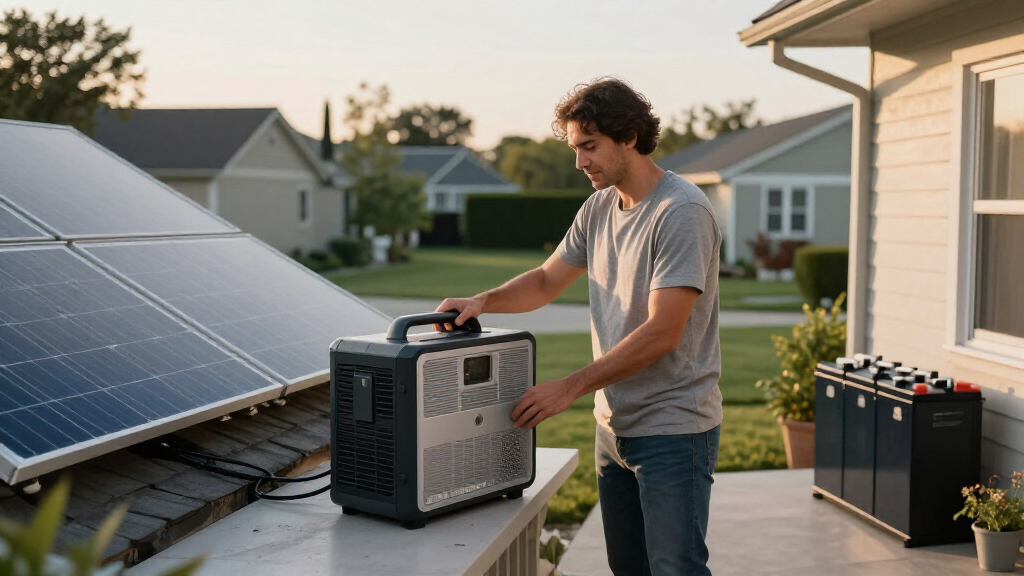

Solar backup power systems range from small 300W emergency units to whole-home 5kWh expandable rigs, and the right choice depends almost entirely on what you actually need to keep running during an outage. The Jackery Solar Generator 5000 Plus earns my best overall pick for its massive 5040Wh capacity and 7200W output — enough to run refrigerators, well pumps, and medical devices through multi-day outages. For tighter budgets, the BROWEY 1600W with 1024Wh LiFePO4 battery delivers home-backup capability at roughly a third of the price, while the BLUETTI Elite 30 V2 is the smart pick for lightweight emergency essentials. The main tradeoff in this category is straightforward: capacity and output cost money and weight, while portability means accepting shorter runtimes. Read on for the full breakdown, including who each system is for and which ones I’d skip.

Get backup power and energy gear delivered free with Prime
- Fast, free delivery on millions of items
- Prime Video, Amazon Music and more included
- Member-only deals all year
Complete the kit


Key Takeaways
- Capacity is the single biggest price driver: the 288Wh BLUETTI costs a fraction of the 5040Wh Jackery 5000 Plus, and every 1000Wh step up roughly doubles what you can run overnight.
- LiFePO4 chemistry has become standard across this lineup — every mid-range and premium pick here uses it, making cycle life (3000+ cycles) a non-differentiator; output wattage and expansion are where the real differences live.
- Bundle sizing is uneven: the BROWEY, Blavor, and Jackery 1000 V2 include appropriately matched panels, but the Jackery 5000 Plus’s two 200W panels will take over 15 sunny hours to fully refill it — plan on adding panels or grid charging.
- Built-in solar panels (Blavor) sound convenient but cap recharge speed badly; detachable panel bundles consistently recharge faster despite the extra setup step.
- Whole-home capability requires 3000W+ output — only the Anker S2000, Jackery 5000 Plus, HomePower 3600 Plus, and HomePower 3000 can run heavy appliances like air conditioners, well pumps, or electric kettles simultaneously.
| Portable Solar Generator 300W with 60W Solar Panel |  | Best Budget Starter Kit | Output Wattage: 300W max | Included Solar Panel: 60W foldable monocrystalline | Outlets: 2 AC, 1 DC, 3 USB, 1 quick-charge USB | VIEW LATEST PRICE | See Our Full Breakdown |
| BROWEY 1600W Portable Power Station with 1024Wh LiFePO4 Battery and Solar Panel |  | Best Value All-in-One | Capacity: 1024Wh | Power Output: 1600W (3200W peak) | Battery Type: LiFePO4 | VIEW LATEST PRICE | See Our Full Breakdown |
| BLUETTI Elite 30 V2 Portable Power Station 288Wh 600W LFP Solar Generator |  | Best Lightweight Pick | Capacity: 288Wh | Continuous Power: 600W | Surge Power: 1500W (Power Lifting Mode) | VIEW LATEST PRICE | See Our Full Breakdown |
| Anker SOLIX S2000 Portable Power Station, 2010Wh, 3000W Peak |  | Best for Home Backup Longevity | Capacity: 2010Wh | Continuous Output: 1500W | Peak Power: 3000W | VIEW LATEST PRICE | See Our Full Breakdown |
| Jackery Solar Generator 1000 V2 with 200W Solar Panel, 1070Wh, 1500W AC |  | Best Fast-Charging Solar Kit | Capacity: 1070Wh | AC Output: 1500W (3000W surge) | Battery Type: LFP, 4000+ cycles | VIEW LATEST PRICE | See Our Full Breakdown |
| Blavor Portable Power Station 1600W with Built-in Solar Panel, 1024Wh LiFePO4 Battery |  | Best All-in-One Solar Kit | Capacity: 1024Wh LiFePO4 | Continuous Output: 1600W (3200W surge) | Solar Panel: Built-in 40W foldable panel | VIEW LATEST PRICE | See Our Full Breakdown |
| Jackery Solar Generator 5000 Plus with 2x200W Panels, 5040Wh, 7200W AC Output |  | Best Premium Whole-Home Backup | Capacity: 5040Wh, expandable to 60kWh | Continuous Output: 7200W (14,400W surge) | Voltage: 120V and 240V | VIEW LATEST PRICE | See Our Full Breakdown |
| Jackery HomePower 3600 Plus Portable Power Station with 2 Solar Panels |  | Best for RV and Frequent Transport | Capacity: 3584Wh, expandable to 21kWh | Continuous Output: 3600W | Charging Options: AC, solar, gas generator, hybrid | VIEW LATEST PRICE | See Our Full Breakdown |
| Jackery HomePower 3000 Portable Power Station, 3072Wh, 3600W AC Output |  | Best Value Home Backup | Capacity: 3072Wh LiFePO4 | Continuous Output: 3600W (7200W surge) | Recharge Time: 1.7 hours hybrid, 2.2 hours AC | VIEW LATEST PRICE | See Our Full Breakdown |
| solar backup power system | Capacity | Weight | Battery Type | Continuous Output |
|---|---|---|---|---|
| Portable Solar Generator 300W | — | — | — | — |
| BROWEY 1600W Portable Power St | 1024Wh | — | LiFePO4 | — |
| BLUETTI Elite 30 V2 Portable P | 288Wh | 9.4 lbs | — | — |
| Anker SOLIX S2000 Portable Pow | 2010Wh | 35.7 lbs | LiFePO4 (LFP) | 1500W |
| Jackery Solar Generator 1000 V | 1070Wh | 23.8 lbs | LFP, 4000+ cycles | — |
| Blavor Portable Power Station | 1024Wh LiFePO4 | 26 pounds | — | 1600W (3200W surge) |
| Jackery Solar Generator 5000 P | 5040Wh, expandable to 60kWh | 134.5 pounds | LiFePO4, ~11-year lifespan | 7200W (14,400W surge) |
| Jackery HomePower 3600 Plus Po | 3584Wh, expandable to 21kWh | 77.2 pounds with luggage-style design | LFP, 6,000 cycles (~10 years) | 3600W |
| Jackery HomePower 3000 Portabl | 3072Wh LiFePO4 | — | — | 3600W (7200W surge) |
More Details on Our Top Picks
Portable Solar Generator 300W with 60W Solar Panel
For buyers who want a complete solar kit without a triple-digit price tag, this bundle is the easiest entry point in the lineup. You get a generator and a 60W foldable panel in one box, which is more than the pricier BLUETTI Elite 30 V2 offers out of the box. The tradeoff is capacity: 300W of output means phones, lights, and a fan are fine, but a fridge or microwave is off the table — a hard limit the 1600W BROWEY handles easily. Still, for basic emergency readiness, the included panel and multi-layer safety protections make this a low-risk first purchase rather than a watered-down compromise.
Pros:- Solar panel included in the bundle, so no separate purchase needed
- Seven output ports covers phones, tablets, cameras, and small appliances
- Short circuit, over-current, and overheating protections built in
- Lightweight and genuinely portable for camping and off-grid trips
Cons:- 300W output ceiling excludes most household appliances
- Not waterproof — the junction box must stay dry in wet weather
- Solar performance drops sharply on cloudy days
Best for: First-time buyers and casual campers who need affordable backup power for phones, lights, and small devices
Not ideal for: Households preparing for multi-day outages — the 300W ceiling rules out refrigerators and most kitchen appliances
- Output Wattage:300W max
- Included Solar Panel:60W foldable monocrystalline
- Outlets:2 AC, 1 DC, 3 USB, 1 quick-charge USB
- Conversion Efficiency:20.5%
- Battery Management System:Yes
- Extras:SOS flashlight, cooling fan
Our verdict“A sensible, low-cost first step into solar backup for small-device emergencies, not for whole-home preparedness.”
BROWEY 1600W Portable Power Station with 1024Wh LiFePO4 Battery and Solar Panel
This is the sweet spot in the lineup: 1024Wh of capacity, 1600W of pure sine wave output, and a built-in solar panel with MPPT charging at a mid-range price. Compared with the Jackery Solar Generator 1000 V2, the BROWEY matches capacity closely and edges ahead on continuous output, though Jackery wins on recharge speed and brand polish. The integrated panel is a genuine differentiator — no separate panel to store or lose — but it also adds bulk that makes this noticeably heavier than the BLUETTI Elite 30 V2. Buyers get a LiFePO4 battery rated for years of cycling, and eight ports means a fridge, laptops, and lights can run simultaneously during an outage.
Pros:- 1600W continuous (3200W peak) output runs most household appliances
- Built-in solar panel with MPPT controller simplifies off-grid recharging
- LiFePO4 chemistry offers a much longer lifespan than older lithium-ion
- Eight ports, including 100W USB-C PD, charge many devices at once
Cons:- Heavier and bulkier than similarly capable name-brand rivals
- Reaching only 80% charge in 3 hours lags faster competitors
- Premium features push the price above basic 1000Wh units
Best for: Camping and RV owners who want a high-output, solar-capable station without paying premium-brand prices
Not ideal for: Backpackers and hikers — the weight and bulk make it impractical to carry any real distance
- Capacity:1024Wh
- Power Output:1600W (3200W peak)
- Battery Type:LiFePO4
- Charging Time:3 hours to 80%
- Ports:8 (AC/DC/USB-C PD 100W)
- Solar:Built-in panel with MPPT controller
Our verdict“The best capacity-to-price-to-output balance here for buyers who want real appliance backup in one purchase.”
BLUETTI Elite 30 V2 Portable Power Station 288Wh 600W LFP Solar Generator
At 9.4 lbs, the Elite 30 V2 is the easiest unit here to actually carry, and its Power Lifting Mode stretching surge output to 1500W lets it briefly start resistive devices its size class normally can’t touch. Compared with the 300W budget generator, it’s a clear step up in build quality and charging speed — 380W wall charging refills it fast — but the 288Wh capacity is the real constraint. That’s roughly a quarter of the BROWEY’s storage, so it’s a weekend-away solution, not an outage solution. Solar and car charging are supported, but panel buyers should plan on a second panel to recharge at a reasonable pace.
Pros:- Genuinely light at 9.4 lbs with a compact footprint
- 600W continuous with 1500W surge handles surprising loads for its size
- 380W fast wall charging minimizes downtime between uses
- AC, solar, and car charging options add flexibility
Cons:- 288Wh capacity is the smallest in this lineup
- Price per watt-hour is high compared with larger units like the BROWEY
- Practical solar recharging requires buying additional panels
Best for: Solo travelers, van lifers, and anyone who prioritizes carry weight over raw capacity
Not ideal for: Home-backup planners — 288Wh won’t sustain a fridge or multiple devices through even a short outage
- Capacity:288Wh
- Continuous Power:600W
- Surge Power:1500W (Power Lifting Mode)
- Weight:9.4 lbs
- Charging Modes:AC wall, solar, car
- Fast Wall Charge:380W
Our verdict“The pick for buyers who will carry their power station more than they’ll rely on it during an outage.”
Anker SOLIX S2000 Portable Power Station, 2010Wh, 3000W Peak
The S2000’s headline spec isn’t capacity — it’s the 10,000-cycle LiFePO4 battery, which is roughly double or triple the cycle life of the Jackery 1000 V2 and BROWEY units. For a system that sits in a closet waiting for outages, that endurance matters more than raw wattage. With 2010Wh, it holds nearly twice the BROWEY’s energy in a 35.7 lb package, though the 1500W continuous output matches smaller rivals rather than exceeding them. The omission of a 12V DC port is a genuine annoyance for campers running portable fridges, and outlet count is modest. Compared with the larger Jackery 5000 Plus elsewhere in this guide, it’s the sane middle option for apartments rather than whole-house backup.
Pros:- 10,000-cycle LFP battery dramatically outlasts typical 3,000-4,000 cycle rivals
- 2010Wh capacity in a relatively compact 35.7 lb frame
- 400W solar input support enables meaningful off-grid recharging
- 3000W surge handles motor startup from fridges and pumps
Cons:- No 12V DC outlet limits compatibility with car-style accessories
- Fewer total outlets than competing stations
- 1500W continuous is modest for a unit of this capacity
Best for: Apartment dwellers and homeowners who want long-shelf-life emergency power for essentials without whole-home system costs
Not ideal for: Overlanding and camping setups that depend on 12V DC appliances — there’s no DC car port
- Capacity:2010Wh
- Continuous Output:1500W
- Peak Power:3000W
- Battery Type:LiFePO4 (LFP)
- Cycle Life:10,000 cycles
- Solar Input:Up to 400W
- Weight:35.7 lbs
Our verdict“Buy it for the battery lifespan and stored energy; skip it if you need DC ports or higher continuous wattage.”
Jackery Solar Generator 1000 V2 with 200W Solar Panel, 1070Wh, 1500W AC
Where the BROWEY competes on value, the Jackery 1000 V2 competes on speed and refinement: a full 1-hour fast charge (once enabled via the app) and a bundled 200W panel that outcharges the 60W kit on the budget generator by a wide margin. At 23.8 lbs with 1500W of AC output, it hits a portability-to-power ratio none of the other mid-size options match, and the LFP battery is rated for 4,000+ cycles — solid, if short of the Anker S2000’s 10,000. The annoyances are small but real: the app requirement to unlock fast charging frustrates buyers who expect full functionality out of the box, and the panel ships separately, so expect two deliveries and some assembly.
Pros:- 1-hour fast charging dramatically shortens recharge cycles
- Bundled 200W panel recharges roughly 6 hours in good sun
- 1500W AC output with 3000W surge runs kitchen-grade appliances
- LFP battery rated for 4,000+ cycles and 10+ years of use
Cons:- Fast charging requires app setup before it works
- Solar panel ships separately, complicating delivery and setup
- Costs more than comparable-capacity value options like the BROWEY
Best for: Campers and road-trippers who want quick turnarounds between uses and a genuinely capable bundled solar panel
Not ideal for: Buyers who dislike app-dependent hardware — the fast-charge feature requires setup through Jackery’s app first
- Capacity:1070Wh
- AC Output:1500W (3000W surge)
- Battery Type:LFP, 4000+ cycles
- Weight:23.8 lbs
- Charging Time:1 hr fast / 3 hr wall / 6 hr solar
- Ports:3 AC, 2 USB-C, 1 USB-A, 1 DC car port
- Included Panel:200W solar panel
Our verdict“The most polished mid-size solar kit here for buyers who prize fast recharges and a strong included panel.”
Blavor Portable Power Station 1600W with Built-in Solar Panel, 1024Wh LiFePO4 Battery
Blavor’s pitch is simplicity: the 40W solar panel is built into the unit itself, so there’s nothing extra to buy, carry, or connect. That makes this the most self-contained option in the lineup — even the Jackery Solar Generator 1000 V2, which bundles a panel, requires you to fold out and cable a separate accessory. The 1024Wh LiFePO4 battery covers the essentials during an outage: a fridge, lights, phones, and a CPAP machine for a night or two. Where it falls short is scale. Unlike the Jackery HomePower 3000, it can’t be expanded, and its 1600W ceiling rules out power-hungry appliances like space heaters or well pumps. The built-in panel is also modest at 40W, meaning a full solar recharge takes days, not hours.
Pros:- Integrated 40W solar panel means a complete solar solution out of one box
- LiFePO4 chemistry rated for 10+ years of daily-style use
- Eight outlets with fast USB-C charging covers phones, laptops, and small appliances
- At 26 pounds, it’s far easier to move than the 134.5-pound Jackery 5000 Plus
Cons:- 40W of built-in solar is slow — full solar recharging takes multiple days of good sun
- 1600W output can’t handle high-draw appliances like heaters, microwaves, or power tools
- No expansion path — capacity is permanently capped at 1024Wh
Best for: Campers and budget-conscious households who want a true grab-and-go solar backup with zero extra components
Not ideal for: Homeowners backing up whole circuits — 1024Wh and 1600W won’t run a refrigerator plus major appliances for long
- Capacity:1024Wh LiFePO4
- Continuous Output:1600W (3200W surge)
- Solar Panel:Built-in 40W foldable panel
- Outlets:8 total, including fast USB-C
- Weight:26 pounds
- Best Use:Camping, road trips, emergency home backup
Our verdict“Buy this if you want a genuinely complete, portable solar backup in one purchase; skip it if your goal is whole-home outage coverage.”
Jackery Solar Generator 5000 Plus with 2x200W Panels, 5040Wh, 7200W AC Output
This is the heavyweight of the roundup, literally and figuratively. With 7200W of continuous output and 240V support, the 5000 Plus can run central appliances the smaller units simply can’t touch — think of it as the difference between backing up a fridge and backing up a kitchen. Compared with the Jackery HomePower 3600 Plus, you get double the output and a much higher expansion ceiling of 60kWh, which turns a portable power station into a legitimate generator replacement. The tradeoffs are obvious: at 134.5 pounds, this is a semi-permanent installation, not something you toss in the trunk for a weekend trip. And the base 5040Wh capacity depletes quickly at full load, so most buyers will want extra batteries — an expense that compounds fast. You’ll also need substantial solar input (up to 4000W) to hit those two-hour recharge claims.
Pros:- 7200W output with 120V and 240V support runs well pumps, dryers, and HVAC components
- Expandable up to 60kWh for multi-day or even week-long outages
- Solar recharging in roughly 2 hours with sufficient panel input
- LiFePO4 batteries rated for about 11 years of service
Cons:- At 134.5 pounds, moving it requires wheels, planning, or two people
- Realizing its potential requires buying expansion batteries and high-wattage solar arrays
- Base capacity alone provides limited runtime under continuous heavy loads
Best for: Homeowners in outage-prone areas who want to replace a gas generator with silent, expandable whole-circuit backup
Not ideal for: Campers and RV users — the weight and price are wasted if you only need portable weekend power
- Capacity:5040Wh, expandable to 60kWh
- Continuous Output:7200W (14,400W surge)
- Voltage:120V and 240V
- Included Panels:2x 200W solar panels
- Battery Type:LiFePO4, ~11-year lifespan
- Weight:134.5 pounds
Our verdict“The closest thing here to a true whole-home solar generator — if your budget and floor space can absorb the expansion costs.”
Jackery HomePower 3600 Plus Portable Power Station with 2 Solar Panels
The 3600 Plus sits in the sweet spot between portability and serious backup power. Its standout feature is the rolling luggage-style design, which makes 77 pounds genuinely manageable — a real advantage over the Jackery 5000 Plus, which weighs nearly twice as much and has no such transport story. With 3584Wh of capacity and expansion to 21kWh, it handles an RV’s air conditioner or a home’s essential circuits more capably than the Anker SOLIX S2000, though it costs considerably more. The 4,000 to 6,000 cycle LFP battery and flexible charging — AC, solar, gas generator, or hybrid — mean it fits almost any recharging situation. One practical annoyance: the bundled solar panels ship separately, so don’t panic when the power station arrives alone.
Pros:- Luggage-style wheels and handle make 77 pounds easy to move despite the weight
- Expandable from 3584Wh up to 21kWh as needs grow
- Four charging methods, including hybrid and gas-generator input, for maximum flexibility
- 6,000-cycle LFP battery rated for roughly 10 years
Cons:- Solar panels ship in a separate package, which can cause delivery confusion or delays
- 77.2 pounds is still heavy for lifting into a vehicle without help
- Only four outlets on the base unit — fewer than much cheaper models like the Blavor
Best for: RV owners and anyone who regularly moves their backup power between locations
Not ideal for: Budget buyers or apartment dwellers — the price and footprint are hard to justify for occasional phone-and-laptop backup
- Capacity:3584Wh, expandable to 21kWh
- Continuous Output:3600W
- Charging Options:AC, solar, gas generator, hybrid
- Battery Type:LFP, 6,000 cycles (~10 years)
- Weight:77.2 pounds with luggage-style design
- Included Panels:2 solar panels (shipped separately)
Our verdict“The best middleweight choice if you need big backup power that actually travels with you.”
Jackery HomePower 3000 Portable Power Station, 3072Wh, 3600W AC Output
For most households, the HomePower 3000 is the smartest balance of price, power, and practicality in this roundup. It matches the 3600 Plus on output at 3600W while costing meaningfully less, and its UL-certified UPS function means plugged-in devices switch to battery instantly during an outage — no manual switchover, which cheaper units like the Blavor don’t offer. Recharging is a genuine strength: 1.7 hours via hybrid AC/DC puts it back in service quickly, faster than most competitors at this capacity. Ten ports cover everything from USB-C laptops to full-size appliances. The compromises are modest but real — no included solar panels (unlike the Blavor or 5000 Plus bundles), no expansion beyond the base 3072Wh, and a weight that’s only “lighter” relative to other 3kWh-class units.
Pros:- UL-certified UPS delivers seamless, automatic switchover during outages
- Very fast recharging: 1.7 hours hybrid, 2.2 hours AC only
- 3600W output rivals the more expensive 3600 Plus at a lower price
- Ten ports handle everything from phones to kitchen appliances
Cons:- No solar panels included, so a complete solar setup adds to the cost
- Capacity is fixed at 3072Wh with no expansion option
- Still substantial in weight despite being smaller than comparable 3kWh models
Best for: Homeowners who want fridge-and-essentials outage coverage with automatic UPS switchover at a reasonable price
Not ideal for: Off-grid users — without included panels or capacity expansion, long stretches without grid power are a stretch
- Capacity:3072Wh LiFePO4
- Continuous Output:3600W (7200W surge)
- Recharge Time:1.7 hours hybrid, 2.2 hours AC
- Ports:10, including USB-A and USB-C
- Cycle Life:4,000 cycles
- Special Feature:UL-certified UPS switchover
Our verdict“The best price-to-capability pick for automatic home backup — just budget for panels if you want true solar self-sufficiency.”
How We Picked
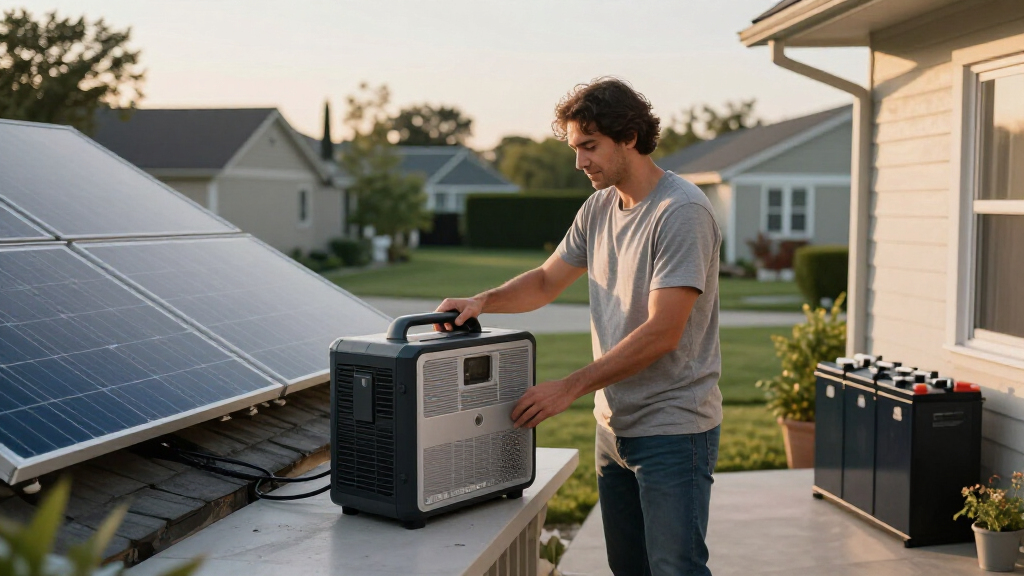
I ranked these nine systems by asking the questions a buyer actually faces during an outage: how long will it run my essentials, how fast does it recharge, and can it handle the appliances I care about? Capacity in watt-hours set the baseline tier — anything under 300Wh is an essentials-only emergency kit, 1000Wh covers a night or two of fridge-and-phones duty, and 3000Wh+ crosses into real home backup. Output wattage mattered next, because a big battery with a small inverter still can’t start a refrigerator compressor or run a microwave alongside anything else. I also weighed battery chemistry and cycle life, since LiFePO4 cells lasting 3000+ cycles change the long-term value math considerably.
Beyond specs, I evaluated solar recharge practicality — whether the included panels could realistically refill the battery in a reasonable number of sun hours, or whether the bundle forces an upgrade purchase. Portability, expansion capability, warranty coverage, and price per usable watt-hour rounded out the ranking. The final order reflects a simple logic: systems that match their capacity to realistic buyer needs, with sensibly sized panels, ranked higher than those with impressive headline numbers but impractical recharge realities.
| solar backup power system | Battery Type |
|---|---|
| Portable Solar Generator 300W | — |
| BROWEY 1600W Portable Power St | LiFePO4 |
| BLUETTI Elite 30 V2 Portable P | — |
| Anker SOLIX S2000 Portable Pow | LiFePO4 (LFP) |
| Jackery Solar Generator 1000 V | LFP, 4000+ cycles |
| Blavor Portable Power Station | — |
| Jackery Solar Generator 5000 P | LiFePO4, ~11-year lifespan |
| Jackery HomePower 3600 Plus Po | LFP, 6,000 cycles (~10 years) |
| Jackery HomePower 3000 Portabl | — |
Factors to Consider When Choosing Solar Backup Power Systems
Before committing to any of these systems, it helps to understand the broader landscape — the mistakes that catch out first-time buyers and the tradeoffs that don’t show up on a spec sheet.
Size Your Watt-Hours to Your Real Outage, Not Your Worst-Case Fantasy
The most common mistake in this category is buying capacity for a disaster scenario that never arrives, then paying for it in weight, cost, and shelf space forever. A more useful exercise: write down the five things you genuinely need running during a typical outage, look up their watt draw, and multiply by your expected outage duration. A refrigerator (~150W average), phone charging, a few LED lights, and a CPAP machine typically totals under 300Wh per day — which explains why 1000Wh units dominate the middle of this market. Buyers who jump straight to 5000Wh systems often discover they’ve spent four times the money for capacity that sits unused. The exception is anyone with medical equipment, well pumps, or electric heating, where undersizing isn’t just inconvenient but genuinely risky.
Output Wattage Is the Spec People Forget to Check
Capacity tells you how long a system runs; output wattage tells you what it can run at all, and confusing the two trips up a surprising number of buyers. A 1000Wh station with 300W output cannot start most refrigerators, no matter how much stored energy it holds, because compressor startup briefly demands two to three times the running wattage. Look for a continuous output rating at least double your largest appliance’s draw, and check whether the peak/surge rating covers motor startup. The 3000W-and-up tier in this lineup exists precisely for this reason — it’s the threshold where air conditioners, space heaters, and power tools become usable. Also count outlets realistically: a single AC port limits you even when the wattage budget allows more devices.
Solar Panels Are Usually the Weak Link in a Bundle
Manufacturers love advertising a power station ‘with free solar panel,’ but the included panels are often sized to look like a deal rather than to recharge the battery at a useful speed. A 200W panel realistically delivers 140–170W in good conditions, meaning a 3000Wh station needs 20+ peak sun hours to refill from empty — potentially three or four days of decent weather. When comparing bundles, divide battery capacity by total panel wattage: anything above 8–10 hours of ideal recharge time means you should budget for extra panels or plan on grid charging between outages. Built-in panels deserve special skepticism — they’re convenient but permanently capped at low wattage. Conversely, don’t overbuy panels for a small station; input limits mean extra wattage gets wasted if the station can’t absorb it.
Battery Chemistry Changes the Ownership Timeline
Older lithium-ion (NMC) batteries typically last 500–800 charge cycles before degrading to 80% capacity, while LiFePO4 cells — now standard across most of this lineup — are rated for 3000+ cycles. For occasional outage use, that difference may not matter much in practice; for daily or weekly cycling (camping, van life, DIY work), it’s the difference between a system that lasts two years and one that lasts a decade. The tradeoff is weight: LiFePO4 packs are heavier per watt-hour, which is why the ultra-portable options sometimes still use older chemistry. Also check the warranty terms — a five-year warranty signals the manufacturer expects the cells to hold up, while one-year coverage on a ‘budget’ brand shifts the long-term risk onto you.
Expansion Capability: Cheap Now or Cheap Later
Several premium systems in this category support extra battery modules, letting you start with 3000Wh and grow toward 10kWh+ over time. This flexibility costs more upfront but protects against the classic upgrade trap: buying a standalone station, outgrowing it, and ending up with two disconnected units that can’t share load. If your backup needs might grow — an EV purchase, a home addition, a move off-grid — prioritizing an expandable platform usually beats buying the biggest single unit you can afford today. The counterargument is real: expansion modules are rarely discounted, and a expandable 3000Wh system often costs more per total watt-hour than buying a fixed 5000Wh unit outright. Buyers with stable, known needs should skip expansion and buy the right size once.
The Hidden Costs: Accessories, Transfer Switches, and Your Time
The sticker price rarely tells the whole story. Whole-home systems need a manual transfer switch or at minimum long, heavy-gauge extension cords run through a window — add $200–600 if an electrician is involved. Larger stations may benefit from a rolling cart or dedicated storage space, since a 100+ pound battery doesn’t move itself during an emergency. Charging infrastructure matters too: some high-capacity systems support dual AC charging or fast solar input, but only if you buy the right cables and panels separately. Finally, budget an hour of setup and testing when the system arrives — discovering a dead unit or a missing adapter during an actual outage is a failure mode no spec sheet warns you about.
Frequently Asked Questions
Can a solar backup power system actually run my refrigerator during an outage?
Yes, but only if you check two numbers before buying. Your station needs enough continuous output wattage to handle the compressor’s startup surge, which can briefly hit 3–5 times the running draw — a fridge rated at 150W may demand 600W or more for a second. That rules out small 300W-class units entirely; anything from the 1500W tier upward handles it comfortably. On the capacity side, a typical fridge consumes 1–1.5kWh per day, so a 1000Wh station covers one day, while 3000Wh systems stretch to two or three days without sun. Combined with a solar panel for daytime top-ups, even mid-sized systems in this lineup can keep a refrigerator running indefinitely in decent weather.
Is a bigger battery always better if I can afford it?
Not necessarily, and the downsides go beyond price. Large systems weigh 80–100+ pounds, making them effectively stationary — fine for a basement home-backup role, but useless for camping or moving between rooms during an extended outage. Bigger batteries also take far longer to recharge from the bundled panels, so a half-drained 5000Wh unit can sit unusable for days after a major event unless you’ve invested heavily in solar array capacity. There’s also a shelf-life angle: batteries self-discharge and age whether or not you use them, so unused capacity slowly degrades. The better question is what you need to run and for how long — if your essentials fit in 1500Wh per day, a mid-sized system with quality panels often serves you better than an oversized flagship you never fully use.
How long do the solar panels take to recharge these systems?
Realistic recharge math is where most bundles disappoint. Panels deliver roughly 70–85% of their rated wattage in good direct sun, so a 200W panel yields about 150W — meaning a 1000Wh station recharges in 7–8 sunny hours, which is workable, but a 3000Wh station needs multiple days on the same panel. If solar recharging is central to your plan, divide watt-hour capacity by realistic panel output and check the answer against your patience. Also verify the station’s maximum solar input: some units accept 400W+ of panel input while others cap at 100–200W, making extra panels pointless. The premium systems in this lineup accept 1000W+ input, which is precisely why they cost more despite similar battery specs.
What’s the difference between the cheap no-name brands and the established ones like Jackery, Anker, and BLUETTI?
The headline specs of budget brands often match the big names on paper — same watt-hours, same LiFePO4 claims, sometimes more included accessories. The differences show up in three places you can’t see on a listing: battery management system quality (how safely the cells handle overcharge, heat, and deep discharge), warranty support and parts availability, and whether the rated capacity is honest. Established brands also tend to honor warranties without a fight and offer firmware support and ecosystem accessories like expansion batteries. That said, the budget options in this roundup earn their place — they make sense for occasional use where a shorter effective lifespan is an acceptable trade for a lower price. For daily cycling or medically necessary backup, the brand-name premium is cheap insurance.
Do I need an electrician to install one of these systems?
For most portable systems, no — you can run extension cords to essential devices, which is exactly how these units are designed to be used. The electrician question arises when you want hardwired home integration: connecting a 3000W+ station to your home’s circuits so wall outlets work normally during an outage requires a transfer switch, and that’s licensed-electrician work costing a few hundred dollars. Without a transfer switch, never backfeed a station through a dryer outlet — it’s genuinely dangerous to utility workers and typically illegal. Some larger systems in this category support optional transfer switch accessories that make the upgrade straightforward. If hardwired convenience matters to you, factor that installation cost into your budget before choosing a system size.
Conclusion
The right pick from this lineup depends less on which system is objectively best and more on what an outage looks like at your house. For best overall, the Jackery Solar Generator 5000 Plus stands out — its 5040Wh capacity and 7200W output handle genuine whole-home loads, and it’s the only option here that can carry a household through a multi-day event without careful rationing. The Anker SOLIX S2000 and Jackery HomePower 3600 Plus are strong alternatives in that tier, with the 3600 Plus making sense if you prefer a slightly smaller footprint at similar capability.
For best value, the BROWEY 1600W with 1024Wh LiFePO4 battery delivers the most home-backup capability per dollar in this lineup — it runs a refrigerator and essentials for a day, and its battery chemistry means it’ll still be going strong years from now. The Blavor 1600W competes closely, though its built-in panel is better treated as a trickle charger than a primary recharge source.
For beginners, the BLUETTI Elite 30 V2 is the least intimidating entry point: light, affordable, and perfectly matched to phones, lights, and laptops while you learn what you actually need from backup power. The 300W portable generator with panel plays a similar role at an even lower price, though buyers should recognize it’s an emergency kit, not home backup. For specific needs: the Jackery Solar Generator 1000 V2 is the best-balanced pick for campers and van-lifers who want one system for both recreation and outage insurance, and the Jackery HomePower 3000 suits buyers who want serious fixed-home capacity without paying for the 5000 Plus’s expandability ceiling. Whatever you choose, size to your real needs, verify the included panels can actually refill the battery, and test everything before the next storm — not during it.
Fall Picks
fall essentials
As an affiliate, we earn on qualifying purchases.