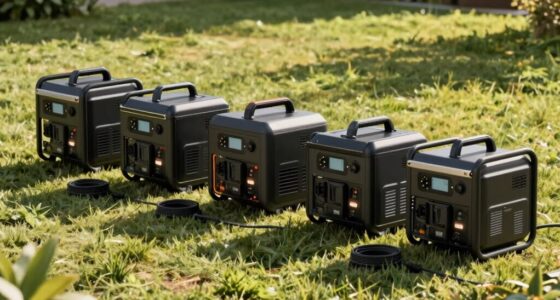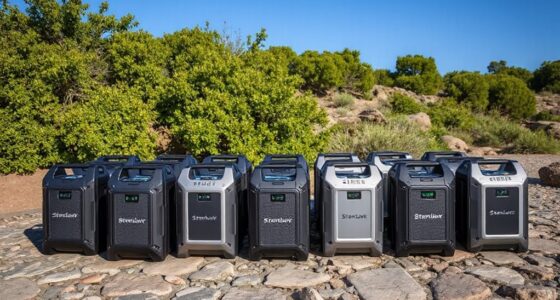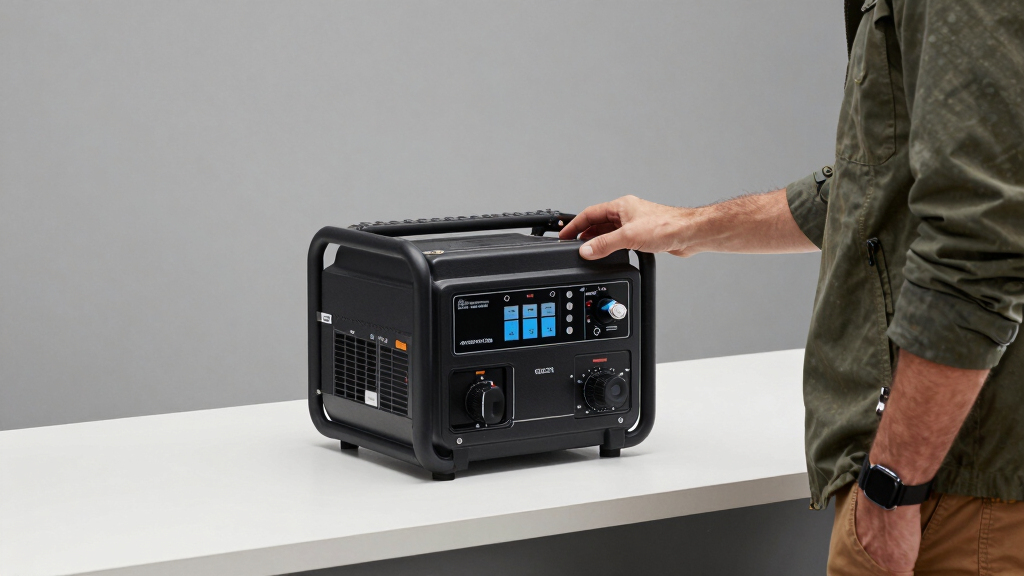
When storms knock out power, having a reliable inverter generator can make all the difference in staying safe and comfortable. The best models in this category combine quiet operation, portability, and enough power to run essentials. The Westinghouse 11000 Peak Watt Dual Fuel Generator stands out for its remote start and fuel flexibility, making it a strong overall choice. Meanwhile, the Pulsar GD10KBN offers high wattage and dual-fuel convenience for heavier loads. However, buyers face tradeoffs between size, noise levels, fuel type, and price. Continue reading for the full breakdown to find your ideal storm backup.
Key Takeaways
- Top performers balance power output with portability, ensuring you can handle storm outages without heavy lifting.
- Dual-fuel options provide greater flexibility, especially during extended outages when fuel availability varies.
- Quiet operation remains a key feature, particularly for overnight use or in densely populated areas.
- Price varies significantly; investing in a higher-quality inverter often yields better reliability and lower maintenance costs.
- Features like remote start and CO sensors enhance safety and convenience during emergency use.




More Details on Our Top Picks
Pulsar GD10KBN 10,500W Dual Fuel Portable Inverter Generator with Wheel Kit and Electric Start
The Pulsar GD10KBN stands out for its impressive 10,500W output and dual fuel flexibility, making it a versatile choice for both home backup and outdoor activities. Compared to the Westinghouse 11000DFc, it offers comparable power but adds the convenience of propane operation for longer-term outages without refueling. Its wheel kit enhances portability, yet it remains somewhat heavy, which could be a challenge for some users. The digital multimeter adds value by allowing real-time power monitoring, but its noise level may be higher than quieter models like the PowerSmart 4300. This generator effectively balances raw power, fuel options, and portability, making it a strong all-around choice for those needing reliable backup power.
Pros:- Flexible dual fuel operation for extended runtime and fuel choice
- High power output suitable for large appliances
- Includes wheel kit for easier transportation
- Digital multimeter for monitoring power output
Cons:- Relatively heavy, may require assistance to move
- Potentially loud during operation compared to quieter models
Best for: Homeowners who want a dual fuel generator capable of running large appliances and outdoor enthusiasts needing portable power.
Not ideal for: Users seeking a lightweight or ultra-quiet generator for frequent, low-noise outdoor camping or frequent mobility.
- Power Output:10,500W
- Fuel Type:Dual Fuel (Gasoline or Propane)
- RV Compatibility:Yes
- Features:Electric Start, Wheel Kit, Digital Multimeter
- Protection:Overload and Short Circuit Protection
Bottom line: This generator is ideal for users needing high power, dual fuel flexibility, and mobility in a reliable backup solution.
Westinghouse 11000 Peak Watt Dual Fuel Portable Inverter Generator with Remote Electric Start and CO Sensor
The Westinghouse iGen11000DFc offers a robust 11,000 peak watts and 9,000 running watts, making it well-suited for serious backup needs. Its remote electric start adds convenience, especially during storm outages or extended blackouts, and the built-in CO sensor enhances safety. Compared with the Pulsar GD10KBN, it provides higher peak power and longer runtime of up to 17 hours, but this comes with increased weight and complexity. The multiple outlet options allow for versatile connections, yet its bulkier size may be a drawback for those needing portability. For users prioritizing power, safety, and remote operation, this generator delivers on all fronts, though it requires more space and effort to transport.
Pros:- High peak and running wattage for demanding appliances
- Remote electric start for easy operation
- Built-in CO sensor improves safety during prolonged outages
- Long runtime of up to 17 hours on a full tank
Cons:- Heavy and less portable for frequent movement
- More expensive and complex setup than smaller models
Best for: Homeowners with large power needs and safety concerns who can accommodate a heavier, more complex unit.
Not ideal for: Campers or users requiring lightweight, highly portable generators for frequent outdoor use.
- Peak Watts:11,000
- Running Watts:9,000 (Gasoline)
- Fuel Type:Gasoline and Propane
- Engine:457cc Westinghouse 4-Stroke OHV
- Run Time:Up to 17 hours
- Outlets:GFCI 120V, 120V L14-30R, 120/240V 14–50R
Bottom line: Best suited for users needing high power output with advanced safety features and remote operation in a stationary backup setup.
Westinghouse 14500 Peak Watt Tri-Fuel Portable Generator with Remote Electric Start
The Westinghouse 14500 combines high power with tri-fuel capability, offering up to 14,500 peak watts and 11,500 running watts on gasoline, plus options for propane and natural gas. Its 550cc engine and 19-hour runtime on gasoline make it a top choice for prolonged outages or busy job sites. Unlike smaller units like the PowerSmart, it handles sensitive electronics with low THD, and remote electric start simplifies operation. However, its weight and size can complicate transport, and residual odors from factory testing may require airing out. This generator suits those needing maximum power with fuel versatility and extended runtime for critical backup or work environments.
Pros:- Powerful tri-fuel operation for maximum flexibility
- Long runtime suitable for extended outages
- Low THD safe for sensitive electronics
- Remote electric start for convenience
Cons:- Heavy and cumbersome to transport
- Potential residual fuel or oil odor after factory testing
Best for: Professionals or homeowners needing high-capacity, long-duration power with multiple fuel options.
Not ideal for: Those seeking a lightweight, portable solution for casual outdoor use or emergency camping.
- Peak Watts:14,500
- Running Watts:11,500 (gasoline)
- Fuel Types:Gasoline, Propane, Natural Gas
- Engine:550cc 4-Stroke OHV
- Runtime:Up to 19 hours
- Warranty:3-Year limited
Bottom line: This generator is best for users requiring high wattage, fuel versatility, and long runtimes in stationary backup or heavy-duty applications.
PowerSmart 4300-Watt Portable Inverter Generator with 3500W Rated Power
The PowerSmart 4300-Watt offers a solid balance of power and portability, with a 223cc 4-stroke engine producing 3500W rated power and a peak of 4300W. Compared to larger units like the Westinghouse 14500, it’s more portable and easier to handle, making it suitable for emergency home use or outdoor camping. Its inverter technology ensures clean power, safe for sensitive electronics. However, at higher loads, it tends to be louder than quieter models such as the WEN 4800. Its runtime of 6.5 hours at half load limits continuous use without refueling. This generator is ideal for users who prioritize portability and reliable power for smaller appliances during outages.
Pros:- High surge power suitable for heavy-duty appliances
- Produces clean sine wave power safe for sensitive electronics
- Compact and portable with a good power-to-weight ratio
- Reliable manual recoil start
Cons:- Loud operation at higher loads
- Limited runtime at full load
- Heavy for some users to carry
Best for: Homeowners or campers needing a lightweight, stable power source for essential electronics and small appliances.
Not ideal for: Users needing high wattage for large appliances or long-duration outages without frequent refueling.
- Peak Power:4300W
- Rated Power:3500W
- Engine:223cc 4-stroke OHV
- Fuel Tank Capacity:1.98 gallons
- Runtime at 50% load:6.5 hours
- Weight:68 lbs
Bottom line: This generator suits those seeking portable, stable power for essential electronics and small appliances during outages or outdoor activities.
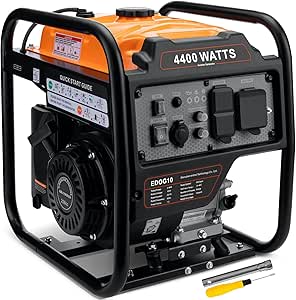
4400-Watts Inverter Generator, Gas Powered, Emergency Home Backup, RV Ready 30A Outlet
The 4400-Watts Inverter Generator provides 3400W of steady power with inverter technology, making it suitable for home backup and RV use. Its lightweight design at 56 lbs allows for easy mobility, contrasting with larger, more powerful models like the Westinghouse 11000DFc. The inclusion of a 30A RV outlet makes it a practical choice for RV owners, while the 14-hour runtime on a 2-gallon tank provides reliable endurance. However, it may emit a slight fuel odor and lacks specific noise level data, which could be concerns for sensitive environments. This unit makes sense for users who need a portable, quiet, and efficient power source for moderate loads during outages or travel.
Pros:- Powerful enough for a variety of applications
- Lightweight and portable at only 56 lbs
- Includes RV-ready 30A outlet for convenience
- Inverter technology provides stable, clean power
Cons:- Limited fuel capacity may restrict extended use
- Possible gas smell upon delivery
- Noise level not specified, potential for higher operation noise
Best for: RV owners or homeowners seeking a portable, efficient backup generator with multiple outlet options.
Not ideal for: Those requiring high wattage for large appliances or extended power needs beyond 14 hours without refueling.
Bottom line: This generator works well for RV owners and homeowners needing a portable, efficient power source with multiple outlets for short-term outages or travel use.
Power Equipment 4400 Watts Inverter Generator Gas Powered, Portable Open Frame Generator, Low Noise with ECO Mode, RV Ready, Emergency Home Backup
This generator stands out for its impressive peak output of 4400 watts, making it well-suited for emergency home backup or powering multiple appliances during outages. Compared with the WEN 4800-Watt, it offers similar surge power but might be slightly heavier, which can affect portability. Its 14-hour runtime and low noise level under 72 dBA make it a practical choice for prolonged outage scenarios. However, some users report a minor gas smell initially, and it may require troubleshooting during first startup. This model is ideal for users needing dependable power with extended runtime, even if it’s a bit heavier.
Pros:- High peak wattage suitable for whole-home backup
- Long runtime up to 14 hours with fuel gauge
- Relatively low noise operation under 72 dBA
- Relatively lightweight for its capacity at 56 lbs
Cons:- Potential initial gas smell upon arrival
- Some users may experience startup issues
Best for: Homeowners needing reliable backup power with high wattage capacity
Not ideal for: Lightweight travelers or those prioritizing ultra-quiet operation, due to weight and startup quirks
- Peak Watts:4400
- Running Watts:3400
- Fuel Tank Capacity:2 gallons
- Runtime at 25% load:up to 14 hours
- Noise Level:under 72 dBA
- Weight:56 lbs
Bottom line: This generator makes sense for homeowners requiring significant power with extended runtime, accepting some minor startup concerns.
WEN 4800-Watt Inverter Generator with Fuel Shut Off, RV-Ready, Quiet and Lightweight
The WEN 4800-Watt generator excels in providing clean, stable power, making it a prime choice for those who need to protect sensitive electronics during outages. Its quiet operation at 62 dBA is a significant advantage over louder models like the PowerSmart 4300-Watt, especially in residential areas. Portability is enhanced by wheels and a telescoping handle, although the weight isn’t specified, which could influence ease of transport. The fuel shutoff feature extends engine lifespan, contributing to durability. However, it requires a separate parallel connection kit for linking units, which adds an extra step for increased power needs. This generator is best suited for campers, tailgaters, and small backup scenarios where quiet, stable power is essential.
Pros:- Produces clean, safe power for sensitive devices
- Quiet operation at 62 dBA
- Portability with wheels and telescoping handle
- Fuel shutoff for engine longevity
Cons:- Weight not specified, potentially heavy
- Additional parallel kit needed for linking units
Best for: Campers, tailgaters, or small-scale backup users prioritizing quiet, clean power
Not ideal for: Large home outages needing high wattage or immediate scalability without additional kits
- Engine Displacement:224cc
- Surge Watts:4800
- Rated Watts:4000
- Decibel Level:62 dB
- Fuel Tank Capacity:1.9 gallons
- Run Time:up to 7 hours
- Receptacles:Four 120V, one RV 120V TT-30R, one 12V DC, two USB ports
Bottom line: This generator suits users needing portable, quiet, and clean power for small to medium applications, accepting extra kit requirements.
Champion Power Equipment 4000-Watt RV Ready Portable Inverter Generator with Quiet Technology and CO Shield
This lightweight generator, less than 49 pounds, offers 4000 starting watts, making it highly portable for RV and camping use. Its quiet operation at 64 dBA closely rivals the WEN, but it’s slightly lighter, which is a plus for mobility. Safety features like CO Shield and low oil shut-off help ensure safe operation during prolonged outages. While it’s capable of parallel connection, the kit must be purchased separately, and it’s not designed for large home backup scenarios. Compared to the Power Equipment 4400 Watts, it trades some wattage for easier portability and quieter operation. This model is ideal for outdoor recreation and small emergency needs where portability and safety matter most.
Pros:- Very lightweight and portable
- Quiet operation at 64 dBA
- Includes safety features like CO Shield
- Parallel capability for increased power
Cons:- Parallel kit sold separately
- Limited to basic power needs, not designed for whole-home backup
Best for: Campers, tailgaters, and outdoor enthusiasts needing portable, safe power
Not ideal for: Full-home backup or situations requiring sustained high wattage without parallel setup
- Weight:Less than 49 pounds
- Starting Watts:4000
- Running Watts:3000
- Run Time:up to 10 hours
- Tank Capacity:1.54 gallons
- Noise Level:64 dBA
- Outlets:120V 25A TT-30R, 120V 20A duplex, 12V automotive, parallel outlets
Bottom line: This generator suits outdoor adventurers and small backup scenarios where ease of transport and safety are priorities, with some capacity limitations.
ERAYAK 4500W Portable Inverter Generator for Home Use, Super Quiet Small Generator for Camping Outdoor Emergency Power Backup, Gas Powered Engine, ECO Mode, EPA Compliant
This model provides 4500W peak and 3500W rated power, making it suitable for home backup or outdoor use. Its quiet operation at 60.5 dB surpasses many competitors like the Champion, making it perfect for residential areas or quiet camping sites. The compact design and relatively light weight of 55.12 lbs enhance portability, and multiple outlets support a variety of devices. Its fuel efficiency and ECO mode extend runtime, but it requires fuel and parallel connection kits for increased power, which can add to setup complexity. Compared to the PowerSmart 4300-Watt, it offers higher power and quieter operation but at a higher price point. This generator is ideal for those who prioritize quiet, stable power with versatility for outdoor and emergency use.
Pros:- Quiet operation at 60.5 dB
- Stable power safe for sensitive electronics
- Compact, lightweight design
- Multiple outlets for versatile use
Cons:- Parallel kit sold separately
- Limited to 4500W without parallel connection
Best for: Homeowners needing quiet, reliable backup power with outdoor versatility
Not ideal for: Heavy-duty, large-scale home outages requiring maximum wattage without parallel setup
- Peak Watts:4500W
- Running Watts:3500W
- Weight:55.12 lbs
- Dimensions:20″ x 12.2″ x 19.3″
- Fuel Consumption:0.561 gallons/hour
- Noise Level:60.5 dB
Bottom line: This generator is best suited for users wanting quiet, stable power for home or outdoor activities, accepting some setup steps for increased capacity.

How We Picked
Our evaluation focused on performance, usability, build quality, and value. We looked for generators that deliver sufficient power for essential household needs while remaining portable enough for quick deployment. Noise levels and fuel efficiency also played critical roles, as these factors directly impact usability during storm outages. We prioritized models with reliable starting mechanisms, safety features like CO sensors, and positive user feedback. The ranking reflects a balance between power capacity, convenience features, and price, ensuring options suitable for different needs and budgets.
Factors to Consider When Choosing Best Inverter Generator For Storm Outages
Choosing the best inverter generator for storm outages involves considering several key factors. It’s important to assess how much power you need, how portable the unit is, and what fuel options are available. Safety features and noise levels also influence usability during emergency situations. Understanding these factors helps prevent common mistakes, such as overestimating your power needs or choosing a noisy model that disturbs neighbors. Here’s a closer look at the most important considerations:Power Capacity and Load Management
Determine the essential appliances and devices you want to run during an outage. Inverter generators are rated in watts, so selecting a model with enough capacity to handle your startup and running wattage is vital. Overestimating can lead to unnecessary expense, while underestimating risks appliance damage or insufficient power. A good rule of thumb is to add 20-25% to your total estimated load for startup surges and future needs. Consider models with slightly higher wattage than your immediate requirements for flexibility.
Fuel Type and Runtime
Dual-fuel models offer greater flexibility, especially when fuel supplies are uncertain during extended outages. Gasoline is common but can be less available or deteriorate over time. Propane or natural gas options are cleaner and more stable but might require extra setup. Pay attention to runtime ratings at half load; longer runtimes reduce the need for frequent refueling during outages. Also, consider the ease of refueling and storage safety when selecting your fuel type.
Portability and Size
Storm outages often require quick setup and moving the generator to a safe, accessible location. Compact, lightweight units are easier to handle, but they might sacrifice power or run time. Larger, high-capacity models tend to be heavier and less portable but can power more devices simultaneously. Look for units with wheels or handles for easier transportation—especially if you need to move the generator around or store it when not in use.
Noise Level and Safety Features
Quiet operation is especially valued in neighborhood settings or during overnight outages. Many inverter generators emphasize noise reduction, making them less disruptive and more comfortable to run for extended periods. Safety features like carbon monoxide sensors are critical since generators are often used in enclosed or semi-enclosed spaces. These sensors automatically shut down the unit if CO levels become unsafe, preventing poisoning risks. Balancing noise and safety with power needs is key to selecting the right model.
Price and Long-Term Value
While budget models may seem appealing, they often lack durability, power, or safety features needed during storm outages. Investing a bit more can lead to a more reliable, quieter, and longer-lasting generator. Consider the total cost of ownership, including maintenance, fuel efficiency, and warranty coverage. Higher upfront costs can pay off with greater peace of mind and fewer breakdowns during emergencies. Always evaluate whether features like remote start or eco modes justify the additional expense.
Frequently Asked Questions
How much power do I need for typical storm outage essentials?
For most storm outages, a generator rated between 3000 and 5000 watts will handle essential appliances such as a refrigerator, lights, and a few small electronics. If you plan to run a sump pump, space heater, or multiple devices simultaneously, opting for a model closer to 5000 watts provides more headroom. Carefully list your critical devices and their startup wattage to determine the minimum capacity needed, avoiding undersized units that can’t support your needs during an outage.
Is a dual-fuel generator worth the extra cost?
Dual-fuel generators offer significant flexibility during extended outages, allowing you to switch between gasoline and propane depending on availability and storage. This versatility can be crucial when fuel supplies are limited or inconsistent. However, they tend to be more expensive and slightly larger or heavier. If you live in an area prone to frequent storms and want reassurance of fuel options, investing in a dual-fuel model can provide peace of mind, despite the higher price and added complexity.
Should I prioritize quiet operation over power output?
Quiet operation is particularly important if you plan to run the generator overnight or in close proximity to your home and neighbors. Many inverter models emphasize noise reduction, which enhances comfort and safety. However, quieter units sometimes have lower wattage capacities or higher price tags. Balancing noise levels with your power needs is essential; if running heavy appliances, you might need a louder, more powerful unit, but for minimal essentials, a quiet inverter can make a big difference in your comfort.
How often should I perform maintenance on my inverter generator?
Regular maintenance is key to ensuring your generator operates reliably during emergencies. It’s advisable to change the oil every 50-100 hours of use and inspect the spark plug, air filter, and fuel system periodically. Running the generator for a few minutes every month helps keep components lubricated and prevents fuel from degrading. Proper storage, especially in off-season, and following manufacturer recommendations extend the lifespan and readiness of your unit when storms strike.
What safety features should I look for in a storm-ready inverter generator?
Safety features like carbon monoxide (CO) sensors are vital, as they automatically shut off the generator if CO levels become dangerous. Overload protection and circuit breakers prevent damage to connected devices and the generator itself. Electric start mechanisms ease operation during stressful situations, and fuel shut-off valves help contain spills or leaks. Prioritizing these safety features ensures your generator operates reliably without posing health or fire risks during storm outages.
Conclusion
For general use during storm outages, the Westinghouse 11000 Peak Watt Dual Fuel Generator offers a compelling blend of power, safety, and convenience, making it the best overall choice. Those seeking the most budget-friendly option with decent performance might consider the PowerSmart 4300-Watt Inverter, which balances affordability with essential features. If you’re looking for premium features and maximum reliability, the Westinghouse Tri-Fuel Generator delivers advanced fuel options and higher capacity for long-term resilience. Beginners or those new to generators should prioritize models with easy-start features and safety sensors, like the Champion 4000-Watt RV Ready Generator. Finally, if quiet operation and portability are your priorities, the WEN 4800-Watt Inverter Generator stands out for its low noise and lightweight design. Matching your needs to these profiles will ensure you’re prepared when storms strike.