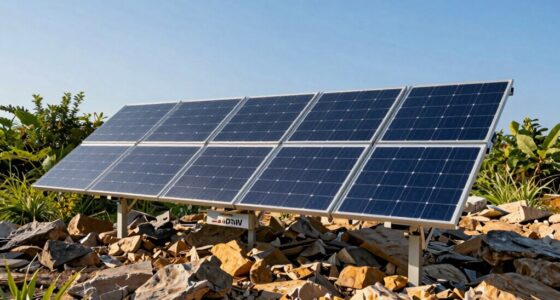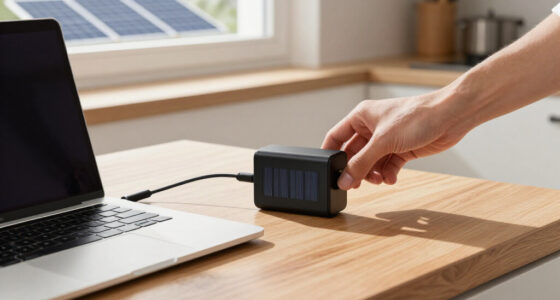
For storm readiness, my two picks solve different problems: the Ropelux 3000-Lumen Solar Motion Sensor Light is the brighter choice for a specific outdoor area, while the BioLite SolarHome 625 spreads lower-output light across several indoor or sheltered spots and adds a radio and USB charging. Neither can promise dependable light after days without sun; both rely on solar charging, and the BioLite’s 6W panel has to replenish its 25Wh control box.

Get backup power and energy gear delivered free with Prime
- Fast, free delivery on millions of items
- Prime Video, Amazon Music and more included
- Member-only deals all year
I rank Ropelux first for outdoor security and usable brightness around a garage, shed, or entry. BioLite is my pick for a more complete off-grid kit when power goes out and the household needs several light points and basic communication features. The tradeoff is straightforward: focused brightness and adjustable motion control versus distributed lighting and emergency extras. Buyers should choose based on where they need light, how they can mount the panel, and whether they need a kit rather than one powerful fixture.
Key Takeaways
- Ropelux is the better fit for lighting one outdoor area, with a stated maximum output of 3000 lumens and five modes.
- BioLite includes three 130-lumen hanging lights, an 80-lumen control-box light, an FM/MP3 radio, and USB charging.
- Ropelux’s separate panel and 16.4-foot cable allow placement away from the light to reach a sunnier spot.
- Only one BioLite hanging light has a motion sensor; its other two lights are not motion-activated.
- Both options need sunlight to recharge, so storm preparation depends on charging and positioning the panels ahead of poor weather.
| Ropelux 3000-Lumen Solar Motion Sensor Light with Remote |  | Best Overall for Bright Outdoor Coverage | Maximum brightness: 3000 lm | Lighting modes: 5 | Brightness adjustment: 20%–100% | VIEW ON AMAZON | See Our Full Breakdown |
| BioLite SolarHome 625 Emergency Solar Lighting Kit with Radio |  | Best Multi-Light Kit for Power Outages | Solar panel: 6W | Control box capacity: 25Wh | Included lights: 3 hanging lights and 1 control-box light | VIEW ON AMAZON | See Our Full Breakdown |
| outdoor solar lighting kit for storm | Maximum brightness | Lighting modes | Brightness adjustment | Motion sensing time |
|---|---|---|---|---|
| Ropelux 3000-Lumen Solar Motio | 3000 lm | 5 | 20%–100% | 16, 25, 35, or 45 seconds |
| BioLite SolarHome 625 Emergenc | — | — | — | — |
More Details on Our Top Picks
Ropelux 3000-Lumen Solar Motion Sensor Light with Remote
Ropelux takes the top spot because it addresses the clearest outdoor storm-prep need in this pair: lighting a defined exterior area with a much higher stated output than BioLite’s individual lamps. Its 3000-lumen maximum suits a garage approach, barn entrance, patio, or shed where a dim hanging light would leave too much of the area dark. Five modes, remote operation, and brightness adjustment from 20% to 100% also give more control than the BioLite kit offers at each lamp.
The separate panel is a useful distinction, not just an installation detail. Its 16.4-foot cable lets me place the light near the area that needs coverage while positioning the panel where it can receive stronger sun. That flexibility can matter when a wall faces away from the best daylight. The listing gives up to 12 hours of runtime, but actual performance depends on charging conditions and selected settings; buyers should not read that figure as a guarantee for every storm scenario.
Compared with BioLite, Ropelux is the better exterior fixture but the less complete outage package. It has no listed radio, USB charging, or set of portable hanging lights. Its motion sensor and selectable activation times can help conserve stored energy when the area is not continuously occupied, while its all-day options suit different lighting needs. The IP65 rating supports outdoor use, though installation still needs sensible placement and secure mounting. The key drawback is solar dependence: a run of cloudy weather can limit recharging, and the panel must be mounted separately. I’d choose it for one outdoor zone, not as the only light source for a whole home.
Pros:- 3000-lumen maximum output targets brighter coverage of one outdoor area.
- Five modes and adjustable brightness support different lighting needs and energy use.
- Separate panel with a 16.4-foot cable offers flexibility in solar placement.
- IP65 rating supports outdoor installation, with remote and button controls.
Cons:- Needs sunlight to recharge, which can be a limitation during prolonged cloudy weather.
- The solar panel requires its own installation and placement.
- It is a single light, without the radio, USB charging, or multiple hanging lamps found in BioLite.
Best for: People who need a bright, wall- or hanging-mounted light for a garage, patio, barn, shed, or exterior entrance and can place its panel in good sun.
Not ideal for: Households seeking several portable lights, a radio, or USB charging in one outage kit, or anyone who cannot mount a separate solar panel in a sunny location.
- Maximum brightness:3000 lm
- Lighting modes:5
- Brightness adjustment:20%–100%
- Motion sensing time:16, 25, 35, or 45 seconds
- Stated runtime:Up to 12 hours
- Solar panel cable:16.4 ft
- Water resistance:IP65
- Control and mounting:Remote and button; hanging or wall-mounted
Our verdict“I’d choose Ropelux for bright, adjustable light on one outdoor approach, while treating BioLite as the more versatile choice for spreading modest light through an outage.”
BioLite SolarHome 625 Emergency Solar Lighting Kit with Radio
BioLite is the more useful pick when a storm knocks out household power and one outdoor beam is not enough. The kit includes three hanging lights plus an 80-lumen control-box light, so I can think of it as a small off-grid lighting system rather than a single security lamp. Each hanging light is rated at 130 lumens, far below Ropelux’s 3000-lumen maximum, but the multiple fixtures can distribute light across separate places instead of concentrating it at one wall.
The broader emergency role comes from its extras. A 25Wh control box works with the 6W solar panel and supports USB charging, while the MP3/FM radio adds a way to receive audio without depending on a phone. One of the three hanging lights includes a motion sensor. That is a helpful feature for a selected area, but it is not equivalent to Ropelux’s motion-oriented setup across one powerful outdoor light: only one BioLite lamp is sensor-equipped, and the other two are not.
For storm lighting, the main compromise is output and replenishment. BioLite’s total stated output is 470 lumens across its lights, making it better suited to basic room, tent, shed, or task lighting than illuminating a broad driveway. The 6W panel also calls for realistic expectations about charging, especially when weather stays cloudy. Compared with Ropelux, BioLite offers more useful pieces for an outage but less punch for outdoor visibility. I’d favor it when several low-output lights and simple emergency electronics matter more than a bright exterior beam; I’d skip it if the main goal is lighting a large outdoor area.
Pros:- Three hanging lights and a control-box light provide multiple light points.
- Includes USB charging and an MP3/FM radio for added outage utility.
- One hanging light has a motion sensor.
- Solar panel and control box support off-grid operation when charged.
Cons:- The 6W solar panel may be limiting when charging conditions are poor.
- Only one of the three hanging lights has a motion sensor.
- Its 470-lumen total output is far below Ropelux’s maximum for outdoor coverage.
Best for: Campers or households preparing for outages who want several hanging lights, a control-box light, USB charging, and an FM/MP3 radio in one solar kit.
Not ideal for: Buyers who need high-output exterior illumination, want motion sensing on every lamp, or expect quick solar replenishment through cloudy storm conditions.
- Solar panel:6W
- Control box capacity:25Wh
- Included lights:3 hanging lights and 1 control-box light
- Hanging light output:130 lumens each
- Control-box light output:80 lumens
- Total light output:470 lumens
- Radio and charging:MP3/FM radio; USB charging
- Motion sensor:Included on one hanging light
Our verdict“I’d choose BioLite for spreading basic light and adding radio and USB functions during outages, but not for replacing a bright outdoor motion light.”

How We Picked
I compared these two products as storm-use lighting systems, not as interchangeable outdoor fixtures. My ranking gives weight to the kind of coverage each provides, how its solar panel can be positioned, and whether it offers useful functions beyond illumination. A bright security light can help with one exterior approach, but it does not replace several portable light points during an outage. A multi-light kit can serve more rooms or work areas, but its individual lamps are much dimmer than a dedicated high-output fixture.
I also looked at stated power and charging details, controls, weather suitability, installation demands, and the limits described in the supplied product information. Ropelux lists IP65 water resistance and a separate panel with a long cable, useful traits for an outdoor installation. BioLite provides a 6W panel, a 25Wh control box, USB charging, and a radio, making it a broader emergency kit rather than a high-output floodlight. I do not treat either product as a substitute for a generator or a guaranteed source of light through extended cloudy weather. The ranking reflects fit for an outdoor storm-lighting search: Ropelux leads for exterior brightness, while BioLite earns its place for outage versatility.
Factors to Consider When Choosing Outdoor Solar Lighting Kit For Storms
For storm lighting, I’d start with the location and task rather than the word “solar.” These products store and use power differently, and neither can collect much energy while clouds block the sun.Choose focused brightness or several light points
If the priority is seeing an entry, driveway edge, or work area outdoors, Ropelux’s 3000-lumen maximum makes it the stronger match. Its output is concentrated in one fixture, which is useful for visibility in a particular zone. BioLite takes the opposite approach: three 130-lumen hanging lamps and an 80-lumen control-box light can serve multiple spots, but each lamp is much less powerful. That makes it better for basic indoor or sheltered lighting than a large exterior area.
I would not compare the listed outputs as if they describe identical coverage. A single high-output fixture and several modest lamps serve different jobs. Decide whether a bright outdoor point or spread-out outage lighting would help more in your home or campsite.
Plan around sunlight and stored power
Solar gear is most dependable when its panel gets good exposure before bad weather arrives. Ropelux separates its panel from the light and supplies a 16.4-foot cable, which can make it easier to place the panel in a sunnier position. BioLite uses a 6W panel to charge a 25Wh control box. The supplied details do not give a charging-time estimate, so I would avoid assuming that a short break in the clouds will restore the kit fully.
For either option, set up and charge it ahead of a forecast storm, then test the controls and intended lighting locations. Solar charging depends on available sunlight; neither product should be treated as an unlimited or guaranteed source through an extended period of poor weather.
Match installation to the storm-use location
Ropelux is a mounted fixture, with hanging or wall-mount options and an IP65 rating for outdoor use. Its separate panel adds installation work, but also lets the light and panel occupy different positions. Check that both can be mounted securely and that the cable can reach without being stretched or placed where it may snag.
BioLite’s hanging lamps are more adaptable to tents, sheds, or indoor spaces during an outage. Its components weigh 1.8 kg according to the listed item weight, so it is still portable, but it is a multi-part kit rather than a permanently installed floodlight. Think through where the control box and lights will be kept, and how the panel will be positioned for charging.
Decide which extras matter during an outage
BioLite has the broader feature set for a power cut: USB charging, an MP3/FM radio, and multiple lamps. Those functions can be useful when household power is unavailable, though USB charging is not a substitute for a dedicated high-capacity power bank. The motion sensor appears on only one hanging light, so the kit does not provide motion activation at every point.
Ropelux keeps its role narrower. Its remote, five modes, adjustable brightness, and selectable motion-sensing duration support control of one fixture. Choose it for exterior lighting and BioLite for a compact collection of emergency lighting and electronics; buying either for the other’s main strength can lead to disappointment.
Set realistic expectations for runtime and brightness
Ropelux lists a runtime of up to 12 hours, but that is a stated maximum rather than a promise for every brightness level or charging condition. Lower brightness and motion-based operation may help manage energy compared with keeping a light at full output, but the exact runtime will depend on use and charge. BioLite’s listed total output is 470 lumens, yet the provided specifications do not state a runtime for the full kit.
For storm preparation, I’d plan around the lights’ roles rather than assume either system can illuminate continuously for days. Keep a separate backup plan for extended outages, and use these products where their stated strengths—bright focused coverage or multiple modest light sources—make the greatest difference.
Frequently Asked Questions
Which of these is better for lighting an outdoor driveway during a storm?
Ropelux is the closer fit because its stated maximum output is 3000 lumens and it is designed as a mounted motion-sensor light. BioLite’s 470 lumens are spread among several smaller lights, making it more suited to basic lighting in separate areas than broad driveway coverage. Ropelux still needs a charged battery and sunlight for recharging, so it is best prepared and mounted before storm conditions arrive.
Can either solar product keep working through several cloudy days?
Neither product description supports a guarantee of operation through several cloudy days. Both rely on solar charging, and limited sunlight can reduce how much stored energy is available. Ropelux lists up to 12 hours of runtime, while BioLite lists a 6W panel and 25Wh control box but no runtime figure. I’d charge the system in advance and keep other backup lighting available for a prolonged outage.
Does the BioLite SolarHome 625 provide brighter outdoor light than Ropelux?
No. The stated figures favor Ropelux for peak brightness: it reaches up to 3000 lumens, while BioLite lists 470 lumens total across its lights. BioLite’s advantage is having multiple fixtures that can be placed in different locations, plus a radio and USB charging. That arrangement supports broader basic outage use, but it does not match Ropelux as a bright exterior light.
Can the Ropelux solar panel be placed away from the light?
Yes. Ropelux includes a separate solar panel connected by a 16.4-foot cable, so the panel can be positioned apart from the fixture. This can help when the best sun exposure is not where the light needs to be mounted. Buyers should still plan the cable route and panel mounting location before installation, and the panel needs useful sunlight to recharge the light.
Which product is better if I want lighting and emergency electronics in one kit?
BioLite is the better match for that combination. It includes three hanging lights, a control-box light, USB charging, and an MP3/FM radio, while Ropelux focuses on one adjustable outdoor light. BioLite’s individual lamps have modest output, its panel is rated at 6W, and only one hanging lamp has a motion sensor. Choose it for multi-point outage utility rather than strong exterior illumination.
Conclusion
My recommendation depends on the job. Choose Ropelux if you want one brighter outdoor light for a garage, shed, patio, or entrance, and can mount its separate panel where it will receive sun. Choose BioLite SolarHome 625 if your storm plan calls for several modest light sources plus a radio and USB charging, especially for indoor, camping, or sheltered use. For homes that need both bright exterior visibility and distributed outage lighting, these products fill different roles rather than serving as direct substitutes. Whichever you pick, charge it ahead of severe weather and keep another backup light source for long stretches without sun.
Fall Picks

Philips Hue Essential Starter Kit – Bridge and 4 E26 Smart Bulbs
As an affiliate, we earn on qualifying purchases.