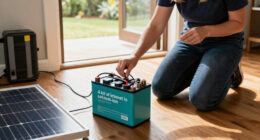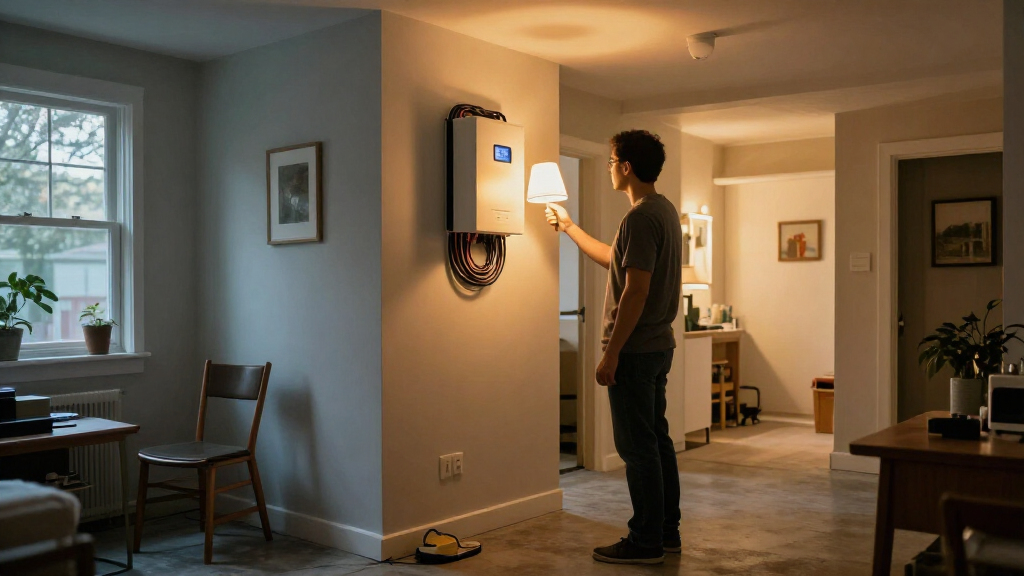

The best home battery backup systems balance usable capacity, power output, expandability, and ease of setup. My best overall pick is the FOSSiBOT F3600, whose 3,840Wh capacity and 3,600W output make it a strong fit for running several household essentials. The PECRON F3000LFP stands out for its large expansion ceiling, while the BLUETTI FridgePower is tailored to keeping a refrigerator powered. The main tradeoff is between a portable all-purpose station, a purpose-focused backup, and a system that can grow with your needs. Read on for how the eight options compare and which one best matches your home.

Get backup power and energy gear delivered free with Prime
- Fast, free delivery on millions of items
- Prime Video, Amazon Music and more included
- Member-only deals all year
Complete the kit

Key Takeaways
- FOSSiBOT F3600 leads on listed capacity and output among these picks, making it the strongest all-purpose choice for multiple essential loads.
- PECRON F3000LFP is the expansion standout: its listed capacity can grow from 3,072Wh to 10,752Wh, though that flexibility matters most to buyers who plan to add batteries.
- BLUETTI FridgePower takes a different route from general-purpose stations, pairing a refrigerator-focused role with expansion from 2,016Wh to 4,032Wh.
- The Jackery HomePower 3600 Pro Max and 3600 Plus both offer 3,584Wh, but the Plus listing specifies 3,600W output while the Pro Max listing emphasizes capacity; check exact output and configuration before choosing.
- The smaller-capacity options—Anker SOLIX S2000 and Jackery HomePower 2000 Plus v2—can suit lighter backup plans, but they offer less stored energy than the 3,000Wh-plus models.
| FOSSiBOT F3600 Portable Power Station |  | Best for High-Draw Appliances | Battery capacity: 3,840Wh, expandable to 11,520Wh | Battery chemistry: LiFePO4 | Continuous output: 3,600W | VIEW LATEST PRICE | See Our Full Breakdown |
| Anker SOLIX S2000 Portable Power Station |  | Best for Lighter-Duty Emergency Backup | Battery capacity: 2,010Wh | Battery chemistry: LiFePO4 | Continuous output: 1,500W | VIEW LATEST PRICE | See Our Full Breakdown |
| Jackery HomePower 2000 Plus v2 Power Station |  | Best for Expandable Essential-Circuit Backup | Battery capacity: 2,048Wh, expandable to 12kWh | Battery chemistry: LFP | Continuous output: 2,200W | VIEW LATEST PRICE | See Our Full Breakdown |
| Jackery HomePower 3000 Portable Power Station |  | Best for Fast-Recharging Mid-Size Backup | Battery capacity: 3,072Wh | Battery chemistry: LiFePO4 | Running output: 3,600W | VIEW LATEST PRICE | See Our Full Breakdown |
| Jackery HomePower 3600 Pro Max Portable Power Station |  | Best Premium Expandable Home Backup | Battery capacity: 3,584Wh | Expandable capacity: Up to 43kWh | Output: 4,000W, 120V/240V | VIEW LATEST PRICE | See Our Full Breakdown |
| BLUETTI FridgePower Backup System, 2016Wh Expandable to 4032Wh LFP Battery |  | Best Appliance-Specific UPS | Battery Capacity: 2016Wh (expandable to 4032Wh) | Battery Type: LFP (LiFePO4) | Output Wattage: 1800W continuous / 3600W surge | VIEW LATEST PRICE | See Our Full Breakdown |
| PECRON Portable Power Station F3000LFP – 3072Wh Solar Generator, 3600W LiFePO4 Battery, Expandable to 10752Wh, Home Backup, Camping & RV |  | Best for Fast Recharge & Expandability | Battery Capacity: 3072Wh LiFePO4 (expandable to 10752Wh) | Continuous Output: 3600W | AC Fast Charging: 1800W (full charge ~2h) | VIEW LATEST PRICE | See Our Full Breakdown |
| Jackery HomePower 3600 Plus Portable Power Station, 3584Wh, 3600W |  | Best for Portability & Parallel Power | Battery Capacity: 3584Wh | Output Wattage: 3600W (7200W in parallel) | Voltage: 120V; 240V in parallel | VIEW LATEST PRICE | See Our Full Breakdown |
| home battery backup system | Battery capacity | Weight | Battery chemistry | Continuous output |
|---|---|---|---|---|
| FOSSiBOT F3600 Portable Power | 3,840Wh, expandable to 11,520Wh | 42kg | LiFePO4 | 3,600W |
| Anker SOLIX S2000 Portable Pow | 2,010Wh | 35.7lb | LiFePO4 | 1,500W |
| Jackery HomePower 2000 Plus v2 | 2,048Wh, expandable to 12kWh | 40.6lb | LFP | 2,200W |
| Jackery HomePower 3000 Portabl | 3,072Wh | 59.5lb | LiFePO4 | — |
| Jackery HomePower 3600 Pro Max | 3,584Wh | 74lb | LFP | — |
| BLUETTI FridgePower Backup Sys | 2016Wh (expandable to 4032Wh) | 41.9 lbs | — | — |
| PECRON Portable Power Station | 3072Wh LiFePO4 (expandable to 10752Wh) | 63.3 lbs | — | 3600W |
| Jackery HomePower 3600 Plus Po | 3584Wh | 77.2 lbs | — | — |
More Details on Our Top Picks
FOSSiBOT F3600 Portable Power Station
The FOSSiBOT F3600 is the strongest fit here for buyers who need substantial output from a portable unit: its 3,600W continuous rating and 7,200W surge capacity can handle heavier startup demands than the Anker SOLIX S2000’s 1,500W continuous output. Its 3,840Wh battery also provides more reserve than the Jackery HomePower 2000 Plus v2, and optional expansion raises storage to 11,520Wh. That makes it better suited to keeping several essentials running or powering a demanding appliance than a smaller emergency pack. The tradeoff is substantial weight: at 42 kg, its wheels help with repositioning but do not make it easy to carry. Expansion batteries and solar panels are separate purchases, so the advertised flexibility requires additional components.
Pros:- 3,600W continuous output with 7,200W surge capacity for high-draw loads.
- 3,840Wh LiFePO4 battery expands to 11,520Wh with additional batteries.
- Up to 2,000W MPPT solar input supports substantial solar recharging.
- Five AC outlets plus USB and DC connections cover a range of household and RV devices.
Cons:- At 42 kg, it is cumbersome to carry despite its wheels and retractable handle.
- Expansion batteries and compatible solar panels are sold separately.
- Its high output and storage make it a larger commitment than compact backup units.
Best for: Households needing high inverter output for demanding appliances and the option to expand storage for longer outages.
Not ideal for: Buyers who need a unit they can regularly lift into a vehicle, or who want solar panels and expansion batteries included.
- Battery capacity:3,840Wh, expandable to 11,520Wh
- Battery chemistry:LiFePO4
- Continuous output:3,600W
- Surge output:7,200W
- AC outlets:5 × 120V
- Maximum solar input:2,000W MPPT
- Weight:42kg
- Cycle life:6,500+ cycles
Our verdict“Choose the FOSSiBOT F3600 if high appliance output and expandable storage matter more than easy lifting or an all-in-one solar bundle.”
Anker SOLIX S2000 Portable Power Station
The Anker SOLIX S2000 favors manageable backup for everyday essentials over the high-output, larger-capacity approach of the FOSSiBOT F3600. Its 2,010Wh LiFePO4 battery and 1,500W continuous output suit smaller household loads, while eight outlets let several devices connect without a pile of adapters. An advertised UPS switchover under 10ms adds value for compatible electronics that should stay powered through a brief interruption. At 35.7 pounds, it is easier to move than the 59.5-pound Jackery HomePower 3000. The tradeoff is less headroom for demanding appliances and no 12V DC port, which limits direct connection to some vehicle-oriented gear. Its claimed refrigerator runtime is conditional, not a guarantee: actual operation depends on the appliance and usage.
Pros:- 2,010Wh LiFePO4 battery provides substantial reserve for essential electronics.
- Eight outlets accommodate several connected devices.
- UPS switchover under 10ms supports continuity for compatible equipment.
- At 35.7 pounds, it is easier to move than larger units such as the Jackery HomePower 3000.
Cons:- 1,500W continuous output is below the FOSSiBOT F3600 and Jackery HomePower 3000.
- No 12V DC port for direct connection to some vehicle and DC appliances.
- Up to 400W solar input offers less solar charging headroom than higher-input models.
Best for: Apartment dwellers and households backing up routers, phones, lights, and other moderate loads who want a portable unit with UPS support.
Not ideal for: Buyers who need to run high-draw appliances, direct 12V DC equipment, or sustain larger household loads through a long outage.
- Battery capacity:2,010Wh
- Battery chemistry:LiFePO4
- Continuous output:1,500W
- Peak output:3,000W
- Total outlets:8
- Maximum solar input:400W
- UPS switchover:Under 10ms
- Weight:35.7lb
Our verdict“Pick the Anker SOLIX S2000 for portable backup of moderate loads and connected electronics, not for high-wattage appliances or extensive household coverage.”
Jackery HomePower 2000 Plus v2 Power Station
The HomePower 2000 Plus v2 stands out for buyers who want a portable starting point that can grow into a larger backup reserve. Its 2,048Wh LFP battery can expand to 12kWh, giving it a longer-term capacity path than the Anker SOLIX S2000, which is listed without expansion. Smart Energy Management and Priority Routing are aimed at keeping essential circuits supplied, a more directed backup approach than simply plugging assorted devices into the FOSSiBOT F3600. The unit weighs 40.6 pounds, making it easier to move than the Jackery HomePower 3000, though it is still a substantial carry. Output is the main constraint: 2,200W continuous is below both that larger Jackery and the FOSSiBOT, so buyers should match appliance loads carefully.
Pros:- 2,048Wh LFP battery can expand to 12kWh.
- Smart Energy Management and Priority Routing support a focus on essential loads.
- 40.6-pound weight is lower than the Jackery HomePower 3000’s listed weight.
- 140W USB-C output can charge compatible high-power devices.
Cons:- 2,200W continuous output trails the FOSSiBOT F3600 and Jackery HomePower 3000.
- Expansion capacity depends on additional batteries.
- At 40.6 pounds, it is not a lightweight unit for frequent carrying.
Best for: Homeowners who want a portable LFP station now and a path to expand storage for prioritized essential loads later.
Not ideal for: People who need more than 2,200W continuous output or want a high-capacity system without buying expansion batteries separately.
- Battery capacity:2,048Wh, expandable to 12kWh
- Battery chemistry:LFP
- Continuous output:2,200W
- Peak AC output:2,400W
- USB-C output:140W
- Cycle life:6,000+ cycles
- Weight:40.6lb
- Dimensions:14.37 × 10.24 × 10.73in
Our verdict“Choose the HomePower 2000 Plus v2 if expandable storage and prioritized essential loads matter more than maximum output in a single unit.”
Jackery HomePower 3000 Portable Power Station
The Jackery HomePower 3000 brings 3,072Wh of storage and 3,600W running output to buyers who want more reserve than a roughly 2kWh station without moving up to the FOSSiBOT F3600’s 3,840Wh capacity. Its charging flexibility is a practical strength: the listed AC recharge time is 2.2 hours, with hybrid AC/DC charging listed at 1.7 hours, and it can also take solar, car, or generator input. A TT-30 RV port makes it useful beyond household backup. The ≤20ms UPS switchover can help connected equipment ride through an interruption, though it is slower than the under-10ms claims for the Anker SOLIX S2000 and Jackery HomePower 3600 Pro Max. At 59.5 pounds, this is a station to position and leave in place, not carry around casually.
Pros:- 3,072Wh battery and 3,600W running output cover a broad range of backup loads.
- AC and hybrid AC/DC recharge times are listed at 2.2 and 1.7 hours.
- AC, solar, car, and generator charging options support different outage conditions.
- TT-30 RV port adds a useful connection for RV applications.
Cons:- At 59.5 pounds, moving it between rooms or vehicles takes effort.
- UPS switching of up to 20ms is slower than the under-10ms specifications of some alternatives.
- Solar panels are optional rather than included.
Best for: Households and RV owners who want around 3kWh of capacity, multiple recharge routes, and strong AC output in one unit.
Not ideal for: Buyers who need the lightest portable option, the fastest listed UPS switching, or the largest expandable capacity.
- Battery capacity:3,072Wh
- Battery chemistry:LiFePO4
- Running output:3,600W
- Surge output:7,200W
- UPS switching:≤20ms
- AC recharge time:2.2 hours
- Cycle life:4,000 cycles to 70% capacity
- Weight:59.5lb
Our verdict“Choose the HomePower 3000 for a versatile 3kWh backup station with fast listed recharging, provided its weight and UPS timing suit your setup.”
Jackery HomePower 3600 Pro Max Portable Power Station
For buyers planning beyond a single portable battery, the HomePower 3600 Pro Max offers the most ambitious expansion path in this group: 3,584Wh onboard can grow to a stated 43kWh, far beyond the FOSSiBOT F3600’s 11,520Wh expansion ceiling. It also supplies 120V/240V output and up to 4,000W, making it the more capable fit for a broader residential setup than the 120V Jackery HomePower 3000. Under-10ms UPS switching and operation below 30dB add appeal for backup placed near living spaces or sensitive equipment. The tradeoffs are clear: at 74 pounds it is the heaviest choice here, and a home backup setup requires a manual transfer switch. Buyers wanting a simple portable station may find the expansion potential excessive.
Pros:- 3,584Wh capacity can expand to a stated 43kWh.
- 120V/240V output and up to 4,000W support a wider range of residential loads.
- UPS switch time is under 10ms.
- Noise level is listed below 30dB.
Cons:- At 74 pounds, it is heavier than every other listed model in this batch.
- Home backup setup requires a manual transfer switch.
- Its large expansion potential may be unnecessary for buyers who only need portable emergency power.
Best for: Homeowners planning a substantial expandable backup system who need 120V/240V output and are prepared to arrange a manual transfer switch.
Not ideal for: Buyers seeking a lightweight grab-and-go station or a home backup setup that does not require transfer-switch installation.
- Battery capacity:3,584Wh
- Expandable capacity:Up to 43kWh
- Output:4,000W, 120V/240V
- Battery chemistry:LFP
- Cycle life:6,000 cycles
- UPS switch time:Under 10ms
- Noise level:Under 30dB
- Weight:74lb
Our verdict“Pick the HomePower 3600 Pro Max for expandable 120V/240V home backup, not for frequent transport or a transfer-switch-free setup.”
BLUETTI FridgePower Backup System, 2016Wh Expandable to 4032Wh LFP Battery
The BLUETTI FridgePower is a purpose-built uninterruptible power supply for refrigerators and other critical appliances, and it fills a role that general-purpose stations like the PECRON F3000LFP or Jackery HomePower 3600 Plus simply don’t address. Its 10ms switch time means a fridge never blinks during an outage, and the ultra-slim 75mm profile slides into tight spaces under counters or in utility closets. Out of the box, the 2016Wh capacity runs a standard fridge for two to three days, and adding the included BC200 expansion battery doubles that to 4032Wh. Compared with the Jackery, which offers more raw capacity but requires a rolling cart to move, the FridgePower is designed to be mounted once and forgotten. The tradeoff is a 1800W continuous output ceiling, so you can’t power a large AC unit or oven, and at 41.9 lbs it’s still heavy enough that wall mounting needs two people.
Pros:- Ultra-slim 75mm design fits in tight kitchen or utility spaces
- Fast 10ms UPS switch prevents fridge and freezer from losing power
- Expandable capacity from 2016Wh to 4032Wh with included BC200 battery
- Low 4W standby draw minimizes wasted energy
Cons:- 41.9 lbs weight makes installation awkward, especially for wall mounting
- 1800W continuous output excludes high-power appliances like large AC units or ovens
Best for: Homeowners who want a dedicated, always-on backup for their refrigerator, freezer, or sump pump and don’t need to power high-draw appliances.
Not ideal for: Anyone expecting a do-everything portable station for camping, tailgating, or running multiple heavy appliances simultaneously — the output limit and fixed mounting design make that a poor fit.
- Battery Capacity:2016Wh (expandable to 4032Wh)
- Battery Type:LFP (LiFePO4)
- Output Wattage:1800W continuous / 3600W surge
- Switch Time:10ms
- Standby Power Draw:4W
- Dimensions:13.78″ L x 22.83″ W x 2.95″ H
- Weight:41.9 lbs
- Power Sources:Solar, AC, car, lead-acid, generator
Our verdict“Buy the FridgePower if your priority is keeping food cold and your basement dry during outages, not powering the whole house.”
PECRON Portable Power Station F3000LFP – 3072Wh Solar Generator, 3600W LiFePO4 Battery, Expandable to 10752Wh, Home Backup, Camping & RV
The PECRON F3000LFP stands out because it attacks the two biggest annoyances of home backup: slow recharging and limited scalability. Its 1800W AC input fills the 3072Wh battery in about two hours, which is dramatically faster than the Jackery HomePower 3600 Plus’s standard AC charging and makes it practical to top up between outages. The expandable capacity up to 10752Wh (via a separately sold XT120-M cable) lets you grow from essential loads to nearly whole-house coverage, something the BLUETTI FridgePower can’t match because it’s capped at 4032Wh. With 3600W continuous output and 13 ports, it handles a fridge, sump pump, and several electronics at once. The real costs are physical: at 63.3 lbs it’s heavy, and the expansion cable adds an extra purchase. If you need fast turnaround after a storm and plan to add capacity over time, this is the better value than the Jackery for the same wattage.
Pros:- 3600W continuous output runs heavy appliances like refrigerators and sump pumps
- 3072Wh native capacity expands up to 10752Wh
- 1800W AC input reaches full charge in about 2 hours
- 13 output ports cover AC, USB-C PD, USB-A, car, and DC devices
Cons:- 63.3 lb weight makes transport and repositioning difficult
- Expansion requires a separate XT120-M cascade cable sold separately
Best for: Households that face frequent short outages and want a station that recharges quickly from wall or solar, with room to expand capacity later.
Not ideal for: Users who want a single, all-in-one purchase without extra cables or who need to move the station frequently — the 63.3 lb weight and required expansion cable are real hurdles.
- Battery Capacity:3072Wh LiFePO4 (expandable to 10752Wh)
- Continuous Output:3600W
- AC Fast Charging:1800W (full charge ~2h)
- Solar Input Max:1600W (25-120V)
- Output Ports:13 (6 AC, 2 USB-C PD 100W, 2 USB-A 18W, 1 car, 2 DC)
- UPS Switch Time:8-20ms
- Weight:63.3 lbs
- Warranty:2+3 years
Our verdict“Choose the PECRON F3000LFP if fast recharging and the ability to scale from 3kWh to 10kWh matter more than portability.”
Jackery HomePower 3600 Plus Portable Power Station, 3584Wh, 3600W
The Jackery HomePower 3600 Plus is the rare large-capacity station that actually tries to solve the mobility problem. Its wheeled base and telescopic handle let you roll 77.2 lbs across a garage or yard, something the PECRON F3000LFP and BLUETTI FridgePower force you to lug by hand. That portability pairs with parallel operation that unlocks 7200W output and 240V support, which is a step beyond the PECRON’s single-unit 3600W ceiling. The 3584Wh LFP battery is rated for 6,000 cycles and carries a five-year warranty, and hybrid AC+solar charging keeps it flexible. But the tradeoffs are real: the 240V mode requires a second unit and a parallel kit, and the built-in cables are fixed, so you can’t swap them out. Compared with the PECRON, it charges slower on AC (no 1800W input) and costs more per watt of capacity. Still, for someone who needs to move backup power between a home, RV, or job site, this is the most practical high-capacity option here.
Pros:- Wheeled design with telescopic handle eases transport of 77.2 lbs
- Parallel operation delivers 7200W output and 240V support
- LFP cells rated for 6,000 cycles with 5-year warranty
- Hybrid AC+solar charging plus generator input
Cons:- 77.2 lbs is still heavy to lift into vehicles or up stairs
- 240V operation requires a second unit and parallel kit
- Solar panel not included, adding to the initial cost
Best for: Owners of large homes, RVs, or workshops who need to move a high-capacity station between locations and want the option to scale to 240V or 7200W with a second unit.
Not ideal for: Budget-conscious buyers or those who need the fastest possible recharging — the PECRON F3000LFP charges in half the time and costs less per watt, and the Jackery’s 240V feature requires an extra purchase.
- Battery Capacity:3584Wh
- Output Wattage:3600W (7200W in parallel)
- Voltage:120V; 240V in parallel
- Expandable Capacity:Up to 21kWh per unit or 43kWh with multiple units
- Battery Type:LFP (6,000 cycles)
- Charging Options:Hybrid AC+DC, AC, solar, gas generator
- Weight:77.2 lbs
- Warranty:5 years
Our verdict“Pick the Jackery HomePower 3600 Plus if you need to roll your backup power around and might want to pair two units for 240V whole-home capability.”
How We Picked
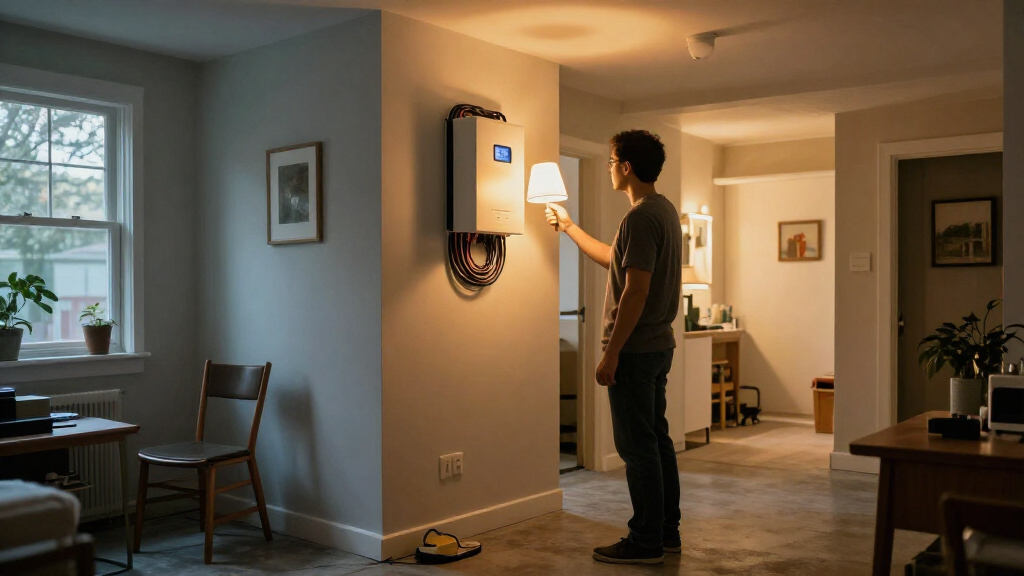
I ranked these systems around the job a home battery needs to do during an outage: supply enough stored energy for the intended runtime, deliver enough output for the devices being run, and fit the buyer’s setup and growth plans. Listed capacity and output helped distinguish large-load choices from lighter-duty options, while expansion support and use-specific design separated flexible systems from focused backups. I also weighed whether the product’s stated role and specifications make it straightforward to match with a realistic household backup plan.
The ranking favors systems with a persuasive combination of capacity, output, and practical versatility, rather than treating the largest number as an automatic win. The FOSSiBOT F3600 ranks first for its strong listed capacity and output; PECRON earns a distinct place for substantial expansion potential, and BLUETTI for refrigerator-focused backup. Where the supplied specifications do not establish a direct advantage—such as a model’s output or transfer setup—I avoid assuming it and recommend checking the exact configuration before purchase.
| home battery backup system | Battery chemistry |
|---|---|
| FOSSiBOT F3600 Portable Power | LiFePO4 |
| Anker SOLIX S2000 Portable Pow | LiFePO4 |
| Jackery HomePower 2000 Plus v2 | LFP |
| Jackery HomePower 3000 Portabl | LiFePO4 |
| Jackery HomePower 3600 Pro Max | LFP |
| BLUETTI FridgePower Backup Sys | — |
| PECRON Portable Power Station | — |
| Jackery HomePower 3600 Plus Po | — |
Factors to Consider When Choosing Best Home Battery Backup Systems
Before choosing a system, I would start with the loads you need to protect and the way you expect to use backup power. Capacity, output, installation, and expansion answer different questions; a high figure in one area cannot make up for a mismatch in another.
Match Capacity to the Outage Plan
Capacity, measured in watt-hours, is a stored-energy figure—not a promise that every appliance can run for a set number of hours. List the devices you want to power, their wattage, and how long you expect to use each one; then account for the fact that conversion and operating conditions reduce energy available at the outlet. A refrigerator that cycles on and off has a different energy pattern from a heater or kettle that draws heavily while running. A 3,000Wh-plus system such as the FOSSiBOT or PECRON gives more stored energy than the 2,000Wh-class Anker and Jackery options, but it may be unnecessary if your plan covers only a few modest loads. Avoid buying by capacity alone: a large battery can still be a poor match if its output cannot start or run your chosen equipment.
Check Running and Startup Power
Output in watts tells you how much power a station can supply at one time, while appliances with motors can briefly require more power at startup than they use once running. Add the running wattage of devices you expect to operate simultaneously, then check their startup requirements against the manufacturer’s specifications. This is especially relevant when a plan includes a refrigerator, sump pump, or other motor-driven load alongside lights and electronics. Among the listings here, the FOSSiBOT F3600 and PECRON F3000LFP specify 3,600W, while the Anker SOLIX S2000 lists 1,500W and the Jackery HomePower 2000 Plus v2 lists 2,400W. Do not infer that a model can handle a particular appliance from capacity alone; confirm continuous and surge ratings for the exact configuration.
Decide Whether Expansion Is Worth Planning For
An expandable battery can spread the purchase across stages, but added capacity is useful only if the main unit supports the batteries you intend to use and the combined setup fits your space and budget. The PECRON’s stated growth to 10,752Wh is the most ambitious expansion path in this lineup, while BLUETTI FridgePower expands from 2,016Wh to 4,032Wh. Those options suit buyers whose backup needs may grow or who want longer runtime later. If your outage plan is fixed and modest, a larger expansion ceiling may add complexity without helping today. Before buying, check compatible battery models, connection requirements, and whether the system’s output remains suitable as capacity grows.
Choose Between General Backup and a Specific Job
Some systems are positioned as broad portable power stations, while others are designed around a narrower household task. BLUETTI FridgePower’s refrigerator-focused identity may appeal to a buyer who wants a defined food-preservation backup plan rather than a general station for varied loads. A general-purpose unit can offer more flexibility across appliances, but that versatility does not automatically make it easier to connect to household circuits. Think through whether you will plug devices directly into the unit or want to power selected circuits; these are different use cases with different setup needs. Check the product’s supported connection method and qualified installation requirements before assuming a portable station can act as whole-home backup.
Plan for Charging During a Long Outage
A battery’s stored energy sets the starting point, but recharge options determine how useful it remains after that energy is spent. Look at the exact unit’s supported AC and solar charging inputs, recharge time under those conditions, and whether panels or cables are included or sold separately. Solar recharge can help during extended outages, though weather, panel placement, and available daylight make it less predictable than a wall outlet. A system intended mainly for short interruptions may not need the same solar setup as one expected to support repeated or prolonged outages. Avoid comparing solar claims without checking the input limit and the conditions behind the stated charging time.
Check Home Compatibility Before You Buy
Portable power stations commonly provide outlets for plugging in devices, but that is not the same as automatically powering a home’s wiring. If you want backup for wall circuits, confirm whether the specific model supports a transfer switch or another approved connection method, and ask a qualified electrician about local requirements. Also verify the number and type of outlets, voltage, simultaneous output limits, and whether critical appliances can connect without extension-cord hazards. The five AC outputs listed for the FOSSiBOT F3600 may help when several devices need direct connections, but outlet count alone does not confirm that all loads can run together. Make a compatibility checklist before purchase so the system’s role in an outage is clear.
Frequently Asked Questions
Can one of these portable battery stations power my home’s existing outlets?
Not automatically. A portable station’s AC outlets usually power devices plugged directly into it, while feeding selected household circuits requires a supported connection method and often professional installation. Check the exact model’s documentation for transfer-switch compatibility, output limits, and permitted wiring configurations. Ask a qualified electrician to confirm whether your panel and intended circuits can work with that setup. If you only need a refrigerator, router, and a few small devices, direct connection may be simpler.
Is a 2,000Wh system enough to keep a refrigerator running during an outage?
It may be enough for some refrigerators and outage durations, but capacity alone cannot give a reliable runtime estimate. Refrigerator energy use varies by model, age, temperature, how often the door opens, and how much food is inside. Startup demand also matters, so check both the appliance’s running and surge requirements against the battery system’s output. For a longer outage or extra devices, a larger-capacity or expandable choice may offer more margin. Measure or look up your refrigerator’s energy use before deciding.
Should I choose a higher-wattage unit or a higher-capacity one?
Choose based on the problem you need to solve: output governs how much power you can draw at once, while capacity affects how long stored energy may last. A high-output unit with limited capacity can run demanding equipment but may run out sooner; a high-capacity unit with insufficient output may not start that equipment at all. Write down the appliances you plan to use together and their startup needs, then estimate the energy they consume over your target outage period. The FOSSiBOT and PECRON listings pair 3,600W output with more than 3,000Wh capacity, while the smaller options may fit lighter plans. Verify the full specifications for the exact version before committing.
Is an expandable battery system a better choice than buying more capacity upfront?
Expansion is useful when your needs may grow or you prefer to add storage in stages, but it is not automatically the simpler choice. Check which add-on batteries are compatible, how they connect, and whether the combined system still meets your output needs. PECRON offers the largest stated expansion ceiling in this group, while BLUETTI FridgePower provides a more limited increase aimed at its refrigerator-backup role. If you already know you need long runtime, compare the cost and practicality of the complete setup rather than relying on a future expansion plan. If your load list is small and stable, a non-expanded system may be easier to manage.
What should I verify before relying on a battery backup for an outage?
Check that the unit can supply the running and startup power of every appliance on your plan, and estimate how long its capacity will last under that load. Confirm how you will connect devices, whether you need a transfer switch for household circuits, and which charging sources are available if the outage lasts. Keep the manual, cables, and any required adapters accessible, and test the planned setup before an emergency while following the manufacturer’s safety instructions. Pay particular attention to ventilation, placement, and keeping cords clear of walkways. A backup system works best when the load plan and connection method are settled in advance.
Conclusion
For a strong all-purpose balance of listed capacity and output, I recommend the FOSSiBOT F3600 as best overall. Buyers focused on a system that can grow should look first at the PECRON F3000LFP, my pick for expansion potential, while BLUETTI FridgePower is the best fit for a refrigerator-centered backup plan. For a lighter setup, the Anker SOLIX S2000 is a reasonable value-oriented choice based on its 2,010Wh capacity and 1,500W output; compare it with the Jackery HomePower 2000 Plus v2 if higher listed output matters more to you. The Jackery HomePower 3600 Plus is my premium-leaning option in this lineup for buyers seeking 3,584Wh paired with a listed 3,600W output, while the 3600 Pro Max also offers 3,584Wh but calls for a closer check of its exact output and configuration. For beginners, I would favor the system whose connection method and intended loads are easiest to verify before purchase—not simply the largest battery. Match the final choice to your appliance list, outage length, and home connection plan.