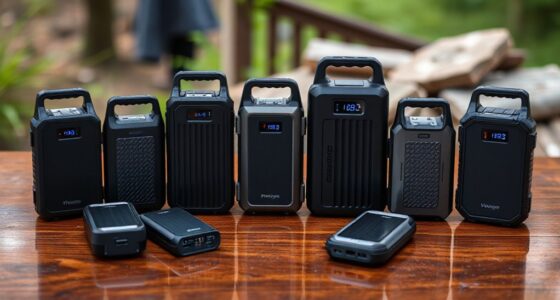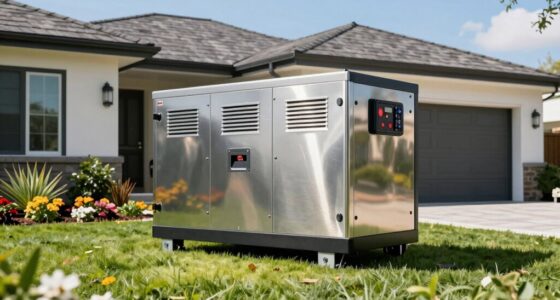

During heat waves, power outages can threaten your comfort and safety, especially when cooling systems fail. The best battery backup system for heat wave outages needs to provide reliable, long-lasting power to keep essentials running. The Jackery Solar Generator 5000 Plus stands out for its expandable capacity and solar compatibility, making it perfect for prolonged outages. For budget-conscious buyers, the CyberPower ST425 offers solid surge protection and backup at an affordable price. The main tradeoffs involve balancing capacity, portability, and upfront cost—larger systems often provide more runtime but are less portable. Keep reading to see how these options stack up and find the right backup for your needs.
Key Takeaways
- High-capacity portable power stations like the Jackery 5000 Plus excel for long outages, but come with higher costs and size considerations.
- UPS systems such as the CyberPower and APC models offer immediate backup for critical devices but typically have limited run time and power output.
- Battery chemistry matters—LiFePO4 batteries provide better longevity and safety compared to traditional lithium-ion options.
- Expandability and solar compatibility are key for sustained outages, especially for those looking to reduce reliance on grid power.
- Budget options like the DaranEner provide essential backup for small devices but fall short for powering larger appliances or multiple devices simultaneously.


More Details on Our Top Picks
Jackery Solar Generator 5000 Plus Portable Power Station with 7200W AC Output and Expandable Capacity
This model stands out for its massive capacity and expandability, making it ideal for enduring extended heat wave outages. Unlike the smaller CyberPower ST425, which offers limited runtime, the Jackery 5000 Plus can be scaled up to 60kWh, providing peace of mind during prolonged power failures. Its silent operation and eco-friendly LiFePO4 battery make it suitable for indoor use without disturbing household noise. However, the high price and unclear portability details mean it’s best suited for those prioritizing capacity over mobility. The need for optional solar panels might add extra cost but offers the benefit of renewable charging during outages.
Pros:- Massive expandable capacity up to 60kWh for prolonged outages
- Quiet operation with noise levels under 30dB
- Smart app control for remote monitoring and management
- Eco-friendly LiFePO4 battery ensures safer long-term use
Cons:- High upfront cost may be prohibitive for some buyers
- Weight and portability details are not specified, limiting mobility options
Best for: Homeowners seeking a reliable, long-term backup solution with expandable capacity for entire household needs
Not ideal for: Renters with limited space or those needing a lightweight, portable option for outdoor activities
- Capacity:5000Wh (expandable to 60kWh)
- AC Output:7200W (120V/240V)
- Battery Type:LiFePO4
- Weight:Not specified
- Noise Level:Under 30dB
- Response Time:0ms UPS
Bottom line: This pick is best for households prioritizing long-term, high-capacity backup power during extended outages.
CyberPower ST425 Standby UPS Battery Backup and Surge Protector, 425VA/260W, 8 Outlets
Compared with larger models like the APC 600VA, the CyberPower ST425 offers a compact and affordable solution for protecting essential electronics during brief outages. Its 425VA capacity handles basic devices like routers, modems, and small appliances, but it falls short for powering high-demand appliances or longer outages. The simulated sine wave output might not suit sensitive electronics like audio systems or medical devices, limiting its use for some consumers. Despite its limited runtime, it’s a practical choice for those needing a simple surge protector combined with backup power for critical small devices.
Pros:- Affordable and easy to set up
- Provides surge protection alongside backup power
- Compact design fits in small spaces
- Includes 8 outlets for multiple devices
Cons:- Limited runtime during extended outages
- Only supports small loads, not suitable for high-power appliances
- Simulated sine wave may not be ideal for sensitive electronics
Best for: Small households or individuals needing a reliable backup for essential electronics during short outages
Not ideal for: Users requiring backup for large appliances or prolonged outages, as runtime and capacity are limited
- Voltage:120 Volts
- Maximum Power:260 Watts
- Battery Charge Time:76 Amps
- Form Factor:UPS System
- Surge Protection Rating:890 Joules
- Noise Level:Not specified
Bottom line: This option is best for small-scale, short-duration backup needs in budget-conscious setups.
APC 600VA UPS Battery Backup & Surge Protector with 7 Outlets and USB Charging
The APC BE600M1 offers a dependable backup for critical devices like computers and routers, with a runtime of up to 23 minutes at 100W. Its user-replaceable batteries extend its lifespan and ensure ongoing protection, which is a key advantage over sealed models like the CyberPower CP1500PFCRM2U. However, the limited runtime and capacity mean it’s not suitable for powering high-demand appliances or during long outages. Its 7 outlets cover most small setups but might require additional surge protectors for larger systems. The USB port adds convenience for mobile device charging.
Pros:- Reliable backup power for critical devices
- User-replaceable batteries extend lifespan
- Includes USB charging port for mobile devices
- Affordable and easy to maintain
Cons:- Limited runtime for high-power loads
- Battery replacement involves additional purchase
- Not designed for long-term or high-capacity backup
Best for: Home office users or small households needing reliable backup for essential electronics during outages
Not ideal for: Users seeking to power large appliances or needing extended runtime for more devices
- Capacity:600VA / 330W
- Outlets:7 (5 backup + surge, 2 surge-only)
- USB Port:1.5A USB-A
- Runtime:Up to 23 minutes at 100W
- Warranty:3 years
- Protection:$75,000 Equipment Protection
Bottom line: This is a solid choice for individuals seeking dependable short-term backup for essential electronics.
CyberPower CP1500PFCRM2U PFC Sinewave UPS Battery Backup and Surge Protector, 1500VA/1000W, 8 Outlets, AVR, Short Depth 2U Rackmount, UL Certified
The CyberPower CP1500PFCRM2U excels in protecting sensitive electronics like security systems and high-end networking gear, especially with its active PFC support and automatic voltage regulation. Its 1500VA capacity is suitable for small to medium loads but falls short for whole-home backup. The compact 2U rackmount design makes it ideal for space-constrained setups, yet with only 8 outlets, it might require additional surge protectors for larger systems. Its detailed LCD display helps monitor real-time status, making it a good choice for tech-heavy environments that need reliable, clean power during outages.
Pros:- Supports active PFC power supplies and sensitive electronics
- Automatic voltage regulation extends battery life
- Compact rackmount design saves space
- Detailed color LCD for real-time monitoring
Cons:- Limited to 8 outlets, may need extra surge protectors
- Battery replacement required after warranty period
- Not suitable for powering large appliances or entire homes
Best for: Tech-savvy users or small businesses needing space-efficient, high-quality backup for sensitive electronics
Not ideal for: Homeowners seeking a high-capacity, whole-house backup solution, as this is limited in scale
- Capacity:1500VA/1000W
- Outlets:8 NEMA 5-15R
- Input:NEMA 5-15P right angle, 6 ft cord
- Display:Color LCD
- Depth:10.5 inches
- Warranty:3 years
Bottom line: This UPS is ideal for protecting critical, sensitive devices in space-constrained environments during outages.
Enphase IQ PowerPack 1500 Portable Power Station, 1500 W, LFP Battery, Fast Recharge, UL-Certified Solar Generator for Home Backup, Camping, RV, Emergency
This model stands out for its combination of fast recharge times and smart monitoring, making it highly suitable for those who need reliable backup during heat wave outages. Compared with the AFERIY P280, it offers a more integrated solar recharging option, but at a higher price and bulkier size. The microinverter technology ensures stable power, which is vital for sensitive electronics. While it’s not the lightest option, its durability and remote monitoring make it a strong choice for users who value peace of mind and real-time control.
Pros:- Fast recharge time via AC (75 minutes) and solar
- Multiple output ports for diverse device needs
- Microinverters provide stable, safe power
- Smart app integration for remote monitoring
Cons:- Relatively high price point compared to simpler units
- Heavy and bulky for portable use
- Requires solar panels for optimal solar recharge
Best for: Homeowners seeking a reliable, versatile backup system with smart features and solar compatibility
Not ideal for: People needing a highly portable, lightweight unit for frequent outdoor use or camping without grid access
- Battery Capacity:1500 W
- Recharge Time:75 minutes (AC), ~4 hours (solar)
- Output Ports:4x AC 120V, 4x USB-A, 2x USB-C, 1x DC 12V
- Cycle Life:2,500 cycles
- Temperature Range:-4°F to 122°F
- Warranty:5 years / 2,500 cycles
Bottom line: Best suited for users who prioritize stability, monitoring, and versatile backup for home and emergency scenarios.
AFERIY 2048Wh Portable Power Station with LiFePO4 Battery and 2400W Inverter
This pick makes the most sense for those needing extensive backup capacity with longevity; its 2048Wh LiFePO4 battery supports over 3500 cycles, surpassing the AFERIY P280’s cycle count. Compared to the smaller DaranEner, it offers more power and expandability, but at a higher initial cost and greater weight. The 2400W continuous power output ensures it can handle most household essentials, making it ideal for prolonged outages during heat waves. Its robust build and smart app management add to its appeal for serious users seeking reliable long-term backup.
Pros:- Long-lasting LiFePO4 battery with over 3500 cycles
- Supports up to 16 devices simultaneously
- Pure sine wave inverter for sensitive electronics
- Expandable capacity up to 10kWh
Cons:- Relatively heavy at 48.5 lbs, limiting portability
- Higher initial cost compared to smaller units
- Limited info on solar panel compatibility
Best for: Home users requiring a high-capacity, expandable backup system capable of supporting multiple appliances for extended outages
Not ideal for: Individuals needing a lightweight, portable unit for quick outdoor or camping use without extensive power needs
- Battery Type:LiFePO4
- Capacity:2048Wh
- Peak Power:4800W
- Cycle Life:3500+ cycles
- Weight:48.5 lbs
- Ports:6 AC, 2 USB, 4 Type-C, 2 DC5521, 1 Car Outlet, 1 XT60
Bottom line: Ideal for homeowners who want a durable, high-capacity backup that can grow with their needs and last for years.
AFERIY P280 Portable Power Station 2800W, 2048Wh LiFePO4 Battery, Expandable to 10kWh, Fast Charging, UPS for Home, Camping, RVs
This model is perfect for users who need substantial power with instant transfer, supporting up to 2800W continuously and expanding to 10kWh. Its 38-minute fast charge from 0-80% makes it a practical choice during heat waves, ensuring minimal downtime. Compared with the AFERIY 2048Wh, its higher surge capacity and expandability make it a better fit for more demanding needs. However, its larger size and cost may deter those looking for a portable, budget-friendly solution. Its reliable UPS function ensures critical devices stay powered during outages.
Pros:- Fast 38-minute charging from 0-80%
- High continuous power of 2800W and expandable to 10kWh
- Pure sine wave output for sensitive electronics
- Instant power transfer with <10ms response
Cons:- Relatively high initial cost
- Bulkier size may limit portability
- Limited details on weight and dimensions
Best for: Homeowners or campers who need a high-power, expandable backup system capable of supporting multiple devices during prolonged outages
Not ideal for: Individuals seeking a compact, lightweight unit for occasional outdoor use with limited power demands
- Battery Capacity:2048Wh
- Expandable Capacity:up to 10.24kWh
- Peak Power:5600W
- Charge Time:38 minutes (0-80%)
- Outlets:NEMA TT-30 industrial
- Cycle Life:4000+ cycles
Bottom line: Best for users who prioritize high power, speed, and expandability during extended outages or demanding outdoor activities.
DaranEner Portable Power Station 60,000mAh 192Wh LiFePO4 Battery Backup with 2 300W AC Outlets, Fast Charging for Emergency/Home/Outdoor Camping/RVs
This compact option makes sense for quick, short-term power during outages or outdoor activities, offering a reliable 192Wh capacity with 300W output. Compared with the larger AFERIY units, it is much lighter and easier to carry, making it suitable for occasional use or as a secondary backup. Its fast recharging ability via AC, car, or solar adds convenience, but its limited power ceiling means it cannot support high-wattage appliances for long. It’s an ideal choice for those who need a portable, easy-to-carry device for small devices or emergency charging during heat waves.
Pros:- Long-lasting LiFePO4 battery with over 3500 cycles
- Multiple recharging options including solar and car
- Lightweight at just 5.73 lbs
- Supports multiple devices simultaneously
Cons:- Limited to devices under 300W, unsuitable for high-power appliances
- Solar and car cables sold separately
- Not designed for extended, high-demand backup
Best for: Outdoor enthusiasts or emergency responders seeking a small, portable solution for charging essential devices quickly
Not ideal for: Homeowners needing to power large appliances or sustain prolonged outages
- Capacity:192Wh
- Continuous Power:300W
- Surge Power:600W
- Weight:5.73 lbs
- Recharging Methods:AC wall, car, solar (up to 60W)
- Cycle Life:3500+ cycles
Bottom line: Great for quick, portable device charging and short-term emergencies, but not for supporting high-wattage appliances during extended outages.

How We Picked
These products were evaluated based on their capacity to sustain power during extended outages, ease of use, build quality, and value for money. We prioritized systems that can reliably power critical devices in extreme heat conditions, considering both portable and stationary options. Additional factors included battery chemistry, expandability, charging options, and safety certifications. The ranking reflects a balance between high performance and affordability, aiming to recommend solutions suitable for different levels of preparedness and budgets.Factors to Consider When Choosing Best Battery Backup System For Heat Wave Outages
Choosing the right battery backup system for heat wave outages involves understanding several key factors. Capacity determines how long your devices can run, while portability affects whether you can move the system easily during emergencies. Battery chemistry influences longevity and safety, and expandability allows for increased capacity as needs grow. Cost is also a consideration—higher-capacity units typically come with a higher price tag but offer more reliable, long-term backup. By understanding these factors, you can select a system that provides peace of mind during extended outages.Capacity and Runtime
Capacity, measured in watt-hours (Wh), directly impacts how long your backup system can power essential devices. For heat wave outages, consider what appliances or devices you need to keep running—cooling units, fans, medical devices—and choose a system that can sustain them for the duration you expect. Larger capacity units like the Jackery 5000 Plus provide extended runtime but tend to be bulkier and more expensive. Smaller systems may suffice for short outages or powering only critical devices, but they might require frequent recharging or limit what can stay operational.
Portability vs. Stationary Use
If mobility is important—such as for outdoor use, camping, or moving between rooms—look for lightweight, portable options. Conversely, for home use where portability is less critical, larger, stationary systems can deliver higher capacity and longer backup times. Many models now feature wheels or handles to aid movement, but size and weight remain important considerations. Remember, portable units often sacrifice some capacity for ease of transport, so weigh your needs carefully before selecting.
Battery Chemistry and Longevity
The type of battery technology used affects safety, lifespan, and performance. LiFePO4 batteries are becoming popular because they offer better thermal stability, longer cycle life, and improved safety compared to traditional lithium-ion batteries. This makes them more suitable for repeated use during frequent outages or long-term emergency preparedness. Cheaper systems with older chemistries may degrade faster or pose safety risks if not properly managed, so investing in safer, more durable batteries can pay off over time.
Expandability and Solar Compatibility
For extended outages, expandability is a significant advantage. Many systems now support additional batteries or solar panels, allowing you to scale capacity as needed. Solar compatibility reduces dependence on grid power and can keep your backup charged even during prolonged outages. However, not all systems are compatible with solar or expandable, so verify these features if you anticipate needing more power or want a renewable backup solution. Keep in mind that solar setup requires additional investment and space, which may not suit every situation.
Cost and Overall Value
Price varies widely depending on capacity, features, and brand reputation. While it’s tempting to choose the most affordable option, consider whether it will meet your needs during prolonged heat waves. Cheaper units often have limited runtime and lower build quality, potentially leading to more frequent replacements. Investing in a slightly more expensive, reliable system can provide greater peace of mind and better long-term value, especially if it offers features like safety certifications, fast charging, or expandability.
Frequently Asked Questions
How long can a battery backup power my cooling system during a heat wave?
The duration depends on the capacity of your backup system and the power draw of your cooling device. Smaller UPS units may only last a few hours for essential electronics, while larger portable power stations with several thousand watt-hours can potentially run cooling fans or small AC units for multiple hours or even days. To estimate your specific needs, check the wattage of your appliances and compare it to the backup system’s rated capacity. Planning for longer outages often means choosing higher-capacity systems or ones that can be expanded with additional batteries.
Is solar compatibility worth the extra cost for a heat wave backup system?
Solar compatibility can significantly extend the usability of your backup system by allowing you to recharge during daylight hours without relying on grid power. For heat waves, where outages might last days or even weeks, solar panels provide a sustainable and cost-effective way to keep your system charged. Although initial setup costs are higher, the long-term savings and increased independence from the grid often justify the investment. If you live in a sunny area or plan for frequent outages, solar-ready systems are worth considering.
Should I prioritize capacity or portability for heat wave outages?
This depends on your specific situation. If you need to power essential devices at home during a prolonged outage, prioritizing capacity makes sense, even if it means a larger, less portable system. Conversely, if you want to be able to move your backup system easily for outdoor use or emergency situations, portability becomes more important. Many high-capacity systems are designed with portability in mind, but there’s often a tradeoff between size and runtime. Carefully consider your primary use case when making your choice.
What safety features should I look for in a battery backup system?
Safety features like thermal management, overcharge protection, and certification from recognized safety agencies are critical when choosing a backup system. Lithium iron phosphate (LiFePO4) batteries tend to be safer due to their thermal stability. Additionally, systems with built-in surge protection and automatic shutoff can prevent damage to connected devices and improve overall safety during power fluctuations. Prioritizing certified, well-built units can help avoid hazards and ensure reliable operation during emergencies.
Can I power my whole home with these backup systems during a heat wave outage?
Most portable backup systems and UPS units are designed to power only specific devices or critical loads, not an entire household. Larger, stationary systems or integrated home battery solutions can support more appliances but often require professional installation and significant investment. For most consumers, a backup system will cover essentials like fans, medical devices, and small appliances, but powering an entire home will typically demand a dedicated whole-house generator or a high-capacity, professionally installed battery system. Evaluate your critical needs carefully to determine what’s feasible within your budget.
Conclusion
For those seeking a reliable, long-term backup, the Jackery Solar Generator 5000 Plus makes the most sense for extended outages, especially if solar recharging is a priority. Budget-conscious users will appreciate the CyberPower ST425 for quick, affordable backup of essential electronics. If you prefer a high-end, scalable solution, the AFERIY P280 offers expandable capacity and fast charging. Beginners should focus on simple, user-friendly models like the APC UPS, while advanced users needing maximum power should consider stationary home battery systems. Choose based on your specific needs, budget, and the expected duration of outages.