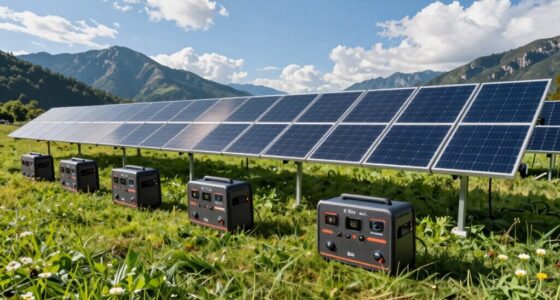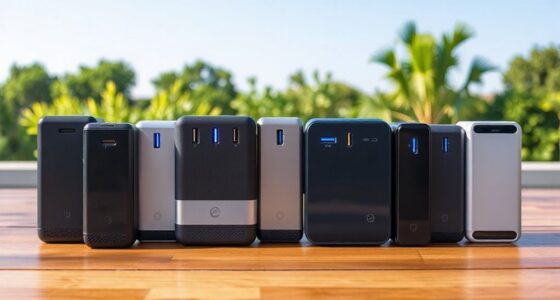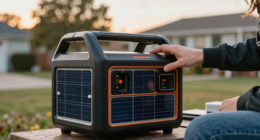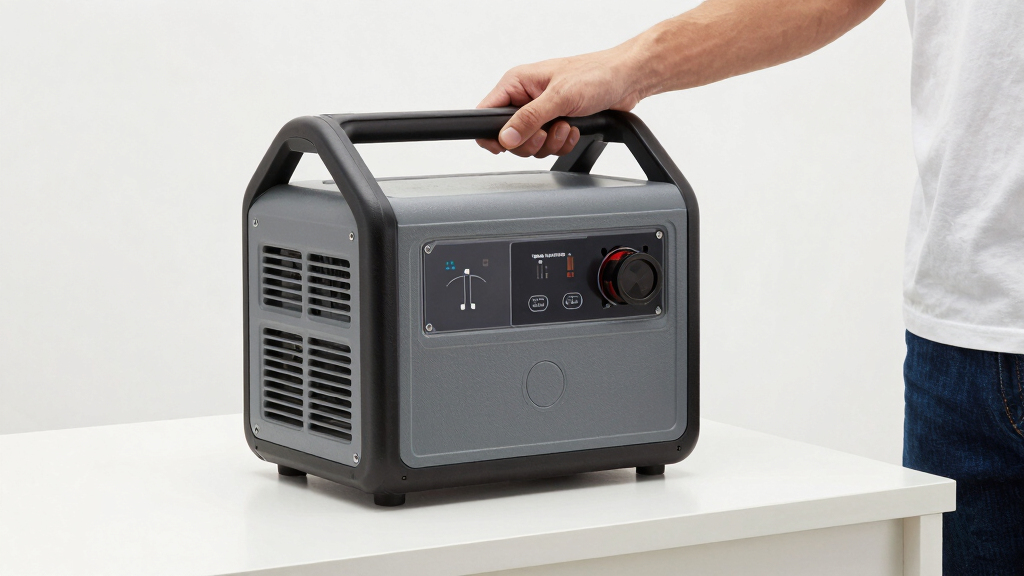
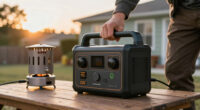
Choosing the best portable power station for a furnace blower involves balancing power output, size, and reliability. The Anker SOLIX C1000 Gen 2 stands out for its high capacity and robust build, making it ideal for demanding jobs. The BLUETTI Elite 100 V2 offers a compact design with high surge power, perfect for emergency backup. Meanwhile, the EF ECOFLOW DELTA 3 excels with fast charging and expandability. Common tradeoffs include size versus power and cost versus capacity, which can make selecting the right model tricky. Keep reading for a detailed breakdown to help you choose the best fit for your needs.
Key Takeaways
- High-capacity models like the Anker SOLIX C1000 are best for extended use but tend to be larger and heavier.
- Surge power is critical for furnace blowers to start reliably; models with higher surge ratings are preferable.
- Fast recharging features like in the ECOFLOW DELTA 3 can minimize downtime during outages or use in the field.
- Build quality and battery chemistry (LiFePO4 vs. standard Li-ion) influence longevity and safety.
- Size and portability vary significantly; smaller units are easier to carry but may lack sufficient power for longer runs.


More Details on Our Top Picks
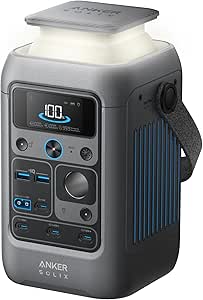
Anker SOLIX C300 DC Power Station, 288Wh Portable Solar Generator for Camping and Emergencies
This option stands out for its small size and ease of transport, making it perfect for outdoor enthusiasts who need a reliable power source for a furnace blower during camping or emergency situations. Compared with larger models like the Anker SOLIX C1000, the C300 sacrifices capacity but gains portability, which is often more valuable in remote settings. It offers a versatile array of charging ports, including USB-C and car outlets, enabling flexible power delivery. However, its 288Wh capacity limits how long it can run a furnace blower, especially if it’s a high-demand unit. The absence of a wall charger and limited solar compatibility mean it’s best suited for short-term use or emergency backup rather than sustained operation. This pick is ideal for users prioritizing light weight and quick setup over extended runtime.
Pros:- Ultra-lightweight and compact design for easy carrying
- Multiple charging options including USB-C and car socket
- Fast recharge capability and solar compatibility
Cons:- Limited capacity may not sustain a furnace blower for long
- No wall charger included and limited solar panel compatibility
Best for: Outdoor enthusiasts or emergency kits where portability and quick recharging are key
Not ideal for: Anyone needing prolonged furnace blower operation or higher capacity backup
- Battery Capacity:288Wh
- Battery Type:LiFePO4
- Power Output:300W
- Number of Ports:7
- Recharging Options:USB-C, Solar Panel, Car
- Weight:Not specified
Bottom line: This is best for users needing a small, portable power source for short-term furnace blower use outdoors or in emergencies.
Anker SOLIX C1000 Gen 2 Portable Power Station, 2000W (Peak 3000W), 1024Wh LiFePO4 Battery, Solar Generator for Home Backup and Camping
This model is better suited to users who need significant power to run a furnace blower for longer periods, thanks to its robust 1024Wh capacity and 2000W continuous output. Unlike the Jackery Explorer 1000, which offers a slightly smaller 1070Wh capacity but a lower surge power, the C1000 excels in handling high-demand appliances with greater stability. Its rapid recharge in under an hour and multiple outlets make it ideal for home backup or extended camping sessions where power reliability matters. The high price and reliance on app controls may be drawbacks for budget-conscious or less tech-savvy users. Furthermore, its 600W solar input limit could slow recharging during prolonged off-grid use. This pick is best for those needing substantial, reliable power with quick recharge times.
Pros:- High-capacity 1024Wh battery for extended operation
- Fast recharge in 49 minutes via AC or solar
- Reliable UPS backup with quick switch-over
Cons:- Higher cost may deter budget-conscious buyers
- Limited solar input rate could slow recharging in off-grid scenarios
- Requires app for full feature access, which may be less user-friendly
Best for: Homeowners or campers requiring dependable, high-capacity power backup for furnace blowers and other appliances
Not ideal for: Budget buyers or those preferring simple, screen-free operation without app dependency
- Wattage:2000W
- Peak Wattage:3000W
- Battery Capacity:1024Wh
- Recharge Time (AC):49 minutes
- Recharge Time (Solar):1.8 hours
- Number of Outlets:10
Bottom line: This is a strong choice for users prioritizing high power, rapid recharge, and home backup reliability for furnace blowers.
Jackery Explorer 1000 v2 Portable Power Station, 1070Wh LiFePO4 Battery, 1500W AC/100W USB-C Output, Fast 1-Hour Charge, Solar Generator for Camping, Emergency, RV, Off-Grid Living
The Jackery Explorer 1000 v2 strikes a balance between capacity and portability, with a 1070Wh battery capable of powering a furnace blower for several hours, depending on demand. Its 1500W AC output is suitable for most residential blower units, and the fast one-hour charging minimizes downtime. Comparing to larger models like the EF ECOFLOW DELTA 3, it offers less expandability but benefits from a lighter weight (23.8 lbs) and foldable handle, making it more practical for outdoor use. Its reliance on Jackery solar panels for solar input can be a limitation if you prefer third-party options. The need to restrict shipping to certain addresses might also pose logistical issues. Ideal for outdoor users who need portable, reliable power without excessive bulk.
Pros:- Powerful 1500W AC output suitable for furnace blowers
- Fast 1-hour recharge minimizes downtime
- Lightweight and portable with foldable handle
Cons:- Requires Jackery-specific solar panels for solar charging
- Limited to certain shipping addresses
- Not as expandable as some larger systems
Best for: Campers, RV owners, or those needing a portable backup for furnace blowers in outdoor or emergency situations
Not ideal for: Users seeking expandable or ultra-high capacity systems with multiple expansion options
- Battery Capacity:1070Wh
- Battery Type:LiFePO4
- AC Output:1500W
- Fast Charge Time:1 hour
- USB-C Ports:2
- Weight:23.8 lbs
Bottom line: This is a reliable, portable choice for outdoor users needing quick, stable power for furnace blowers.
BLUETTI Elite 30 V2 Portable Power Station 600W, 288Wh LiFePO4 Battery with UPS for Emergency & Outdoor Use
The BLUETTI Elite 30 V2 offers a compact form factor with 288Wh capacity, making it suitable for quick, short-term power needs like running a furnace blower during outages or outdoor activities. Its 600W continuous power output and surge capacity of 1500W give it enough muscle for many appliances, though it’s limited for prolonged furnace operation. Its ultra-light weight of just 9.4 lbs makes it easy to carry, especially compared to larger units like the EF ECOFLOW DELTA 3. Multiple charging options, including solar, make it versatile for quick recharges. Nonetheless, its capacity restricts how long it can sustain a furnace blower, and it relies on compatible solar panels for efficient solar input. This is best suited for emergency or short-term outdoor use.
Pros:- Very lightweight and portable at only 9.4 lbs
- High power surge capacity up to 1500W
- Multiple recharging options including solar
Cons:- Limited capacity for extended furnace blower use
- Requires compatible solar panels for optimal solar charging
Best for: Emergency kits and short outdoor trips where portability and quick power are priorities
Not ideal for: Long-term or high-demand furnace blower operation due to limited capacity
- Wattage:600W
- Battery Capacity:288Wh
- Output Wattage:600W
- Additional Features:UPS, fast charging, multiple modes
- Weight:9.4 lbs
- Maximum Surge Power:1500W
Bottom line: This is a practical, portable power station ideal for short-term emergency or outdoor use with a furnace blower.
EF ECOFLOW DELTA 3 Portable Power Station, 1024Wh LiFePO4 Battery, Fast Charging, 1800W AC/100W USB-C, Expandable Solar Generator for Home, Camping & RVs
The EF ECOFLOW DELTA 3 stands out for its substantial 1024Wh capacity and 1800W AC output, making it suitable for extended furnace blower operation in home backup or RV scenarios. Its ability to expand capacity up to 5kWh with additional batteries makes it a flexible, long-term solution. When compared to the Anker SOLIX C1000, the Delta 3 offers even more expansion potential, which is ideal for users with growing power needs. Its fast recharge in under an hour and IP65 rating for dust and splash-proofing add to its appeal. The higher weight and cost might be drawbacks for mobile outdoor use, but for stationary backup or large-scale outdoor use, it excels. This system is best for users needing high capacity, expandability, and durability.
Pros:- Large 1024Wh capacity suitable for long-term operation
- Expandable up to 5kWh for future growth
- Fast recharge in just 56 minutes
Cons:- Heavy at 12.5 kg, less portable for frequent movement
- Higher price point may limit affordability
- Requires additional batteries for maximum expansion
Best for: Homeowners or RV users requiring extensive, expandable power for furnace blowers and other appliances
Not ideal for: Lightweight outdoor adventurers or those with limited space seeking a small portable unit
- Battery Capacity:1024Wh
- AC Output:1800W
- Surge Power:3600W
- Full Charge Time:56 minutes
- Max Solar Input:500W
- Expandable Capacity:up to 5kWh
Bottom line: This is ideal for users seeking a high-capacity, expandable power station for continuous furnace blower operation and home backup.
Anker Portable Power Station SOLIX C300
The Anker SOLIX C300 excels in portability, offering 288Wh of LiFePO4 capacity with a 300W (600W surge) output, making it suitable for smaller furnace blowers or short-term backup. It shines compared to bulkier models like the BLUETTI Elite 100 V2, thanks to its lightweight and versatile charging ports, including multiple USB-C outputs. However, its limited power output means it can’t support high-wattage furnace blowers for sustained periods, and some solar panels may not be compatible, which could complicate off-grid charging. This pick makes sense for users who prioritize mobility and quick recharging over raw power, but it’s less suited for prolonged or high-demand furnace operation. Its main tradeoff is capacity — enough for short-term backup but not for extended runs.
Pros:- Lightweight and easy to carry
- Multiple charging options including fast USB-C
- Long battery cycle life of 3,000 cycles
Cons:- Limited power output restricts high-wattage devices
- Not compatible with all solar panels, reducing off-grid flexibility
Best for: Homeowners or campers needing a portable, quick-charging power station for occasional furnace blower use during outages or outdoor work.
Not ideal for: People with large furnace blowers or long-term backup needs, as its 288Wh capacity and 300W output limit sustained operation.
- Battery Capacity:288Wh
- Power Output:300W (600W Surge)
- Charging Ports:3x AC, 2x USB-C, USB-A
- Recharging Time:50 minutes to 80%
- Battery Type:LiFePO4
- Cycle Life:3,000 cycles
Bottom line: This is best for users seeking a portable and versatile backup power source for small to medium furnace blowers, not for continuous high-power needs.
BLUETTI Elite 100 V2 Portable Power Station
The BLUETTI Elite 100 V2 offers a substantial 1024Wh capacity, making it a clear choice for supporting larger furnace blowers during prolonged outages. Its 1800W (3600W surge) output surpasses both the Anker SOLIX C300 and smaller options like the BLUETTI Elite 30 V2, providing confidence in handling high-wattage devices. Its 4 AC outlets and fast-charging capabilities via solar or AC power make it versatile and reliable, particularly for emergency scenarios or backup at home. However, at around 25 pounds, it’s heavier than the smaller units, and the higher price point may be a barrier for some users. Compared to the Anker, it sacrifices portability for capacity and power. This machine is best for those who need robust, sustained, high-wattage support for furnace blowers and other critical appliances.
Pros:- Large 1024Wh capacity for extended backup
- High 1800W continuous output supports powerful furnace blowers
- Fast recharge in 70 minutes and multiple outlets
Cons:- Heavier and less portable than smaller units
- Higher cost may not suit budget-conscious buyers
Best for: Homeowners seeking reliable, high-capacity backup power for large furnace blowers and multiple devices during extended outages.
Not ideal for: Users who prioritize portability or have a tight budget, as its weight and cost are higher than smaller alternatives.
- Battery Capacity:1024Wh
- Power Output:1800W (3600W Surge)
- Number of Outlets:4
- Weight:25 lbs
- Dimensions:17L x 17W x 8H inches
- Charging Time:70 minutes
Bottom line: This model is ideal for those needing a high-capacity, reliable backup for demanding furnace blowers and multiple devices, accepting increased weight and cost.
How We Picked
These products were selected based on their power output, capacity, build quality, and suitability for powering furnace blowers. We prioritized models with high surge ratings to handle the startup current of blowers, along with battery chemistry that ensures durability over repeated cycles. Ease of use, recharging options, and portability also factored into the rankings, as these are key for practical, real-world applications. Products were compared on value, reliability, and versatility to identify the best options for both temporary and longer-term use. This approach ensures that each pick serves a specific role, whether for emergency backup or portable use in remote locations.Factors to Consider When Choosing Best Portable Power Station For Furnace Blower
When choosing a portable power station for a furnace blower, several factors come into play that can significantly impact your experience. Understanding these considerations helps prevent common mistakes like underestimating power needs or choosing a unit that’s too bulky. The right model depends on your specific use case, budget, and portability requirements. Below are key factors to evaluate to make an informed purchase.Power Output and Surge Capacity
Furnace blowers often require high startup power, so it’s essential to select a power station with a surge capacity that exceeds the blower’s starting current. Look for models with at least 150% of your blower’s running wattage to ensure reliable startup. A unit with insufficient surge capacity can cause the blower to fail to start or shut down unexpectedly. Always check both continuous and peak power ratings when comparing options.
Battery Chemistry and Longevity
Battery chemistry impacts both safety and lifespan. Lithium Iron Phosphate (LiFePO4) batteries provide longer cycle life and greater thermal stability compared to standard lithium-ion batteries, making them a better choice for frequent use or backup scenarios. Although LiFePO4 units are often more expensive upfront, their durability can reduce long-term replacement costs. Consider your expected usage to balance initial investment with overall longevity.
Size, Weight, and Portability
If you plan to move your power station frequently, size and weight become critical. Smaller, lighter models may have less capacity but are easier to carry around. Conversely, larger units with higher capacity tend to be bulkier and heavier, which might limit mobility. Assess your typical use environment—whether stationary or on-the-go—to select a model that balances power with portability.
Recharging Options and Speed
Fast recharging capabilities can significantly reduce downtime, especially during extended outages or outdoor use. Solar compatibility is an added advantage, allowing for renewable recharging in remote locations. Consider units with multiple recharging methods—AC wall outlets, car chargers, or solar panels—to maximize flexibility. Keep in mind that charging times vary and can impact your ability to maintain continuous operation.
Price and Long-Term Value
While budget models may seem appealing, they often compromise on capacity, durability, or surge power. Investing in a slightly more expensive unit with higher surge ratings and better build quality can provide peace of mind during critical moments. Think about your typical usage, frequency, and whether the extra initial cost will pay off over the product’s lifespan. A well-chosen power station can serve multiple purposes, increasing its overall value.
Frequently Asked Questions
Can a portable power station reliably power a furnace blower during an outage?
Yes, a quality portable power station with sufficient surge capacity can reliably power a furnace blower during outages. It’s important to verify the blower’s startup wattage to select a unit with an appropriate surge rating. Many models can provide power for several hours, depending on the blower’s power draw and the station’s capacity. For longer outages, consider a unit with expandable battery options or fast recharging features.
How do I determine the right capacity for my furnace blower?
Start by checking the blower’s wattage, which is usually listed on the label or in the manual. Multiply the startup wattage by 1.5 to account for surge power needs. Then, choose a power station with a capacity that exceeds this number to ensure reliable operation. Keep in mind that higher capacity units are heavier and more expensive, so balancing your power needs with portability is key.
Are LiFePO4 batteries worth the extra cost for powering a furnace blower?
LiFePO4 batteries offer longer cycle life, enhanced thermal stability, and greater safety compared to standard lithium-ion batteries. For applications like powering a furnace blower, which may require frequent use or long backup periods, this durability can justify the higher upfront cost. Additionally, they tend to maintain capacity over many charge cycles, making them a more economical choice over the long term.
Is it better to choose a smaller, portable power station or a larger, higher-capacity one?
The choice depends on your specific needs. Smaller units are easier to carry but may lack enough power for continuous operation or long backup periods. Larger, higher-capacity stations provide more power and longer run times but are less portable. If mobility is a priority, find a balance by selecting a unit with enough capacity for your blower’s startup wattage and typical run time without becoming unwieldy.
Can solar panels recharge my power station quickly enough for continuous use?
Solar panels can be an effective way to recharge a power station, especially if the station supports fast solar input or has a high capacity. However, recharge times depend on panel wattage, sunlight conditions, and the station’s input specifications. For continuous use, pairing your station with high-wattage solar panels and sunny conditions can keep it topped up, but don’t expect rapid recharges during overcast days or in winter months.