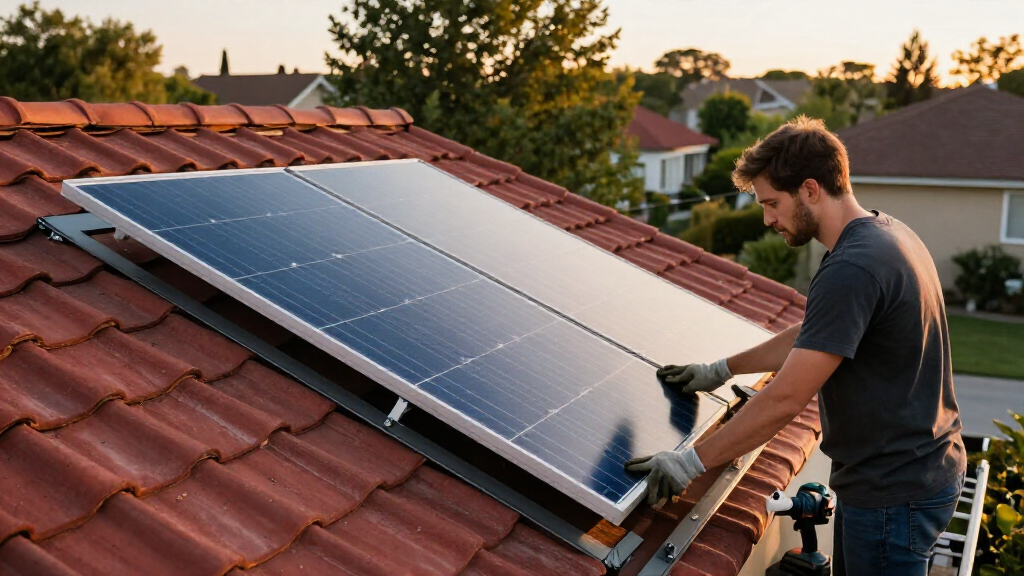

Choosing among rooftop solar panel kits starts with a basic distinction: some listings provide a near-complete power system, while others are panels and a charge controller that still need a compatible battery and installation plan. My strongest choice for buyers seeking an integrated off-grid setup is the ECO-WORTHY 10 kW kit, which bundles panels, inverter, and substantial battery storage. For a larger roof project where panel count and warranty matter more than an included inverter, I’d look at the SUNGOLDPOWER 31-panel set. The ZOUPW 220W kit is a more approachable small-system option, while ECO-WORTHY’s 200W kit offers a similar modest scale with different panel and mounting details.

Get backup power and energy gear delivered free with Prime
- Fast, free delivery on millions of items
- Prime Video, Amazon Music and more included
- Member-only deals all year
The main tradeoff is system completeness versus flexibility. The 10 kW kit includes major components but calls for professional installation and freight delivery. The 31-panel bundle supplies far more PV capacity, yet buyers must plan the rest of the system and handle heavy, full-size modules. The two compact kits are easier to place on a small roof or outbuilding, but their PWM controllers and low output make them poor substitutes for a whole-home array. I rank these picks by how clearly each serves a rooftop use case, how much of the system it supplies, and the practical demands it places on the buyer.
Key Takeaways
- ECO-WORTHY 10 kW: the most complete off-grid package here, pairing 2,950W of panels with a 10 kW split-phase inverter and about 16.1 kWh of LiFePO₄ storage.
- SUNGOLDPOWER 31-panel set: the highest listed panel capacity at 18,290W, with a long performance warranty, but it does not include the inverter, battery, or charge equipment needed for a full system.
- ZOUPW 220W: a compact kit with higher stated panel efficiency and a 10-year panel warranty, though its 30A PWM controller is limited to 400W of input.
- ECO-WORTHY 200W: offers included brackets and cabling plus 12V/24V wiring flexibility, but the one-year warranty and PWM controller limit its appeal for long-term rooftop investment.
- Roof fit matters: the SUNGOLDPOWER modules weigh 69.5 lb each and measure 90 × 44.7 inches; the small kits are easier to allocate to limited roof sections but produce much less power.
| ECO-WORTHY 10 kW Off-Grid Solar Panel Kit with 48V 314Ah Battery |  | Best Overall Complete Off-Grid Rooftop Package | Panel quantity: 5 bifacial panels | Total PV capacity: 2,950 W | Inverter output: 10,000 W continuous; 20,000 W peak | VIEW LATEST PRICE | See Our Full Breakdown |
| SUNGOLDPOWER 590W N-Type Bifacial Monocrystalline Solar Panels, 31-Pack |  | Best for Large Rooftop Arrays | Panel count: 31 | Maximum power: 18,290 W | Efficiency: Up to 22.8% | VIEW LATEST PRICE | See Our Full Breakdown |
| ZOUPW 220W Solar Panel Kit with 30A PWM Charge Controller |  | Best Compact Kit for Small Off-Grid Roofs | Panel configuration: 2 × 110 W | Maximum power: 220 W | Cell type: N-type 16BB monocrystalline | VIEW LATEST PRICE | See Our Full Breakdown |
| ECO-WORTHY 200W Solar Panel Kit with 30A PWM Charge Controller |  | Best Value-Style Entry Kit for 12V/24V Setups | Panel configuration: 2 × 100 W | Total panel power: 200 W | Cell type: Monocrystalline | VIEW LATEST PRICE | See Our Full Breakdown |
| rooftop solar panel kit | Efficiency | Cell type | Warranty | Maximum power |
|---|---|---|---|---|
| ECO-WORTHY 10 kW Off-Grid Sola | — | — | — | — |
| SUNGOLDPOWER 590W N-Type Bifac | Up to 22.8% | N-type monocrystalline, 16BB | 12-year materials and workmanship; 30-year linear performance | 18,290 W |
| ZOUPW 220W Solar Panel Kit wit | Up to 25.6% | N-type 16BB monocrystalline | 10 years for panels; 2 years for controller | 220 W |
| ECO-WORTHY 200W Solar Panel Ki | Up to 21.5% | Monocrystalline | 1 year | — |
More Details on Our Top Picks
ECO-WORTHY 10 kW Off-Grid Solar Panel Kit with 48V 314Ah Battery
This is my leading pick for a buyer who wants the main pieces of an off-grid system in one package rather than sourcing panels, inverter, and storage separately. It combines five 590W bifacial panels, a 10 kW split-phase inverter, and a 48V 314Ah LiFePO₄ battery listed at about 16.1 kWh. The 120V/240V output makes the inverter more adaptable to household loads than the 12V/24V architecture of the two small kits, although system design still needs to match the actual loads and electrical requirements.
Compared with the SUNGOLDPOWER set, this package is far more complete but provides only 2,950W of PV capacity versus SUNGOLDPOWER’s listed 18,290W. That distinction matters: ECO-WORTHY includes storage and conversion equipment, while SUNGOLDPOWER supplies a much larger panel field without those major system parts. The bifacial design may harvest additional light from the rear in suitable installation conditions, but I would treat the advertised uplift as site-dependent rather than guaranteed. The battery’s monitoring connectivity, wheels, and handles add useful access and portability around the system, not a substitute for safe installation.
The biggest drawbacks are scale and installation complexity. The kit ships by pallet freight, and professional installation is recommended; this is not the pick for someone hoping to mount a couple of panels over a weekend. Its 10 kW inverter rating also exceeds the 2,950W panel capacity, so buyers should read the complete system specifications and clarify expansion plans, operating limits, and compatibility before ordering. For buyers who value a bundled off-grid foundation and meaningful battery storage, those constraints are easier to justify than they are for a simple rooftop grid-tie project.
Pros:- Bundles five panels, a split-phase inverter, battery, and cables in one system package.
- About 16.1 kWh of LiFePO₄ storage supports energy use beyond immediate solar production.
- 120V/240V inverter output is more household-oriented than the compact kits’ 12V/24V setup.
- Battery supports Bluetooth, Wi-Fi, and PC monitoring; wheels and handles aid movement.
Cons:- Professional installation is recommended, and pallet freight makes delivery less convenient.
- The 2,950W PV array is much smaller than the 18,290W SUNGOLDPOWER panel bundle.
- Bifacial energy gains depend on installation and reflected light; they are not a fixed output increase.
Best for: A buyer planning an off-grid or backup-oriented installation who wants panels, inverter, and substantial LiFePO₄ storage bundled together and has access to qualified installation.
Not ideal for: A homeowner seeking a straightforward grid-tied rooftop array, a small DIY kit, or a package with enough panel capacity to match a very large inverter without future system planning.
- Panel quantity:5 bifacial panels
- Total PV capacity:2,950 W
- Inverter output:10,000 W continuous; 20,000 W peak
- Output:120V / 240V split-phase
- Battery:48V, 314Ah LiFePO₄
- Battery energy:16.076 kWh
- Panel efficiency:23.23%
- Certifications:TÜV and CSA
Our verdict“I’d choose this as the strongest all-in-one off-grid option here, provided the buyer plans around its modest PV capacity, freight delivery, and professional installation needs.”
SUNGOLDPOWER 590W N-Type Bifacial Monocrystalline Solar Panels, 31-Pack
For buyers with a large, suitable roof and a system designer already lined up, this 31-panel bundle offers the strongest stated panel capacity in the group: 18,290W across 31 modules. Its N-type monocrystalline cells, 16BB design, and dual-glass bifacial construction are aimed at a substantial fixed array. The listed efficiency reaches 22.8%, and the panel maker states up to 30% rear-side energy gain under favorable conditions. I would view that rear-side figure as dependent on mounting height, surface reflectivity, and layout—not as a promise for every roof.
Compared with ECO-WORTHY’s complete package, SUNGOLDPOWER puts much more emphasis on panel quantity and less on turnkey convenience. It does not list an inverter, battery, or controller in the package, so the buyer needs a compatible electrical design and must source the remaining equipment. That is a reasonable trade for someone who wants to configure a large array around existing or planned equipment, but a substantial extra step for a first-time buyer. Its 12-year materials and workmanship warranty and 30-year linear performance warranty also make the panel-only approach more appealing for a long-term project than the one-year warranty specified for ECO-WORTHY’s 200W kit.
Roof logistics are the deciding caution. Each panel weighs 69.5 lb and measures 90 × 44.7 inches, so transporting, lifting, laying out, and securing 31 modules calls for careful planning and likely professional help. This is not a compact solution and should not be ordered until roof area, structural capacity, access, electrical compatibility, and local requirements have been checked. Against the two small kits, its output and scale are in a different category; against the ECO-WORTHY 10 kW system, it trades included storage and inverter hardware for a far larger panel field.
Pros:- 31 panels provide the highest stated PV capacity in this comparison at 18,290W.
- N-type cells, 16BB design, and bifacial glass construction target efficient energy collection.
- Includes a 12-year materials and workmanship warranty and 30-year linear performance warranty.
- UL61730 certified by ETL and listed by CEC according to the supplied product details.
Cons:- Panels alone do not supply the inverter, battery, or other system equipment needed for a complete installation.
- Each 69.5 lb panel is large and may be difficult to handle on a roof.
- Rear-side energy gains depend on suitable site and mounting conditions.
Best for: A buyer planning a high-capacity rooftop array who has ample suitable roof area, a system designer or installer, and a plan for compatible inverter and storage equipment.
Not ideal for: Someone wanting a complete ready-to-connect package, a compact roof installation, or a DIY project without help handling large, heavy modules.
- Panel count:31
- Maximum power:18,290 W
- Efficiency:Up to 22.8%
- Cell type:N-type monocrystalline, 16BB
- Bifacial gain:Up to 30% rear-side energy gain, conditions dependent
- Dimensions and weight:90 × 44.7 in; 69.5 lb per panel
- Warranty:12-year materials and workmanship; 30-year linear performance
Our verdict“I’d choose this for a professionally planned, large rooftop array where panel capacity and long-term panel warranty matter more than bundled system hardware.”
ZOUPW 220W Solar Panel Kit with 30A PWM Charge Controller
ZOUPW’s kit is the better fit when a rooftop project means a small cabin, shed, boat, or RV rather than a household array. Its two 110W N-type panels total 220W, and the package includes a 30A PWM controller, brackets, cables, and connectors. The panel efficiency is listed at up to 25.6%, the highest figure among these four products, but that does not make the kit a high-output system: total rated capacity remains far below either large-array option.
Compared with ECO-WORTHY’s 200W kit, ZOUPW adds 20W of panel capacity, lists a longer panel warranty, and provides an LCD on its controller along with dual USB ports and built-in safeguards. The panels also have IP68 waterproofing and corrosion-resistant aluminum frames. ECO-WORTHY, by contrast, specifies a 2400 Pa wind and 5400 Pa snow load rating and includes a 16.4 ft solar cable, while the ZOUPW details emphasize a compact 26.9 lb listed kit weight and a 400W controller input limit. Buyers should confirm the actual mounting layout and controller-to-battery arrangement for their system rather than choosing by efficiency number alone.
The central compromise is the PWM charge controller. It keeps the package straightforward, but it is a less capable match for extracting power than many rooftop buyers may expect from a larger system; the controller is also limited to 400W of input. Its 12V/24V support and multiple battery-type compatibility offer flexibility for small off-grid setups, not a route to whole-home generation. I’d place it above ECO-WORTHY’s small kit for buyers who value the stated panel efficiency, warranty, and controller display, but neither compact product should be mistaken for a substitute for a professionally designed residential array.
Pros:- Two N-type panels provide 220W total in a compact off-grid package.
- Up to 25.6% stated panel efficiency and IP68-rated panel construction.
- Includes controller, cables, connectors, and Z-shaped mounting brackets.
- Controller includes an LCD, dual USB ports, safeguards, and support for 12V/24V systems.
Cons:- Uses a PWM controller rather than an MPPT controller.
- Controller input is capped at 400W, limiting expansion.
- Its 220W rating is intended for small loads, not a full household rooftop array.
Best for: A buyer fitting a small roof on an RV, boat, cabin, or outbuilding who wants an included controller and mounting accessories for a modest 12V or 24V system.
Not ideal for: A homeowner expecting meaningful whole-house power, a buyer needing a high-capacity MPPT-based rooftop setup, or anyone likely to exceed the controller’s 400W input limit.
- Panel configuration:2 × 110 W
- Maximum power:220 W
- Cell type:N-type 16BB monocrystalline
- Efficiency:Up to 25.6%
- System compatibility:12V / 24V
- Controller:30A PWM; up to 400W input
- Panel dimensions:38.2 × 22.7 × 1.2 in each
- Warranty:10 years for panels; 2 years for controller
Our verdict“I’d pick ZOUPW over the other compact kit for a small off-grid roof when its warranty and controller display appeal, while keeping expectations firmly at 220W scale.”
ECO-WORTHY 200W Solar Panel Kit with 30A PWM Charge Controller
ECO-WORTHY’s 200W kit is a straightforward small-system package: two 100W monocrystalline panels, a 30A PWM controller, Z mounting brackets, cables, connectors, and a tray cable. Its strongest practical feature is that the panels can be wired in series for a 24V setup or parallel for 12V, making it adaptable to common small off-grid arrangements. Pre-drilled holes, plug-and-play cables, an aluminum frame, and an IP68-rated junction box help reduce setup friction, though they do not remove the need to mount and wire a rooftop system safely.
Compared with the ZOUPW 220W kit, this model gives up 20W of stated panel capacity and the higher listed efficiency, but it provides a stated wind and snow load rating and included mounting hardware. The ZOUPW option has a longer panel warranty and a controller LCD, so I’d favor that one when those details matter more than load figures and wiring flexibility. Against the 10 kW ECO-WORTHY system, this 200W version is far easier to place on a small roof but lacks battery storage and a household-scale inverter. The listed estimate of up to 800Wh per day assumes four hours of full sunshine, so actual generation will vary with weather, shade, orientation, and system losses.
Its main limits are modest output, a PWM controller, and a one-year warranty. Those limits matter more for a permanent rooftop purchase than for a small cabin or mobile setup, where the included parts and basic system flexibility may be the main priorities. I would not rank it as a residential roof replacement or a route to substantial utility savings. It works best as an entry-level package for modest DC loads, provided the buyer checks battery compatibility and mounting conditions before installation.
Pros:- Includes two panels, controller, brackets, cables, and connectors.
- Can be wired for either 12V or 24V systems.
- Aluminum frames are rated for 2400 Pa wind and 5400 Pa snow loads.
- IP68 junction box and pre-drilled mounting holes support practical installation.
Cons:- The one-year warranty is shorter than ZOUPW’s stated panel and controller warranties.
- Uses a PWM charge controller.
- The stated 800Wh daily output assumes four hours of full sunshine and is not guaranteed.
Best for: A cost-conscious buyer building a modest 12V or 24V off-grid setup for a camper, boat, shed, or small cabin who values included cables and brackets.
Not ideal for: A buyer seeking a household rooftop system, long-term warranty coverage, high daily generation, or a charge controller designed for more demanding array performance.
- Panel configuration:2 × 100 W
- Total panel power:200 W
- Cell type:Monocrystalline
- Efficiency:Up to 21.5%
- System wiring:12V or 24V
- Controller:30A PWM
- Panel dimensions and weight:35.2 × 23.1 × 1.3 in; 31.6 lb listed
- Warranty:1 year
Our verdict“I’d choose this as a basic small-system bundle when included accessories and 12V/24V wiring flexibility matter more than a longer warranty or higher output.”
How We Picked
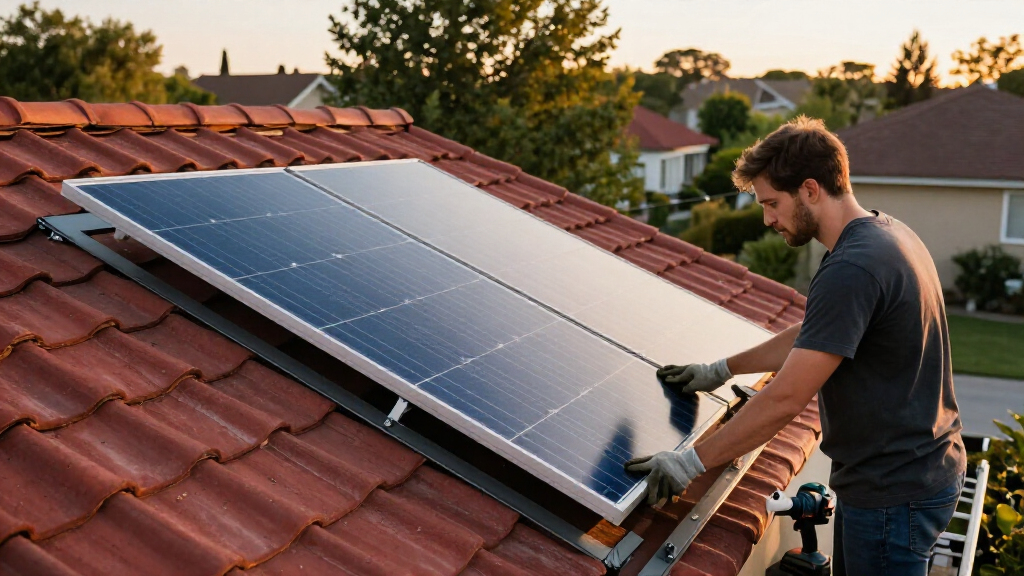
I ranked these products by their usefulness as rooftop solar panel kits, not by treating every panel bundle as an equivalent system. I compared stated PV capacity, included hardware, storage and inverter provisions, system compatibility, mounting practicality, warranty details, and the installation burden implied by each listing. Since rooftop projects depend on roof area, electrical design, shade, local rules, and installer choices, I give more weight to clear fit and system role than to headline efficiency alone.
The order reflects distinct buyer needs. ECO-WORTHY’s 10 kW package ranks first because it includes panels, inverter, battery, and cables, making its role easier to understand for someone planning off-grid backup or a standalone system. SUNGOLDPOWER ranks second: its large 18,290W panel array and warranty are compelling for a buyer designing a substantial rooftop installation, but it is a panel-only bundle and demands more component planning. The two 200W-class kits rank below those larger options because their output is suited to small 12V/24V applications rather than typical household rooftop generation.
I also account for practical constraints instead of relying on advertised output in isolation. Large panels can be difficult to move and fit, and small kits’ stated energy figures depend on sunshine and system conditions. Controller type matters: both compact kits use PWM controllers, while the provided details do not describe a comparable charge controller in the two larger listings. I do not assume compatibility beyond the stated specifications, and I recommend confirming roof loading, electrical design, permits, and component matching with a qualified installer before purchase.
| rooftop solar panel kit | Efficiency | Cell type |
|---|---|---|
| ECO-WORTHY 10 kW Off-Grid Sola | — | — |
| SUNGOLDPOWER 590W N-Type Bifac | Up to 22.8% | N-type monocrystalline, 16BB |
| ZOUPW 220W Solar Panel Kit wit | Up to 25.6% | N-type 16BB monocrystalline |
| ECO-WORTHY 200W Solar Panel Ki | Up to 21.5% | Monocrystalline |
Factors to Consider When Choosing Rooftop Solar Panel Kits
I’d begin by defining what “rooftop solar” means for the project. A cabin’s small DC setup, an off-grid house with battery storage, and a grid-connected residential array need different equipment. These four options span all three scales, but none should be chosen by panel wattage alone. The following checks help separate a workable system from a bundle that leaves major planning or hardware gaps.
Match system scale to the loads you need to serve
Start with a list of the appliances, devices, and hours of use the system must support. The 200W and 220W kits are for modest 12V/24V applications, not ordinary whole-home consumption. Their panel ratings describe nameplate capacity under specified test conditions, not guaranteed daily energy. ECO-WORTHY’s larger kit adds a battery and inverter, making it more relevant to an off-grid or backup design, but its PV array is still 2,950W. SUNGOLDPOWER’s 18,290W array offers much more panel capacity, yet the listing does not include the major conversion and storage components. I would size the array and battery against actual loads, location, seasonal sun, and backup goals before selecting a bundle.
Check what is—and is not—included
A product called a kit may include very different portions of a solar system. ECO-WORTHY’s 10 kW bundle lists panels, inverter, battery, and cables. The small ECO-WORTHY and ZOUPW products include panels, PWM controller, mounting brackets, and wiring parts, but not a battery in the supplied description. SUNGOLDPOWER is a panel set rather than a complete power system. Before ordering, confirm the package contents and identify any needed inverter, battery, disconnects, wiring, roof attachments, monitoring, and electrical protection. I would also verify that voltage and current specifications suit the chosen equipment; apparent compatibility based only on a shared system voltage can miss important limits.
Measure roof area and account for module handling
Panel count and dimensions should be checked against usable roof area, not just total roof size. Obstacles, edges, pathways, orientation, shade, and local fire or access rules can reduce the space available. SUNGOLDPOWER’s 31 modules are each 90 × 44.7 inches and weigh 69.5 lb, so transport and rooftop handling deserve serious attention. The compact ECO-WORTHY panels are 35.2 × 23.1 inches, while ZOUPW’s are 38.2 × 22.7 inches. Smaller modules can suit limited surfaces, though they supply a fraction of the power of a full array. Ask a qualified professional to assess roof condition and structural loading before installing any system.
Treat efficiency and bifacial claims as site-dependent
Efficiency describes how effectively a panel converts incoming light under specified conditions; it does not tell the full story of system output. ZOUPW lists up to 25.6% efficiency, while SUNGOLDPOWER and ECO-WORTHY’s larger panels also use high-efficiency or bifacial designs. Bifacial modules can collect light from the rear, but the amount depends on mounting clearance, roof surface, reflected light, and layout. A dark, close-mounted roof may provide less rear-side contribution than an installation designed to expose the back of the panels. I would compare expected production using the actual site and system design rather than treating “up to” figures as guaranteed daily generation.
Understand controller and inverter roles
The two compact kits include 30A PWM controllers. ZOUPW’s controller accepts up to 400W of input, which places a clear boundary on expansion. PWM can be adequate for simple small systems, but buyers planning a larger or more demanding array should ask whether a different controller architecture is needed. An inverter converts DC electricity to AC power; the small kits do not list an included inverter in their descriptions. ECO-WORTHY’s large kit does include a 10 kW split-phase inverter, while SUNGOLDPOWER’s panel bundle does not. Check continuous and surge loads, voltage, array limits, and battery requirements with an installer, rather than assuming a large inverter rating alone means the panels can supply that output.
Review warranties, installation, and delivery before committing
Warranty coverage differs sharply across the lineup. SUNGOLDPOWER specifies a 12-year materials and workmanship warranty plus a 30-year linear performance warranty; ZOUPW lists 10 years for its panels and two years for its controller; ECO-WORTHY’s 200W kit lists one year. Confirm what each warranty covers, who handles claims, and whether installation conditions affect eligibility. Delivery and labor also matter: ECO-WORTHY’s large system arrives by pallet freight and recommends professional installation, while heavy panels in the 31-pack still demand a safe handling plan. Rooftop electrical work may require permits, inspections, and licensed professionals depending on location. I’d confirm these practical details before the equipment arrives.
Frequently Asked Questions
Which of these rooftop solar kits is the most complete?
The ECO-WORTHY 10 kW package is the most complete option described here because it includes five panels, a 10 kW split-phase inverter, a 48V 314Ah LiFePO₄ battery, and cables. It is still an off-grid package that needs careful system design and professional installation. SUNGOLDPOWER supplies a much larger panel array, but the listing does not include an inverter or battery. The compact kits include controllers and mounting accessories but are designed for small systems, not full household power.
Can the 200W or 220W kits power a whole house?
Neither compact kit is sized as a whole-house rooftop system. Their 200W and 220W ratings suit modest off-grid applications such as a small cabin, boat, RV, or shed, depending on sunlight, battery capacity, loads, and system losses. They also use PWM controllers, and the ZOUPW controller has a 400W input limit. A household system needs a load assessment and a properly designed array, inverter, storage plan if required, and code-compliant installation.
Does bifacial solar mean the panels will produce 25% or 30% more power?
No fixed increase should be assumed from a bifacial claim. The listed rear-side gains are stated as possible maximums under suitable conditions, and actual contribution depends on reflected light, roof surface, mounting height, spacing, shading, and system design. A bifacial panel mounted close to a dark roof may not receive the same rear-side light as one installed above a reflective surface. I would ask an installer for a site-specific production estimate rather than using the maximum figure as a guaranteed output.
What should I check before putting these panels on my roof?
Check usable roof area, roof condition and structural capacity, module dimensions and weight, shading, orientation, mounting compatibility, local permit rules, and access for installation and maintenance. Then confirm the panel electrical specifications match the controller, inverter, and battery configuration. The SUNGOLDPOWER modules are large and weigh 69.5 lb each, while the ECO-WORTHY 10 kW package requires freight delivery and recommends professional installation. A qualified installer can verify roof loading and electrical design before purchase.
Are the compact kits easy DIY rooftop installations?
The included brackets, pre-drilled holes, cables, and connectors can make the compact kits simpler to assemble than a panel-only bundle, but they do not make rooftop electrical work risk-free. Safe attachment, weatherproof penetrations, wiring, controller setup, battery matching, and any required permits still matter. The ECO-WORTHY 200W kit lists a plug-and-play cable arrangement, and ZOUPW includes mounting hardware, but I would follow the manuals and use qualified help when roof work or electrical rules call for it.
Conclusion
For a buyer who wants panels, inverter, and substantial battery storage in one off-grid package, I’d start with the ECO-WORTHY 10 kW system, while planning for freight delivery and professional installation. If the priority is a large panel array with long-term panel warranty coverage and the rest of the system will be designed separately, SUNGOLDPOWER is the more suitable choice. For an RV, boat, small cabin, or outbuilding, I’d compare the two compact kits directly: choose ZOUPW for its higher stated efficiency, longer panel warranty, and controller display; choose ECO-WORTHY’s 200W kit when its 12V/24V wiring flexibility and stated wind and snow load ratings better suit the project. I would skip both compact models for whole-house power, and I would not order any large rooftop array before checking roof capacity, electrical compatibility, permits, and installation requirements.