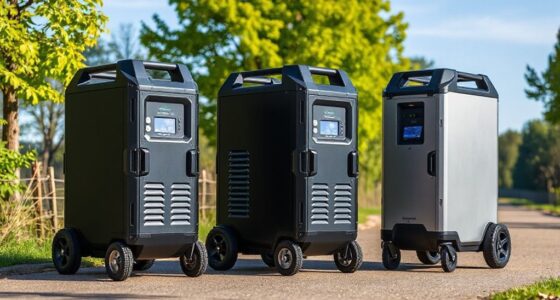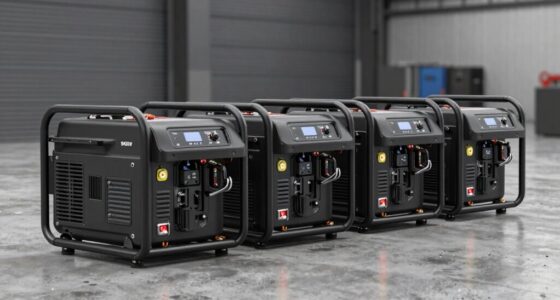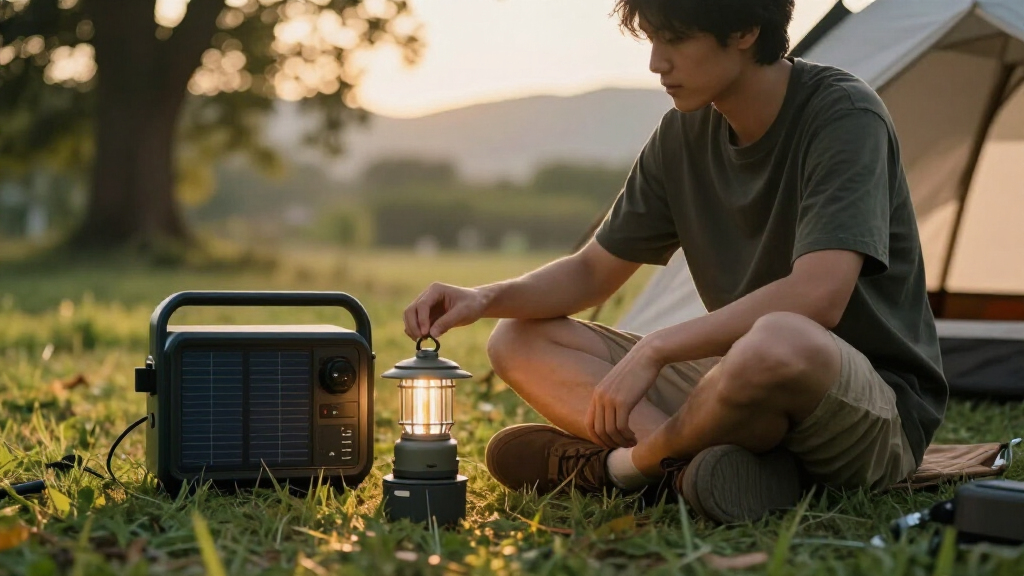
A solar-powered generator for camping has to balance three things that rarely cooperate: enough battery capacity to run your gear overnight, a solar panel big enough to recharge in a day of decent sun, and a weight you actually want to carry to a campsite. My top pick overall is the Anker SOLIX C1000 Gen 2, which pairs fast recharging with a well-built inverter for campers who want reliable power for multi-day trips. The OUKITEL P2001 Pro stands out for base-camp setups where raw capacity matters most, while the MARBERO 237Wh kit with a 60W panel is the smart budget choice for car campers who just need lights, a phone charger, and a small cooler. The main tradeoff in this category is simple: bigger capacity means heavier gear and slower solar recharging relative to what you drain, so the right pick depends on how long you stay out and what you plug in. Keep reading for the full breakdown of all 14 models.

Get backup power and energy gear delivered free — and shop member deals
- Fast, free delivery on millions of items
- Access to Prime Big Deal Days deals on October 6–7
- Prime Video, Amazon Music and more included
Complete the kit


Key Takeaways
- Capacity is the great divider in this lineup: the OUKITEL P2001 Pro (2048Wh) holds roughly 23 times the power of the Marbero 88Wh units, and most buyers overestimate what small units can run — anything under 300Wh will not handle even a portable fridge overnight.
- Several budget kits pair 300W stations with only 40W panels, which means 20-plus hours of good sun for a full recharge; the MARBERO 237Wh with a 60W panel recharges proportionally faster and is the better-matched budget pairing.
- Built-in solar panels (BROWEY and BLAVOR) trade charging speed for convenience — they suit campers who move often but cannot compete with a separate 200W+ panel for sustained recharging.
- The Jackery Solar Generator 1000 v2 with its 200W panel is the only mid-size kit here that can realistically recharge fully in a single sunny day, which is why it earns a top-three spot despite a higher asking price.
- Three of the 14 products are near-duplicates (the generic 300W stations and the two Marbero 88Wh options), and the differences between them — panel wattage, surge rating, included accessories — determine whether they are a deal or a trap.


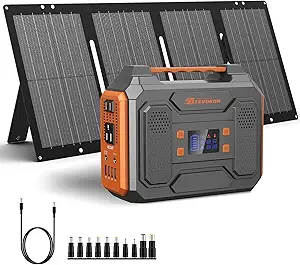


| solar-powered generator for camping | Capacity | Weight |
|---|---|---|
| Anker SOLIX C1000 Gen 2 Portab | 1,024Wh LiFePO4 | 11.3 kg (24.9 lbs) |
| BROWEY 1600W Portable Power St | — | — |
| PowerMax 3600SE Solar Power Ge | — | — |
| MARBERO 237Wh Solar Generator | — | — |
| Portable Solar Generator 300W | — | — |
| BLAVOR 1600W Solar Generator w | 1024Wh | — |
| Marbero Portable Power Station | 88Wh (24,000mAh) | 2.3 lbs (1.04 kg) |
| Jackery Solar Generator 300 wi | 292Wh | 7.5 lbs |
| Jackery Explorer 300 Portable | 292Wh | 7.5 lbs |
| Jackery Solar Generator 1000 v | 1070Wh | 23.8 lbs |
| MARBERO Solar Powered Generato | 88Wh | — |
| Portable Solar Generator 300W | — | 5 lbs |
| OUKITEL P2001 Pro 3200W/2048Wh | 2048Wh | 25 kg |
| Portable Solar Generator with | — | — |
More Details on Our Top Picks
Anker SOLIX C1000 Gen 2 Portable Power Station
For a camping trip where you want real appliance power without lugging a beast, the SOLIX C1000 Gen 2 hits a sweet spot few rivals match. Its 2,000W output runs kettles, portable fridges, and even hair dryers — something the 300W-class units like the MARBERO simply can’t touch — while the 1,024Wh LiFePO4 battery covers a weekend of family use. The standout trick is recharging: HyperFlash fills it in 49 minutes from a wall outlet, and solar input brings it back in roughly 1.8 hours under good sun, so you’re not babysitting panels all day. Compared with the BROWEY, which offers similar capacity but only 1,600W output, the Anker handles more demanding gear. The tradeoffs are real, though: at 11.3 kg it’s a two-hand carry, and some settings live behind an app that not everyone wants to fuss with at camp.
Pros:- 2,000W continuous output handles most camping appliances, not just phones and lights
- Recharges to full in 49 minutes via AC, or 1.8 hours via solar
- LiFePO4 chemistry rated for around 4,000 cycles for years of trips
- Nine outlets let you power up to 10 devices at once
Cons:- At 11.3 kg, it’s heavier than casual campers expect
- Some management features require the companion app
- No solar panel included — you buy panels separately
Best for: Weekend campers and families who want fridge, lights, laptops, and small cooking appliances running reliably for 2-3 days
Not ideal for: Backpackers and ounce-counters — at 11.3 kg it’s strictly a car-camping companion
- Capacity:1,024Wh LiFePO4
- AC Output:2,000W continuous / 3,000W peak
- Recharge Time:49 min (AC), 1.8 hrs (solar)
- Total Outlets:9
- Weight:11.3 kg (24.9 lbs)
- Dimensions:15.1″L x 8.2″W x 9.6″H
- Extra Features:UPS backup mode for critical gear
Our verdict“If you camp by car and want one power station that covers everything from a coffee maker to camera batteries, this is the pick that justifies its space in the trunk.”
BROWEY 1600W Portable Power Station with Built-in Solar Panel
Most power stations make you buy panels separately, but the BROWEY ships with a built-in solar panel and MPPT controller, which makes it the most self-contained option in this lineup. That matters if you want a grab-and-go kit: unfold, face the sun, and you’re generating power without extra cables or accessories. The 1,024Wh LiFePO4 battery matches the Anker SOLIX C1000 in capacity, though its 1,600W output sits a step below the Anker’s 2,000W — enough for a portable fridge, fan, and laptops, but not for a kettle. Compared with the MARBERO 237Wh kit, this is a different class of trip length: days rather than hours. The honest tradeoff is that the integrated panel adds bulk and weight, and recharging to 80% takes about 3 hours — noticeably slower than the Anker’s HyperFlash — so plan around sunlight rather than expecting instant top-ups.
Pros:- Built-in solar panel with MPPT controller means no separate panel purchases or wiring
- 1,024Wh LiFePO4 battery supports multi-day trips for moderate loads
- Multiple charging paths: solar, AC wall, and car outlet
- Advanced BMS protection keeps charging safe in varied conditions
Cons:- Heavier and bulkier than comparable stations without integrated panels
- 1,600W continuous output limits high-power appliances
- Solar recharging depends heavily on consistent direct sunlight
Best for: Campers who want a complete solar solution in one purchase, without researching and buying separate panels
Not ideal for: Anyone planning to run high-wattage appliances like electric kettles or hair dryers — 1,600W won’t cover them
Our verdict“Buy this if you value a single-box solar kit over maximum output — it trades some power headroom for true out-of-the-box energy independence.”
PowerMax 3600SE Solar Power Generator 3600W Power Station
When a weekend trip stretches into a week, capacity stops being a luxury and becomes the whole game. The PowerMax 3600SE’s 3,600Wh battery holds roughly three and a half times the energy of the Anker SOLIX C1000, and its 3,600W pure sine wave output can genuinely run a camp kitchen. With solar input up to 3,000W, it can recover a day’s usage in a few hours of strong sun — the MARBERO would need several days of perfect conditions to do the same. The smart app gives real-time monitoring, which is genuinely useful at this scale since you’re managing a small power system, not charging a phone. The tradeoffs are predictable: this is heavy, bulky, and priced accordingly. It’s a base-camp or RV-adjacent tool, not something you carry to a tent site, and it needs a serious panel array to hit those fast recharge numbers — a single 60W panel would be almost pointless against it.
Pros:- 3,600Wh capacity supports week-long off-grid stays without rationing
- Up to 3,000W solar input enables fast daytime recovery with a proper panel array
- Pure sine wave output is safe for sensitive electronics
- Smart app provides real-time monitoring and remote management
Cons:- Heavy and bulky — far beyond a one-person carry
- Premium price reflects capacity you may never use on short trips
- Fast recharging requires a large solar array most campers don’t own
Best for: Overlanding groups and base-camp campers running fridges, lighting, and cooking gear for a week or more
Not ideal for: Tent campers and anyone moving camp frequently — the size and weight make it impractical to carry
Our verdict“This is the right choice only if your trips are long or your power demands are serious; for weekend campers it’s overkill in every dimension.”
MARBERO 237Wh Solar Generator with Foldable 60W Solar Panel
The MARBERO 237Wh kit nails the budget entry point without the compromises of smaller 88Wh units like the Marbero 24,000mAh — which can top up phones but dies before a laptop finishes charging. Here you get enough capacity for a phone, a tablet, and a couple of laptop charges, plus a foldable 60W panel with a solid 21.5-23.5% conversion rate that keeps the battery topped up during the day. The 300W pure sine wave inverter is honest about its limits: it runs camp lights, a fan, or a CPAP briefly, but a kettle is off the table. Compared with the Anker SOLIX C1000, you’re giving up roughly three-quarters of the capacity and all appliance-level power — but also most of the weight and cost. The built-in LED flashlight with emergency modes is a nice touch for tent-side use. Just keep loads under 300W; pushing past that risks damaging the unit.
Pros:- Foldable 60W panel included, with strong 21.5-23.5% solar conversion
- Pure sine wave output is gentle on laptops and cameras
- Built-in LED flashlight with emergency modes
- Light and compact enough to move between car and campsite easily
Cons:- Hard 300W device limit — exceeding it can damage the unit
- 237Wh capacity drains quickly with any AC appliance
- Solar charging slows dramatically without direct sunlight
Best for: Budget-conscious car campers and festival-goers who mainly need phones, cameras, and laptops kept alive
Not ideal for: Anyone running a portable fridge or cooking appliances — 237Wh and 300W won’t sustain them
Our verdict“For the price of a nice camp chair you get a genuine phone-and-laptop solar setup, making this the smart entry point for casual campers.”
Portable Solar Generator 300W with 60W Solar Panel
This 300W unit with its foldable 60W monocrystalline panel positions itself as a compact emergency-and-camping hybrid — the SOS flashlight, multiple charging paths, and included adapters (wall, car, solar) make it a sensible glovebox or emergency-kit resident. Compared with the MARBERO 237Wh kit, it matches the 60W panel and adds a third AC-level charging route plus a fuller protection suite covering short circuit, over-current, over-voltage, overload, and overheating. It’s a solid fit for keeping a phone, tablet, and small fan alive on an overnight trip. But there are two honest caveats: the manufacturer doesn’t clearly specify battery capacity, which makes trip-planning guesswork, and the junction box isn’t waterproof — a real limitation for a product meant to live outdoors. The 20.5% conversion efficiency is respectable but a notch below the MARBERO panel, so expect slightly slower solar top-ups in the same conditions.
Pros:- Three recharge methods: AC outlet, solar panel, and 12V carport
- Five-layer protection system plus cooling for safe unattended charging
- SOS flashlight adds genuine emergency utility
- Bundle includes all cables and adapters needed out of the box
Cons:- Battery capacity is not clearly specified, making runtime planning difficult
- Junction box is not waterproof and must be kept dry
- Output drops noticeably in low-light conditions
Best for: Campers and households wanting a low-cost, multi-input backup unit for short outings and power outages
Not ideal for: Wet-weather or coastal campers — the non-waterproof junction box demands careful placement
Our verdict“A reasonable budget pick if you want flexibility and safety features over verified capacity — but check your runtime expectations before relying on it off-grid.”
BLAVOR 1600W Solar Generator with 1024Wh Capacity and Built-In 40W Panel
Most solar generator kits ship the panel and the battery as separate pieces — the BLAVOR 1600W builds a 40W solar panel directly into the unit, so there’s nothing extra to pack or forget. That self-sufficiency is what earns it a spot here: at a campsite, it starts trickle-charging the moment you set it down in the sun. With 1024Wh of LiFePO4 capacity and 4000+ rated cycles, it outclasses the Jackery Explorer 300 on raw endurance by more than three to one, and its 1600W output can actually run appliances like a kettle or a portable fridge. The tradeoff is weight — compared with the sub-8-pound Jackery units, this is a basecamp unit, not a backpacking one. And the built-in 40W panel is a convenience feature, not a full recharge strategy; topping up 1024Wh from sunlight alone takes days without adding an external panel (sold separately, capped at 200W input).
Pros:- Built-in 40W solar panel means one less thing to pack or forget
- 1024Wh LiFePO4 battery rated for 4000+ cycles of long-term use
- 1600W output (3200W peak) runs real appliances, not just phones
- 100W bidirectional USB-C charges laptops and recharges the unit fast
Cons:- Built-in panel charges slowly; meaningful solar recharging requires a separate external panel
- Bulky and heavy compared with sub-8-pound options like the Jackery Explorer 300
- External solar input capped at 200W
Best for: Campers and van-lifers who want one self-contained unit for basecamp power without managing separate panels
Not ideal for: Backpackers and hikers — the size and weight make it impractical to carry any real distance
- Capacity:1024Wh
- Power Output:1600W rated, 3200W peak
- Battery Type:LiFePO4
- Cycle Life:4000+ cycles
- Built-In Solar Panel:40W
- External Solar Input:Up to 200W (panel sold separately)
- USB-C Port:100W bidirectional fast charging
- Recharging Methods:AC wall, car, built-in solar, external solar
Our verdict“This pick makes the most sense for campers who want a single grab-and-go unit with solar baked in, as long as they accept its weight and the need for an add-on panel for serious recharging.”
Marbero Portable Power Station 88Wh, 120W Surge, Solar Generator 24,000mAh
At roughly 2.3 pounds and the size of a large sandwich, the Marbero 88Wh is the lightest option in this lineup by a wide margin — the Jackery Explorer 300 more than triples its weight, and the BLAVOR 1600W isn’t even in the same conversation. This model is better suited to buyers whose priority is keeping phones, headlamps, and a GPS alive rather than running appliances. Its 80W continuous output rules out anything demanding, but the built-in LED flashlight with SOS mode is a genuinely useful camping addition that larger units skip. The honest limitation: 88Wh runs out fast. Compared with the Marbero 237Wh kit elsewhere in this roundup, you’re trading roughly a third of the capacity for a much smaller footprint. Recharging from a solar panel is slow at this capacity class, so treat it as a battery bank with AC outlets, not a true generator.
Pros:- Genuinely pocketable at just over 2 pounds with a 6.5-inch footprint
- Eight output ports cover phones, tablets, cameras, and small gadgets
- Built-in LED flashlight with SOS mode doubles as camp lighting
- Fast recharge, 0-80% in about 2 hours from a wall outlet
Cons:- 88Wh capacity drains quickly beyond basic device charging
- 80W continuous output can’t handle high-power devices
- Solar recharging is slow and depends on compatible panels
Best for: Day hikers, tent campers, and emergency-kit builders who need to charge small devices with minimal pack weight
Not ideal for: Anyone running a cooler, CPAP, or laptop-heavy trips — 80W output and 88Wh capacity won’t sustain them
- Capacity:88Wh (24,000mAh)
- Continuous Output:80W
- Surge Power:120W
- Total Outlets:8
- Weight:2.3 lbs (1.04 kg)
- Dimensions:6.5 x 4.6 x 3.1 inches
- Recharge Time:0-80% in 2 hours
Our verdict“Buy it if pack weight is your top constraint and your needs stop at phones and small electronics; skip it if you expect generator-level performance.”
Jackery Solar Generator 300 with 40W Solar Panel
This is the complete package for a first solar setup: the Explorer 300 power station plus a bundled 40W panel, so a camping newcomer can generate power off-grid on day one without researching compatibility. That’s the key difference from the standalone Jackery Explorer 300 elsewhere in this list — same 292Wh unit, but here you’re not paying for a battery you can’t recharge in the field. The LiFePO4 chemistry with 4000+ cycles means the kit will outlast cheaper lead-acid or older lithium units by years of weekend trips. Be realistic about pacing, though: the included 40W panel takes about 7.5 hours of good sun for a full recharge, so multi-day trips with heavy AC use will outpace it. Pairing with a 100W panel cuts that to under 3 hours, but that’s an extra purchase. With 300W output, it handles a drone battery, camera gear, and a laptop comfortably — not a kettle.
Pros:- Panel and station bundled together, ready for off-grid use out of the box
- LiFePO4 battery rated for 4000+ charge cycles
- Lightweight 7.5-pound design with comfortable carry
- Full port spread: 2 AC, 100W USB-C, 2 USB-A, and a car port
Cons:- Included 40W panel needs 7.5+ hours of sun for a full charge
- 300W output limits appliance use
- Faster solar charging requires upgrading to a larger panel
Best for: First-time buyers who want everything needed for off-grid charging in one purchase
Not ideal for: Power-hungry campers running appliances — 300W output and 292Wh capacity cap what’s possible
- Capacity:292Wh
- Weight:7.5 lbs
- Output:300W
- Ports:2 AC, 1 USB-C (100W PD), 2 USB-A, 1 car port
- Included Panel:40W solar panel
- Solar Charge Time (40W panel):About 7.5 hours
- Solar Charge Time (100W panel):About 2.8 hours
- Battery Cycle Life:4,000+ cycles
Our verdict“The easiest on-ramp into solar camping: everything works together from day one, provided your expectations stay in the device-charging lane.”
Jackery Explorer 300 Portable Power Station, 292Wh
For buyers who already own a solar panel — or plan to add one later — the standalone Explorer 300 makes more financial sense than the bundled Jackery Solar Generator 300 kit. Same 292Wh capacity, same 7.5-pound weight, same 4000+ cycle LiFePO4 battery, just without paying for hardware you might not need. It slots neatly between the Marbero 88Wh (a third of the capacity, far fewer outlets) and the BLAVOR 1600W (triple the capacity, triple the weight), making it a sweet spot for 1-2 night tent camping trips where phones, a lantern, and maybe a drone battery need topping up. The integrated handle and sub-8-inch width mean it fits in a car trunk next to the cooler without thought. The honest drawback is runtime math: 292Wh is roughly five hours at moderate load, and with no panel in the box, a longer trip ends with a dead battery unless you budget for solar separately.
Pros:- Featherweight at 7.5 lbs with an integrated carry handle
- Versatile outlet spread: 2 AC, USB-C, 2 USB-A, and a car port
- LiFePO4 chemistry rated for 4000+ cycles of seasonal use
- Supports fast solar charging when paired with a panel
Cons:- No solar panel included — off-grid recharging costs extra
- 292Wh capacity is limiting for multi-day trips
- 300W output ceiling excludes most kitchen appliances
Best for: Weekend car campers who already own a compatible solar panel and want lightweight capacity for devices
Not ideal for: Extended off-grid trips or appliance users — the capacity runs dry and 300W won’t run high-wattage gear
- Capacity:292Wh
- Output:300W
- Weight:7.5 lbs
- Dimensions:9.1 x 5.2 x 7.8 inches
- Outlets:2 AC, 1 USB-C, 2 USB-A, 1 car port
- Battery Cell Type:LiFePO4 (4000+ cycles)
- AC Charge Time:About 4 hours
- Runtime:About 5 hours at moderate load
Our verdict“The right choice if you value portability and already have (or don’t need) a panel; buy the bundled kit instead if you’re starting from zero.”
Jackery Solar Generator 1000 v2 with 200W Solar Panel, 1070Wh, 1500W AC
At the top of this batch sits the Solar Generator 1000 v2, and the gap between it and everything else here is obvious: 1070Wh of capacity and 1500W of AC output mean it can run a portable fridge, an electric grill, or a CPAP machine for days, not just charge phones. The included 200W panel is a serious charging tool — full solar recharge in about 6 hours — and its 1-hour fast AC charging beats the BLAVOR 1600W’s slower top-up dramatically, a real advantage when you’re prepping between trips. Three AC outlets plus dual USB-C ports let it serve a whole campsite at once, where the Jackery Explorer 300 would tap out on the first appliance. The compromises are real too: at 23.8 pounds it’s over three times the Explorer 300’s weight, the panel and station ship separately so arrive on different days, and the fastest emergency charging mode is locked behind the companion app — a mild annoyance if you prefer hardware buttons to software.
Pros:- 1070Wh capacity with 1500W AC output runs real appliances simultaneously
- 1-hour fast AC charging preps the unit between trips quickly
- 200W solar panel included for full off-grid recharging in about 6 hours
- LFP battery designed for over 10 years of use
Cons:- At 23.8 lbs, it’s far heavier than sub-8-pound alternatives
- Panel and station ship separately, arriving on different schedules
- Fastest emergency charging mode requires the companion app
Best for: Family campers and overlanders who need appliance-level power and fast recharging for multi-day trips
Not ideal for: Minimalist tent campers — the weight and price of capacity you won’t use make smaller units the smarter buy
- Capacity:1070Wh
- AC Output:1500W (3000W surge peak)
- Weight:23.8 lbs
- Battery Type:LFP (Lithium Iron Phosphate)
- Included Panel:200W solar panel
- Ports:2 USB-C, 1 USB-A, 1 DC car port, 3 AC
- Fast Charge Time:1 hour
- Full AC Charge Time:3 hours
- Solar Charge Time:About 6 hours
Our verdict“If your camping involves refrigeration, cooking, or multi-day stays, this is the kit that ends the capacity anxiety — just be ready to carry it.”
MARBERO Solar Powered Generator 88Wh with 21W Solar Panel Kit
At just 88Wh, this MARBERO kit barely registers in a backpack, which is precisely why it earns a slot in a roundup dominated by heavier gear. Compared with the Jackery Explorer 300, it gives up roughly two-thirds of the capacity, but it also asks far less of your legs on the trail. The 21W panel is modest — expect slow solar recharges measured in hours, not minutes — yet it keeps a phone or headlamp topped off indefinitely in decent sun. What this kit does well is cover the essentials: a few phone charges, camera batteries, an LED lantern. It won’t run a portable fridge or a laptop through a full evening, and buyers who push past ~60W devices will hit its ceiling fast. This option makes the most sense for minimalists who treat power as a convenience, not a lifeline.
Pros:- Featherweight kit that fits inside a daypack
- Solar panel keeps the battery topped up off-grid
- Clean, quiet power with no fumes or fuel
- Simple enough for first-time solar users
Cons:- 88Wh capacity limits it to small devices
- 21W panel recharges slowly, especially in weak sun
- Cannot support high-power appliances or sustained loads
Best for: Solo hikers and weekend campers who only need phone, headlamp, and camera recharges
Not ideal for: Anyone running a 12V fridge, laptop, or CPAP — 88Wh runs dry quickly under those loads
- Capacity:88Wh
- Solar Panel Power:21W
- Battery Chemistry:Lithium-ion
- Best Use:Phones, headlamps, small electronics
- Portability:Ultralight, backpack-friendly
- Charging:Solar or AC
- Kit Includes:Power station + solar panel
Our verdict“A minimal, carry-anywhere kit for campers whose power needs stop at phones and small gadgets.”
Portable Solar Generator 300W with 40W Solar Panel
This 300W/220Wh kit hits a sweet spot that the smaller MARBERO 88Wh can’t reach: enough output for a laptop, a drone charger, and a small fan at once. The five-pound station plus 40W panel combination keeps the whole setup car-camping friendly, and the built-in LED floodlight is a genuinely useful touch for campsite dinners after dark — something the pricier Jackery Solar Generator 300 doesn’t match at this capacity class. Port selection is generous for the size, with two AC outlets, dual USB-C PD, and a carport, so a couple can charge everything without playing outlet roulette. The tradeoff is honest: 220Wh disappears fast if you lean on AC, so the solar panel isn’t optional — it’s part of your daily routine. Compared with the similar 300W kit with the foldable panel below, this one wins on lighting and port coverage.
Pros:- Charges phones, laptops, and small appliances simultaneously
- Built-in LED floodlight doubles as campsite lighting
- Lightweight 5 lb station with a full port spread including dual USB-C PD
- 40W panel meaningfully shortens solar recharge times
Cons:- 300W ceiling blocks anything with a heating element
- 220Wh needs daily solar input to sustain multi-day trips
- No carrying case or strap included for the panel and station together
Best for: Couples and small groups car camping who want laptop and multi-device charging on a budget
Not ideal for: RV owners or base-camp setups running fridges and induction cooktops — 300W output and 220Wh fall short
- Power Capacity:300W
- Battery Capacity:220Wh (60000mAh)
- Solar Panel Power:40W
- Weight:5 lbs
- Dimensions:8.5×6.7×4.1 in
- Ports:2 AC outlets, 3 USB-A, 2 USB-C PD, 1 DC carport
- Extras:Built-in LED floodlight
Our verdict“The most sensible all-around kit for car campers who want real port variety and camp lighting without hauling a big station.”
OUKITEL P2001 Pro 3200W/2048Wh Portable Power Station with 400W Solar Panel
The OUKITEL P2001 Pro plays a different sport than everything else here. With 2048Wh of capacity and 3200W of output, it runs a portable fridge, an electric kettle, and string lights simultaneously — capabilities the Jackery Solar Generator 1000 v2 and even the PowerMax 3600SE class can appreciate but at very different price tiers. The LiFePO4 chemistry rated for 4000+ cycles means this battery will outlast several camping seasons of hard use, unlike the lithium-ion packs in the 300W kits. Its party trick is speed: full AC recharge in 1.5 hours, or 80 minutes combining solar and wall power, so turnaround between trips is nearly effortless. The 400W panel is a serious charger, not an afterthought. The cost of all this is literal: 25 kg of weight and a premium price that overshoots what tent campers need.
Pros:- 2048Wh capacity and 3200W output run multiple appliances at once
- LiFePO4 battery rated for 4000+ charge cycles
- Exceptionally fast recharging via AC or combined solar+AC
- 400W solar panel provides genuine off-grid recovery, not trickle charging
Cons:- 25 kg weight requires two hands and a vehicle
- Advanced feature set and app control add setup complexity
- Premium capacity comes at a premium price
Best for: Overlanding families and base-camp groups who run fridges, cooking appliances, and home backup from one unit
Not ideal for: Tent campers and backpackers — the 25 kg weight makes it a vehicle-only proposition
- Capacity:2048Wh
- Power Output:3200W
- Battery Type:LiFePO4 (4000+ cycles)
- Solar Panel Power:400W
- Weight:25 kg
- Charging Time:1.5 hours (AC), 80 minutes (solar+AC)
- Connectivity:Bluetooth and WiFi app control
- Ports:Multiple AC outlets, USB-C PD, DC outputs
Our verdict“If your camping looks more like a mobile kitchen and you want years of battery life, this is the overkill-that’s-worth-it pick.”
Portable Solar Generator with Panel, 300W Power Station and 40W Foldable Solar Panel for Camping and Home Use
Where the OUKITEL P2001 Pro demands study, this kit asks almost nothing of you — plug in, unfold the panel, go. That simplicity is its core appeal for first-time buyers, and the foldable 40W panel packs flatter than rigid alternatives, sliding alongside camp chairs instead of needing its own bag. Output matches the other 300W station in this lineup at 300 running watts (550W surge), so it powers the same category of gear — laptops, fans, drone batteries — while adding built-in safety protections and an SOS flashlight that give it a home-emergency angle the camping-only kits skip. Compared with the MARBERO 237Wh kit with the 60W panel, it trades panel wattage and capacity for a friendlier, safety-first package. Realistically, its runtime and output limits are the same story: small devices only, and the sun is your fuel truck.
Pros:- Truly plug-and-play setup with no learning curve
- Foldable panel stores flat and travels easily
- Built-in safety protections plus SOS flashlight for emergencies
- Four outlets cover AC, USB, and DC charging needs
Cons:- Hard 300W limit excludes kettles, heaters, and most cooking gear
- Runtime varies widely with load — heavy use drains it well before the quoted 7 hours
- Solar recharging depends entirely on clear, direct sunlight
Best for: First-time solar buyers who want one simple kit that covers both weekend camping and home power-outage basics
Not ideal for: Users with appliances above 300W or anyone needing multi-day capacity without reliable sunlight
- Wattage:300W running / 550W starting
- Solar Panel Power:40W foldable
- Total Power Outlets:4
- Battery Type:Lithium-ion
- Runtime:Up to 7 hours (load dependent)
- Frequency:60 Hz
- Recommended Use:Camping, emergency home backup
- Safety Features:Built-in protections, SOS flashlight
Our verdict“A low-stress entry point into solar camping power that doubles as a household blackout kit for small essentials.”
How We Picked
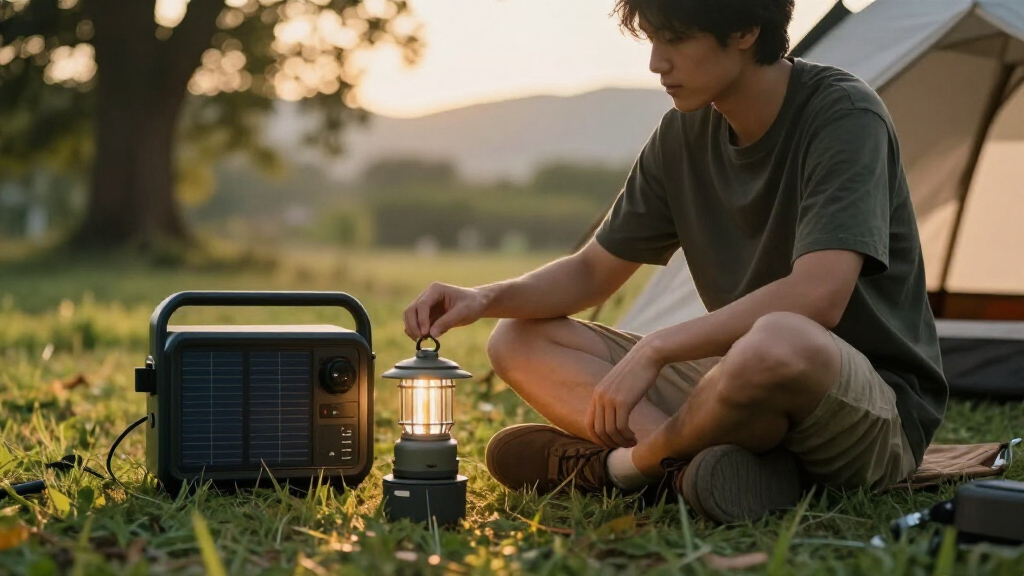
I ranked these 14 solar generators on four camping-specific criteria rather than raw spec sheets. Capacity-to-weight balance came first: a 2000Wh station that weighs 50 pounds earns its size only for drive-up base camps, while a 300Wh unit under 8 pounds suits canopy and backpack-adjacent use. Solar recharge math came second — I compared each kit’s panel wattage against its battery size, because a mismatched pairing (a big battery with a tiny panel) turns a generator into a very slow brick once you leave the wall outlet behind. Inverter quality and surge headroom mattered third, since camping loads like portable fridges and small cooking devices spike on startup and cheap inverters trip or shut down. Finally, I weighed kit completeness and value: bundled panels, cables, and warranty coverage change the real cost of ownership.
The ranking order reflects a simple philosophy: matched kits beat mismatched ones, reputable battery management beats anonymous cells, and the best generator is the one sized to your actual trip length — not the biggest one you can afford. Products with unclear branding but genuinely sound pairings still placed, because for occasional campers a cheap matched kit often makes more sense than a premium nameplate.
Factors to Consider When Choosing Solar-powered Generator For Camping
Before you pick a specific model, it helps to understand the patterns I saw across all 14 products — the same mistakes come up repeatedly, and most of them are avoidable with a bit of arithmetic done before checkout.Do the Watt-Hour Math Before Anything Else
The most common mistake in this category is buying capacity by gut feeling. List every device you’ll actually power — phone (10Wh per charge), LED lantern (5Wh per evening), portable fridge (40–60Wh per day), laptop (50Wh per charge) — and add a 20% cushion for inverter losses. That total tells you the minimum usable capacity you need per day away from an outlet. Most car campers land between 250Wh and 500Wh per day, which is why mid-size kits dominate this roundup. Anything larger only pays off if you run a fridge, a CPAP, or a small cooking appliance. Remember that lithium batteries should not be drained fully, so treat about 80% of the rated capacity as usable.
Panel Wattage Matters as Much as Battery Size
A generator is only as good as its recharge rate once you’re off-grid. Divide battery capacity by panel wattage and you get your best-case recharge time in full direct sun — real-world results run 30–50% slower due to clouds, panel angle, and heat. A 300Wh battery with a 40W panel needs a full day of perfect conditions; the same battery with a 100W+ panel can recharge by early afternoon. If you camp for two nights or fewer, panel size barely matters because you can recharge at home. For longer trips, prioritize kits where panel wattage is at least a third of battery capacity in watt-hours. This single ratio eliminated several otherwise decent kits from my top tier.
Weight and Portability Define Where You Can Actually Camp
Be honest about how the generator gets from your car to your tent. A 50-pound power station with wheels is fine at a drive-in campsite and miserable anywhere past a 100-foot carry. Built-in panels (like the BROWEY and BLAVOR) shine here because there’s one object to move instead of two. If you hike even short distances from the car, stay under 10 pounds total and accept the capacity ceiling that comes with it. Also check the carry handle design — some budget units have thin handles that dig into your hand at 15+ pounds, a small annoyance that compounds over a weekend.
Inverter Surge Ratings and Pure Sine Wave
Devices with motors or compressors — fridges, fans, some blenders — draw two to three times their running wattage at startup. A 300W inverter will run a 60W fridge but may trip on its 150W startup surge if the surge rating is weak. Look for pure sine wave output if you’ll charge laptops, camera gear, or anything with a modern power brick, since modified sine wave can cause heat, buzzing, and long-term damage. The gap between rated wattage and surge wattage is where cheap units cut corners. If your must-run device is a fridge, buy at least double its running wattage in inverter capacity.
Battery Chemistry and Long-Term Ownership
Nearly every unit here uses lithium iron phosphate (LiFePO4) or lithium-ion chemistry, and the difference shapes how long your investment lasts. LiFePO4 cells typically endure 3,000+ charge cycles versus 500–800 for standard lithium-ion, which means a battery that outlives the rest of the product versus one that noticeably degrades after two or three seasons of weekend use. Cycle life matters less if you camp twice a year and more if you’re out monthly or using the unit as home backup too. Also check whether the battery is replaceable — with most budget units it isn’t, so chemistry is effectively the product’s lifespan. Warranty length is a decent proxy for how much the manufacturer trusts its own cells.
Bundled Kits Versus Buying Separately
Five of the fourteen products here are sold as generator-plus-panel kits, and the bundling isn’t always a bargain. Sometimes the included panel is underpowered for the battery (a tactic to hit a price point), and replacing it later with a proper 100W or 200W panel costs more than buying the right kit upfront. On the flip side, buying a bare power station and adding a quality third-party panel gives you flexibility and often better panels — provided the charge controller input limits of the station support the panel’s output. Check the maximum solar input wattage before adding any panel; exceeding it wastes money, not time. My general rule: bundles win below 500Wh, separate purchases win above it.
Frequently Asked Questions
Will a 300Wh solar generator run a portable camping fridge?
A 300Wh station will run a typical 40–60W camping fridge for roughly 4–6 hours, which covers an evening but not a full weekend unless you recharge successfully each day. The bigger obstacle is the startup surge — compressors draw two to three times their running wattage, and an underpowered inverter will trip or fail to start the fridge at all. If a fridge is your main load, you want at least a 500Wh battery, an inverter rated well above 300W, and a panel of 100W or more so daily solar input outpaces daily drain. The OUKITEL P2001 Pro and Jackery Solar Generator 1000 v2 are the two kits in this lineup built for that job; the 300W-class units are better reserved for lights, phones, and small fans.
Are built-in solar panels as good as separate foldable panels?
How long does it actually take to recharge one of these with solar?
Is it worth paying more for a big-name brand like Anker or Jackery?
Can I take one of these on a plane or hiking trip?
For air travel, the cutoff is 100Wh of battery capacity — the Marbero 88Wh units are the only models in this lineup that qualify for carry-on without airline approval, and you’d leave the solar panel in checked luggage. For hiking, capacity and weight trade off directly: every watt-hour costs roughly 10–14 grams, so a weekend of phone charges means carrying 1–2 pounds of station plus a foldable panel. Anything above 300Wh is car-camping-only territory. If your trips are genuinely on-foot, consider whether a small 20–40W panel charging a power bank directly would serve you better than a full generator, since you’d skip the inverter weight you’re not using anyway.
Conclusion
After comparing all 14 options, the right choice comes down to trip length and what you plug in. For best overall, the Anker SOLIX C1000 Gen 2 delivers the most balanced combination of capacity, recharge speed, and build quality for typical multi-day campers. For best value, the MARBERO 237Wh kit with its 60W panel is the smartest matched pairing at the budget end — its panel-to-battery ratio beats every other cheap kit here. For best premium and base-camp power, the OUKITEL P2001 Pro with a 400W panel handles fridges, cooking devices, and group trips without breaking a sweat. For beginners and light-duty campers, the Jackery Solar Generator 300 with 40W panel offers the gentlest learning curve with foolproof connectors. And for cyclists, canoeists, and anyone moving camp daily, the BLAVOR 1600W with built-in panel keeps everything in one grab-and-go unit. Size the generator to your real loads, verify the panel can keep up with your trip length, and you’ll land on the right model from this list.
Fall Picks
fall essentials
As an affiliate, we earn on qualifying purchases.