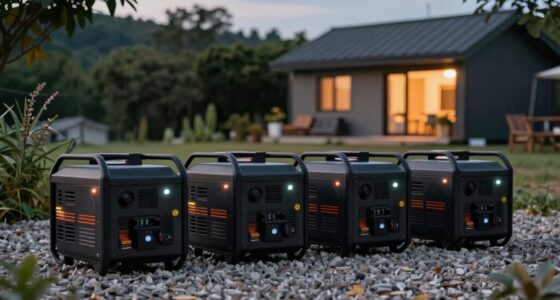

Solar-powered laptop chargers split into two very different camps: all-in-one solar generators with panel-plus-battery kits, and solar power banks that trade capacity for portability. The Portable Power Station 300W with 60W Solar Panel takes the top spot because its 60W panel output is high enough to genuinely recharge its battery during daylight, not just trickle it. For travelers who want something pocketable, the YELLOMIN 10000mAh with foldable panels is the lightest option, while the Daran 89.6Wh LiFePO4 stands out for battery longevity that outlasts the lithium-ion competition by years. The main tradeoffs in this category are weight versus capacity, and panel wattage versus honest recharge times — most bundled panels are too weak to fully recharge their own battery in a single day. Keep reading for the full breakdown of which charger fits your situation.
Listen free for 30 days with Audible
Thousands of audiobooks and originals — cancel anytime.
Start your free trialAs an affiliate, we earn on qualifying purchases.
Key Takeaways
- Bundled panel wattage was the biggest differentiator: only the 60W kit (#10) and the standalone 100W station (#2) can realistically recharge their own battery in one sunny day — most other bundled panels (21W–40W) need two to four days of good sun.
- LiFePO4 battery chemistry (the Daran #4) offers roughly 4x the cycle life of standard lithium-ion power banks, which matters more than raw capacity if you charge a laptop daily.
- Small solar power banks (#7, #8, #9, #12) with 10,000–24,000mAh capacities cannot fully charge most laptops — they’re best treated as emergency top-up devices, not primary laptop power.
- Several units ship without any panel (#3, #11), so the low sticker price is misleading — budget an extra $80–150 for a compatible panel if you want true solar operation.
- AC outlet wattage caps matter: a 300W inverter (#3, #10, #11) handles gaming laptops, while 65W–100W outlets (#1, #4, #5, #6) only reliably support ultrabooks and Chromebooks.




More Details on Our Top Picks
Portable Solar Power Bank with AC Outlet 65W 110V
Most options in this roundup force a choice between a power bank and a separate folding panel, but this unit bundles a 24,000mAh battery with a 30W foldable solar panel in one kit — that alone shapes its appeal. The 65W AC outlet is enough for most ultrabooks and MacBooks, though gamers or workstation laptops will hit the ceiling fast. Compared with the Takki Solar Generator, the battery here is substantially larger, which means more laptop recharges per solar session despite the similar output rating. The tradeoff is weight and fuss: the panel’s junction box isn’t waterproof, and the AC outlet needs manual activation, which catches people off guard the first time. This pick makes the most sense for anyone who wants true solar independence in a single purchase rather than piecing together a station and a panel separately.
Pros:- Solar panel and power bank included together as a complete kit
- 24,000mAh capacity delivers multiple laptop recharges
- Three recharge methods: solar, wall outlet, and car charger
- Built-in BMS safety protection
- AC outlet handles most ultrabooks and mainstream laptops
Cons:- AC output capped at 65W — insufficient for gaming or workstation laptops
- Solar panel junction box is not waterproof
- AC outlet requires manual activation before each use
Best for: Campers and van-lifers who want one self-contained solar charging kit for a laptop and small devices
Not ideal for: Owners of power-hungry laptops over 65W, and anyone expecting to leave the solar panel out in rain
- Battery Capacity:24,000mAh
- AC Output:65W, 110V
- Solar Panel:30W foldable
- DC Output:9V~12.6V/10A max
- USB Ports:5V/2.4A max; 5V/3A, 9V/2A max
- Size:6.89 x 3.98 x 1.89 inches
- Folded Solar Panel Size:12.7 x 8.4 x 0.3 inches
Our verdict“Buy this if you want a ready-to-go solar laptop kit without shopping for a separate panel — skip it if your laptop draws more than 65W.”
Portable Power Station with 40W Solar Panel, 100W Solar Powered Generator
This kit hits a middle ground that most entries here miss: a 100W power station paired with a genuinely useful 40W panel, giving it more solar harvesting muscle than the 21W Takki or 30W bundled options. That matters because solar input is often the real bottleneck — a bigger panel means less time waiting for daylight. With 22.8% conversion efficiency, it turns marginal sunlight into usable charge better than cheaper panels in this category. The 100W ceiling rules out anything demanding, so think laptop, camera, drone, and lights rather than kitchen appliances. Unlike the 300W station without a panel elsewhere in this roundup, you’re not hit with a second purchase to go solar. Maintenance is the hidden cost: the battery wants a top-up every couple of weeks or its lifespan suffers.
Pros:- Complete kit includes both power station and 40W foldable solar panel
- High 22.8% solar conversion efficiency for faster recharging
- AC, USB, and DC outputs cover laptops, tablets, and small devices
- BMS protection against shorts, over-current, and over-voltage
Cons:- 100W output cap excludes high-demand appliances
- Solar panel junction box is not waterproof
- Requires recharging at least every two weeks when idle
Best for: Weekend campers and emergency-prep buyers who want a complete station-plus-panel kit with solid solar throughput
Not ideal for: Anyone powering devices over 100W or buyers who might forget the recommended twice-monthly recharge
- Output Wattage:100W
- Voltage:120V
- Solar Panel:40W foldable, included
- Solar Conversion Efficiency:22.8%
- Power Sources:AC/DC/USB, solar, carport
- Safety Features:BMS with short-circuit, over-current, over-voltage protection
Our verdict“The most sensible all-in-one solar kit for laptop users who camp or prep on a budget — as long as 100W covers your gear.”
Portable Power Station 300W, 110V Solar Generator 280Wh (Without Solar Panel)
With 280Wh of capacity and a 300W output ceiling, this station outmuscles every other battery in this batch — the Daran and Takki units sit at roughly 90Wh each. That headroom translates into real outcomes: a full laptop recharge plus phone, camera, and a CPAP or light without anxiety. Seven outlets let you run a small mobile office at once. The catch is right there in the title: no solar panel included, so going off-grid means buying a panel separately, which pushes the total cost past the all-in-one kits. Compared with the 100W generator kit, this model wins on raw capability but loses on out-of-the-box solar readiness. At 5.1 lbs it’s still carry-friendly, though heavier than the sub-3-lb competitors. This option stands out for buyers who already own a panel or plan to add one deliberately.
Pros:- 280Wh capacity is the largest in this lineup
- 300W output supports laptops plus larger small appliances
- Seven outlets for simultaneous device charging
- Built-in LED flashlight with emergency modes
- Lightweight at 5.1 lbs for its capacity class
Cons:- Solar panel not included — extra purchase required
- 300W ceiling still excludes high-draw appliances
- Battery degrades if left uncharged in storage
Best for: Remote workers and multi-device travelers who need serious battery capacity and already own or will choose their own solar panel
Not ideal for: Buyers wanting a complete solar solution in one purchase — the panel is sold separately
- Capacity:280Wh
- Output Wattage:300W max
- Voltage:110V, 60Hz
- Number of Outlets:7
- Runtime:Up to 9 hours
- Weight:5.1 lbs
- Solar Charging:Compatible, panel not included
Our verdict“The capacity leader here — buy it if 90Wh kits feel too small and you’re willing to source your own panel.”
Daran Portable Power Station 89.6Wh LiFePO4 Battery 100W Solar Power Bank
The headline feature here isn’t capacity — it’s chemistry. The LiFePO4 battery is rated for over 3,500 cycles, roughly triple or more the lifespan of the standard lithium-ion packs in the 24,000mAh and Takki options, which degrade noticeably after a few hundred charges. For a device that sits in a go-bag for years, that durability matters more than raw watt-hours. Reaching 80% charge in 1.2 hours is also unusually fast for this category, and the fanless design means silent operation in a tent or library. The compromises mirror its size: 89.6Wh covers a laptop recharge or two but not much beyond that, and like the 300W/280Wh station, there’s no panel in the box. This model is better suited to buyers prioritizing longevity and quiet over capacity.
Pros:- LiFePO4 chemistry rated for 3,500+ charge cycles
- Fast recharge: 0-80% in 1.2 hours
- Fanless, silent operation for tents and bedrooms
- Four input methods including USB-C PD and solar
- Advanced BMS with 12 layers of protection
Cons:- 89.6Wh capacity is modest for extended off-grid use
- Solar panel not included
- 100W output cap limits high-power devices
Best for: Preparedness-minded buyers and frequent travelers who want a battery that survives years of charge cycles
Not ideal for: Multi-day campers needing more than a couple of laptop charges — the 89.6Wh capacity runs out quickly
- Battery Capacity:89.6Wh LiFePO4
- Cycle Life:3,500+ cycles
- Max Output:100W
- Number of Ports:7
- Charging Time:1.2 hours (0-80%)
- Input Methods:AC, USB-C PD, car, solar
- Weight:2.54 lbs
- Dimensions:6.5 x 3.3 x 4 inches
Our verdict“The pick for buyers who care about battery lifespan and quiet operation more than maximum capacity.”
Takki Solar Generator 120W Peak Portable Power Station with 21W Solar Panel
At 2.29 lbs with a foldable 21W panel included, this is the lightest complete solar setup in the roundup — if you’re carrying everything on your back, that difference against the 5.1-lb 300W station is the whole decision. The 120W peak rating is a burst figure; sustained output is capped at 80W, which handles most laptops but not all, so check your charger’s wattage before buying. Compared with the 40W panel kit, the smaller panel means 5-7 hours of good sun for a full recharge — fine for a basecamp day, frustrating if you’re moving. One quirk: the manufacturer advises against charging devices while the station itself is solar-charging, which limits pass-through convenience. For first-time solar buyers testing the waters on a budget, it’s a low-risk entry point.
Pros:- Lightest complete solar kit in the roundup at 2.29 lbs
- Foldable 21W solar panel included
- Multiple charging ports plus LED flashlight with SOS mode
- 120W peak power handles startup surges on small devices
Cons:- Sustained output limited to 80W — excludes many power bricks
- Solar recharge takes 5-7 hours of direct sunlight
- Cannot charge devices while the station itself recharges
Best for: Backpackers and first-time solar buyers who want the lightest possible laptop-charging kit included with a panel
Not ideal for: Impatient users or high-wattage laptop owners — 5-7 hour solar recharges and an 80W sustained cap will frustrate both
- Battery Capacity:88.8Wh
- Sustained Output:80W starting wattage
- Peak Power:120W
- Voltage:110V
- Solar Panel:21W foldable, included
- Solar Charging Time:5-7 hours
- Weight:2.29 lbs
- Total Power Outlets:2
Our verdict“The go-to pick when weight is the deciding factor — just verify your laptop stays under 80W.”
Portable Power Station, 146Wh 100W Solar Powered Power Bank with AC Outlet
At 3.3 lbs with 146Wh of capacity, this orange power station hits a sweet spot the heavier options in this roundup miss: it stays under the FAA’s 160Wh carry-on limit while still packing a real AC outlet. Compared with the SinKeu 24000mAh, you get roughly 60% more battery capacity at a similar output class, plus seven total outlets where the SinKeu offers fewer. The catch is that it’s solar-ready, not solar-equipped — the panel is sold separately, unlike the 300W generator that ships with a 60W panel in the box.
Pros:- Airline-friendly 146Wh capacity that most power stations exceed
- Seven output options covering AC, USB, and DC devices
- Lightest AC-outlet option in this lineup at 3.3 lbs
- Triple recharge methods: solar, wall, and car
Cons:- Solar panel sold separately, adding cost and bulk
- 100W ceiling rules out power-hungry laptops like gaming rigs
Best for: Travelers who fly with their laptop and need TSA-compliant capacity with an AC outlet on arrival
Not ideal for: Buyers expecting an all-in-one solar solution — there’s no panel included, so it’s an extra purchase and extra packing bulk
- Battery Capacity:146Wh / 39600mAh
- Output Wattage:100W
- Number of Outlets:7
- Weight:3.3 lbs
- Voltage:110V
- Power Source:AC/DC/USB-C, Solar
- Battery Cell Type:Lithium Ion
Our verdict“Frequent travelers who want a carry-on-legal laptop power source should pick this over larger stations, as long as they budget for a separate solar panel.”
SOARAISE Solar Power Bank 48000mAh Wireless Portable Charger with 4 Cables
The four built-in solar panels are the story here — instead of a single trickle panel like most power banks in this category, this SOARAISE folds out a small array that actually recovers meaningful charge in sunlight. With 48000mAh, built-in cables for four connector types, wireless charging, and support for up to seven devices at once, it out-guns the YELLOMIN 10000mAh for capacity by nearly five times. The tradeoff is size: this is a brick, closer to a small power station than a pocket power bank, and it commands a premium price over simpler chargers.
Pros:- Four solar panels recharge meaningfully faster than single-panel rivals
- Massive 48000mAh capacity for multi-day use
- Built-in cables eliminate the need to pack your own
- Charges up to seven devices simultaneously
Cons:- Bulky and heavy compared with conventional power banks
- Higher price point than standard chargers with similar wired output
Best for: Families or groups who need to keep several phones, tablets, and earbuds charged across a full day outdoors
Not ideal for: Laptop users wanting AC power or USB-C PD output — this is built for phones and tablets, not computers
- Capacity:48000mAh
- Solar Panels:4 high-efficiency panels
- Ports:2 USB-A, 1 USB-C (input/output)
- Wireless Charging:Yes
- Built-in Cables:USB-C, Phone, USB-A, Micro
- Fast Charging:3A via USB-C port
Our verdict“If your priority is keeping a family’s phones alive on long outdoor days rather than charging a laptop, this is the capacity-and-convenience pick.”
SinKeu 24000mAh Portable Power Bank with AC Outlet and Solar Generator
The OLED display sets this SinKeu apart — while most budget power stations leave you guessing at remaining charge, this one shows exactly what’s left, which matters when you’re rationing power for a laptop through a long workday off-grid. Its 110V/65W AC outlet covers standard ultrabooks and MacBooks, though gaming laptops will trip its limit. Against the 146Wh station above, it gives up about a third of the capacity but recharges in under four hours and adds a BMS safety system that cheaper banks skip. Note that hitting those recharge speeds requires its specific DC input accessories.
Pros:- OLED display shows exact remaining charge and status
- Full recharge in under 4 hours beats most rivals
- BMS protection system guards against overcharge and shorts
- AC outlet handles most ultrabooks and tablets
Cons:- 65W AC limit excludes power-hungry laptops
- Heavy and bulky for its capacity class
- Fast recharging depends on carrying the right DC accessories
Best for: Remote workers with standard-wattage laptops who value precise battery monitoring during off-grid work sessions
Not ideal for: Owners of high-wattage laptops — the 65W AC ceiling won’t run gaming machines or 16-inch pro laptops under load
- Capacity:24000mAh / 88.8Wh
- AC Outlet:110V/65W
- USB Outputs:QC3.0 9V/2A, 5V/3A
- DC Output:9-12.6V/10A
- Recharging Time:Under 4 hours
- Input:DC15V/2A (30W)
Our verdict“Business travelers with efficient laptops who hate battery ambiguity will appreciate the display and safety features here.”
YELLOMIN Solar Power Bank 10000mAh with Foldable Solar Panels, Wireless Charging, and Emergency Flashlight
This is the cheapest path to a self-contained solar charging kit in this roundup — the panels fold into the unit itself, so there’s nothing extra to buy or lose, unlike the 146Wh station that requires a separate panel purchase. The rugged, weather-resistant housing and 3-mode SOS flashlight make it a natural for glove boxes and go-bags, a role the SOARAISE is too large and expensive to fill. The honest limitation: 10000mAh is roughly one full laptop charge at best, and more realistically two phone charges — this is emergency insurance, not a primary power source.
Pros:- Foldable solar panels built in — a complete kit at a low price
- Weather-resistant rugged housing handles rough conditions
- 15W wireless charging plus built-in USB-C and Lightning cables
- 3-mode SOS flashlight adds genuine emergency utility
Cons:- 10000mAh capacity is quickly exhausted by laptop charging
- Wired fast-charging specs are not documented
- No listed weight or dimensions makes packing planning a guess
Best for: Preppers and commuters building an emergency kit who want solar backup without spending much
Not ideal for: Anyone relying on it as their main laptop charger — the capacity and unspecified wired charging speeds won’t sustain real work sessions
Our verdict“For a low-cost, grab-and-go emergency charger with real solar capability, this is the entry point — just don’t expect it to replace a power station.”
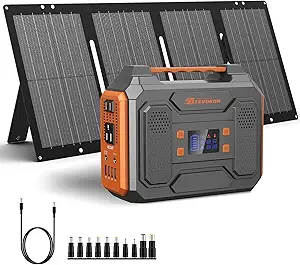
Portable Solar Generator 300W with 60W Solar Panel
This is the only option in this batch that includes the solar panel in the box, and that changes the math entirely: you’re buying a working solar system, not half of one. The 60W monocrystalline panel at 20.5% efficiency gives it real off-grid regeneration that the 146Wh station (panel sold separately) and the YELLOMIN can’t match. With two 300W AC outlets, it runs laptops and small appliances comfortably. The compromises are the non-waterproof junction box on the panel — rain needs active management — and the 300W ceiling that excludes things like hair dryers or kettles.
Pros:- Solar panel included — a complete off-grid kit with no hidden purchases
- Two 300W AC outlets power laptops plus small appliances simultaneously
- 20.5% efficient monocrystalline panel charges faster than typical budget panels
- BMS safety system with built-in cooling for sustained use
Cons:- Panel’s junction box isn’t waterproof and needs protection from rain
- 300W ceiling excludes high-draw appliances
- Battery degrades if left uncharged for long storage periods
Best for: Campers and van lifers who want a true solar ecosystem out of the box for multi-day trips
Not ideal for: Day-trippers and minimalists — the panel plus generator combo is more weight and setup than short outings justify
- Power Output:300W
- Solar Panel:60W monocrystalline, 20.5% efficiency
- AC Outlets:2 x 300W max
- USB Ports:3 x 5V/3A, 1 x quick charge 9V/2A
- DC Port:9V-12.6V/10A max
- Charging Methods:AC outlet, solar panel, car port
- Battery Management System:Yes
- Included Accessories:AC adapter, car charging cable, solar panel kit
Our verdict“Buyers who want genuinely functional solar charging on day one, not an accessory shopping list, get the most complete package here.”
Portable Power Station 300W, 220Wh Solar Generator Backup Battery Pack
Among the bigger power stations in this roundup, this 220Wh unit is the easiest to actually carry — at 5 lbs, it undercuts entries like the Portable Solar Generator 300W with 60W Solar Panel on weight while keeping a similar 300W AC output ceiling. Seven simultaneous ports means a laptop, phone, camera, and headlamp can all charge at once, which smaller banks like the Daran 89.6Wh simply can’t manage. The tradeoff is a familiar one for this category: the solar panel is not included, so the “solar generator” label only becomes true after an extra purchase. Compared with the Takki 120W kit, which bundles a 21W panel, you pay less upfront but lose the off-grid readiness out of the box.
Pros:- At 5 lbs, it’s far lighter than comparable 300W power stations in this guide
- Charges up to 7 devices at once, including two 110V AC outlets for laptops
- Three recharge paths (AC, car, solar) give flexibility between trips
- Over 1000 charge cycles means years of regular use
Cons:- Solar panel not included, so a complete off-grid setup costs extra
- 300W ceiling rules out power-hungry appliances like kettles or hair dryers
Best for: Campers and van-lifers who want AC outlet power for a laptop and several devices without hauling a heavy generator
Not ideal for: Buyers who want true off-grid solar charging on day one — the panel is sold separately, unlike bundled kits in this guide
- Wattage:300W
- Battery Capacity:220Wh
- Weight:5 lbs
- Dimensions:8.5 x 6.7 x 4.1 inches
- Output Ports:2x 110V AC, 4x USB, 1x DC vehicle port
- Recharge Options:AC wall adapter, car charging, solar panel (not included)
- Battery Type:Lithium-ion
- Charge Cycles:Over 1000
Our verdict“Buy this if you need genuine multi-device AC power at a carry-able weight, but budget for a separate solar panel if going off-grid.”
20,000mAh Wireless Portable Solar Power Bank with 10W Foldable Solar Panel and Hand Crank Emergency Generator
Where most entries here offer one or two ways to refill, this one offers three: solar, USB, and a hand crank. That redundancy is the whole point — in a genuine outage, the crank guarantees some power even when the sun and grid are both gone. Its 20W PD output is enough for USB-C laptops, though unlike the SinKeu 24000mAh or the 65W AC power bank elsewhere in this roundup, there’s no AC outlet, so laptop charging depends on having the right cable. The built-in iOS, Type-C, and USB-A cables eliminate the forgotten-cable problem entirely, and the waterproof, rugged shell outclasses softer power banks like the YELLOMIN 10000mAh. Just know that solar and crank charging are slow — they’re lifelines, not primary power sources.
Pros:- Three independent charging sources: 10W foldable solar, USB, and hand crank
- Built-in iOS, Type-C, and USB-A cables mean nothing extra to pack
- 20W PD fast charging supports USB-C laptops and phones
- Waterproof, rugged construction with a 36-month warranty
Cons:- No AC outlet, so it can’t run standard laptop power bricks
- Solar charging takes several hours of direct sun for a meaningful charge
- Heavier and bulkier than ordinary 20,000mAh power banks
Best for: Hikers, emergency preppers, and go-bag builders who want multiple independent ways to generate power when everything else fails
Not ideal for: Users who need to run AC-powered laptop chargers or quickly top up a large power bank — there’s no outlet and solar charging takes hours
- Capacity:20,000mAh
- Solar Panel Power:10W foldable
- Fast Charging:20W PD
- Ports:3 external ports (USB-A, Type-C, iOS)
- Built-in Cables:3 (iOS, Type-C, USB-A)
- Material:ABS+PC alloy, PU leather, Oxford fabric
- Water Resistance:Waterproof with silicone seals
- Warranty:36 months
Our verdict“This is the pick when charging redundancy matters more than raw speed — ideal for emergencies, wrong for anyone who needs AC outlets.”

How We Picked
My ranking logic came down to one question: can this product actually run a laptop off-grid, and for how long? I weighed real usable watt-hours first, then inverter capacity (whether the AC outlet can handle a laptop’s power draw), then panel wattage relative to battery size. A 40W panel recharging a 280Wh battery is a five-day proposition, so I penalized kits where the bundled panel is undersized relative to the battery it feeds. Build quality, battery chemistry, and output port selection rounded out the scoring.
I also factored in portability and honest expectations. Power banks with built-in fold-out panels were judged as emergency devices rather than laptop chargers, and priced accordingly in the rankings. Warranty length, cell chemistry (LiFePO4 vs. lithium-ion), and whether the panel is included in the box all affected final placement, because these determine the true cost of ownership over a few years of off-grid use.
Factors to Consider When Choosing Solar-powered Laptop Chargers
Before spending money on a solar laptop setup, it helps to understand where the marketing numbers mislead and which specs actually decide whether your laptop charges. These are the factors that separated the winners from the rest of this lineup.
Panel Wattage vs. Battery Capacity
The most common mistake in this category is buying on battery size alone. A 280Wh battery paired with a 40W panel sounds impressive until you do the math: real-world solar input runs at roughly 60–70% of rated wattage, meaning that battery needs two full sunny days to recharge. If your plan involves moving camp daily or only intermittent sun, the panel-to-battery ratio matters more than capacity. As a rule of thumb, aim for at least 1 watt of panel per 4–5 watt-hours of battery if you want a same-day solar recharge. Buyers in cloudy or northern regions should weight this even more heavily, since diffuse light can cut panel output by half or more.
Inverter Wattage and Laptop Compatibility
A 65W AC outlet charges an ultrabook fine but will shut down under a gaming laptop’s 150W+ draw, and repeated overloads can trip protection circuits mid-work session. Check your laptop’s charger brick rating before choosing — if it says 100W or higher, you need one of the 300W-class stations in this roundup. Also look at whether the unit supports pass-through charging (charging the laptop while the unit itself soaks up sun), which effectively doubles your working time in good conditions. Sine wave quality matters less for laptops than for motors, but cheap modified sine wave inverters can make some laptop chargers run hot or audibly buzz. When in doubt, charging over the USB-C PD port instead of the AC outlet is more efficient and avoids inverter losses entirely.
Battery Chemistry and Lifespan
Most buyers overlook that lithium-ion power banks typically deliver 300–500 charge cycles before capacity drops noticeably, while LiFePO4 cells handle 2,000–3,000 cycles. If you’re charging a laptop three times a week, that’s the difference between a device that lasts two years and one that lasts seven. LiFePO4 also handles heat better — a real consideration when the unit sits in the sun next to its panel. The tradeoff is weight and cost: LiFePO4 units run heavier per watt-hour. For occasional camping trips, standard lithium-ion is fine; for daily off-grid work, the chemistry premium pays for itself by avoiding a replacement purchase.
Honest Portability Expectations
There’s a physical limit no marketing can escape: solar panels need surface area, and surface area means weight and bulk. A genuinely useful 60W foldable panel is the size of a large pizza and weighs several pounds — nothing that fits in a laptop bag will meaningfully charge a laptop battery. The small fold-out panels on power banks (10–21W) are emergency trickle chargers, capable of adding maybe 10–15% to a laptop over a full day. If you’ll be near your car or a wall outlet most days, a small power bank makes sense. If you’re genuinely off-grid for days, accept the weight of a real panel-plus-station kit. Trying to have both usually results in owning a device that does neither job well.
True Cost of Ownership
Several attractively priced units in this category ship without a panel, which can add $80–150 to the real cost of a solar setup. Check the box contents carefully before comparing prices. Also budget for cables — many stations include only bare-bones charging leads, and a quality 100W USB-C cable alone costs $15–20. Warranty length varies from 12 months to 5 years in this category, and given how hard off-grid use is on batteries, that difference is worth real money. Finally, consider resale and repairability: established brands with replaceable parts and service networks tend to hold value, while generic no-name units are effectively disposable once the cells degrade.
Who Should Skip Solar Altogether
An honest note: if you only lose power a few times a year, a plain high-capacity power bank charged from the wall is cheaper, lighter, and more reliable than any solar option here. Solar earns its cost when you’re regularly away from grid power for more than a day — van life, extended backcountry trips, field research, or grid-unelectable worksites. Even then, many experienced users treat solar as a battery top-up system rather than a primary power source, sizing the battery for two days of laptop use and using panels to extend runtime indefinitely. If your laptop use is occasional and short, one of the sub-$100 power banks will cover you; reserve the $400+ station-and-panel kits for people whose work genuinely depends on off-grid power.
Frequently Asked Questions
Can a solar power bank actually charge a laptop, or is that just marketing?
It depends entirely on capacity and output wattage. A 10,000mAh power bank holds roughly 37Wh of energy, and after conversion losses that’s about 25Wh delivered — enough for a 30–50% charge on a typical ultrabook and far less for a power-hungry machine. Small units like the YELLOMIN work in a pinch but shouldn’t be your primary plan. For real laptop charging, look at units of 88Wh (the Takki or Daran) or larger, with AC outlets rated at least 65W. The 146Wh–280Wh stations in this roundup can deliver two to five full laptop charges per refill, which is the threshold where solar stops being a gimmick.
How long does it take to recharge these units by solar panel alone?
Divide the battery capacity by roughly 65% of the panel’s rated wattage to get realistic sun-hours. A 280Wh battery on a 40W panel needs about eleven hours of good sun — two full days in practice. The 60W panel paired with a 300W station cuts that to roughly eight sun-hours, or one strong day. The tiny 10–21W built-in panels on power banks are slower still, sometimes needing three to five days. If same-day solar recharge is your goal, prioritize panel wattage over battery size when choosing, and angle the panel directly at the sun rather than laying it flat.
Is it better to charge my laptop through the AC outlet or the USB-C port?
USB-C PD charging is almost always more efficient. Converting DC battery power to AC through an inverter wastes 10–15% of your energy as heat, and cheap inverters can waste more, while USB-C PD runs DC-to-DC at 90%+ efficiency. On a finite battery, that difference translates to an extra 30–45 minutes of laptop runtime. Use the AC outlet only for laptops whose chargers require it or for other devices like cameras and drones. The one exception is if the USB-C port is limited to 30W or less — then an AC outlet feeding your laptop’s own 65W brick may actually charge faster.
Are the units that don’t include a solar panel still worth buying?
Yes, if you already own a compatible panel or plan to buy a better one separately. The panel-free stations like the 300W 280Wh and 220Wh units often represent better value per watt-hour, and separately purchased panels frequently outperform bundled ones in efficiency and durability. Check the unit’s solar input specifications and maximum input wattage before buying a panel — feeding more wattage than the input cap allows just wastes the panel’s potential. The catch is budget honesty: once you add a quality 100W panel at $100–150, the total often exceeds a bundled kit’s price, so compare final costs rather than sticker prices.
What size do I need for a full workday off-grid?
A typical modern laptop consumes 30–60Wh over an 8-hour workday, depending on brightness, workload, and whether you’re running external displays. Add 20% for conversion losses, and a 100Wh unit like the Daran or Takki covers one solid workday with a small buffer. For two days between sun, look at the 146Wh–280Wh stations. If you’re running a gaming or workstation laptop with a discrete GPU, double those figures and start at 200Wh minimum. Remember that moderate sun can add real power mid-day, so a setup that charges while you work effectively extends runtime beyond the battery’s nominal capacity.
Conclusion
For the best overall pick, the 300W station with 60W panel is the only kit in this lineup where the solar input genuinely keeps pace with laptop-level consumption, making it the safest choice for anyone working off-grid regularly. The best value award goes to the Daran 89.6Wh LiFePO4 — its battery chemistry means it will outlast cheaper lithium-ion rivals by years, offsetting the higher upfront cost. Budget hunters get the most capability per dollar from the Takki 120W kit, though its 21W panel demands patience.
For beginners and casual campers, the YELLOMIN or the hand-crank 20,000mAh unit are low-risk, low-cost ways to learn what solar can (and can’t) do before committing to a full kit. Travelers who need pocketable backup should choose the SinKeu 24,000mAh, while the SOARAISE with its built-in cables suits anyone tired of carrying a cable nest. And if raw capacity is the priority — say, powering a workstation laptop or multiple devices — the 100W-panel 300W generator is the premium choice. Whatever your pick, match the panel wattage to your patience and the battery capacity to your actual workday, not to the biggest number on the box.
Fall Picks
fall essentials
As an affiliate, we earn on qualifying purchases.