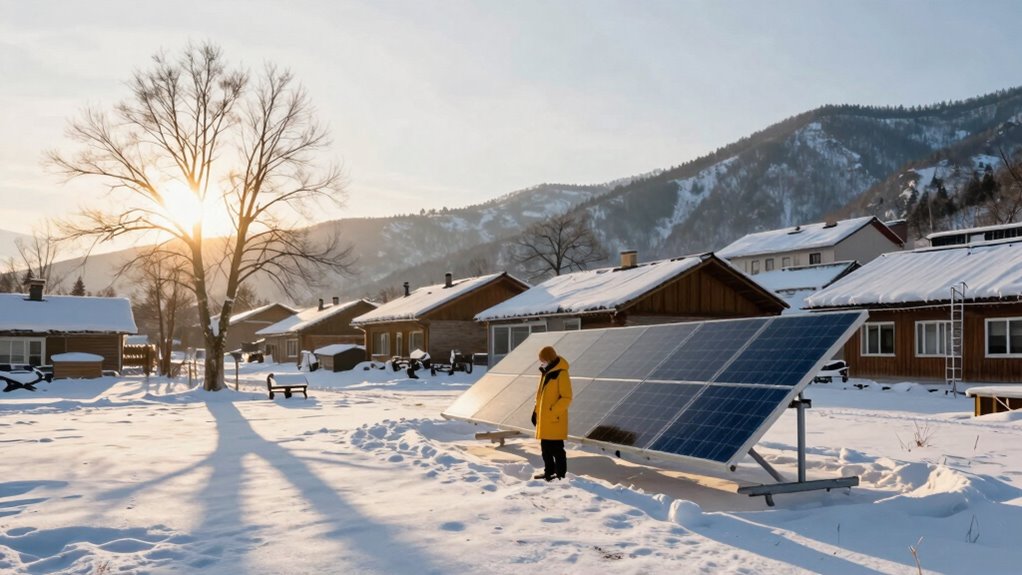
To maximize winter solar energy in the U.S., tilt your panels about your latitude plus 15 degrees. This adjustment helps capture more low-angle winter sunlight, boosting your panels’ efficiency. Steeper tilts also help snow slide off, reducing downtime. If you want to learn how to fine-tune your system seasonally and overcome snow challenges, there’s more useful info ahead that can help you get the most out of your panels during winter months.
Key Takeaways
- Adjust panel tilt to approximately 40°–60° during winter to better align with the sun’s lower altitude.
- Setting tilt to your latitude plus 15° enhances winter sunlight capture and energy output.
- Using adjustable mounts allows seasonal tilt changes for optimal winter performance.
- Steeper tilts help snow slide off panels, reducing downtime and maintaining efficiency.
- Fixed tilts near your latitude offer a simple, effective compromise for year-round solar gains.

Jackery Solar Generator 1000 v2 with 200W Solar Panel,1070Wh Portable Power Station LiFePO4 Battery,1500W AC/100W USB-C Output, 1Hr Fast Charge for Outdoor,Off-Grid Living,RV,Emergency
Powerful yet Compact: Boasting a 1,500W AC output and a 3,000W surge peak, the Solar Generator 1000 V2...
As an affiliate, we earn on qualifying purchases.
Understanding Solar Declination and Midday Altitude in Winter

Understanding solar declination and midday altitude in winter is essential for maximizing solar panel performance in the U.S. because these factors directly influence the sun’s position in the sky. During winter, the solar declination drops to about –23.5°, meaning the sun is positioned lower in the sky. This results in a reduced midday solar altitude, which can be approximated by subtracting the latitude from 90° and then adding the solar declination. For example, at 40° N latitude, the midday sun reaches roughly 34° above the horizon. This lower sun angle shortens the path of sunlight, decreasing irradiance and energy production. Recognizing these angles helps you set your panels at the suitable tilt, ensuring you maximize sunlight capture during the critical winter months. Additionally, understanding these solar angles can help optimize your panel orientation for better energy efficiency. Being aware of solar geometry enables better forecasting of energy yields and planning for seasonal variations.

Jackery Portable Power Station Explorer 300, 293Wh Backup Lithium Battery, Solar Generator for Outdoors Camping Travel Hunting Blackout (Solar Panel Optional)
SPEED UP YOUR RECHARGEABILITY: It takes only 2 hours to recharge 80% battery of the power station through...
As an affiliate, we earn on qualifying purchases.
How Tilt Angles Affect Winter Energy Capture
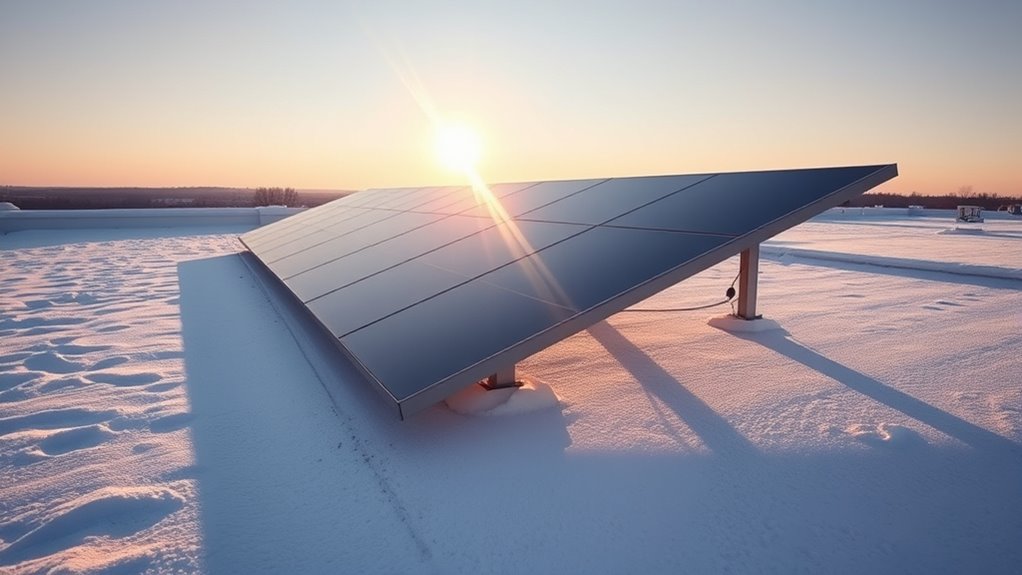
Adjusting your solar panel tilt angle has a significant impact on winter energy capture because it determines how directly the sunlight hits the panels during the low sun angles of the season. When the sun is lower, a steeper tilt aligns the panels closer to the sun’s altitude, maximizing direct beam irradiance. For example, increasing tilt toward 45°–60° can improve winter energy output, especially at higher latitudes. Conversely, a shallower tilt reduces snow accumulation and facilitates shedding, minimizing downtime. The right tilt balances capturing low-angle sunlight with snow management and local conditions. Using seasonal or adjustable mounts allows you to optimize energy capture during winter months, ensuring your panels harvest the most sunlight possible when demand for heating and grid stress peaks. Additionally, understanding solar panel orientation can help you further enhance your system’s efficiency during the colder months, especially when combined with tilt adjustment techniques.

Anker SOLIX C1000 Gen 2 Portable Power Station, 2,000W (Peak 3,000W) Solar Generator, Full Charge in 49 Min, 1,024Wh LiFePO4 Battery for Home Backup, Power Outages, and Camping (Optional Solar Panel)
49 Min UltraFast Recharging: With upgraded HyperFlash tech, fully recharge at 1,600W—for outage prepping, camping trips, or tailgating...
As an affiliate, we earn on qualifying purchases.
Strategies for Seasonal Adjustment of Panel Tilt
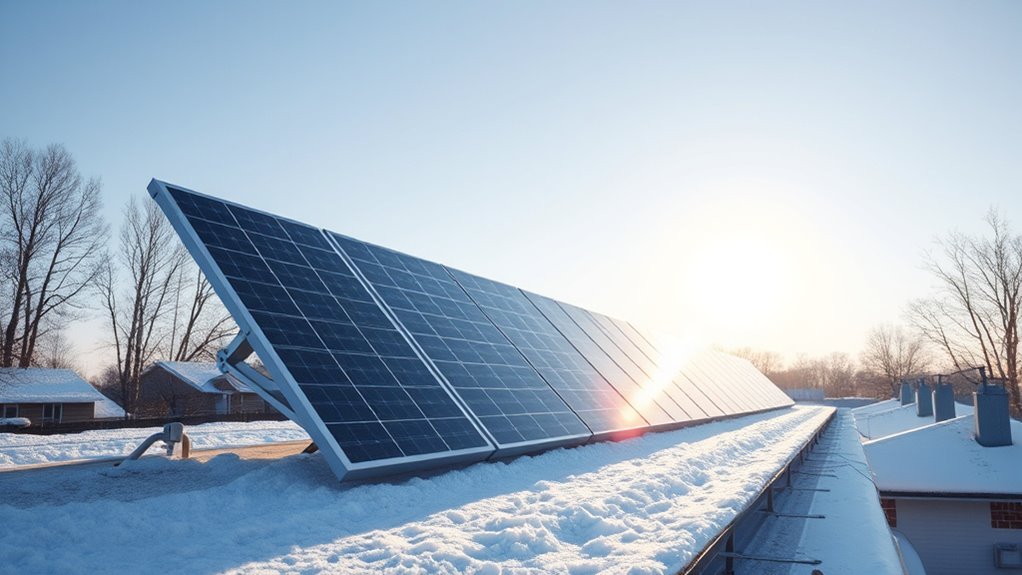
Seasonal adjustment of panel tilt involves modifying the angle of your solar arrays at different times of the year to maximize energy production. To do this effectively, you can use simple rules of thumb or more precise formulas. For example, setting your tilt to latitude +15° works well for winter, while latitude alone provides a good year-round compromise. You might also consider:
- Adjusting twice yearly—winter and summer—to optimize seasonal gains
- Using motorized trackers for automatic, precise positioning
- Choosing fixed mounts with a compromise tilt near your latitude
- Incorporating snow-shedding features with steeper tilts
- Planning adjustments around weather, safety, and roof constraints
- Recognizing that seasonal panel tilt adjustments can remind you of resilience when managing seasonal changes, encouraging persistence in optimizing your setup. Proper panel orientation also plays a crucial role in maximizing energy efficiency, especially during winter months when sunlight is less direct. Proper panel tilt can significantly enhance winter energy yield by optimizing sunlight capture during the shorter days. These strategies balance effort, cost, and performance, helping you boost winter energy yield without sacrificing overall annual output.

BLUETTI Elite 30 V2 Portable Power Station 600W (Power Lifting 1500W), 288Wh LiFePO4 Battery with 10ms UPS, Emergency Backup Power for Home Blackout/Winter Storm, Solar Generator for Camping/Road Trip
[288Wh On-the-Go Power] - Only 9.4 lbs lightweight, carry it anywhere during storms! 288Wh capacity meets daily &...
As an affiliate, we earn on qualifying purchases.
Overcoming Snow and Soiling Challenges With Tilt Optimization

Have you ever struggled with snow accumulation or soiling reducing your solar panel’s output during winter? Adjusting your tilt can help overcome these challenges. Steeper angles—around 45° to 60°—shed snow more effectively, reducing downtime and maintaining energy production. Panels tilted at higher angles allow snow to slide off easily, especially when combined with passive snow-shedding features like heated rails or specialized coatings. Additionally, steeper tilts reduce soiling buildup from dust or leaves, as rain or melting snow helps clean the panels naturally. When panels are angled more vertically, snow and dirt are less likely to stick, keeping your system cleaner and more efficient. Proper tilt optimization minimizes manual clearing, boosts winter energy yield, and ensures more reliable performance throughout the cold months. Understanding tilt angles can help you choose the best setup for your location and conditions. Incorporating seasonal adjustments into your setup can further enhance snow removal and cleanliness, especially when considering solar panel orientation for optimal winter performance. Adjusting tilt based on solar elevation is another effective strategy to maximize snow shedding and efficiency during the winter season. Additionally, selecting appropriate mounting hardware can improve the durability and effectiveness of snow shedding features.
Practical Tips for Implementing Winter-Ready Solar Mounts

Implementing winter-ready solar mounts requires choosing the right tilt and ensuring proper installation to maximize snow shedding and winter performance. Start by setting your panels at a steeper tilt—around latitude +15° or using the empirical formula (0.9×latitude + 29°)—to boost snow slide-off and winter energy capture. Use adjustable racks for seasonal tuning if possible, or set a fixed winter tilt close to your latitude for convenience. Consider the terrain and roof constraints when selecting mounting hardware, and prioritize south-facing orientation. For snow-heavy areas, opt for mounts with steeper angles, heated rails, or integrated snow-shedding features. Regularly clear snow and soiling to maintain output, and monitor local weather patterns to fine-tune tilt adjustments effectively. Incorporating proper installation techniques can further enhance snow removal and overall system efficiency during winter months. Additionally, understanding solar angles in winter can help optimize your panel positioning for maximum energy production during the colder months, and being aware of local snow accumulation patterns can inform your tilt choices for better snow shedding and system performance. To improve snow shedding, consider proper maintenance and monitoring of your panels throughout the season.
Frequently Asked Questions
How Does Local Snow Cover Impact Winter Solar Energy Yield?
Snow cover can considerably reduce your winter solar energy yield by blocking sunlight from reaching panels. When snow accumulates, especially on shallow mounts, production drops sharply. Steeper tilts help shed snow more effectively, keeping panels clear and maintaining output. However, prolonged snow cover or frequent snowfall can still cause downtime. To optimize winter energy, consider tilting panels steeply and incorporating snow-clearing methods or self-cleaning designs.
What Are the Cost Implications of Adjustable Versus Fixed Tilt Systems?
Adjustable tilt systems cost more upfront due to additional hardware, installation complexity, and maintenance. You’ll spend more on motorized or manual adjustment mechanisms compared to fixed mounts. However, adjustable systems can boost winter energy production and improve snow shedding, potentially increasing your overall ROI. Fixed systems are cheaper initially but may underperform during winter months, possibly leading to missed energy savings and longer payback periods.
Can Winter Tilt Adjustments Improve Energy Production During Cloudy Days?
Think of adjusting your tilt like tuning a musical instrument—getting the right pitch can make all the difference. Winter tilt adjustments can boost your energy harvest on cloudy days by better capturing diffuse sunlight and improving panel orientation to the sun’s lower path. While not a magic fix, this tweak helps your system soak up more available light, turning even gray days into opportunities for extra power.
How Do Different Roof Types Influence Feasible Winter Tilt Angles?
You should consider your roof type when deciding on winter tilt angles. Flat roofs easily accommodate steeper or adjustable mounts, making seasonal tilt adjustments simple. Pitched roofs, especially those with limited space or structural constraints, may restrict tilt options—often favoring fixed angles close to the roof pitch. Metal roofs generally support steeper angles better, while shingle or tile roofs might limit modifications due to weight or safety concerns.
What Policies or Incentives Promote Winter-Optimized Solar Installations?
Policies and programs promote winter-optimized solar installations by providing powerful perks and proactive incentives. Tax credits, rebates, and grants encourage you to prioritize winter performance, while performance-based incentives pay for winter’s worth. Utility programs often push for peak power during cold, critical months, and policy proposals promote steeper, snow-shedding setups. These proactive policies propel you toward maximizing winter energy, making winter-warded solar solutions more affordable, accessible, and appealing for your energy needs.
Conclusion
By adjusting your solar panels’ tilt to match winter sun angles, you can boost energy production and reduce snow buildup. For example, imagine a homeowner in Vermont who increases their panel tilt during winter—seeing a noticeable rise in energy output and easier snow shedding. Taking these simple steps makes your solar system more efficient year-round. So, don’t forget to fine-tune your tilt—your energy savings and system performance will thank you.