A tiny shadow on a solar panel can cause big power drops because of how series wiring limits current flow. When even one cell is shaded, it bottlenecks the entire string’s output, reducing energy production considerably. Bypass diodes and layout design help minimize losses, but shadows from trees, structures, or dirt can still impact performance during peak sunlight. Want to discover how to protect your system from shading issues? Keep exploring for more insights.
Key Takeaways
- Solar cells wired in series rely on each other’s current; shading even a small part reduces overall current significantly.
- Shaded cells act as bottlenecks, limiting the entire string’s power output regardless of unshaded cells.
- Tiny shadows can cause large energy losses because they affect the weakest link in the series.
- Bypass diodes help mitigate shading effects but can’t fully recover power loss from even small shadows.
- Proper layout and shading management are crucial to prevent minor shadows from disproportionately reducing energy production.
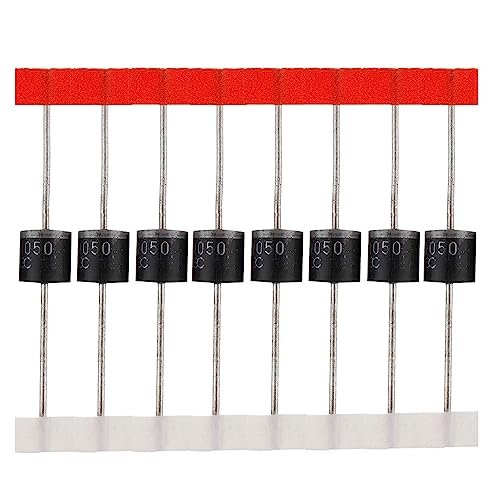
BOJACK Schottky diode 30SQ050 (30A 50V) Axial 30SQ050 (30 amps 50 Volts) for Solar Panel Parallel reflow Protection diodes Barrier Rectifier Diodes (Pack of 20)
30SQ050 Specifications: Forward rectified current: 30A,Maximum recurrent peak reverse voltage: 50V
As an affiliate, we earn on qualifying purchases.
As an affiliate, we earn on qualifying purchases.
How Series Wiring Amplifies Small Shadows
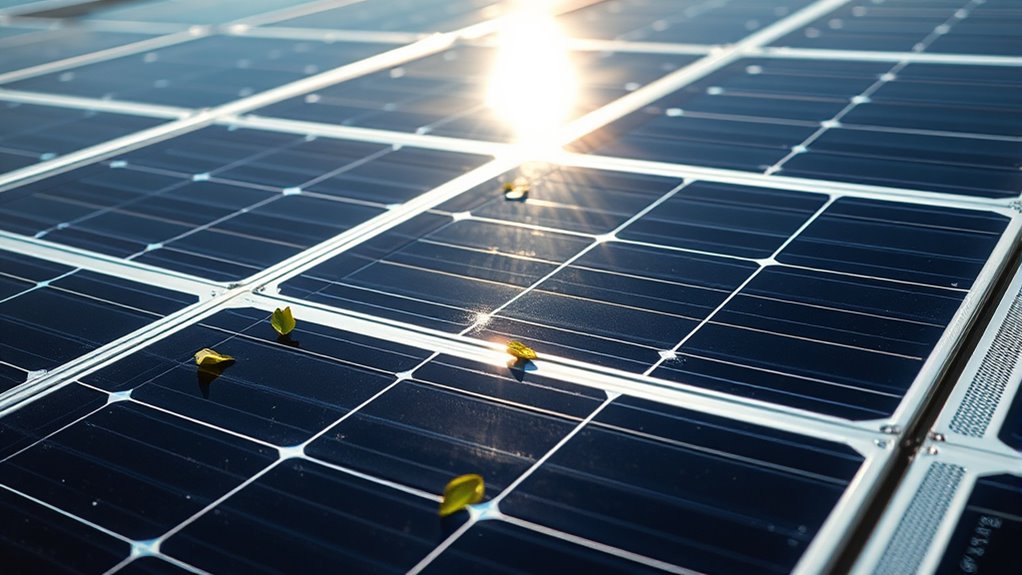
When solar cells are wired in series within a module, even a small shadow on one cell can cause a significant drop in the entire string’s current output. This happens because the current flows through each cell sequentially, so the shaded cell becomes the bottleneck. If one cell produces less current due to shading, the entire string must operate at that reduced level, regardless of the unshaded cells’ capacity. Your system’s power output hinges on the weakest link. Even a tiny shadow covering only a few cells can limit the current for the whole string, leading to disproportionate power losses. This effect emphasizes how vital it is to manage shading and understand the series wiring layout to optimize energy production. Understanding series wiring can help in designing systems that minimize the impact of shadows and maximize efficiency. Additionally, implementing bypass diodes can help mitigate some of these shading effects by allowing current to bypass shaded cells, reducing power loss and protecting your system. Recognizing shading effects early can also guide optimal panel placement and orientation to prevent shadows from forming during peak sunlight hours.
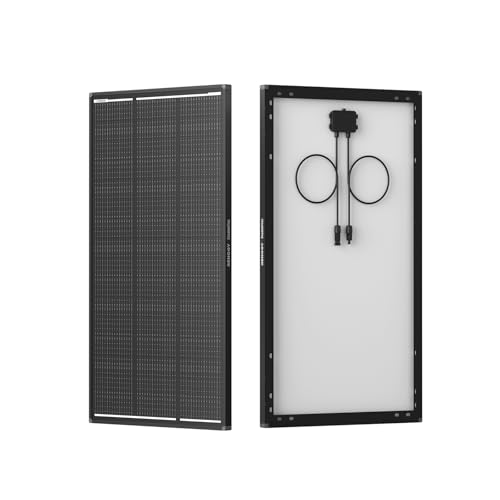
Renogy ShadowFlux Solar Panels, N-Type Anti-Shading Panels for 12V/24V Systems with 25% High-Efficiency PV Modules, 120W ShadowFlux N-Type Panel
ShadowFlux Anti-Shading Technology – Renogy shadowflux technology delivers enhanced power generation even in shaded areas caused by buildings,…
As an affiliate, we earn on qualifying purchases.
As an affiliate, we earn on qualifying purchases.
The Critical Role of Bypass Diodes and Layout

Bypass diodes play a vital role in limiting shading losses by allowing current to bypass shaded cells, reducing hot spots and damage. However, their placement and the panel layout considerably influence how effectively they recover energy when partial shading occurs. Understanding how layout design interacts with diode placement helps you optimize your system’s resilience to shadows and maximize output. Additionally, adopting European cloud innovation approaches can further enhance the sustainability and security of your solar installations. Proper panel configuration ensures that bypass diodes are utilized efficiently, minimizing energy loss and prolonging the lifespan of the system. Careful consideration of system layout can significantly improve overall performance during shading conditions, especially when integrated with advanced solar monitoring technologies. Moreover, considering system resilience strategies can help maintain consistent energy production despite variable shading scenarios.
Diodes Limit Shading Loss
Diodes play a vital role in mitigating shading losses in photovoltaic modules by providing alternative current pathways around shaded or damaged cells. They help prevent hotspots and reduce the overall impact of partial shading. Bypass diodes are typically placed across groups of cells or substrings, allowing current to bypass shaded sections. However, their effectiveness depends on their placement and number. Proper diode placement ensures shading doesn’t span multiple substrings, maximizing recovery. Diodes only protect the cells they cover; shading crossing diode boundaries limits benefits. Increasing diode count improves shading resilience but adds cost and complexity. Well-designed layouts align shadow patterns with diode boundaries, minimizing shading losses. Effective layout design can further enhance shading mitigation by considering typical shadow patterns and module orientation. Ultimately, effective diode use reduces output dips, but layout considerations remain essential for optimal shading mitigation.
Layout Influences Recovery
Have you ever considered how the physical layout of your PV modules can make or break their ability to recover from shading? Your module’s design, especially how cells are arranged into substrings, plays a vital role. If shading hits across multiple substrings, the system’s ability to isolate the impact diminishes, reducing output. Proper layout aligns bypass diodes with potential shadow zones, allowing shaded sections to bypass without affecting the rest. Additionally, spacing modules to minimize self-shading during low sun angles helps. Using module-level power electronics, like optimizers or microinverters, further isolates each panel’s performance, preventing shading on one module from dragging down the entire string. A well-planned layout maximizes recovery, reducing overall losses caused by even tiny shadows.
solar panel layout optimization kit
As an affiliate, we earn on qualifying purchases.
As an affiliate, we earn on qualifying purchases.
Common Sources of Partial Shading in Real-World Installations

In real-world solar installations, partial shading often comes from a variety of common sources that can substantially impact system performance. You should be aware of these typical culprits:
- Trees and foliage – seasonal growth or moving leaves cast intermittent shadows, especially during mid-day.
- Roof features – vents, chimneys, dormers, and nearby parapets can create persistent shading patterns.
- Wires and infrastructure – wires, cables, and utility poles often produce linear shadows crossing multiple panels.
- Adjacent structures – neighboring buildings, walls, or additions can block sunlight at different times, especially during midday.
- Shading can also be influenced by auditory processing challenges that affect visual attention and spatial awareness, making it harder to identify and mitigate shading issues effectively. Additionally, understanding the security zone around your installation can help in planning to minimize obstructions from nearby objects or structures. Recognizing potential shading sources during installation planning can greatly improve overall solar efficiency.

ECO-WORTHY 1200W Solar Tracker System: 6pcs 195W Monocrystalline Solar Panels, Dual-Axis Solar Tracking Kit with Tracker Controller for Shed Farm Yard Hut Field and Any Off-Grid
【More Daily Output】 Starting from Nov 3, 2025, due to tech iteration, the tracking system is fully equipped…
As an affiliate, we earn on qualifying purchases.
As an affiliate, we earn on qualifying purchases.
Why a Tiny Shadow Can Cause Big Power Losses

A tiny shadow can cause disproportionately large power losses because photovoltaic cells are wired in series, making the entire module’s output dependent on the performance of its most shaded cell. When even one cell receives less light, it limits the current flow through the whole string, reducing overall power. This bottleneck effect means a small shadow—covering just a few cells—can drop the module’s output by 40% or more. Bypass diodes can help, but they often only isolate specific sections, not fully recover lost irradiance. As a result, the entire system’s energy production suffers markedly from minor shading. This is especially true during peak sunlight hours when the system’s output is highest, amplifying the impact of tiny shadows on your overall energy yield. Understanding the series wiring of solar panels highlights why shading impacts performance so significantly. Additionally, the net worth of the system can be compromised if shading causes consistent power reductions over time, affecting long-term returns. Recognizing the importance of solar panel configuration can help optimize placement to minimize shading effects and protect your investment. Furthermore, shade management strategies are essential to ensure maximum efficiency and prevent unnecessary energy loss over the system’s lifespan. Proper system design can also mitigate the effects of shading and improve overall energy production.
The Impact of Shading Timing and Sun Angles

Shading impacts vary considerably depending on the time of day and sun angle, with peak effects during midday hours when sunlight is most intense. During these hours, even a small shadow can drastically reduce output because the panel’s current is at its highest. As the sun moves lower in the sky in the morning and late afternoon, shadows lengthen and move, often reducing their impact. Consider these factors:
- Shading during noon causes the greatest power loss due to direct, vertical sunlight.
- Low sun angles in mornings and evenings produce longer shadows, affecting more of the panel.
- Shadows cast during peak hours have a disproportionate impact on energy production.
- The sun’s position influences shadow length and movement, making timing critical for system design and placement.
- Proper system placement and orientation can help mitigate the effects of solar shading and improve overall energy output.
- Understanding the solar geometry helps in planning panel placement to reduce shading issues throughout the day. Additionally, using predictive modeling can assist in anticipating shading patterns and optimizing panel layout. Recognizing these factors allows for better system efficiency and long-term energy gains. Being aware of cultural symbolism, such as the significance of shadows or light in various traditions, can also deepen the understanding of solar patterns and their impact.
Strategies to Minimize Shade-Induced Performance Drops

To minimize shade-induced performance drops, you should optimize your layout design to avoid shading obstacles and guarantee proper spacing. Using microinverters or optimizers can help isolate shaded modules and prevent system-wide losses. Additionally, conducting a detailed shade analysis before installation allows you to identify potential issues and plan your system layout effectively. Incorporating advanced diagnostic tools can further enhance your ability to detect and address shading problems promptly. Implementing preventive maintenance routines can also help identify and mitigate shading factors caused by nearby objects or foliage growth over time. Regularly monitoring system performance with real-time data analysis can uncover unexpected shading issues early, ensuring sustained optimal output.
Optimize Layout Design
Optimizing layout design is essential for minimizing performance losses caused by shading. You can reduce shade impact by carefully planning your array placement. Consider these strategies:
- Align panels to avoid shading during peak hours by orienting them southward and selecting a tilt that minimizes low-angle shading.
- Increase row spacing based on sun angles, following the 1:3 rule (object height ×3), to prevent self-shading at low sun.
- Position panels away from shading sources like trees, chimneys, or nearby structures, and trim vegetation regularly.
- Match module layouts with bypass diode boundaries to prevent shading across multiple substrings, limiting performance loss.
These steps help maintain maximum sunlight exposure, reduce cascade effects, and improve overall system efficiency.
Use Microinverters or Optimizers
Using microinverters or power optimizers can substantially reduce the impact of shading on your solar system’s performance. These devices enable each panel or even each cell to operate independently, preventing shaded modules from dragging down the entire string’s output. Unlike traditional string inverters, which limit system performance when one panel is shaded, MLPE (module-level power electronics) isolate shading effects, maintaining higher overall energy production. If a shadow hits one panel or a part of it, only that section’s output drops, while the rest of your system continues to perform at ideal levels. This approach minimizes cascade losses and improves system resilience during partial shading. Investing in microinverters or optimizers is especially beneficial in environments with trees, nearby structures, or variable sunlight, ensuring you get the most from your solar investment.
Conduct Detailed Shade Analysis
Have you thoroughly assessed how shading impacts your solar array before installation? Conducting a detailed shade analysis is essential to identify potential issues and maximize placement. Start by:
- Mapping the sun’s path throughout the year using sun charts or software like PVsyst or Helioscope.
- Analyzing horizon profiles to detect obstructions during peak sun hours.
- Conducting onsite sun-path and irradiance measurements with a solar scanner or smartphone apps.
- Modeling shading scenarios based on nearby structures, trees, and seasonal foliage.
This process reveals shadow patterns and helps you choose ideal panel locations. By understanding shading dynamics beforehand, you can prevent performance loss, select suitable equipment, and plan for mitigation strategies, ensuring your system operates at maximum efficiency.
Regulatory Rules and Legal Protections Against Shading

Did you know that legal protections can help prevent shading issues from harming your solar investment? Many jurisdictions have laws like California’s Solar Shade Control Act, which restricts trees or structures from casting significant shadows on panels during peak sunlight hours. These regulations often require property owners to maintain solar access and provide remedies if shading causes system performance drops. Local ordinances and homeowners’ association rules may also impose restrictions to protect solar rights. Understanding these protections helps you safeguard your system against unexpected shading conflicts. However, enforcement varies, and legal processes can be complex. Consulting local regulations and documenting shading issues early ensures you can advocate for your solar rights and minimize potential output losses caused by shading.
Cost Considerations for Shading Mitigation Solutions

Mitigating shading issues often involves upfront costs that can substantially impact your solar project’s overall budget. You need to weigh several key expenses:
- Advanced shading analysis tools like PVsyst or Helioscope to identify potential shading risks early.
- Module-level power electronics (MLPE) such as microinverters or optimizers, which reduce cascade losses but add to initial costs.
- Site modifications including trimming trees, adjusting row spacing, or relocating panels to minimize shading impact.
- Design adjustments like choosing ideal tilt angles, orientations, and bypass diode placement to limit shading effects.
While these measures require upfront investment, they can greatly improve energy output, shorten payback periods, and maximize your system’s long-term value. Proper planning makes shading mitigation cost-effective.
Frequently Asked Questions
How Do Partial Shadows Affect Long-Term PV Module Degradation?
You should know that partial shadows can accelerate your PV module degradation over time. When shaded cells heat up unevenly, hotspots develop, causing stress and damage to the silicon. This repeated thermal cycling weakens the module’s materials, leading to faster wear and potential failure. To protect your system’s longevity, minimize shading and consider module-level electronics that reduce hotspot formation and distribute heat evenly across the panels.
Can Shading Impacts Be Accurately Predicted Before Installation?
You can predict shading impacts accurately before installation by conducting detailed site analyses. Use sun-path diagrams, horizon profiles, and tools like PVsyst or Helioscope to model how shadows move throughout the day and year. By identifying potential shade sources—trees, structures, or nearby objects—you can optimize panel placement, tilt, and spacing. This proactive approach guarantees you minimize energy losses and avoid costly redesigns later.
Do Microinverters Fully Eliminate Shading Losses?
Microinverters don’t fully eliminate shading losses, but they substantially reduce their impact. Unlike string inverters, microinverters operate at the module level, isolating shaded panels so their reduced output doesn’t affect others. This means shaded modules won’t drag down the entire system, boosting overall energy production. However, even with microinverters, shading can still cause some loss, especially if shadows cover multiple modules or critical system components.
How Does Seasonal Vegetation Growth Influence Shading Risks?
Seasonal vegetation growth increases shading risks considerably because trees and plants grow taller and denser during certain seasons, casting longer, more persistent shadows. You might notice more shading in spring and summer when foliage is full, reducing your system’s output during peak production hours. To minimize losses, you should trim or remove overgrown vegetation regularly, especially before the high-sun months, and consider strategic site planning to avoid shading during critical times.
Are There Legal Limits to Tree or Structure Shading on Solar Arrays?
Yes, there are legal limits on tree and structure shading on solar arrays. In California, the Solar Shade Control Act prohibits new trees from casting more than 10% shadow on collectors during peak hours. Many jurisdictions also have ordinances or homeowner association rules to protect solar access. You should check local regulations, permits, and homeowner agreements to guarantee compliance and avoid disputes, especially if shading impacts your solar performance.
Conclusion
Remember, even the tiniest shadow can wipe out your solar panel’s entire power output like a sneaky ninja. To keep your system shining at its brightest, pay close attention to wiring, layout, and shading sources. Don’t let small shadows turn into giant energy thieves—your solar investment deserves the best defense. Stay vigilant, optimize your setup, and keep that sunshine flowing freely, because in the world of solar, a little shadow can cause a power blackout of epic proportions!