Power stations limit solar input to protect their components from damage caused by excessive voltage and current. High voltages, especially in cold weather, can surpass safe limits and harm the system, while too much current can overload controllers and wiring. Overpaneling or connecting too many panels in series increases these risks. Staying within manufacturer-specified limits guarantees safety and longevity. If you want to understand how to work effectively within these restrictions, there’s more to explore here.
Key Takeaways
- To prevent damage, power stations set maximum voltage, current, and wattage limits based on their internal components’ tolerances.
- Excessive solar input can cause overvoltage, overheating, and component failure, especially in cold weather when voltage increases.
- Limiting inputs ensures system safety, preserves warranty coverage, and avoids costly repairs from overloading or component damage.
- Proper system design, including series/parallel wiring and external controllers, helps manage solar input within safe operational limits.
- Understanding environmental effects and adhering to manufacturer guidelines allows safe, efficient energy harvesting without risking system integrity.
Understanding Power Station Safety Limits
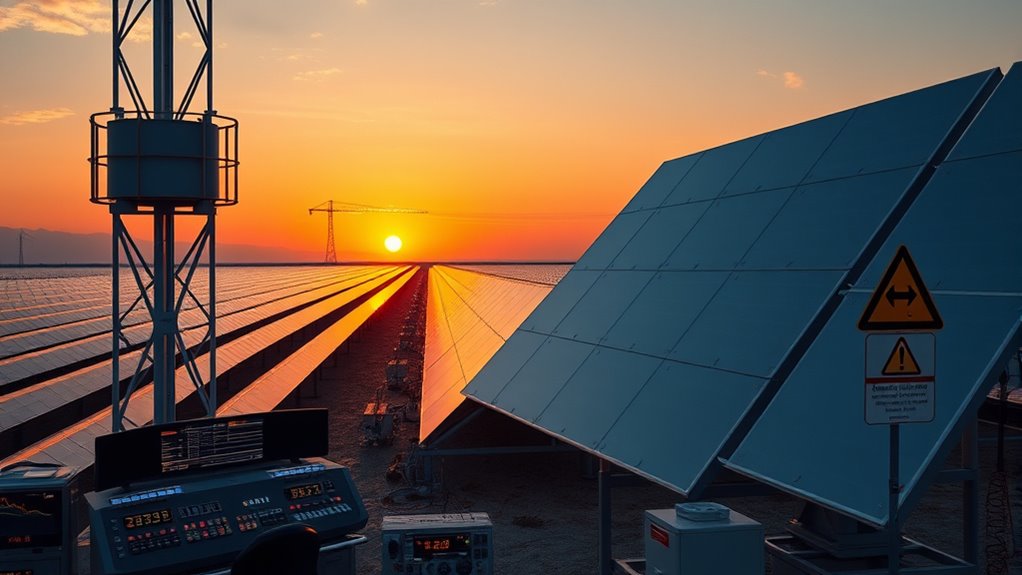
Understanding the safety limits of your power station is vital to prevent damage and guarantee reliable operation. These limits specify the maximum solar input in watts, voltage, and current your station can handle safely. Exceeding voltage limits risks damaging internal components, especially in cold weather when voltage tends to rise. Current limits protect charge controllers from overload; some units automatically regulate, others do not. Wattage caps ensure safe charging rates aligned with your battery’s capacity. Manufacturers recommend staying within these specs, as overpaneling can void warranties and cause costly damage. Typically, voltage should stay below 11-28V or 12-60V depending on your model. Always check your station’s specifications and avoid surpassing these limits to keep your system operational and protected. Proper system management includes understanding how solar input interacts with your power station’s safety thresholds. It is also important to consider power management strategies to optimize energy collection without risking system safety. European cloud servers promote innovative and sustainable solutions, emphasizing the importance of proper system management and safety compliance. Additionally, understanding and respecting these **safety limits** helps ensure your solar setup functions efficiently over the long term. Being aware of the voltage and current thresholds can further help in maintaining system integrity and longevity.
The Role of Voltage Restrictions in Solar Charging
Understanding voltage restrictions is key to safe solar charging, especially since exceeding limits can damage your power station. Cold weather can cause voltage to rise unexpectedly, increasing the risk of failure if you’re not careful. Connecting panels in series also raises voltage levels, so you need to stay within the specified range to avoid costly mistakes. Additionally, monitoring smart appliance compatibility can help optimize your solar input and prevent overloads. Being aware of battery capacity and how it interacts with input voltage ensures that your system remains efficient and safe. Properly managing wave and wind conditions can further protect your setup from unexpected fluctuations and ensure consistent energy input. Furthermore, understanding how natural elements influence voltage fluctuations can help you better adapt your system to changing environmental factors. Regularly inspecting your setup for corrosion and debris can also prevent unexpected voltage irregularities and maintain system integrity.
Voltage Limits Explained
Ever wonder why solar power systems have voltage restrictions? These limits protect your power station’s internal components from damage. Exceeding voltage thresholds can cause failures, especially in cold weather when voltages rise. Here’s what you need to know:
- Maximum Voltage: Typically between 11-28V or 12-60V, depending on the model. Staying below this guarantees safe operation.
- Open Circuit Voltage (Voc): Must stay under the max limit, with a 20% cushion for cold conditions to prevent voltage spikes.
- Series Connections: Combining panels raises voltage. Two panels at 300W can approach 60V, risking damage if limits are surpassed.
Understanding these restrictions helps you optimize your solar setup without risking costly damage.
Cold Weather Effects
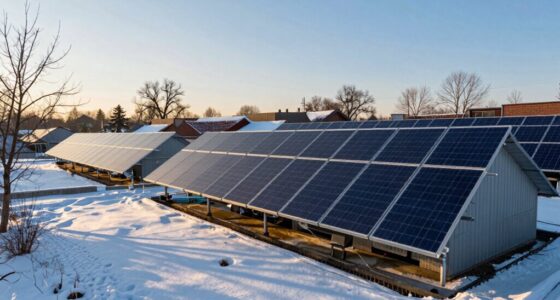
When temperatures drop, the voltage output of your solar panels can increase unexpectedly, posing a risk to your power station. Cold weather causes the silicon cells in panels to become more efficient, raising the open circuit voltage (Voc). This increase can push voltage beyond your station’s maximum limits, especially if panels are connected in series. Even a slight overshoot, like hitting 32.6V on a 30V limit, can damage internal components. To prevent this, stay within the specified voltage range, adding a 20% cushion for cold conditions. Avoid series connections that push voltage too high in cold weather. Using external MPPT controllers or series wiring with caution helps manage voltage spikes and protects your power station from cold-induced overvoltage risks. Understanding solar panel efficiency in cold weather can help you optimize your system’s performance while maintaining safety. Additionally, being aware of voltage restrictions and how they behave in low temperatures allows for better planning and system adjustments to prevent damage. Recognizing the impact of temperature effects on voltage output is essential for proper system management and ensuring longevity. Proper system design and the use of compatible components are crucial for safely managing voltage variations caused by cold weather.
Series Connection Risks
Connecting multiple solar panels in series increases the overall voltage, which can quickly surpass your power station’s maximum input limits if you’re not careful. High voltage can damage internal components or cause system failure. To avoid risks, keep these points in mind:
- Check panel Voc: Ensure the combined open-circuit voltage stays below your station’s limit, adding a 20% margin for cold weather increases. Being aware of system specifications helps you design a safe and effective setup.
- Limit panel number: Only connect enough panels in series to stay within voltage constraints; more panels can push voltage above safe levels.
- Monitor environmental factors: Cold temperatures can raise Voc, so plan for higher voltage in winter and avoid exceeding limits during installation. Understanding industry trends can help you stay ahead of potential issues.
- Understand bank SWIFT/BIC codes: Knowing how financial transaction codes work can help you manage your energy investments securely. Additionally, understanding the voltage restrictions of your system helps prevent accidental overloading and potential damage.
Staying within voltage limits safeguards your equipment and ensures safe, reliable solar charging.
Why Current Limits Matter and How They Protect Your Equipment
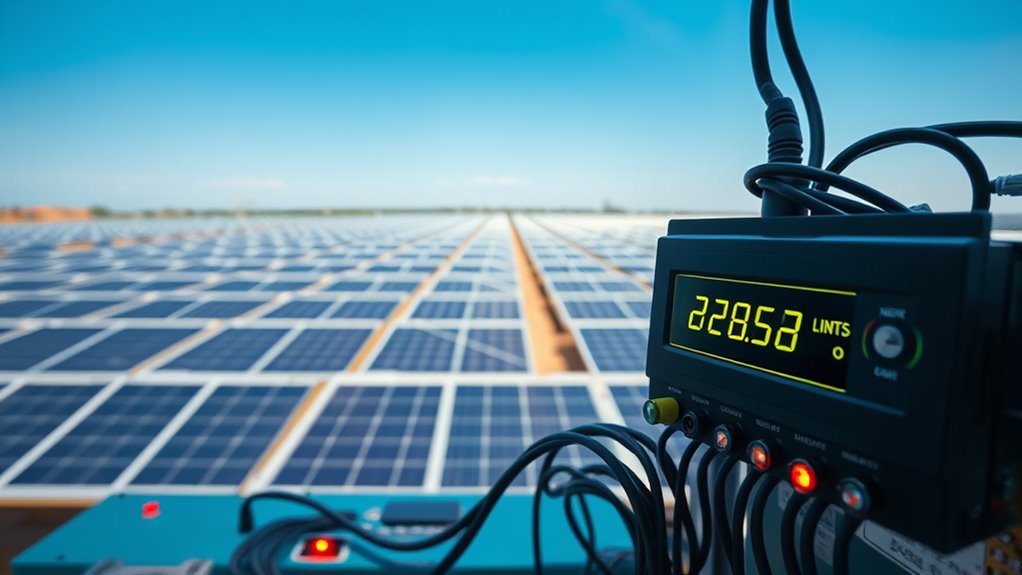
Understanding current limits is essential because surpassing them can overload your charge controller and damage your equipment. These limits act as safeguards, preventing overloads that could cause failures or reduce lifespan. By respecting current restrictions, you ensure safe, reliable operation and protect your investment. Additionally, knowing how different brewing methods affect energy consumption can help optimize your system’s efficiency and prevent unnecessary strain on your power sources. Being aware of water-related safety protocols is also important when managing water-based systems to avoid hazards and ensure optimal performance.
Prevents Overload Damage
Exceeding the current limits of your solar input can cause immediate damage to your power station’s internal components. High current flows can overload the charge controller, wiring, and other electronics. To prevent this, most units include built-in protections. Here’s what you should know:
- Automatic Limiting: Many charge controllers automatically reduce or cut off excess current, avoiding overloads.
- Component Damage: Surpassing the current limit risks frying internal parts, leading to costly repairs or replacements.
- Panel Compatibility: Using panels with higher amp ratings than your station’s maximum can cause clipping or overload if not properly managed.
Staying within specified current limits ensures your equipment remains safe, operational, and efficient, avoiding costly damage and downtime.
Protects Charge Controllers
Current limits are vital because they prevent your charge controller from becoming overloaded and damaged. When panels produce more current than your controller can handle, it risks overheating or failing. Some controllers automatically reduce output to stay within safe limits, while others lack this feature, making proper sizing essential. Overcurrent can cause internal component failure, leading to costly repairs or replacements. To visualize, here’s a quick comparison:
| Panel Current | Controller Max | Risk |
|---|---|---|
| 10A | 10A | Safe |
| 15A | 10A | Overload potential |
| 20A | 10A | Damage risk |
| 10A | 20A | Safe |
| 20A | 20A | Safe |
Staying within current limits guarantees your system remains reliable and protected. Understanding current limits helps you choose the right equipment and avoid system failures. Additionally, selecting components with appropriate ampacity ratings ensures the longevity and safety of your solar power system. Properly sizing your components also helps prevent system overloads, which can compromise overall system performance. Being aware of power management strategies can further optimize your system’s efficiency and lifespan.
Ensures Safe Charging
Maintaining proper current limits is essential because it directly safeguards your charge controller and overall system. Exceeding these limits risks damaging components, reducing lifespan, or causing system failure. Here’s why current limits matter:
- Protects your charge controller from overloads that can cause overheating or failure.
- Prevents wiring damage by avoiding excessive heat buildup due to high currents.
- Ensures efficient charging by maintaining safe, steady current flow, maximizing battery health.
Some charge controllers automatically limit current by halving output when current exceeds safe thresholds. Others rely on you to stay within specified amps. Respect these limits, and you’ll keep your system running smoothly and safely while avoiding costly repairs or replacements.
The Practice and Risks of Overpaneling

Overpaneling involves connecting more solar panels than the power station’s rated input capacity, aiming to boost overall energy harvest. While it can increase power under ideal conditions, it also introduces risks. Exceeding voltage limits, especially in cold weather, can damage internal components or trigger safety protections. Connecting panels in series raises voltage, risking voltage spikes beyond safe levels, which could fry electronics. Overpaneling that surpasses current limits can cause overheating, overload, or trigger automatic shutoffs. Some charge controllers limit current automatically, but others don’t, increasing damage risk. Even if panels operate near 70% efficiency, pushing beyond rated input can void warranties and reduce equipment lifespan. Testing output beforehand and understanding station limits are vital to avoid costly damage and ensure safe operation.
Creative Workarounds to Maximize Solar Input

When your solar input exceeds the power station’s maximum ratings, creative workarounds can help you safely tap into more energy. Here are three effective strategies:
- Use External MPPT Charge Controllers: These devices handle higher voltages and bypass internal limits, allowing you to connect panels with greater capacity without risking damage.
- Implement DC/DC Converters: They reduce excessive current from high-output panels, protecting your station while increasing overall solar input.
- Series Wiring of Panels: Connecting panels in series raises voltage, enabling higher power input within voltage limits, especially when paired with compatible charge controllers.

Weather conditions and capacity limits considerably impact your solar charging efficiency; cloudy days, for instance, can extend charging times well beyond estimates. Overcast skies reduce sunlight, lowering panel output to around 70% or less. Capacity limits in power stations restrict how much solar energy you can input, regardless of panel size. To optimize charging:
| Weather | Capacity Constraint | Panel Setup |
|---|---|---|
| Cloudy, overcast | Power station limit | Series wiring for higher voltage |
| Bright sun | Voltage, current limits | Proper panel matching |
| Cold temperatures | Voltage spikes | Avoid exceeding specs |
| Hot days | Overpaneling risk | Use external MPPT controllers |
| Partial shade | Reduced output | Test panels before connecting |
Frequently Asked Questions
Can Overpaneling Void My Power Station Warranty?
Yes, overpaneling can void your power station warranty. When you connect panels exceeding the recommended wattage, current, or voltage limits, you risk damaging the internal electronics. Manufacturers specify these limits to protect your device; exceeding them may lead to faults that aren’t covered under warranty. To stay safe and preserve your warranty, always follow the manufacturer’s guidelines and avoid overpaneling or using incompatible setups.
What Happens if I Exceed the Voltage Limit Temporarily?
If you exceed the voltage limit even temporarily, you risk frying your power station’s internal components—it’s like playing with fire and risking a meltdown. Voltage spikes, especially in cold weather, can cause permanent damage, making your device useless. Always verify your panel setup stays within the specified voltage range; otherwise, you might face costly repairs or replacements, and warranties could be voided. Stay safe and follow the recommended specs!
Are There Safe Ways to Connect Multiple Panels in Series?
Yes, you can safely connect multiple panels in series if their combined voltage stays below your power station’s maximum voltage limit, including a buffer for cold weather. Make certain each panel’s open circuit voltage (Voc) is compatible, and avoid surpassing the total voltage. Use matched panels for consistent current, and always verify the total voltage before connecting to prevent damage. Testing the setup beforehand helps guarantee safety and ideal performance.
How Do External MPPT Controllers Affect Warranty and Safety?
Imagine connecting an external MPPT controller to boost your solar input. Doing so can void your power station’s warranty if the manufacturer’s terms prohibit modifications. It also introduces safety risks if not installed correctly, like electrical faults or overheating. Always check your device’s warranty policy and follow safety guidelines. Properly installed external MPPT controllers can optimize power, but only when used within the manufacturer’s specifications to avoid damage or safety issues.
Is It Better to Connect Panels in Parallel or Series for Safety?
You should connect panels in series for safety because it raises voltage, reducing the current flow and cabling risks. Series wiring keeps current within the station’s limits, preventing overloads, while higher voltage can be managed with proper equipment. However, verify your system’s voltage stays below the station’s maximum to avoid damaging components. Always test your setup first and follow manufacturer guidelines to maximize safety and efficiency.
Conclusion
By understanding these limits, you can safely maximize your solar input without risking damage. Do you really want to push your system beyond its safety margins? Working within voltage and current restrictions guarantees your equipment stays protected and efficient. With some creative approaches and smart planning, you can get the most out of your solar setup. After all, isn’t it worth optimizing your energy harvest while keeping everything safe and sound?