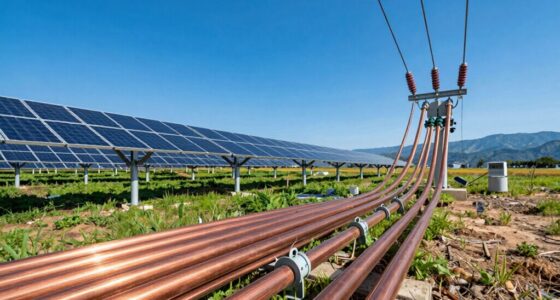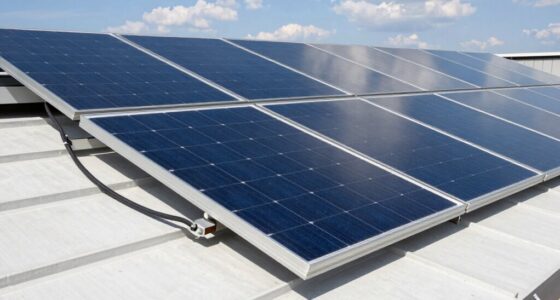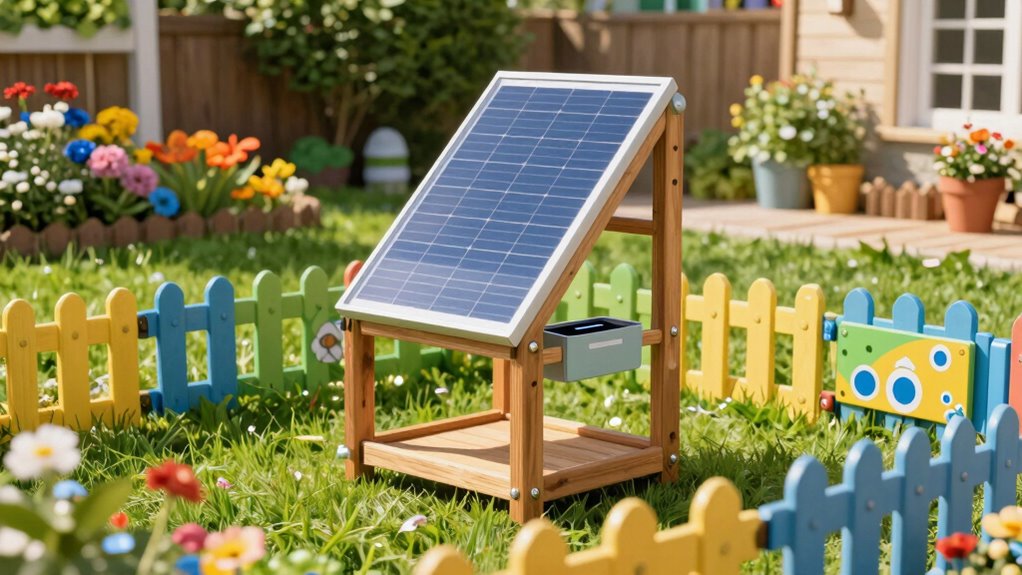

To build a kid-safe solar charging spot, choose an open area with full sun free of shade or obstructions. Mount weatherproof panels securely on level ground or structures, ensuring cables stay protected inside conduit. Install lockable, vented enclosures for batteries and outlets out of children’s reach, and surround the setup with fencing or barriers for safety. Regular maintenance and clear safety indicators make it safe and easy to manage—keep exploring for detailed steps to create your secure solar station.
Key Takeaways
- Select an open, unobstructed area with firm, level ground and install fencing or barriers to prevent accidental contact.
- Use weatherproof, outdoor-rated solar panels mounted securely with tamper-resistant hardware, facing true south and tilted for optimal efficiency.
- Enclose batteries, charge controllers, and outlets inside lockable, vented, childproof boxes placed out of reach.
- Properly ground all electrical components, route wiring through conduit, and install tamper-proof enclosures to ensure safety and code compliance.
- Incorporate clear safety indicators like LED status lights, and schedule regular inspections and maintenance to ensure ongoing child safety.
kid-safe outdoor solar charging station
As an affiliate, we earn on qualifying purchases.
As an affiliate, we earn on qualifying purchases.
Choosing the Perfect Location for Safety and Sunlight
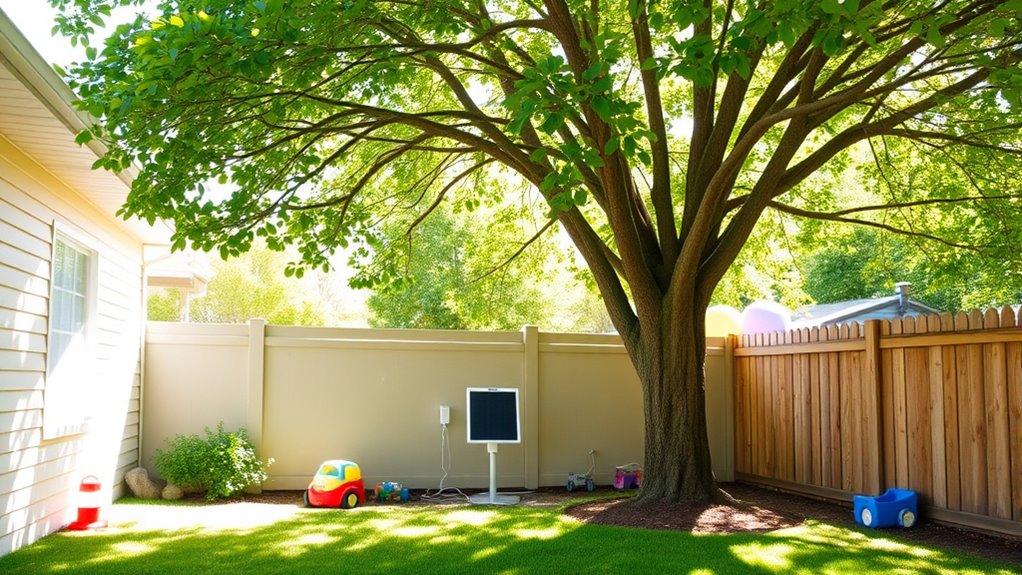
Selecting the right location is essential to guarantee both safety and ideal sunlight exposure for your kid-safe solar charging spot. You want an open-sky area with no obstructions like trees, buildings, or fences that cast shade during peak sunlight hours. Position your solar panels facing true south (Northern Hemisphere) or true north (Southern Hemisphere), tilting them to match your local latitude for maximum efficiency. Choose firm, level ground or sturdy structures to support mounts and prevent tipping in wind. Keep clear of play structures, water features, and tree canopies to minimize shading and hazards. Plan cable routes away from walkways and play zones, preferably underground, to prevent trips and tampering. Proper site selection guarantees maximum energy collection and a safe environment for kids. Additionally, considering Hydrotherapy benefits can promote overall well-being and safety for children using the area. Ensuring the site has adequate solar access will optimize energy production throughout the day, and incorporating mounting options can improve stability and safety for the solar panels. Incorporate safe fencing or barriers to further enhance safety around the solar setup and prevent accidental contact or interference. Moreover, assessing environmental factors such as wind and weather conditions can help maintain the longevity and safety of your solar equipment.

Joinfworld Outdoor Electrical Box Waterproof IP67 6X6 Plastic Project Box Enclosure Weatherproof for WiFi Electronics Solar Network Marine Outside with Stainless Steel Hinged
◆IP67 Waterproof◆ This outdoor electrical box weatherproof is IP67 Waterproof that makes the plastic box hold excellent water…
As an affiliate, we earn on qualifying purchases.
As an affiliate, we earn on qualifying purchases.
Selecting Kid-Friendly and Weatherproof Equipment
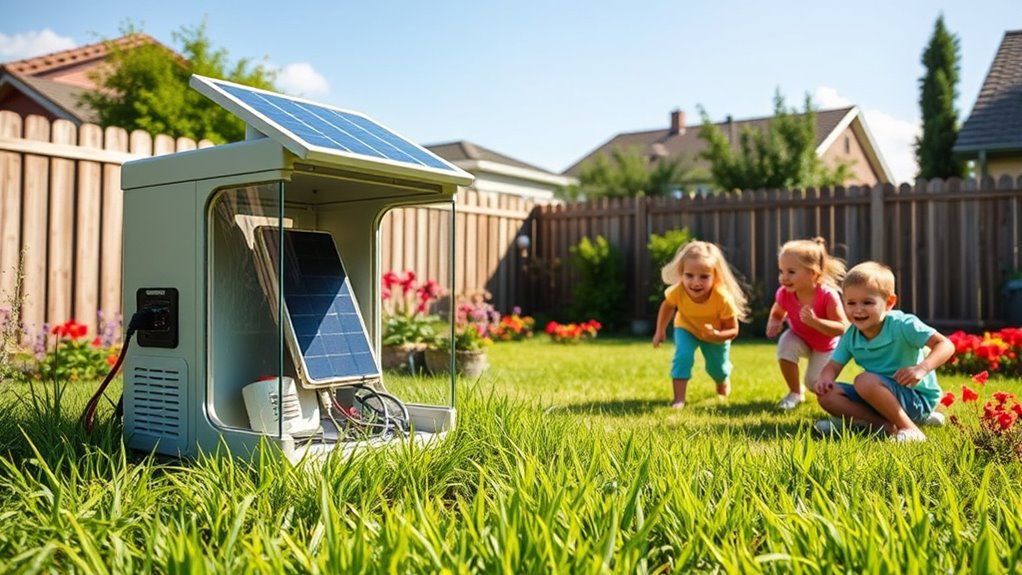
To guarantee safety and durability, choose kid-friendly and weatherproof equipment designed specifically for outdoor use. This ensures the system withstands the elements and minimizes risks. Look for gear with built-in safety features and robust enclosures. Here are key considerations:
- Use low-voltage DC outputs or enclosed battery packs with overcurrent and short-circuit protection.
- Select IP65+ rated housings and outdoor-rated panels and connectors to prevent water ingress.
- Opt for charge controllers and inverters with documented safety features like GFDI/GFCI.
- Choose mechanical fasteners with tamper-resistant screws or lockable enclosures to restrict unauthorized access.
- Incorporate weather-resistant components and portable power sources that are quiet and designed for outdoor safety, ensuring reliable operation under various weather conditions. Additionally, selecting equipment with weather-resistant components can greatly extend the lifespan of your setup.
- Consider adding safety signage and barriers around the charging station to further protect children and inform users of potential hazards. Ensuring the entire system is weatherproofed helps prevent damage from rain, snow, or dust, maintaining safety over time.
- Always verify that the outdoor-rated equipment meets relevant safety standards to ensure long-term protection and reliability.

Peastorm Trailer RV Marine Battery Box – 12V Waterproof Steel Battery Relocation Kit for Boat, Trolling Motor, Kayak (Group 27 Black)
【Material】- Heavy duty battery box is made of quality steel material, surface spray black coating, sturdy and durable,…
As an affiliate, we earn on qualifying purchases.
As an affiliate, we earn on qualifying purchases.
Ensuring Electrical Safety and Code Compliance
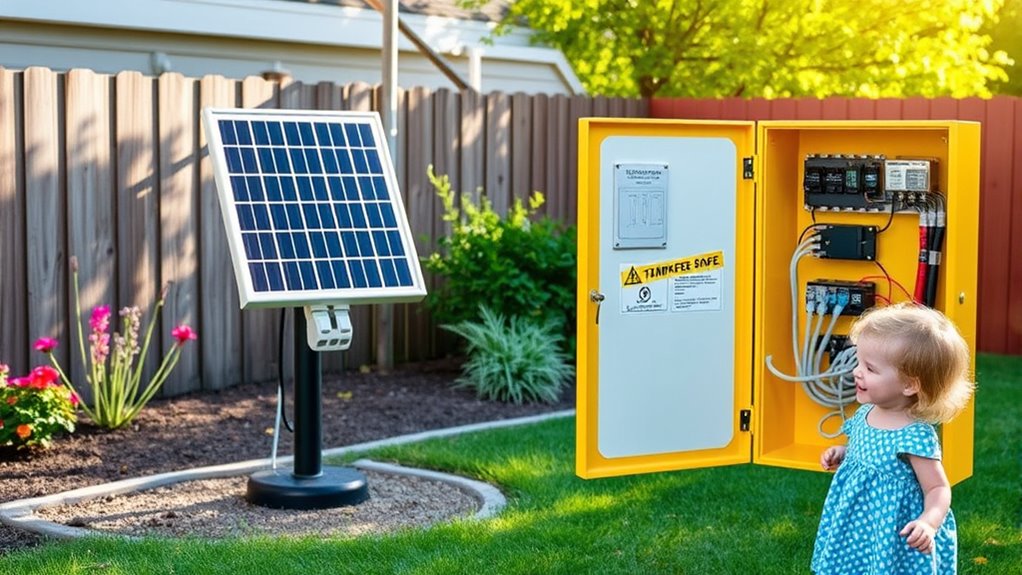
You need to guarantee proper grounding of your solar setup to prevent electrical shock and equipment damage. Follow local electrical codes and use the correct grounding methods, such as ground rods or approved grounding systems. Having a licensed electrician inspect your installation guarantees it meets safety standards and code requirements. Additionally, understanding electrical safety practices can help you identify potential hazards early and ensure your setup remains safe over time. Proper wiring techniques are essential for maintaining the integrity and safety of your solar charging station, especially when considering materials and fuel primers to ensure compatibility and safety. Being aware of security zone info can further help you protect your setup from environmental and security risks. Regular inspection and maintenance also play a crucial role in sustaining safety and compliance over the lifespan of your solar installation.
Proper Grounding Practices
Proper grounding is essential for electrical safety and code compliance in a kid-safe solar charging station. It prevents electric shock hazards and ensures system stability. To achieve this, you should:
- Connect all metal enclosures and mounting hardware to a proper grounding system, such as a ground rod or approved grounding electrode.
- Use grounding conductors of the correct size, as specified by local electrical codes and equipment manuals.
- Verify all connections are tight and corrosion-free, maintaining low-resistance paths.
- Include a grounding bus or terminal strip for organized, reliable connections to all grounded components.
- Ensure that grounding practices follow the appropriate standards for electrical systems, much like the importance of proper piercing care and hygiene to prevent infections and irritation.
- Additionally, regularly consult electrical code updates to ensure your grounding methods remain compliant with current safety standards. Staying informed about electricity safety guidelines helps prevent hazards and keeps your setup up to date.
Regularly inspect grounding connections during maintenance to confirm they remain secure. Proper grounding minimizes shock risk and ensures your solar station meets safety standards.
Compliance With Local Codes
Ensuring your solar charging station complies with local electrical codes is vital for safety and legal operation. You must install overcurrent protection, like breakers or fuses, sized according to wiring diagrams and local regulations before powering up. Ground-fault protection, such as GFCI or GFDI devices, is often mandated and must be correctly integrated. Proper grounding and earthing to an approved system are essential to prevent electrical shocks. Use conductors with appropriate AWG ratings and tighten connections to specified torque settings. In many cases, a licensed electrician must perform the final inspection or electrical connection, especially if local codes require professional installation. Additionally, understanding the horsepower of electric dirt bikes can help you anticipate the power needs of your system if you plan to incorporate high-powered components. Ensuring all components meet electrical safety standards helps guarantee your setup is safe, compliant, and ready for long-term use. Being aware of circuit capacity and load calculations is crucial to prevent overloading your system. Properly managing system grounding is essential for preventing potential electrical hazards. Always verify that your installation adheres to the local electrical codes to prevent potential hazards or legal issues.

Solar Panel for Outdoor Camera, IP66 Waterproof Solar Charger, Continuous Solar Power Supply for Security Cameras, with 10ft Cable Type-C Port & Micro USB Adapter Solar Panel, 360° Adjustable Bracket
🌈 【Compatible Type-C & Micro USB Port】Lybuorze solar panel is specially designed for wireless outdoor security cameras. Solar…
As an affiliate, we earn on qualifying purchases.
As an affiliate, we earn on qualifying purchases.
Implementing Physical Barriers and Childproofing Measures

Implementing physical barriers and childproofing measures is essential to keep kids safe around a solar charging station. You need to create a secure environment that prevents unintended access to electrical components and equipment. Use fencing or raised planters to establish a clear boundary around the station, reducing the risk of tampering. Mount solar panels on secure, anti-theft hardware at heights that discourage climbing. Route all wiring through conduit and cover exposed terminals with tamper-proof enclosures. Enclose batteries, charge controllers, and outlets inside lockable, vented boxes placed out of reach. Additionally, incorporate rounded edges, recessed fasteners, and protective caps to minimize injury risks. These measures ensure your setup remains both functional and safe, giving you peace of mind while children enjoy the yard. Ensuring your solar setup is child-safe and secure is vital for a worry-free outdoor space. Incorporating solar safety tips can further enhance the security and safety of your outdoor solar station.
Setting Up User-Friendly Charging Stations

To make your charging station safe and easy for kids to use, focus on installing simple, clearly labeled ports and outlets. You should also include visible safety indicators like LEDs or display screens to show charging status at a glance. This way, supervising adults can quickly verify everything’s working safely without confusion.
Easy-to-Use Ports
Setting up user-friendly charging ports is essential for making your solar station accessible and safe for kids and adults alike. Clear, simple ports encourage responsible use and reduce confusion. To achieve this, install ports that are easy to operate and clearly labeled. Use durable, weatherproof connectors suited for outdoor use. Incorporate straightforward indicators like LEDs to show power status and fault alerts. Position ports at accessible heights for children and adults, avoiding exposed wiring. Consider these features:
- Brightly labeled USB-A/C and outlet ports with pictograms
- Tamper-resistant covers and covers with locks
- Status LEDs indicating charging, full, or fault conditions
- Height placement for easy reach and visibility
These measures ensure safe, intuitive access, fostering confidence and minimizing risks at your solar charging station.
Clear Safety Indicators
Clear safety indicators are crucial for ensuring that everyone can easily understand the status of your solar charging station at a glance. You want clear signals to show when the system is active, charging, or in fault. Use simple LEDs or display panels to communicate these states visually. Label everything with pictograms or color codes—green for safe, red for fault, yellow for caution—that everyone can recognize quickly. Here’s a helpful guide:
| Status | Indicator Type | Meaning |
|---|---|---|
| Charging | Green LED | Power is active; device is charging |
| Fault | Red LED | Issue detected; stop use immediately |
| Standby | Yellow LED | System is ready but not charging |
This setup keeps safety front and center, especially around kids.
Establishing Maintenance and Emergency Procedures

Regular maintenance and clear emergency procedures are essential to keep the solar charging spot safe and functioning properly. You should schedule quarterly visual inspections to check for dirt, loose fittings, or damaged cables. Regularly test safety devices like GFCI/GFDI outlets and circuit breakers, especially after storms or faults. Keep a simple fault-response plan posted nearby, with clear instructions and labeled main disconnects. Use remote monitoring or periodic meter checks to track energy output and battery levels, catching issues early. Additionally, maintain a detailed log of service actions, parts replaced, and firmware updates for safety audits. This proactive approach ensures your system stays reliable, safe, and ready to operate without risking child safety or electrical faults.
Frequently Asked Questions
How Do I Ensure the Solar Panel Remains Secure Against Theft or Vandalism?
You can guarantee your solar panel stays secure by mounting it on a sturdy, tamper-resistant pole or bracket with anti-theft hardware. Elevate the panel to reduce climbability and surround it with fencing or raised planters to create a physical barrier. Use lockable enclosures for wiring and equipment, and install tamper-proof fasteners on all mounts. Regularly inspect the site for signs of tampering, and consider security cameras for added protection.
What Safety Measures Are Recommended for Children Accessing Charging Ports?
You should enclose charging ports inside lockable, vented enclosures mounted out of kids’ reach. Use tamper-resistant screws and secure covers to prevent unauthorized access. Clearly label ports with simple pictograms and warnings to guide safe use. Install safety features like overcurrent and temperature protection. Regularly inspect and maintain the ports, ensuring they remain secure and in good condition, and post emergency procedures nearby for quick reference.
How Can I Verify My Installation Meets Local Electrical Codes?
Think of your installation as the sturdy backbone of a safe haven. To verify it meets local electrical codes, you must first consult your local authority’s regulations and wiring diagrams. Then, conduct a thorough inspection, ensuring all components adhere to specified ratings, grounding is solid, and overcurrent protections are in place. Finally, have a licensed electrician perform a professional inspection to confirm everything is up to code and safe for children.
What Are the Best Ways to Prevent Shading From Nearby Trees?
To prevent shading from nearby trees, you should choose a site with an open sky and minimal obstructions. Regularly trim or prune branches that cast shadows on your panels, especially during peak sunlight hours. Position your panels away from overhanging foliage and consider installing them at an ideal tilt and elevation to avoid shade. Keep an eye on growth and maintain clearance to ensure consistent sunlight exposure and maximum efficiency.
How Often Should I Perform Maintenance Checks on the Solar System?
You should perform maintenance checks on your solar system quarterly. For example, if you notice a drop in energy output during routine inspections, it might indicate dirt buildup or loose connections. During each check, clean panels, inspect mounting hardware, and verify wiring integrity. Regular maintenance guarantees peak performance, prolongs system lifespan, and keeps safety features functioning correctly. Don’t forget to record your inspections and address issues promptly to prevent costly repairs.
Conclusion
By following these steps, you’ll create a solar charging spot that’s as safe as a cozy nest and as bright as a sunny day. Think of it as planting a sturdy tree where your kids can grow and learn safely under its shade. With careful planning and ongoing maintenance, your yard becomes a sanctuary of solar power and safety—where energy flows like a gentle stream, and your kids’ safety blooms like springtime flowers.