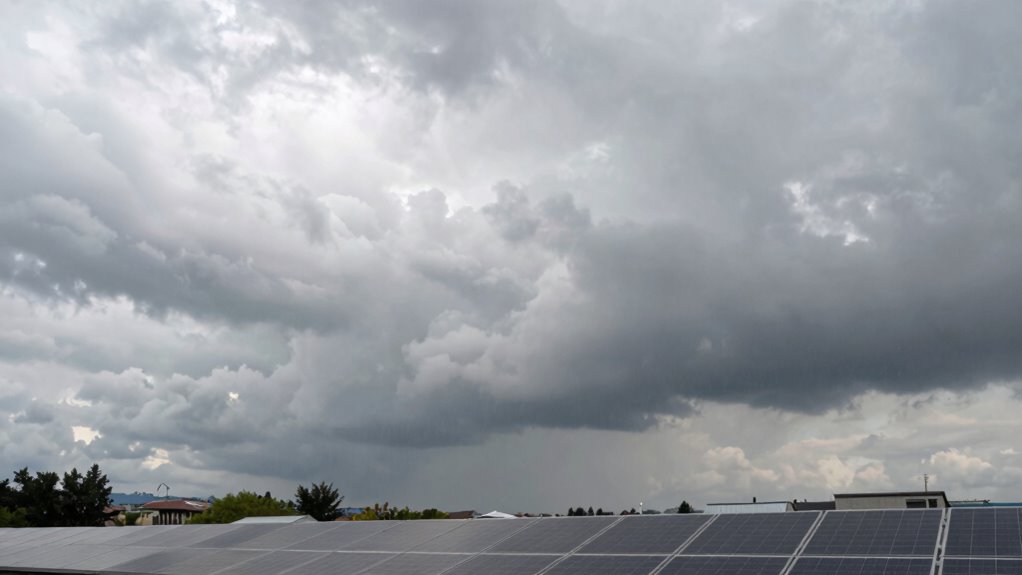

On cloudy days, your solar panels still work because clouds scatter and reflect sunlight, creating diffuse light that can generate energy, though at lower levels—usually 10-25% of sunny-day output. Thicker clouds block more light, but some reflection and scattering can boost power. Advanced panel technologies like monocrystalline and SunPower units perform better in low-light conditions. Regional weather plays a role, with partly cloudy skies often still providing meaningful energy. If you continue exploring, you’ll discover ways to optimize your system even when the weather turns gloomy.
Key Takeaways
- Solar panels can still generate power on cloudy days through diffuse sunlight, typically producing 10-70% of sunny-day output.
- Cloud density and type significantly influence how much sunlight reaches panels and their overall efficiency.
- Reflection and scattering of sunlight by clouds can sometimes boost energy production unexpectedly.
- Monocrystalline panels perform better in low-light, overcast conditions than polycrystalline or standard panels.
- Recognizing weather patterns and cloud cover helps optimize solar system performance and manage expectations during gloomy weather.

Anker SOLIX C1000 Gen 2 Portable Power Station, 2,000W (Peak 3,000W) Solar Generator, Full Charge in 49 Min, 1,024Wh LiFePO4 Battery for Home Backup, Power Outages, and Camping (Optional Solar Panel)
49 Min UltraFast Recharging: With upgraded HyperFlash tech, fully recharge at 1,600W—for outage prepping, camping trips, or tailgating...
As an affiliate, we earn on qualifying purchases.
Understanding Solar Efficiency on Cloudy Days
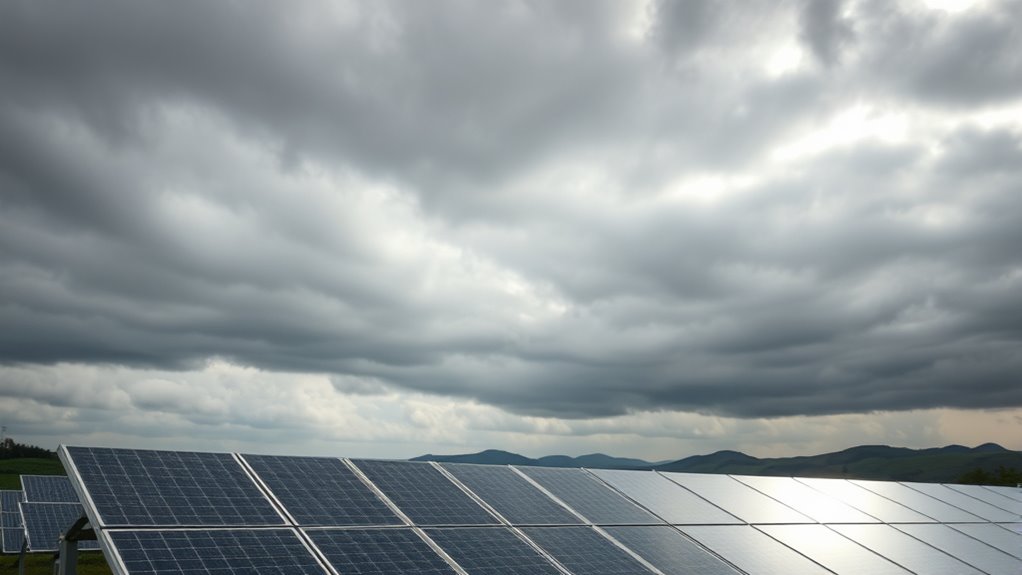
Understanding solar efficiency on cloudy days is crucial because weather conditions profoundly impact how much energy your solar panels can produce. When the sky is overcast, sunlight reaching your panels decreases considerably, often dropping to 10-25% of what you’d get on a sunny day. Light clouds can still allow 50-70% of clear-sky output, while heavy overcast can reduce production to just 10-25%. Even with clouds, diffused light penetrates and enables some energy generation, especially with high-efficiency panels like SunPower or monocrystalline types. Keep in mind, the overall efficiency depends on cloud density, with very overcast skies limiting output greatly. Recognizing these variations helps you better anticipate your system’s performance and plan for energy needs, even when the weather isn’t ideal. Recognizing how cloud cover influences solar output can help you optimize your energy use and storage strategies, ensuring you make the most of available sunlight. Additionally, considering weather patterns can inform your expectations and system adjustments for varying cloud conditions, and understanding the impact of diffuse light can further improve your energy management. Monitoring local weather forecasts can also provide valuable insights into upcoming conditions that may affect your solar performance.

Jackery Portable Power Station Explorer 300, 293Wh Backup Lithium Battery, Solar Generator for Outdoors Camping Travel Hunting Blackout (Solar Panel Optional)
SPEED UP YOUR RECHARGEABILITY: It takes only 2 hours to recharge 80% battery of the power station through...
As an affiliate, we earn on qualifying purchases.
How Cloud Density Affects Solar Power Production

You’ll notice that light clouds allow solar panels to produce about 50-70% of their usual output, while heavy clouds can drop that to just 25-50%. Cloud reflection can sometimes boost power by scattering sunlight back onto panels, but dense clouds usually block most sunlight entirely. Understanding how different cloud densities impact solar production helps you optimize your system’s performance on gloomy days. Additionally, sustainability practices integrated into solar infrastructure can help maximize efficiency during variable weather conditions. Incorporating advanced filtration systems in solar panel design can also improve performance under cloudy conditions by reducing debris and enhancing light absorption. Recognizing the impact of cloud cover on energy output is essential for planning and maintaining reliable solar power systems, especially since cloud density directly influences the amount of sunlight reaching panels and thus their overall efficiency. Moreover, implementing adaptive tracking technology can help maximize sunlight capture during unpredictable weather patterns.
Light vs. Heavy Clouds
Light and heavy clouds impact solar power production profoundly by altering the amount of sunlight reaching your panels. With light clouds, you can still expect about 50-70% of your panels’ clear-sky output, as diffused sunlight compensates somewhat for reduced direct rays. In heavy overcast conditions, however, output drops to roughly 10-25%, severely limiting energy generation. In heavy clouds, the sun’s rays are blocked more completely, and only scattered or diffused light reaches the panels. This reduction affects system efficiency, especially on days with persistent overcast. While light clouds allow for better performance, heavy clouds can considerably diminish your solar output. Recognizing solar system efficiency under different cloud cover scenarios enables better planning and maintenance of your solar setup. Additionally, understanding how cloud density influences energy production helps optimize your energy management strategies, ensuring you make the most of available sunlight even in less-than-ideal weather conditions. For instance, cloud cover patterns can vary significantly based on local climate, which further influences the effectiveness of solar installations. Moreover, the presence of free floating clouds can lead to unpredictable fluctuations in solar energy output, emphasizing the importance of adaptable energy storage solutions.
Cloud Reflection Effects
Cloud density can considerably influence solar power production through reflection effects, as clouds act like mirrors that bounce sunlight in different directions. When clouds are light and scattered, they reflect some sunlight back into space, but much still reaches your panels, maintaining high efficiency. Heavy overcast clouds, however, reflect more sunlight away, reducing the amount that reaches your panels and lowering output. Interestingly, in certain conditions, clouds can reflect scattered light that enhances solar exposure, especially around the edges of the cloud cover. This cloud reflection can sometimes boost power generation beyond what direct sunlight alone would provide. So, while dense clouds generally diminish solar output, their reflective properties can occasionally create localized increases, making cloud reflection effects a complex but essential factor in real weather conditions. Additionally, cloud composition can influence how effectively clouds reflect sunlight, impacting overall solar energy capture. Variations in cloud type can also alter the degree of reflection and thus the efficiency of solar panels under different cloud conditions. Moreover, the weight of wind turbine blades and other environmental factors can affect the overall reliability of solar energy systems by influencing local weather patterns and cloud formation. Understanding these atmospheric interactions is crucial for optimizing solar power predictions in diverse weather scenarios.

Jackery Solar Generator 1000 v2 with 200W Solar Panel,1070Wh Portable Power Station LiFePO4 Battery,1500W AC/100W USB-C Output, 1Hr Fast Charge for Outdoor,Off-Grid Living,RV,Emergency
Powerful yet Compact: Boasting a 1,500W AC output and a 3,000W surge peak, the Solar Generator 1000 V2...
As an affiliate, we earn on qualifying purchases.
Comparing Panel Technologies in Low-Light Conditions

When choosing solar panels for cloudy days, monocrystalline options often provide a clear efficiency advantage in low-light conditions. Diffused light performance varies among panel types, with some technologies capturing broader wavelengths to boost output. Considering the cost-benefit balance is essential, as higher initial investments may pay off through better performance in overcast environments. Additionally, understanding the performance metrics of different panel types can help make more informed decisions tailored to specific weather conditions. Recognizing the material composition of panels can further influence their ability to perform under diffuse lighting. Moreover, advances in technology continue to improve the efficacy of solar panels in challenging weather, making comprehensive knowledge about these factors crucial for optimal energy harvesting. As research progresses, new material innovations are emerging that enhance low-light efficiency even further.
Monocrystalline Efficiency Advantage
In low-light conditions, monocrystalline solar panels outperform polycrystalline options due to their higher efficiency in capturing diffuse sunlight. Their superior electron mobility allows them to generate more power when sunlight is scattered or weak. This advantage is especially clear on cloudy days, where their efficiency hovers around 20-22%, outperforming polycrystalline panels at 15-17%. The difference matters when every watt counts. Additionally, panel technology continues to evolve, further enhancing performance in challenging weather conditions.
| Panel Type | Efficiency in Low Light | Ideal for |
|---|---|---|
| Monocrystalline | 20-22% | Overcast, cloudy regions |
| Polycrystalline | 15-17% | Clear, sunny environments |
| SunPower (advanced) | >22% | High-performance needs |
| Standard Panels | 10-15% | Bright, consistent sunlight |
Choose monocrystalline for resilience against gloomy weather.
Diffused Light Performance
Diffused light from clouds plays a crucial role in low-light conditions, and different solar panel technologies respond to it with varying effectiveness. You’ll notice that certain panels perform better when sunlight is scattered. Here’s what you can expect:
- Monocrystalline panels excel in diffuse light, reaching 20-22% efficiency, especially in overcast regions.
- SunPower panels push beyond 22%, capturing broader wavelengths for improved power.
- Polycrystalline panels lag behind, with 15-17% efficiency in cloudy conditions.
- Higher-cost monocrystalline options are justified in low-light areas due to their superior electron mobility.
Understanding these differences helps you make smarter decisions when weather isn’t sunny, ensuring you maximize your solar output even on gloomy days.
Cost-Benefit Considerations
Choosing the right solar panel technology for low-light conditions depends on weighing initial costs against long-term benefits. Monocrystalline panels, though more expensive upfront, deliver higher efficiency in cloudy weather, making them more cost-effective over time in overcast regions. Polycrystalline panels cost less but provide lower output, which may reduce savings during prolonged cloudy periods. SunPower panels, with their higher efficiency, can justify their premium price in areas with frequent overcast skies, maximizing energy production on cloudy days. Consider your local climate and your energy needs—investing in more efficient panels might pay off if cloudy conditions persist. Balancing installation costs against expected energy gains helps determine whether higher-efficiency panels offer a worthwhile advantage or if budget-friendly options suffice.

BLUETTI Elite 30 V2 Portable Power Station 600W (Power Lifting 1500W), 288Wh LiFePO4 Battery with 10ms UPS, Emergency Backup Power for Home Blackout/Winter Storm, Solar Generator for Camping/Road Trip
[288Wh On-the-Go Power] - Only 9.4 lbs lightweight, carry it anywhere during storms! 288Wh capacity meets daily &...
As an affiliate, we earn on qualifying purchases.
Regional Variations in Cloudy-Day Solar Potential
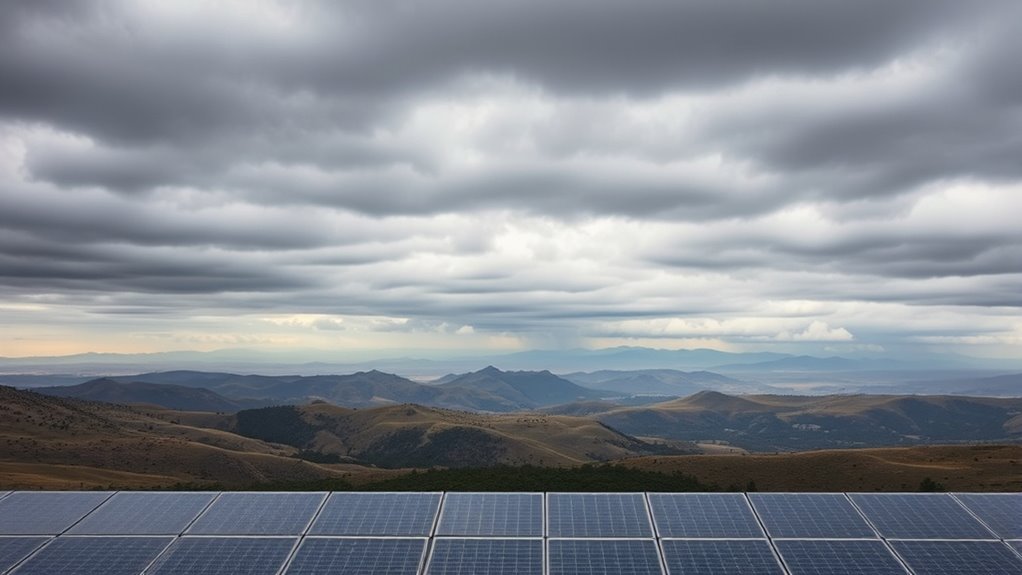
Regional variations substantially influence how effectively solar panels generate power on cloudy days. Your location determines how much diffuse light you receive and how well your panels perform. Consider these factors:
- In cities like Seattle or San Francisco, diffuse light exceeds 60%, helping your panels produce up to 70% of their sunny-day output.
- Regions such as New York or Boston, with frequent overcast skies, still generate 50-60% of maximum capacity.
- In the Pacific Northwest, persistent cloud cover allows panels to operate efficiently despite limited direct sunlight.
- Conversely, in sunnier areas like Adelaide, cloudy days average only 57% of clear-sky output, yet still provide meaningful energy.
Understanding these regional differences helps you optimize your system and set realistic expectations for cloudy-day performance.
The Role of Diffuse Light in Power Generation

Even when the sky is overcast, your solar panels can still generate electricity thanks to diffuse light. Clouds scatter sunlight, allowing some rays to reach your panels even without direct sun. This scattered light, though less intense, still contains enough energy for photovoltaic cells to produce power. Different panel technologies handle diffuse light more or less efficiently; monocrystalline panels excel because of their higher electron mobility, capturing broader wavelengths. The amount of diffuse light varies with cloud density and weather, but even heavy overcast conditions can yield 10-25% of sunny-day output. In regions with frequent clouds, your panels rely heavily on diffuse light to maintain energy production. This process helps ensure your system continues to generate electricity, just at a reduced but steady rate, regardless of the weather.
Surprising Ways Clouds Can Boost Solar Output
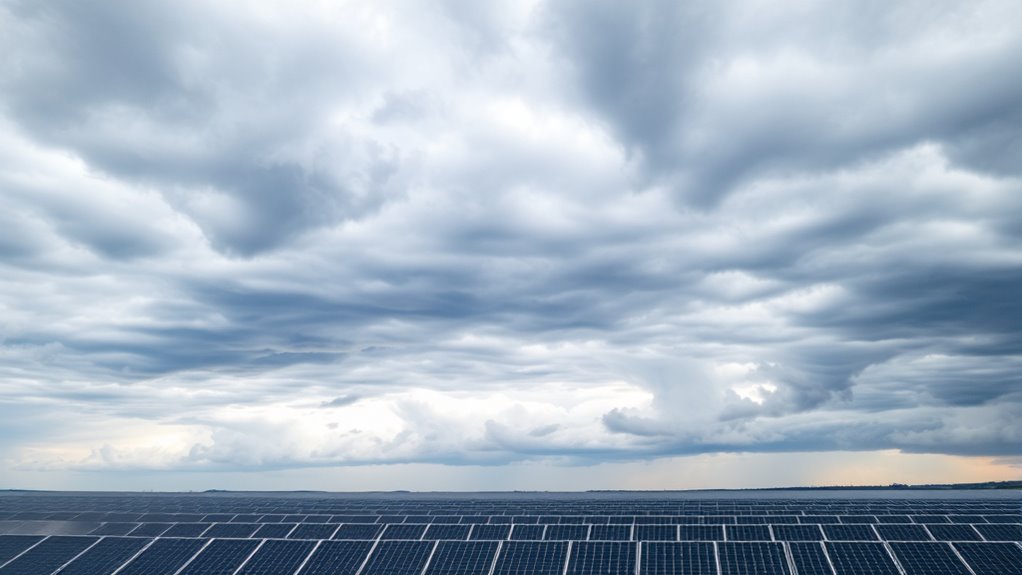
Clouds don’t just block sunlight; under certain conditions, they can actually boost your solar output. When clouds reflect and scatter sunlight, they can increase the amount of diffuse light reaching your panels. This effect can lead to surprising gains, especially in cloudy regions. For example:
Clouds can boost solar output by reflecting and scattering sunlight, increasing diffuse light on panels even on cloudy days.
- Cloud reflection amplifies scattered sunlight, raising power production.
- Glary effects from surrounding clouds can intensify light on panels temporarily.
- Magnified sunlight occurs when clouds act like natural lenses, focusing beams onto your panels.
- Cooler days prevent overheating, allowing panels to operate more efficiently despite overcast conditions.
These phenomena show that, even in cloudy weather, your solar system can perform better than expected, turning gloom into a source of unexpected energy.
Practical Tips for Maximizing Solar Savings in Overcast Weather
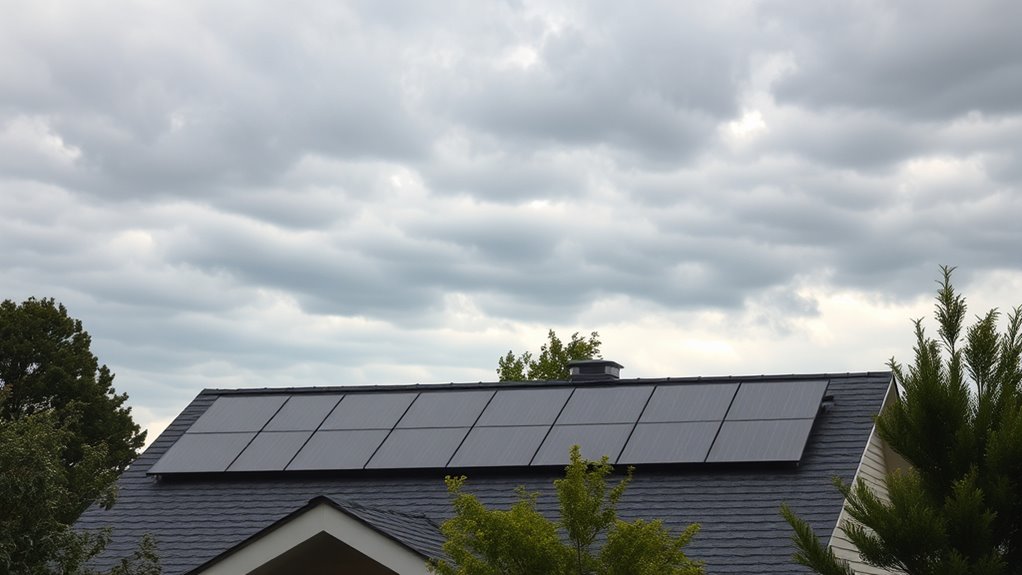
Maximizing your solar savings during overcast weather requires strategic adjustments and smart system choices. First, upgrade to high-efficiency panels like SunPower or monocrystalline models, which perform better in diffuse light. Position your panels to face the sun directly when possible, optimizing angles for low-light conditions. Regularly clean panels to maximize light absorption. Consider adding a battery system to store excess energy for cloudy days. Monitor weather forecasts and adjust your energy use accordingly.
| Cloud Cover | Recommended Action | Expected Result |
|---|---|---|
| Light clouds | Optimize panel tilt | Maximize diffuse light capture |
| Heavy clouds | Use energy storage | Maintain power supply |
| Rainy days | Limit energy consumption | Save stored energy |
| Overcast with sun spots | Adjust angles dynamically | Boost output |
Future Technologies and Strategies for Cloudy-Day Solar Optimization
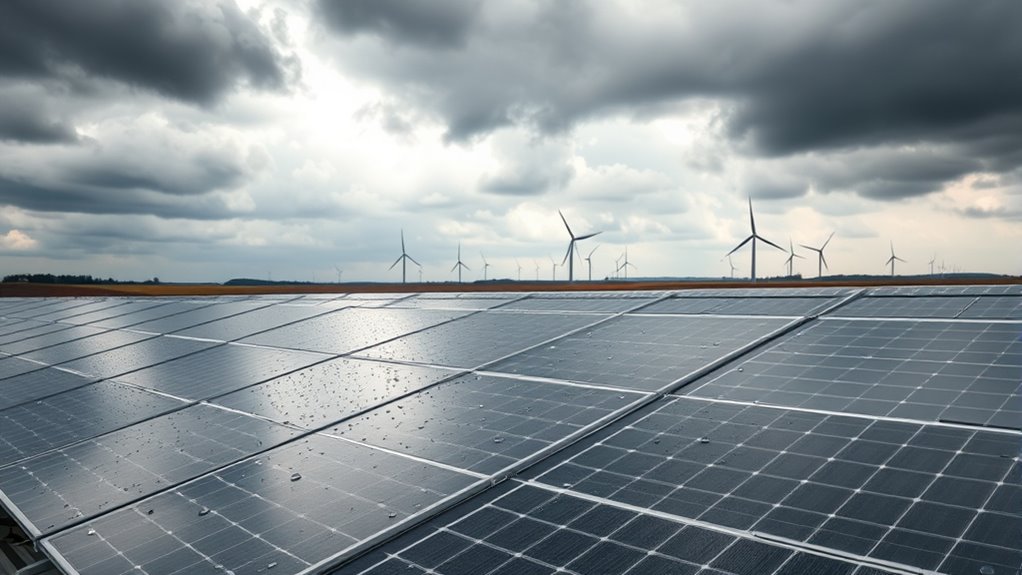
Advancements in photovoltaic technology are paving the way for more effective solar energy use during cloudy days. You can harness new strategies to maximize power even when skies are gray. Consider these innovative approaches:
- Next-generation panels like SunPower with broader wavelength absorption, capturing more diffuse light.
- Bifacial modules that utilize reflected and scattered sunlight from surfaces, boosting output.
- Smart tracking systems that optimize panel angles in real-time, adjusting for cloud movement and diffuse light.
- Hybrid energy systems combining solar with storage solutions, ensuring power during low-light periods.
These technologies empower you to turn cloudy days into productive energy opportunities, reducing dependence on clear skies. Embracing these strategies means you can confidently continue generating clean energy, regardless of the weather.
Frequently Asked Questions
How Do Seasonal Changes Impact Solar Efficiency on Cloudy Days?
Seasonal changes impact your solar efficiency on cloudy days mainly through variations in daylight hours and weather patterns. In winter, shorter days and increased cloud cover reduce solar exposure, dropping efficiency further. Conversely, summer offers longer daylight and often clearer skies, helping you get more power even when clouds are present. Cooler temperatures in winter also help panels operate more efficiently, offsetting some weather-related losses.
Can Shading From Clouds Cause Power Surges or Fluctuations?
Shading from clouds can cause fluctuations in your solar power, like flickering lights during a storm. When thick clouds block direct sunlight, your panels produce only 10-25% of their usual output, leading to inconsistent energy flow. This isn’t typically a surge, but rather dips in power. To minimize this, consider installing a system with voltage regulation or energy storage, ensuring you stay powered smoothly even when clouds roll in.
Are Certain Panel Orientations Better for Overcast Conditions?
You’ll get better results with panel orientations that maximize diffuse light capture, typically facing southeast or southwest depending on your hemisphere. Tilt the panels to reduce shading by clouds and optimize sunlight exposure during overcast days. Keep in mind, less-than-ideal angles still generate power, but adjusting orientation can boost efficiency by capturing more scattered sunlight. Regularly monitor and fine-tune your setup to guarantee you’re making the most of cloudy conditions.
How Does Temperature Influence Solar Output During Cloudy Weather?
As the sky darkens and clouds gather, you might wonder how temperature affects your solar panels. Cooler days actually boost efficiency, preventing overheating that reduces output. In overcast conditions, this cooling effect keeps panels operating closer to their ideal range. So, while sunlight is limited, the cooler air helps your system work smarter, capturing diffuse light more effectively without the heat-induced decline in performance you’d see on hot, sunny days.
What Maintenance Tips Optimize Performance in Consistently Cloudy Climates?
To optimize performance in consistently cloudy climates, regularly clean your panels to remove dust and grime that reduce efficiency. Inspect for shading or debris blocking sunlight, and ensure mounting angles maximize diffuse light capture. Keep cooling vents clear to prevent overheating, and monitor system performance to catch any issues early. Consider upgrading to panels with higher efficiency, like SunPower, to get the most out of low-light conditions.
Conclusion
While cloudy days may not always shine a spotlight on solar’s full potential, they gently remind you that even in less-than-ideal conditions, your system can still quietly do its part. By understanding the nuances and embracing smart strategies, you can turn overcast moments into opportunities. With a bit of patience and planning, you’ll find that your solar investment continues to work diligently, proving that sometimes, the most subtle efforts make the brightest impact.