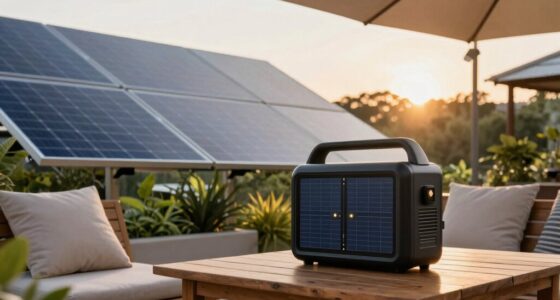

Portable solar power banks promise phone charging away from an outlet, but the real choice is between an all-in-one unit with a small built-in panel and a conventional power bank paired with a separate portable panel. The all-in-one is simpler to carry and keep ready; the separate-panel setup usually offers more surface area for collecting sunlight and lets you replace or upgrade either component. For most people who need dependable charging on a camping trip or during a power outage, the separate panel is the more capable option. Choose the all-in-one if compactness and emergency convenience matter more than how quickly sunlight can refill the battery.

Get backup power and energy gear delivered free with Prime
- Fast, free delivery on millions of items
- Prime Video, Amazon Music and more included
- Member-only deals all year

BLAVOR Solar Power Bank 10,000mAh Portable Wireless Charger
- ✔ Battery capacity: 10,000mAh
- ✔ USB-C output: 20W
- ✔ Wireless charging: Qi standard

YELOMIN 38800mAh Solar Power Bank with LED Flashlights
- ✔ Battery capacity: 38,800mAh
- ✔ Ports: Two USB-A outputs; one USB-C input/output
- ✔ Weight: 9.9 ounces

49,800mAh Solar Power Bank with Wireless Charging, Built-In Cables, and LED Flashlights
- ✔ Battery capacity: 49,800mAh
- ✔ Battery voltage: 3.7V
- ✔ Connectors: Built-in USB-C, Lightning, and Micro USB cables; USB-A port
At a Glance
| Criteria | All-in-one solar power bank | Power bank paired with a separate solar panel | Winner |
|---|---|---|---|
| Portability | One compact unit; no separate panel or cable to pack | More pieces to carry, though foldable panels pack down for travel | A |
| Solar charging speed | Typically slow because the built-in panel has limited area | Often faster when the panel is larger and positioned in direct sun | B |
| Charging reliability | Convenient in bright, direct sun, but performance varies with angle and shade | Panel can be repositioned independently; USB charging remains available | B |
| Battery capacity and flexibility | Battery and panel are bundled; fewer upgrade choices | Choose panel and battery sizes separately, and replace either component | B |
| Ease of use | Simple setup; leave the unit in the sun or charge it by USB | Requires connecting the panel and power bank and positioning the panel | A |
| Durability and repair | One enclosure can be convenient, but a damaged panel may affect the whole unit | Separate components are easier to replace individually; panel needs careful handling | B |
| Value | Can be a good compact backup if expectations for solar charging are modest | Costs more upfront in some combinations, but solar output and capacity can be matched to the need | Depends |
BLAVOR Solar Power Bank 10,000mAh Portable Wireless Charger
BLAVOR earns our overall pick because it makes the most balanced case for a portable outdoor charger: 20W USB-C output, Qi wireless charging, and an IPX5-rated rugged design are all useful whether we are topping up a phone at camp or carrying the bank in changeable weather. The 10,000mAh capacity is much lower on paper than the YELOMIN’s 38,800mAh or the 49,800mAh model, so we would choose it for practical charging and protection rather than extended reserve power.Its simultaneous three-device support can help a small group share one bank, and the supplied description lists USB-A, USB-C, and Lightning connections. The dual flashlights and compass carabiner add trail utility. Compared with the YELOMIN, BLAVOR is the stronger fit for someone prioritizing faster wired charging and a stated water-resistance rating; YELOMIN offers considerably more stated capacity. Wireless charging is also convenient when cables are awkward, but it is generally slower than wired charging and can be less efficient. Solar remains supplemental, so we would not count on its panel to replenish the bank quickly.
Pros:
- 20W USB-C output supports faster wired charging for compatible devices.
- IPX5 waterproof, dustproof, and shockproof design is suited to outdoor use.
- Qi wireless charging and multiple connection options offer charging flexibility.
- Dual flashlights and a compass carabiner add practical trail features.
Cons:
- Its 10,000mAh stated capacity is far below the two larger-capacity alternatives.
- Solar charging is supplementary and likely much slower than charging from an outlet.
- Wireless charging is generally slower than a wired connection.
Best for: Outdoor users who prioritize a rugged design, faster USB-C charging, and the flexibility to charge more than one device.
Not ideal for: Buyers who need the largest stated battery reserve or a slim, lightweight bank with minimal extras.
Bottom line: We recommend BLAVOR for buyers who value rugged protection and fast wired charging more than maximum stated capacity.
“We recommend BLAVOR for buyers who value rugged protection and fast wired charging more than maximum stated capacity.”
YELOMIN 38800mAh Solar Power Bank with LED Flashlights
YELOMIN is the middle ground in this lineup: it claims 38,800mAh of capacity, weighs 9.9 ounces, and includes two USB-A outputs alongside a USB-C input/output. That combination gives it a more capacity-focused profile than BLAVOR without moving to the 49,800mAh model’s higher stated figure. For a hiker or camper who wants multiple wired outputs and emergency lighting in one compact unit, those are useful priorities.The dual LEDs offer steady, SOS, and strobe modes, while a carabiner makes it easier to attach the bank to a pack. Protective port covers help guard against dust and splashes, but the provided description does not give it a formal IP rating like BLAVOR’s IPX5. That distinction matters if exposure to rain is a major concern. YELOMIN’s solar panel is explicitly described as a supplemental backup, and the bank should be charged by USB-C before a trip for dependable power. Compared with the 49,800mAh alternative, it has a lower stated capacity but a more clearly specified weight and port arrangement.
Pros:
- 38,800mAh stated capacity offers a substantial reserve on paper.
- Two USB-A outputs and USB-C input/output support multiple wired charging needs.
- Dual LED lights include steady, SOS, and strobe modes.
- Carabiner and protective port covers suit basic outdoor carry.
Cons:
- Solar charging is slow and intended only as supplemental backup.
- The supplied specifications do not list a formal IP water-resistance rating.
- USB-C charging before a trip is recommended for dependable power.
Best for: Campers and day hikers who want a high stated capacity, multiple wired charging ports, and built-in emergency lights.
Not ideal for: Buyers who need a published water-resistance rating or who expect solar to recharge the bank quickly while traveling.
Bottom line: YELOMIN is a sensible capacity-focused option for outdoor users who can charge by USB-C before leaving and do not need a specified IP rating.
“YELOMIN is a sensible capacity-focused option for outdoor users who can charge by USB-C before leaving and do not need a specified IP rating.”
49,800mAh Solar Power Bank with Wireless Charging, Built-In Cables, and LED Flashlights
This model is the capacity leader on paper, with a stated 49,800mAh battery and built-in USB-C, Lightning, and Micro USB cables. That cable mix may appeal to households or groups carrying different devices: we can leave several loose leads behind and still have common connection types at hand. Wireless charging adds another option, while the dual LED lights include standard, SOS, and strobe modes.The tradeoff is that its solar claim comes with a clear time estimate: 18–24 hours of sunlight to recharge. That is useful context, but it also reinforces that the panel is not a quick refill strategy. The listed fast-charge figure says up to 70% in 30 minutes, though the description does not specify the device or conditions for that claim. Compared with YELOMIN, this bank offers more stated capacity and built-in cables; compared with BLAVOR, the provided information does not give a 20W USB-C output or a formal IP rating. Its outdoor protection is described as shockproof, sandproof, rainproof, and splashproof, but we would want details on the rating before treating those claims as equivalent to a specified ingress-protection standard.
Pros:
- 49,800mAh is the highest stated capacity among these three options.
- Built-in USB-C, Lightning, and Micro USB cables reduce loose accessories.
- Supports both wired and wireless charging.
- Includes dual LED lights with standard, SOS, and strobe modes.
Cons:
- Solar recharge is listed at 18–24 hours of sunlight.
- The description does not specify the conditions behind the up-to-70%-in-30-minutes claim.
- Wireless charging must be reactivated if no device is placed within 30 seconds.
Best for: Travelers or households who want the largest stated capacity in this group and built-in cables for several device types.
Not ideal for: Buyers who need a clearly specified fast-charge output, a compact bank, or predictable solar replenishment during a short trip.
Bottom line: Choose this model when stated capacity and built-in cable variety outweigh the need for a clearly documented charging rate or quick solar refill.
“Choose this model when stated capacity and built-in cable variety outweigh the need for a clearly documented charging rate or quick solar refill.”
As an Amazon Associate we earn from qualifying purchases.
Key Differences
The important difference is panel area. A built-in panel makes an all-in-one power bank convenient to clip to a bag or set in a sunny spot, but its small surface limits how much energy it can collect. Real output also changes with cloud cover, shade, panel angle, temperature, and the device’s charging controls. These products work better as batteries that can occasionally top up in sunlight than as batteries that quickly refill themselves outdoors.
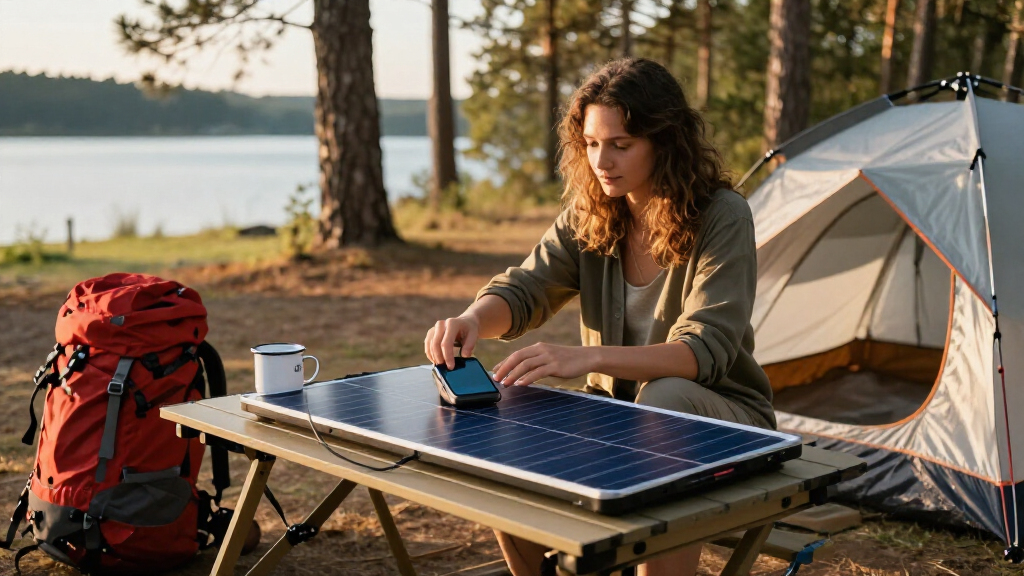
A separate panel takes more room and requires a cable, but it can be spread out and angled toward the sun while the power bank stays in shade. That separation improves practical charging and gives you choices: pair a larger panel with a higher-capacity battery for longer trips, or take a smaller combination when weight matters. Neither setup replaces checking rated capacity, output ports, and manufacturer specifications for your devices. If solar charging is central to the purchase, prioritize panel output and realistic charging conditions over the word “solar” on the package.
Detailed Comparison
Portability (All-in-one solar power bank wins — moderate)
The all-in-one wins by a moderate margin for people who want a single item with no panel to unfold or cable to manage. A separate panel and battery take up more space, though foldable panels can pack neatly. On a short walk or in an emergency kit, fewer pieces may matter more than solar output. For a longer trip, the extra panel can earn its space by collecting more energy.
Solar charging speed (Power bank paired with a separate solar panel wins — major)
The separate-panel setup wins by a major margin when its panel has meaningfully more area and receives direct sun. A small built-in panel may gather only a limited charge over a day, so it should not be counted on to refill a depleted battery quickly. A larger panel can still slow down in clouds or shade, and advertised output is not a guarantee of real-world charging speed. For anyone relying on solar rather than wall charging, panel size and conditions matter more than convenience.
Charging reliability (Power bank paired with a separate solar panel wins — moderate)
The separate panel wins by a moderate margin because you can move it into better sunlight without exposing the power bank itself. This helps when the battery needs to stay cool or protected, and lets you adjust the panel as the sun moves. Both setups remain weather- and shade-sensitive, so neither guarantees charging in poor conditions. A USB or wall-input option is useful backup for either type.
Battery capacity and flexibility (Power bank paired with a separate solar panel wins — moderate)
The separate-panel setup wins by a moderate margin. It lets you choose the battery capacity that fits your phone, tablet, or trip, then select a panel to match how much sunlight you expect to use. All-in-one products simplify shopping but lock the panel and battery into one package. Check the stated capacity and port output: a large capacity figure alone does not tell you how fast the unit can charge a device.
Ease of use (All-in-one solar power bank wins — minor)
The all-in-one wins by a minor margin for basic operation: open the package, charge the battery by USB, and use its ports. A separate panel adds a cable connection and the task of placing the panel in sun. That extra step is simple, but it asks for more attention during the day. The all-in-one’s simplicity does not make its smaller panel more productive.
Durability and repair (Power bank paired with a separate solar panel wins — moderate)
The separate-panel setup has a moderate advantage in serviceability. If one component fails, you can replace that panel or battery without discarding the other, though foldable panels still need care around hinges, connectors, and fabric. An all-in-one has fewer loose pieces to misplace, but damage to its integrated panel may leave the solar function impaired. Compare water-resistance claims and handling guidance for the specific models; portable does not automatically mean waterproof.
Value (moderate difference)
Neither format always wins. The all-in-one can be better value for a compact backup that will mostly be charged from an outlet and only occasionally exposed to sun. A separate panel costs more upfront in some combinations, but is better value when the buyer needs useful solar input, since the larger panel can do more of the job the product promises. Pay extra for the separate setup only if you will use its added panel area or flexibility.
All-in-one solar power bank: Pros and Cons
Pros:
- Compact, simple to pack, and easy to keep in an emergency kit
- No separate panel cable or connection to manage
- Useful as a conventional power bank when charged by USB
Cons:
- Small built-in panel can take a long time to gather useful charge
- Battery and panel cannot be sized or replaced independently
- Sunlight, shade, and angle can make the solar contribution hard to predict
Power bank paired with a separate solar panel: Pros and Cons
Pros:
- Larger panel options can collect more solar energy
- Panel can be positioned independently from the battery
- Battery capacity and panel can be selected or replaced separately
Cons:
- More pieces and setup to carry and manage
- Panel performance still drops in shade or cloudy weather
- A larger panel and battery combination may cost more and take more space
Who Should Choose What
Choose All-in-one solar power bank if:
- You want one compact battery for a glove box, day bag, or emergency kit.
- You will usually charge from an outlet and treat sunlight as a slow supplemental source.
- Simple setup matters more than refilling the battery quickly outdoors.
Choose Power bank paired with a separate solar panel if:
- You plan multi-day camping, travel, or regular off-grid use and expect sunlight to contribute meaningful charge.
- You want to keep the battery protected while positioning the panel in direct sun.
- You need to choose battery capacity and solar panel size for particular devices or trip length.
Skip both if: You need guaranteed fast charging, expect to rely on solar in shade or poor weather, or need power for equipment beyond the output ratings. Choose a suitable high-capacity power bank and access to a dependable charging source instead.
Value for Money
Paying more for a separate panel makes sense when you will actually unfold it, position it in good sunlight, and use the extra collection area. That setup offers stronger solar capability and lets you match the panel and battery to your needs. If you mainly want an emergency phone battery that you will recharge at home, the integrated model may be the better value because the added panel capacity would go unused. Compare the listed battery capacity, panel output, port ratings, and warranty together; a premium label alone does not establish better value.
Final Verdict
For most buyers who specifically want solar charging while camping or traveling, choose a power bank paired with a separate panel. Its larger collection area and flexible positioning make solar input more practical, even though performance still depends on weather and placement. Choose an all-in-one if you want a compact backup battery and view sunlight as an occasional bonus. The deciding factor is whether you need solar to contribute useful energy: if yes, favor the separate panel; if not, keep the kit simple and spend on the battery capacity and device outputs you will use.
Frequently Asked Questions
Can a portable solar power bank recharge itself from its built-in panel?
Usually, yes, but the small panel may gather energy slowly. Treat it as a supplemental source and check the manufacturer’s panel rating and charging guidance before depending on it.
Is a separate solar panel better for camping?
For trips where you expect to collect meaningful energy, often yes. A larger panel can sit in direct sun while the power bank stays protected. The tradeoff is carrying and connecting another item.
Will either option charge a phone quickly in cloudy weather?
Clouds can reduce solar output, and shade or poor positioning can reduce it further. Neither format guarantees fast charging in those conditions. Start with a charged battery and use solar as a supplement when the weather allows.
Which option is better for an emergency kit?
An all-in-one is convenient when compact storage and few loose pieces matter most. If you expect to rely on solar during a prolonged outage, a separately sized panel and battery may provide more useful flexibility.