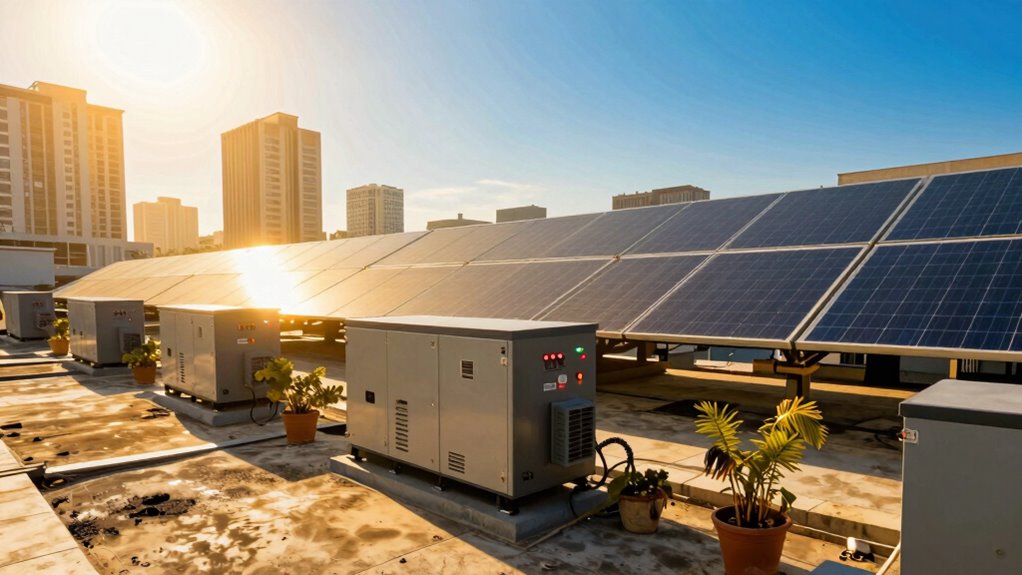
During heat waves, your backup power priorities shift because the surge in electricity demand from air conditioning strains the grid and exposes vulnerabilities. Traditional generators aren’t enough to keep critical infrastructure operational, so you need more resilient, renewable, and smart systems that adapt quickly. Enhanced storage and smarter management can prevent failures and guarantee essential services stay online. If you want to understand how these changes improve grid stability and what solutions are emerging, keep exploring.
Open a free Amazon Business account
Business pricing, bulk buying and tax-exempt orders.
As an affiliate, we earn on qualifying purchases.
Key Takeaways
- Heat waves increase electricity demand, stressing backup power systems and forcing a shift toward more reliable, renewable, and flexible energy sources.
- Elevated temperatures can cause grid overloads, making advanced, intelligent backup strategies essential for preventing failures.
- The need for rapid response and adaptability in backup systems becomes critical during prolonged heat stress.
- Traditional backup generators may be insufficient alone; integrating renewables and storage enhances resilience during heat events.
- Climate change-driven frequency of heat waves necessitates redefining backup power priorities for sustainable and reliable energy supply.

Have you ever wondered what happens when a heat wave hits and the power grid fails? During extreme temperatures, the demand for electricity skyrockets as people crank up their air conditioners, putting immense strain on the entire system. This surge exposes vulnerabilities in the grid, making it clear that backup power strategies need to shift quickly. In such moments, the focus isn’t just on keeping the lights on; it’s about ensuring that critical infrastructure remains operational and that the grid’s resilience is maintained. As heat waves become more frequent due to climate change, integrating renewable energy sources and enhancing grid resilience become essential components of backup power planning.
You might not realize it, but renewable integration plays a crucial role in stabilizing the grid during these stressful periods. Solar and wind power can be harnessed to supplement traditional energy sources, reducing reliance on fossil fuels and easing the demand on conventional generators. When a heat wave strikes, the ability to draw on a diverse mix of renewable energy helps balance supply and demand more effectively. This diversification not only supports a cleaner energy footprint but also improves the grid’s resilience by preventing overloads that could lead to widespread blackouts. With smarter energy storage solutions and decentralized generation, renewable sources can quickly respond to increased heat-related demand, ensuring power remains available even when the grid is under stress. Additionally, promoting biodiversity in energy infrastructure can enhance ecosystem resilience and reduce environmental impacts associated with energy production. Incorporating smart grid technology further enhances the ability to adapt in real-time to shifting energy needs during extreme conditions. A more resilient grid can also better withstand natural disasters and extreme weather events that are becoming more common with climate change. Recognizing the importance of renewable energy integration can help utilities develop more comprehensive backup strategies that are adaptable to changing conditions.
In these critical moments, backup power systems must adapt. Conventional generators, like diesel or gas-fired plants, may be prioritized for their reliability, but they aren’t enough on their own. To truly enhance grid resilience, backup systems are increasingly designed to incorporate renewable energy and advanced storage technologies. This way, power can be redistributed efficiently, avoiding over-dependence on any single source. Furthermore, grid operators are investing in smarter grid management tools that can detect stress points early and reroute power flows seamlessly. These improvements help prevent cascading failures and maintain essential services such as hospitals, water treatment plants, and emergency response centers. As the demand for resilient backup solutions grows, exploring innovative energy storage options becomes more critical than ever.
Ultimately, a heat wave’s impact reveals the need for a fundamental shift in how we plan for backup power. It’s no longer just about having generators on standby; it’s about creating a resilient, flexible energy system that leverages renewable integration. By doing so, you’re not only safeguarding against power outages but also taking crucial steps toward a sustainable and reliable energy future. As climate challenges intensify, adapting backup power priorities to emphasize resilience and renewable resources becomes an urgent necessity for everyone relying on the grid.
As an affiliate, we earn on qualifying purchases.
Frequently Asked Questions
How Do Heat Waves Affect Battery Performance in Backup Systems?
Heat waves can greatly affect your backup system’s battery performance. Elevated temperatures speed up battery deterioration, decreasing lifespan and efficiency. You’ll notice reduced capacity and reliability during extreme heat. To maintain ideal performance, you need to meet cooling requirements, which help prevent overheating. Proper cooling ensures batteries stay within safe temperature ranges, minimizing degradation and preserving backup power reliability when you need it most during heat waves.
What Are the New Safety Concerns During Extreme Heat Events?
During extreme heat, safety concerns shift as cooling strategies become critical. You need to monitor material durability, as high temperatures can weaken components, risking failure or fires. The juxtaposition of heat’s destructive power and the necessity of reliable backup power highlights the importance of proactive safety measures. Ensuring effective cooling and choosing durable materials help prevent overheating, protect personnel, and maintain system integrity during these intense heat events.
How Can Backup Power Systems Be Optimized for Prolonged Heat Waves?
To optimize backup power systems during prolonged heat waves, you should implement effective cooling strategies to prevent overheating and guarantee reliability. Regular maintenance schedules are vital to keep equipment in top condition, reducing the risk of failures under extreme temperatures. Additionally, consider upgrading components with heat-resistant materials and monitoring systems to promptly detect issues. These steps help maintain backup power performance when demand peaks and temperatures soar.
Do Heat Waves Impact Renewable Energy Sources Used in Backup Systems?
Heat waves act like relentless flames, scorching renewable energy sources used in backup systems. You’ll find solar panels and wind turbines struggling under extreme temperatures, reducing their efficiency and output. This challenges climate adaptation strategies and underscores urgent policy implications. You need to prioritize diversified, resilient backup solutions that can withstand heat stress, ensuring reliable power when it’s needed most. Without this, your backup systems risk failing just when heat waves threaten stability.
What Role Does Infrastructure Resilience Play During Heat-Induced Power Failures?
You play a vital role in your community’s resilience during heat-induced power failures by supporting strong infrastructure resilience. Urban planning that prioritizes cooling centers and resilient power grids helps prevent outages. Emergency preparedness guarantees you’re ready with backup power solutions. By advocating for these measures, you help reduce vulnerabilities, ensuring essential services stay operational and you remain safe during extreme heat events.
As an affiliate, we earn on qualifying purchases.
Conclusion
So, when heat waves hit, your backup power suddenly becomes the superhero you didn’t realize you needed—fighting off blackouts like a mighty fortress. Forget what you thought mattered; now, keeping cool and staying connected takes top priority. Without that power, your world could turn into a scorching wasteland of chaos in seconds. Stay prepared, because when the heat’s on, your backup power isn’t just a backup—it’s your lifeline, your ultimate hero in the fight against the fiery fury!
As an affiliate, we earn on qualifying purchases.
As an affiliate, we earn on qualifying purchases.
Flea & tick season Picks
flea and tick prevention
As an affiliate, we earn on qualifying purchases.