When power returns after an outage, unexpected voltage spikes can occur, putting your electronics at risk. These surges happen as the grid stabilizes and appliances reconnect, sometimes causing damage or reducing lifespan. Without proper surge protection, expensive devices like computers and appliances are vulnerable to overloads. Installing whole-house protectors and monitoring system safeguards can help prevent damage. Keep going to discover how you can effectively protect your home and save money during this risky time.
Key Takeaways
- Power restoration often causes voltage spikes that can damage sensitive electronics.
- Sudden surges occur due to imperfect regulation and fluctuating loads during reconnection.
- Outages weaken power infrastructure, increasing the risk of dangerous spikes when electricity returns.
- Proper surge protection, including whole-house systems, helps prevent damage during power comeback.
- Unprotected devices are vulnerable to costly damage and reduced lifespan due to voltage surges.
Understanding Power Surges During Restoration
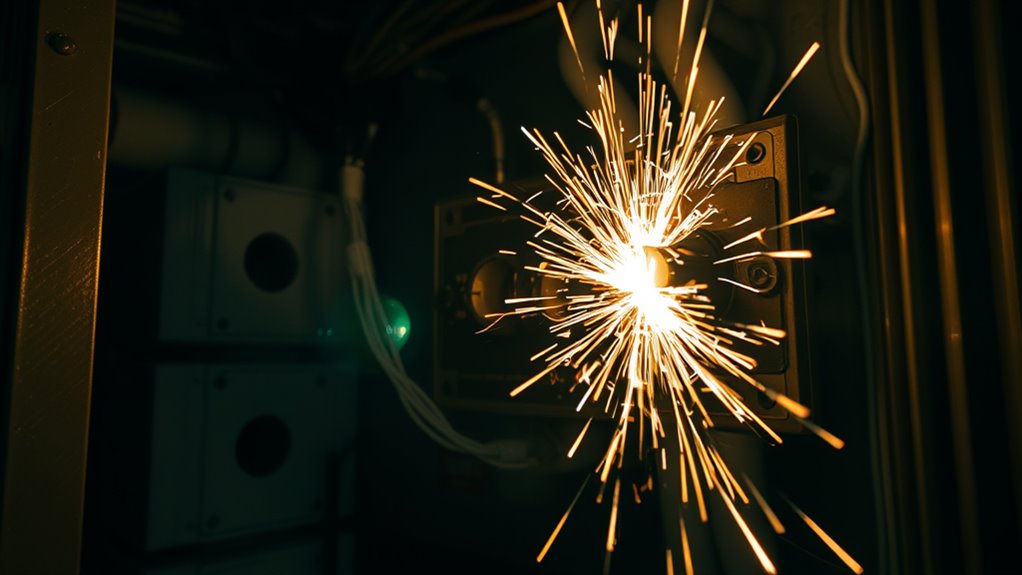
When power is restored after an outage, sudden voltage spikes can occur, known as power surges. These surges often follow patterns rooted in historical outage trends, which can help utilities predict and manage restoration efforts. Climate impacts, such as storms or extreme heat, can also influence outage frequency and severity, increasing the likelihood of surges during recovery. For example, severe weather can weaken power lines or cause equipment failures, leading to uneven power restoration. As the system comes back online, these vulnerabilities can cause abrupt voltage spikes that damage your electronics. Knowing that historical outage patterns and climate impact play a role, you should be prepared for potential surges during restoration, ensuring your devices are protected from sudden electrical fluctuations. Additionally, understanding power grid vulnerabilities can help you better anticipate and safeguard against these surges, especially considering the increased frequency of outages. Recognizing system restoration challenges can also improve your overall preparedness for sudden electrical disturbances, highlighting the importance of surge protection devices in your home. Being aware of electrical system reliability can further enhance your readiness for unexpected power issues.
The Risks to Home Appliances and Electronics
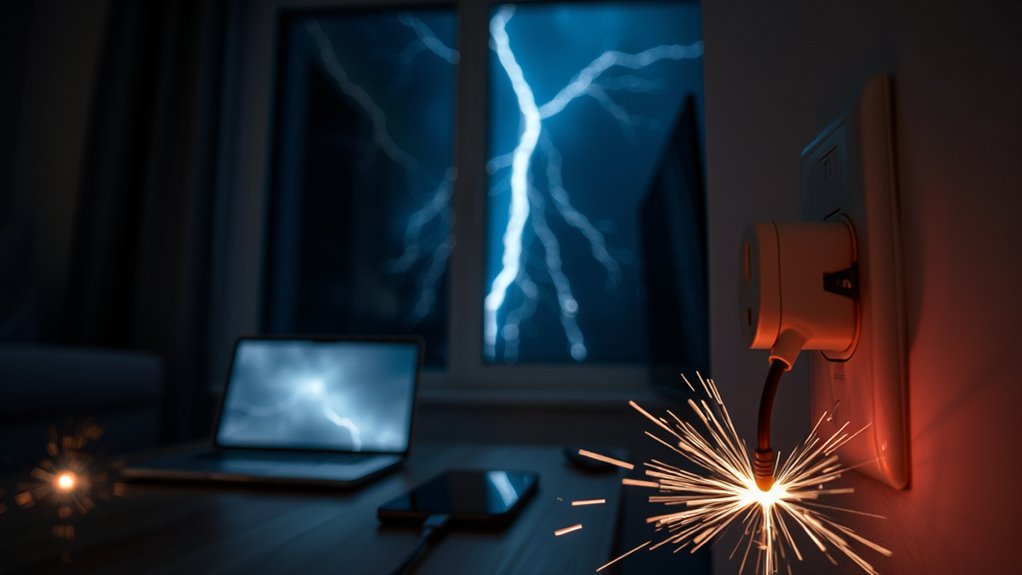
Power surges that occur during outage restoration can pose serious risks to your home appliances and electronics. When power returns, sudden voltage spikes can overload circuits, especially if your circuit breakers don’t trip quickly enough. This overload can damage sensitive devices like computers, TVs, and refrigerators. Using power meters helps you monitor voltage levels and identify dangerous surges before they harm your equipment. Without proper surge protection, these voltage fluctuations can weaken components, degrade performance, or cause immediate failure. Protecting your devices with surge protectors or whole-house surge suppression systems is essential. Being aware of the risks and taking precautions guarantees your appliances stay safe and functional when power is restored after an outage. Understanding Free Floating systems and how they influence electrical stability can also help in designing more resilient protection strategies. Additionally, installing surge protection devices at key points in your electrical system can significantly reduce the risk of damage during power restoration. Proper grounding and earthing are fundamental to ensuring surge protection systems work effectively and safely. Moreover, using surge arresters can further enhance your home’s defense against unpredictable voltage spikes during power fluctuations.
How Power Fluctuations Occur When the Grid Comes Back Online

When the grid restarts, you might notice sudden voltage spikes that can damage your devices. Power loads can fluctuate unpredictably as appliances turn on and off, causing instability. Understanding these issues helps you protect your electronics from unexpected surges and fluctuations. Additionally, power management techniques can help mitigate the risks associated with these fluctuations during outages. Proper use of surge protectors can provide an extra layer of defense against damaging power variations. Incorporating electrical grid stability measures can also help minimize the impact of power fluctuations during restoration, especially when the grid’s voltage regulation systems are not yet fully stabilized. Recognizing power quality issues early can further support your efforts to safeguard sensitive electronics during these unpredictable periods.
Sudden Voltage Spikes
As the grid comes back online after an outage, it often causes sudden voltage spikes that can damage your connected devices. When the power grid resumes, it doesn’t immediately stabilize due to imperfect voltage regulation. Instead, voltage levels can surge unexpectedly, creating spikes that exceed normal operating ranges. These rapid increases in voltage can fry sensitive electronics or shorten their lifespan. Your electrical system struggles to manage these fluctuations, especially if there’s no surge protection in place. Without proper safeguards, your appliances are vulnerable to these damaging power surges. Understanding how these voltage spikes occur emphasizes the importance of installing surge protection devices that can absorb or redirect excess energy, ensuring your devices stay safe during the unpredictable reconnection process. voltage regulation plays a crucial role in maintaining stable power levels during grid reconnection. Additionally, implementing **proper surge protection** can significantly reduce the risk of damage caused by these unexpected power surges. Proper installation practices are essential to ensure these protective devices function correctly when most needed, especially considering how power fluctuations can impact sensitive electronics. Recognizing these issues highlights the need for reliable protective devices that can adapt to sudden changes in electrical supply.
Fluctuating Power Loads
Just as the grid begins to restore electricity after an outage, you’ll notice fluctuations in the power load. When the electrical infrastructure reboots, the power grid doesn’t smoothly return to normal; instead, it experiences sudden surges and drops. These fluctuations happen because the system tries to balance supply and demand as different generators come online and stabilize. During this process, voltage levels can fluctuate unpredictably, stressing your electrical devices. The instability can cause damage or shorten their lifespan if you’re not prepared. Power loads may spike unexpectedly, overwhelming circuits and increasing the risk of surges. Understanding these fluctuations helps you appreciate why surge protection is essential during grid restoration, safeguarding your appliances from unpredictable power behavior. Additionally, connected equipment and smart home systems can help monitor and mitigate these fluctuations, providing extra protection during this vulnerable period. Proper surge protectors can absorb these unexpected spikes, preventing damage to sensitive electronics. Implementing power conditioning devices can further help manage these fluctuations and ensure a more stable power supply during recovery. Recognizing the importance of electrical system management can also improve your preparedness and response during such events.
The Importance of Whole-House Surge Protectors

Whole-house surge protectors are essential for safeguarding your entire home’s electrical system from unexpected power surges. They shield critical components like your lighting fixtures and outdoor outlets, preventing damage during voltage spikes. Imagine a sudden surge hitting your home—without protection, it can fry sensitive electronics and wiring. Installing a whole-house protector acts as a first line of defense, absorbing or diverting excess energy. To visualize, consider this table:
| Protection Level | Devices Protected | Common Vulnerable Areas |
|---|---|---|
| Whole house | Lighting fixtures, outdoor outlets | Main electrical panel, appliances |
| Local surge | Computers, TVs | Wall outlets |
| Point-of-use | Small electronics | Phone chargers |
| Extra safeguards | HVAC systems | Outdoor lighting |
This extensive approach keeps your home safe from unpredictable surges, especially when understanding electrical safety can help prevent damage and hazards. Additionally, understanding the causes of power surges can help you better prepare and protect your home equipment. Recognizing how electric power generation interacts with your electrical system can also aid in choosing the appropriate surge protection devices for your needs.
Common Devices Vulnerable to Power Surges
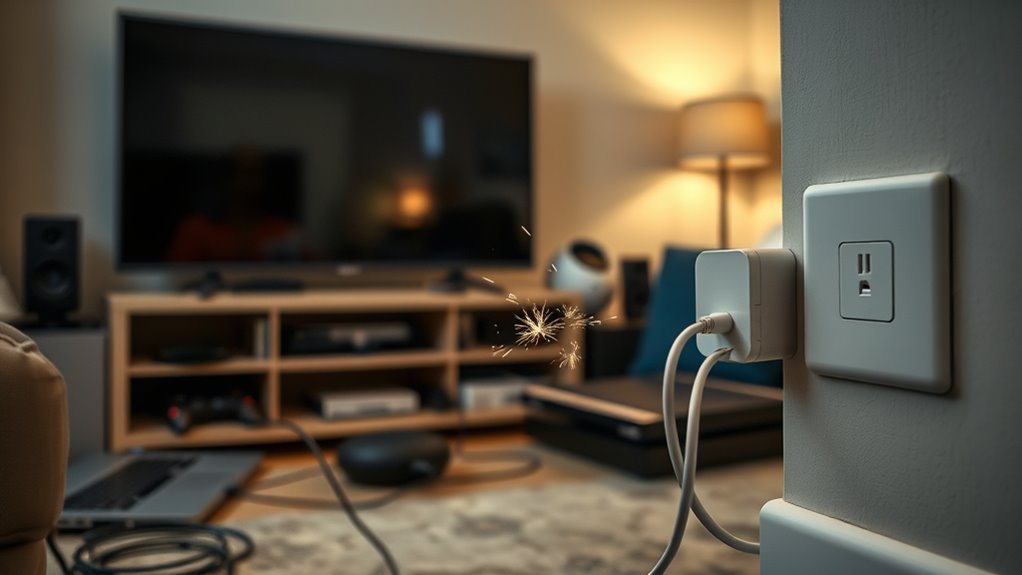
Many of your electronic devices are vulnerable to power surges, especially sensitive electronics like computers and TVs. Home appliances such as refrigerators and HVAC systems can also be damaged by sudden voltage spikes. Additionally, networking and communication devices, including modems and routers, are at risk and can lose data or become damaged during a surge.
Sensitive Electronic Equipment
Sensitive electronic equipment such as computers, gaming consoles, and home theater systems are particularly vulnerable to power surges. Lightning strikes and power outages often cause sudden voltage spikes that can damage these devices. When power returns, surges can be even more intense, risking costly repairs or replacements. To protect your gear, consider these key points:
- Surges from lightning strikes can instantly fry sensitive components.
- Power outages followed by sudden restoration cause unpredictable voltage spikes.
- Without surge protection, your electronics face hidden damage over time.
- Investing in surge protectors minimizes risk and preserves device longevity.
Understanding these threats helps you take proactive steps, safeguarding your electronics from the worst of power surges after outages.
Home Appliances at Risk
Home appliances like refrigerators, washing machines, and microwave ovens are vulnerable to power surges, especially after outages. When power returns, circuit overloads can occur as your electrical system tries to stabilize, increasing the risk of damaging these devices. Without proper surge protection, sudden voltage spikes can fry motors, compressors, and control boards, leading to costly repairs or replacements. Power outages often create unstable electrical conditions, making appliances more susceptible to damage during the surge when power is restored. To protect your appliances, consider installing surge protectors or whole-home surge protection systems. This ensures that when power comes back on, your essential appliances stay safe from harmful voltage fluctuations caused by circuit overloads or sudden surges.
Networking and Communication Devices
Networking and communication devices, such as modems, routers, and VoIP phones, are vulnerable to power surges that can disrupt your connectivity and damage critical hardware. Surges can fry circuits and corrupt data, especially affecting devices that manage wireless networks and communication protocols. Protecting these devices guarantees your home stays connected and secure. Consider these key points:
- Surge damage can interrupt your internet, affecting remote work and streaming.
- Routers and modems are particularly sensitive, risking total failure.
- VoIP phones rely on stable power to maintain communication; surges can cause service interruptions.
- Proper surge protection preserves your network’s integrity and prolongs device lifespan, keeping communication protocols reliable during power fluctuations.
Steps to Safeguard Your Home During Power Restoration
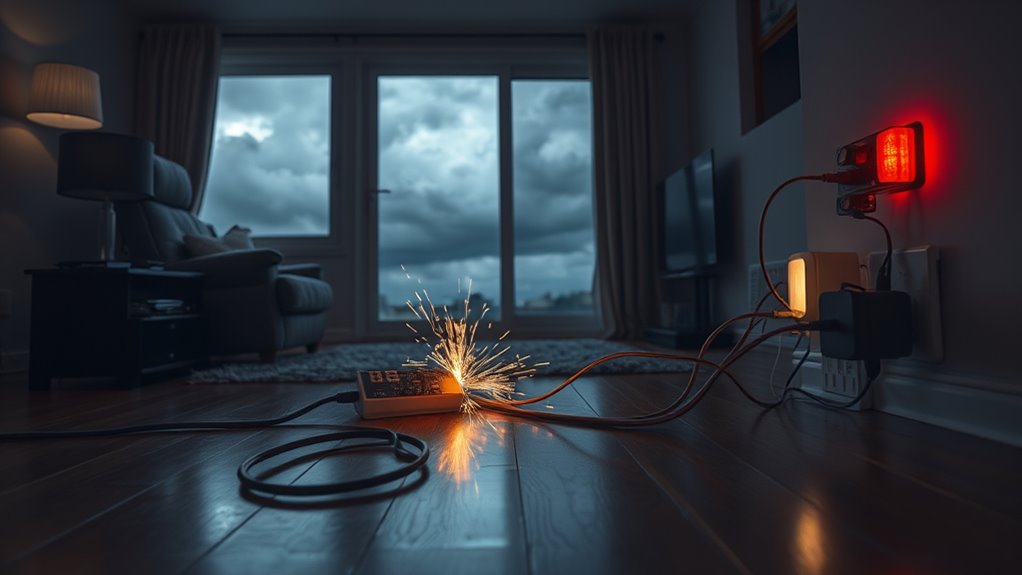
As power begins to come back on, it’s essential to take deliberate steps to protect your electrical system and appliances from potential surges. Lightning strikes during storms can cause sudden voltage spikes, so stay alert for severe weather and avoid turning on sensitive devices immediately. Be cautious of power line maintenance crews working on nearby lines, which can also lead to unexpected surges. Before restoring power, unplug major appliances and electronics to prevent damage. Once the power is stable, reconnect devices gradually, monitoring for any unusual activity. Consider turning off your main breaker temporarily to cut off power flow during initial restoration. These precautions help minimize the risk of damage caused by power surges as electricity returns to your home.
The Role of Surge Protectors in Preventing Damage

Surge protectors play a crucial role in shielding your appliances and electronics from damaging voltage spikes, especially during power restoration after outages. Different surge protector types, like unplugged surge strips and whole-house systems, offer varying levels of protection. It’s common to believe surge protection myths, such as all devices being equally protected or that surge protectors last forever. In reality, understanding the limitations of each type helps you choose the right solution. Here are four points to contemplate:
- Not all surge protectors provide the same level of protection.
- Regularly replacing surge protectors is essential for effective defense.
- Whole-house surge protectors safeguard multiple devices simultaneously.
- Knowing the myths prevents you from underestimating surge risks during power restoration.
Recognizing Signs of Surge-Related Damage
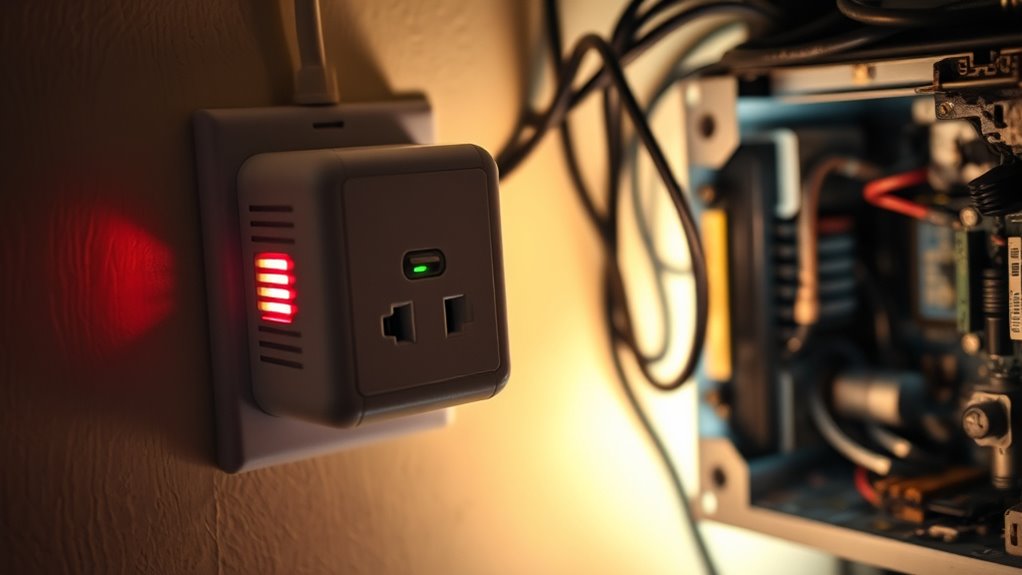
After a power outage, it’s important to assess whether your appliances and electronics have suffered damage from voltage spikes. Look closely at your lighting fixtures; flickering or dimming lights can indicate internal damage. Check wiring insulation for signs of melting, cracking, or discoloration, which suggest overheating caused by surges. Unusual buzzing sounds or a burning smell near outlets or appliances may also signal damage. Inspect electronics for abnormal behavior, such as failure to turn on or frequent resets. Keep in mind that damage isn’t always visible, so if equipment behaves oddly after a blackout, it’s wise to have a professional evaluate it. Recognizing these signs early can prevent further damage and ensure your home remains safe.
Tips for Properly Installing Surge Protection Equipment

Properly installing surge protection equipment is essential to guarantee your home stays safe from voltage spikes. To do this effectively, focus on correct grounding techniques and choosing the right surge protector types.
Ensure home safety by properly installing surge protectors with correct grounding and suitable types.
Here are four tips:
- Use surge protectors with proper grounding to dissipate excess voltage safely.
- Select surge protector types suited for your appliances—types include plug-in, whole-house, or power strips.
- Install surge protectors as close to the main electrical panel as possible for ideal protection.
- Regularly test and replace surge protectors to ensure they function correctly when needed.
Long-Term Benefits of Investing in Surge Protection Systems
Investing in surge protection systems offers significant long-term benefits by safeguarding your appliances and electronics from costly damage. When your devices are protected, they operate more efficiently, enhancing overall energy efficiency in your home. This means you’ll use less electricity, which can lead to noticeable cost savings on your utility bills. Additionally, surge protection reduces the risk of unexpected breakdowns and replacements, saving you money over time. Protecting sensitive electronics ensures they last longer, delaying the need for repairs or upgrades. By investing in quality surge protection, you create a safer, more reliable electrical environment that benefits your budget and energy consumption. Ultimately, this proactive approach pays off by minimizing expenses and maximizing the lifespan of your valuable electronics.
Frequently Asked Questions
How Can I Tell if My Appliances Have Been Damaged by a Power Surge?
You can tell if your appliances have been damaged by a power surge by inspecting their electrical wiring and testing their functions. Check for signs like flickering screens, unusual noises, or failure to turn on. Conduct an appliance inspection to identify any visible damage or burning smells. If you’re unsure, it’s best to unplug devices and consult a professional to prevent further issues or potential hazards.
Are There Specific Brands of Surge Protectors Recommended for Home Use?
Think of surge protectors like the trusted guardians of your home automation system, guarding your energy efficiency investments. Brands like APC, Belkin, and Eaton are highly recommended for home use because they offer reliable surge protection and advanced features. I once saw a house with cheap protectors suffer damage after a storm, while those with trusted brands stayed safe. Choose reputable brands to keep your devices and energy-efficient systems secure.
How Often Should I Replace or Upgrade My Surge Protection Devices?
You should replace or upgrade your surge protection devices every 3 to 5 years, following a regular maintenance schedule. Over time, their device lifespan diminishes, reducing their effectiveness against power surges. Check for any signs of damage or wear, and consider upgrading if you notice issues. Staying proactive ensures your devices provide maximum protection, especially after outages when power surges are more likely.
Can Surge Protectors Prevent Damage From Lightning Strikes During Outages?
Surge protectors can help prevent damage from lightning strikes during outages if they’re properly maintained. Regular lightning protection and surge protector maintenance guarantee your devices stay protected when power surges occur. Keep in mind, surge protectors have limits, so replace them when they show signs of wear or after a major surge. This way, you’re better prepared for lightning-induced power spikes and can avoid costly damage.
What Are the Signs That My Entire Home’s Surge Protection System Is Failing?
You might notice your home’s surge protection system is failing if you experience frequent tripped circuit overloads or ground faults. Surprisingly, studies show nearly 60% of surge protectors lose effectiveness within five years. Signs include persistent electrical issues, flickering lights, or sensitive electronics getting damaged despite surge protectors. These symptoms indicate your system isn’t managing power surges properly, risking damage to your appliances and wiring. Regular inspection ensures your surge protection stays reliable.
Conclusion
Think of surge protectors as your home’s shielded fortress, standing strong against the chaos of returning power. When the grid comes back online, it’s like a storm releasing its fury—your appliances are vulnerable, but with the right protection, you steer clear of damage. Investing in surge protection is like planting a sturdy tree in a storm’s path, ensuring your electronics stay safe and sound, no matter how wild the power surge may be.