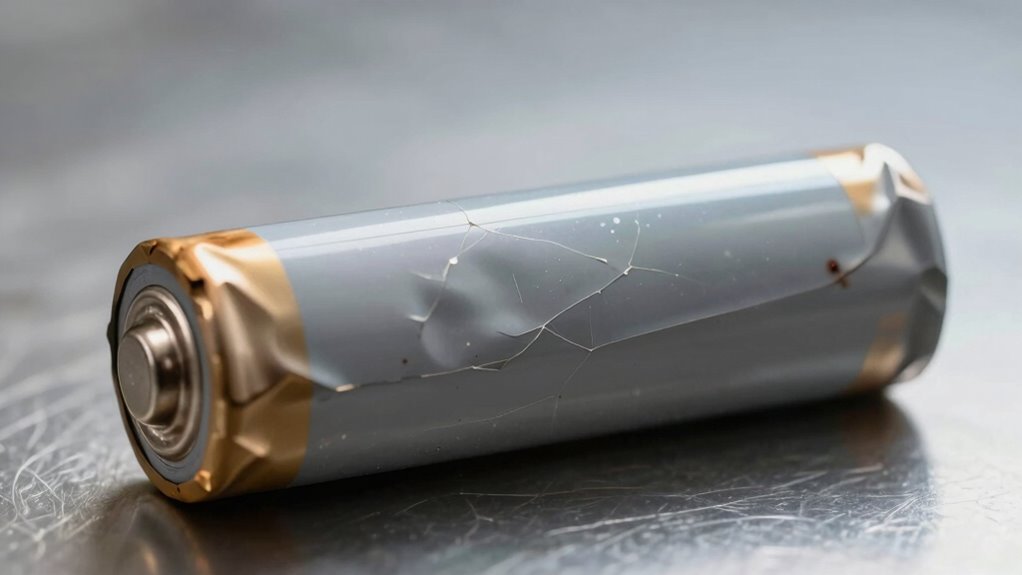

Battery safety means understanding how heat, damage, and swelling can cause problems or hazards. If your battery heats up excessively, swells, leaks, or shows signs of corrosion, stop using it immediately, as these indicate internal damage or chemical reactions. Swelling happens when gases build up inside from chemical reactions gone wrong. Handling damaged batteries carefully and knowing proper disposal methods are essential. Keep learning about safety tips to protect yourself and your environment.
Key Takeaways
- Swelling indicates internal gas buildup from chemical reactions, signaling potential battery failure and safety risks.
- Excessive heat can cause thermal runaway, leading to fires or explosions; proper thermal management is essential.
- Visible damage like leaks, corrosion, or bulging warrants immediate safe handling and proper disposal.
- Use certified chargers and avoid overcharging to prevent overheating and battery damage.
- Store batteries in cool, dry conditions and recycle damaged units at authorized facilities to ensure safety and environmental protection.
Understanding How Batteries Work

Batteries store chemical energy that converts into electrical energy when you use them. This process depends on battery chemistry, which involves specific reactions between materials inside the battery. The chemistry determines the voltage, capacity, and safety features. Electrode design plays a vital role, as it influences how efficiently ions move between the positive and negative terminals. The electrodes, typically made of different materials, facilitate the flow of electrons through an external circuit, powering your devices. Understanding how the chemical reactions and electrode structure work together helps you grasp why batteries can generate power and also why they might become unsafe if damaged. Proper design guarantees stable operation, but compromised electrodes can lead to issues like overheating or swelling, emphasizing the significance of safe handling. Additionally, advancements in European cloud innovation are focusing on developing safer, more reliable battery technologies for sustainable energy storage. Electrode stability is crucial in preventing issues like swelling and ensuring long-term safety and performance.
Recognizing Common Signs of Battery Damage

When a battery’s internal chemistry or electrode structure becomes compromised, it often shows visible or functional signs of damage. You should watch for:
- Battery leaks, which can leave sticky or corrosive residue around the terminals.
- Corrosion buildup, appearing as white or bluish-green crust on contacts or casing.
- Swelling or bulging, indicating gas buildup inside the cell. This internal damage can also cause the battery to overheat or fail unexpectedly. Recognizing the signs of battery failure early is essential for safety and device protection. Additionally, understanding battery chemistry can help you better grasp how these signs develop over time and what preventative measures to take. Proper battery maintenance can extend the lifespan and safety of your devices.
These signs aren’t just cosmetic; they signal potential safety hazards. Leaking fluids can damage devices or cause skin irritation. Corrosion buildup may impair connectivity, reducing battery performance. Swelling suggests internal damage that could lead to rupture or fire. Recognizing these signs early helps prevent accidents and ensures you handle damaged batteries safely. Always inspect batteries regularly and dispose of any showing these warning signs properly. Battery safety guidelines emphasize the importance of proper handling and disposal of compromised cells.
Why Excessive Heat Is Dangerous

Excessive heat can considerably increase the risk of battery failure and safety hazards. When a battery gets too hot, it risks entering thermal runaway, a chain reaction that causes the temperature to rise uncontrollably. This process can lead to the release of gases and pressure inside the cell, prompting battery venting. Venting is a safety mechanism that prevents the battery from bursting by releasing built-up gases, but it often indicates severe damage. Overheating weakens battery components, accelerates chemical reactions, and increases the chance of fires or explosions. To stay safe, avoid exposing batteries to high temperatures, especially during charging or storage. Proper handling and cooling are essential to prevent thermal runaway and ensure your battery remains safe and functional. Additionally, understanding battery management systems can help monitor and maintain safe operating temperatures. Regularly checking for battery swelling or other signs of damage can also prevent dangerous failures and ensure longevity. Incorporating effective cooling techniques can further help dissipate excess heat and protect your batteries from overheating, reducing the risk of thermal runaway and related hazards. For optimal safety, be aware that temperature sensors can provide real-time data to help manage and prevent overheating conditions.
The Meaning Behind Battery Swelling

Battery swelling is a clear sign that something has gone wrong inside the cell. It usually indicates that internal damage has occurred, often due to issues with battery chemistry or swelling causes. When a battery swells, the internal components, like electrolyte and electrodes, may produce gas from chemical reactions gone awry. This buildup of gas pushes against the casing, causing it to bulge. To imagine this, consider:
- The buildup of gases from chemical reactions
- The expansion of electrolyte and electrode materials
- The breakdown of battery chemistry integrity
- Chemical reactions can accelerate rapidly under certain conditions, increasing the risk of swelling and potential hazards. Understanding battery chemistry and its vulnerabilities helps in recognizing early warning signs of failure. Swelling occurs when these processes happen too rapidly or intensely, often from overheating, overcharging, or manufacturing defects. Recognizing swelling helps you understand that the battery’s internal chemistry is compromised, posing safety risks. Understanding how chemical reactions impact battery safety is crucial for preventing hazardous situations. Additionally, thermal management plays a vital role in controlling these reactions and preventing damage. Proper battery maintenance can help mitigate these risks and extend the lifespan of your device.
How to Safely Handle Damaged Batteries
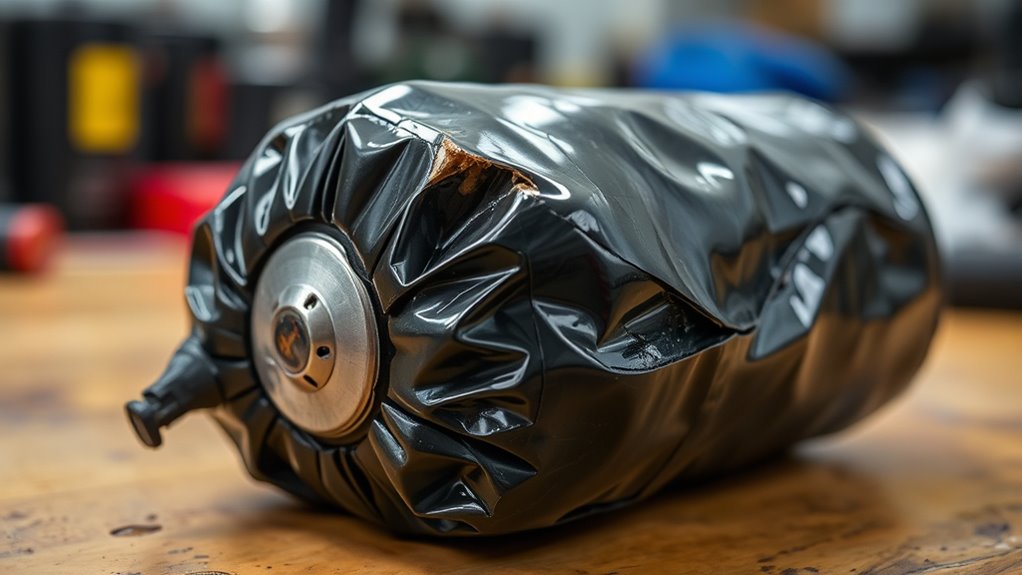
Handling damaged batteries requires immediate caution to prevent safety hazards. If you notice swelling, leakage, or corrosion, avoid touching or forcing the battery. Instead, wear protective gloves and eye protection. Carefully place the damaged battery in a non-conductive container, such as a plastic bag or a fireproof container, and keep it away from flammable materials. Do not attempt to recharge or dispose of it in regular trash; instead, take it to a certified battery recycling facility that handles lithium-ion chemistry safely. Proper disposal prevents environmental harm and reduces fire risks. Remember, lithium-ion batteries contain reactive chemicals that can ignite if mishandled. Always follow manufacturer guidelines and local regulations when dealing with damaged batteries to ensure your safety and the safety of others. Understanding battery maintenance can help prevent damage and ensure safe handling in the future. Being aware of fire safety precautions related to batteries is also essential to minimize potential hazards during storage or disposal. Regularly inspecting batteries and keeping them in cool, dry environments can also reduce the risk of battery damage.
Tips for Proper Battery Maintenance

To keep your batteries safe and reliable, you should regularly inspect them for signs of damage or wear. Avoid exposing your batteries to extreme temperatures, which can damage their performance and safety. Also, follow proper charging practices to prevent overcharging or undercharging that can shorten their lifespan. Using the correct battery storage methods can further help maintain their integrity and prevent issues such as swelling or leakage. Additionally, understanding the horsepower of electric dirt bikes can help you gauge the appropriate usage and prevent overloading your battery. Moreover, maintaining good air purifier practices, such as ensuring proper airflow and regular filter checks, can prevent dust and humidity from affecting your battery’s environment. Proper sizing and load‑planning tools are essential to ensure your battery system is appropriately matched to your energy needs, reducing stress on the batteries and extending their life. Incorporating knowledge of sound vibrations and their impact on cellular health can also support overall battery longevity by reducing environmental stress factors.
Regular Inspection Routines
Have you checked your battery lately? Regular inspections are key to extending its lifespan and guaranteeing safe operation. Look for signs of damage or swelling, which can indicate internal issues. Keep an eye on storage conditions, as improper storage can accelerate deterioration. During inspections, consider these points:
- Check for corrosion or leaks around terminals
- Examine for any bulging, cracks, or discoloration
- Ensure vents are clear and battery is securely mounted
- Be aware of Free Floating conditions that may lead to unpredictable behavior or safety hazards.
- Remember that Battery Damage can sometimes be hidden beneath the surface, so a thorough visual check is essential.
- Maintaining proper Battery Maintenance routines can prevent many common issues before they develop.
Avoid Extreme Temperatures
Extreme temperatures can considerably harm your battery’s performance and lifespan. To maintain *ideal* thermal management, keep your device within recommended ambient temperatures. Avoid exposing it to direct sunlight or leaving it in hot cars, as excessive heat accelerates degradation and increases swelling risk. Similarly, don’t let temperatures drop too low, which hampers battery efficiency. Proper thermal management helps preserve capacity and safety.
| Temperature Range | Effect on Battery | Recommended Action |
|---|---|---|
| Below 0°C | Reduced performance, possible damage | Keep in a warmer environment |
| 0–25°C | Ideal for use and storage | Maintain ambient temperature |
| 25–45°C | Accelerates aging, swelling risk | Avoid prolonged exposure to heat |
| Above 45°C | Severe damage, potential failure | Remove from heat sources |
Proper Charging Practices
Proper charging practices are essential to keep your battery healthy and maximize its lifespan. To do this, pay attention to charging speed and cable quality. Using fast chargers frequently can generate excess heat, which damages the battery over time. Opt for the right charging speed that matches your device’s specifications. Always choose high-quality cables to ensure a safe, stable power flow and prevent overheating or short circuits.
To visualize, consider:
- Using a charger with appropriate charging speed for your device
- Investing in certified, high-quality cables
- Avoiding cheap, poorly made chargers that may cause heat buildup
What to Do If Your Battery Swells or Overheats
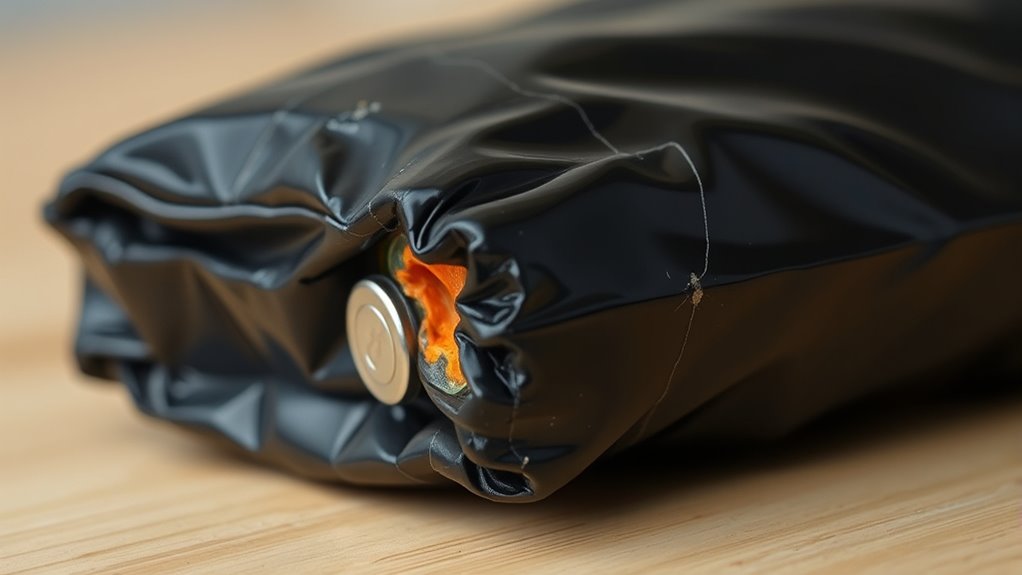
If your battery begins to swell or overheats, it’s essential to act immediately to prevent safety hazards. First, power down the device and disconnect it from any power source. Carefully remove the battery if possible, avoiding any punctures or damage. Do not attempt to press or puncture the swollen battery, as this can cause dangerous leaks or fires. If you notice signs of battery leaks, such as corrosion or a strange smell, handle the battery with gloves and dispose of it properly according to local regulations. Never continue to use or charge a swollen or overheated battery. Place it in a non-flammable container and contact your local waste disposal center or a professional for safe removal. Prompt action helps prevent accidents and further damage.
Preventing Battery Failures in Devices
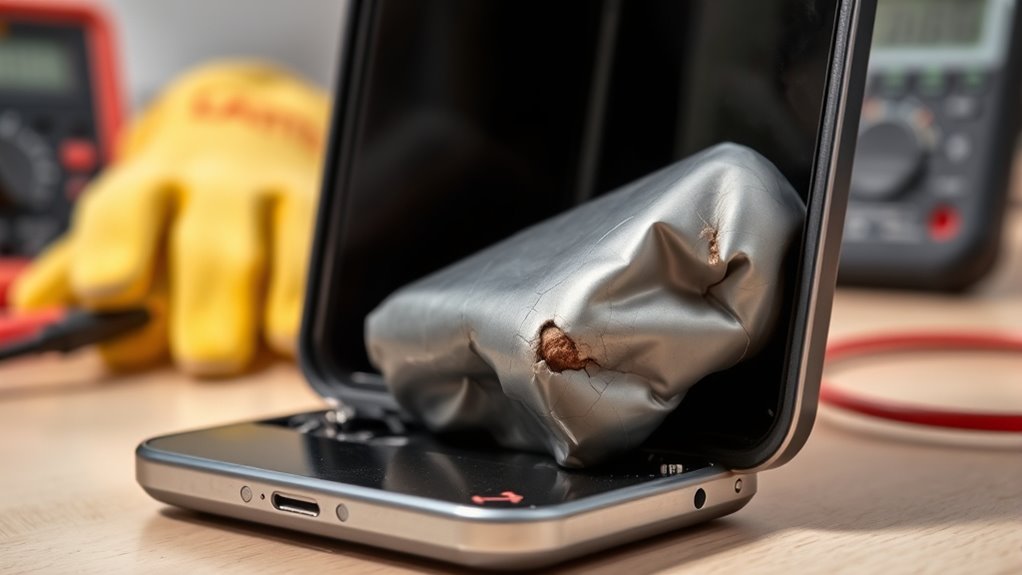
To prevent battery failures, you should follow proper charging practices and avoid overcharging your device. Keep it away from extreme temperatures, as heat and cold can damage the battery. Regular inspections help catch issues early before they lead to more serious problems.
Proper Charging Practices
Ensuring your device charges correctly is crucial for maintaining battery health and preventing failures. Proper charging practices help preserve battery capacity and extend its lifespan. To do this effectively, keep these points in mind:
- Avoid repeatedly charging to 100% or draining to 0%, as extreme charging cycles can strain the battery.
- Use the original charger or certified accessories to guarantee proper voltage and current flow.
- Don’t leave your device plugged in overnight; prolonged charging can lead to overheating and capacity loss.
Avoid Extreme Temperatures
Extreme temperatures can seriously damage your device’s battery, so it’s vital to keep it within a safe range. Proper temperature regulation helps prevent overheating or extreme cold, which can cause internal damage or reduce battery lifespan. Environmental impacts like direct sunlight, leaving your device in a hot car, or exposing it to freezing conditions can accelerate battery failure. To protect your battery, avoid exposing your device to high heat or cold for extended periods. Keep it in a cool, shaded place during hot days and avoid charging in direct sunlight or very cold environments. Maintaining ideal temperature levels not only prolongs your battery’s life but also ensures it functions safely and reliably over time. Proper environmental awareness is key to preventing costly failures.
Regular Battery Inspections
Regular battery inspections are essential for preventing device failures and extending battery life. By checking your battery regularly, you can spot issues early, such as reduced battery capacity or changes in electrolyte composition that may signal deterioration. During inspections, look for signs like bulging, leaks, or corrosion. Keep in mind:
- Declining battery capacity leading to shorter usage times
- Changes in electrolyte composition causing internal damage
- Visible swelling or deformation indicating potential failure
Monitoring these factors helps you catch problems before they cause device shutdowns or safety hazards. Maintaining proper electrolyte balance and ensuring the battery’s capacity remains ideal reduces the risk of failure. Regular inspections empower you to keep your devices safe, reliable, and functioning at their best.
Choosing Safe Batteries and Proper Disposal

Choosing the right batteries and disposing of them properly can considerably reduce safety risks. Always look for batteries with proper certifications, such as UL or IEC, which ensure safety standards are met. When selecting batteries, prioritize those from reputable brands to minimize hazards like leaks or overheating. Proper disposal involves recycling batteries through certified battery recycling centers, preventing environmental harm and potential fires. Use the following table to understand key aspects:
| Aspect | What to Do | Why It Matters |
|---|---|---|
| Battery Type | Choose certified, high-quality batteries | Reduces risk of failure or damage |
| Battery Recycling | Recycle at certified centers | Prevents environmental hazards |
| Storage | Store in cool, dry places | Avoids overheating and swelling |
| Disposal | Follow local guidelines | Ensures safe, eco-friendly disposal |
| Handling | Avoid puncturing or crushing | Prevents leaks and fires |
Frequently Asked Questions
Can a Swollen Battery Still Be Used Safely?
No, you shouldn’t use a swollen battery. It’s unsafe because it could leak, overheat, or even catch fire. Instead, carefully dispose of it following local battery disposal or recycling guidelines. Never puncture or try to repair a swollen battery; always opt for proper battery recycling to keep everyone safe and protect the environment. Remember, a swollen battery is a sign it needs to be discarded immediately.
How Does Temperature Specifically Affect Battery Lifespan?
Temperature acts like a double-edged sword, slicing through your battery’s lifespan. When it gets too hot, thermal degradation accelerates, speeding up chemical breakdown inside the cells. This weakens the battery’s capacity and shortens its life, while cold temps can slow chemical reactions, reducing performance. Keep your device at moderate temperatures to preserve its health; heat is the silent thief that steals your battery’s future.
Are Some Battery Types More Prone to Swelling?
Some battery types, like lithium-ion and lithium-polymer, are more prone to swelling due to their specific battery chemistry. Swelling causes stem from factors like overcharging, high temperatures, and internal damage, which are more common in these chemistries. You should handle and store your batteries carefully, especially if they show signs of swelling, as it indicates potential safety risks and reduced lifespan. Always follow manufacturer guidelines to prevent swelling issues.
What Are Hidden Signs of Internal Battery Damage?
You might think visible damage is the only sign of internal battery issues, but hidden signs exist. Investigate the theory that battery corrosion around terminals indicates internal damage; it often does. Also, watch for charger compatibility problems, like slow charging or overheating, which can signal internal harm. These signs, combined with subtle swelling or unusual device behavior, reveal hidden damage, helping you prevent potential battery failures.
Can Damaged Batteries Cause Device Malfunctions Besides Safety Risks?
Damaged batteries can definitely cause device malfunctions beyond safety risks. You might notice reduced battery life, unexpected shutdowns, or slower performance. Poor charging practices or ignoring signs of damage can worsen these issues. To prevent further problems, always follow proper charging practices and recycle damaged batteries responsibly. Regularly inspecting your device helps catch internal damage early, ensuring peak performance and safety for your device and the environment.
Conclusion
Knowing the signs of battery damage can keep you safe and your devices running smoothly. Did you know that over 25,000 battery-related fires occur each year in the U.S.? By understanding heat, swelling, and proper handling, you can prevent accidents and extend your battery’s life. Stay vigilant, follow safety tips, and always dispose of batteries properly. Your awareness makes a big difference in avoiding dangerous situations and keeping your tech safe.