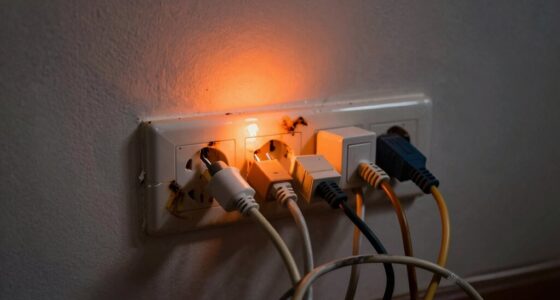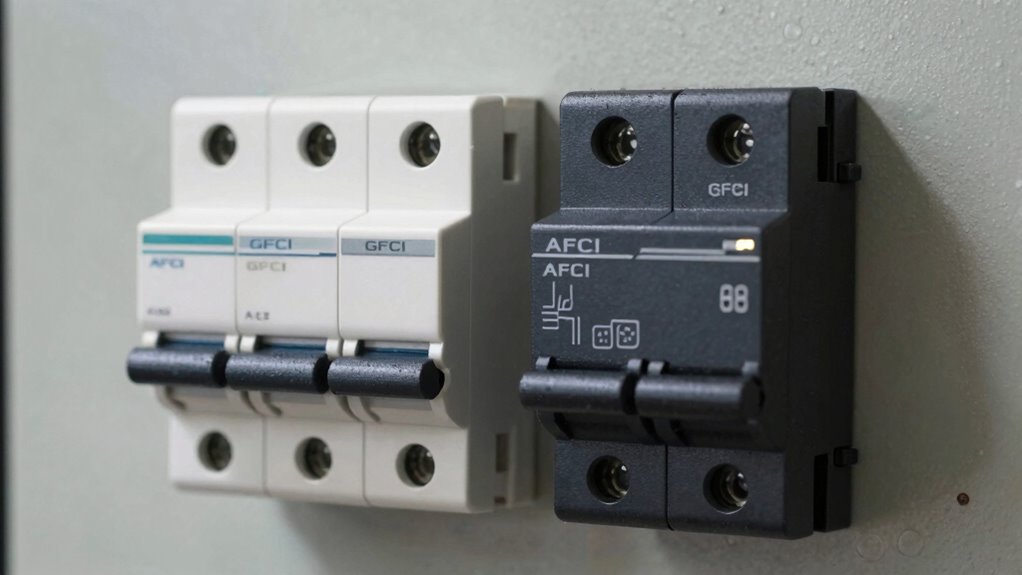

GFCI and AFCI breakers both have unique letter codes—GFCI indicates Ground Fault Circuit Interrupter, which protects against ground faults and shocks, while AFCI stands for Arc Fault Circuit Interrupter, which prevents electrical fires caused by arcing. Each type targets different hazards, with GFCIs common in wet areas and AFCIs in living spaces. Understanding these codes helps keep your home safer; if you want to learn more, continue exploring how these breakers protect your family.
Key Takeaways
- GFCIs protect against ground faults and shocks, while AFCIs prevent fires caused by arc faults.
- GFCI breakers are labeled “GFCI” and are used in wet or outdoor areas.
- AFCI breakers are labeled “AFCI” and are installed in living spaces prone to wiring faults.
- Many breakers combine both functions; always verify labels and descriptions for proper safety.
- Correctly matching breaker types to areas enhances home safety and prevents electrical hazards.

Anker SOLIX F2000 Solar Generator, 2048Wh Portable Power Station with LiFePO4 Batteries and 2× 200W Solar Panel, GaNPrime Technology, 4 AC Outlets Up to 2400W for Home, Power Outages, Camping, and RVs
Long-Lasting Portable Power Station With a 10-Year Lifespan: With our proprietary long-lasting technology InfiniPower, combined with LiFePO4 batteries,...
As an affiliate, we earn on qualifying purchases.
Understanding Ground Faults and How GFCIs Respond
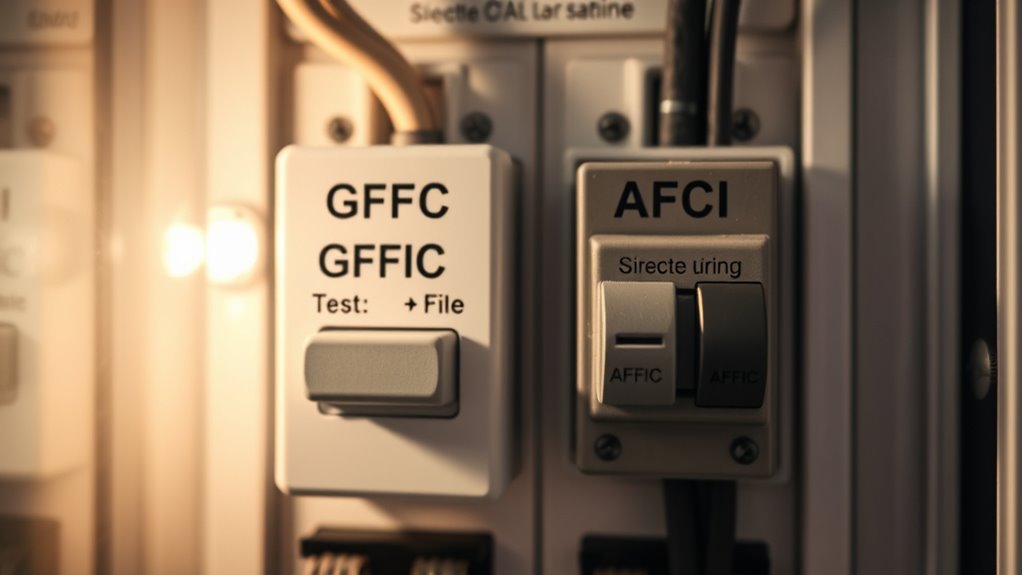
Ground faults occur when electricity flows outside its intended path, often through a person or unintended object, creating a shock hazard. Ground fault detection is essential because it identifies these leaks quickly. When a ground fault happens, the GFCI monitors the current difference between the hot and neutral wires. If it detects even a small imbalance—typically 4 to 6 milliamps—it recognizes a ground fault. The breaker response mechanisms then activate immediately, shutting off power to prevent injury. This rapid response minimizes the risk of electric shock or fire. By constantly monitoring current flow, GFCIs provide a crucial safety barrier. Ground fault detection is a vital component in preventing electrical accidents, especially in wet environments. Regular testing of GFCIs ensures their reliability and safety over time. Proper installation and maintenance practices are essential for ensuring GFCI effectiveness. High-performance projectors with quick response times can further enhance safety in home theater setups.
Jackery HomePower 3600 Plus Portable Power Station with 2x 200W Solar Panels, 3600W AC Output, 3584Wh LFP Solar Generator, Expandable up to 21kWh, Essential Home Backup for Home Use, Emergencies, RV
Essential Home Backup: The Jackery HomePower 3600 Plus delivers 3600W output (7200W in parallel) to run pumps, heaters,...
As an affiliate, we earn on qualifying purchases.
The Role of Arc Faults and AFCI Protection
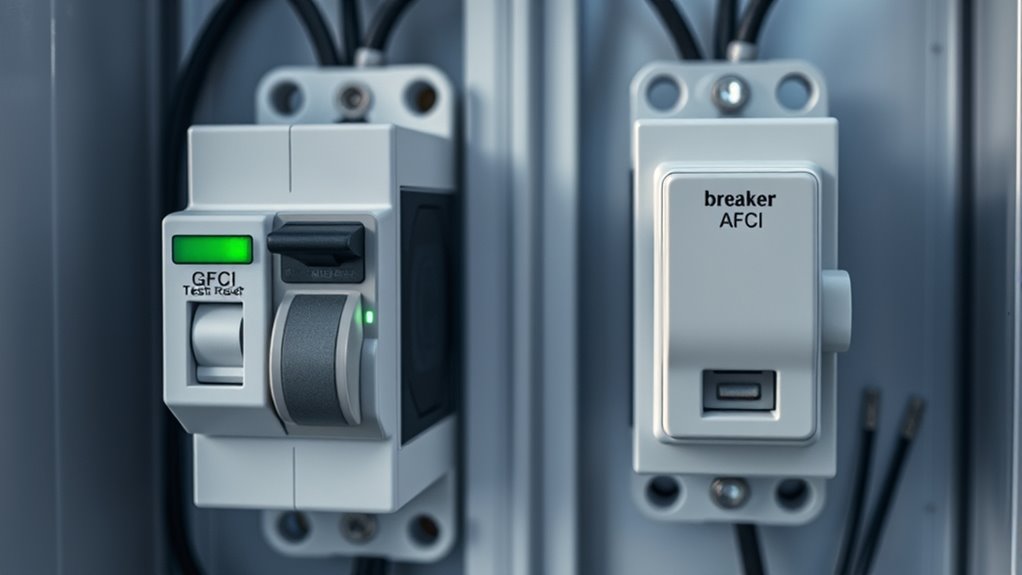
Arc faults can ignite fires if left unchecked, so detecting them early is vital for your safety. AFCI devices are designed to identify these dangerous arcs before they cause harm. By understanding how AFCIs detect faults, you can better appreciate their role in enhancing your home’s electrical safety. Offensive security measures are also employed by ethical hackers to proactively identify vulnerabilities in electrical systems and prevent potential hazards. Recognizing the importance of fault detection underscores the significance of AFCI technology in safeguarding your environment.
Detecting Dangerous Arcs
Detecting dangerous arcs is a critical function of AFCI (Arc Fault Circuit Interrupter) protection, as arc faults can ignite fires even without a direct short or overload. AFCIs monitor electrical wiring for irregularities that suggest arcing, such as intermittent connections or damaged insulation. When these are detected, the breaker trips, preventing potential fires. Proper breaker installation ensures AFCIs can effectively sense these faults. Here’s a quick overview:
| Fault Type | Warning Signs | Action Taken |
|---|---|---|
| Paralleled Arc | Flickering lights, sparks | Breaker trips immediately |
| Series Arc | Intermittent power loss | Breaker trips to prevent fire |
| Damaged Wiring | Unusual buzzing or heat | Breaker trips, wiring inspection |
| Loose Connections | Intermittent operation | Breaker trips, tightening needed |
| Frayed Cables | Visible damage | Breaker trips, replace wiring |
Additionally, understanding the role of arc faults in fire prevention highlights the importance of AFCI protection in modern electrical systems.
Enhancing Electrical Safety
Understanding how arc faults develop and their potential dangers highlights the importance of advanced protection devices like AFCIs. Arc faults often originate from circuit overloads or damaged wiring insulation, creating sparks that can ignite fires. Without proper detection, these faults can go unnoticed until significant damage occurs. AFCIs monitor the electrical system continuously, sensing the unique signatures of arc faults caused by compromised wiring insulation or overloaded circuits. By quickly disconnecting power when an arc fault is detected, AFCIs prevent fires and protect your home and loved ones. Incorporating AFCI breakers into your electrical system enhances safety by addressing hidden hazards before they escalate. Proper circuit protection is essential for maintaining electrical safety in residential settings, especially considering fire prevention strategies. This proactive approach minimizes risks, ensuring your electrical system remains secure and reliable. Additionally, understanding the types of arc faults can help in selecting the appropriate AFCI device for comprehensive safety coverage.

Anker Solar Generator SOLIX C300 with 60W Solar Panel, 288Wh Portable Power Station, 300W (600W Surge), LiFePO4 Battery, 140W Two-Way Fast Charging, for Outdoor Camping, Traveling, and Emergencies
Compact with Massive Power: It's portable power that moves as freely as you. Give your devices 300W (600W...
As an affiliate, we earn on qualifying purchases.
Key Differences in Design and Functionality
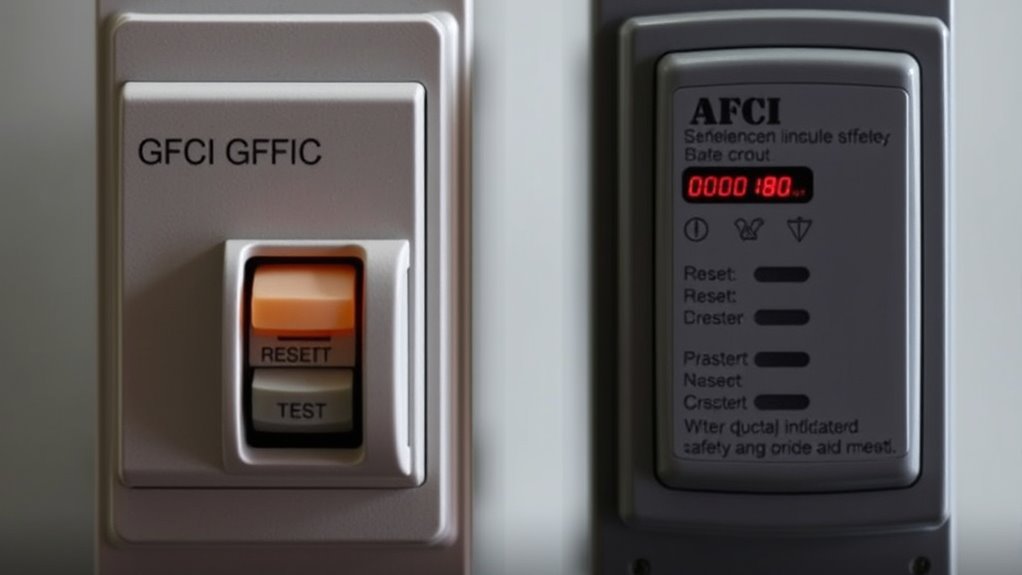
While GFCIs and AFCIs serve different safety purposes, their design and functionality also differ significantly. GFCIs are designed to detect ground faults by monitoring the current balance between hot and neutral wires, quickly shutting off power to prevent shocks. AFCIs, on the other hand, identify arcing faults that can cause fires by sensing irregular electrical activity. In terms of breaker compatibility, GFCI breakers are typically used in outlets or circuit breakers for specific areas, while AFCIs are installed to protect entire circuits. Surge protection is generally not a feature of AFCIs but can be integrated into GFCI units. Additionally, electrical safety standards are often updated to include these breakers, emphasizing their importance in modern electrical systems. These differences mean each breaker type is tailored to specific hazards, emphasizing their unique roles in electrical safety. Understanding electrical safety is crucial for selecting the appropriate breaker type for your needs. Additionally, compliance with electrical codes often dictates which type of breaker should be used in different applications to ensure safety standards are met. Proper installation practices are essential to ensure both types of breakers function correctly and provide the intended protection, and consulting a qualified electrician can help ensure proper setup.

Anker SOLIX C800 Portable Power Station with 200W Solar Panels, 1200W (Peak 1600W) Solar Generator, Full Charge in 58 Min, 768Wh LiFePO4 Battery for Outdoor Camping, RVs, Road Trip, and Power Outages
Fully Power Multiple Appliances: No more compromising. Plug in multiple appliances and power with 768Wh and 1200W rated...
As an affiliate, we earn on qualifying purchases.
When to Use GFCI Breakers in Your Home
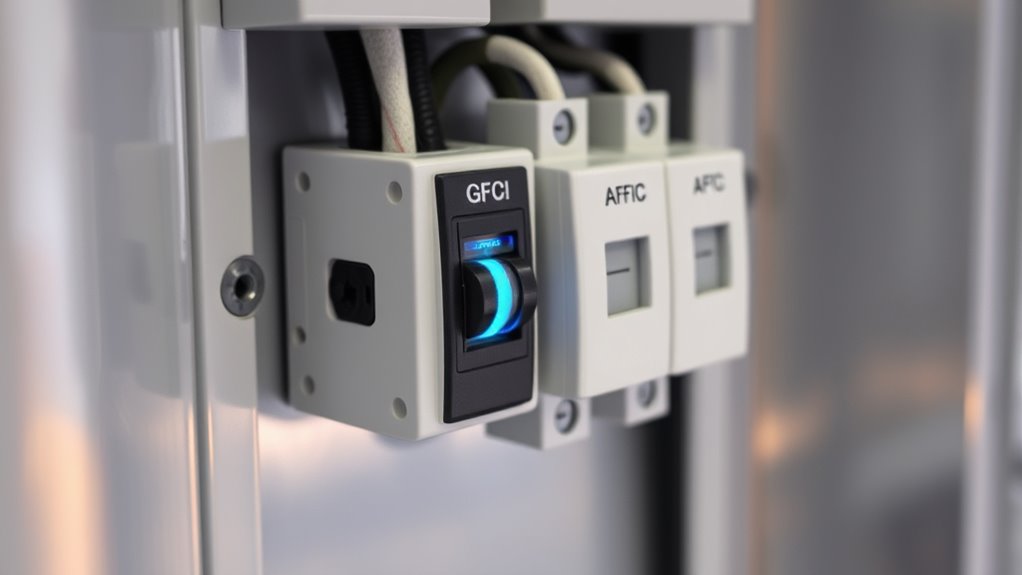
You should install GFCI breakers whenever a circuit supplies power to areas where water and electricity might come into contact, such as kitchens, bathrooms, garages, and outdoor outlets. GFCIs help prevent shocks by quickly disconnecting power if they detect ground faults, which can occur when grounding systems are compromised or improperly connected. Proper breaker labeling ensures you know which circuits are protected and where GFCIs are installed. If your home lacks grounding systems or has outdated wiring, GFCIs provide added safety by reducing shock risks. Remember, GFCI protection isn’t limited to new installations—it’s essential for retrofit projects in wet or damp areas. Installing GFCI breakers in these locations keeps you safer and helps meet electrical code requirements. Using load‑planning tools can help determine the best placement of GFCIs to ensure comprehensive protection throughout your home. Additionally, understanding electrical safety standards can guide proper installation and maintenance practices.
Ideal Locations for Installing AFCI Breakers
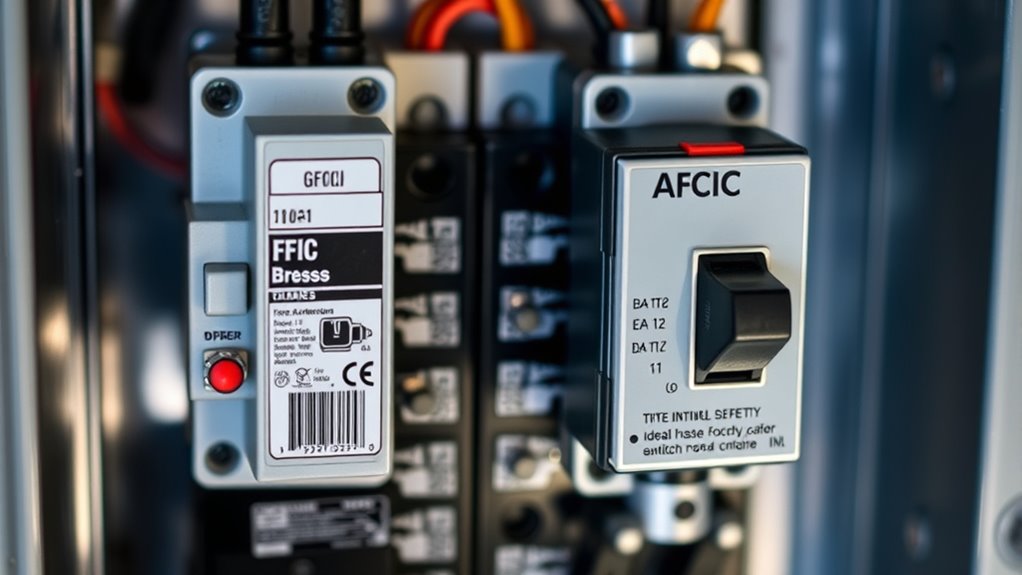
AFCI breakers are designed to protect against electrical fires caused by arcing faults, making their placement just as vital as GFCIs in safeguarding your home. You should install these circuit breakers in areas where electrical wiring is likely to develop faults, such as bedrooms, living rooms, and hallways. They serve as a fundamental safety device, preventing fires before they start. Proper installation ensures maximum protection for your family and property. Consider these ideal locations for AFCI breakers:
| Location | Reason for Installation | Safety Benefit |
|---|---|---|
| Bedrooms | High usage, potential wiring issues | Fire risk reduction |
| Living Rooms | Multiple outlets, appliances | Fire prevention |
| Hallways | Long wiring runs, concealed cables | Early fault detection |
| Home Offices | Computer equipment, surge risk | Fire hazard mitigation |
| Closets & Attics | Less visible wiring faults | Enhanced home safety |
Additionally, understanding electrical faults can help you better identify when AFCI protection is most critical. Recognizing the signs of wiring problems can also aid in preventing dangerous situations before they occur. Being aware of arcing faults can further improve your home’s safety measures. Regular inspection and maintenance are crucial to ensure all AFCI devices function properly over time. Incorporating proper wiring practices can significantly reduce the likelihood of faults developing in your home’s electrical system.
Recognizing the Signs of a Faulty GFCI or AFCI
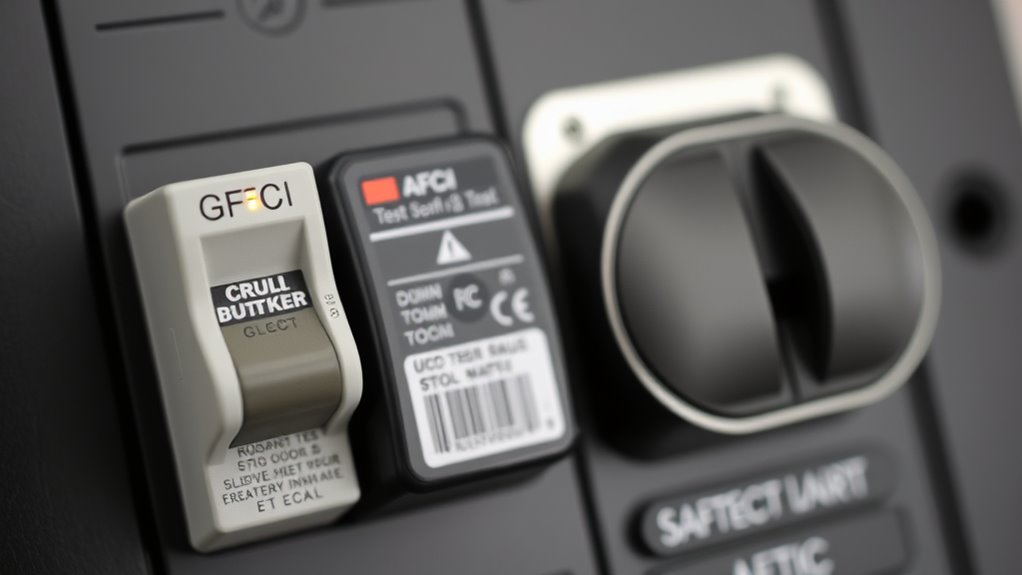
You should watch for signs like frequent power trips or the breaker shutting off unexpectedly. Visible damage, such as burn marks or corrosion, also signifies a problem. Recognizing these signs early can help prevent electrical hazards and ensure your safety. Additionally, understanding the different types of circuit breakers, like GFCI and AFCI, can aid in identifying specific issues related to each breaker type. Being aware of Vetted – Security Zone Info can also help you choose the right security measures for your home to complement electrical safety. Knowing the local electrical codes and standards can further assist in maintaining a safe electrical system.
Unusual Power Trips
Have you noticed your circuit breaker tripping unexpectedly or frequently? If so, it could be a sign of a faulty GFCI or AFCI. Ground faults, which occur when electricity leaks to the ground, can cause the breaker to trip to prevent shock hazards. Similarly, arc faults—small sparks caused by damaged wiring—can also trigger frequent trips. These unexpected trips aren’t normal and often indicate that your breaker is detecting a dangerous condition. If you experience this, it’s essential to have your system inspected promptly. Ignoring these signs might lead to more serious electrical issues or fire hazards. Regularly resetting your breaker without addressing the underlying cause isn’t a solution—identify whether a ground fault or arc fault is causing the problem and take proper action. Electrical safety measures are crucial when dealing with circuit breaker issues to prevent potential hazards.
Visible Damage or Wear
Have you examined your GFCI or AFCI outlets lately? Look closely for visible damage or wear, like corrosion issues around the contacts or cracks in the plastic housing. Corrosion can weaken the connection, leading to faulty operation or electrical hazards. Visible cracks indicate physical damage that might compromise the breaker’s integrity and safety. If you notice any corrosion or cracks, replace the unit immediately—don’t wait for it to fail completely. Regular inspections can help catch these issues early, preventing potential electrical shocks or fires. Additionally, filter maintenance and proper cleaning can reduce the risk of damage and prolong the life of your electrical components. Remember, these signs often appear before a breaker trips or malfunctions, so staying vigilant is key to keeping your electrical system safe. Prioritize safety by addressing visible damage promptly, and be sure to follow electrical safety practices to minimize risks.
Safety Standards and Code Requirements for Breakers
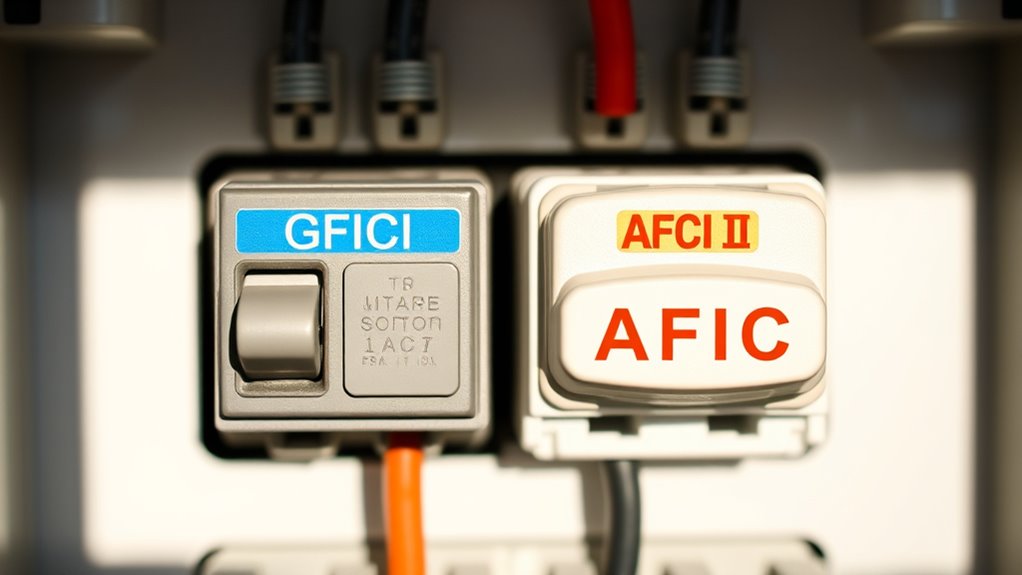
Safety standards and code requirements for GFCI and AFCI breakers are essential to making certain electrical systems are safe and reliable. These standards specify how ground fault and arc fault detection should work to prevent fires and electrical shocks. GFCI breakers are designed to trip when they detect a ground fault, protecting you from electric shocks caused by stray currents. AFCI breakers focus on identifying arc faults, which can ignite fires before they start. Building codes, like the National Electrical Code (NEC), mandate the use of these breakers in specific areas of your home to minimize risks. Proper installation and adherence to safety standards ensure these breakers perform correctly, reducing hazards and increasing your safety. Following these requirements keeps your electrical system compliant and trustworthy.
How GFCI and AFCI Breakers Enhance Home Security
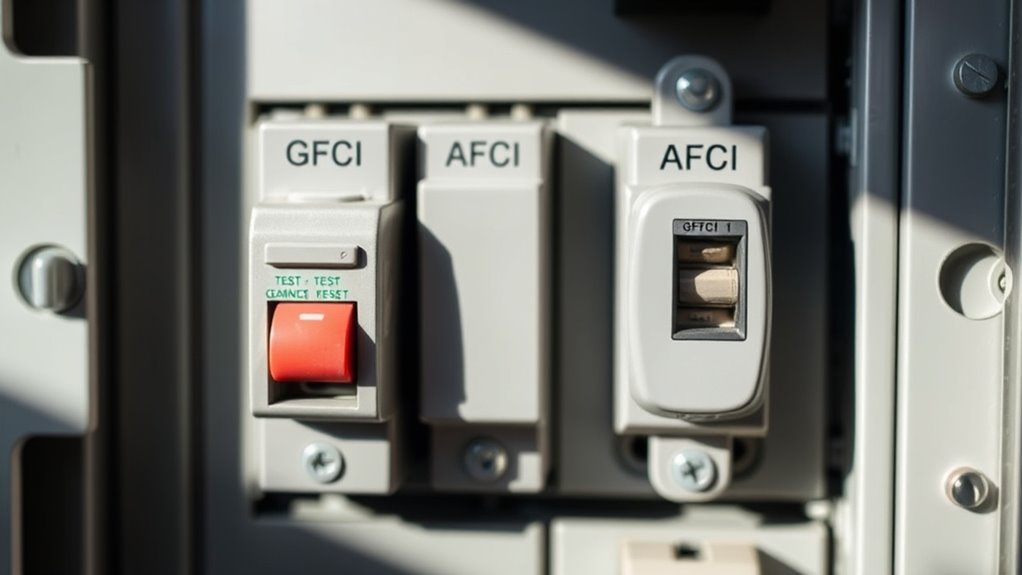
Building on the safety standards that guide the use of GFCI and AFCI breakers, understanding how these devices enhance your home’s security is key. They protect you by quickly detecting faults and preventing electrical hazards. Here are four ways they improve your safety:
GFCI and AFCI breakers enhance home safety by quickly detecting faults and preventing electrical hazards.
- Detect Ground Faults – GFCIs shut off power when they sense leakage to prevent shocks.
- Identify Arc Faults – AFCIs detect sparks that could cause fires, stopping them early.
- Streamline Circuit Troubleshooting – Faulty circuits are identified faster, reducing downtime.
- Simplify Breaker Maintenance – Regular testing ensures breakers function properly, maintaining safety.
Using these breakers helps you maintain a safer home environment and reduces risks associated with circuit issues.
Common Misconceptions About Ground and Arc Faults
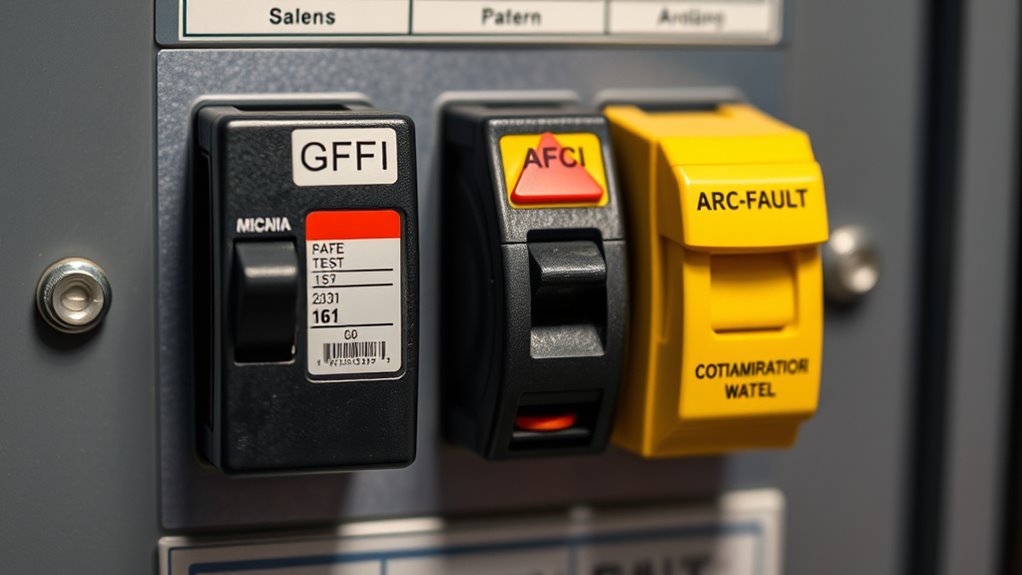
Many people believe ground faults are common, but they’re actually rare. In contrast, arc faults happen more often and can pose serious fire risks. Sometimes, you misinterpret breaker labels, which can lead to confusion about the type of fault you’re dealing with.
Ground Faults Are Rare
Although ground faults are often portrayed as rare occurrences, they actually happen more frequently than most people realize. You might think electrical shocks are unlikely, but ground faults can occur unexpectedly, especially in damp or damaged wiring. These faults happen when current leaks to the ground, risking your safety. Recognizing this helps you understand why GFCIs are crucial in preventing injuries. Here are key points to take into account:
- Ground faults can occur during normal use, not just in faulty wiring.
- They are a common cause of electrical shocks in households.
- Moisture and damage increase the risk of ground faults.
- Ground faults often go unnoticed until a GFCI or AFCI trips, preventing harm.
Understanding this dispels the myth that ground faults are rare and highlights the importance of proper protection.
Arc Faults Are Common
Arc faults are more common than most people realize, often occurring silently and unexpectedly in residential wiring. Unlike ground faults, which involve a direct connection to the ground, arc faults happen when electrical sparks jump between wires or through damaged insulation. These sparks can ignite nearby materials, creating a fire hazard without any visible warning. Because arc faults can occur without tripping a standard circuit breaker, many homeowners remain unaware of the danger. They are especially common in older wiring, damaged cords, or devices with loose connections. Recognizing that arc faults happen more frequently than ground faults helps you understand why AFCIs are essential for safety. They detect these dangerous sparks early, reducing the risk of electrical fires and protecting your home.
Misinterpreting Breaker Labels
Misinterpreting circuit breaker labels can lead to dangerous assumptions about your home’s electrical safety. Many people rely on breaker labels and safety symbols, but these can be confusing or misleading. For example, a breaker labeled “GFCI” doesn’t necessarily protect against arc faults, and an “AFCI” isn’t always a ground fault protector. Misunderstanding these labels could mean you leave a hazard unprotected.
Here are common misconceptions:
- Believing all breakers with a GFCI symbol protect against arc faults.
- Confusing breaker labels with their actual functions.
- Assuming safety symbols are standardized across all brands.
- Overlooking the importance of reading the detailed description on the breaker.
Always verify breaker labels and understand the specific protection they provide to ensure your safety.
Selecting the Right Breaker for Different Electrical Needs
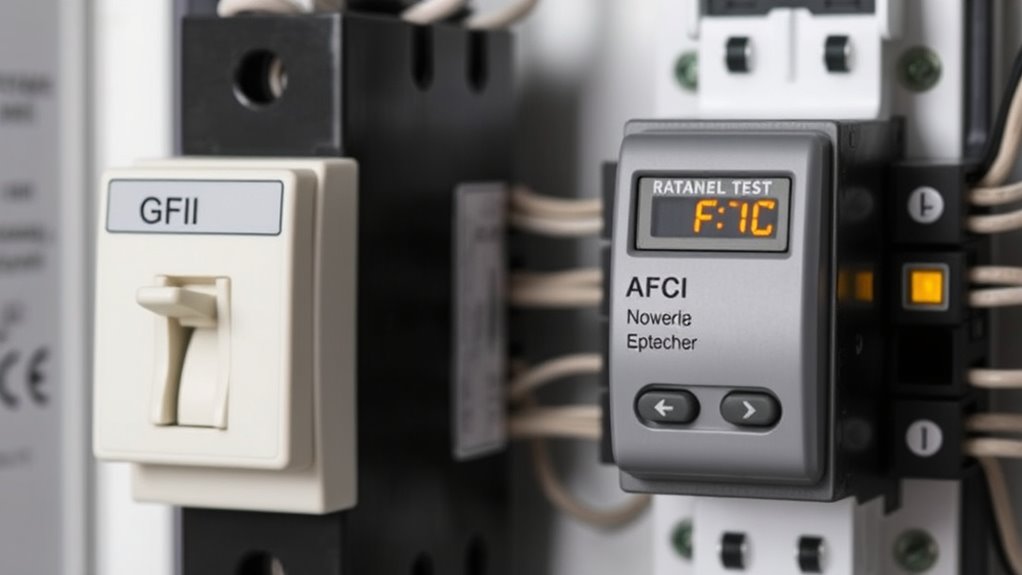
Choosing the right breaker depends on the specific electrical needs of your space. You need to contemplate the circuit capacity to ensure the breaker can handle the load without tripping unnecessarily. Different breaker types serve various purposes: GFCI breakers protect against ground faults, ideal for areas like bathrooms and kitchens, while AFCI breakers prevent arc faults, suitable for living rooms and bedrooms. Assess your electrical system’s demands and the hazards present to determine which breaker type best fits each area. For circuits with high power demands, select breakers with appropriate capacity to avoid overloads. Mixing breaker types based on their functions helps maximize safety and performance. Always match the circuit capacity with the breaker specifications to keep your electrical system reliable and safe.
Frequently Asked Questions
Can GFCI or AFCI Breakers Be Reset After Tripping?
Yes, GFCI and AFCI breakers can be reset after tripping. To do this, you need to follow the proper reset procedures, usually flipping the breaker switch fully off then back on. Regularly resetting these breakers helps maintain their functionality and can extend their lifespan. If a breaker trips repeatedly, it’s a sign to review your wiring or consult an electrician, as ongoing trips may indicate underlying issues.
Are GFCI and AFCI Breakers Compatible With All Electrical Panels?
Imagine a puzzle piece fitting perfectly into its spot—that’s how compatible GFCI and AFCI breakers are with your electrical panel. Not all panels support these breakers, so you need to check panel compatibility before installation. Proper breaker installation guarantees safety and functionality, preventing issues down the line. Always verify your panel’s specifications and consult an electrician to confirm that GFCI or AFCI breakers will work seamlessly.
How Often Should GFCI and AFCI Breakers Be Tested?
You should test GFCI and AFCI breakers monthly to guarantee they work properly. Regular testing is essential for safety and helps catch potential issues early. Use the test button on each breaker and reset it afterward. Follow maintenance tips like inspecting for damage and keeping panels clean. Consistent testing and proper upkeep help protect your home from electrical faults and keep your breakers functioning effectively.
Do GFCI and AFCI Breakers Require Special Wiring Considerations?
Ever wondered if GFCI and AFCI breakers need special wiring? Yes, they often require grounding requirements and wiring upgrades to work properly. You should verify your system’s wiring meets the manufacturer’s specifications and is up to code. Proper grounding is essential for safety and breaker functionality. If you’re unsure, consulting a professional electrician can help you avoid costly mistakes and keep your home protected effectively.
Are There Different Types of AFCI Breakers for Various Appliances?
Yes, there are different types of AFCI breakers designed for various appliances. You need to check breaker compatibility to guarantee you select the right appliance-specific breakers, especially for sensitive or specialized equipment. Some appliances require dedicated AFCI breakers to meet safety standards and prevent electrical fires. Always verify that the breaker matches your appliance’s power needs and wiring setup to ensure safe and proper operation.
Conclusion
Understanding GFCI and AFCI breakers keeps your home safer, but knowing when to use each makes all the difference. While GFCIs protect you from ground faults and current leaks, AFCIs guard against dangerous arc faults that can spark fires. Together, they form a powerful safety duo—like guardians at every outlet and circuit. Equip your home wisely, and you’ll not only meet code but create a safer space for everyone inside.