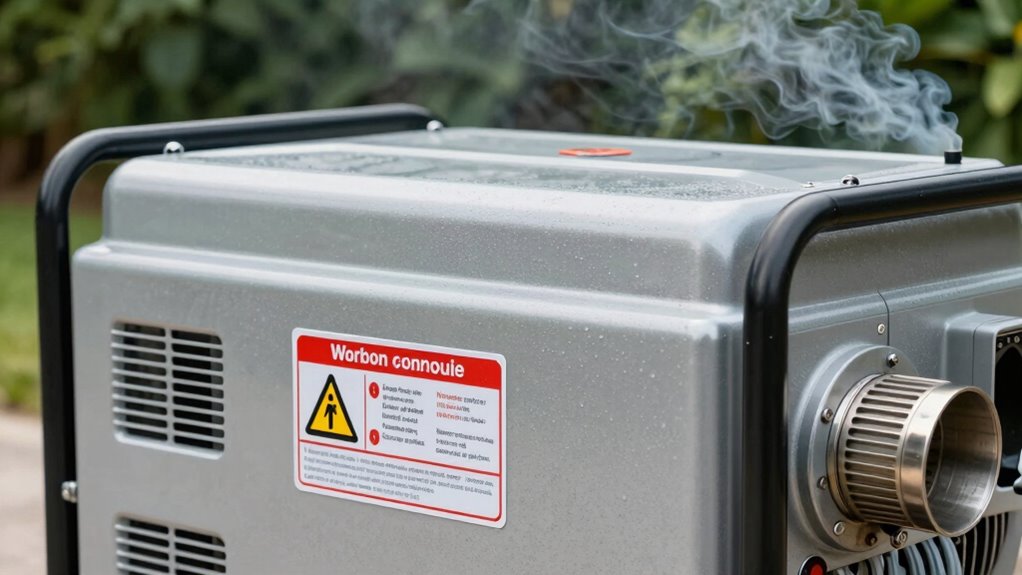

Many believe that simply running a generator outdoors keeps them safe from carbon monoxide poisoning, but that’s a dangerous misconception. Proper placement and ventilation are vital to prevent CO leaks, even outside. Keep your generator at least 20 feet from windows and make sure exhaust fumes are directed away from your home. Recognizing symptoms early and installing CO detectors are necessary. Stay tuned; understanding the best safety practices can protect your family from hidden dangers.
Key Takeaways
- Always operate generators outdoors, at least 20 feet away from windows and doors, to prevent CO buildup indoors.
- Use carbon monoxide detectors near generators and living spaces for early warning.
- Regularly maintain and inspect generators and exhaust systems to prevent leaks and emissions.
- Recognize symptoms of CO poisoning—headache, dizziness, nausea—and respond immediately by moving to fresh air.
- Never run a generator indoors or in enclosed spaces, and ensure proper ventilation during operation.
Understanding Carbon Monoxide Risks With Generators
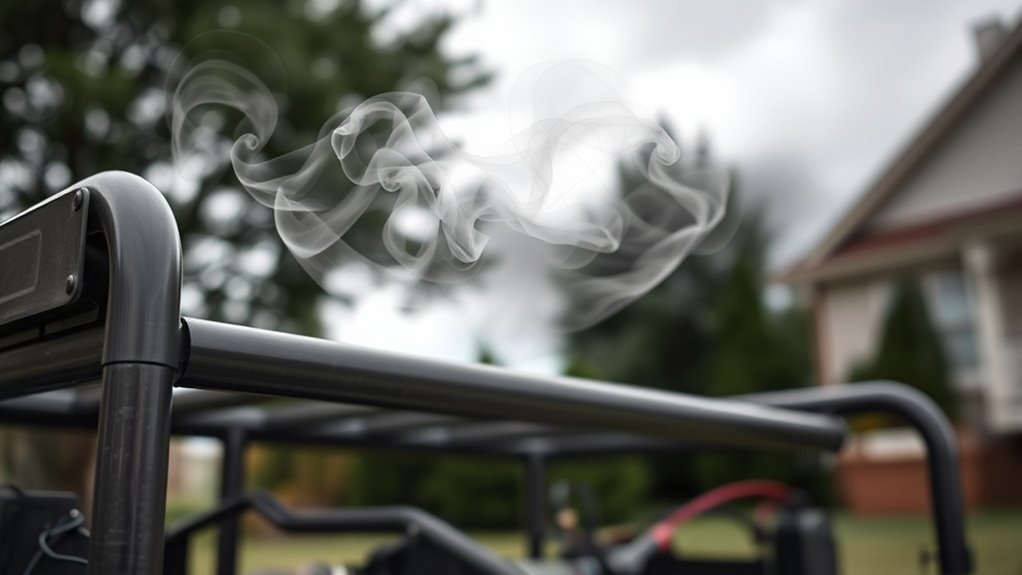
Since carbon monoxide (CO) is a colorless, odorless gas, many people underestimate its dangers when using generators. Proper generator maintenance is essential to reduce CO emissions and ensure safe operation. Regularly inspecting and servicing your generator helps prevent dangerous leaks and malfunctions. To enhance safety, consider integrating smart‑home solutions that monitor CO levels and alert you to potential hazards. You should always operate your generator outdoors, away from windows, vents, and open doors, to prevent CO buildup indoors. Being prepared for emergencies means knowing the risks and having a plan to evacuate if needed. Never run a generator in enclosed spaces, even if windows are open, because CO can quickly accumulate. Recognizing generator safety guidelines is crucial to protecting yourself and your loved ones from the silent threat of carbon monoxide poisoning. Understanding these risks emphasizes the importance of thorough maintenance and emergency preparedness, helping you protect yourself and your loved ones from the silent threat of carbon monoxide poisoning. Additionally, understanding CO exposure symptoms can enable prompt action if accidental poisoning occurs. Properly ventilating the area and using CO detectors further enhances safety measures. Using appropriate ventilation techniques can significantly reduce the risk of dangerous CO buildup during generator operation.
The Common Safety Rule and Its Misinterpretation
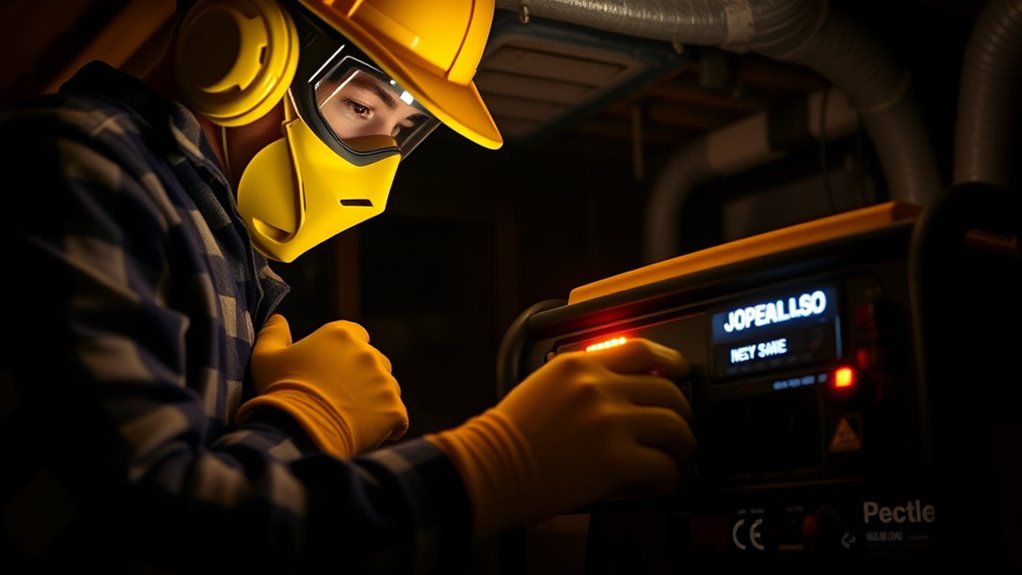
Many people believe that keeping a generator outdoors is enough to prevent carbon monoxide poisoning, but proper ventilation practices are more nuanced. You need to guarantee fresh air circulation and avoid enclosed spaces, even if the generator is outside. Recognizing early signs of carbon monoxide exposure can save lives, so stay alert to symptoms like headaches or dizziness. Additionally, ensuring your environment uses energy-efficient cloud servers can contribute to reducing overall environmental impact. Incorporating proper ventilation techniques and understanding free floating concepts can further enhance safety and prevent dangerous buildup of emissions. Properly managing airflow and understanding air exchange rates are essential for safe generator operation. Moreover, being aware of ambient airflow conditions helps optimize safety measures in various outdoor settings.
Proper Ventilation Practices
Proper ventilation is essential when operating a generator to prevent dangerous carbon monoxide buildup. You need to guarantee fresh air flows freely to avoid harmful concentrations. To do this effectively, consider these practices:
- Keep the generator outdoors in a well-ventilated area, away from windows and vents. Proper airflow reduces carbon monoxide risk and improves fuel efficiency.
- Avoid enclosed or partially enclosed spaces, as poor ventilation can increase noise levels and reduce noise reduction. Clear airflow helps keep noise manageable.
- Regularly check exhaust outlets and ventilation paths for blockages or debris. Proper airflow not only mitigates CO buildup but also optimizes generator performance and longevity.
- Always monitor local ventilation standards and guidelines to ensure your setup complies with safety requirements and optimal airflow practices.
Following these practices ensures safety and efficiency, aligning with proper ventilation standards.
Recognizing Carbon Monoxide Signs
How can you tell if you’re experiencing carbon monoxide poisoning from a generator? You might notice symptoms like headache, dizziness, weakness, nausea, or confusion—signs that often mimic other illnesses. Recognizing these early signs is essential for fire safety and emergency preparedness. If you or others show symptoms, move to fresh air immediately and seek medical attention. Many people mistakenly rely solely on the common safety rule of “ventilate,” but understanding the real signs of CO poisoning helps prevent tragedy. Be aware that carbon monoxide is colorless and odorless, making detection tricky without a monitor. Additionally, understanding carbon monoxide detection can help you recognize when your environment may be unsafe, as traditional methods are often insufficient. Properly maintaining and installing carbon monoxide alarms is crucial for early warning. Knowing these signs, along with proper equipment, allows you to respond quickly, reduce risks, and guarantee everyone’s safety during power outages or emergencies. Recognizing symptoms is a vital part of protecting yourself and your loved ones. Moreover, regularly testing your CO alarms and ensuring they are functioning correctly can provide an extra layer of safety that many overlook. Regular maintenance and understanding water safety can further enhance your preparedness, especially during outages when water systems may be compromised.
Why Proper Placement Matters for Ventilation
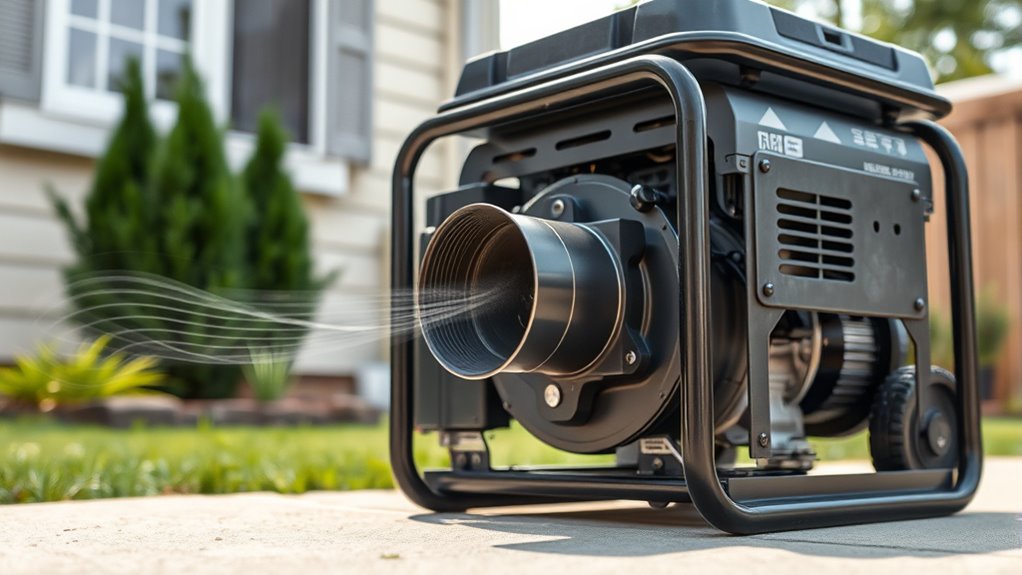
Placing a generator in the right location is essential to guarantee effective ventilation and prevent dangerous buildup of carbon monoxide. Proper placement ensures exhaust gases are safely directed away and airflow is optimized. To do this, consider these key points:
- Position the generator outdoors, at least 20 feet from windows and doors.
- Ensure exhaust placement directs fumes away from your home and living spaces.
- Maintain unobstructed airflow around the generator to facilitate proper ventilation.
- Regularly check that the transfer switch is correctly installed and functioning to prevent backfeeding and ensure safe operation.
Recognizing Symptoms of Carbon Monoxide Poisoning
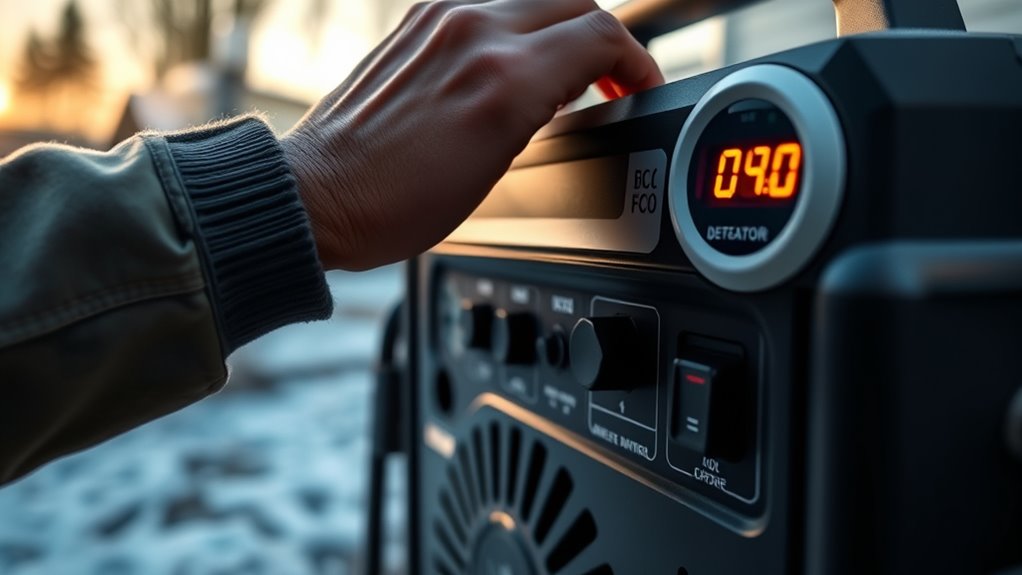
Have you ever wondered how to tell if you’re experiencing carbon monoxide poisoning? Recognizing symptoms of CO poisoning is vital for your safety. Common signs include headache, dizziness, weakness, nausea, and confusion. You might also notice shortness of breath or chest pain. Because these symptoms mimic other illnesses, symptom awareness is key to early detection. If you or others in your household experience these symptoms while a generator is running nearby, it’s essential to act quickly. Your immediate emergency response should involve moving to fresh air, leaving the contaminated area, and seeking medical help right away. Prompt action can prevent severe health effects or death. Being alert to these symptoms ensures you respond effectively and protect yourself and loved ones in CO emergencies.
Essential Safety Practices for Generator Use

To guarantee safe generator operation, you must follow essential safety practices at all times. Proper generator maintenance assures it runs efficiently and reduces CO risks. Always operate your generator outdoors in a well-ventilated area, never inside your home or garage. Prepare for emergencies by keeping a fire extinguisher nearby and knowing how to shut off your generator quickly. Regularly consulting architecture solutions can provide insights into optimal safety setups for generator placement and use. Additionally, understanding body piercing safety measures can help prevent infections if you or someone else has recent piercings near the generator area. Using field‑of‑view considerations in your setup can help ensure proper ventilation and safe placement of your generator. Implementing privacy policy guidelines for your safety information can also enhance understanding and compliance. Considering safe placement strategies can further reduce the risk of accidental CO buildup and improve overall safety. Here are key safety practices: 1. Schedule regular generator maintenance to prevent malfunctions. 2. Use carbon monoxide detectors near your generator and living spaces. 3. Maintain clear ventilation and never run the generator indoors or in enclosed spaces.
Following these steps minimizes CO exposure risks and keeps you prepared for any emergency.
What to Do If You Suspect CO Exposure

If you start to notice symptoms like headache, dizziness, or nausea, act quickly and get to fresh air. Ventilate the area immediately to mitigate your exposure. Then, seek medical attention right away to ensure your safety. To prevent further risks, consider installing smart appliances that can monitor for dangerous gases and alert you promptly. Being aware of carbon monoxide symptoms can help you recognize the danger early and respond appropriately. Additionally, understanding indoor air quality and maintaining proper ventilation can reduce the risk of gas buildup in your home.
Recognize Symptoms Early
Recognizing the symptoms of carbon monoxide (CO) poisoning early can save lives. If you notice signs like headache, dizziness, or nausea, act quickly. Prompt recognition is key to avoiding serious health risks. Keep your emergency preparedness in mind and guarantee your generator is well-maintained to prevent leaks.
Here are three steps to take if you suspect CO exposure:
- Move to fresh air immediately—away from the generator and enclosed spaces.
- Call emergency services without delay to get professional help.
- Inform everyone nearby to evacuate and avoid re-entering until it’s safe.
Regular generator maintenance reduces CO risks, and being alert to symptoms helps you respond swiftly. Staying vigilant is essential to protecting yourself and others from CO poisoning.
Ventilate Immediately
When you suspect carbon monoxide exposure, ventilate the area immediately to disperse the dangerous gas. Improving air quality is essential for your safety and emergency preparedness. Open windows and doors to allow fresh air in and push out CO. Avoid re-entering the space until you’re confident it’s safe. Use fans if available to speed up the process. Keep others away from the area during ventilation. Here’s a quick guide:
| Action | Key Step | Purpose |
|---|---|---|
| Open windows and doors | Create cross-ventilation | Flush out CO |
| Turn off appliances | Stop ongoing CO production | Reduce further risk |
| Leave the premises | Guarantee safety before re-entry | Prevent exposure |
| Monitor air quality | Confirm CO levels are safe | Confirm it’s safe to re-enter |
| Call emergency services | Seek professional help | Ensure proper cleanup |
Proper ventilation is essential to protect your air quality and ensure emergency preparedness. Proper ventilation can significantly reduce carbon monoxide levels and should be a priority during any suspected exposure.
Seek Medical Attention
Seek medical attention immediately if you suspect carbon monoxide exposure. Prompt emergency response is essential to prevent serious health effects. Once at the healthcare facility, medical treatment will focus on removing CO from your body and supporting critical functions. To guarantee proper care, consider these steps:
- Clearly describe your symptoms and potential exposure sources to medical professionals.
- Follow their instructions carefully, including oxygen therapy or hyperbaric oxygen if necessary.
- Keep track of your symptoms and inform doctors about any ongoing issues for follow-up treatment.
- Understanding carbon monoxide detection and proper safety measures can help prevent future incidents. Additionally, being aware of symptom recognition can lead to faster response times and better outcomes.
Ignoring symptoms or delaying medical care can lead to permanent damage or death. Always prioritize swift, professional medical response when CO poisoning is suspected. Your health depends on quick action and proper medical treatment.
Frequently Asked Questions
Can Portable Generators Produce Dangerous CO Levels Indoors?
Yes, portable generators can produce dangerous CO levels indoors if not used properly. You should prioritize proper generator placement, keeping it outside and away from windows and vents. Also, guarantee adequate ventilation requirements are met, allowing fresh air to circulate and prevent CO buildup. Never run a generator indoors or in enclosed spaces, as this can lead to deadly carbon monoxide poisoning. Always follow safety guidelines to protect yourself and others.
Are Carbon Monoxide Detectors Sufficient Safety Devices for Generator Use?
Carbon monoxide detectors are essential safety devices for generator use, but they aren’t enough alone. You should guarantee proper detector placement—ideally on every level and near sleeping areas—and regularly maintain and test them to ensure they’re working correctly. Relying solely on detectors can be risky; always follow safety guidelines, keep generators outside, and never operate them indoors or in enclosed spaces.
How Long Does It Take for CO Poisoning Symptoms to Appear?
Symptom onset from CO poisoning can vary, but you might start feeling symptoms within a few minutes to hours of exposure, depending on concentration levels. The poisoning timeline is rapid if you’re in a confined space with high CO levels, leading to dizziness, headache, or nausea quickly. To stay safe, always use a carbon monoxide detector and guarantee proper ventilation, especially when running a generator indoors or near openings.
Can Generator CO Risks Be Mitigated With Open Windows and Doors?
Open windows and doors are like vents to the outdoors, but they don’t guarantee safety. Ventilation strategies, including proper window placement, can reduce CO risk, yet they’re not foolproof. CO can still accumulate if the generator runs too long or is too close to your home. Always use generators outside in well-ventilated areas, away from windows and doors, to truly protect yourself from dangerous carbon monoxide buildup.
Is It Safe to Run a Generator in a Garage With the Door Open?
Running a generator in a garage with the door open isn’t safe because proper generator ventilation is essential. You should keep the garage well-ventilated, but never rely solely on open doors. Additionally, install CO detectors near sleeping areas and at generator level to monitor dangerous fumes. Always follow manufacturer instructions and local regulations to guarantee your safety, and never operate a generator indoors or in enclosed spaces.
Conclusion
Remember, safety is no accident. Always follow proper generator placement and ventilation guidelines to avert carbon monoxide poisoning. Recognize the symptoms early and act swiftly if you suspect exposure. As the saying goes, “An ounce of prevention is worth a pound of cure.” Staying informed and cautious ensures you and your loved ones stay safe—because in matters of life and health, it’s better to be safe than sorry.